• Link to X
  • Link to Facebook
  • Link to Instagram
  • Link to TikTok
  • Link to Youtube
  • About
    • About Us
      • President
      • Board of Directors
      • Board of Advisors
      • Financials
      • Our Methodology
      • Success Tracker
      • Contact
  • Act Now
    • 30 Ways to Help
      • Email Congress
      • Call Congress
      • Volunteer
      • Courses & Certificates
      • Be a Donor
    • Internships
      • In-Office Internships
      • Remote Internships
    • Legislation
      • Politics 101
  • The Blog
  • The Podcast
  • Magazine
  • Donate
  • Click to open the search input field Click to open the search input field Search
  • Menu Menu

Archive for category: Women and Female Empowerment

information and Stories about woman and female empowerment.

Global Poverty, Politics, Women and Female Empowerment, Women's Empowerment, Women's Rights

Justice for Iraqi Women

Justice for Iraqi Women

The status and protection of women remain a heated topic of discussion in international and national committees, particularly concerning justice for Iraqi women. Iraq‘s government is aware of the violations committed by its previous regime against certain civil community groups. As a result, Iraq’s government has strived to drastically change how they aid and support victimized and often impoverished groups. However, Iraq‘s strategy to reconcile these issues is unique. For example, China encourages its impoverished population to move to urbanized cities, and the United Kingdom encourages participation in its labor market. But Iraq seeks to acknowledge the voices of the victims.

In 2003, Iraq‘s government and the International Center for Transitional Justice partnered with the Human Rights Center of the University of California, Berkeley to create Iraqi Voices. Iraqi Voices is a report based on data collected from in-depth interviews and focus groups. This data represents different perspectives of the Iraqi population regarding transitional justice. There are seven main topics of focus represented in this report: past human rights abuses, justice and accountability, truth-seeking and remembrance, amnesty, vetting, reparations, and social reconstruction and reconciliation.

Hearing Women

Iraq is working to have women and girls meaningfully participate in all stages of decision making. Programs and organizations like the SEED Foundation have worked to ensure this justice for Iraqi women. In particular, the SEED Foundation works to empower and engage the voices of violence and trafficking victims in Iraq. As such, SEED Foundation leaders and activists encourage the meaningful participation of women in sustainable peace negotiations and conflict reconciliation. Through their efforts, the Iraqi Parliament now has a quota setting aside 25 percent of seats for women in provincial councils. By acknowledging these voices, the Iraqi government is helping seek justice for Iraqi women.

Moreover, Iraq has taken strides to bridge the gap between policymakers and victims when addressing the needs of local communities affected by ISIS. To do so, Iraq is considering partnering with or accepting assistance from other nations. While international policymakers seek justice for Iraqi victims, they fail to address the real concerns of affected communities. Instead, they often focus on prosecuting the perpetrators. But affected communities also have more immediate needs. Therefore, this partnership and assistance allow victims of affected communities to participate in prioritizing and creating appropriate policies. Efforts to ensure meaningful participation in Iraq‘s government thus bring about transitional justice. By addressing systemic failures, Iraq’s government brings justice to marginalized victims, including justice for Iraqi women.

Bringing Change

Ultimately, the changes implemented by the Iraqi government aid and empower impoverished and victimized groups, such as women. The inclusion of female voices in politics influences larger discussions affecting women and, as seen as Iraq, helps get justice for Iraqi women.

– Jordan Melinda Washington
Photo: Pixabay

June 15, 2019
https://borgenproject.org/wp-content/uploads/borgen-project-logo.svg 0 0 Kim Thelwell https://borgenproject.org/wp-content/uploads/borgen-project-logo.svg Kim Thelwell2019-06-15 12:07:102019-12-17 08:31:00Justice for Iraqi Women
Global Poverty, Women and Female Empowerment, Women's Rights

Syria: Education in a Time of Strife

Read more
June 6, 2019
https://borgenproject.org/wp-content/uploads/borgen-project-logo.svg 0 0 Kim Thelwell https://borgenproject.org/wp-content/uploads/borgen-project-logo.svg Kim Thelwell2019-06-06 01:30:212026-05-21 12:19:00Syria: Education in a Time of Strife
Global Poverty, Women and Female Empowerment, Women's Rights

Advancing Women: What is the W-GDP?

What is the W-GDP
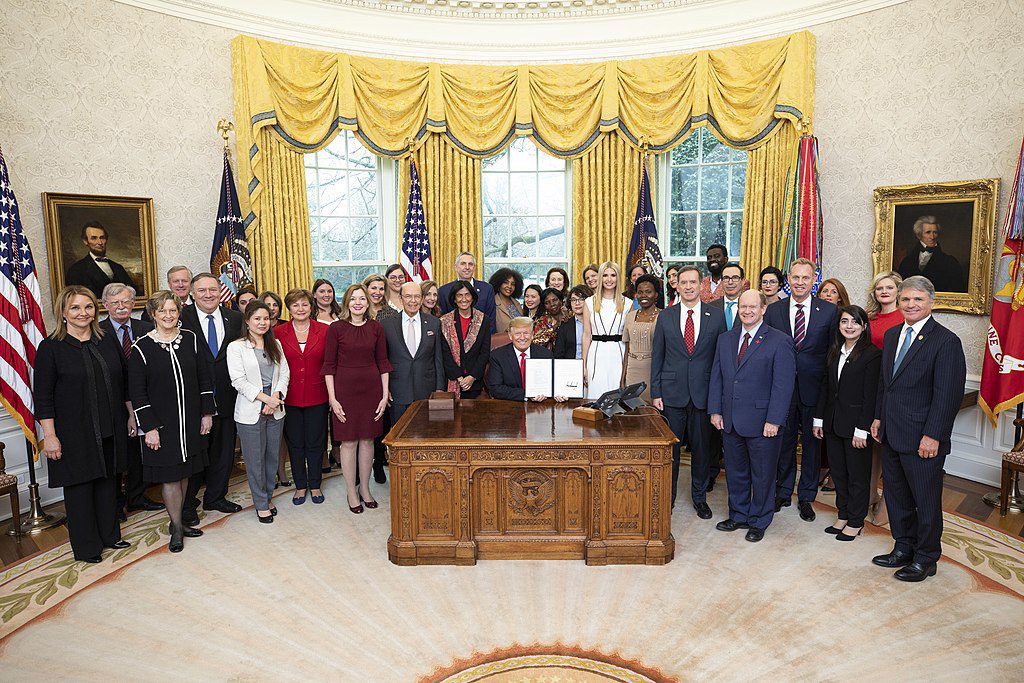
The limitations that women have to pursue economic advancement on the same playing field as men occur even at a young age. There are societal expectations, stereotypes and constraints that women face from when they are very young. These expectations do not cease to affect women in the pursuit of roles in higher-paying jobs around the globe. U.S. President Donald Trump launched the Women’s Global Development and Prosperity (W-GDP) Initiative in February 2019 in recognition of these issues and acknowledging related foundational constraints.

The W-GDP focuses on women prospering within the workforce, thriving in entrepreneurship and becoming established in the economy through the removal of legal barriers. These three pillars of the W-GDP recognize the untapped potential of women in the global economy. A unique team including the Secretaries of State, Treasury and Defense, a National Security Advisor and leaders of the World Bank, UNICEF and Walmart promote the W-GDP. This sheds light on the uniqueness and significance of this initiative.

Women Prospering in the Workforce

The focus on women prospering within the workforce pertains to efforts implemented toward the placement and elevation for women’s global workforce participation. The actions behind this pillar prioritize making provisions for women’s access to education and training and providing the support necessary to thrive economically. Women also do not receive equal access to digital services in comparison to men. This further limits women’s economic advancement considering these services may involve training, employment and financial services. Over 1.7 billion women do not own cell phones throughout developing countries. Further, the likelihood of women using mobile internet is 26 percent less than men. These components also restrain the equality of women in the workforce.

The time-consuming weight of care and labor that women endure also limits opportunity. More likely than men, women face unsalaried work such as family care, cleaning and retrieving clean water. These activities hinder women from receiving a quality education, training or essential skills. All of these components are essential in obtaining higher-paying substantial-growth positions in areas such as engineering, math or science.

So, what is the W-GDP? It is an initiative that acknowledges this crisis that is harming the global economy and has developed plans to invest in over 50 million women in developing countries. Estimates have determined that this initiative adds $28 trillion to global gross domestic product (GDP) when it has 100 percent participation from women in the workforce.

Women Thriving in Entrepreneurship

The W-GDP initiative helps women thrive in entrepreneurship by opening their access to capital, markets, networks and mentorship. The W-GDP is addressing this issue because it highlights another problematic area; women-owned businesses face inequality in systems developed in their countries that do not provide equal access to market information, personal services, networks and other means of expansion. About $300 billion represents the credit gap in women-owned small and medium-sized enterprises all around the world. Many countries with undeveloped financial structures are not treating these gray areas in the middle efficiently.

To change these circumstances, systemic reconstructions will provide short and long-term aid as solutions to these issues. Overall structural or institutional amendments make up the solution to combat the blockages women face regarding opportunities and system access.

Women Enabled in the Economy

The pillar of enabling women in the global economy focuses on the policies and laws that countries established that provided barriers to the financial progress of women. The trials women face in pursuing economic participation include the weight of unsalaried care, gender-based violence, lack of expenditure in their education, required spousal consent for employment and lawful blockades to specific careers. These lawful barriers include prohibiting or limiting their rights to assume, own property or have contracts through their name. To alleviate these limitations, the government, private sector and citizens of society must implement essential exerts of labor and force.

The W-DGP believes that investing in women can lead to positive outcomes. These outcomes are beneficial to all, including national security, peace, stability and local economy boosts from family investments. It is time to tap into the population that has the potential to bring upon these changes.

– Janiya Winchester
Photo: Wikimedia Commons

June 5, 2019
https://borgenproject.org/wp-content/uploads/borgen-project-logo.svg 0 0 Kim Thelwell https://borgenproject.org/wp-content/uploads/borgen-project-logo.svg Kim Thelwell2019-06-05 10:30:132024-05-29 23:13:51Advancing Women: What is the W-GDP?
Global Poverty, Women

Top 5 Facts About Period Poverty in India

period poverty in India
Period poverty involves the lack of access to menstrual education and sanitary products. With 800 million women and girls menstruating daily, this is a subject that concerns half the population around the world. However, the issue is particularly prevalent in India where only 42% of women have access to sanitary pads. What are some doing to alleviate this common problem? Here are the top five facts about period poverty in India.

Top 5 Facts About Period Poverty in India

  1. Increased Risk of Disease: In India, an estimated 70% of all reproductive diseases are due to poor menstrual hygiene. Women often use dirty rags as a replacement for sanitary pads. Even rags that are cleaned can still develop bacteria if not dried properly. Furthermore, 63 million adolescent girls in India, do not have access to a toilet in their homes. Without a clean and private space to change menstrual products, girls are less likely to properly manage their own hygiene
  2. Cultural Stereotypes Have a Huge Impact: People often see menstruation in India as a shameful conversation. Studies estimate that 71% of girls have no knowledge about menstrual health until after their first period. People often describe women as “dirty” while menstruating and are commonly separated in the home when dining, praying or participating in other activities. Some studies suggest that this is due to gender norms that become more prevalent at puberty. In addition, there is no required curriculum surrounding menstrual health in school.
  3. The High Cost of Sanitation Facilities: Third on the list of the top five facts about period poverty in India is the expense of menstrual products. Approximately 70.62 million people in India live in extreme poverty on less than $1.90 per day. The average Indian woman needs 300 rupees ($4.20) per month for menstrual products. For low-income households, the cost of sanitary pads is often unattainable. Furthermore, Since most adolescents do not have access to toilets at home, girls are more likely to pay for restrooms in public, which is another unaffordable expense.
  4. Period Poverty in India Affects Education: On average, girls miss six days of class each month due to shame surrounding their periods or a lack of sanitary products. This contributes to the number of girls in India who drop out of school each year, around 23%. Girls that leave school are stunted in their careers and are more likely to become child brides. India has the highest number of child brides in the world, with 15.5 million children being married by the age of 18.
  5. Removal of Taxes: While some parts of period poverty seem daunting, other parts seem hopeful. In 2017, the Indian government labeled menstrual products as luxury goods. Quickly after the announcement of the new tax, the public gathered to campaign against it. In July 2018, the government removed the tax, thus making sanitary products more accessible to low-income households.

Working to Improve Conditions

The good news does not end with the removal of taxes. Many positive strides have occurred to address the issues of period poverty. Binti is one organization in India (as well as 11 other countries) aiming to minimize the issue. The nonprofit is fighting for menstrual equality through education, distribution of sanitary products and government advocacy. The World Bank and WASH partnered to create Menstrual Hygiene Day to spread awareness about the importance of sanitary products for women and girls around the world.

Documentaries have also aided in global education about period poverty. For example, “Period. End of Sentence.” partnered with Action India (a nonprofit aiming to create gender equality) to create a documentary about the situation. The Netflix original was successful in fundraising enough money to install a vending machine of menstrual products in Hapur, India. It also received an Oscar for best documentary short film, gaining public recognition for its efforts.

Ultimately, when looking at the top five facts about period poverty in India, one can see it is a very prevalent issue. Menstrual inequality is often due to shame around the conversation as well as the high cost of feminine products. This creates challenges in education and an increased risk of disease. However, many positive strides are occurring, and governments are starting to see that this is a cause worth advocating for.

– Anna Melnik
Photo: Flickr

June 3, 2019
https://borgenproject.org/wp-content/uploads/borgen-project-logo.svg 0 0 Kim Thelwell https://borgenproject.org/wp-content/uploads/borgen-project-logo.svg Kim Thelwell2019-06-03 01:30:382024-05-29 22:39:33Top 5 Facts About Period Poverty in India
Global Poverty, Women and Female Empowerment, Women's Rights

Women in Government: Representation in Rwanda

Women’s Representation in RwandaRwanda has a higher percentage of representation of women in government than any country in the world. In 2017, there were 49 women in the lower house of parliament, which is more than half of its 80 seats, and 10 women in the upper house of parliament consisting of 26 seats. The high proportion of women in government came after the devastating Rwandan genocide of 1994, and the country has made significant strides since then.

A Shift in Gender Representation

The genocide in Rwanda marked a change in gender representation because, after the violence had subsided, 70 percent of the surviving population was women. This was a result of the practice of killing men and allowing women to survive as sex slaves during the genocide. However, it was not only the new gender disparity that caused an increase in women’s roles in government, but the country also introduced quotas requiring 30 percent of candidates for public office to be women.

It is important to note that the Rwandan government decided to increase the representation of women in government through candidate quotas in political parties rather than seat reservations in parliament. According to a study by Mala Htun published in Perspective on Politics, “Women and men belong to all political parties; members of ethnic groups, by contrast, frequently belong to one only.” By using quotas, the Rwandan government is acknowledging the bipartisan nature of women in government.

Therefore, the most efficient way to establish a higher representation of women in government is to promote their representation within political parties because they are a cross-cutting group, meaning that women have an active political presence across the political spectrum. This thoughtful approach to increasing women’s representation in the Rwandan government has resulted in record-breaking numbers of women becoming involved in political life in Rwanda and setting positive examples for young girls throughout the country.

The Difficulties Women in Government Face

The presence of women in such politically powerful positions in Rwanda has not come without difficulties. Many women face backlash from their families or husbands for sacrificing domestic work in order to become political leaders. In fact, Berthilde Muruta, Executive Secretary in the Rubavu District noted that “there are people who think that we come to meet men, or for other business, which makes it hard to be trusted by our husbands.” Additionally, female politicians in Rwanda are oftentimes not seen as equals to the men in similar positions.

According to Claudette Mukamana, a District Vice Mayor, “When people see you holding any of those [elected] positions as women, the very first question asked by everyone is: Will she be able to perform her duties? Is she capable of holding such a position?” Despite these difficulties, the presence of so many women in the Rwandan government has resulted in the passing of several key pieces of legislation to improve the lives of women and girls throughout the country.

These reforms include legislation to alter the Civil Code to allow women to have equal inheritance rights as men, equal pay, consequences for gender discrimination and harassment in the workplace and further prevention and consequences for violence against women and children. In addition, with 7 of the 14 supreme court justices in Rwanda now being women, new laws were passed requiring that both boys and girls must attend primary and secondary school.

Areas to Improve

A lot still needs to change in regards to the perception of women’s roles in society. Furthermore, there is still more progress to be made, especially in terms of violence against women. The Rwandan government performed a study that showed that two out of every five women ages 15 and older had been physically abused at least one time in their lives. As more women are elected to office, hopefully, more people will change their perspective in these areas and these statistics will represent that improvement.

The representation of women in the Rwandan government has led to significant advancements for the rights of women and girls throughout the country. Globally women only hold 21.9 percent of all elected seats in government. Promoting the equality of men and women in political positions in Rwanda and around the world is integral to solving many of the issues governments face. Although the system is not yet perfected, the world could learn a lot about the importance of women in government from Rwanda.

– Alina Patrick
Photo: Flickr
May 29, 2019
https://borgenproject.org/wp-content/uploads/borgen-project-logo.svg 0 0 Kim Thelwell https://borgenproject.org/wp-content/uploads/borgen-project-logo.svg Kim Thelwell2019-05-29 01:30:572019-05-29 04:00:18Women in Government: Representation in Rwanda
Gender Equality, Global Poverty, Sanitation, Women and Female Empowerment

Addressing Gender Equality in India

Addressing Gender Equality in IndiaIt’s clear that improvements are immensely needed in order to bridge the gap in gender equality in India. The country ranked 130 out of 168 for the Gender Development Index. Fortunately, the United Nations Women Executive Director, Phumzile Mlambo-Ngcuka, attended the #WeSeeEqual summit in Mumbai on Feb. 18 to address issues of addressing gender equality in India, the Middle East and Africa as well as potential solutions.

Puberty and Hygiene

Many adolescent girls in India are not educated about how their body changes during puberty or the importance of having adequate hygienic methods. Discussing the topic of menstruation is taboo, which leads to many misconceptions. According to a report conducted by the Dasra Foundation, 71 percent of girls had no knowledge about menstruation until their first period. It was also discovered in this report that 70 percent of the mothers surveyed believed menstruation was “dirty,” which further perpetuates shame felt by young girls when puberty starts.

Young girls and women who menstruate are also treated differently, one cultural tradition that remained until recently was that women who have reached menstruation age were not allowed to visit temples. Poor sanitary facilities in schools and other public areas is also a pressing issue. However, at the #WeSeeEqual summit, U.N. Women and Procter & Gamble (P&G), an American multinational consumer goods corporation, teamed up and pledged to educate more than 23 million adolescent girls over the next three years on puberty and hygiene in India, the Middle East and Africa.

Women-Owned Businesses

Although the economy in India is impressive, it could improve even more if women were more involved in the workforce. Only about 26 percent of women in India work. There are many social and religious constraints preventing more women from working, including household chores and motherly duties, which are normally placed on women. More than 70 percent of home-makers in India stated that they would prefer at least part-time work if given the chance.

If the employment rate of women were raised to the same level of employment for men, about 240 million more women would be included in the workforce. This would also mean that the world’s biggest economy would be 27 percent richer. P&G revealed at the #WeSeeEqual summit that it would aim to spend $100 million on working with women-owned businesses and improving female education in India, Middle East and Africa over the next three years. At this summit, P&G and U.N. Women also committed to using their voices to spark conversation and motivate change.

Looking Ahead

It’s important for organizations to use their resources and power to encourage equality in areas of the world that need it the most. U.N. Women and P&G addressed gender equality in India in an impactful way by discussing important issues, such as women in the workforce and adolescent girls being educated about menstruation and proper hygienic methods. Summits like #WeSeeEqual encourage change and help address important issues and potential solutions that will hopefully improve the situation around the world.

– Maddison Hines
Photo: Flickr

May 22, 2019
https://borgenproject.org/wp-content/uploads/borgen-project-logo.svg 0 0 Kim Thelwell https://borgenproject.org/wp-content/uploads/borgen-project-logo.svg Kim Thelwell2019-05-22 01:30:162024-06-06 00:15:32Addressing Gender Equality in India
Global Poverty, Women and Female Empowerment

The Impact of HIV/AIDS on Women in Ghana

The Impact of HIV on Women in GhanaIn Ghana, a nation in West Africa’s Gulf of Guinea, approximately 190,000 women and girls above the age of 15 are living with AIDS. This high number can be attributed to the lack of necessary resources and education. The social and gender norms for females in Ghana also put girls at a higher risk. In fact, women are two to four times more susceptible to HIV infection than men. Some organizations are working to educate and empower women in Ghana and reduce the transmission of HIV.

Gender Roles in Ghana

The expectation that women and girls stay apathetic and quiet about intercourse leads to their inability to speak up about safe sex. These stereotypes and expectations mean that women in Ghana have less access to education and information than men, which minimizes their ability to negotiate and argue the need for condoms and other forms of safe sex. Even if a woman has the necessary education, it is a stereotype that married women who want to use contraceptives are having an affair.

Symptoms of sexually transmitted diseases (STDs) are often asymptomatic for women even though they are not for men. The existence of an STD puts an individual at higher risk of HIV infection. So, when women go untreated they become more susceptible without being aware of it. Also, women have a higher surface area that is exposed to contact during unprotected sex than men, which leads to a greater risk of infection. These are just some of the reasons why education about safe sex is so important.

The impact of HIV/AIDS on women in Ghana also comes from their role as caretaker to those suffering from the illness. This is especially impactful when a family member becomes sick. When a woman has to spend much of her time caring for a family member with HIV/AIDS, this takes away from her work, household tasks, time for self-care and time that she could be spending with her children.

WomenStrong International in Ghana

A community of organizations, WomenStrong International, works with women and girls to end extreme poverty. Their goal is to “find, fund, nurture and share women-driven solutions that transform lives.” Women’s Health to Wealth, an organization within WomenStrong International, started a women’s clinic in Kumasi, Ghana. One of their goals is to deliver more information about reproductive and family health to women in Ghana. More information and education for women and girls would give them the ability to voice their wants, needs and opinions about their sexual health.

As one of the top diseases in Ghana, HIV/AIDS education and prevention is extremely important regardless of gender, but in the current climate, especially for women. Although leaps and bounds still need to be taken towards progression, there has been movement in the right direction through organizations such as Women’s Health to Wealth. With organizations fighting for equality and raising awareness, there is hope for improved health for women in Ghana.

– Malena Larsen 
Photo: Unsplash
May 20, 2019
https://borgenproject.org/wp-content/uploads/borgen-project-logo.svg 0 0 Kim Thelwell https://borgenproject.org/wp-content/uploads/borgen-project-logo.svg Kim Thelwell2019-05-20 01:30:112024-05-29 23:00:14The Impact of HIV/AIDS on Women in Ghana
Global Poverty, Women, Women and Female Empowerment, Women's Empowerment

Five Resilient Women in Rwanda

Five Resilient Women in RwandaOctober 1990 ushered in a period of war, death and devastation in Rwanda. Civil war ravaged the country and ultimately culminated in the 1994 genocide of 500,000 to 1 million people in a period of a little over three months.

Only 25 years since the Rwandan Genocide, many women in Rwanda are still recovering from loss, hardship and trauma. Militants raped between 250,000 to 500,000 women during the genocide and many who survived lost friends, family and community. Determined to raise up their communities after a period of national devastation, here are five resilient women in Rwanda who inspire and create change for the present and the future of Rwanda.

Five Resilient Women in Rwanda

  1. Christelle Kwizera
    Christelle Kwizera graduated magna cum laude from Oklahoma Christian University, where she researched purifying water via ozone. Now Christelle is the managing director of Water Access Rwanda, whose mission is to provide clean, affordable and reliable water sources to combat water security. Operating since 2014, Water Access Rwanda provided access to clean water to more than 132,000 people, schools, businesses and farms throughout not only Rwanda but also within the Democratic Republic of Congo, Burundi and Uganda.
  2. Elise Rida Musomandera
    Elise Rida Musomandera lost both of her parents at an early age. This dramatically shaped her life and fed her determination to combat hunger, empower women and youth and support survivors of genocide and individuals with AIDS. In 2014, Elise founded Isano Women and Youth Empowerment. Elise is the CEO of her nonprofit organization and leads the fight against poverty, promotes peace, protects the environment and empowers others through education.
  3. Safi Umukundwa
    At only 8 years old, Safi Umukundwa became a survivor and orphan of genocide. On account of her resiliency and dedication, she excelled in secondary school. She ultimately received funding for university education and inspired the name of the nonprofit, Safi Life, where she serves as the county director of Rwanda. Safi Life works to promote female advancement in Africa through awarding university scholarships and funding education for women, which additionally combats domestic abuse and poverty. As a result, Safi works to build up and inspire the next generation of strong and resilient women in Rwanda.
  4. Salaama Numukobwa
    Salaama Numukobwa is a mother, activist and inspiration. Since 2011, she served her community through volunteer work. Salaama is now the community facilitator of Mind Leaps in Rwanda. Mind Leaps is a nonprofit organization that works with vulnerable and at-risk youth through dance, increasing cognitive and social-emotional development. Seventy percent of students who completed Mind Leaps’ dance program in Rwanda performed within the top 20 percent of their classes in 2017.
  5. Solange Impanoyimana
    Solange Impanoyimana was only 11 years old when the Rwandan genocide left her to provide for herself. Committed to furthering her education, she achieved her bachelor’s degree and went on to co-found Resonate. Resonate is a nonprofit that provides girls and women leadership workshops to cultivate skills and increase confidence through storytelling, professional development and action leadership programs. In 2017, 36 percent of participants started businesses, 60 percent fill leadership roles and 43 percent have secured employment, promotions or academic opportunities.

Only a quarter-decade after the dark stain of hatred and genocide affected Rwanda, Christelle, Elise, Safi, Salaama and Solange shine their light on the future of their country. These courageous women are the epitome of strength and represent millions of resilient women in Rwanda.

– Keeley Griego
Photo: Flickr

May 15, 2019
https://borgenproject.org/wp-content/uploads/borgen-project-logo.svg 0 0 Kim Thelwell https://borgenproject.org/wp-content/uploads/borgen-project-logo.svg Kim Thelwell2019-05-15 05:23:302024-06-06 00:15:32Five Resilient Women in Rwanda
Aid, Global Poverty, Women

How CARE International Changed Its Approach to International Aid

CARE International

From Europe to Everywhere

CARE International is one of the foremost aid organizations in the world. It has a long and distinguished history, having been established in 1945 to help survivors of World War II in Europe. Today, CARE operates in more than 90 countries, runs 1,033 projects that serve more than 80 million people, and holds more than $584,161 in financial resources.

The beginnings of CARE were very different than the organization that exists today. Many people today may not realize that the term care package, now part of the everyday English lexicon, began as a registered trademark of CARE—an acronym that originally stood for “Cooperative for American Remittances to Europe.”

But CARE—which now stands for “Cooperative for Assistance and Relief Everywhere”—has changed dramatically over its more than 70 years of operation. Not only has it grown in size, but it has also changed focus. While CARE started by sending commodities to hungry people in Europe, it has evolved into an organization that is both more global and more local, both broader and more focused.

International and Local

One of the biggest changes CARE has undergone since its inception is a change in scale. In 1979, CARE changed its name to Care International and transitioned from a U.S. organization to an international organization with 14 branches around the world. While the largest branch is CARE USA in Atlanta, CARE International’s central headquarters is in Geneva.

At the same time, CARE International has moved away from one-size-fits-all aid, like the CARE package, and toward locally focused aid. It makes an effort to hire employees from the localities that receive the benefits of aid projects, so the people tasked with implementing programs have a deep understanding of local needs and obstacles.

In the words of CARE USA’s previous CEO, Helene Gayle, “Now instead of just focusing on the consequences of poverty and lack of access to basic needs, we also focus on the underlying causes… We look at how you have a longer-term impact on the lives of the communities in which we work… and we work not only on relief and emergency situations but continuing from relief to recovery to development, and building resiliency so communities that are affected from time to time by emergencies are able to respond and bounce back better.”

Helping Women and Girls

Gayle, as CEO of CARE USA, ushered in another major change, this one a change of focus. Under her leadership, CARE starting focusing its efforts on women and girls.

This is because, in Gayle’s view, “Girls and women bear the brunt of poverty around the world.” She explains elsewhere, “if women and girls have an opportunity, there’s this catalytic effect. A girl who is educated is more likely to marry later, have fewer children, have a greater economic future for her children, get them into school, etc.”

CARE’s focus on the wellbeing of women and girls has generated impressive results. For instance, in one CARE program in Bangladesh designed to reduce malnutrition in children, aid workers realized that the program was most effective “when households also participated in activities that contributed to women’s empowerment.” CARE began by creating programs to increase educational access to women and fight domestic violence, and the nutrition benefits followed.

CARE International is a storied organization that could have continued along the path it started in 1945. In order to have an impact on a changing world, though, the organization decided to change. In the process, it has provided a lesson in flexible, dynamic global aid work in the 21st century.

-Eric Rosenbaum
Photo: Flickr

May 12, 2019
https://borgenproject.org/wp-content/uploads/borgen-project-logo.svg 0 0 Kim Thelwell https://borgenproject.org/wp-content/uploads/borgen-project-logo.svg Kim Thelwell2019-05-12 14:17:472024-12-13 18:01:47How CARE International Changed Its Approach to International Aid
Activism, Global Poverty, Women and Female Empowerment, Women's Rights

5 Facts About Women’s Rights in Togo

5 Facts About Women’s Rights in Togo
Togo is a small country in West Africa. Like other developing countries, many people in Togo have made the realization that gender equality and women’s rights would lead to a thriving, more prosperous community. Although recognizing the issue is a crucial and necessary step, actions are needed to see real change. This article examines 5 facts about women’s rights in Togo.

5 Facts About Women’s Rights in Togo

  1. In 2007, Togo adopted a law that prohibits sexual assault, early and forced marriage, exploitation, female genital mutilation and sexual harassment. Yet, women are still lacking in information and education when it comes to their rights, which means marital rape and domestic violence are still common in Togo regardless of the law.
  2. There is a 10-day national conference held every year in Togo called the Women’s Wellness and Empowerment Conference (WWEC). The conference brings women leaders from across Togo together. The Peace Corps’ goal for the WWEC is to empower women, advocate gender equality and education and encourage the community to engage with one another.
  3. For women, there is a substantial drop in literacy rates from primary education (72 percent) to secondary education (14 percent). One of the reasons for this extremely high drop-out rate is because of early pregnancies. The high number of early pregnancies is because sex education, contraceptives and family-planning are all non-existent in Togo, making it extremely difficult for women to take charge of their bodies and futures.
  4. According to the World Bank’s country report, women lack economic opportunities and are rarely represented in high-level positions. This hurts society as a whole. The International Labour Organization stated that more female participation in the workforce would result in faster economic growth. Although there is a law in Togo that constitutes equal pay for equal work regardless of gender, women’s rights activist Berthe Adjoavi Tatey stated that this law is not acted upon. She claimed that women continue to have inadequate access to financial services. Sophie Ekue, a journalist in Togo said, “women are the belt that holds men’s trousers. And it is high time that this changes–for the benefit of the whole society.”
  5. Women are becoming more involved politically. As of 2010, nine members of the National Assembly and seven ministers in the Cabinet were women. In 2012, Togolese women organized a week-long “sex-strike.” The goal of the strike was to pressure President Faure Gnassingbe to resign. Women who wanted to take part in the strike were asked to withhold sex from their husbands. The goal was to convince men to also take action against the president. Togolese women have also led two naked protests. The first was following the sex-strike in August 2012, and the second was in September 2017. The goal of the protests was the same as the sex-strike: mobilize men against the president.

With the uprise of gender equality laws, female-led protests and national women’s conferences, Togo is looking toward a better future as far as gender equality and women’s rights are concerned. These 5 facts about women’s rights in Togo show there is still room to improve. It is essential that Togo continues to focus on advancements for women so there can be political, educational and financial equality between both genders in Togo, creating a strong flourishing community.

– Malena Larsen
Photo: Flickr

May 3, 2019
https://borgenproject.org/wp-content/uploads/borgen-project-logo.svg 0 0 Kim Thelwell https://borgenproject.org/wp-content/uploads/borgen-project-logo.svg Kim Thelwell2019-05-03 01:30:402024-12-13 18:01:455 Facts About Women’s Rights in Togo
Page 37 of 82«‹3536373839›»

Get Smarter

  • Global Poverty 101
  • Global Poverty… The Good News
  • Global Poverty & U.S. Jobs
  • Global Poverty and National Security
  • Innovative Solutions to Poverty
  • Global Poverty & Aid FAQ’s
Search Search

Take Action

  • Call Congress
  • Email Congress
  • Donate
  • 30 Ways to Help
  • Volunteer Ops
  • Internships
  • Courses & Certificates
  • The Podcast
Borgen Project

“The Borgen Project is an incredible nonprofit organization that is addressing poverty and hunger and working towards ending them.”

-The Huffington Post

Inside The Borgen Project

  • Contact
  • About
  • Financials
  • President
  • Board of Directors
  • Board of Advisors

International Links

  • UK Email Parliament
  • UK Donate
  • Canada Email Parliament

Get Smarter

  • Global Poverty 101
  • Global Poverty… The Good News
  • Global Poverty & U.S. Jobs
  • Global Poverty and National Security
  • Innovative Solutions to Poverty
  • Global Poverty & Aid FAQ’s

Ways to Help

  • Call Congress
  • Email Congress
  • Donate
  • 30 Ways to Help
  • Volunteer Ops
  • Internships
  • Courses & Certificates
  • The Podcast
Scroll to top Scroll to top Scroll to top