• Link to X
  • Link to Facebook
  • Link to Instagram
  • Link to TikTok
  • Link to Youtube
  • About
    • About Us
      • President
      • Board of Directors
      • Board of Advisors
      • Financials
      • Our Methodology
      • Success Tracker
      • Contact
  • Act Now
    • 30 Ways to Help
      • Email Congress
      • Call Congress
      • Volunteer
      • Courses & Certificates
      • Be a Donor
    • Internships
      • In-Office Internships
      • Remote Internships
    • Legislation
      • Politics 101
  • The Blog
  • The Podcast
  • Magazine
  • Donate
  • Click to open the search input field Click to open the search input field Search
  • Menu Menu

Archive for category: Technology

Information and stories about technology news.

Technology, USAID

What is PEER?

What is PEER?
PEER or, Partnerships for Enhanced Engagement in Research, is a collaboration between the U.S. Agency for International Development (USAID) and the U.S. National Science Foundation (NSF). PEER is a competitive grant program that allocates money to scientists in developing countries, who are working on research that is of importance to the development of their respective regions. PEER focuses on granting money to scientists whose research involves food security, climate change, or other development tools such as biodiversity and renewable energy. PEER attempts to create connections between scientists of developed countries and scientists of developing countries. The grants allow these scientists to conduct research that they would not have been able to do without a grant. PEER is a relatively new program, being two years old.

Alex Dehgan, science and technology advisor to USAID Administrator Rajiv Shah commented, “…PEER Science has provided over $12 million to 98 projects in 40 countries, and we are already seeing the tremendous benefits of bringing together developing and developed country researchers to solve some of our greatest global development challenges.”

Previous PEER success stories include reducing the risk of landslides and earthquakes in Lebanon and Bangladesh, decreasing air pollution in Mongolia, and improving the resilience of coral reefs and related habitats in Indonesia. PEER allows scientists in 87 countries to apply.

DeAndra Beck, program director for developing countries at NSF said, “With two or more parties contributing resources, a true intellectual partnership can be established, maximizing the potential to advance the pursuit of science and development in new and creative ways.”

PEER just announced its second cycle of awardees this June. PEER selected 54 new projects to receive a portion of the $7.5 million allocated to this cycle. Awardees were chosen out of 300 highly qualified applicants. These 54 projects reach across 32 countries and will focus on development issues. This has been an incredibly successful program in the short two years it has been running. Its innovative idea to connect scientists all over the developing world has been very effective in solving certain development issues.

– Catherine Ulrich

Sources: National Academies, All Africa
Photo: Minnesota Public Radio

June 26, 2013
https://borgenproject.org/wp-content/uploads/borgen-project-logo.svg 0 0 Borgen Project https://borgenproject.org/wp-content/uploads/borgen-project-logo.svg Borgen Project2013-06-26 10:29:242020-07-06 18:21:25What is PEER?
Activism, Global Poverty, Poverty Reduction, Technology

Google Blimps Bring Internet To Africa

Google Blimps
Some companies provide food to people in countries who need it, others may donate supplies to build homes or schools, and some may send doctors or medical supplies to help the sick. Google is taking a different approach, using their technology skills to bring the internet to Africa via blimps.

The company’s goal is to connect nearly 1 billion people across Africa and Asia to the internet with high-flying blimps and balloons. The Google blimps are beneficial because they can cover a wider area while remaining cost-efficient. Google has created an ecosystem of smartphones that are low-cost with low processing power, and the signals are carried by the balloons. Google also is asking the local government regulators for permission to use television airwaves for their project, because these waves are better at transferring signals through buildings and across large areas of land than traditional WiFi infrastructure.

Google isn’t the first to propose a plan that uses balloons and blimps. Afghanistan already uses blimp technology for surveillance purposes by scanning wide areas that wouldn’t be possible or as simple as other forms of ground technology. The U.S. military is also involved in cloud-type projects involving blimps, and the Army uses them for communication. Instead of using traditional satellites to communicate back and forth with troops on the ground, which is very expensive, they use Combat SkySat balloons.

Google has begun a trial launch of their blimps in South African schools to test how well the new technology performs.

– Katie Brockman

Source Forbes, Wired

June 17, 2013
https://borgenproject.org/wp-content/uploads/borgen-project-logo.svg 0 0 Borgen Project https://borgenproject.org/wp-content/uploads/borgen-project-logo.svg Borgen Project2013-06-17 04:00:252024-12-13 17:49:24Google Blimps Bring Internet To Africa
Advocacy, Aid Effectiveness & Reform, Development, Technology, USAID

USAID and Qualcomm Expand Relationship

cell_phone
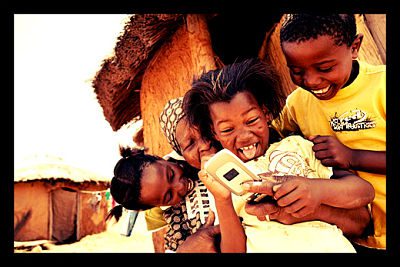
USAID and Qualcomm announced a formal agreement to work to expand global technology and increase collaborative efforts in development.  Qualcomm, a San-Diego based telecommunications company, has been working with USAID in recent years to improve access to technology in developing countries. The formal agreement will give Qualcomm’s Wireless Reach Division the ability to carry out projects.

Those that have already benefited from USAID and Qualcomm’s projects are fishermen in Brazil, police officers in El Salvador, and health workers in the Philippines.  In Brazil, the joint project provided small-scale fisherman with mobile devices and applications to connect with buyers, track sales, and get weather updates. Qualcomm was able to equip police in high-crime neighborhoods in El Salvador with smart phones that allowed them to connect to a database to work to reduce crime. Collaboration in the Philippines helped rural health clinics establish electronic records.

USAID commended Qualcomm for being an innovative, nimble, and strategic global technology leader.  USAID and Qualcomm share a vision of how to address the challenges in the developing world. Among the current goals of the formal agreement are to close the mobile phone gender gap, expand access to broadband, reduce the negative effects of climate change, and connect small farmers to market data.  Projects in Africa and Asia are the top priority and future consideration will be given to other areas including Latin America.

The future of technology in developing nations is changing quickly and this is just more step in the right direction.

– Amanda Kloeppel

Source: UT San Diego
Photo: CIAT News

May 26, 2013
https://borgenproject.org/wp-content/uploads/borgen-project-logo.svg 0 0 Borgen Project https://borgenproject.org/wp-content/uploads/borgen-project-logo.svg Borgen Project2013-05-26 07:33:012020-06-18 19:49:50USAID and Qualcomm Expand Relationship
Technology

Iqbal Quadir’s TED Talk: Mobiles Fight Poverty

Iqbal Quadir is an advocate of business as a humanitarian tool. With GrameenPhone, he brought the first commercial telecom services to poor areas of Bangladesh. Partnering with microcredit pioneer GrameenBank in 1997, Quadir established GrameenPhone, a wireless operator that provides phone services to 80 million rural Bangladeshi. The company has become the standard for a bottom-up, tech-empowered approach to development.

In his TED Talk, he first questioned the way that rich counties sent aid to poor countries to fight poverty. And also, even though he did not find much evidence to support the idea that connectivity can really increase productivity, he presented research done by the International Telecommunication Union showing the positive effects it has. The impact of one new telephone to richer countries’ GDP is very little, however, one new telephone has a huge impact on the GDP of poorer countries.

“Mobiles have a triple impact,” Quadir says. “They provide business opportunities; connect the village to the world; and generate over time a culture of entrepreneurship, which is crucial for any economic development.”

– Caiqing Jin(Kelly)

Source: TED Talk

May 19, 2013
https://borgenproject.org/wp-content/uploads/borgen-project-logo.svg 0 0 Borgen Project https://borgenproject.org/wp-content/uploads/borgen-project-logo.svg Borgen Project2013-05-19 05:21:502024-05-24 23:50:35Iqbal Quadir’s TED Talk: Mobiles Fight Poverty
Sanitation, Technology

The Future of Toilets in Poor Countries

The future of toilets in poor countries
What does the future of toilets in poor countries look like? The Gates Foundation hosted a competition to reinvent the toilet to process human waste without utilizing piped water, sewer or electrical connections and to transform waste into useful resources like water and energy.

The grand prize design was a solar-powered toilet that creates hydrogen and electricity. The second place prize was taken by a toilet that creates biological charcoal, minerals and clean water. A toilet that sanitizes feces and urine and recovers resources and creates clean water won third place.

Why all the excitement about toilets? In a nutshell, return on investments in sanitation is huge. For every dollar spent on sanitation, 5.5 dollars are returned. At a national level, lack of access to proper sanitation costs countries up to 7 percent of their GDP. In addition to being a smart investment, investing in sanitation is also a moral imperative. Diarrhea is the cause of an estimated 5000 child deaths every day. In areas where people defecate in the open or share large community bathrooms, women and girls are more frequently victimized.

Despite these striking numbers, improved sanitation is neglected at every political level. Without a drastic shift in strategies and the courage to undertake this stigmatized issue, the Millennium Development target of cutting the proportion of the population without access to clean water and basic sanitation by a half will be missed by a long shot.

In addition to the Reinvent the Toilet Challenge, the government of India is running multiple campaigns to improve sanitation such as the “No toilet, no bride” campaign and an information and shaming campaign aimed at changing the culture of open-space defecation.

The World Bank also recently wrapped up a sanitation hackathon where mobile phone application developers were challenged to create apps to improve sanitation. Many involved mapping public toilets and reporting malfunctioning toilets. Several were designed as games to teach children good sanitation.

– Katherine Zobre


Sources: Gates Foundation , Global Poverty Project
Photo: The Guardian

May 8, 2013
https://borgenproject.org/wp-content/uploads/borgen-project-logo.svg 0 0 Borgen Project https://borgenproject.org/wp-content/uploads/borgen-project-logo.svg Borgen Project2013-05-08 10:00:102024-05-24 23:49:57The Future of Toilets in Poor Countries
Technology

How the 2022 World Cup Could Help Alleviate Poverty

How the 2022 World Cup Could Help Alleviate Poverty
Qatar will be hosting the World Cup in 2022 which creates the problem of dealing with the high climate experienced by the region. Temperatures in Qatar reach roughly 104 Fahrenheit and while the World Cup has relatively little effect of many impoverished nations the developments made to assist in cooling the stadium could be implemented throughout the Middle East.

Nasser Al-Khelaifi, a former professional tennis player and current sports businessman, is acting as the organizing committee’s director of communications and marketing. The stadium has already had a cooling system installed which has earned it the title of being the first and only cooled stadium in the world. However, the main element of the 2022 World Cup that could help alleviate poverty is the method in which they power the cooling system.

Al-Khelaifi is working with companies in Germany to develop a more resilient solar power grid to help power the stadium. Germany has thus far been leading the way in solar power technology and should prove useful in developing a new technology to deal with the conditions of harvesting power in the desert. The main problems in harvesting solar energy in the desert are keeping the grids clean enough to run efficiently.

By working to develop grids more resistant to the harsh environment of the desert, Al-Khelaifi could be producing a useful technology to assist in powering the impoverished communities which lie in some of the world’s harshest environment.

When the new solar power grids are not using the energy gathered by the grids for the World Cup in 2022, it will be put toward powering the neighboring communities.

– Pete Grapentien

Source: Arab Times
Photo: Ahram Online

April 24, 2013
https://borgenproject.org/wp-content/uploads/borgen-project-logo.svg 0 0 Borgen Project https://borgenproject.org/wp-content/uploads/borgen-project-logo.svg Borgen Project2013-04-24 08:35:532024-06-10 03:06:29How the 2022 World Cup Could Help Alleviate Poverty
Developing Countries, Technology

Five Affordable Technologies Changing the World

Five Affordable Technologies Changing the World
More than just funky and fun, these innovations could be the key to progress and, ultimately, change in developing countries. The biggest hurdle developing countries face with widespread technology is affordability. While many basic life-saving and life-changing products are distributed throughout the developing world, technology is ready to make a breakthrough that gives everyone a chance to get connected, power their devices or have access to clean water. These five affordable technologies will change the developing world.

Affordable Tablets

On October 5, India launched the world’s cheapest tablet, Aakash, priced at just $35 for students with government subsidies or $60 in stores, which the government hopes will reduce the digital divide between the rich and poor. The Indian government is also distributing the first 100,000 units of the Android-powered tablet to college students for free. The tablet was also tested in 118 degrees Fahrenheit to test its durability in northern India’s summers and to give middle class Indians the value for their money. “The rich have access to the digital world, the poor and ordinary have been excluded. Aakash will end that digital divide,” said Kapil Sibal, India’s Minister of Communications and Information Technology.

Affordable Laptops

One Laptop Per Child’s XO and Intel’s Classmate PC share a common mission: Bringing children access to education through computer ownership. Both programs distribute rugged, affordable laptops to schoolchildren across the developing world. Each laptop costs between $400 and $500 to distribute and is powered by Intel. The software, an Intel innovation, enables students to communicate with their students through web-based learning.

Inexpensive Mobile Phones

Vodafone 150 sells the World’s Cheapest Cell Phone for just under $15. While it is not decked out with extensive features or applications, it does have the bare essentials; voice calling, text messaging and mobile payments. The phone will have an enormous impact on those who have never before been connected to the “grid”.

Alternative Energy

SunSaluter, winner of the Startups for Good challenge, aims to bring solar panels to villages in the developing world that have never had access to electricity. While solar energy is a hot topic across the world, its cost has halted widespread implementation.  Eden Full, a mechanical engineering undergraduate at Princeton University, developed solar panels that optimize energy collection as they rotate to face the sun for as much time as possible each day. The system costs just $10 and uses 40% fewer panels than typical solar energy thanks to its rotations.

Improved Sanitation

Last year, India’s Tata Chemicals released the Tata Swach (the Hindi word for clean). Priced around $21, Swach is an affordable water filter that uses rice husk ash and fine nano-silver particles to stop bacteria growth. Using the filter prevents against waterborne bacteria and viruses, requires no electricity and meets the U.S. Environmental Protection Agency’s sanitation standards.

When Swach was released, Tata said only 6% of urban households and 1% of rural households in India were using water purification devices. Hopefully, this nanotechnology will reach billions of people that don’t have access to clean water and improve sanitation in developing countries around the globe.

– Kira Maixner

Source: Mashable
Photo: Action Instute

April 15, 2013
https://borgenproject.org/wp-content/uploads/borgen-project-logo.svg 0 0 Borgen Project https://borgenproject.org/wp-content/uploads/borgen-project-logo.svg Borgen Project2013-04-15 11:05:052024-05-24 23:48:00Five Affordable Technologies Changing the World
Global Poverty, Technology

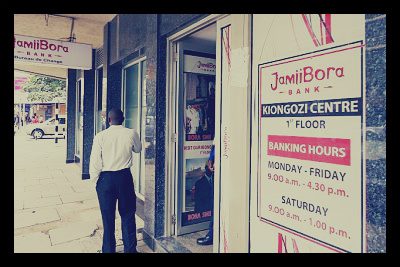
Mobile Banking With M-Pesa

Mobile Banking With M-Pesa
Here in the U.S., cell phone apps such as ‘Venmo’ that allow simple and quick money transfers have revolutionized the way we exchange money. However, with mobile banking as well as Venmo-like apps, they require all users to actually have a bank account. While speed and efficiency are a huge pro about these apps, they, as they are, wouldn’t necessarily be as successful a venture in the developing world.

M-Pesa (meaning mobile ‘money’ in Swahili) has grown to be the most successful mobile financial service in the developing world. Started in 2007, the company’s main goal wasn’t necessarily convenience but had the more objective of creating an app that people without bank accounts can use. Bank accounts usually must maintain a minimum balance or have other requirements many people living in developing areas just cannot meet.

M-Pesa users only need two out of three things: a mobile phone and an ID card or passport. With these in hand, they can do numerous things just from their phone: deposit and withdraw money, transfer between different accounts (even to those without an M-Pesa account), manage their transactions, pay their bills, and even purchase mobile minutes. With about 1 in 5 sub-Saharan Africans actually having a bank account, M-Pesa opens up an entire world for people to exchange money freely without being tied down to a bank.

The company manages an individual’s account through their phone number. As part of Safaricom’s and vodacom’s networks (service operators in Kenya and Tanzania: think Verizon or AT&T), only those who receive their service through these companies can take advantage of the system. Once money is transferred, users can cash out at various retail outlets or stores that normally sell cellphone minutes.

M-Pesa was initially created to help the transfer of funds for people receiving microfinanced loans because it helped keep rates down, as it cut out the direct contact with money. Now, it operates in 5 countries including Afghanistan, South Africa, Kenya, Tanzania, and India. It reaches 15 million users in Kenya alone. 

– Deena Dulgerian

Sources: Co.Exist, Wikipedia
Photo: Hapa Kenya

April 13, 2013
https://borgenproject.org/wp-content/uploads/borgen-project-logo.svg 0 0 Borgen Project https://borgenproject.org/wp-content/uploads/borgen-project-logo.svg Borgen Project2013-04-13 08:03:572024-05-24 23:47:49Mobile Banking With M-Pesa
Technology

Nafundi and Open Data Kit: Organizing the World

Open-Data-Kit-Nafundi

As Bill Gates discussed in his 2013 letter, data collection and maintenance is an important aspect in running nonprofit organizations in developing countries. This is especially important when it comes to using that data to help make better decisions and analyze trends and successes. Gates encourages a focus on training staff members, clinicians, and volunteers on how to meticulously keep such records.

Open Data Kits, or ODK, was started as a google.org project in 2008. ODK is an enormous mobile, web, and cloud based resource that simplifies and organizes data collection through various tools and applications. With interns and researchers from the University of Washington’s Department of Computer Science and Engineering, the project grew into a full scale organization with multiple members, companies, developers, and users.

Two of the interns, Yaw Anokwa and Carl Hartung, started their own company, Nafundi, that extends these services to individual clinics, companies, or other nonprofits that work in developing countries. Not only does Nafundi provide these services and the mobile devices to use them, they spend a significant time training users so that they can handle any issues and gain a deep understanding of what is going on with all their data.

For example, a health clinic in rural Kenya needs to record the number of patients, their illnesses, drugs prescribed, and follow-ups. After collecting all this information, there needs to be a safe way to store this information; safe from natural distress, purposeful destruction, or faulty handling from staff. Users can create forms and surveys, including images, audio recordings, videos, and most importantly mapping locations. This data is then aggregated and can be illustrated as graphs and maps, showing specific locations where there is a decline or increase in a disease.

While the initial cost of the technology to use ODK may be expensive, looking into the future cost-benefit analysis, detailed visuals of successes or failures of a clinic’s or organization’s efforts will better help them decide how to move forward. These final products could also greatly affect the willingness and understanding of donors to see how their money is being put to use.

– Deena Dulgerian

Source: opendatakit.org
Source: nafundi.com

April 8, 2013
https://borgenproject.org/wp-content/uploads/borgen-project-logo.svg 0 0 Borgen Project https://borgenproject.org/wp-content/uploads/borgen-project-logo.svg Borgen Project2013-04-08 09:51:092020-05-04 08:19:47Nafundi and Open Data Kit: Organizing the World
Technology

REwiRE Brings Electricity to 67 Million

REwiRE Brings Electricity to 67 Million
Rural Electrification with Renewable Energy (REwiRE) has taken the multi-level task of financing, developing and managing renewable and sustainable energy power grids in emerging markets. In this type of setting, once a company is on the ground in a foreign country, many unforeseen challenges present themselves.

REwiRE has chosen Indonesia, where 67 million people are without electricity, as the best country for the business. Indonesia presents almost the perfect situation for a startup such as REwiRE. The archipelago landscape has made fuel shipments to the country’s 18,000 islands very costly leaving some communities without power completely. However, this provides the perfect context for smaller scale power grids which can provide the communities of Indonesia with much needed and affordable electricity.

Faced with a new culture, diverse landscape, and unfamiliar legal system, REwiRE has teamed up with Ibeka, an NGO which has been helping REwiRE get accustomed to local culture and other challenges.

Providing electricity to impoverished communities is one of the most important building blocks to creating an infrastructure that can pull a developing country into the developed world. By contributing this tantamount element to Indonesia’s diverse landscape REwiRE sets the stage for more future development.

-Pete Grapentien
Source: Social Capital Markets
Photo: 

April 4, 2013
https://borgenproject.org/wp-content/uploads/borgen-project-logo.svg 0 0 Borgen Project https://borgenproject.org/wp-content/uploads/borgen-project-logo.svg Borgen Project2013-04-04 10:00:042024-05-24 23:46:34REwiRE Brings Electricity to 67 Million
Page 86 of 88«‹8485868788›»

Get Smarter

  • Global Poverty 101
  • Global Poverty… The Good News
  • Global Poverty & U.S. Jobs
  • Global Poverty and National Security
  • Innovative Solutions to Poverty
  • Global Poverty & Aid FAQ’s
Search Search

Take Action

  • Call Congress
  • Email Congress
  • Donate
  • 30 Ways to Help
  • Volunteer Ops
  • Internships
  • Courses & Certificates
  • The Podcast
Borgen Project

“The Borgen Project is an incredible nonprofit organization that is addressing poverty and hunger and working towards ending them.”

-The Huffington Post

Inside The Borgen Project

  • Contact
  • About
  • Financials
  • President
  • Board of Directors
  • Board of Advisors

International Links

  • UK Email Parliament
  • UK Donate
  • Canada Email Parliament

Get Smarter

  • Global Poverty 101
  • Global Poverty… The Good News
  • Global Poverty & U.S. Jobs
  • Global Poverty and National Security
  • Innovative Solutions to Poverty
  • Global Poverty & Aid FAQ’s

Ways to Help

  • Call Congress
  • Email Congress
  • Donate
  • 30 Ways to Help
  • Volunteer Ops
  • Internships
  • Courses & Certificates
  • The Podcast
Scroll to top Scroll to top Scroll to top