Although breaking the cycle of poverty is difficult, poverty rates around the world have been improving. According to a report issued by the World Bank, 35 percent of the world’s population lived in extreme poverty 1990. In 2013, that number was down to 10.7 percent, which means the U.N.’s first Millenium Development Goal, to cut poverty in half by 2015, has been accomplished.
However, while many have moved out of extreme poverty, statistics show that the end of poverty is far from over. As a potential way to help speed up the process even more, many companies are helping with poverty alleviation through technology programs.
Companies Tackling Poverty Alleviation Through Technology
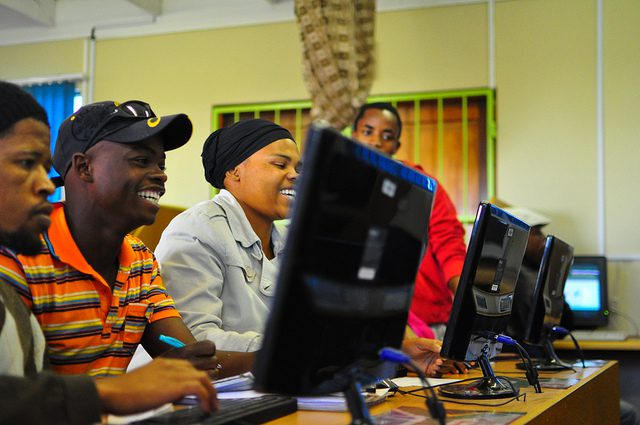
- Microsoft 365: Microsoft teamed up with the United Nations Development Programme on Jan. 23, 2004, to help with poverty alleviation through technology in Africa. It strongly believes that technology is a crucial aspect that can bridge the gap between schools in urban and rural areas, eventually eliminating world hunger and poverty. Co-founder of Microsoft Bill Gates hopes to end poverty by 2030 by launching his software in more developing countries around the world.Microsoft set up a three-pillar model in order to make sure the technology was applied correctly in schools. The first pillar provided the appropriate service for the individual based on their technological ability or age group. The second pillar equipped more than 200,000 teachers with the software in order to make sure the teachers were trained and familiar with the technology before it was introduced to students. The third pillar encouraged participation and creativity. The students were introduced to programs such as Skype or OneNote.
- GeoPoll: GeoPoll is a company that is taking advantage of mobile phones becoming more common in developing countries. Since 2012, it has partnered with more than 85 mobile network operations and has had connectivity in 64 countries of the world. Its purpose is to send a survey text through those living in the developing countries. Once citizens fill out the survey, the results are sent to the government and NGOs, allowing them to help with poverty alleviation.An example of when a GeoPoll survey was used was during the outbreak of Ebola in 2014. GeoPoll conducted food security surveys in countries that were affected and helped gather data on food prices and wages. From these results, it was able to decipher which areas needed more aid and which areas should continue to be monitored.
- Humanitarian Accelerators: Humanitarian Accelerators was launched in 2016 by the Ruler of Dubai, Sheikh Hamdan Bin Mohammed Bin Rashid Al Maktoum. It is meant to help with cultural, social and environmental issues in the region by connecting businesses all around the globe to United Arab Emirate’s humanitarian sector. Humanitarian Accelerators has set up its technology in over 116 different countries with the hopes of improving the lives of those in developing countries.In the past, the company has worked to provide educational technology to refugee students in order to ensure they receive the same level of education as other children. One of the company’s current initiatives is to employ technology in order to provide job opportunities to refugees.
- Poverty Spotlight: Poverty Spotlight is a program that is currently working in 18 countries and is most advanced in South Africa. It is meant to help with poverty alleviation through a mobile app that enables those in poverty to self-diagnose their own level of poverty. Its mission is to help individuals and families in poverty discover innovative solutions to lift themselves out of their situations.Individuals complete a survey about what they are in need of, then their neighbors fill out the same assessment and together they work on achieving them. The app allows individuals to become aware of their situation and build motivation and support from others to overcome it. The staff behind Poverty Spotlight also creates a personalized plan for every family.
Technology allows for many things today that were impossible in the past. The more technology advances, the more opportunities it gives us to learn, educate and help poverty alleviation through technology around the world.
– Negin Nia


 Over the last few years, innovators and inventors have been springing up across the African continent to deliver buzzworthy technological advancements to the world. Though Africa is not conventionally thought of as a global tech powerhouse, the continent is certainly on the rise and gaining recognition for developing original and important technologies. There are a lot of brilliant minds coming out of African countries, and they are using their intellect, resolve and resourcefulness to introduce groundbreaking inventions to the world. These three contemporary African
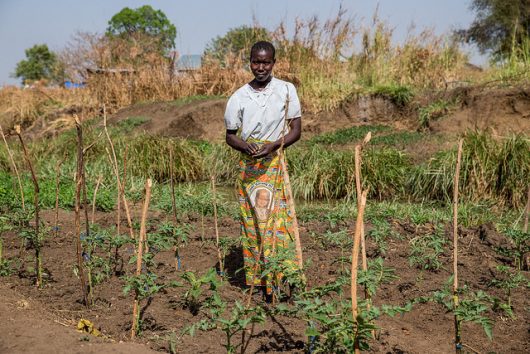 Farmers constitute around 75 percent of the world’s poor. This fact is singularly important considering the perspective that global poverty is solvable by providing easily accessible, effective and economical farming solutions to people around the world.