• Link to X
  • Link to Facebook
  • Link to Instagram
  • Link to TikTok
  • Link to Youtube
  • About
    • About Us
      • President
      • Board of Directors
      • Board of Advisors
      • Financials
      • Our Methodology
      • Success Tracker
      • Contact
  • Act Now
    • 30 Ways to Help
      • Email Congress
      • Call Congress
      • Volunteer
      • Courses & Certificates
      • Be a Donor
    • Internships
      • In-Office Internships
      • Remote Internships
    • Legislation
      • Politics 101
  • The Blog
  • The Podcast
  • Magazine
  • Donate
  • Click to open the search input field Click to open the search input field Search
  • Menu Menu

Archive for category: Technology

Information and stories about technology news.

Global Poverty, Technology

Three Simple Tools to Solve Farmer Poverty

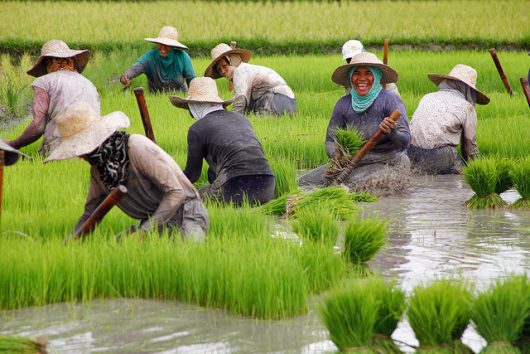
tools to solve farmer povertyFarmers constitute around 75 percent of the world’s poor. This fact is singularly important considering the perspective that global poverty is solvable by providing easily accessible, effective and economical farming solutions to people around the world.

Experts believe there are three simple tools to solve farmer poverty. These are:

  1. Hybrid seeds
  2. Skill training
  3. Microloans

How to Best Address the World’s Current Needs

The world is struggling to meet the demands of consistently rising rates of population and consumption There are only two alternatives to meet this increasing demand and multiply production: either dedicate more forest land to farming or increase the efficiency and productivity of the existing farmland.

Increasing land use is an inefficient short-term solution that is also detrimental to the environment, whereas the latter option can be achieved as an enduring solution. The most simple and proven way to produce a greater volume of crops from existing farmlands is through the use of hybrid seeds.

Using Hybrid Seeds as Tools to Solve Farmer Poverty

Hybrid seeds are one of the three simple tools to solve farmer poverty. Using a hybrid can yield a product that has the benefits of both its parents; for example, improved resistance toward disease from one and climate tolerance and high yield from the other. Several agricultural experiments in Africa, South America and South Asia have successfully proven the effectiveness of hybrid seeds in multiplying the crop production.

In rural Kenya, a farmer support initiative called One Acre Fund reported an average gain of 65 percent in farmer income using hybrid maize seeds along with microdoses of fertilizers in 2017 alone. Several farmers reported that they doubled or tripled their produce.

Skill Training as the Second Solution to Farmer Poverty

One of the other two tools to solve farmer poverty is skill training. Providing skill training to farmers can help them navigate their lives out of poverty’s vicious circle. Skill training can range from simple things like seed spacing or the right amount of irrigation to more advanced cultivation techniques; for example, sustainable agricultural practices and innovative cross-pollination methods.

In March, the Indian government’s Ministries of Agriculture and Skill Development signed an agreement to impart training and skill development to farmers at 690 Krishi Vigyan Kendras (farming science centers) all over the country. The scheme aims to double the farmer income.

Solving Farmer Poverty Through Microloans

The third one among the three simple tools to solve farmer poverty is microloans. As the name suggests, a microloan is a small amount of money borrowed from a bank or a local financial institution. Microloans are an essential key to solve poverty due to a small principal amount ($2 – $500), small monthly installments (only a few cents), flexible tenure (12 to 60 months) and a low-interest rate (12 – 20 percent).

Startups like Branch and LendUp are helping farmers in developing countries to borrow money using their mobile phones. Branch charges 15 percent interest on a loan as low as $2 at the end of a month. It never charges an overdraft fee and employs 100 employees in San Francisco, Lagos and Nairobi.

Though they appear to be small changes, these three simple tools to solve farmer poverty can change the world sooner than it might seem.

– Himja Sethi

Photo: Flickr

May 4, 2018
https://borgenproject.org/wp-content/uploads/borgen-project-logo.svg 0 0 Borgen Project https://borgenproject.org/wp-content/uploads/borgen-project-logo.svg Borgen Project2018-05-04 01:30:452024-05-29 22:42:16Three Simple Tools to Solve Farmer Poverty
Global Poverty, Technology

The State of Technology Out of India

Technology out of India

India’s reputation for outsourcing has grown over the last 30 years. However, India’s market has dropped due to the recent change in the U.S. political climate and the development of artificial intelligence and automation systems. While things look uncertain now, there is still a strong case for the technology out of India.

Opportunity for Growth

India has been called the “new China” for many companies looking to expand consumer bases. Corporations like Google, Facebook and Twitter have largely been banned from China’s market, which is why India provides an important opportunity. The technology out of India would have been unheard of ten years ago, but now with the ballooning smartphone users (hitting 168 million Indian users in 2015) and internet users (around 277 million Indian users as of 2017), an environment for phone applications, mobile payments, social media sites and more are growing.

The big corporations have moved in despite challenges. One such hurdle was the Indian government requesting more than any other country that Facebook remove information (10,792 times in 2014). This change in technological circumstances has opened channels for local Indian companies to develop as well. A 2016 National Association of Software and Services Companies reported India ranked 3rd largest for startups. While there is still some gender inequality with less than 10 percent of Indian entrepreneurs and engineers being women, there is an awareness of the inequality, thus creating an opportunity for change.

Replacing IT Jobs

The IT sector brings in almost 10 percent of India’s gross domestic product (GDP) and all trajectories showed growth, but recent layoffs in the industry have caused some question of India’s ability to create a job market and grow. The wave of recent layoffs, estimated to be around 56,000 over the last year, is assumed to be due to automation in a lot of the industry along with U.S. President Trump’s campaign of focussing jobs in the U.S. and cutting back H-1B visas.

Around 60 to 70 percent of jobs in the IT and call center industry are expected to be replaced by automation systems. The layoffs are expected to hit a high of 480,000 by 2021. This makes it difficult as 12 million Indians enter the workforce every year, but only about 135,000 jobs were created by India’s eight biggest sectors, including IT, in 2015. Pankaj Bansal, a chief executive with People Strong, believes the IT sector will hit a net of zero hires in the future unless something changes.

Returning Home

Even with layoffs, many Indian engineers and entrepreneurs are leaving the U.S. to return home and pursue careers in India. Experts estimate the migration home to be in the tens of thousands. Indians are returning home to pursue opportunities closer to family and where their salaries will go farther than in the U.S. The migration back to India shows the job market is still open and available for more technology out of India. Although India’s average GDP has slowed recently, it has still grown tremendously in the past compared to other countries, like the U.S. India’s GDP grew 7.3 percent from 2010 to 2014 while the U.S. GDP only saw a 2.2 percent increase. 

Electronic Payment

A particular segment of the IT sector worth noting is electronic payments. The use of electronic payment is growing in Asia as a whole and many are trying to bring India to a place of acceptance for mobile payment applications. Paytm (an Indian mobile payment technology out of India) in particular plans to invest $1.9 billion over the next two years to make this the electronic payment method the future of India. Only about one-third of citizens have access to the internet, and of those who do, only about 14 percent are making an average of one electronic payment a week. Plus, there is a trust issue from reports of hackers stealing money from Paytm accounts.

Two years ago India was all over the news for being the next China, but many have decreased their expectations and predictions after recently reduced job opportunities. While India is currently facing challenges, if it can find growth prospects, particularly locally, there should be no reason to be unable to turn layoffs into job possibilities.

– Natasha Komen

Photo: Flickr

April 16, 2018
https://borgenproject.org/wp-content/uploads/borgen-project-logo.svg 0 0 Borgen Project https://borgenproject.org/wp-content/uploads/borgen-project-logo.svg Borgen Project2018-04-16 07:30:572024-12-13 17:58:41The State of Technology Out of India
Education, Global Poverty, Technology

Poverty and Peril: How the Media Misrepresents Haiti

media misrepresents Haiti
In recent years, the typical media portrayal of Haiti has consistently conjured up a static image of a beleaguered nation where visible indicators of natural disaster, political instability and extreme poverty abound. Though this representation is not entirely false, it is incomplete. Haiti is well-deserving of a more fitting image that conveys its dynamism and development.

Withstanding trial and tribulation, Haiti is among the most resilient nations in the world. Like any other developing country today, Haiti is continuing to make progress despite setbacks along its way. The media misrepresents Haiti to be a place that is completely devoid of progress, forever stifled by unfortunate issues of circumstance. To the contrary, Haiti enjoys a stunningly beautiful landscape and is inhabited by hardworking, happy people with the resolve to pursue better lives for themselves and a better legacy for their country.

Education Reforms

Ensuring that children have access to quality education is an important investment in the development of any nation. Elizabeth King, former Director of Education for the World Bank, said it best: “The human mind makes possible all development achievements from health advances and agricultural innovations to efficient public administration and private sector growth. For countries to reap these benefits fully, they need to unleash the potential of the human mind. And there is no better tool for doing so than education.”

To this end, Haiti has made quality education a top policy priority over the last decade. The Global Partnership for Education granted $24.1 million in funding to improve primary education access, school performance and enrollment in Haiti.

In the last four years, Haiti has enrolled more than 73,000 students in primary education, built six additional classrooms, developed and employed more than 3,500 qualified teachers at the primary level and implemented a learning assessment system for primary education. Furthermore, the grant has helped increase student attendance to 83.5 percent in disadvantaged areas and made nutrition and health programs accessible to more than 100,000 children.

Agriculture

Suggesting that there is a dearth of economic stimulus is a particularly damaging way that the media misrepresents Haiti. It is true that many Haitians live on less than $2 a day, but economic opportunity continues to develop in the country to counteract extreme poverty.

With a climate that supports the cultivation of important cash crops like cacao and mango, as well as several staple crops, Haiti has a promising agricultural sector. USAID has worked with the country to develop sustainable agricultural techniques that increase production, improve food security and strengthen agricultural markets, ultimately increasing agricultural incomes and helping to develop and support small and medium enterprises to spur investment opportunity in the country.

Tech

Much of the media misrepresents Haiti by failing to cover recent tech advancements at work within the country. Surtab, Haiti’s answer to Apple and Samsung, has become a shining example of successful tech innovation in the country. Surtab develops and delivers a range of electronic mobile devices throughout the Caribbean and the African continent. The company employs a highly-skilled workforce, many of whom are women, and is helping to drive private sector development.

In June, Haiti will host its second annual Haiti Tech Summit, which will be attended by local and international industry leaders, digital marketers and innovators. Keynote speakers include lead developers from Facebook and Google as well as several notable figures from around the world. Aggregating some of the best tech thinkers and creators in the industry, the Haiti Tech Summit aims to accelerate local entrepreneurship and to bring global attention to Haiti’s emerging markets.

Tourism

The media misrepresents Haiti by suggesting that the country is too poor and too battered by earthquakes and hurricanes to be beautiful. The Dominican Republic and Haiti are co-located on the island of Hispaniola. They both boast beautiful beaches with glittering turquoise waters, rolling mountains and temperate, tropical weather, but only the Dominican Republic is celebrated as a place that’s worth visiting.

Despite unfair media portrayals, Haiti has been gaining traction over the last five years as a tourist destination. Haiti offers potential travelers breathtaking landscapes, complicated history and rich culture. Resort towns like Jacmel and Cap Haitien boast scenic coastal views, opulent dining and luxe accommodations that rival those of top beach communities around the world.

According to MSN, expatriate designer Victor Glemaud recently returned to Haiti after having left more than a decade ago. The country he came back to shattered his expectations: “What I was expecting from the media, and all the perceptions around the world about Haiti, were nonexistent. I saw the same vibrancy, the same resilience I remember from growing up. . . I was expecting devastation, and I didn’t see that.” Contrary to popular portrayals of the Caribbean nation, Haiti is a beautiful, thriving country.

– Chantel Baul

Photo: Flickr

April 15, 2018
https://borgenproject.org/wp-content/uploads/borgen-project-logo.svg 0 0 Borgen Project https://borgenproject.org/wp-content/uploads/borgen-project-logo.svg Borgen Project2018-04-15 01:30:222024-05-29 22:42:02Poverty and Peril: How the Media Misrepresents Haiti
Global Poverty, Technology

Practical Methods: How Floating Gardens Can Tackle Poverty


One of the most innovative technologies used to combat poverty, particularly in places where climatic conditions and rising sea levels impair local agriculture, are floating gardens. Areas such as Bangladesh, which are now below sea level in many places, do not have the land to grow crops; thus, floating gardens allow farmers to grow crops in the absence of arable land. Here is how floating gardens can tackle poverty.

Floating Gardens

Floating gardens were first used by the Aztecs in Tenochtitlan, and consisted of a raft woven from water hyacinth on top of which soil and manure were placed. From this structural orientation, farmers have been able to grow crops without the need for adequate farming land.

Today, farmers in many countries, such as Bangladesh, suffer from poor growing conditions due to flooding from monsoons and rising sea levels. It was reported in the New York Times that “the country’s climate scientists and politicians have come to agree that by 2050, rising sea levels will inundate some 17 percent of the land and displace about 18 million people.”

When water saturates soil and air — which plants need for nutrient uptake — growing and cell division are restricted; this process is referred to as waterlogging and is a major concern for farmers in Bangladesh.

Mitigating Obstacles

Farmer productivity is also weakened by lengthy dry periods. According to Practical Action, an organization that fights to mitigate these obstacles for farmers, “Growing conditions are already challenging as the clay soil becomes hard during the dry season (November to March) while prolonged rain during the monsoon (June to October) causes flooding.”

Floating gardens are a way for farmers to adapt to climate conditions and gain control over the production of crops for selling for both their productivity and for their own families. In this way, floating gardens can tackle poverty because they are economically beneficial to farmers who would otherwise have great difficulty doing their jobs.

Practical Action

Practical Action works on aqua-geoponics — special contraptions that combine floating gardens and fish farming — to help secure income for poor families in Bangladesh.

These contraptions increase efficiency and raise income levels for farmers. In addition to raising household incomes, floating gardens also save households money by reducing amounts spent on vegetables as households can now grow their own. According to the Horticulture Innovation Lab at UC-Davis, one floating garden provides a family with pesticide-free vegetables for a year.

Food Security

Another benefit of floating gardens is food security. According to the Independent, thanks to the efforts of the Practical Action residents of rural villages in Bangladesh now get at least 1,800 calories per day. In this way, floating gardens have reduced hunger and by growing their own crops, households now have pesticide-free vegetables.

A flyer published by Penn State asserted that potential effects of long-term exposure to pesticides include birth defects, tumors and blood or nerve disorders; in mitigating these effects, there are also health benefits to growing a floating garden.

Floating Gardens Tackle Poverty

There are numerous ways in which floating gardens can tackle poverty, including increased income and efficiency for farmers, and improved health for consumers of the crops. According to the World Bank, agriculture has been a key step in fighting poverty in Bangladesh. Poverty dropped from 48.9 percent to 31.5 percent between 2000 and 2010.

Additionally, over 87 percent of rural people receive some income from agricultural activities. In this way, finding a dependable method of crop production will be key in fighting poverty in countries such as Bangladesh.

– Olivia Booth

Photo: Flickr

April 14, 2018
https://borgenproject.org/wp-content/uploads/borgen-project-logo.svg 0 0 Borgen Project https://borgenproject.org/wp-content/uploads/borgen-project-logo.svg Borgen Project2018-04-14 01:30:542024-05-29 22:42:00Practical Methods: How Floating Gardens Can Tackle Poverty
Developing Countries, Global Poverty, Technology

The Emergence of Mobile Apps in Developing Countries

mobile apps in developing countries
In the last 10 years alone, the number of mobile phone users has grown to four billion, with 37 percent of that growth occurring in developing economies. With internet availability expected to reach even the least developed nations in the next couple of years, a rapidly growing market for mobile apps in developing countries will likely expand even more.

Why is This the Trend?

In areas of Asia and Africa, one can buy a smartphone for the equivalent of $30. Simply put, mobile technology is the most convenient and cheapest technology option available for developing countries.

This convenience is one reason why the biggest market growth is seen in three main regions:

  1. Latin America, where smartphone adoption has seen double-digit growth and mobile banking gives financial access to those who might not ordinarily have it.
  2. South Asia, where in places like Vietnam, the number of Internet users has grown from four million to 45 million in just the last 10 years.
  3. The Middle East and North Africa, where, in Egypt alone, downloads of tool and messaging apps rose 60 percent in a year.

What Are the Uses for Mobile Apps in Developing Countries?

Whether it is to increase food production, access health information, launch a startup or improve education, a new reliance on mobile apps in developing countries transforms the way nations grow. While access to education is not a given in developing countries, the concept and means of education are shifting.

Four of the five top countries for educational app downloads are India, South Africa, Kenya and Nigeria. A large reason for this is that 50 percent of South Asians and 33 percent of Africans who finish school still cannot read, and 60 percent of six- to 14-year-olds in India cannot read at a second-grade level.

Mobile Apps are Facilitating Needed Change

For farmers who seek to increase food production, change is especially welcome. For practical purposes, apps like iCow allow livestock farmers in Kenya to track gestational periods for their animals, find veterinarians and monitor best practices. An app called Esoko disseminates information to farmers about market prices, weather forecasts and advisory services. Yet another popular app, WeFarm, offers a peer-to-peer platform for farmers to share information among themselves, with or without Internet access.

Beyond the fields and the classroom, popular mobile apps in developing countries range from banking apps like M-PESA, which allows for the transfer of funds over text message, to Voto Mobile, voice-based services in local languages. These programs have been rolled out in countries like Ghana, Nigeria, Uganda and India.

In India, as with much of the developing world, access to good healthcare is also a concern. With over 60 million people in the country with type two diabetes and 36 million living with Hepatitis B, its people look to take advantage of the over 100,000 healthcare apps that already exist.

Never has technology been so accessible, yet never has the need for technology been so dire. With the myriad issues that arise because of extreme poverty, mobile technology gives rise to a new hope for developing nations.

– Daniel Staesser

Photo: Flickr

April 13, 2018
https://borgenproject.org/wp-content/uploads/borgen-project-logo.svg 0 0 Borgen Project https://borgenproject.org/wp-content/uploads/borgen-project-logo.svg Borgen Project2018-04-13 07:30:162024-05-29 22:42:01The Emergence of Mobile Apps in Developing Countries
Food & Hunger, Global Poverty, Technology

Fighting Poverty by Improving Cooking in Africa

Fight Poverty By Improving Cooking in Africa
One of the goals in the 2015 Millennium Development Goals was to eradicate hunger and poverty. New technologies and programs are currently being developed to achieve this global challenge. One important focus of such innovations is to fight poverty by improving cooking.

A shortage of fuel and the use of biomass and kerosene for cooking both cause many health issues in Africa, such as physical ailments from collecting firewood, burns and respiratory problems due to the inhalation of deadly smoke fumes. In order to feed their families, African women in poor communities face life-threatening attacks and rape.

Furthermore, in some places where local firewood sources have been completely used up, women have to resort to digging up tree roots or travel increasingly further away from their homes in order to find firewood. The practice of cooking with wood fuel contributes to poverty in Africa by taking up time and resources families could be using to buy food and generate income. Fortunately, new technologies in Africa are making the process of cooking cleaner and more efficient.

One example is the fuel-efficient woodstove created by the global innovating charity, Practical Action. The woodstoves are easy to use, affordable and require less wood fuel. Their high sides allow for improved heat transfer. Best of all, they can be made with clay and bricks that are readily available in local communities. Practical Action has also trained more than 150 women to use its new stoves as well as to practice fuel saving methods, like using dry wood, pre-soaking beans prior to cooking, using a weighted lid and regulating the air supply to the fire.

Another initiative that is helping to fight poverty by improving cooking is the SCORE (Stove for Cooking, Refrigeration and Electricity) project. Also supported by Practical Action, the stove was funded by the Engineering and Physical Sciences Research Council and created under the collaboration of the University of Nottingham, City University, the University of Manchester and Queen Mary and the University of London.

SCORE is a smokeless cooking stove with a generator powered by burning different kinds of biomass like wood and animal dung. It converts the generated heat to acoustical energy and then to electricity, allowing for even the waste heat to be utilized when cooking. The SCORE project aims to halve the household fuel consumption and to use local, low-cost materials as much as possible.

Other innovative efforts to fight poverty by improving cooking include introducing new construction materials, improving designs for basic cooking stoves and intermediate rocket stoves as well as enabling for more customization in design. Such efforts are led by multistakeholder initiatives such as EnDev and ProBEC, national cookstove programs as well as NGOs like GERES in Africa and Southeast Asia and HELPS in Central America.

However, reducing the combustion of solid cooking fuels, in general, is important to the health of the poor. Burning fuels like charcoal, wood and coal produce significant emissions of hazardous air pollutants (HAP) that have potential carcinogenic and other harmful effects. According to a recent World Health Organization study, HAP emissions contributed to 4.3 million premature deaths in 2012 and more than 110 million years lost due to ill-health disability or early death in 2010.

Forced draft and natural draft gasifier stoves are a promising technological solution. Their side-loaded design significantly decreases emissions without requiring the user to prepare or refill the fuel. While advanced biomass stoves are still at a very early stage for commercialization and field testing, they have the greatest potential to improve cooking health conditions.

BioLite’s patented Direct Conduction Thermoelectric System, the HomeStove, is a great example of this. Not only does it autonomously power an internal fan, but it also generates extra electricity to charge LED lights and mobile phones.

As for the renewable fuel sector, cookstoves are still in embryonic stages. They also typically remain expensive. One promising biogas digester model is that of SimGas Tanzania. It is small and custom designed for East African farmers to use by feeding in manure as its power source.

These improved cookstoves, from the cheaper ones produced by artisan collectives like GEREs and EnDev to the high-tech ones manufactured on the global mass scale, face several common challenges. The growing cost of materials and labor make it difficult for such producers to make cookstoves that the poor would be able to afford as well as to transport cookstoves where the poor would have access to them. This makes quality control and, in turn, safety additional issues. Lastly, they also lack access to capital markets.

While many improvements have been made to fight poverty by improving cooking in Africa, much still needs to be done in making improved cookstoves available to the poor.

– Connie Loo

Photo: Flickr

April 3, 2018
https://borgenproject.org/wp-content/uploads/borgen-project-logo.svg 0 0 Borgen Project https://borgenproject.org/wp-content/uploads/borgen-project-logo.svg Borgen Project2018-04-03 01:30:202024-05-29 22:40:07Fighting Poverty by Improving Cooking in Africa
Development, Technology

New Developments: Afghanistan’s Technology Is Growing

Afghanistan's Technology Is Growing and Developing
Thoughts of Afghanistan generally focus on the Taliban, harsh restrictions and a war-torn country; but in actuality, the nation has dramatically changed in the last 15 years with a huge contributor of such change being the introduction of technology in the country.

From 2001, when even phone usage was limited, to 2016 when 73 percent of the government receives its pay electronically, Afghanistan’s technology is growing in a unique way that is creating more jobs, a higher standard of living and improved relations between Afghanistan and other nations.

Technological Life under the Taliban

The Taliban is an Islamic fundamentalist group that ruled Afghanistan from 1996 to 2001. The militant organization was outed by U.S. military for providing support and shelter for Al Queda after the 2001 terrorists attacks. Life under the Taliban has been highlighted for its injustices towards women, but it expands to a set of strict restrictions for all citizens that reaches so far as to ban the internet.

The Taliban took Shaira, an Arabic word for path (or the way to live life), and fed its interpretations through this mantra. Anything that was deemed “un-Islamic” was banned, which meant no music, movies or internet for anyone since these could act as means of spreading Western “propaganda.”

Major Technological Advances in Afghanistan

Afghanistan’s technology is growing largely through its payment sector. Innovation in banking through the introduction of mobile pay has improved the systems and lives of those using it. In 2009, mobile pay was suggested for use on a trial basis; and as of 2016, 97 percent of the police force were registered in the system.

It seems strange that it’s in Afghanistan — where only 5 percent of citizens use a bank account and over 70 percent are unable or read or write — that this technological advancement would find its footing.

Mobile banking — transferring funds to a mobile account, paying with that account, and then being able to lend, pay off loans — has cut costs in the police department by 10 percent which is a measure largely associated with avoiding corruption. Since payments can be traced and tracked more accurately, it makes it more difficult for a someone (i.e. a corrupt officer) to take a cut.

Afghanistan and E-Governance

Along with using technology to create mobile pay, Afghanistan’s technology is growing through E-governance. E-governance is implemented by creating a centralised system of ‘Presidential docs.’ This allows the cut down on paperwork and has reduced processing time from weeks, to a maximum of 48 hours.

This system also allows government officials to connect with each other through video conference calls which helps in decreasing the amount of time and money spent in travel. Again, such efforts serve as an example of how corruption has decreased, transparency has increased and money evades hands that would take it illegally.

Technology Connects Afghani Citizens to the World

Afghanistan’s technology is growing and connecting the country with its neighbors and Western countries like the U.S. The innovative boom also provides more opportunities for often overlooked demographics, such as women. For instance, with the online hemisphere hitting homes, technology has come to provide women, like Roya Mahboob, opportunities to educate themselves and even open new businesses.

Even with the Taliban gone, the predominantly conservative society still possesses obstacles for growing technology, but Mahboob is an example of how the technology available is working to create jobs, educate citizens and connect the world.

Mahboob now lives in New York with businesses in Afghanistan and hopeful expansions into Mexico. She is an amazing example of the positive impacts of technology, and Afghanistan’s government is ever-increasingly recognizing the benefits of technology and is working to more extensively incorporate it into Afghani society.

– Natasha Komen

Photo: Flickr

March 12, 2018
https://borgenproject.org/wp-content/uploads/borgen-project-logo.svg 0 0 Borgen Project https://borgenproject.org/wp-content/uploads/borgen-project-logo.svg Borgen Project2018-03-12 01:30:492019-11-29 14:40:11New Developments: Afghanistan’s Technology Is Growing
Global Poverty, Technology

Waste-to-Energy in Ethiopia is Bettering the Planet

Waste-to-Energy in Ethiopia Increasing Electricity and Decreasing WasteIn Ethiopia’s capital, Addis Ababa, a landfill the size of 36 soccer fields is being turned into renewable energy, meeting the needs of 30 percent of the city’s electricity. The landfill, previously the only waste disposal site in Addis Ababa, made the news in 2017 due to an onsite landslide that killed 114 people. The new energy plant, known as Reppie Waste-to-Energy in Ethiopia, plans to turn 80 percent of the city’s waste into energy each day.

Waste is turned into energy through incineration, a process already popular in many European countries. About 25 percent of European waste is turned into energy and there are over 100 waste-to-energy plants in both France and Germany. Strict European Union emissions standards ensure that no harmful emissions from the incineration process enter the atmosphere, standards that the Reppie project will be held to as well.

Electricity is produced directly from the burning of waste. As garbage is burned in a combustion chamber, heat is produced. The heat boils water, creating steam, which in turn produces energy in a turbine. The emissions that occur in this process are cleaned before they enter the atmosphere, making this a renewable and sustainable source of clean energy.

The Reppie facility came into development out of a partnership between the government of Ethiopia and several international partners, including Chinese and Danish companies. This partnership came together to tailor the needs of the new energy plant to sub-Saharan Africa, as opposed to the waste-to-energy plants already operating in Europe.

The Ethiopian project further protects the environment and its citizens from harmful toxins that are released into groundwater supplies and the atmosphere at landfill sites. Methane is a harmful greenhouse gas that adds to the negative effects of climate change and is typically produced at landfill sites; this project will reduce methane emissions, as well as save space and generate electricity.

In addition to providing energy to three million people, the Reppie project plans to make an additional three million bricks from the waste and recover 30 million liters of water from the landfill. These materials will be additionally used to benefit the population of Addis Ababa. Furthermore, the plant will create hundreds of jobs for people who previously relied on scavenging at the waste site, a dangerous occupation.

In Ethiopia, only 27 percent of the population has access to electricity. While that number includes rural areas, in only urban areas such as Addis Ababa, the number rises to almost 92 percent. However, the Reppie plant is connected to the national grid and the introduction of waste-to-energy in Ethiopia will spread from urban areas and be able to serve rural areas as well, increasing access to electricity to all Ethiopians.

The Reppie Waste-to-Energy in Ethiopia will aid in reducing poverty conditions through increasing access to electricity, creating jobs and improving the environment to the benefit of human health. The plant will additionally be a model for similar plants across the continent of Africa. Already, seven other plants are being planned. These plants together will leave a lasting positive impact on both the environment and the energy needs of people across the continent.

– Hayley Herzog

Photo: Flickr

March 7, 2018
https://borgenproject.org/wp-content/uploads/borgen-project-logo.svg 0 0 Borgen Project https://borgenproject.org/wp-content/uploads/borgen-project-logo.svg Borgen Project2018-03-07 19:30:522019-11-05 02:02:32Waste-to-Energy in Ethiopia is Bettering the Planet
Global Poverty, Technology

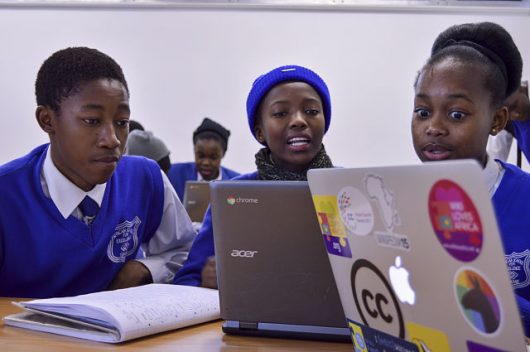
Artificial Intelligence Update: Meet the Chatbots in Africa

chatbots in Africa
Businesses are slowly introducing chatbots in Africa, as more local users opt for mobile interactions through social media. At the end of 2015, 46 percent of the African population subscribed to mobile services, which is equivalent to more than half a billion people; interestingly, this percentage is expected to increase to 54 percent in 2020.

With such a growing use of smartphones, a chatbot revolution in Africa is not very far away.


The Chatbot Revolution

For starters – a chatbot simulates human conversation and are interactive. Using Artificial Intelligence (AI), a chatbot is supported across different messaging platforms including Twitter and Facebook. Here are three chatbots in Africa automate services that are convenient and available 24/7 to users.


1. Leo

Recently, the United Bank of Africa (UBA), the Nigerian multinational financial institution, hired Leo — a chatbot. At the launch, Leo displayed a unique way of how bank customers could use social media platforms to carry out their banking activities.

UBA’s chat banker is a Facebook bot, something which the company says is “necessary in today’s fast-paced world with demands for quick-time transactions.” Customers will be able to carry out basic banking facilities like opening a new bank account, checking balances, transferring funds and receiving instant alerts. Additionally, customers will be able to pay bills, get answers to loan queries and applications and check balance statements.


2. Nuru

Nuru is created by UXstudio, a Budapest-based Hungarian start-up, and currently is available to users in Kenya and Ghana. This AI chatbot assists users in matters relating to agriculture, classified ads, finances and healthcare.

African farmers looking to sell can use Nuru to set prices. The chatbot automatically configures a price based on the type and the amount they have. The activation of the deal can only occur once the farmers are satisfied. Once activated, the buyers can reach out to the farmers through message or phone call.

For mobile money transactions, users in Kenya heavily rely on mPesa. Nuru integrates the transaction through Messenger — the chatbot asks for a password and, once authenticated, the transactions can successfully take place. Nuru also provides health tips based on questions asked by users.


3. Keirabot & Hazie

Keirabot is one of Botsza’s six tailor-made chatbots in Africa.

Botsza’s chatbots currently work across many industries like hotel reservation, flight booking, e-commerce, banks, finance, insurance and customer services. Currently supported on multiple messaging platforms, two chatbots are already operational for users — Haziebot and Keirabot.

Keirabot relieves users from the tiring process of searching homes by utilizing browsing functions via Facebook Messenger or Skype. Various tasks are performed using AI including credit checks, tenants, and comparisons between selling and buying a home.

Hazie, on the other hand, is a recruitment chatbot in Africa that allows job seekers to acquire ideal jobs. Users can simply apply for jobs using social media platforms like Facebook Messenger and Twitter.


Challenges

Despite extensive benefits, the revolution of chatbots in Africa faces challenges.

According to The World Bank, African mobile and wireless markets are highly concentrated; in 27 countries, one player has more than 50 percent market share. Monopolies are still present in Africa: eleven in international gateway services and six in wireless internet services.

Additionally, with more than half of the population yet to subscribe to a mobile service, a big challenge for Africa is to connect the unconnected and unleash the economic potential of increased connectivity. Such challenges would also involve the problems of moving text-based interactions to chatbot technology.


The Potential Solution

But the African youth may be the answer to such challenges. Sixty percent of Sub-Saharan Africa’s population is under the age of 25, making Africa the world’s youngest region, according to World Economic Forum. Social media giants like Facebook and Google are already developing programs for the people in Africa.

In September 2016, Facebook founder, Mark Zuckerberg visited Nairobi to learn more about mobile money and meet entrepreneurs and developers. The U.S. social media giant later announced that the center would host an “incubator program” to help develop technology start-ups while simultaneously training 50,000 Nigerians in digital skills.

In 2017, Google expanded its Africa initiatives following CEO Sundar Pichai’s visit to Nigeria. Alphabet also plans on increasing the funding for African startups by providing $20 million in grants to digital nonprofits. In April 2016, the company also launched Digital Skills for Africa, an initiative to provide free training (online and face-to-face) to people across 27 countries in Africa.

With such promising ventures, innovative technology in Africa could allow the country to stay on par with the rest of the world.

– Deena Zaidi

Photo: Flickr

February 10, 2018
https://borgenproject.org/wp-content/uploads/borgen-project-logo.svg 0 0 Borgen Project https://borgenproject.org/wp-content/uploads/borgen-project-logo.svg Borgen Project2018-02-10 01:30:332024-12-13 17:58:35Artificial Intelligence Update: Meet the Chatbots in Africa
Global Poverty, Technology

ModRoof is a Safer, Warmer Improvement for Slums

Slums
In 2001, 65 million people in India were living in slums without decent living conditions or any access to water and food on a daily basis. According to Berkeley research, more ore than 80 percent of the urban population in India cannot afford a concrete slab to be used as a roof.

For those who can afford a roof in slums, most of the time they are made of cement or metal sheets, which has a very bad effect on health and leads to poor quality of life. Witnessing such a lack of basic need, Hasit Ganatra, engineer and founder of ReMaterials, conceptualized a new type of roof named ModRoof to improve lives in slums.

According to ReMaterials, ModRoof is a “modular roofing system” that can improve shelters in slums and village homes in developing areas. Eco-friendly, easily removable and simple to install, it is also designed to be strong, waterproof and fire-resistant.

In addition, ModRoof is available for a low cost. Payable through microfinance companies, a very popular system in developing countries, the program solves the main obstacle to better facilities in worldwide slums: the price.

ReMaterials is currently considering embedding solar cells in ModRoof, which would allow houses to have power LED lights and outlets to charge phones. Employing solar power with ModRoof would be a huge step forward, as providing electricity to these shelters could assist in lifting the residents out of poverty.

“Worldwide experts told us to give up; they said we’d never do it,” said Ganatra in an interview with BBC. “But when you see this sort of problem [in the slums] you have to do something about it.”

Thus, the stark blue rooftop from ReMaterials is set to change lives. With continued persistence from Ganatra and his team, ModRoof will allow families living in slums all around the world to sleep in a safer, warmer environment.

– Léa Gorius

Photo: Flickr

December 19, 2017
https://borgenproject.org/wp-content/uploads/borgen-project-logo.svg 0 0 Borgen Project https://borgenproject.org/wp-content/uploads/borgen-project-logo.svg Borgen Project2017-12-19 07:30:252019-12-06 13:46:14ModRoof is a Safer, Warmer Improvement for Slums
Page 54 of 89«‹5253545556›»

Get Smarter

  • Global Poverty 101
  • Global Poverty… The Good News
  • Global Poverty & U.S. Jobs
  • Global Poverty and National Security
  • Innovative Solutions to Poverty
  • Global Poverty & Aid FAQ’s
Search Search

Take Action

  • Call Congress
  • Email Congress
  • Donate
  • 30 Ways to Help
  • Volunteer Ops
  • Internships
  • Courses & Certificates
  • The Podcast
Borgen Project

“The Borgen Project is an incredible nonprofit organization that is addressing poverty and hunger and working towards ending them.”

-The Huffington Post

Inside The Borgen Project

  • Contact
  • About
  • Financials
  • President
  • Board of Directors
  • Board of Advisors

International Links

  • UK Email Parliament
  • UK Donate
  • Canada Email Parliament

Get Smarter

  • Global Poverty 101
  • Global Poverty… The Good News
  • Global Poverty & U.S. Jobs
  • Global Poverty and National Security
  • Innovative Solutions to Poverty
  • Global Poverty & Aid FAQ’s

Ways to Help

  • Call Congress
  • Email Congress
  • Donate
  • 30 Ways to Help
  • Volunteer Ops
  • Internships
  • Courses & Certificates
  • The Podcast
Scroll to top Scroll to top Scroll to top