• Link to X
  • Link to Facebook
  • Link to Instagram
  • Link to TikTok
  • Link to Youtube
  • About
    • About Us
      • President
      • Board of Directors
      • Board of Advisors
      • Financials
      • Our Methodology
      • Success Tracker
      • Contact
  • Act Now
    • 30 Ways to Help
      • Email Congress
      • Call Congress
      • Volunteer
      • Courses & Certificates
      • Be a Donor
    • Internships
      • In-Office Internships
      • Remote Internships
    • Legislation
      • Politics 101
  • The Blog
  • The Podcast
  • Magazine
  • Donate
  • Click to open the search input field Click to open the search input field Search
  • Menu Menu

Archive for category: Technology

Information and stories about technology news.

Global Poverty, Health, Technology

On Artificial Intelligence and Poverty

Artificial Intelligence and Poverty

Artificial intelligence (AI) has forever changed the way society interacts with technology. It has provided limitless opportunities for problem-solving in the last decade, and the relationship between artificial intelligence and poverty reduction may be one worth fostering.

In 2007, the iPhone had first made its appearance on the world stage. Since its release, phone-based computer programs (apps) have evolved from simple games like Space Invaders: Infinite Gene, to industry-upsetting business models like Uber.

Since apps began to use algorithms to create relatively simple artificial intelligence (AI), computation has become vital to leading businesses and organization. Ten years ago, AI was almost entirely task-based, but a new form of AI—known as deep learning—has garnered more attention in the past few years.

Instead of a programmer telling how a certain machine should do a task, deep learning AI uses neural networks which actually teach the computer (or other deep learning AI) how to complete tasks in the most efficient manner. What makes it so special is that deep learning is faultless, and, with enough computation resources, can learn things faster than humans.

Does this finally mean that the age of robots is upon us? The easy answer is yes. Deep learning machines have now outplayed people in chess, Go (widely considered to be the most complex game in the world) and are possibly are going to try to beat humans at StarCraft, a multiplayer video game. But AI can disrupt the world’s economy in significant ways. Corporations use it to trade in the financial sector; write articles for newspapers; diagnose health disorders and diseases and do manual office work. It has even recreated a Nobel prize-winning physics experiment.

In the last decade, we have discovered that deep learning AI and AI has infinite potential. So, the question goes, how will artificial intelligence and poverty correlate? Can AI reduce poverty? In general, it should. Never in the history of mankind have we let machines do this type of work for us, so we have no precedents to build off of. Additionally, because deep learning machines are only just coming onto the marketplace, new obstacles may appear as we continue AI research.

However, people are beginning to harness this extremely powerful tool for the poor, and the work sounds promising. At the moment, AI is especially useful for data mining simple statistics: which areas need more development, which people require more education and how they can receive it, etc. Having to collect this data manually would be a time-intensive task that would also be incredibly expensive.

However, there are also more complex uses for AI, such as agricultural research for poor farmers. Tech giant IBM is working on an operations research robot that will optimize transporting food aid around the globe. Improvement of artificial intelligence and poverty reduction are thus parallel goals for these major corporations.

In addition, IBM is also working on a novel illiteracy project. If eventually implemented, it will allow people to learn how to read without the assistance of a teacher by having a computer analyze something that a student of any age might find in their daily life (such as a flower). The computer would then display the written word while playing the sound for it. This would allow people to learn how to read wherever they are, whenever they have time.

Of course, these are all leading edge uses when talking about artificial intelligence and poverty. While engineers continue to work on the technical aspects of the technology, the U.N. is preparing for the change in methodology in battling poverty by holding AI summits. Twenty U.N. agencies have and will continue to discuss issues pertaining to the Millennium Goals and the Sustainable Development Goals in relation to AI.

The potential to significantly diminish poverty with these new technologies is very high. It might take humanity decades before AI is actively fighting poverty, but when it does, it will most likely help eradicate it.

One main challenge of AI is to make sure that we can control it. Futurologist Elon Musk, along with world renowned physicist Stephen Hawking and many AI experts have signed an open letter warning the U.N. against the use of AI-powered weapons, as they can potentially develop their own ethics standards and kill humans ceaselessly, regardless of their affiliation. Even though this warning specifically targets militarized robots, it is a cautionary tale: we need to tread carefully when using new technology, which is why AI will only truly take off several years into the future.

– Michal Burgunder

Photo: Flickr

October 2, 2017
https://borgenproject.org/wp-content/uploads/borgen-project-logo.svg 0 0 Kim Thelwell https://borgenproject.org/wp-content/uploads/borgen-project-logo.svg Kim Thelwell2017-10-02 01:30:172024-06-11 02:48:32On Artificial Intelligence and Poverty
Global Poverty, Technology

How to Reduce Poverty in Developing Countries

Reduce Poverty in Developing Countries

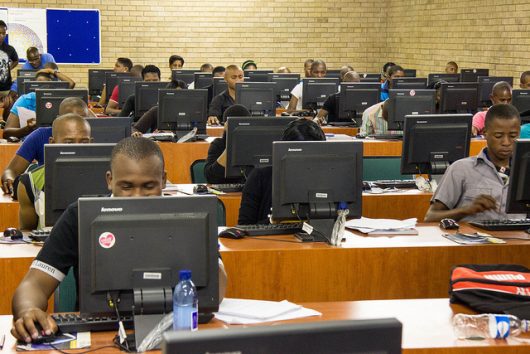
A country’s economic growth, security, development and prosperity depend on the ability of its young population to obtain proficiency in science, technology, engineering and mathematics (STEM) education. Students exposed to STEM education at an early age gain valuable experience in a consistently growing field. The skills they gain can be used to create a more innovative, efficient and productive workforce. Though most developing countries face many obstacles in affording basic education for young children, promoting STEM education can be one of the most effective ways to reduce poverty in developing countries.

As technological advancements become an inseparable part of our lives, STEM education can empower human resources with global competitiveness. UNESCO emphasizes that it is also a building block in creating “a critical mass of scientists, researchers and engineers to enable them to participate fully in the global economy.”

Obstacles in providing STEM education remain. According to the Institute of Engineering and Technology, low-quality teaching and a monotonous curriculum have been identified as two common barriers to students who end up losing interest in STEM education. Afraid of being perceived as “geeks” or “nerds,” students give in to negative stereotypes and fail to see how a STEM education can help propel them towards interesting, lucrative careers and reduce poverty in developing countries.

The perceived difficulty of STEM subjects and the ever-present pressure to obtain high scores scare off students, while a passive approach in transitioning from primary to secondary school discourages more thorough engagement. Furthermore, gender stereotypes create significant challenges for girls in developing countries to maintain an appreciable literary level, much less make strides in the STEM arena.

But there are also positive developments. In 2014, for example, 19 universities in west and central Africa received funding from the World Bank for specialized studies in STEM-related disciplines, as well as in agriculture and health.

Initiatives like Code to Hope seek to improve digital literacy and education by empowering underserved communities with the necessary computer and technical skills. Code to Hope notes that access to technology is directly related to an income increase of $21 per month.

Organizations such as the WorldFund work in Latin America and target poverty by assisting educators in devising teaching methods that can help spark students’ interests in learning STEM-related subjects.

Moreover, open source applications, which depend on the collaborative work of people all over the world, are also enhancing learning in STEM fields for students and helping to reduce poverty in developing countries. Schools utilizing the open source approach not only provide a more robust education for their students, but also help create a more sustainable future by helping people move out of poverty.

The United Nations places a special emphasis on STEM education, noting that it can empower youths and help eliminate the gender gap for young women and girls. The U.N. also notes that growing career opportunities in STEM-related fields present the best antidote to chronic youth unemployment and that STEM skills are “an ideal communication channel that enhances social engagement as well as sharing information and innovative ideas to overcome poverty and to promote peace and prosperity for all.”

By providing the necessary skill development and equal employment opportunities as part of a comprehensive strategy to reduce inequality, STEM education can help reduce poverty in developing countries.

– Mohammed Khalid

Photo: Flickr

October 1, 2017
https://borgenproject.org/wp-content/uploads/borgen-project-logo.svg 0 0 Kim Thelwell https://borgenproject.org/wp-content/uploads/borgen-project-logo.svg Kim Thelwell2017-10-01 07:30:402024-06-08 03:53:46How to Reduce Poverty in Developing Countries
Developing Countries, Development, Global Poverty, Technology

The Effects of Automation on Developing Countries

The Effects of Automation on Developing CountriesThe world is on the cusp of another industrial revolution. This time, it is information technology that is dramatically altering the fundamentals of the global economy, displacing millions of workers in the process.

While technological disruptions have already taken a significant toll on developed countries—causing what Erik Brynjolfsson and Andrew McAfee dub the “Great Decoupling” of wages from productivity—the effects of automation on developing countries are only beginning to be felt.

In the last three decades, information technologies produced high growth rates in many developing countries, as communication and transportation technologies facilitated economic globalization and tapped low-cost labor sources.

But in the future, continued technological advancement is expected to undercut even the lowest-cost labor in developing countries.

Last year, the World Bank estimated that roughly two-thirds of all the jobs in the developing world are due to succumb to automation.

While deindustrialization caused wage stagnation and inequality in developed economies, automation in developing countries will likely have an even worse effect. Lacking the wealth and educational infrastructures developed countries had, most developing countries will be hard-pressed to transition from export-led to service-based economies.

Instead, the coming technological revolution is likely to produce a reverse-outsourcing effect on developing countries. The countries with the best-educated and most competitive STEM workers will be the ones attracting the businesses that are going to design and develop the technologies that put everyone else out of work.

To compensate for technological disruptions, tech moguls like Mark Zuckerberg have suggested implementing policies like universal basic income.

While this platform may offer a short-term solution to the coming wave of unemployment, it will likely bankrupt governments and ultimately fail to uphold a long-term consumer-based economy.

In the developing world, specifically, universal basic income will explode budgetary deficits, which are in many cases already inflated from subsidizing industrial production and exportation.

Regardless of how cheap and efficient technology renders supply chains, without an employed and enriched populace, efficiently produced goods will find no new markets.

The only long-term means to mitigating the effects of automation on developing countries will be investing in human capital and educating high-skilled workers. Only when most workers are responsible for driving the driverless economy will the economy work for most workers.

– Nathaniel Sher

Photo: Flickr

September 30, 2017
https://borgenproject.org/wp-content/uploads/borgen-project-logo.svg 0 0 Borgen Project https://borgenproject.org/wp-content/uploads/borgen-project-logo.svg Borgen Project2017-09-30 01:30:092024-12-13 17:58:28The Effects of Automation on Developing Countries
Global Poverty, Technology

Listening to Africa

Listening to AfricaData collection is an extremely important part of solving any problem. It is key in understanding the needs of a person, place or thing and what impacts certain stimuli have on them. When it comes to people, this can be particularly difficult, especially in war-torn regions, impoverished nations or in migrant communities. Unfortunately, these are often the conditions of the extremely poor.

In order to understand global poverty and effective methods to eradicate it, data must be gathered on people and their living conditions, whatever they may be. Historically, groups such as the World Bank would collect this data personally, traveling to sites and interviewing locals. However, this can be a vastly ineffective way to gather data for the aforementioned reasons, as people may migrate or the area may be too dangerous to travel. Listening to Africa is an organization investing in technology to help solve this problem.

Listening to Africa is a program set up by the World Bank Group to collect data on global poverty. Listening to Africa is using mobile phones supplemented by information from statistical offices and nongovernmental organizations in Africa in order to systematically collect data on extremely poor regions.

The program marries two different approaches; face-to-face interviews and follow-up phone calls to monitor selected regions. Respondents are asked some simple questions to begin the process and take part in 20-minute phone calls each month as the program is carried out. Those who complete the surveys successfully are awarded credit to their phones. Data from these calls is then paired with data collection done in the field and with other statistical offices to help better understand real time conditions in impoverished regions.

Listening to Africa has a great potential for data analysts to communicate with policy-makers on actual conditions of these regions, which will, in turn, allow them to better serve these communities and eventually help bring global poverty to an end.

– Casey Hess
Photo: Flickr

September 29, 2017
https://borgenproject.org/wp-content/uploads/borgen-project-logo.svg 0 0 Borgen Project https://borgenproject.org/wp-content/uploads/borgen-project-logo.svg Borgen Project2017-09-29 01:30:312020-07-16 21:56:34Listening to Africa
Technology, United Nations

How Poverty Is Reduced Through Basic Technology

How Is Poverty ReducedMost modern technology is marketed towards the world’s wealthy, but that should not inhibit its potential to help the world’s poor. As prices fall and production increases, affordable and basic technology may be the solution for eradicating global poverty.

How is poverty reduced through basic technology? First and foremost, by understanding the realistic and productive uses for technology in a community and ensuring that it is relevant.

Too often there are stories of computers collecting dust in African classrooms, or new smartphone apps that can help impoverished people find work — in places where smartphones are unattainable. Despite the vast amount of information on the internet, it is hardly relevant to a rural family in a developing country and will rarely help them escape poverty. In reality, the technology that will help end poverty is more basic.

The United Nations is at the forefront of this vision, with the International Institute for Communication and Development (IICD) working towards the global spreading of information and communications technology (ICT). Founded in 1996, the IICD has come a long way in understanding the pragmatic strategy needed for implementing modern technology in developing countries. The IICD has learned that “it is not the technology itself that makes the difference but rather the people who own it and apply it.” Therefore, helping people get the most out of ICT is now as equally important to the organization’s mission as introducing it.

The IICD works to apply ICT to health, economic and education sectors in different communities around the world. It’s main focus is in the context of helping the U.N. meet its Millennium Development Goals — an effort that the IICD has been at the center of. In short, the IICD works to instigate large-scale social change through low-tech, relevant technology.

Other organizations, such as Kopernik, work on a smaller scale to improve the lives of many through simple technology. Kopernik connects poor, rural families with basic, life-altering technologies that not only save lives, but also save money and time. These simple technologies include water filters, fuel-efficient stoves and solar lights.

Technologies such as solar lights are affordable and sustainable, and their usage is linked to positive behavioral changes and higher household productivity. Investing and distributing this basic technology should be a major priority, for it is fundamental to increasing human development and reducing poverty.

It is not to say that computers and the internet are not infinitely useful and powerful, but we should keep in mind that the internet won’t help a child if they only have access to contaminated water. So, perhaps the question of how to eliminate poverty has a simple answer: distribute relevant, basic technology.

– Catherine Fredette

Photo: Google

September 26, 2017
https://borgenproject.org/wp-content/uploads/borgen-project-logo.svg 0 0 Kim Thelwell https://borgenproject.org/wp-content/uploads/borgen-project-logo.svg Kim Thelwell2017-09-26 07:30:082020-07-16 21:08:34How Poverty Is Reduced Through Basic Technology
Technology, United Nations

How Virtual Reality Is Fighting Global Poverty

Virtual Reality Is Fighting Global PovertyVirtual reality technology is such a recent phenomenon that we have only just tapped into its potential. This technology has been used to expand the capabilities of film and video games, to train soldiers and surgeons, to assist space missions and to aid patients in physical and mental therapy. Non-governmental organizations have found another use for it; now virtual reality is fighting global poverty.

One of the first major forays into using virtual reality to fight global poverty when the U.N. showed a film called “Clouds Over Sidra” which puts the viewer in a Syrian refugee camp in Jordan. The viewer is given a tour by a twelve-year-old girl named Sidra, who explains what her life is like at the camp.

The U.N. has shown this film and others through virtual reality headsets to potential donors at humanitarian fundraising events. These films have seemingly become a hit. At a March humanitarian pledging conference where donors viewed “Clouds Over Sidra,” $3.8 billion was donated to aiding Syrian refugees, well beyond the conference’s goal of $2.3 billion. In New Zealand, one out of six people who saw the film chose to donate, which was twice the normal donation rate.

A major reason why virtual reality is fighting global poverty so effectively is its ability to elicit empathy from viewers. In a 2013 experiment from Stanford University and the University of Georgia, two groups did a color-matching exercise in virtual reality, where one group pretended to be colorblind and the other group was forced into colorblindness through a filter. The study found that the second group spent twice as much time helping colorblind people than the first group. Similar experiments found that people who saw 65-year-old virtual avatars of themselves were more likely to save for retirement, and people who cut down a tree in a simulator used fewer napkins than people who read a description of what happens when a tree is cut down.

The intense, empathetic reactions to VR films have not been lost on VR film producers such as Robert Holzer, CEO of Matter Unlimited. “I’ve never experienced such a visceral reaction to any form of media,” says Holzer. “People are left with something closer to what a memory is, versus what they are left with when it is something that they just watched, and that to me is the wild difference of VR.”

The apparent success of virtual reality has caused other global development nonprofits, such as Amnesty International and Trickle Up, to invest in virtual reality films. It seems that virtual reality isn’t just for video games; it also has the potential to be a significant driver of development funding.

– Carson Hughes

Photo: Flickr

September 25, 2017
https://borgenproject.org/wp-content/uploads/borgen-project-logo.svg 0 0 Kim Thelwell https://borgenproject.org/wp-content/uploads/borgen-project-logo.svg Kim Thelwell2017-09-25 07:30:492024-12-13 17:56:26How Virtual Reality Is Fighting Global Poverty
Education, Global Poverty, Technology

Technological Advancements in Kenyan Education

Technological Advancements in Kenyan EducationNew technological advancements in Kenyan education are attracting students and parents to schools in the area. Such advancements not only aid the students’ learning, but also get them excited about going to school and getting a basic education.

Amaf Primary and Elim Academy in Kawangware, a low-income settlement in Nairobi, have already reaped the benefits of such technology. Since advertising their new computers, these schools both have waiting lists and excited students.

The M-Pesa Foundation Academy in Thika is also establishing itself as a benchmark for Kenyan education reform. Every student has their own iPad, allowing for free use of the Internet to nurture discovery and an interest in learning.

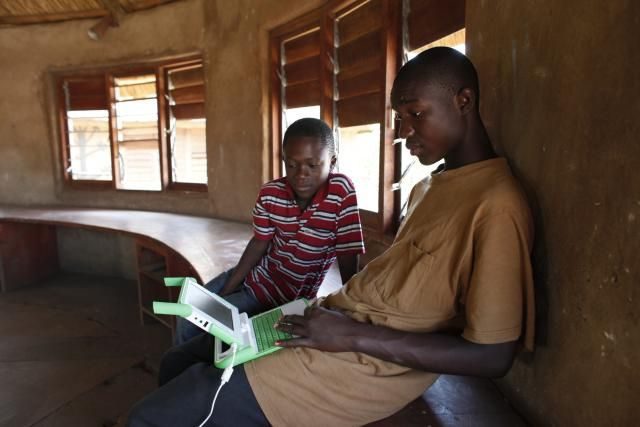
These efforts can be attributed to the eLimu project, which selected these schools to integrate interactive tablets into the classroom to allow them to use modern and advanced teaching methods.

Plan International Kenya is another organization that works alongside projects such as eLimu to advance literacy among children through the use of technology. After being piloted in 25 schools, Plan International Kenya is set to put its technological resources in 300 schools across the country.

With the help of such famous technical partners as Nokia, British Telecom and Lenovo, OSL works to help teachers create more interactive and inclusive learning methods and environments through information and communication technologies.

The main idea behind these new technological advancements in Kenyan education is to help teachers make school more exciting and interactive to attract more students.

After recognizing the success of the 16 pioneer teachers selected for training, the Kenyan government is now supporting the implementation of a project to work with the Kenya Institute of Curriculum Development to train teachers to integrate modern technology into their teaching methods.

– Tucker Hallowell

Photo: Google

September 22, 2017
https://borgenproject.org/wp-content/uploads/borgen-project-logo.svg 0 0 Borgen Project https://borgenproject.org/wp-content/uploads/borgen-project-logo.svg Borgen Project2017-09-22 01:30:542024-05-29 22:26:41Technological Advancements in Kenyan Education
Global Poverty, Government, Technology

Freedom of the Press and Social Media in Cambodia

Freedom of the Press in Cambodia

Over the past few weeks, the freedom of the press in Cambodia has suffered significantly. The country normally displays an impressive ability to support unbiased news sources, but the government of Prime Minister Hun Sen has recently directed a crackdown on opposing press organizations.

In anticipation of a threatening 2018 election, the government has shut down 19 radio stations and charged exorbitant taxes to other publications that do not support Hun Sen’s government. The U.S., European Union and the U.N. have all criticized the Cambodian government for its recent actions.

However, Hun Sen is empowered by President Trump’s attacks on free press and the current domestically-focused agenda, which has led to weak engagement with Southeast Asia. In recent years, social media has become a main source of news for Cambodians, and parties challenging the government have been able to use platforms such as Facebook to their advantage.

Social media use in Cambodia has surged dramatically since 2010, with the 2015 growth rate of Facebook users being 30 percent each year. Eight out of 10 of Cambodia’s most popular Facebook pages are political information sources, including news publications and political figures. Cambodians want personal connections with political figures, and thus value the opportunity to engage with candidates on Facebook. Another contributor to high political activity is the heated political climate which makes every issue into a political issue, according to deputy opposition leader Mu Sochua. Sochua believes that Facebook will be a crucial platform to communicate with Cambodians about her party’s values.

Hun Sen’s rival political candidate, Sam Rainsy, has accused Hun Sen of buying Facebook “likes.” The post landed him in prison for defamation, which is yet another example of the government suppressing the freedom of the press in Cambodia. Leaks revealing unflattering information about opposing parties is a common occurrence on political Facebook pages.

During the Arab Spring, social media proved to be a tool that allowed discontented citizens to organize and make their voices heard. In the week before Egyptian President Hosni Mubaraks resigned, tweets about politics increased from 2,300 to 230,000 per day. Videos featuring political protest or commentary went viral, building confidence in the peoples’ ability to organize to force the change they want to see.

Demands for political freedom on social media has inspired other nearby countries, sparking political discussion in the entire region. Government efforts to restrict discussion on social media has only fueled the change makers, since social media is much harder to control than traditional press organizations.

The desire for reform regarding freedom of the press must originate from the Cambodian people, and Facebook can be a tool used to amplify their voices. The Cambodians’ extensive involvement in politics on social media is a promising sign for their ability to come together to protect their political freedoms, even when the freedom of the press is being threatened.

– Kristen Nixon

Photo: Flickr

September 21, 2017
https://borgenproject.org/wp-content/uploads/borgen-project-logo.svg 0 0 Kim Thelwell https://borgenproject.org/wp-content/uploads/borgen-project-logo.svg Kim Thelwell2017-09-21 01:30:072024-05-29 22:26:49Freedom of the Press and Social Media in Cambodia
Aid, Economy, Global Poverty, Technology

App Boosts African Informal Economy

African Informal Economy

The informal economy in sub-Saharan Africa is booming. Comprised of jobs ranging from independent manufacturers to food vendors, the informal economy is responsible for nearly 70 percent of employment in the sub-Saharan. Additionally, it’s estimated that on average, the African informal economy accounts for nearly two-fifths of national GDP.

Working in the informal economy does come with certain challenges. Access to communication technology and money transfers is particularly difficult. Additionally, access to loans for ready liquid capital is slim. Most could be addressed with banking infrastructure and all are necessary services that businesses operating in the formal economy enjoy.

However, from the bank’s perspective, it is not in their financial interest to service many in the informal economy. Many unbanked Sub-saharan Africans, nearly 500 million of them, consistently make small transactions—usually less than $5  a day. For this reason and the cost of opening and maintaining banking branches, banks don’t consider these individuals serviceable.

That’s where companies like Nomanini step in.

Nomanini, meaning “Anytime” in saSwiti, is just one of several tech companies investing in the African informal economy. With the use of mobile point-of-sale (PoS) devices, individuals can become walking, talking ATMs.

Nomanini’s physical PoS terminal is no bigger than perhaps two smartphones put together and is fully wireless. The Google cloud also hosts the system, giving clients more stability.

Armed with the PoS device, vendors can sell pre-paid mobile airtime, electricity, facilitate banking transactions, and help others pay their bills. In some cases, clients are even granted micro-loans, allowing them access to working capital and the opportunity to build credit.

With the help of Nomanini’s digital PoS app, the African informal economy is exploding. Some vendors have seen their monthly incomes grow 20-30 percent.

Since launch in 2010, Nomanini has facilitated more than 16 million transactions. With the help of Nomanini, the African informal economy, armed with only smartphones and a wireless connection has shown its viability, It has also proven that its large number of unbanked shouldn’t be ignored by institutions just because of the size of their transactions.

– Thomas James Anania

Photo: Flickr

September 20, 2017
https://borgenproject.org/wp-content/uploads/borgen-project-logo.svg 0 0 Borgen Project https://borgenproject.org/wp-content/uploads/borgen-project-logo.svg Borgen Project2017-09-20 01:30:502024-12-13 17:58:28App Boosts African Informal Economy
Education, Global Poverty, Technology

Private Education in India

Private Education in India

Despite an impressive adult literacy rate of 71.2 percent, the public education system in India is struggling, with half of primary-aged students unable to read a basic text and two thirds unable to do basic math. Consequently, over the last eight years there has been a definite decrease in public school enrollment in India, with a 10 percent drop in primary school enrollment from 2008 to 2014. Though 62 percent of primary-school students do still attend public school, the overall decrease in attendance is attributed to a 35 percent rise in private education in India, as parents seek better educational opportunities for their children.

In 2016, over 58 percent of Indians cited a preference for private education due to a “better environment of learning.” Additionally, 22.4 percent of rural respondents and 18.6 percent of urban respondents also asserted that the quality of public education is not satisfactory. Such is why some 300,000 low-cost private schools have sprang up across the country in an effort to address the desire for better education and capitalize on the market for it.

Yet, these low-cost private schools lack a universal curriculum and set of standards, causing inconsistencies in education. This results in varying levels of opportunity for further education due to irregularities in what has previously been learned. In an effort to address this issue of non-existent universality, an organization called Standard of Excellence in Education and Development (SEED) has arisen.

SEED addresses these inconsistencies by partnering with underperforming low-cost private schools to provide standardized curriculums and teacher training to improve the overall education offered. Its focus is on technology-driven curriculum, with an emphasis on social development, through the implementation of school-based extracurricular activities. Further, SEED’s teacher trainings aim to both support and advance teachers by providing lesson plans and information on innovative teaching methods.

All of these initiatives work to improve the quality of education within these low-cost private schools, with the hopes of eventually creating a system of standardization for them as well. Though public education is overtly struggling, private education in India is both on the rise and improving along the way. With 6.4 million students within its borders, the work of organizations like SEED could not be more crucial to shaping the future of the nation and our world.

– Kailee Nardi

Photo: Google

September 19, 2017
https://borgenproject.org/wp-content/uploads/borgen-project-logo.svg 0 0 Kim Thelwell https://borgenproject.org/wp-content/uploads/borgen-project-logo.svg Kim Thelwell2017-09-19 01:30:472024-05-29 22:26:50Private Education in India
Page 57 of 89«‹5556575859›»

Get Smarter

  • Global Poverty 101
  • Global Poverty… The Good News
  • Global Poverty & U.S. Jobs
  • Global Poverty and National Security
  • Innovative Solutions to Poverty
  • Global Poverty & Aid FAQ’s
Search Search

Take Action

  • Call Congress
  • Email Congress
  • Donate
  • 30 Ways to Help
  • Volunteer Ops
  • Internships
  • Courses & Certificates
  • The Podcast
Borgen Project

“The Borgen Project is an incredible nonprofit organization that is addressing poverty and hunger and working towards ending them.”

-The Huffington Post

Inside The Borgen Project

  • Contact
  • About
  • Financials
  • President
  • Board of Directors
  • Board of Advisors

International Links

  • UK Email Parliament
  • UK Donate
  • Canada Email Parliament

Get Smarter

  • Global Poverty 101
  • Global Poverty… The Good News
  • Global Poverty & U.S. Jobs
  • Global Poverty and National Security
  • Innovative Solutions to Poverty
  • Global Poverty & Aid FAQ’s

Ways to Help

  • Call Congress
  • Email Congress
  • Donate
  • 30 Ways to Help
  • Volunteer Ops
  • Internships
  • Courses & Certificates
  • The Podcast
Scroll to top Scroll to top Scroll to top