• Link to X
  • Link to Facebook
  • Link to Instagram
  • Link to TikTok
  • Link to Youtube
  • About
    • About Us
      • President
      • Board of Directors
      • Board of Advisors
      • Financials
      • Our Methodology
      • Success Tracker
      • Contact
  • Act Now
    • 30 Ways to Help
      • Email Congress
      • Call Congress
      • Volunteer
      • Courses & Certificates
      • Be a Donor
    • Internships
      • In-Office Internships
      • Remote Internships
    • Legislation
      • Politics 101
  • The Blog
  • The Podcast
  • Magazine
  • Donate
  • Click to open the search input field Click to open the search input field Search
  • Menu Menu

Archive for category: Activism

Information and stories on social activism.

Activism, Development, Global Poverty

Richest Man in Africa Combats Poverty Through Agriculture

Richest_Man_in_Africa
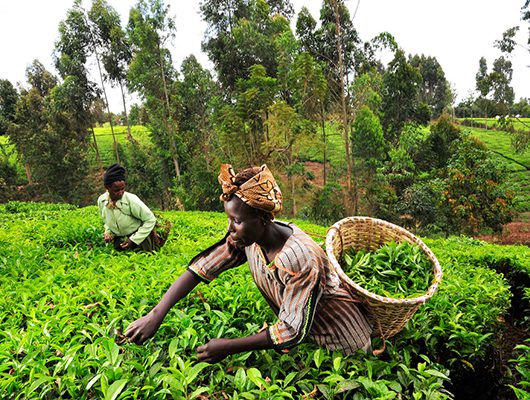
Aliko Dangote, a Nigerian billionaire, is nominated as Africa’s richest man on the FORBES World’s Billionaires list. He takes advantage of the advanced natural condition in Nigeria, such as plenty of agricultural land to develop the economy of commercial agriculture in Nigeria.

Aliko Dangote created the Dangote Group, a conglomerate mainly offering agricultural products, such as cement, sugar, salt and flour. Commercial agriculture has become one of the most important branches of Africa’s economy.

In recent years, Dangote keep investing in the land in Africa to expand his agricultural business and to create profits in Nigeria.

“I can remember that when I was in primary school, I would go and buy cartons of sweets (sugar boxes) and I would start selling them just to make money. I was so interested in business, even at that time,” said Dangote.

From 1997 to 2015, Dangote developed the Dangote Group from a small trading firm into a multi-trillion Naira conglomerate with international operations located in Benin, Ghana, Nigeria, and Togo.

Agricultural commodities are the main products in the Dangote Group. It has covered food processing, cement manufacturing and freight. Moreover, it dominates the sugar market in Nigeria and becomes the major supplier to domestic soft drink companies, breweries and confectioners.

In addition, Dangote Group also owns salt factories and flour mills; it imports rice, fish, pasta, cement and fertilizer and exports cotton, cashew nuts, cocoa, sesame seed and ginger to several countries.

With the current achievement, Dangote is still expanding his Agricultural business in Africa lands. Recently, Dangote invested $500 million in cement plants in Ethiopia and is building other plants in Kenya, Niger and Congo.

Moreover, Dangote intends to invest in Malawi, one of the poorest countries in the world. The majority of people in Malawi earn less than $1 per day. Foreign donors and Tobacco exports constitute the main national income. Before this investment, he has built a South African cement manufacturer, Sephaku Cement, and a cement plant in Zambia.

“His visit to Malawi will inspire both private and public sectors on how he has succeeded in his businesses”, said Joseph Mwanamvekha, Malawi’s Minister of Industry and Trade.

Facing the success of an agricultural business, Dangote said that, “Let me tell you this and I want to really emphasize it … nothing is going to help Nigeria like Nigerians bringing back their money. If you give me $5 billion today, I will invest everything here in Nigeria. Let us put our heads together and work.”

As the richest man in Africa, Dangote combats poverty in Nigeria by developing the economy of commercial agriculture.

– Shengyu Wang

Sources: Forbes, Forbes 2
Photo: Google Images
September 27, 2015
https://borgenproject.org/wp-content/uploads/borgen-project-logo.svg 0 0 Borgen Project https://borgenproject.org/wp-content/uploads/borgen-project-logo.svg Borgen Project2015-09-27 01:30:172020-06-29 17:50:53Richest Man in Africa Combats Poverty Through Agriculture
Activism, Advocacy, Global Poverty

Team Africa Rising: The Opportunity For Unity

Team Africa Rising: The Opportunity For Unity
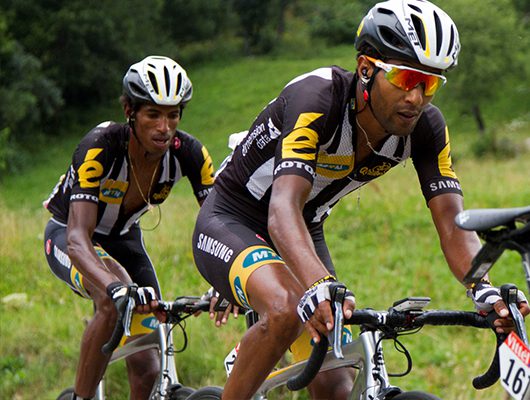
This month, five Rwandan cyclists from Team Africa Rising are set to compete in the UCI Road World Championships in Richmond, Virginia. The international competition is set to take place from Sept. 19 – 27.

Team Africa Rising, formally called Team Rwanda, is comprised of professional cyclists who often serve as the world’s informal ambassadors to Rwanda and other conflict-stricken nations. Team Rwanda was founded in 2006 by American cyclist Jock Boyer in order to spread the sport of cycling and unify countries under its name.

Team Africa Rising is now comprised of over 25 of the best cyclists from Rwanda, Ethiopia and Eritrea. For these athletes, cycling can serve as a form of therapy to deal with their difficult pasts.

The team has also given African athletes the chance to compete at an international level, therefore granting them additional opportunities for sponsorship, equipment and more. One of the cyclists, Nathan Byukusenge, has qualified to compete in the 2016 Rio Olympics.

The cyclists have captured attention from the international community, as the subjects of a documentary entitled “Rising From Ashes” and the book “Land of Second Chances.”

Cycling teams provide a common, positive cause for members of the host countries to support. Team Africa Rising’s participation in the world championship provides a collective source of pride and excitement, particularly for the citizens of Rwanda.

According to Kimberly Coats, director of logistics for Team Africa Rising, the team represents unity for the country.

“The team is made up of people from both sides [of the 1994 genocide,]” she was quoted in the Richmond Times Dispatch. “But today we’re all Rwandans and it’s really started to develop this national unity, this national pride. This team is a thing for the country to rally around.”

For the past 21 years, Rwanda has focused on healing itself from the historic genocide and growing together as one Rwandan society. One of the major struggles in developing in the wake of such a mass atrocity has been in providing the international community another way to look at the country.

“You say Rwanda, you think genocide. They want you to say Rwanda (and) think cycling,” Coats said. “It’s going to take time, but it’s definitely there. We do a lot of bike tours, a lot of people come visit the team and the team has been goodwill ambassadors to show the world that Rwanda is a safe place, that the country has reconciled and that there’s peace.”

– Arin Kerstein

Sources: The Guardian, Richmond Times Dispatch, Team Africa Rising, World Bicycle Relief
Photo: Google Images

September 26, 2015
https://borgenproject.org/wp-content/uploads/borgen-project-logo.svg 0 0 Borgen Project https://borgenproject.org/wp-content/uploads/borgen-project-logo.svg Borgen Project2015-09-26 01:30:512024-12-13 18:05:00Team Africa Rising: The Opportunity For Unity
Activism, Advocacy, Global Poverty

How Panera Bread Fights World Poverty

How Panera Bread Fights World Poverty
Panera Bread is known for its superb soups, salads and bakery items that might feed our appetites quite often. But Panera Bread has another, lesser-known side to their business. As one of the United States’ and Canada’s biggest food companies, Panera Bread also works to serve the less fortunate around the world.

The company previously enacted a ‘pay what you like’ method of paying to help those unable to pay the full price for food to have something to eat. The ‘pay what you like’ method allowed diners to pay more or less than $5.89 for their chili.

The purpose of this program was to encourage their customers to use what they were not paying to donate to charities and to provide food to those unable to pay. The method is still being used in locations such as Chicago, Illinois and Portland, Oregon. Other restaurants that have stopped using it are currently searching for new ways to support those suffering from hunger.

Another way Panera Bread gives back is through their Panera Cares Community Cafes. In the United States, 17 million homes are considered food insecure and 16 million children, meaning one in five children, do not have the means to receive proper nutrition every day. In these nonprofits locations, Panera Bread is willing to serve anyone for free. The aim of this project is to end hunger throughout the country.

In 2013, Panera Bread’s CEO demonstrated a style of living to promote hunger awareness. For one month, Ron Shaich collaborated with the Supplemental Nutrition Assistance Program to enact a lifestyle to live on $4.50 a day to create awareness for those in need, even though he normally makes roughly 3 million a year.

To put this into perspective, $4.50 is the average cost of a McDonald’s Mighty Kids Meal. Ron Shaich noted that although he was buying foods to keep him full, he continuously missed out on the healthy foods that matter, like meat, vegetables and fruits. He also stated how eye-opening of an experience it was for him and how impactful it will be on his efforts of putting an end to hunger.

Panera Bread continues to help fight poverty by continuing to give back to their communities through programs like the Day-End Dough-Nation and In-Kind Donations, which provide unsold bakery items to hunger relief agencies. Panera Cares operates in multiple cities throughout the US and is continuously creating innovative ideas to end world hunger.

– Julia Hettiger

Sources: Time, CNBC, Panera Bread
Photo: Google Images

September 26, 2015
https://borgenproject.org/wp-content/uploads/borgen-project-logo.svg 0 0 Borgen Project https://borgenproject.org/wp-content/uploads/borgen-project-logo.svg Borgen Project2015-09-26 01:30:332024-06-04 04:33:50How Panera Bread Fights World Poverty
Activism, Global Poverty, Water

Sisters Fold Origami and Raise $650,000 to Build Wells

z1 splash
Every year about 842,000 people die from diarrhoea that causes dehydration and more than 840,000 people die from a water related disease each year. Worldwide, there are 750 million people who lack clean water access, which is more than twice the size of the U.S. population.

On average, it costs between $12,000-$15,000 to build enough wells to support an entire village of people. Five thousand dollars builds one well and provides enough water for 500 people. The costs include constructing the wells, preparing the community for the water project, and then monitoring and evaluating.

In 2011, Katherine Adams, age 5, and her sister Isabelle Adams, age 8, learned about the millions of people who go thirsty every day and about the girls who haul water all day instead of going to school. Therefore, both girls put their origami folding skills to use to raise money to build a well in Ethiopia.

With the help of their dad, they held an origami sale at a Starbucks in Dallas, Texas in order to help thousands of people without water. After eight weeks of selling origamis, the two girls raised more than $10,000, which is enough to benefit an entire village.

It has been almost four years since they started folding origamis, and the two sisters–now 9 and 11–founded an organization called Paper for Water that has hundreds of volunteers and helped raise more than $650,000. That is enough money to create clean sustainable water for about 63 to 65 villages or 32,000 people.

The origami ornaments are not easy or simple to make. The average ornament they make takes one hour and one volunteer took 22 hours to create a single ornament.

Globally, it would take about $20 billion to solve water and sanitation problems, which the girls believe is doable. Their origami ornaments are for sale online ranging from $10 to $100 per item and give you an option to donate without getting an origami gift.


– Donald Gering

Sources: Good News Network, Paper for Water, UNICEF, Water.org, The Water Project

September 23, 2015
https://borgenproject.org/wp-content/uploads/borgen-project-logo.svg 0 0 Borgen Project https://borgenproject.org/wp-content/uploads/borgen-project-logo.svg Borgen Project2015-09-23 02:09:322024-05-27 09:27:39Sisters Fold Origami and Raise $650,000 to Build Wells
Activism, Education, Global Poverty

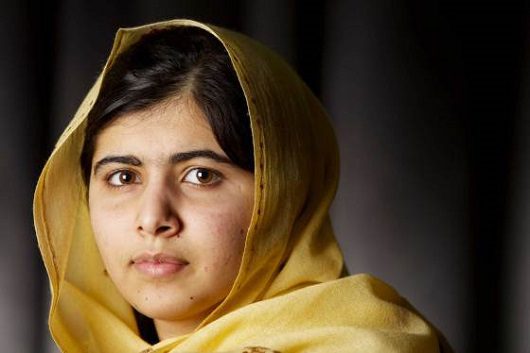
Malala Yousafzai: Fighting for Global Education

Malala Yousafzai

In 2012, 15-year-old Malala Yousafzai was shot three times by the Taliban because she was fighting for her right to attend school. Three years later, the youngest Nobel Peace Prize winner is creating a social movement through her activism regarding global education.

Now 18 years old, Yousafzai has called on the United States and other leading powers to devote more of their foreign policy to educational opportunities for needy children around the world.

“World leaders…are only focusing on six years of education, or nine years,” she said at a panel event co-hosted by Foreign Policy, Vital Voices, and the Malala Fund at the Carnegie Endowment in Washington. “This is not how we are going to achieve success in our future. It is necessary we provide 12 years of quality education to every child.”

Around the world, 57 million children of primary school age do not attend school, with half of these children living in sub-Saharan Africa. Out of these children, 54 percent who do not attend primary school are girls.

Yousafzai argues that leading world powers spend too much on their military forces and should promote, “Books, not bullets. Books, not bombs.”

According to the U.S. Department of Defense archives, $663 billion of the U.S. budget goes towards the military while a mere 0.1 percent is used for foreign aid, including global education.

As Yousafzai continues her global activism and promotion of the Malala Fund, the Nobel Peace Prize winner is finishing her high school education in England because she is afraid the Taliban will kill her if she tries returning to Pakistan.

While finishing school is her top priority, the activist also has a documentary being released on October 2. The documentary “He Named Me Malala” will follow Yousafzai’s life as she completes schoolwork, visits schoolgirls in Nigeria, and viewers will even have the opportunity to see the aftermath of the gunshot injuries as she undergoes surgery and physical therapy.

“I made a choice not to tell the global political story,” said film director Davis Guggenheim during the Q&A after the Telluride Film Festival screening. “As a father of two daughters, I wanted to tell the story of… why did this amazing girl happen?”

As the documentary’s release date to the public approaches, there are high hopes that the film will start a conversation and make a lasting impact on the current state of global education.

– Alexandra Korman

Sources: BMZ, Fast Coexist, Foreign Policy, Los Angeles Times

Photo: Flickr


September 21, 2015
https://borgenproject.org/wp-content/uploads/borgen-project-logo.svg 0 0 Borgen Project https://borgenproject.org/wp-content/uploads/borgen-project-logo.svg Borgen Project2015-09-21 01:39:152024-12-13 18:05:05Malala Yousafzai: Fighting for Global Education
Activism, Developing Countries, Global Poverty

Developing World Connections: Poverty-Alleviating Projects

Developing World Connections Creates Poverty-Alleviating Projects for Underdeveloped Communities
Of the 31 million people living in Peru, roughly 26 percent of them live in poverty. With the idea of a globally engaged, poverty-free and socially just world, Developing World Connections and its many volunteers work alongside locals to counter poverty in Lima, Peru and surrounding communities among many other countries on different continents.

Developing World Connections’ mission is to connect people and resources through international community development. The organization has impacted nine countries on three different continents so far.

Developing World Connections has worked in Peru, Guatemala, Nepal, India and Kenya among others. Some of the projects include working with children and youth, education and training, food and water security and homes and community building. As a whole, the organization is focused on having a global impact.

In Nepal, Developing World Connections works with Creating Possibilities, an organization dedicated to increasing the rights for women and children. The goal of this partnership is to help women make substantive income to provide their children. In India, Developing World Connections works with Comfort the Children International to create sustainable change.

Developing World Connections bases its projects on a number of guiding principles as follows:

  1. The main approach is to achieve its goals through sustainable community development. The organization will work with and support community-led projects created based on community needs and priorities. The organization determines these needs and priorities through in-country Host Partners, whom they work with to alleviate poverty, promote human rights and empower communities.
  2. The second approach is being of service. With its belief that serving others has a greater impact on one’s well-being, Developing World Connections dedicates its time to helping communities through bottom-up, egalitarian and grassroots initiatives.
  3. Developing World Connections aims to develop meaningful connections with the people and communities it serves, with the purpose being to connect everyone — development partners, community members, volunteers and donors — on a larger scale. These strong connections open up the possibility of enriching each other’s lives, gaining hands-on development experience and learning more about the global community.
  4. Developing World Connections uses its fourth principle, integrity, accountability and transparency, to form meaningful connections. It contributes honesty and openness to its image while making sure all responsibilities to stakeholders are met.
  5. The fifth principle puts the fourth one on fellow people, encouraging them to have integrity, accountability and transparency with the world around them to gather a true understanding of the global community.
  6. Lastly, Developing World Communities puts in an effort to implement projects to help everyone, regardless of race, sex, religion or political affiliations.

– Julia Hettiger

Sources: Developing World Connections, Verge Mahazine, Haganaisworth
Photo: Flickr

September 20, 2015
https://borgenproject.org/wp-content/uploads/borgen-project-logo.svg 0 0 Borgen Project https://borgenproject.org/wp-content/uploads/borgen-project-logo.svg Borgen Project2015-09-20 01:30:592020-06-25 10:26:13Developing World Connections: Poverty-Alleviating Projects
Activism, Global Poverty

Global Goals & UNICEF Launch “World’s Largest Lesson”

world_largest_lesson
The Global Goals for Sustainable Development will launch on September 25, 2015, when 193 world leaders unite in New York City to pledge their commitment to the 17 initiatives that seek to achieve three major goals by 2030: end extreme global poverty, fight inequality and injustice and fix climate change.

The more awareness of the Global Goals, the better. If more people understand the mission of the goals, more change is likely to occur in the next 30 years.

That’s why the Global Goals have partnered with UNICEF to launch “World’s Largest Lesson,” a program designed to teach children the reality of poverty, the importance of the goals and the impact that they can have on the future.

The kids of today are the future of tomorrow; they have the potential to become the generation that changes the world and ends extreme poverty. However, it is imperative that they first understand the Global Goals. “World’s Largest Lesson” is an opportunity to promote global citizenship in schools around the world.

Together, UNICEF and the Global Goals have created a program to teach children about the three major components of the goals.

The “World’s Largest Lesson” includes several videos and lesson plans accessible to teachers around the world. It also encourages teachers to spend the week following Sept. 25 teaching their students about the Global Goals through a wide variety of subjects.

Positive change can be enforced by anyone, anywhere, regardless of age. “World’s Largest Lesson” believes that children are capable of making a difference and seeks to inspire young people to take action. Through lessons in geography, sustainability, technology and citizenship, teachers can break down the Global Goals and foster citizenship in their students.

The Global Goals will change the world and provide new life for the impoverished. “The World’s Largest Lesson” will ensure that children around the world are aware of current and future events, and inspire them to build a just and sustainable world.

– Sarah Sheppard

Sources: TES 1, TES 2
Photo: British Council

September 20, 2015
https://borgenproject.org/wp-content/uploads/borgen-project-logo.svg 0 0 Borgen Project https://borgenproject.org/wp-content/uploads/borgen-project-logo.svg Borgen Project2015-09-20 01:09:092020-06-29 18:25:09Global Goals & UNICEF Launch “World’s Largest Lesson”
Activism, Aid Effectiveness & Reform, Charity, Global Poverty, Nonprofit Organizations and NGOs

St. George’s Crypt Makes Progress to Help those in Need

St. George’s Crypt Makes Progress to Help those in Need
Founded in the 1930s, St. George’s Crypt became a charitable group that has helped local people for generations. In its beginnings, the small church began charitable functions and fundraising from local people, run by Reverend Percy Donald, known as the Don.

Throughout its existence the function of the organization has shifted to satisfy the needs of the people and the events occurring around the neighborhood, such as assistance for those affected by war, illness, and the impact of a devastating economic downturn.

As the group’s website states, one of the objectives of the organization is to assist in “the relief of poverty, hardship, sickness and distress among needy and destitute persons,” and recently St. George’s Crypt has taken their efforts to help people even further.

In 2011, The Crypt set up purchase shops that would benefit more people in the area. More recently, the organization has done even more as it has invested more money into building homes for struggling families in the area.

A development project recently gave the group £1.5 million to spend on infrastructure, and the building of 20 new homes for those in need. These properties will act as “halfway houses” to help individuals as well as families get back on their feet, and create more sustainable lifestyles, and smarter economic practices.

The outreach of support for those in need knows no limits, helping those that are homeless, ill, suffering the vulnerabilities of recent catastrophes, and even those suffering from addiction. One of these housing developments will include a hostel in Hyde Park, which will house a larger number of people at a time for a shorter period of time.

When small organizations such as these expand over the years, even over 85 years such as the St. George’s Crypt, it gives hope that there is potential for anyone to make a difference in their communities. To learn more about St. George’s Crypt and the work they continue to do for those in need in their community, go to their website.

– Alexandrea Jacinto

Sources: St. George’s Crypt, BBC
Photo: Flickr

September 18, 2015
https://borgenproject.org/wp-content/uploads/borgen-project-logo.svg 0 0 Borgen Project https://borgenproject.org/wp-content/uploads/borgen-project-logo.svg Borgen Project2015-09-18 01:30:402024-05-27 09:27:38St. George’s Crypt Makes Progress to Help those in Need
Activism, Global Poverty

H&M Designs T-Shirts for Global Citizen Festival

Global_Citizen_Festival
H&M is known for providing fashionable and affordable styles for men, women and children. However, the Swedish clothing store chain also does its part to promote sustainability across the world. That’s right – H&M knows how to make fashion sustainable.

A proud partner of the Global Poverty Project, H&M is dedicated to supporting the mission to end extreme global poverty and building sustainable lives for people around the world.

By default, H&M is also in a partnership with Global Citizen, the online platform for the Global Poverty Project that provides crucial information about ongoing problems in the world and actions global citizens can take to eliminate them.

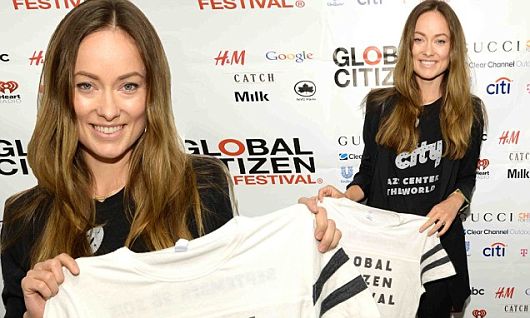
Most recently, H&M and Global Citizen have launched an exclusive t-shirt line to promote the Global Citizen Festival this fall. Musicians Coldplay and Ed Sheeran also contributed to the designs to show their support for the fight against global poverty. Coldplay and Sheeran will also perform at the Global Citizen Festival on September 26th.

Each shirt has a design unique to the musician and is made entirely of sustainable materials. At $9.95, the shirts are on sale at all H&M locations in the U.S. and 25 percent of the proceeds go to Global Citizen.

Furthermore, H&M encourages customers to donate gently used clothing to be recycled. Donation stations are located in every H&M store nationwide until Sept. 17, in a box that advertises the Festival.

Tickets for the Festival are free of monetary charge. Instead, guests must earn their tickets by taking actions against poverty. For every customer that purchases a t-shirt or donates clothing, H&M will provide them with the opportunity to earn free tickets.

Sheeran expressed his excitement to work alongside H&M and Global Citizen to create a shirt that fights back against poverty, uniting people to take meaningful action. T-shirts and fashion are no longer all about style; fashion is now also about taking sustainable steps towards a positive future.

– Sarah Sheppard

Sources: PR News Wire, Global Citizen 1, Global Citizen 2
Photo: Google Images

September 10, 2015
https://borgenproject.org/wp-content/uploads/borgen-project-logo.svg 0 0 Borgen Project https://borgenproject.org/wp-content/uploads/borgen-project-logo.svg Borgen Project2015-09-10 01:30:382024-05-27 09:27:51H&M Designs T-Shirts for Global Citizen Festival
Activism, Advocacy

What is Advocacy?

What is Advocacy?-TBP
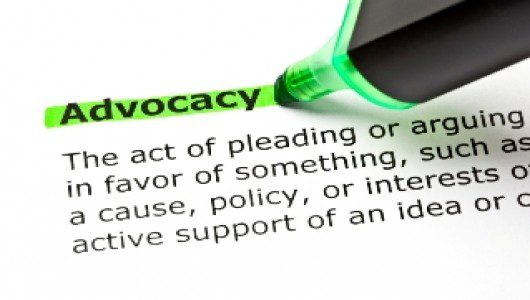
Advocacy is a concept with a short definition but an extensive explanation. In a very broad sense, advocacy is simply supporting a cause. The cause could be anything from human rights to animal rights and anything in between and beyond. An advocate works on behalf of another person or a group of people (or animals) who are voiceless or too vulnerable to promote their own causes and obtain help.

Advocates can work on the behalf of individuals, such as a parent for a child. Other examples include a teacher for a student, a doctor for a patient and a lawyer for a client. Relatives can also hire individual advocates who are trained and specialize in specific causes. Advocating for the disabled is one example.

Advocates can also work for groups that support individuals or larger numbers of people. Nonprofit organizations, such as charities or public arts organizations, are one type. An example is The Borgen Project. Another type are nongovernmental organizations that include Doctors Without Borders and Amnesty International.

Depending on the context of the situation, whether it be social, legal, medical or political, advocates use different skills and types of activities to benefit the people they support. Most advocacy involves at least researching, educating and organizing. The following list of activities, while not comprehensive, includes the most common advocacy activities.

  1. Research to gather the necessary information that reflects the reality as well as expose the myths of a cause or a person’s situation. Research also includes discovering relevant, beneficial resources.
  2. Educate legislators, school administrators, the public or other parties who change the laws, make the decisions or can in any other way provide what is necessary. The education may include composing fact sheets, writing letters or speaking at meetings or with individuals.
  3. Organize meetings, conferences and rallies in order to build a foundation of support and power within a community.
  4. Collaborate with other advocates or groups of the same philosophy to fortify resources and staff. You’ll be better prepared to campaign for shared goals.
  5. Attend conferences in order to network and share information with others of similar needs. This is one way to both research and collaborate.
  6. Act as a watchdog to ensure that government agencies comply with existing laws and regulations.
  7. Litigate to win in court for a person or cause.
  8. Lobby for or against specific legislation in order to benefit a person or cause.

These activities help form the backbone of advocacy. They enable advocates to support, defend and safeguard the children, families, communities and causes they represent. In these small and large ways, advocacy efforts effectively empower the vulnerable and give voice to the voiceless.

– Janet Quinn

Sources: Alliance for Justice, Citizens’ Committee for Children
Photo: NAGC

September 8, 2015
https://borgenproject.org/wp-content/uploads/borgen-project-logo.svg 0 0 Borgen Project https://borgenproject.org/wp-content/uploads/borgen-project-logo.svg Borgen Project2015-09-08 10:43:402024-12-13 17:51:37What is Advocacy?
Page 20 of 56«‹1819202122›»

Get Smarter

  • Global Poverty 101
  • Global Poverty… The Good News
  • Global Poverty & U.S. Jobs
  • Global Poverty and National Security
  • Innovative Solutions to Poverty
  • Global Poverty & Aid FAQ’s
Search Search

Take Action

  • Call Congress
  • Email Congress
  • Donate
  • 30 Ways to Help
  • Volunteer Ops
  • Internships
  • Courses & Certificates
  • The Podcast
Borgen Project

“The Borgen Project is an incredible nonprofit organization that is addressing poverty and hunger and working towards ending them.”

-The Huffington Post

Inside The Borgen Project

  • Contact
  • About
  • Financials
  • President
  • Board of Directors
  • Board of Advisors

International Links

  • UK Email Parliament
  • UK Donate
  • Canada Email Parliament

Get Smarter

  • Global Poverty 101
  • Global Poverty… The Good News
  • Global Poverty & U.S. Jobs
  • Global Poverty and National Security
  • Innovative Solutions to Poverty
  • Global Poverty & Aid FAQ’s

Ways to Help

  • Call Congress
  • Email Congress
  • Donate
  • 30 Ways to Help
  • Volunteer Ops
  • Internships
  • Courses & Certificates
  • The Podcast
Scroll to top Scroll to top Scroll to top