• Link to X
  • Link to Facebook
  • Link to Instagram
  • Link to TikTok
  • Link to Youtube
  • About
    • About Us
      • President
      • Board of Directors
      • Board of Advisors
      • Financials
      • Our Methodology
      • Success Tracker
      • Contact
  • Act Now
    • 30 Ways to Help
      • Email Congress
      • Call Congress
      • Volunteer
      • Courses & Certificates
      • Be a Donor
    • Internships
      • In-Office Internships
      • Remote Internships
    • Legislation
      • Politics 101
  • The Blog
  • The Podcast
  • Magazine
  • Donate
  • Click to open the search input field Click to open the search input field Search
  • Menu Menu

Archive for category: Activism

Information and stories on social activism.

Activism, Aid, Global Poverty, Hunger, Philanthropy

10 Top Philanthropists in Asia

Philanthropists_in_Asia
The United Nations, the World Health Organization and other aid groups estimate that almost one-third of people in Asia live on less than $1.51 per day. Here are some of the most successful philanthropists in Asia who are fighting to end poverty and hunger by 2030.

10 Significant Philanthropists in Asia

  1. Jack Ma—China: Founder and executive of Chinese e-commerce giant Alibaba. Ma donated $2.9 billion to charitable causes across China last year. Ma also set up a $2.4 billion trust for Hong Kong youth and rising entrepreneurs.
  2. Sunny Varkey—India: Founder of Gems Education and one of India’s most prominent entrepreneurs. Varkey has recently signed the Giving Pledge, which is a promise to give most of his wealth to philanthropic missions. His foundation seeks to train 250,000 teachers in order to help nearly 10 million students across India, China, Africa and the Middle East.
  3. P.J. Lhuillier—Philippines: Founder of the P.J. Lhuillier Group. In addition to providing 300 annual scholarships to impoverished students, Lhuillier has also established a foundation that enables dropouts to go back to school. The foundation already has 19 adult education centers open with 48 additional centers to open this coming year.
  4. Cho Gang-Gul—South Korea: Founder of Hannsem. The furniture magnate donated $400 million to a South Korean think tank that works across Asia to seek out and train a new generation of global leaders through an understanding of both Eastern and Western cultures.
  5. Jeffrey Cheah—Malaysia: Chairman for the Sunway Group. Since 1997, Cheah has donated nearly $50 million worth of scholarships for 20,000 low-income students. Cheah’s foundation has also donated $6.2 million to fund an exchange program between Southeast Asian institutions and Cambridge University.
  6. Mohamed Abdul Jaleel—Singapore: Founder of Mes Group. The construction mogul had to drop out of school when he was 16 to support his family. He has made it a life mission to help impoverished children get through school. For the past several years, he has given $1.1 million annually to the Straits Times School Pocket Money Fund, which gives students money for lunch meals and school supplies. Abdul Jaleel also donates an additional $1 million each year to schools in Singapore’s poorer neighborhoods.
  7. Philipp Graf von Hardenberg—Thailand: Founder of the Children’s World Academy. The German native moved to Thailand to provide aid after the 2004 Tsunami and has been helping impoverished children ever since. He set up an orphanage to help children affected by the devastation, and the same facility still operates to this day as a school for impoverished youth. The school has raised more than $5 million.
  8. Manny Pacquiao—Philippines: World boxing champion and Philippine Congressman. Pacquiao and his wife donated 200 college scholarships, funded full missions for Habitat for Humanity in the Southern Philippines and gave upwards of $400,000 in medical assistance to needy families.
  9. Hendro Gondokusumo—Indonesia: Founder of Intiland Development. As one of the largest property developers in Indonesia, Gondokusumo has just set up a new foundation aimed at giving low-income and impoverished families affordable and safe living in the capital Jakarta and across the island of Java.
  10. Yao Ming—China: Retired NBA All-Star. His foundation has helped repair schools and build sports facilities for hundreds of thousands of students in rural China. The Yao Foundation hopes to improve the lives of 150,000 children through sport and exercise by the end of this year.

– Joe Kitaj

Sources: Forbes 1, Forbes 2, Forbes 3
Photo: Flickr

October 10, 2015
https://borgenproject.org/wp-content/uploads/borgen-project-logo.svg 0 0 Borgen Project https://borgenproject.org/wp-content/uploads/borgen-project-logo.svg Borgen Project2015-10-10 01:30:392020-06-28 15:23:1810 Top Philanthropists in Asia
Activism, Advocacy, Development, Global Poverty

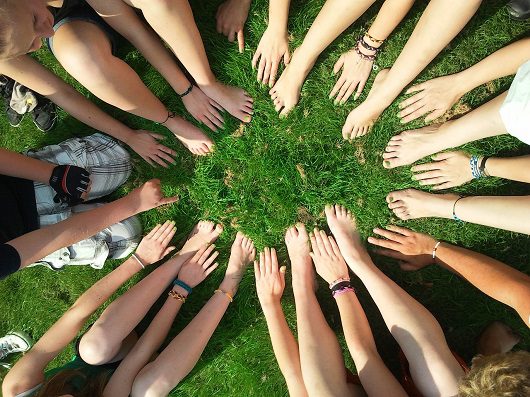
The Power of Partnerships

The Power of Partnerships
“Together, we can make a difference.”

It sounds cliché, but in the world of humanitarianism, partnerships have been shown, again and again, to be key in fighting global poverty and injustices.

Of course, it occurs on an organizational level all the time. In the humanitarian community, organizations intersect in countless ways. At the end of almost any humanitarian website, there is a tab at the bottom called “Partnerships,” “Partners,” or “Work with Us.”

When one organization has the expertise to improve education opportunities, another has the educators on the ground, another has the finances, and another has the technology to create school supplies that are more affordable or efficient; a partnership can be massively beneficial.

Pooling resources to unite for a common goal means that more help can be brought to where it is needed most.

Historically, partnerships have occurred between countries in order to achieve common political, economic and sometimes humanitarian, goals.

Often, these arise out of necessity: wartime, natural disasters, disease epidemics, and so on. But when partnerships arise out of foresight, crises can be handled more efficiently and existing programs and policies can be improved.

An example is the countries united in a commitment to the Millennium Development Goals, which have been implemented over the last fifteen years to a largely successful degree.

In the partnership between GlaxoSmithKline (GSK) and Save the Children, there are five key elements: programming, research and development, joint-advocacy, employee engagement and cause-related marketing.

The Partnerships page of CARE, an organization whose mission is simply “to serve individuals and families in the poorest communities in the world,” is divided into sections: foundations and trusts, corporate partners, humanitarian partners, institutional donors, and research and technical partners.

The Office for the Coordination of Humanitarian Affairs (OCHA) is a part of the UN Secretariat. Its mission is to bring together humanitarian groups to make sure that responses to emergencies are coordinated and coherent.

partnershipsIt works with governments, regional organizations, and groups at the national and international levels in order to make sure that the people who need help are getting as much as they can as quickly as possible.

These are all examples of the many ways that partnerships can be utilized. There are so many different aspects to any heartfelt mission, so organizations can connect in ways that the average person might never have considered. When opportunities are considered critically, the possibilities are endless.

It can all start to feel a little bit like alphabet soup sometimes: The IRRI works with HRDC, SKEPs, and a company called PRIME. UNAIDS cosponsors include UNHCR, UNICEF, WFP, UNDP, UNFPA, and UNODC.

But here is what lies at the core of it all: organizations are coming together, communities are coming together, and individuals are coming together to make a difference and to do what is right. With technology increasing the rate of globalization, partnerships are easier than ever to form, and this should be taken advantage of.

It can serve as a lesson to anyone about the importance of coming together.

For any individual who looks at everything that is wrong with the world and says, “But what can I do?” because their resources and the scope of their influence are limited, he can ask, “What do I need in order to make a difference?”

From there, he can reach out to other individuals and groups who have different resources to offer, who have a different sphere of influence, who can help the person to make the kind of impact that will really be worthwhile.

“Partnership” is a word that can mean so many things. It offers forth a range of possibilities that are almost infinite. Humanitarian groups are one of the most important examples of how much more can be achieved through communication and the formation of connections.

– Emily Dieckman

Sources: Care, OCHA 1, IRRI, OCHA 2
Photo: Pixabay1, Pixabay2

October 8, 2015
https://borgenproject.org/wp-content/uploads/borgen-project-logo.svg 0 0 Borgen Project https://borgenproject.org/wp-content/uploads/borgen-project-logo.svg Borgen Project2015-10-08 01:30:492024-12-13 18:05:02The Power of Partnerships
Activism, Advocacy, Global Poverty

Want to be a Part of Baylor’s Global Health Hackathon?

Want to be a Part of Baylor's Global Health Hackathon?
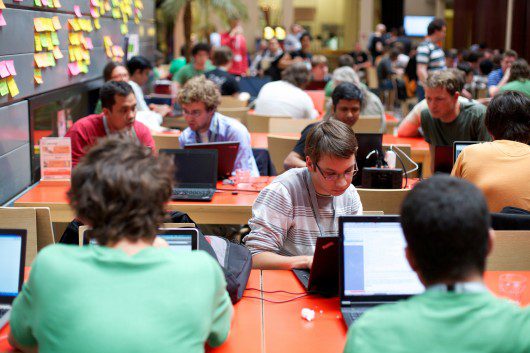
In September, Baylor Global Initiatives hosted their first Global Health Hackathon. While a hackathon may sound like a group of socially awkward nerds sitting in a dark basement stealing credit card information, it is actually something much less devious and much more relevant to reducing global poverty.

Hackathons are events hosted to bring together students and innovators from a myriad of disciplines. During the event, teams are created that then race to develop solutions to a given problem.

Baylor’s hackathon was held with the intent of generating solutions to global health issues, specifically the emergency response and procedural care being used by Baylor College of Medicine faculty in African countries.

A team’s final product can be anything that can improve global health: software, hardware, medical tools, delivery or financing mechanisms. Winning teams can win funding to further the development of their prototypes or concepts as well as a reward.

Baylor’s hackathon is a wonderful opportunity to work with thinkers who are hoping to make a difference and learn from world-renown faculty from several top-notch university and organizations, including Rice University, Texas A&M University and NASA.

Click here to see highlights from Baylor’s Global Health Hackathon.

– Brittney Dimond

Sources: Momentum, Baylor College of Medicine
Photo: Flickr

October 7, 2015
https://borgenproject.org/wp-content/uploads/borgen-project-logo.svg 0 0 Borgen Project https://borgenproject.org/wp-content/uploads/borgen-project-logo.svg Borgen Project2015-10-07 01:30:402020-06-27 06:43:29Want to be a Part of Baylor’s Global Health Hackathon?
Activism, Global Health, Global Poverty, Health, Nonprofit Organizations and NGOs

Child Family Health International at a Glance

Child Family Health International (CFHI) at a Glance
There is a plethora of organizations working toward the betterment of our world and the people living in it, however, they often do not get the attention or credit they deserve. So let’s shine a little spotlight on one and take a minute to appreciate others’ hard work and the power of teamwork.

Child Family Health International (CFHI) is a nonprofit organization that is focused on global health education. They offer education programs for individuals interested in global health and related careers. Here are three ways CFHI is working towards improving global health.

Educate Future Global Health Crusaders

CFHI offers education programs for students or volunteers to gain experience with the clinical practices, public health and social services in developing nations. They work within Latin America, Africa and India.

Participants of community-based Global Health CFHI programs can gain the valuable experience needed to build their resumes or earn college credit. CFHI offers more than twenty different programs in seven countries that work within and with the local community on projects like providing healthcare for underserved communities in the Himalayas to training midwives in Oaxaca.

Integrates into the Local Health Care Community

CFHI recognizes that there are already health care professionals and experts residing in the community they are working in and have partnered with existing health care providers. By utilizing local community leaders and health workers, CFHI helps support the development of opportunities for their international partners.

They invest in the continuing of their educations by offering scholarships for higher degrees and including locals in conferences and workshops. CFHI holds that students can learn not only from CFHI staff but also from those living in the communities they are working with.

Invests in Host Community

Students who participate in a CFHI education program pay a fee, which is common amongst study abroad experiences. However, unlike many other programs, CFHI invests half of a student’s fee back into the community they will be working and learning in. The invested funds work to bolster the economy of the countries CFHI works with and compensate the communities for their time, expertise and hospitality.

– Brittney Dimond

Sources: Child Family Health International 1, Child Family Health International 2, GoAbroad.com
Photo: Flickr

October 3, 2015
https://borgenproject.org/wp-content/uploads/borgen-project-logo.svg 0 0 Borgen Project https://borgenproject.org/wp-content/uploads/borgen-project-logo.svg Borgen Project2015-10-03 09:53:402020-06-28 16:26:19Child Family Health International at a Glance
Activism, Advocacy, Global Poverty, United Nations

Ending Extreme Poverty: Politics Weighs Us Down

Ending Extreme Poverty: Politics are Weighing Us Down
In November, The United Nations Climate Change Summit will commence in Paris, France, the last of three paired conferences that set to discuss action regarding two great problems of our time: extreme poverty and climate change. Even though extreme poverty has been cut in half since 1980, political systems are making it difficult to envision the end of extreme poverty by 2030.

Since 2000 when the UN adopted the Millennial Development Goals (MDGs), major victories have been made in regard to extreme poverty. Compared to 1990, the number of people in the world living on less than $1.25 per day has dropped from 1.9 billion to 836 million.

Despite the efforts of the 17 Sustainable Development Goals (SDGs) implemented in September 2015, politics may be halting the fight to eradicate extreme poverty.

Due to war and climate change, 59.5 million people worldwide have left their homes, a global displacement figure that has not been this high since World War II.

With this high displacement, the European Union (EU) has failed to find homes for a mere 60,000 asylum seekers. Since the EU has a population of over 500 million, political leaders have no excuse for finding homes.

In regards to the UN’s Third Financing for Development Summit this past July in Ethiopia, the goal was to discuss ways to finance the end to extreme poverty in 2030.

One key phrase from the conference linked climate, environment, and development: “All of our actions need to be underpinned by our strong commitment to protect and preserve our planet and natural resources, our biodiversity and our climate.”

Unfortunately, no dates or commitment to the clause ensures physical action, lacking a sense of urgency that should be present.

As the Climate Change summit approaches, world leaders will decide a necessary strategy in regard to the growing problem with climate change and its connection to extreme poverty.

With only 15 years left to solve extreme poverty, world leaders and the general population cannot expect the matter to solve itself. More compromise and effort is needed with all world leaders to solve extreme poverty.

– Alexandra Korman

Sources: Arab News, Devex, Irish Examiner
Photo: Flickr

October 3, 2015
https://borgenproject.org/wp-content/uploads/borgen-project-logo.svg 0 0 Borgen Project https://borgenproject.org/wp-content/uploads/borgen-project-logo.svg Borgen Project2015-10-03 09:46:132024-12-13 18:04:58Ending Extreme Poverty: Politics Weighs Us Down
Activism, Food & Hunger, Global Poverty

Darden Harvest Aims to Put an End to Hunger


Darden Restaurants, owner of restaurants like Olive Garden and Red Lobster, believes people are their most valuable resource. That being said, they have dedicated much of their time and money to helping end world hunger and poverty.

Their program, Darden Harvest, coordinates food donations to food banks and other charitable organizations across the country.

How it works:
When leftover foods from restaurants are not served to guests, it is packaged, frozen and stored in the restaurant. Nonprofit organizations travel to these restaurants weekly to pick up the food and then donate it to food banks.

The food is then served to those in need in the community. Throughout this process, the quality and safety of the food is ensured by Darden Restaurants’ employees.

What is donated?
Darden Restaurants focuses on donating foods that have a positive impact on health. Twenty-eight percent of the foods donated are vegetables, 27 percent are proteins, 19 percent are soups, 18 percent are pastas and breads, and eight percent are other food items and desserts.

Community Impact:
Since it started in 2003, Darden Harvest has donated more than six million pounds of surplus food to families in need, which is the equivalent of 89 million meals served. Nearly 49 million Americans suffer from hunger, with over 165 million dollars’ worth of food being thrown into landfills each year.

Every year, Darden Harvest observes World Food Day by positively impacting the lives of underprivileged people through food donations. In their 2013 fiscal year, Darden Restaurants donated over 11 million pounds of food to hunger-ridden families.

Darden Restaurants’ team of over 200,000 members has contributed to ending hunger. Just last month, Darden Restaurants created a program to help people feed their families during the busy school semester with their “Buy one, take one” program, which allows families to purchase one meal and take another one home to serve on another night.

– Julia Hettiger

Sources: CNN, Darden, Fool
Photo: Examiner

October 1, 2015
https://borgenproject.org/wp-content/uploads/borgen-project-logo.svg 0 0 Borgen Project https://borgenproject.org/wp-content/uploads/borgen-project-logo.svg Borgen Project2015-10-01 10:52:052024-05-27 09:28:00Darden Harvest Aims to Put an End to Hunger
Activism, Advocacy, Development, Global Poverty

Startups Ending Poverty

Startups
As successful businesses began springing out of Silicon Valley like a garden first introduced to fertilizer, entrepreneurs started to wonder how they could profit from filling the holes in market demands.

According to Business Dictionary, a startup is the “early stage in the life cycle of an enterprise where the entrepreneur moves from the idea stage to securing financing, laying down the basic structure of the business, and initiating operations or trading.”

But what do startups have to do with global poverty? While many businesses, including most startups, are looking to meet the demand of customers who will shell out enough cash to generate their owners and employees increasing incomes, some ventures are looking to fulfill a different demand.

Below are three for-profit startups that are using their business plans in one way or another to help alleviate poverty. These companies differ from nonprofits because they function as a business instead of an organization. While both work towards bettering the lives of others, they do so in distinctly different ways.

Nuru

Nuru provides training-based poverty solutions for local leaders in poor communities. Their leadership programs are intended to create profitable businesses owned and run by local entrepreneurs.

Nuru staff train and equip their counterpart local teams and in return part of that business’s profit is returned to Nuru where it is distributed to shareholders and reinvested in other development projects.

Instead of reaching into markets with foreign goods or services, Nuru allows locals to provide their own communities with desired and necessary products in a self-sustaining manner. Once Nuru implements their programs they withdraw their staff and allow local leaders to become self-reliant and continue making their own difference.

BioLite

BioLite was created by two camping enthusiasts and sells portable, clean energy stoves, kettles and LED lights. The profits made from their western markets help offset the costs required to make their other product. In addition to camping equipment, BioLite produces a cheaper stove to sell in developing nations.

Since most people living in poverty use open fires for cooking and heating purposes, the demand for inexpensive and safe stoves is high.

This company offers a desired product to untapped markets in developing countries for an affordable price due to their other successful profit earning products. Their business plan is sustainable because they do not rely on donations to continue their work.

Good Cloth

An online clothing store that sells exclusively ethically crafted goods. They’ve divided their products into several categories including recycled, sustainable, organic, made in the U.S. and one titled “Trade Not Aid.”

Good Cloth helps companies who design and create goods without exploiting workers, sell their products. Good Cloth and the brands they sell work to eradicate poverty by pushing against the norm of cheap labor.

They want to help companies who treat their employees fairly and pay them a just wage be successful.

Nuru, BioLite and Good Cloth are only three examples of for-profit business models that are working towards alleviating poverty. While nonprofits play an undeniably imperative role in the fight on global poverty, there is also a place for solutions that include profits.

Businesses have a high interest and investment in their success; in order to eradicate global poverty there needs to be a high interest and investment in finding successful solutions. If incorporating business models and profit as a motivation will lead to poverty reduction, why would we not use it?

– Brittney Dimond

Sources: Business Dictionary, The Good Trade, MIC, Nuru International

Photo: Pixabay

September 30, 2015
https://borgenproject.org/wp-content/uploads/borgen-project-logo.svg 0 0 Borgen Project https://borgenproject.org/wp-content/uploads/borgen-project-logo.svg Borgen Project2015-09-30 10:09:172024-12-13 18:05:09Startups Ending Poverty
Activism, Aid, Global Health, Global Poverty

Healthabitat: Helping Disadvantaged People Worldwide

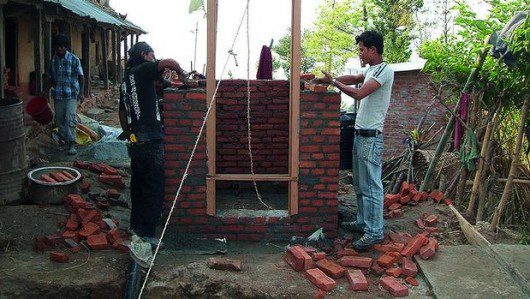
healthhabitat
Operating in countries all over the world including Nepal, the United States and Bangladesh, Healthabitat’s goal is to make the world a healthier, cleaner place for everyone. Their projects focus on improving sanitation, helping people gain access to clean water and providing housing for those in need.

Healthabitat was formed in 1985 when the directors came together to improve the health environment in the Anangu Pitjantjatjara lands of northwest South Australia. Since then, Healthabitat has expanded out of Australia to help disadvantaged people all around the world.

When it was formed in 1985, the directors of Healthabitat put together a list of nine steps to healthy living, which has been used as a guideline for their practices ever since.

These steps ensure that people not only improve their sanitation and living conditions but that they are provided with adequate housing to help decrease mortality rates, particularly among children under the age of 5.

The members of Healthabitat follow a constrained methodology aimed at improving the lives of all involved. This methodology is then improved to accommodate for changes in lifestyles. Data is collected to monitor improvements and is used to better designs.

They then do applied research and develop projects based on the results. Their projects typically involve the help of indigenous people, with 75% of all volunteers coming from their respective local communities. Lastly, the methodology is staged and developed.

In addition to these practices, Healthabitat also works on health hardware for disadvantaged people. This includes a water supply, pumps, tanks, pipes, valves, taps, hot water system, tub and drainage pipes.

The overall goal of Healthabitat is to decrease the number of sick people in the world. The three partners, Paul Pholeros, Dr. Paul Torzillo and Stephan Rainow, along with the guidance of Yami Lester, former director of the controlled health service, Nganampa Health Council, put their minds together to make it all happen.

Healthabitat continues to help people all over the world. Right now, a project they are focusing on is providing the victims of the Nepal earthquake with toilets and housing, while continuing to work in South Australia and the surrounding areas.

– Julia Hettiger

Sources: Health Habitat, Top Masters in Healthcare, World Habitat Awards
Photo: cusphabitat

September 30, 2015
https://borgenproject.org/wp-content/uploads/borgen-project-logo.svg 0 0 Borgen Project https://borgenproject.org/wp-content/uploads/borgen-project-logo.svg Borgen Project2015-09-30 01:30:252024-06-04 04:33:50Healthabitat: Helping Disadvantaged People Worldwide
Activism, Global Poverty, Volunteer

Voluntourism Q&A

Voluntourism Q & AWhat is voluntourism?

Voluntourism (volunteer tourism) is a growing travel trend. It involves trading a typical vacation for an experience volunteering in orphanages and communities in poorer regions of the world. It is an opportunity for others to assist women, men and children in need.

Who participates in voluntourism?

Typically, privileged Americans and Europeans are participants in voluntourism. Most volunteers are women between the ages of 20-25. In some cases, colleges and universities offer volunteer travel courses that replace “fun and sun” spring break trips.

When did voluntourism begin?

Voluntourism began in the 1960s when the Peace Corps was founded. Since then, the number of those volunteering as a form of vacation have steadily increased. Each year, about 1.2 million volunteers participate in voluntourism.

What are the positives associated with voluntourism?

 Traveling volunteers have the ability to engage others with important world issues. For example, after helping in Ghana, a person can return to the U.S. equipped with knowledge and stories that engage advocates. By speaking about their experience, they interest others in the cause. By doing this, more people can strive to make a difference in the lives of others. In addition, they are deepening their understanding of humanity, which contributes to a desire to create a better world for all.

What are the criticisms of voluntourism?

The biggest criticism of voluntourism is that it is a form of narcissism that allows travelers to make themselves the superheroes, the ones who “do good” for people who are impoverished. This idea can be seen when people post photos of themselves with children (that they do not know) or with people who they are helping. By posting these photos, volunteers are showcasing suffering and glorifying themselves.

For those who plan to participate in voluntourism, how can they truly have a positive experience?

The people who participate in voluntourism are by no means malicious. The problem comes when travelers are beefing up their resumes or adding a million pictures to Facebook. Voluntourism is not about self-fulfillment. For more meaningful work, leave IPhones at home or take pictures with the people you actually know. At the end of the trip, the experience isn’t really about making travelers feel good, but about donating time to help those who need it most.

– Kelsey Parrotte

Sources: The Guardian, Huffington Post 1, Huffington Post 2, NPR, Pacific Standard Magazine, Responsible Travel Report
Photo: Flickr

September 28, 2015
https://borgenproject.org/wp-content/uploads/borgen-project-logo.svg 0 0 Borgen Project https://borgenproject.org/wp-content/uploads/borgen-project-logo.svg Borgen Project2015-09-28 02:36:402020-06-29 14:57:18Voluntourism Q&A
Activism, Global Poverty, Poverty Reduction

United Way of Windsor Focuses on Education to Fight Poverty

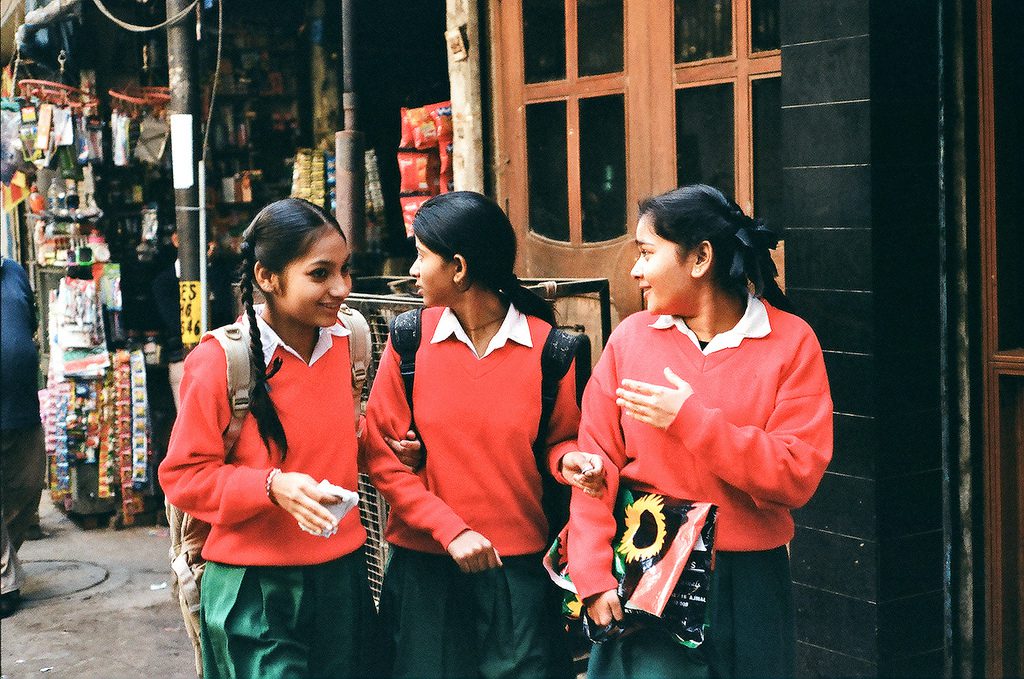
United_Way_of_Windsor
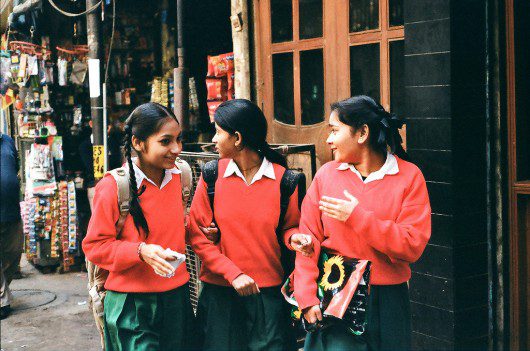
There is an almost universal understanding that a lack of education is almost always a ticket to poverty. From rural India to modern Japan, when children miss out on quality education, it sets them on a difficult path to poverty.

But the United Way of Windsor-Essex in Ontario, Canada is putting their foot down, and starting up a program to make sure low-income students get started off on the right foot. Twenty kids from underprivileged backgrounds are being placed in an immersive program set to get them off through school and off the poverty track.

Each of the youths, who start high school this month, have signed five-year agreements that commit them to finishing high school and keeping their grades up.

In return for doing well in school, the students receive special mentoring, after-school tutoring and counseling options, and perhaps most uniquely – $1,000 will be set aside each year towards each student’s post-secondary education.

A recent report by United Way found that roughly a quarter of county residents under 17 lived in low-income families, and more than half of those in single-parent households are living in poverty.

The report further found that family income has a strong effect on the “child’s cognitive, behavioral, and physical outcomes, as well a lesser relationship on social development.” Children from lower-income families, according to the report, are at a significant disadvantage compared to their higher-income peers.

Poverty places many challenges on young adults, including increased mental strain, the risk of poor nutrition, and, of course, reduced educational opportunities. According to Lorraine Goddard, CEO of the local United Way, many of the students in the pilot program come from “working poor” families in which the head of household is often struggling with multiple jobs to make ends meet.

“You become discouraged, you can be ostracized — kids give up,” said Goddard. The personal and financial support, which comes from individual donors, “builds a sense of hope in these kids,” said Goddard.

Participation in the On Track to Success program offers participating students a reprieve from some of the stresses of living in a low-income home, giving them more time and energy to devote to their education.

Even just completing high school generally allows individuals to earn an average of $10,000 more than someone without a diploma. Completing college earns an average of nearly $17,000 more than just a high school diploma.

By helping these students succeed now in high school and starting them with the funds to attend college, the United Way is putting these students on the path out of poverty.

– Gina Lehner

Sources: Windsor Star, We are United
Photo: tucsoncitizen

September 28, 2015
https://borgenproject.org/wp-content/uploads/borgen-project-logo.svg 0 0 Borgen Project https://borgenproject.org/wp-content/uploads/borgen-project-logo.svg Borgen Project2015-09-28 01:51:072024-06-05 03:46:43United Way of Windsor Focuses on Education to Fight Poverty
Page 19 of 56«‹1718192021›»

Get Smarter

  • Global Poverty 101
  • Global Poverty… The Good News
  • Global Poverty & U.S. Jobs
  • Global Poverty and National Security
  • Innovative Solutions to Poverty
  • Global Poverty & Aid FAQ’s
Search Search

Take Action

  • Call Congress
  • Email Congress
  • Donate
  • 30 Ways to Help
  • Volunteer Ops
  • Internships
  • Courses & Certificates
  • The Podcast
Borgen Project

“The Borgen Project is an incredible nonprofit organization that is addressing poverty and hunger and working towards ending them.”

-The Huffington Post

Inside The Borgen Project

  • Contact
  • About
  • Financials
  • President
  • Board of Directors
  • Board of Advisors

International Links

  • UK Email Parliament
  • UK Donate
  • Canada Email Parliament

Get Smarter

  • Global Poverty 101
  • Global Poverty… The Good News
  • Global Poverty & U.S. Jobs
  • Global Poverty and National Security
  • Innovative Solutions to Poverty
  • Global Poverty & Aid FAQ’s

Ways to Help

  • Call Congress
  • Email Congress
  • Donate
  • 30 Ways to Help
  • Volunteer Ops
  • Internships
  • Courses & Certificates
  • The Podcast
Scroll to top Scroll to top Scroll to top