• Link to X
  • Link to Facebook
  • Link to Instagram
  • Link to TikTok
  • Link to Youtube
  • About
    • About Us
      • President
      • Board of Directors
      • Board of Advisors
      • Financials
      • Our Methodology
      • Success Tracker
      • Contact
  • Act Now
    • 30 Ways to Help
      • Email Congress
      • Call Congress
      • Volunteer
      • Courses & Certificates
      • Be a Donor
    • Internships
      • In-Office Internships
      • Remote Internships
    • Legislation
      • Politics 101
  • The Blog
  • The Podcast
  • Magazine
  • Donate
  • Click to open the search input field Click to open the search input field Search
  • Menu Menu

Archive for category: Activism

Information and stories on social activism.

Activism, Education, Global Poverty, Women and Female Empowerment

Chelsea Clinton Visits Haiti

haiti

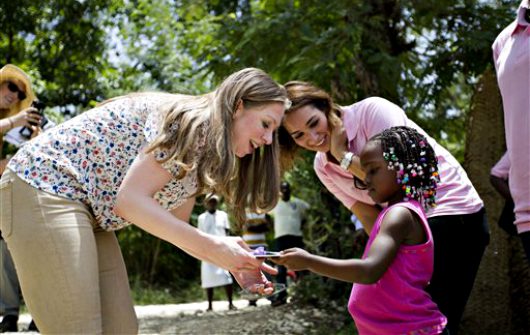
On July 28 and 29, Chelsea Clinton, the Clinton Foundation Vice Chair, visited Clinton Foundation-funded Haitian projects in Port-au-Prince to oversee agricultural improvement, health reform and female employment progress.

The Clinton Foundation’s slogan is “Partners in Haiti’s Future,” and the organization has definitely created many opportunities for the country to flourish in the present. The work of the foundation and its supporters has aided more than 85,000 farmers with new agriculture techniques. In addition, more than 350,000 people’s lives were bettered because of the organization’s social enterprises, and 9.9 million people have access to HIV/AIDS medication.

In total, the Clinton Foundation has helped raise more than $30 million for Haiti for its Trees of Hope program, Clinton Climate Initiative, Chakipi Acceso Distribution Enterprise, the Clinton Health Access Initiative and more.

Clinton visited Haiti to supervise the projects as well as inspire those who are being helped by the foundation. Clinton observed local artisans, posting an Instagram picture of herself holding a locally crafted doll with the caption “#ActionIsGreater through partnership and collaboration.”

This photo practices some of the Clinton Foundation’s guiding principles: “We’re all in this together,” and “The greatest good is helping people live their best life story.”

To further acknowledge these principles, Clinton hosted a meeting with the Clinton Foundation President, Donna Shalala, where the two discussed women’s success in the Haitian workplace and ways to create more opportunities for female employment.

Clinton said the implementation of new programs for the betterment of Haiti’s female youth is crucial to female empowerment and achievement.

“We need programs… to help close the gap, so that girls and young women who haven’t had the chance to get educated don’t live with the burden of illiteracy their whole lives,” she said.

During her stay, Clinton made it a point to visit local female-owned businesses to show support for successful female entrepreneurship. The business, Caribbean Craft, is supported by the Clinton Foundation where products are crafted and later sold in popular U.S. stores like Anthropologie and HomeGoods.

In support of other projects, Clinton visited the Clinton Giustra Enterprise Partnership’s (CGEP) Acceso-Haiti depot. There, local farmers can store their peanuts for safe-keeping. The depot also serves to empower local farmers.

“Across Haiti, CGEP is helping more than 1,500 local smallholder farmers increase their peanut yields dramatically and better sort and store their peanuts,” Clinton said.

Because of depots like this, the Clinton Foundation has helped Haitian farmers grow higher yields of crops and improve market access. In turn, the organization’s help with agriculture creates greater opportunities for a healthy lifestyle.

To check up on the Foundation’s projects for better health in Haiti, Clinton visited Partners in Health’s Mirebalais Hospital. This hospital is the country’s top educational hospital because of the influence of one of the Clinton Foundation’s supporters, Paul Farmer.

Because of his commitment, Clinton said that the hospital employees were just as good as health workers in any developed country.

After leaving the hospital, Clinton said she took time to reflect on stories about the projects created by the Clinton Foundation in her heart. She said she feels confident that Haiti’s future is bright.

“I left with an even stronger belief in what’s possible in Haiti,” Clinton said.

The Clinton Foundation has many projects that have greatly benefited the people of Haiti, and the organization is continually editing and drafting plans to implement for the persistent improvement of the Caribbean country.

– Fallon Lineberger

Sources: ABC News, Caribbean Journal, Clinton Foundation 1, Clinton Foundation 2, Vogue
Photo: Jakarta Post

August 6, 2015
https://borgenproject.org/wp-content/uploads/borgen-project-logo.svg 0 0 Borgen Project https://borgenproject.org/wp-content/uploads/borgen-project-logo.svg Borgen Project2015-08-06 07:47:362024-12-13 18:04:39Chelsea Clinton Visits Haiti
Activism, Development, Economy, Education, Global Poverty, Health

Rotary International Continues Fight Against Poverty

rotary_international
For the past 110 years, Rotary International has brought together business leaders, philanthropists and other individuals to promote interdisciplinary discussion to find solutions to the world’s biggest problems.

Started in the United States, the group now operates on a global scale. Through monetary donation or helping on the ground, Rotary’s 1.2 million members have positively impacted the world’s poor in a variety of ways.

Promoting Peace, Fighting Disease, Providing Clean Water, Saving Mothers and Children, Support Education and Growing Local Economies are Rotary’s biggest campaigns—made up of thousands of initiatives that work in different, but important, ways. Rotary International recognizes poverty is an intricate problem, and combatting it requires employing a litany of methods that enable individuals and countries alike to attain economic security.

Their greatest achievement is highlighted by the role they’ve played in the worldwide fight against polio. Launched in 1979, Rotary International has contributed $1.3 billion and countless volunteer hours to the campaign to eradicate polio. Since then, the number of polio-ridden countries has plummeted from 179 to three.

In January of this year, Rotary contributed an additional $35 million for immunization efforts that many believe will fully eliminate the disease.

Rotary can be just as effective on the ground. Their Clean Water campaign has provided millions with access to toilets, sanitation facilities and other water infrastructure.

Clean water also has many residual health and economic benefits. Healthy children mean less premature deaths, which stabilizes population growth. It also prevents the spread of infectious diseases, such as dysentery, diarrhea and ulcers. Access to local and clean water allows children to attend school instead of walking miles to retrieve it.

Since Rotary has expanded its Clean Water campaign in Ghana, the country has experienced a stark drop in waterborne diseases. Not surprisingly, 85 percent of Ghana’s citizens have access to a reliable water supply due to the newly drilled wells.

Rotary’s part in ending polio and bringing water security to Ghana are just the surface of what the group’s achievements. Its unique structure creates solutions at the local level, but change on a global scale. Going forward, they will have a substantial role in reducing and eventually eliminating global poverty.

Based on the past century, that role will be in safe hands.

Here is the link to Rotary’s website. Check it out to learn more about their mission and campaigns.

– Kevin Meyers

Sources: End Polio Now, Forbes, Rotary International 1, Rotary International 2, Rotary International 3

Photo: Rotary International

August 6, 2015
https://borgenproject.org/wp-content/uploads/borgen-project-logo.svg 0 0 Borgen Project https://borgenproject.org/wp-content/uploads/borgen-project-logo.svg Borgen Project2015-08-06 01:31:332024-12-13 18:04:41Rotary International Continues Fight Against Poverty
Activism, Charity

Top 10 Employers that Practice Corporate Matching

Corporate Matching
What is corporate matching? When a company recognizes the charitable actions of their employees and decides to match that same altruistic nature through financial means. The following companies practice corporate matching (and are in no particular order).

1. General Electric

Today, the GE Foundation matches over 35 million dollars annually to nonprofit and educational institutions.

2. Google

Matching up to over $12,000 in donations per employee each year, Google has been highlighted as a company that not only matches charitable giving, but also matches funds employees personally raise for charities.

3. CarMax

Matching to nearly every nonprofit organization, CarMax’s 1:1 match policy on all donations applies to not only all employees, but all of the employees’ dependents until the age of 26.

4. Soros Fund Management

This company has the highest matching gift ratio (3:1 match for employees and 2:1 match for partners) of any corporation, creating a high incentive for Soros families to give.

5. Boeing

Boeing matches both employee and retiree donations. In addition, they provide a $100 grant to a nonprofit every time an employee participates in a charitable event (run/walk/bike type events).

6. BP

This company offers every type of employee giving with their generous giving programs. BP allows for the public to track all of its charitable spending in addition to the standard 1:1 matching.

7. Gap Corporation

Including many of the Gap subsidiaries, Gap employees can request matches made to majority of nonprofit based organizations. They also offer the most comprehensive and user-friendly online match system. Gifts made within the company can range from $1,000 to $10,000.

8. Microsoft

Through employee giving within the company, more that $1 billion was donated to charitable organizations within the match program.

9. Johnson & Johnson

All company employees, including retirees, are eligible to request up to $10,000 in donation matching. They also have a 2:1 matching ratio for current employees, and a 1:1 rate for all retirees.

10. Bank of America

With a 1:1 matching for all family members, including those of part-time employees, Bank of America has a $5,000 matching cap and has a longer period of acceptance for those matches than other companies.

– Alysha Biemolt

Sources: Double the Donation 1, Double the Donation 2, Double the Donation 3,

August 6, 2015
https://borgenproject.org/wp-content/uploads/borgen-project-logo.svg 0 0 Borgen Project https://borgenproject.org/wp-content/uploads/borgen-project-logo.svg Borgen Project2015-08-06 01:24:412020-07-10 11:30:19Top 10 Employers that Practice Corporate Matching
Activism, Education, Global Poverty

FC Barcelona Players Talk Education And Sports For UNICEF

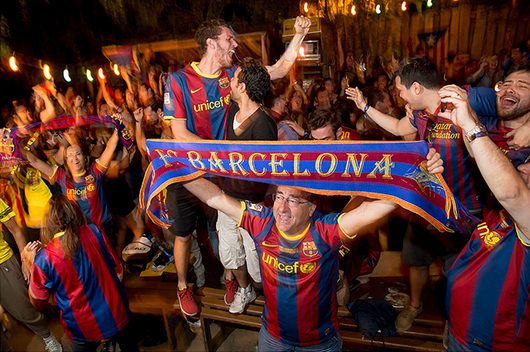
UNICEFAt an event presented by FC Barcelona and UNICEF, soccer players Andrés Iniesta and Marc-André Ter Stegen met with Los Angeles kids to discuss the importance of children’s education.
The FC Barcelona players shared with the kids their thoughts and memories of playing soccer during their school days. Iniesta and Ter Stegen donned their red, yellow and blue team colors during the meeting and answered questions after their initial comments.

On the players’ jerseys, the UNICEF logo can be seen, signifying FC Barcelona’s involvement and association with the organization. Iniesta, FC Barcelona’s midfielder, said that he is proud to be linked with an important organization like UNICEF.

“For us as individuals, and as a club, it’s an honor to wear the jersey because of the values that UNICEF represents,” he said.

In addition, Iniesta voiced his and UNICEF’s similar opinions about the value of education in children’s lives.

“Alongside UNICEF, we want to reinforce the importance of providing the most vulnerable children with access to education,” Iniesta said. “Especially as parents, we are aware that children are the most precious things in our lives. It’s difficult knowing that there are children in other countries who don’t have the same opportunities.”

In agreement with his teammate, Ter Stegen, the team’s goalkeeper, noted the significance of education with his personal testimony.

“I had a lot of coaches and each of them advised me how to reach my goals,” he said. “But it’s not enough to have coaches or just to play soccer: education has been really important for me.”

UNICEF’s choice to partner with FC Barcelona was a strategic one. According to Quora, a question and answer website, soccer is the most popular sport in the world. An estimated 3.5 billion people are either fans of the sport or watch the sport.

By teaming up with one of the most popular clubs in professional soccer, UNICEF gains an unfathomable amount of notoriety by people who have the ability to make a change.

UNICEF and FC Barcelona first began their partnership in September 2006, and since then, the FC Barcelona Foundation has donated more than 12 thousand euros, or a little over $13,000.

The programs put in place by the organizations have aided in improvements in health for several countries in Africa and South America where sports are an integral part of a child’s physical and mental development. UNICEF and FC Barcelona have helped create better education systems for children and greater training programs for teachers.

Albert Soler, Director of Professional Sports of FC Barcelona, said that these projects have created a monumental amount of educational opportunity.

“Through these programs, more than 300,000 children are being reached,” Soler said.

According to a New York Times article, students who play sports in school tend to perform better later in life.

“Participating in sports, like playing in the school band or competing on the debate team, are cognitively and organizationally demanding activities that help convey self-discipline and leadership skills,” the article said.

In agreement with The New York Times, U.S. Fund for UNICEF Regional Managing Director, Amber Hill, said that the power of sports has helped children all over the world receive an education that fosters the skills needed to succeed.

“All children have the right to learn,” Hill said. “The focus of the FC Barcelona and UNICEF partnership is creating a world inspired by the power of quality education, where sports and play are key elements in the development of all children.”

With the help of Iniesta, Ter Stegen and all of the UNICEF and FC Barcelona supporters, thousands of children are receiving a quality education. Sports have always played an important role in a child’s development. Now it can be said that sports, like soccer, have helped children succeed in education and in life.

– Fallon Lineberger

Sources: FC Barcelona, Look to the Stars, The New York Times, Quora
Photo: Flickr

August 5, 2015
https://borgenproject.org/wp-content/uploads/borgen-project-logo.svg 0 0 Borgen Project https://borgenproject.org/wp-content/uploads/borgen-project-logo.svg Borgen Project2015-08-05 01:30:272024-05-27 09:27:15FC Barcelona Players Talk Education And Sports For UNICEF
Activism, Global Poverty

Lights in the Darkness: Ordinary People Doing Good

lights_in_the_darkness
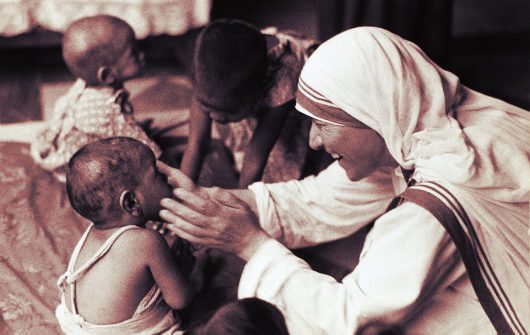
“There is a light in this world… more powerful than any darkness we may encounter…. [This] spirit will emerge through the lives of ordinary people who hear a call and answer in extraordinary ways.”

Mother Teresa, who would not be considered an “ordinary” person, said this once, and there are people who are proving her point every day, serving as lights in the darkness. Even in the midst of devastating circumstances, there are individuals who shine like beacons of light with the efforts they make to make their little corner of the world better. In the fight against global poverty, resources like resilience and joy are all too often underestimated.

For example, 67-year-old Gangadhara Katnam has been filling potholes in Hyderabad, the Indian city where he lives. His effort to tidy up the streets does not only keep clothes from getting ruined–it can save lives. People in cars, on bicycles and on foot all have been seriously injured due to driving or falling into these massive potholes. Katnam says that if he and his peers wanted such problems to get better, they would have to step up and do it themselves. And so he took the initiative to make his sphere of the world a better place and help those around him.

Another one of the lights in the darkness is McArthur Krishna, a volunteer for the Krishna Kumar Charitable Foundation (KKCF). She works to provide employment opportunities and education for young women, which is no small task to take on in the Indian culture of dowries and strict gender roles. As Krishna states plainly, “these girls have one option. They are going to get married to someone, and what they bring to that marriage will determine how the rest of their life goes.” The opportunity for women to take on responsibilities expands their horizons as they find personal fulfillment and their communities watch them succeed. The opportunity to contribute increases self-worth and the way young women are valued by others.

In Ban Naphia, a village in Laos, a man called Phet Napia melts down metal that he collects from ammunition shells and unexploded bombs that litter the countryside and then molds them into key rings and eating utensils. Laos is climbing out of poverty—it was ravaged by bombings during the Vietnam War, which is why this scrap metal is so plentiful. Phet Napia is a testament to the resilience of the country’s population, making something useful and beautiful out of something that was originally harmful and ugly.

It is simple, but all too often forgotten: there is so much good being done in the world. Sometimes the goodness comes in massive strides, as in the successful implementation of the Millennium Development Goals. Sometimes it comes in inspiring milestones, as on July 24, 2015, which marked one year of Nigeria being polio-free. And sometimes, the most influential acts of goodness shine through in a retiree filling potholes or a young woman being given a sense of purpose or in a villager’s resourceful spoon engineering. And for a pedestrian who avoided a pothole, a young woman who finally feels valued or a man making lemonade out of lemons, perhaps this is the sort of goodness that has the biggest impact.

– Emily Dieckman

Sources: Gates Foundation, GB Tribune, KKCF, National Geographic, NPR, UN
Photo: Scoop Whoop

August 3, 2015
https://borgenproject.org/wp-content/uploads/borgen-project-logo.svg 0 0 Borgen Project https://borgenproject.org/wp-content/uploads/borgen-project-logo.svg Borgen Project2015-08-03 09:10:212024-05-27 09:26:26Lights in the Darkness: Ordinary People Doing Good
Activism, Children, United Nations

Celebrating World Youth Skills Day

world_youth_skills_day
On July 15, 2015, the world celebrated the first annual World Youth Skills Day. Founded by the United Nations General Assembly this past winter, the goal of this day is to raise awareness of the need for training youth in the development of general life and work skills. It is also a part of the Sustainable Development Goals for the United Nations, which emphasizes the importance of education and skills training. In June 2014, following a meeting with John W. Ashe, the President of the UN General Assembly, the Sri Lankan Minister for Youth Affairs and Skills Development during the World Conference on Youth in May 2014, a draft resolution for World Skills Day was put forth for the 68th session of the General Assembly, according to a United Nations press release.

The day included a number of panels and presentations across the globe. One such event was titled “Investing in Youth and Ensuring Decent Jobs to Harness the Demographic Dividend” at the Financing for Development Conference in Addis Ababa, Ethiopia, which was attended by Ahmad Alhendawi, the U.N. Secretary General’s Envoy on Youth.

This day also reinforces the need for education in order to further economic development in the country. By educating the youth, they are more prepared for jobs, and by getting a more skilled labor force, the country may provide for greater economic opportunities individually and for the country.

According to the U.N. Secretary-General, Ban Ki-moon, “Skills development reduces poverty and better equips young people to find decent jobs. It triggers a process of empowerment and self-esteem that benefits everyone.”

– Rachelle Kredentser

Sources: UN 1, UN 2, UN 3, UN 4, UNESCOV, World Skills Day
Photo: Save the Children

July 31, 2015
https://borgenproject.org/wp-content/uploads/borgen-project-logo.svg 0 0 Borgen Project https://borgenproject.org/wp-content/uploads/borgen-project-logo.svg Borgen Project2015-07-31 01:30:322024-06-11 02:48:12Celebrating World Youth Skills Day
Activism, Advocacy

How the Richest Americans are Combatting Poverty

Wealthiest_Americans
The members of Forbes’ Top 25 richest Americans includes some of the most influential people in American society. However, these people are not just affecting the lives of Americans – many are using their wealth and influence to better the lives of the world’s poorest people. Here are two of the wealthiest that are making a difference.

Famous as the co-founder of Microsoft, Bill Gates is ranked number one on this list, with a net worth of approximately $81 billion. Focused on the idea “that all lives have equal value,” the Gates family founded the Bill and Melinda Gates Foundation in 2000. Since its launch, the foundation has donated over $30 billion to worthy causes around the world, including organizations aimed at expanding access to immunizations and groups aimed at supporting economic development. The Foundation has four main grant-making areas: global development, global health, global policy and advocacy, and the United States. GAVI Alliance, the organization with the largest grant commitment at $1.5 billion, was also created in 2000 with the goal of expanding access to vaccination in the poorest areas of the world.

An avid supporter of the Bill and Melinda Gates Foundation, as well as a trustee of the organization, Warren Buffett is the second wealthiest person in the Forbes’ list. Having earned his fortune from Berkshire Hathaway, a conglomerate company with stakes in many subsidiary companies, Buffett too makes philanthropy a top priority. Since 2006, Buffet has donated stocks from his company to different philanthropies based on his pledge made in that year to donate the majority of his fortune in annual installments. On July 6, 2015, he announced the latest donation of over $2.8 billion, with the largest amount going to the Bill and Melinda Gates Foundation and the rest donated to four family foundations: Susan Thompson Buffett Foundation, the Susan A. Buffett Foundation, the Howard G. Buffett Foundation and the NoVo Foundation.

These are just two of the richest Americans pledging billions of dollars to the fight against problems stemming from global poverty. Through advocacy, fundraising and donation, these men hope to improve life expectancy, economic mobility and more for those living in poverty in the United States and abroad. While the average American may not be able to donate such significant amounts of money, he or she can donate time and his or her voice to the larger discussion of global poverty. As Bill Gates said as the keynote speaker at the Forbes 400 Summit on Philanthropy last month, “Risk takers need backers. Good ideas need evangelists. Forgotten communities need advocates. And whether your chief resource is volunteer time or hard-earned dollars, for a relatively small investment catalytic philanthropy can make a big impact.

– Rachelle Kredentser

Sources: Forbes 1, Forbes 2 Gates Foundation 1, Gates Foundation 2, Gates Foundation 3, Huffington Post, Bank of America, NY Daily News, Philanthropy Roundtable, WarrenBuffet.com
Photo: World Crunch

July 31, 2015
https://borgenproject.org/wp-content/uploads/borgen-project-logo.svg 0 0 Borgen Project https://borgenproject.org/wp-content/uploads/borgen-project-logo.svg Borgen Project2015-07-31 01:30:252024-05-27 09:26:28How the Richest Americans are Combatting Poverty
Activism, Education, Global Poverty

8 Colombian NonProfit Organizations

non-profit_organizations_in_colombia
From building housing for people living in vulnerable conditions to the promotion of education, Colombian organizations work on humanitarian causes in the country.

Poverty, education, health and living are the main areas that many nonprofit organizations in Colombia work on in order to contribute to the betterment of the Colombian community.

According to the Departamento Administrativo Nacional de Estadística (DANE), 784,000 people in Colombia prevailed out of poverty in 2014. In the same year, extreme poverty also experienced a decrease of 407,000 people.

These results represent a reduction in the poverty rate of Colombia, making them the lowest results in the past 13 years.

Nonprofit organizations form a part that contributes to the betterment of the Colombian society. Here are 8 Colombian nonprofit organizations that are making a difference:

Federación Nacional de Cafeteros de Colombia

Considered one of the biggest rural nonprofit organizations in the world, the Federación Nacional de Cafeteros de Colombia works for the betterment of the Colombian coffee farmers.

Representing more than 563,000 families, the Federación Nacional de Cafeteros de Colombia works to improve the life quality of Colombian coffee producers by optimizing production costs and maximizing the coffee quality.

Fundación Antonio Restrepo Barco

Responding to the issues of a country that has different social conditions and tending to social problems are some of the activities that members of the Fundación Antonio Restrepo Barco do.

The foundation believes that the families living in crisis areas are more afflicted by social issues and problems. Fundación Antonio Restrepo Barco forwards projects related to the protection of children rights, education, health and social and regional development of attention to vulnerable communities.

Fundación Juan Felipe Gómez Escobar

This foundation, also known as “La Juanfe,” works to bring a better life to the children and young people from Cartagena, Colombia. They do this by providing health care, and by bringing psychological and affective care.
The entity works with various partners that are national and international businesses, and public and private agencies.

Asociación Metrópoli Colombia

This association works for the creation of spaces where people living under vulnerable conditions could experience personal growth, the transformation of their surroundings, and equal opportunities through education and culture.

Through the program “Espacios de encuentro para la construcción de la vida y la paz,” Metrópoli Colombia proffers the availability of spaces that provide access to education, wellness, arts and culture as a means of improving the life quality of children and young people.

Corporación Día de la Niñez

This is a nonprofit organization that promotes the importance that childhood has in the development and progress of the community and families, especially in communities that live under poverty and/or violence.

They have as a mission to promote children games in the familiar and communitarian aspects.

Fundación OCMAES

This is a nonprofit foundation that works to promote people’s talent. Fundación OCMAES foments the education among young Colombians that have an academic potential, but do not have the economical facilities to afford professional programs or continue with their studies.

Through the “Programa de Apoyo Universitario,” the foundation gives scholarships to young Colombians with academic potential.

Fundación SERVIVIENDA

This organization improves the life quality of the communities living in vulnerable conditions by the construction of houses for these Colombian communities.

The foundation is compromised with integral development and brings security, identity and the sense of social belonging.

Fundación Terpel

They work to bring quality education to Colombian children. The entity implements programs that develop competitions in leadership, mathematics and language for children and young people living under vulnerable conditions.

– Diana Fernanda Leon

Sources: DANE, Federación Nacional de Cafeteros de Colombia, Fundación Antonio Restrepo Barco, Fundación Juan Felipe Gómez Escobar, Metrópoli Colombia, Corporación Día de la Niñez, Fundación Ocmaes, Fundación Servivienda, Fundación Terpel,
Photo: Fundación Juan Felipe Gómez Escobar

July 31, 2015
https://borgenproject.org/wp-content/uploads/borgen-project-logo.svg 0 0 Borgen Project https://borgenproject.org/wp-content/uploads/borgen-project-logo.svg Borgen Project2015-07-31 01:30:162024-12-13 17:52:168 Colombian NonProfit Organizations
Activism, Hunger

Kate Hudson and Michael Kors Team Up to Watch Hunger Stop

Hunger_Stop
An Instagram post by @michaelkors announced that longtime pals, Kate Hudson and Michael Kors, have joined forces to end world hunger with Kors’ campaign, Watch Hunger Stop.

In the social media post, Hudson and Kors can be seen donning watches from the designer’s own collection, seemingly hinting that just as time is paused in the photo, hunger must be stopped in reality.

The award-winning actress’ first act of charity for Watch Hunger Stop will be to advertise Kors’ new styles of his Bradshaw watch. Each sale of one of these watches will provide a meal for one hundred children in need. Hudson showed her support by posting the ad on her Instagram, @katehudson, as well as speaking about her thoughts of world hunger.

“As a mother, I can’t think of anything more important than raising a healthy and educated generation of children, and World Food Program’s School Meals Program is committed to exactly that,” Hudson said. “This is a cause that I’m eager to be a part of because I believe we can all make a real and significant difference.”

The feeling of excitement was clearly quite mutual. Kors said he chose to work with Hudson because she contributes a positive and irreplaceable vibe to the charity.

“Not only does she have a unique star quality, but she also brings an incredible amount of generosity and a can-do attitude to a cause that is extremely important to me personally,” Kors said.

Kors creates timepieces specifically made to benefit his charity. He was named a United Nations Ambassador for his efforts, which presented meals to 10 million children in need. Kors’ determination is much appreciated by the UN, which said that almost one billion people worldwide go to sleep hungry–that’s 1 in 7 people on this Earth.

The UN also said that hunger not only affects the people suffering but also stifles economic growth in regions where hunger prevails.

“We also should remember that food is good business. When nations solve the problem, it fuels their economy,” said Josette Sheeran, the Executive Director of the World Food Programme in 2010.

With the help of donors and, now Hudson, Kors will continue to fight and raise awareness for hunger for the UN World Food Programme.

Hudson is no stranger to charity. The actress has also worked with Donate Life America, Fulfillment Fund, Healthy Child Healthy World, Last Chance for Animals, Red Cross and WildAid. Her partner in the Bradshaw watch campaign has also contributed greatly to multiple charities. Kors has volunteered to benefit disease, poverty, mental health, environment, conservation and of course, hunger. Kors will release the limited-edition styles of the Bradshaw watch in October of this year. With each sale, Kors will donate $25 to World Food Programme.

To learn more about the cause, visit https://destinationkors.michaelkors.com/watch-hunger-stop/ or search the hashtag, #WatchHungerStop.

– Fallon Lineberger

Sources: Daily Mail, Look to the Stars, Look to the Stars, Michael Kors 1, Michael Kors 2, United Nations
Photo: Destination Kors

July 31, 2015
https://borgenproject.org/wp-content/uploads/borgen-project-logo.svg 0 0 Borgen Project https://borgenproject.org/wp-content/uploads/borgen-project-logo.svg Borgen Project2015-07-31 01:30:102024-12-13 17:52:13Kate Hudson and Michael Kors Team Up to Watch Hunger Stop
Activism, Advocacy, Global Poverty

What Emma Watson Has Done For Poverty

Emma-Watson-Poverty
GQ Magazine’s 2013 Woman of the Year Emma Watson has quickly become one of the most influential women in the world. The British movie star, only 25-years-old, has been involved with many projects for film, music and fashion, as well as numerous philanthropic movements and organizations. Beginning in her teens, Watson has helped end global poverty on a level that few have met.

The Harry Potter actress has most recently jumped forward with her support of gender inequality with her status as a U.N. Women Goodwill Ambassador and her backing of the HeForShe campaign.

According to the United Nations Development Programme (UNDP), gender inequality is a large factor contributing to extreme poverty. Many women in poor areas receive little or no education because they are only expected to perform other duties like fetch water, provide food and care for their families. If women obtain sufficient schooling, their chance for gaining a well-paying occupation greatly increases.

“Their increased earning power in turn raises household incomes,” the UNDP said. In addition, a more equal environment in the household allows for an improved well-being for children, and henceforth, lowering the chance of poverty for later generations.

Last year, Watson gave a speech asking for help to promote and assist with HeForShe. This movement focuses on addressing boys and men to defend gender equality, rather than traditionally gathering women and girls to rally followers.

Watson talked about how gender inequality exists for both men and women. Because of this, economic growth is harder to sustain, and developing areas are still vulnerable to disease, abuse and other side effects of poverty.

Aside from promoting gender equality, Watson has participated in other efforts to end extreme poverty.

In 2011, she donated a signed copy of “Harry Potter and the Deathly Hallows” to an auction facilitated by ShelterBox, which is an organization that aids areas in need overcome by tragedy and humanitarian crisis.

In successive years, she provided service for UNICEF and United Nations Women. Watson also donated a pair of designer Burberry heels to the Small Steps Project, which provides emergency aid to those living in poor conditions. In addition, she worked with the Millennium Promise organization, which aims to end global poverty by 2025.

Watson has greatly helped the struggle to end global poverty. While simultaneously working on her bachelor’s degree at Brown University and acting in “This is the End,” the humanitarian has gone through great lengths to give back to those in need.

When speaking of insecurity about her qualifications to speak on behalf of gender equality, Watson reassured herself with a notion that people everywhere should tell themselves when they are unsure about helping a cause: “In my moments of doubt, I’ve told myself firmly—if not me, who? If not now, when?”

Although Watson is still young, she has helped fund and mobilize people around the globe for the greater good, and has brought the world one step closer to ending extreme poverty.

– Fallon Lineberger

Sources: GQ Magazine, Look to the Stars, ShelterBox, Small Steps Project, The Telegraph, UNDP, UN Women
Photo: The Lake Front

July 30, 2015
https://borgenproject.org/wp-content/uploads/borgen-project-logo.svg 0 0 Borgen Project https://borgenproject.org/wp-content/uploads/borgen-project-logo.svg Borgen Project2015-07-30 09:03:092024-05-27 09:26:09What Emma Watson Has Done For Poverty
Page 22 of 56«‹2021222324›»

Get Smarter

  • Global Poverty 101
  • Global Poverty… The Good News
  • Global Poverty & U.S. Jobs
  • Global Poverty and National Security
  • Innovative Solutions to Poverty
  • Global Poverty & Aid FAQ’s
Search Search

Take Action

  • Call Congress
  • Email Congress
  • Donate
  • 30 Ways to Help
  • Volunteer Ops
  • Internships
  • Courses & Certificates
  • The Podcast
Borgen Project

“The Borgen Project is an incredible nonprofit organization that is addressing poverty and hunger and working towards ending them.”

-The Huffington Post

Inside The Borgen Project

  • Contact
  • About
  • Financials
  • President
  • Board of Directors
  • Board of Advisors

International Links

  • UK Email Parliament
  • UK Donate
  • Canada Email Parliament

Get Smarter

  • Global Poverty 101
  • Global Poverty… The Good News
  • Global Poverty & U.S. Jobs
  • Global Poverty and National Security
  • Innovative Solutions to Poverty
  • Global Poverty & Aid FAQ’s

Ways to Help

  • Call Congress
  • Email Congress
  • Donate
  • 30 Ways to Help
  • Volunteer Ops
  • Internships
  • Courses & Certificates
  • The Podcast
Scroll to top Scroll to top Scroll to top