• Link to X
  • Link to Facebook
  • Link to Instagram
  • Link to TikTok
  • Link to Youtube
  • About
    • About Us
      • President
      • Board of Directors
      • Board of Advisors
      • Financials
      • Our Methodology
      • Success Tracker
      • Contact
  • Act Now
    • 30 Ways to Help
      • Email Congress
      • Call Congress
      • Volunteer
      • Courses & Certificates
      • Be a Donor
    • Internships
      • In-Office Internships
      • Remote Internships
    • Legislation
      • Politics 101
  • The Blog
  • The Podcast
  • Magazine
  • Donate
  • Click to open the search input field Click to open the search input field Search
  • Menu Menu

Archive for category: Activism

Information and stories on social activism.

Activism, Development, Global Poverty, Health

How Human Waste Could Be the New Power Source

human_waste
In today’s age of technology developments and exciting advances, there is still a population of up to 1.3 billion people living without access to electricity. The IEA, or International Energy Agency, shows that “this is the equivalent to 18 percent of the global population and 22 percent of those living in developing countries.”

While this is true, though, the world recognizes that energy is essential to economic development. UN studies have stated, “Energy provides mobility, heat, and light; it is the fuel that drives the global economy. But the production and use of coal, oil, and gas cause air pollution and climate change, harming public health and the environment.”

In response, studies have been made to find the most cost-efficient way to provide eco-friendly energy sources. The new power source that is currently being tested comes in the form of human waste.

To show the true potential of the source, the United Nations University created a study to find the value of human waste in terms of energy.

The study showed that “biogas from human waste, safely obtained under controlled circumstances using innovative technologies, is a potential fuel source great enough, in theory, to generate electricity for up to 138 million households – the number of households in Indonesia, Brazil, and Ethiopia combined.”

With that number in mind, the UNU’s Institute in Canada estimated “that biogas potentially available from human waste worldwide would have a value of up to US$ 9.5 billion in natural gas equivalent.”

The waste would be dried and charred, producing a sludge-like substance similar to coal but with the added bonus of being eco-friendly.

With all of these facts, however, the concept is still a major taboo in people’s eyes. To combat this, experts have shown that the world already reuses water and nutrients from wastewater and continue to fight for the new energy source potential.

With World Toilet Day on Nov. 19 being around the corner, the U.N. hopes to combat the stigma. UNU-INWEH Director Zafar Adeel stated that it will hopefully “promote new thinking and to continue puncturing the taboos in many places that inhibit discussion and perpetuate the disgrace and tragedy of inadequate human waste management in many developing world areas. This report contributes to that goal.”

– Katherine Martin

Sources: World Energy Outlook, UN Foundation, UNU
Photo: Pixabay
November 14, 2015
https://borgenproject.org/wp-content/uploads/borgen-project-logo.svg 0 0 Borgen Project https://borgenproject.org/wp-content/uploads/borgen-project-logo.svg Borgen Project2015-11-14 01:30:432024-12-13 18:05:21How Human Waste Could Be the New Power Source
Activism, Advocacy, Volunteer

How to Get Involved with Causes that Matter

get_involved
Compassion is the emotion that forms out of concern for others. For many individuals, this is easy to feel, but harder to put into action. The desire to do good, but not knowing where to start and how to help are common roadblocks.

Luckily, this block is easily overcome. Whether you are young or old, well off or just getting by, there are ways to help and get involved with causes that matter to you.

1. Educate yourself

Getting involved doesn’t necessarily mean that you have to be an expert, but it’s good to know at least the basics. Good questions to ask before getting involved may include: what is their goal, how are they working toward that goal, which route of involvement works best for your lifestyle, etc.

One worthy cause has shared, “Read, check out documentaries, listen to podcasts on your way to work – whatever you can do to learn the most that you can about your cause will only help… by giving you the knowledge you need to educate others and ignite change.”

2. Use your own unique skills

One of the beautiful things about the world we live in is how individuals are able to get together with varying skills in order to accomplish a similar goal. Getting involved with causes works the same way.

The key is to figure out what you can offer to your cause of choice. “Identify your skills—whether you’re bilingual, you have some teaching experience, or you’re skilled at communications and marketing—and volunteer them for an organization you care about. More importantly, use it as an opportunity to learn more about the issue and advocate for it.”

3. Social media

In the world that we live in, technology can be an incredibly easy way to promote a cause. Whether it’s a quick photo, a shared article, or a hashtag there are ways to share with your friends what matters most to you.

There are several ways to share information and raise awareness through social media. Get creative and try things out. You never know how much impact your post will have.

4. Get political

This one is often seen as the most daunting way to get involved with a cause, but it doesn’t have to be.

For individuals that don’t feel comfortable meeting with congress members, there are other ways. One that doesn’t take much time, yet accomplishes a lot, is sending a quick email. If you know of bills that are in congress that relate to your cause, let your leaders know that it matters to you.

At The Borgen Project, encouraging individuals to call or email congress members is a main aspect of the job, but why?

“Congressional staffers keep a tally of every issue that voters call, write and email the leader about. This information goes into a weekly report that is viewed by the Congressional leader. Your one email will get the issue or bill on the leaders radar.”

For those that are comfortable with putting themselves out there, lobbying, bird dogging and sending YouTube videos to congress are all excellent ways to share your support and get involved with your cause.

5. Volunteer/Fundraise

These two are usually the first things that come to mind when we think of personal involvement in a cause of our choice.

For many, a personal block is the feeling that small contributions don’t really help. “But you don’t have to be raking in thousands to donate to a cause—every little bit helps and you can start small.”

Whatever your cause is, check out the site and look for opportunities to volunteer or fundraise. Doing such is a great opportunity and often very rewarding.

The take home from this is that there are ways to get involved for everyone; no matter what lifestyle you live, there are ways to contribute.

– Katherine Martin

Sources: One Green Planet, The Muse, Borgen Project
Photo: Wikimedia

November 14, 2015
https://borgenproject.org/wp-content/uploads/borgen-project-logo.svg 0 0 Borgen Project https://borgenproject.org/wp-content/uploads/borgen-project-logo.svg Borgen Project2015-11-14 01:30:212020-06-24 19:37:13How to Get Involved with Causes that Matter
Activism, Advocacy, Global Poverty

Active Involvement in Global Poverty Efforts Equals Happiness

Helping To Eradicate Poverty Will Make You Happier
The goal to eradicate global poverty continues to be a growing challenge facing the world today. This year, an estimated 700 million people worldwide still live below the poverty line.

In a survey conducted by the charity Action For Happiness, they identified ten everyday habits that make people happier.

On a scale of 1-10, each habit was ranked based on how frequently people performed each habit.

The number 1 ranked habit, at 7.41, was giving.

“Practicing these habits really can boost our happiness. It’s great to see so many people regularly doing things to help others — and when we make others happy we tend to feel good ourselves too,” said Professor Karen Pine, a psychologist involved in the study.

Here are three simple ways people can become involved in the fight to eradicate poverty:

  1. Join an Organization: Ending poverty is not solely the job of world leaders, but individuals worldwide can do their part as well. People who are passionate about ending poverty can join a network of supporters who share similar ideas and strategies.Examples of non-profit organizations include ONE Campaign, UNICEF, CARE, and The Borgen Project.
  2. Contact Your Congressional Leaders In the United States, each state has two senators and a number of representatives who enjoy hearing thoughts and suggestions from their constituents.With phone numbers and emails easily accessible, senators and representatives keep a tally of every issue their constituents call or email about. A simple phone call or a click of a button can determine if a bill is discussed in the Senate or House. Learn more about how easy it is to email and call Congress here.
  3. Set up a Fundraising Page: Online donation pages can be built with donation sites including Donor Drive and GoFundMe. Using social media, people can persuade friends and family to donate to a worthy cause.

Through global poverty efforts, everyone can play a role in ending poverty while simultaneously feeling better about their well-being.

“Extreme poverty has been cut in half in the last 20 years, and the facts show that we can get it to virtually zero within a generation – but only if we act,” said Bono, musician and global activist.

– Alexandra Korman

Sources: Global Citizen, PSY Blog, The Borgen Project
Photo: Flickr

November 11, 2015
https://borgenproject.org/wp-content/uploads/borgen-project-logo.svg 0 0 Borgen Project https://borgenproject.org/wp-content/uploads/borgen-project-logo.svg Borgen Project2015-11-11 01:30:292024-12-13 18:05:18Active Involvement in Global Poverty Efforts Equals Happiness
Activism, Advocacy, Aid, Children, Education, Global Poverty, Hunger

Read to Feed: Global Education Lesson Plans

Global_Education_Lesson_Plans
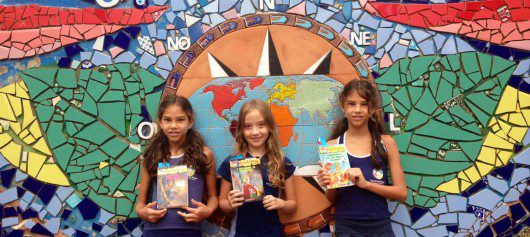
Anyone and everyone can change the world, even in the slightest way. An organization known as Read to Feed gives children the opportunity to make a difference in the lives of families living in poverty.

The program encourages childhood reading while raising awareness of extreme global poverty in young minds. Read to Feed teaches and informs students of the realities of malnutrition and poverty, inspiring them to help those in need and providing an educational incentive to do so.

Here’s how it works: A child chooses a sponsor for each book he or she reads during a period of time set by his or her Read to Feed leader. The sponsor agrees to provide a certain amount of money for each book read or hour spent reading. Then, after the books have been read and the funds collected, the child chooses an animal through Heifer International to give to a family experiencing poverty.

Heifer International is an organization dedicated to ending global poverty and world hunger. Heifer provides families in impoverished communities with livestock and training to combat malnutrition as well as build a sustainable lifestyle.

Furthermore, Heifer encourages the families they have helped to share the training they receive with other families in their communities and pass on the first female offspring of their livestock to another family in need, thus creating a cycle of sustainability that has the power to lift entire communities out of poverty.

The wide variety of livestock provides families with meat, milk, wool and manure to grow their own agriculture. Kids can participate in Read to Feed individually or in groups; however, the program most often takes place in a classroom setting.

Furthermore, Heifer provides Global Education Lesson Plans so that teachers can inform students of the realities of global poverty and the impact that they can make in changing its course.

Read to Feed ultimately provides children with a way to make a difference in many lives. Reading a book is a fun incentive to end extreme poverty, both stimulating a child’s mind by increasing the number of books they read, and their knowledge of the world. Anyone can make a difference and everyone– no matter what age– deserves the chance to try.

– Sarah Sheppard

Sources: Heifer 1, Heifer 2, Learning to Give
Photo: Hiefer International

November 9, 2015
https://borgenproject.org/wp-content/uploads/borgen-project-logo.svg 0 0 Borgen Project https://borgenproject.org/wp-content/uploads/borgen-project-logo.svg Borgen Project2015-11-09 06:26:312024-12-13 18:04:59Read to Feed: Global Education Lesson Plans
Activism, Global Poverty, Technology

Millennials are Essential to Ending Extreme Poverty

ending_extreme_poverty

By the end of the year, the Millennial generation is projected to outgrow the Baby Boomer generation in the U.S., being predicted to grow to 75.3 million. Their large numbers will become crucial to helping end extreme poverty by 2030.

Since 1980, the world has made the unprecedented progress regarding extreme poverty–cutting extreme poverty in half from 43 percent in 1990 to fewer than 20 percent today.

Even with this upward progression, over 1 billion people worldwide suffer from extreme poverty, living on less than $1.25 per day. To make steps toward ending extreme poverty by 2030, 188 countries agreed to the UN’s goals at the World Bank Meetings in 2013.

If Millennials around the world connect themselves through social media and other events, this goal will become possible. As the first generation to have full access to technology at a young age, Millennials can spark a conversation and voice their concerns via social media.

While social media is beneficial in the fight to eradicate extreme poverty, events and festivals are taking place around the country to get the generation involved in the project.

On April 10, 2014, Global Citizen partnered with the World Bank Youth Network to host End Poverty 2030: Millennials take on the challenge in Washington, D.C. The event focused on the important role Millennials play in the fight to stop extreme poverty, even featuring a short film created by award-winning film writer and director Richard Curtis.

Over 1,000 people, including Secretary General of the United Nations Ban Ki-moon, attended the event while thousands more watched the event online. During the event, Ki-moon had a few encouraging words for the generation.

“I know that your generation can break this vicious cycle of extreme poverty, and I count on your strong engagement,” Ki-moon said.

More awareness for extreme poverty can be found at the Global Citizens Festival on Sept. 26 in Central Park. The music festival will include superstars Pearl Jam, Beyoncé, Coldplay and Ed Sheeran, with more to be announced on the festival’s website.

This year in order to buy a ticket, potential buyers are encouraged to complete the Eight Global Steps before entering their name into a raffle system. Some of these steps include tweeting the UN’s Global Goals or signing a petition to bring awareness to the Global Food Security Act.

Since the festival’s inception in 2011, $1.3 billion has been raised to support extreme poverty.

As festivals and events continue to be organized and geared towards Millennials, there is hope to end extreme poverty by 2030.

– Alexandra Korman

Sources: Forbes, Global Citizen, Pew Research
Photo: Huffington Post

November 8, 2015
https://borgenproject.org/wp-content/uploads/borgen-project-logo.svg 0 0 Borgen Project https://borgenproject.org/wp-content/uploads/borgen-project-logo.svg Borgen Project2015-11-08 01:30:252020-06-24 19:22:46Millennials are Essential to Ending Extreme Poverty
Activism, Health

Peru and Ecuador Team Up to Fight Chikungunya Fever


Reports of Chikungunya Fever are on the rise in Peru, raising concerns at the U.S. Centers for Disease Control and Prevention (CDC).

The CDC has added Peru to the Level One Watch List for Chikungunya Fever, as the disease moves toward epidemic proportions in the country. The Peruvian Ministry of Health is taking precautions to limit the spread of the disease in the country, which may have spread from neighboring countries.

Minister Velasquez of the Peruvian Ministry of Health and Minister Candace Vance of Health Ministry of Ecuador have signed an agreement to jointly fight the disease. This agreement allowed Peru to identify the first indigenous case of Chikungunya Fever.

The Peruvian Ministry of Health of has put together a national plan to combat the disease including a surveillance agency MOH to monitor infectious disease coming across the border. They have also placed an epidemiological fence in areas where the disease is prevalent and spray shops and homes to eradicate the disease.

In partnership with Ecuador, the are closely monitoring outbreak and implementing vector control in areas where the outbreaks arise in. Ecuador has suffered more than 15,000 cases of Chikungunya Fever this year alone.

Across Latin America, rates of mosquito-borne disease are increasing; the joint action plan between Ecuador and Peru marks a first step in interstate cooperation to combat mosquito-borne diseases.

Chikungunya fever, much like malaria, Yellow fever, Typhoid fever and Dengue is spread by the bite of a mosquito. Chikungunya symptoms begin about 3-7 days after being bitten by the Aedes Egypti mosquito.

The symptoms include fever, joint pain, headache, muscle ache, rash or swelling. These symptoms left untreated can severely disable an individual. Symptoms can last anywhere from a week to a month depending on the severity of the case.

– Robert Cross

Sources: CDC, EL Universo, Outbreak News Today, PMOH, Peru This Week
Photo: Información desde América Latina

November 2, 2015
https://borgenproject.org/wp-content/uploads/borgen-project-logo.svg 0 0 Borgen Project https://borgenproject.org/wp-content/uploads/borgen-project-logo.svg Borgen Project2015-11-02 01:30:512024-12-13 18:05:18Peru and Ecuador Team Up to Fight Chikungunya Fever
Activism, Food & Hunger, Global Poverty

What is the Africa Governance Initiative?

africas governance
One of the hallmarks of former UK Prime Minister Tony Blair’s premiership is his commitment to the development of Africa. Since leaving office in 2007, Blair continues his dedication to Africa’s poor through the Africa Governance Initiative (AGI).

In Sub-Saharan Africa, nearly 50 percent of all people live in poverty. Around 239 million Africans face food insecurity and 70 percent do not have electricity.

In 2008, AGI was founded upon a mission to establish enduring governments that will lift impoverished Africans out of poverty.

The AGI team strives to achieve this goal by working with public officials to improve their policies, strategies and capacities to affect change within their respective countries.

Liberia’s President Ellen Johnson Sirleaf, who was elected in 2006, noted, “There you stand, trying to re-build a nation in an environment where everyone wants to see change take place right away…. Only you cannot because the capacity to implement whatever change you have in mind does not exist.”

Liberia is one of six African countries AGI works with. The others are Sierra Leone, Guinea, Nigeria, Ethiopia and Rwanda—where AGI was piloted.

AGI operates by working “shoulder-to-shoulder” with the highest levels of government. With a cornerstone platform of prioritization, planning and performance management, AGI tailors its programs to the specific needs of each country.

In 1994, many Rwandans fled the country or died as a result of genocide. Rwanda felt the devastating effects of the genocide for more than a decade after. In 2008, AGI came to Rwanda to help President Paul Kagame and his government put Rwanda back on a path toward development.

The initiatives AGI undertook in Rwanda were tailored to their Vision 2020 plan. Vision 2020 is the government’s plan to make Rwanda a middle-income country by 2020.

Together the AGI team and the Rwandan government developed the Strategic Capacity Building Initiative (SCBI). The SCBI paired government workers with technical experts to recognize and address the reasons why capacity building in Rwanda failed in the past.

After much research and deliberation, SCBI decided on four measures that would be the key to program implementation in the future.

These measures are priority driven, having government ownership of programs and strategies, focusing on delivery of relevant work in a real context and lastly long-term investment or, in other words, youth involvement.

Phase 1 AGI’s Program

  • Phase 1 of the program targeted energy, agriculture, mining and investment.
  • In the energy sector, Rwanda quickly took the initiative to become a world example for sustainable development.
  • In 2014, Rwanda completed the construction of East Africa’s first large-scale solar power plant.

The process of legal negotiations, considering international guidelines for best practice and leveraging long-term investment leading up to the construction took just seven months—what AGI calls, “lighting-fast by international standards.”

The plant is located about an hour outside of Rwanda’s capital, Kigali. Since its implementation just last year, the plant has already produced 8.5 megawatts of electricity.

This replaced expensive and dirty diesel fuel with clean and cheap solar energy which now powers 12,000 homes.

Plans for the future include increasing solar capacity to 250 megawatts, which could power close to 353,000 more homes.

Other successes from the SCBI include increased wages for farmers and a fairer mining industry. Between 2000 and 2010 Rwanda was considered one of the world’s ten fastest growing economies. Since 2007, poverty in Rwanda decreased by nearly 8 percent.

“I set up AGI to help African governments bridge the gap between plans and results, to get from power plans to power plants, from a line in a speech to a line of children outside their new school,” said Blair.

Rwanda’s successes show that it is not corruption, but a need for proper capacity building that hinders development.

The Rwanda government’s eagerness to continue with SCBI and other projects is a testament to Africa’s ability to become a world leader in raising its people out of poverty.

– Celestina Radogno

Sources: Africa Governance Initiative 1, Africa Governance Initiative 2, Africa Governance Initiative 3, Africa Governance Initiative 4, Africa Governance Initiative 5, CIA World Fact Book, Huffington Post, Tony Blair, World Hunger
Photo: Diallo Kenyatta

October 23, 2015
https://borgenproject.org/wp-content/uploads/borgen-project-logo.svg 0 0 Borgen Project https://borgenproject.org/wp-content/uploads/borgen-project-logo.svg Borgen Project2015-10-23 01:30:332020-06-25 19:45:57What is the Africa Governance Initiative?
Activism, Development, Global Poverty

Why We Need More Activists

Why We Need More Activists
When the world’s problems seem too big, too complicated and too terrifying to even try and solve, the words of Margret Meade always seem to provide much-needed perspective, “Never doubt that a small group of thoughtful, committed citizens can change the world. Indeed, it’s the only thing that ever has.”

Activism, as defined by the Cambridge Dictionary, is “the use of direct and noticeable action to achieve a result, usually a political or social one.” By this definition, an activist is someone who does an action on behalf of a cause.

The traditional method of activism usually involved a picket and a protest. However, with the introduction of the Internet and the expanding access to information and connectivity, activism has begun presenting itself in diverse, and arguably more effective, ways.

Activism has played a role in ending slavery, protecting civil rights, promoting equality for women and many other issues, but as the way activism works begins to change, the need for activists grows.

Before globalization and the hyper interconnectivity of our world through trade and online access, problems were handled generally at a local level. Communities pushed against government policies they disagreed with or pushed for social change they deemed fit.

As issues expand to a global level, so must activism. But unlike the past, those most affected by certain life debilitating issues do not have the access needed to have their voices heard.

activistsNearly half of the world’s population — a staggering 3 billion people — live on less than $2.50 a day.

While the international poverty line has been drawn at living on a $1.25 or less a day, which more than 1.3 billion people do, it is important to acknowledge that a significant portion of the people living on earth today is barely getting by. Poverty is especially rampant in undeveloped nations.

So in addition to dealing with economic insecurity, citizens of poor countries have few avenues for social, political or economic change. They cannot simply sign a petition for their government to implement better social programs.

Many of them live in rural communities far removed from their governments, and most of the governments in developing countries are unable or unwilling to help their citizens break the bonds of poverty.

This is why we need more activists. Half of our world is essentially voiceless. They cannot adequately act on behalf of their own cause, but that does not mean they should not be heard. If the portion of our population, who has enough, did enough, then couldn’t we all have enough?

We need to use activism to scream that global poverty must be eradicated.

There is what seems like endless ways to become a voice for someone who needs to have their needs heard.

Join organizations who have made it their mission to address global poverty in one way or another, volunteer at their events, rally your friends to become involved, contact your local and federal governing representatives to encourage them to join the fight.

It does not matter how you choose to be an activist, it only matters that you act.

– Brittney Dimond

Sources: Do Something, BMartin, Cambridge Dictionary, One, Permanent Culture Now, Activists Handbook
Photo: Pixabay, Wikipedia

October 19, 2015
https://borgenproject.org/wp-content/uploads/borgen-project-logo.svg 0 0 Borgen Project https://borgenproject.org/wp-content/uploads/borgen-project-logo.svg Borgen Project2015-10-19 01:30:142024-12-13 18:05:15Why We Need More Activists
Activism, Global Poverty, Government

Lighting Up Myanmar With The National Electrification Plan

National_Electrification_Plan
In rural Myanmar today, only 16 percent of households have electricity. The Myanmar government, in partnership with the World Bank, intends to drastically increase the number of connections to reach universal connectivity for rural residents by 2030 through the National Electrification Plan.

The Myanmar government has found that lack of access to electricity is more than a basic hindrance to the people of Myanmar. As it turns out, lack of access plays a major role in stunting community development and perpetuating the poverty cycle.

Students, in particular, suffer from the lack of universal connectivity, having to rely on expensive battery powered lights or candles. In a nation where the sun sets each evening before 7 p.m. year-round, that leaves a lot of rural school children in the dark.

Creating sustainable local businesses has also proven to be a challenge. Without electricity, markets are unable to operate at night, losing valuable employment opportunities for community members while causing a loss of community potential for outside investment.

Rural clinics also suffer due to the shortage of quality lighting but, more importantly, because of refrigeration issues. A wide variety of injectable medication requires constant refrigeration, such as lifesaving drug insulin.

The National Electrification Plan will be able to put an end to these problems. Designed with three checkpoints, the program intends to reach 50 percent access by 2020, 75 percent by 2025 and universal access by 2030, according to World Bank.

Due to some of the challenging geographic locations that require a connection, the program is incorporating solar power and mini-grid connections besides just increasing the size of the of the national grid.

As of Sept. 16, 2015, the Myanmar government was approved for a $400 million International Development Association (IDA) credit to move forward with the program. The entire project is estimated to require $6 billion of investments to connect all 7 million households.

The first phase of the project is estimated to cost $700 million and connect nearly 2 million homes and will be finished over the course of the next five years.

As for community welfare, 23,000 new connections have been designated for clinics, schools and religious buildings, and more than 150,000 public lights are planned to illuminate public spaces.

The Myanmar government hopes that the National Electrification Plan will help pave the way to increased economic and social prosperity throughout the nations, giving the people of Myanmar a brighter, more successful and sustainable future.

– Claire Colby

Sources: Timebie, World Bank, World Factbook
Photo: Pixabay

October 17, 2015
https://borgenproject.org/wp-content/uploads/borgen-project-logo.svg 0 0 Borgen Project https://borgenproject.org/wp-content/uploads/borgen-project-logo.svg Borgen Project2015-10-17 01:30:052024-12-13 18:05:15Lighting Up Myanmar With The National Electrification Plan
Activism, Development, Global Poverty

Impact of #LightTheWay on Sustainable Development Goals

Light-The-Way
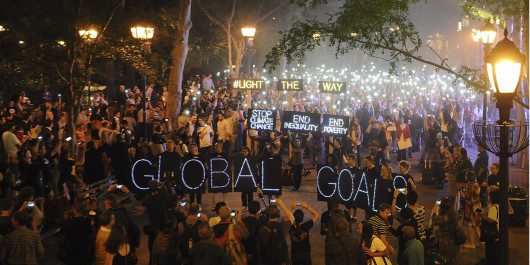
On Sept. 24, at sundown, thousands of candles, flashlights and lanterns were raised to the sky in support of the Sustainable Development Goals (SDGs).

The Sustainable Development Goals

These 17 goals, which would be announced by world leaders in New York the following day, range from ending poverty to protecting marine life and providing quality education.

Each country would decide whether or not to commit to the fifteen-year agenda to “end poverty, protect the planet, and ensure prosperity for all.”

The Sustainable Development Goals were designed to build upon their predecessors, the Millennium Development Goals (MDGs). The MDGs, implemented from 2000 to 2015, targeted the eradication of poverty, disease and hunger.

Now nations hope that the SDGs will finish the deal by directly addressing issues that promote poverty, such as unsanitary water and social inequality.

“This agreement marks an important milestone in putting our world on an inclusive and sustainable course,” says Helen Clark, the administrator of the United Nations Development Programme.

The biggest challenge now is ensuring that these goals remain on track and leaders exercise vigilance in carrying them out. This is where #LightTheWay steps in.

#LightTheWay For a Better Planet

#LightTheWay was founded by action/2015, one of the largest civil society campaigns. The idea was to “call on leaders to light the way to a better future for people and planet.”

#LightTheWay, described by Our Voices as “a tidal wave of humanity,” ensured that the Sustainable Development Goals will not be quickly forgotten. It tells leaders “we’ll be watching every step of the way to ensure they are met.”

Over 100,000 people in cities across the globe organized vigils in both public and private settings to send a message to world leaders that their citizens support the Sustainable Development Goals.

Organizations such as Our Voice and action/2015 encouraged participants to post pictures and videos of the vigils on social media with the caption “#Lighttheway.”

Some world leaders see the enthusiasm and determination as a promise of a better future and fully support their citizens’ efforts in #LightTheWay.

A Global Effort

After more than 150 people gathered on the Millennium Bridge in Dublin, Ireland’s President, Michael D. Higgins, said, “It is my hope that by 2030, we will look back on the 25 September 2015 as a decisive moment in global history.”

Even prominent figures such as Stephen Hawking and Malala Yousafzai participated in #LightTheWay to show their desire for a safer and more stable world.

Said UN Youth Delegate Eoin O’Liathain, “These new goals are lighting the way forward, everyone must work to make them a reality.”

– Sarah Prellwitz

Sources: Action 2015/span>, Our Voices, UNDP, UN , Development Education Programme
Photo: Action 2015

October 12, 2015
https://borgenproject.org/wp-content/uploads/borgen-project-logo.svg 0 0 Borgen Project https://borgenproject.org/wp-content/uploads/borgen-project-logo.svg Borgen Project2015-10-12 01:30:222024-05-27 09:28:07Impact of #LightTheWay on Sustainable Development Goals
Page 18 of 56«‹1617181920›»

Get Smarter

  • Global Poverty 101
  • Global Poverty… The Good News
  • Global Poverty & U.S. Jobs
  • Global Poverty and National Security
  • Innovative Solutions to Poverty
  • Global Poverty & Aid FAQ’s
Search Search

Take Action

  • Call Congress
  • Email Congress
  • Donate
  • 30 Ways to Help
  • Volunteer Ops
  • Internships
  • Courses & Certificates
  • The Podcast
Borgen Project

“The Borgen Project is an incredible nonprofit organization that is addressing poverty and hunger and working towards ending them.”

-The Huffington Post

Inside The Borgen Project

  • Contact
  • About
  • Financials
  • President
  • Board of Directors
  • Board of Advisors

International Links

  • UK Email Parliament
  • UK Donate
  • Canada Email Parliament

Get Smarter

  • Global Poverty 101
  • Global Poverty… The Good News
  • Global Poverty & U.S. Jobs
  • Global Poverty and National Security
  • Innovative Solutions to Poverty
  • Global Poverty & Aid FAQ’s

Ways to Help

  • Call Congress
  • Email Congress
  • Donate
  • 30 Ways to Help
  • Volunteer Ops
  • Internships
  • Courses & Certificates
  • The Podcast
Scroll to top Scroll to top Scroll to top