Information and stories on social activism.

Female Equality

Project Anyone and The Global Goals for Sustainable Development have teamed up to recreate the Class Spice Girls song “Wannabe,” this time with girls’ and women’s rights in mind. In this version, the females who sing the chorus of, “Tell me what you want, what you really really want,” respond with a global request: female equality. The viral video has produced a widespread social media campaign, and the organizations behind it hope to take the campaign’s findings to the attention of the United Nations (UN).

The video portrays girls and women around the world, recreating the song while background buildings and signs display requests in response to the chorus. “End Violence Against Women,” one sign responds as the singers echo, “Tell me what you want.” Quality education for all girls, end child marriage and equal pay for equal work are among the other responses in the video.

The video ends with a platform for continuing the campaign on social media, asking women and girls to share photos of their own requests on various social media platforms, so that the needs expressed by the global female community can be shared with policymakers.

Female Equality: Essential for the World

Actress Emma Watson, the UN Women Goodwill Ambassador, weighed in via Twitter, sharing “#WhatIReallyReallyWant is to see Goal 5 – Gender Equality achieved @theGlobalGoals.” Her international work to promote gender equality over the past several years has made Watson an important voice in promoting women’s rights.

Project Everyone is an organization which works to promote the accomplishment of the Sustainable Development Goals. The Sustainable Development Goals include that which Watson singled out in her response to the campaign, Goal 5: “Achieve Gender Equality and Empower All Women and Girls.” Many of the other goals, which seek things like inclusive and quality education, also stand to enable the empowerment of girls and women.

The relationship between female empowerment and achieving sustainable development also works in the other direction. Gender equality and opportunities for women to be educated and contributing members of society is a key step in achieving goals like ending poverty, which is Sustainable Development Goal number one.

Global goals and Project Everyone’s “Wannabe” remake ends with a message and a call to action. “Girl Power has come a long way, let’s take it further,” comes upon the screen following the video.

The impact and scope of the #WhatIReallyReallyWant campaign represents a large step in the right direction towards eliminating gender inequality, gender violence and unequal access to education. The importance of empowering girls and women is far-reaching. The potential which is unlocked when female equality is promoted has a direct impact of achieving Sustainable Development Goal number one: “Ending poverty in all its forms everywhere.”

Charlotte Bellomy

Photo: IBI Times
Global poverty and foreign aid

Despite various myths about global poverty and foreign aid, evidence supports the claim that foreign aid works well in the fight against poverty.

According to the Gates Foundation, there are currently more than one billion people worldwide living in extreme poverty. Foreign aid (when one country donates a portion of their resources to another) aims to lower that number.

However, many people subscribe to the belief that foreign aid is ineffective. They argue that corruption prevents resources from reaching the people who need it most. In addition, they assume that countries who receive foreign aid will grow to depend on it too much.

The Millennium Development Goals

Thankfully, the data suggests otherwise. The relationship between foreign aid and global poverty is a positive, effective one.

Perhaps some of the strongest examples of the effectiveness of foreign aid are the Millennium Development Goals.

These goals, proposed by the United Nations and ratified by all countries across the globe, aimed to:

  • reduce poverty, hunger and child mortality;
  • achieve universal primary education, gender equality and environmental sustainability;
  • improve both overall health by fighting treatable diseases;
  • and act as a global partnership for development.

“The MDGs helped to lift more than one billion people out of extreme poverty, to make inroads against hunger, to enable more girls to attend school than ever before and to protect our planet. They generated new and innovative partnerships, galvanized public opinion and showed the immense value of setting ambitious goals,” stated Ban Ki-moon, Secretary General of the United Nations, in the project’s 2015 annual report.

After the success of the MDGs, the U.N. introduced a set of followup goals in 2015. These new initiatives were called the Sustainable Development Goals and have a deadline set at 2030.

Global Food Security Act

In 2010, the United States shifted the focus of its foreign aid spending to small farmers across the globe through initiatives such as Feed the Future. The Global Food Security Act aims to build off of the Feed the Future Initiative by expanding investments in small farmers.

The hope is that these investments would aid families (especially women and children) lift themselves out of poverty. In addition, they would also simultaneously provide families access to cheap, nutritious food.

During an interview with Grist, Raj Shah, head of USAID, said that thanks to Feed the Future, they “are starting to see a rapid reduction in rural poverty, in the percentage of children who are stunted, and in the total number of people that don’t get 2,100 calories a day. Those are rough indicators of a large-scale transformation starting to occur.”

Domestic Benefits from Global Contributions

Despite strides made towards ending global poverty, less than 1% of the U.S. federal budget goes toward foreign aid.

In terms of foreign aid, nations can and should do more to help the world’s poor. Moral obligations aside, lifting people out of poverty also provides new economic markets for the U.S. and reduces national security risks.

Sabrina Santos

Charities

Activists often participate in endless debates about what they think will be the key to unlocking a world without hungry children and families. There are numerous charities that work to stop world hunger, and many of them are making real, sustainable impact in countries all over the world. One way to take a step towards a world with healthy, well-fed families is to spread awareness of these foundations. By spreading awareness, there is a higher chance these charities will get the funding they need to continue to meet their goals.

Five Charities Looking to End World Hunger:

1. Action Against Hunger

With more than 6,500 staff workers all over the globe, Action Against Hunger’s programs have been able to reach more than 13.6 million people as of 2014. Its programs not only save lives but also teaches impoverished people how to live safely long-term. With more than 35 years of experience in food crises and disaster, this foundation knows how to keep children healthy and understands where and when to expect malnutrition.

Regarding nutrition and health, Action Against Hunger has treated 5 million people around the world. This includes almost 3 million people from Nigeria, over 104,000 people in the Democratic Republic of Congo and over 93,000 people in South Sudan. They are able to impact millions of hungry people by evaluating nutritional needs, treating acute malnutrition, preventing acute malnutrition and building local capacity. This is done by collecting data on nutritional indicators like geography, infrastructure, local capacities, resources and cultural practices.

2. Bread for the World Institute

The Bread for the World Institute is a voice that urges national leaders throughout the world to end hunger in their own countries and others around the globe. The foundation has been able to help the hunger epidemic in the United States, Asia, Latin America and Africa. The institute works with members of Congress on issues that affect world hunger including immigration reform, incarceration and child nutrition. Basically, Bread for the World Institute wants the goal of eliminating world hunger to be a priority and believes that by doing so, world hunger can be eliminated by 2030.

Through their Vote to End Hunger campaign, Bread for the World Institute encourages voters to make world hunger one of their top priorities during the 2016 election campaigns and in the ballot box. Their goal is to elect a leader who will make ending world hunger a priority in congress.

3. Freedom from Hunger

Freedom from Hunger provides families the resources necessary to build a healthy future. By equipping families with the proper resources, they can live sufficiently on their own and build healthy lives without continuous aid. Freedom from Hunger believes in educating and empowering communities to fight world hunger. Education modules are influenced by the needs of chronically hungry women, a demographic deemed a priority during the research phase. Group activities, training sessions, guidance counselors and interactive discussions are implemented to inform and encourage the women in safe health practices, like HIV/AIDS prevention or breastfeeding practices and hygiene.

4. The Hunger Project

The Hunger Project focuses on ten principles fundamental to ending world hunger: human dignity, gender equality, empowerment, leverage, interconnectedness, sustainability, social transformation, holistic approach, decentralization and transformative leadership.

The Hunger Project believes there are three essential pillars their foundation must follow in order to make an impact on impoverished communities: empowering women as key change agents, mobilizing entire communities into self-reliant action and fostering effective governments to engage local government.

In Africa, India, Bangladesh, Mexico and Peru, The Hunger Project has supported community development and empowered local entrepreneurship.

5. Heifer International

Heifer International works with various impoverished communities to help boost their economies. Their approach focuses on developing income and assets, food security and nutrition, and the environment. They then work on empowering women and social capital in order to multiple the success of their efforts. The foundation has seen much success in bringing sustainable agriculture and commerce to families without food.

Heifer International supports the “passing on the gift” model. By giving a family a goat, a cow or even a water buffalo, a family can build a sustainable life. Cows produce milk, fertilizer for crops or the capacity to plow fields. When these animals create offspring, families are encouraged to pass on the first female baby to another family. This family then does the same with the offspring of their animals.

It is important to raise awareness and donate to these foundations, seeing that they have been making real-time change and investments. Like these vastly different organizations, ending world hunger does not take a single fix-all approach. Different strategies, supported by generous gifts, provide hungry people with the tools and willpower they need to stop world hunger.

Casey Marx

Photo: Flickr

How to end world hunger
Ending world hunger is far less complicated than most people assume. In a world where one in every nine people goes to bed hungry, how do governments and their respective societies ensure people have access to the nutrition they need? Many international organizations are leading the charge to end world hunger, setting manageable goals and creating guidelines to fight against poverty. The World Food Programme’s former executive director, Josette Sheeran outlined a straight-forward approach on how to end world hunger in 10 steps.


How to End World Hunger


  1. Humanitarian action is the first and most direct solution suggested by Sheeran. Spreading resources around the world has been the most popular form of fighting hunger and it continues to grow. According to the Global Humanitarian Assistance Initiative, international humanitarian assistance reached a record of $24.5 billion in aid in 2014.
  2. Providing school meals is an efficient way of supporting both nutrition and youth education in society. Schools are already a haven for youth in developing countries. Adding school meals ensures students stay in school longer and receive a better education.
  3. A social safety net can defend people from falling back into poverty when disaster endangers their ascent. Farmers and their laborers are especially vulnerable to changes in weather patterns and natural disasters, which can destroy their crop and their wealth in one fell swoop.
  4. Connecting small farmers to markets is an essential method of increasing the income of subsistence farmers in developing countries. CNN reports that there are 600 million small farmers and herders in the world. Initiatives such as fair trade products and companies have brought more income to these small farmers.
  5. Decrease infant mortality rates. The first 1,000 days represent the most important period in an infant’s life. During this critical period, the child must receive the necessary nutrition and care from its mother in order to ensure its survival. Improving the chance that children born in poverty receive this care is essential in fighting high child mortality rates and stunting.
  6. Empowering women would unlock a new pool of human capital in the fight against poverty and world hunger. Making political and economic opportunities available to the female population in a country only improves the social institutions of the nation.
  7. With the support of safety nets, a resilient population can resist the pressures of poverty-inducing crises like economic downturns and military conflicts. Preparation can be implemented at the community or governmental level, or however hunger prevention can be mobilized most efficiently.
  8. Bringing the technological development that has occurred in developed countries to their emerging peers can accelerate the development of entire nations. For instance, the output and efficiency of farmers can be augmented by the use of various agricultural technologies.
  9. The power of the individual in a community should not be underestimated by organizations looking to fight hunger. Mobilizing just a small group of people can yield huge results through technology and communication on the internet.
  10. Finally, there needs to be some sort of local leadership in the fight against world hunger. While organizations like the United Nations and the World Food Programme have taken charge on the international level, more local groups need to lead in individual communities if world hunger is to be truly eradicated.

The United Nations, UNICEF and The World Food Programme are just a few examples of groups that have brought widespread relief to nations around the globe.

Jacob Hess

Photo: Flickr

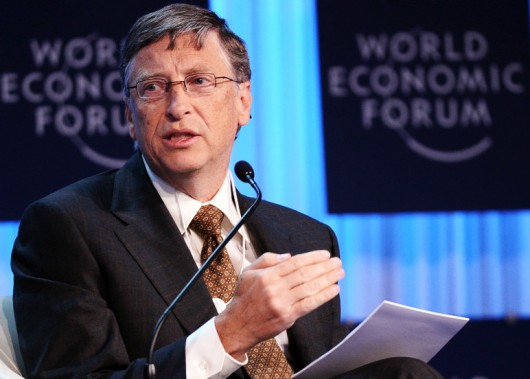
Bill Gates Donate World Economic Forum

The Bill and Melinda Gates Foundation gave (RED), an organization that fights AIDS, the best 10th-anniversary gift ever: a $50 million match for all Global Fund donations in 2016.

The foundation announced its pledge at the 2016 World Economic Forum in Switzerland according to Look to the Stars.

(RED) and the Fight Against Aids

“Over the past decade, (RED) has enrolled millions of people and dozens of brands in the global fight against AIDS,” said Bill Gates, co-founder of the Bill & Melinda Gates Foundation, in a statement at the 2016 World Economic Forum.

“Today’s match will provide the Global Fund with up to $100 million to help save 60,000 lives, prevent 2.3 million new infections and generate more than $2 billion in economic gains for developing countries,” he said. “That’s an amazing return on investment.”

The Bill and Melinda Gates Foundation and the (RED) campaign has actively supported the Global Fund over the years.

Since its inception in 2006, (RED) has raised $350 million thanks to partners, events and products sold according to the organization’s website.

“We owe a debt of gratitude to all the companies, the creative collaborators and the activists who step-up to fight AIDS with (RED),” said (RED) CEO Deborah Dugan in a statement in January 2016.

A portion of the profits from (RED) branded products, like Beats by Dr. Dre Solo 2 headphones, Apple iPods and GAP clothing, benefit the Global Fund to Fight AIDS, Tuberculosis and Malaria.

The Gates and the Global Fund

The Global Fund was established in 2002 to end AIDS, malaria and tuberculosis as epidemics through government, civil society and private sector partnerships according to its website.

To date, the Gates Foundation has contributed a total of $1.4 billion to the Global Fund, which includes the issuance of the long term promissory note of $750 million according to the Global Fund’s website.

“The Global Fund is one of the most effective ways we invest our money in every year,” said Bill Gates at the 2012 World Economic Forum. “By supporting the Global Fund, we can help to change the fortunes of the poorest countries in the world. I can’t think of more important work.”

The Bill and Melinda Gates Foundation and the (RED) campaign even partnered together through Snapchat in honor of World AIDS Day 2015.

Every time a user sent a Snapchat message using a (RED) filter, the Bill and Melinda Gates Foundation agreed to donate $3 to the organization’s fight against AIDS according to Re/code.

Summer Jackson

Photo: CNN

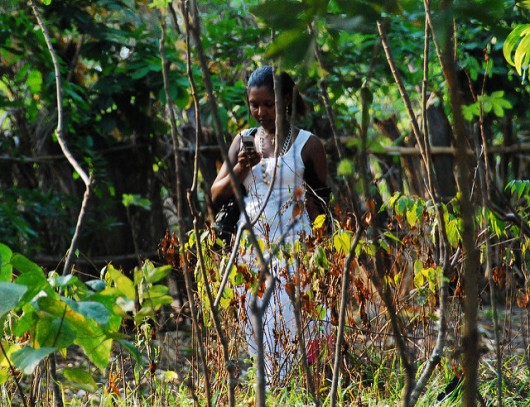
Cell PhoneAs technology continues to advance and grow more accessible, women around the world are increasingly gaining access to a cell phone for the first time. Though it is taken for granted in much of the developed world, cell phone use opens multiple doors that were not there before. According to Africa in Focus, technology can be thought of as a tool that creates opportunities for women. Specifically, technology has permitted women entry into the realms of finance, education and health and employment, thereby encouraging female empowerment and democratization in low-income countries.
Firstly, cell phone ownership gives women the ability to be financially independent, because they can open an online bank account separate from their husbands’. Impatient Optimists claims that “A private account gives women in developing nations control over their money as well as the ability to put food on the table.”

Currently, 1.7 million women in low-income countries don’t own a cell phone, according to the GSMA (an association representing mobile operators worldwide). Women are also 14 percent less likely to own a phone than men. Therefore, technology is a vital component of big-picture solutions to gender inequality and female disempowerment.

Secondly, cell phones are beneficial in the realm of women’s education and health. Impatient Optimists notes that “The East African nation has rolled out an ambitious program allowing parents to register their child’s birth via mobile phone. Under the program, midwives can request a child’s birth certificate by sending a text message.”

The East African program will save women time and money because they will not have to travel to the capital to acquire a birth certificate for their child. The Millennium project reported that most women live on less than 1 dollar per day. Under such conditions, the option of an online birth certificate can have a dramatic impact. Significantly, children in Africa need a recorded birth certificate in order to access schools, medical care, and, eventually, a bank account.

Thirdly, cell phone access can increase employment for women in Africa. Impatient Optimists points out that having a mobile phone allows women to open their own businesses in remote villages, as opposed to walking a great distance in order to register the business.

The New York Times recognizes that, “economically empowered women are one of the most important engines of growth in developing countries, and they play a central role in building prosperous communities.” That is why women in Africa must have their own phones, instead of sharing with family members.

When women have access to their own phones, bank accounts, and financial situations, they often invest in health-care, nutritious food and education. In fact, The New York Times reports that, “A child born in a household where the mother controls the family budget is 20 percent more likely to survive and much more likely to thrive.”

Women in Africa should be given the power and authority to make financial decisions for their family, given that they tend to prioritize moral and just causes. A mobile phone in the hands of a determined woman could benefit not only the economy, but the daily lives of families across Africa.

Megan Hadley

Photo: Flickr

Silicon Valley Community Foundation

SVCF’s mission is to channel the excess wealth flooding Silicon Valley into worthy, charitable causes around the world. One of the systems SVCF uses as a means of helping nonprofits all around the world is Donor Circles.

Each circle has its own focus or philanthropic cause. Currently, the Donor Circles include Donor Circle for the Environment, Donor Circle of the Arts, Donor Circle for Africa and Donor Circle for Safety Net.

Each Donor Circle consists of individuals interested specifically in the circle’s cause who wish to fund nonprofits in the given field that are in need of support.

For example, the Donor Circle for Africa “works with nonprofit groups and entrepreneurs in Africa whose projects demonstrate sustainable and affordable solutions for essential needs.” Since 2012, this Donor Circle has given out over $50,000-worth of grants.

For example, the Donor Circle for Africa “works with nonprofit groups and entrepreneurs in Africa whose projects demonstrate sustainable and affordable solutions for essential needs.” Since 2012, this Donor Circle has given out over $50,000-worth of grants.

Aside from these Donor Circles, the Silicon Valley Community Foundation also gives grants and scholarships to individuals.

On an individual level, two of the issues SVCF specializes in are immigration and education.

In a brief describing the work they do for immigrants in Silicon Valley, SVCF acknowledges a pervasive obstacle in immigrants’ successful assimilation: lack of access to educational resources and aid. The organization attributes immigrants’ difficulties in finding work to an “insufficient number of effective English-language learning, job training and legal services.”

In a San Francisco Chronicle article about SVCF, two recipients of Silicon Valley Community Foundation grants recount some of the challenges they faced as new immigrants. Ramon Alvarez, a 28-year-old Mexican-born immigrant, says that he used to fear interactions with native English speakers, but with the help of SVCF, now he will “talk to anyone.”

In a community with booming affluence, an organization like the Silicon Valley Community Foundation stands as a crucial mobilizer for the many causes that truly deserve the world’s attention.

Liz Pudel

Sources: SVCF 1, SVCF 2, SVCF 3, SVCF 4, San Francisco Chronicles

Photo: Wikimedia Commons,

Bjorn Lomborg
The government of Bangladesh recently dedicated itself to pulling more than six million people out of extreme poverty by 2020. Dr. Bjorn Lomborg, the director of the Copenhagen Consensus Center wrote an article for the Daily Star, an independent newspaper in Bangladesh, on the most efficient ways to tackle poverty in the country.

Bjorn Lomborg is also the author of several books, including “How to Spend $75 Billion to Make the World a Better Place” and has been ranked one of the world’s 100 most influential people by Time magazine.

In this article, he writes that poverty is one of the most crucial challenges that Bangladesh faces. There is much work to do to solve the problem, with 20 million Bangladeshis considered extremely poor.

Bjorn Lomborg is a part of the Bangladesh Priorities project, which works with stakeholders across Bangladesh to find, analyze, rank and publicize the best solutions for the country. Two of the project’s economists, Munshi Sulaiman of BRAC International and Farzana Misha of Erasmus University Rotterdam, have analyzed three of the most important ways to end extreme poverty in Bangladesh.

The first way to tackle poverty is through cash transfers. Bjorn Lomborg writes that this method has proven to be popular in Kenya and Uganda. According to research, the most efficient method is providing no-condition transfers (no conditions on how the money can be used).

However, Bjorn Lomborg notes that the benefits of cash transfers diminish over time. “A one-time stipend for someone in extreme poverty may help for a little while, but the effect is fleeting.”

The second strategy is developing “livelihood programs.” These programs essentially give a livelihood boost to those living in poverty so that they can eventually thrive on their own. Programs include agronomic training and growing inputs. Lomborg says the return on spending is one-to-one in programs of this kind.

The third way out of poverty, the one Lomborg calls “the most promising,” is graduation programs. In these programs, ultra-poor participants first receive a small gift of food or cash, which allows them to meet basic needs and start saving.

Then participants receive an asset, such as a cow, as well as technical and financial education. They also receive healthcare support so they can weather emergencies and not be forced to sell all of their assets. Lastly, participants get social training, which Lomborg notes is an important factor that is overlooked in escaping poverty.

“The assistance in the form of money, assets, and financial and social support allows participants to ‘graduate’ out of extreme poverty over a set timeframe,” he says.

“Graduation programs would increase recipients’ incomes by at least one-third,” he continues. “And it’s likely that household benefits are somewhat understated because the analysis has only estimated the income benefit but not the improved nutrition status of children.”

Although this approach is expensive, Lomborg says the rewards are worth it.

Kerri Whelan

Sources: The Daily Star, Copenhagen Consensus, Lomborg
Photo: Flickr

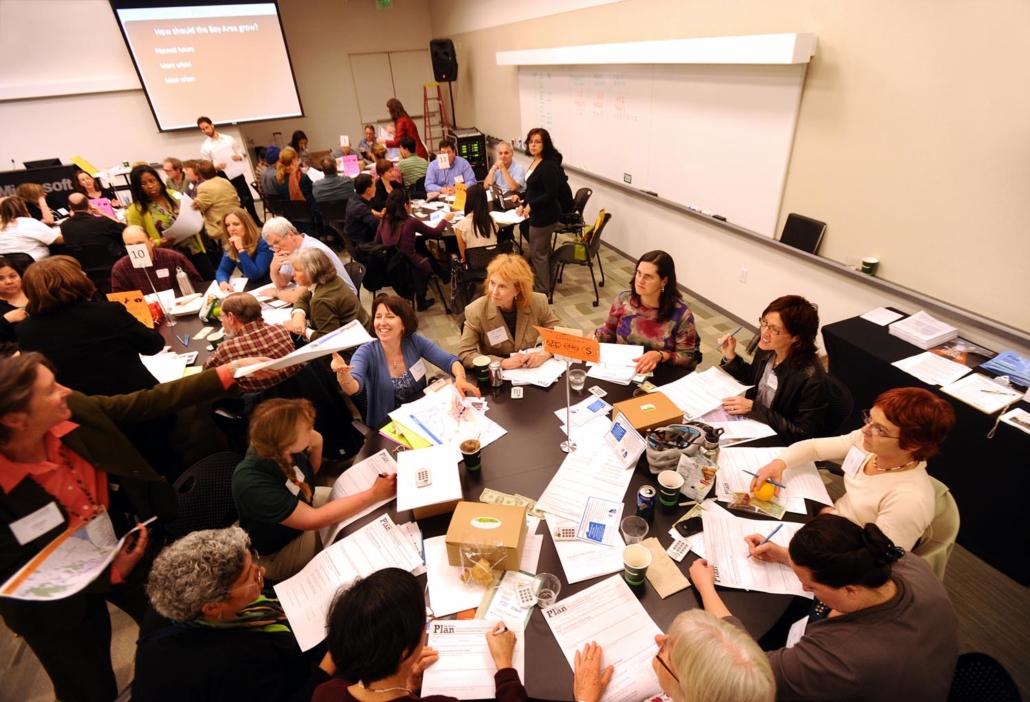
Help the WorldSometimes, the task of making the world a better place can be overwhelming. On top of our daily schedules and expenses, there are so many causes to devote your time or money to. However, a quest to help the world does not have to involve curing cancer or achieving world peace — it can start with a few simple steps to address issues that matter:
Pick an issue area

The most important step to start improving the world is to find an issue you are passionate about. The more passionate you are about a cause, the more likely you are to enjoy working for it and the more inspiration you will find. The issue could be anything from rhino poaching in South Africa or water safety in Flint, MI to school supplies for children in Brazil.

Remember that there are problems both abroad and in your own backyard. Each cause is important and doing something is more effective than doing nothing.

Raise money

Organizations often need both money and manpower to keep their efforts running. How you want to contribute to a cause is up to you.

But if you are interested in donating or fundraising, there are many different options. Whether donations come from your own savings, running a fundraising campaign or asking family members to donate to a cause in lieu of gifts for a special occasion, the money you give to an organization will be very useful for keeping projects running. Donations do not have to be astronomical to make a difference!

Another way to contribute money is by shopping smart. When you are buying products for yourself or as gifts, try to buy products that give back. To start, you could look at this list from the Huffington Post of gifts that give back. Do research and find products that you love that have an added bonus of giving back.

Online websites also provide ways to give back. If you frequently order from Amazon, the company’s Amazon Smile program donates 0.5 percent of the price of eligible purchases to the charity of your choice.

Volunteer your time

You might also choose to work with a local organization on a regular basis or volunteer for a summer to work across the country or across the world. If you are interested in empowering youth, you could volunteer to tutor or become a mentor. You might also try volunteering to prepare food packages at your local Red Cross Food Bank and sort clothing donations at the Salvation Army.

Technology has opened up endless opportunities to volunteer with people around the world. If you are interested in helping teach English, Pax Populi, an online website sponsored by the U.N., allows volunteers to sign up as conversation partners for students in Afghanistan. This website also has opportunities to apply for translation, editing and research volunteer positions.

Another often overlooked but highly important volunteer position is to advocate for your chosen cause or organization. Efforts such as handing out flyers, making donor calls or contacting government representatives can be crucial in spreading the word.

Asking your Senate or Congressional leaders to support specific legislation is not nearly as intimidating as it may seem. Leaders respond well to requests from their constituents and putting pressure on them can spur change at the state or national level. Check out this page to see how we contact government representatives at the Borgen Project.

Stay connected

Lastly, the most important way you can help the world is to be knowledgeable and active in your community. Try to keep up with news reports and research topics of interest to you.

The world changing every day means the challenges it faces are changing as well. The best way we can help the world is to create a population of caring and active citizens.

Taylor Resteghini

Sources: Amazon Smile, The Borgen Project, The Huffington Post, Pax Populi, UN Online Volunteers
Photo: Voluntariat

10 Quotes To Inspire Activism Within All of Us
Throughout history, activists have played major roles in inspiring change and fighting injustice across the globe. From challenging dictatorships to opposing racism to promoting equality for women, nearly every social and political change has come about due in large part to advocacy and public engagement. With that in mind, here are 10 quotes to inspire activism within all of us.


10 Quotes to Inspire Activism


1. Malala Yousafzai

“One child, one teacher, one book, and one pen, can change the world,” Yousafzai said while giving a speech to the U.N. Youth Assembly.

Yousafzai has spent her life advocating for Pakistani women and children and fighting for access to education worldwide. The young activist recently collaborated with British journalist Christina Lamb to publish a book titled “I am Malala: The Girl Who Stood Up for Education and Was Shot by the Taliban.”

“When the whole world is silent, even one voice becomes powerful,” the Nobel Peace Prize winner said during a speech at Harvard University in 2013.

2. Rev. Dr. Martin Luther King Jr.

“One of the great liabilities of history is that all too many people fail to remain awake through great periods of social change. Every society has its protectors of status quo and its fraternities of the indifferent who are notorious for sleeping through revolutions. Today, our very survival depends on our ability to stay awake, to adjust to new ideas, to remain vigilant and to face the challenge of change,” King said in a speech near the Washington Monument in 1968, on the dangers of neglecting important social issues.

As a Baptist minister and social activist, King was a prominent leader of the U.S. Civil Rights Movement. His speeches and legacy continue to inspire activists to pursue political and social change.

3. Anne Frank

“How wonderful it is that nobody needs to wait a single moment before starting to improve the world,” Frank wrote as a child while hiding with her Jewish family from the Nazis during World War II.

Frank’s writings were later published as a book titled “Anne Frank’s Tales from the Secret Annex” and have inspired activists for decades.

4. Sir Ian McKellen

“Try and understand what part you have to play in the world in which you live. There’s more to life than you know and it’s all happening out there. Discover what part you can play and then go for it,” McKellen said.

As an accomplished and well-known actor, McKellen has used his public stance to advocate for LGBT rights across the globe for many years. In 2014, McKellen published an open letter to President Vladimir Putin in an effort to address LGBT issues in Russia.

5. Nelson Mandela

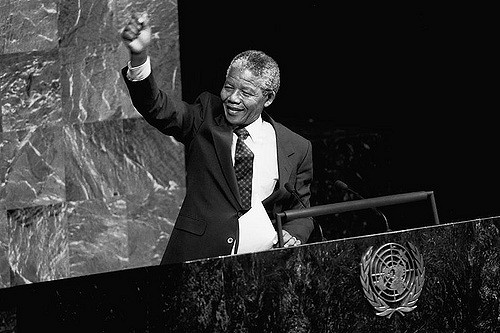
“What counts in life is not the mere fact that we lived. It is the difference we have made to the lives of others that will determine the significance of the life we lead,” Mandela said in 2002, at the 90th birthday celebration of Walter Sisulu in Johannesburg.

Mandela dedicated his life to global peacemaking. In 2009, his birthday was declared Mandela Day, an international day to promote peace, celebrate his legacy and inspire activism across the globe.

6. Sue Monk Kidd

“There’s a gap somehow between empathy and activism. Rev. Dr. Martin Luther King Jr. spoke of soul force, something that emanates from a deep truth inside of us and empowers us to act. Once you identify your inner genius, you will be able to take action, whether it’s writing a check or digging a well,” Kidd said to Marie Claire.

Kidd is an accomplished author, best known for her novel-turned-film “The Secret Life of Bees” and has spent her career writing narratives that inspire women in particular.

7. Gary Zukav

“Developing compassion for Congress and politicians is a good way to begin practicing the new social activism if you want to make effective changes in the world. Perhaps the most startling new insight of all is that there is no other way to effectively change the world,” Zukav told the Huffington Post.

Zukav is a New York Times bestselling author, who is well known for advocating for compassion in politics and society.

8. Melinda Gates

“Optimism for me isn’t a passive expectation that things will get better; it’s a conviction that if we can make things better — that whatever suffering we see, no matter how bad it is, we can help people if we don’t lose hope and we don’t look away,” Gates said in the Bill & Melinda Gates Foundation 2014 commencement address.

Gates is a well-known philanthropist and businesswoman. She is the co-founder of the Bill & Melinda Gates Foundation.

“Sometimes it’s the people you can’t help who inspire you the most,” she said.

9. Bill Gates

“Don’t let complexity stop you. Be activists. Take on the big inequities. It will be one of the great experiences of your lives,” Gates said in a Harvard University commencement speech.

While Gates is widely known as a co-founder of Microsoft, he has devoted much of his life to philanthropic work to promote global policy and advocacy and is also a co-founder of the Bill & Melinda Gates Foundation.

10. Kerry Washington

“Do it! What are you waiting on? Do it! Stand up for what you believe in. The world needs your voice. Whoever you are, you have something to say. Say it,” Washington told Women’s Health.

As a well-known actress, Washington has been a vocal proponent for women to stand up for causes they believe in.

“I’m really inspired by women who are unafraid to be of service around social issues,” she said.

Lauren Lewis

Sources: Anne Frank House, Bio. 1, Bio. 2, Gaiam Life, Good Reads, Huffington Post 1, Huffington Post 2, Huffington Post 3, Inc., Invisible Children, Marie Claire, Stanford News, The Washington Post, Women’s Health
Photo: Flickr