• Link to X
  • Link to Facebook
  • Link to Instagram
  • Link to TikTok
  • Link to Youtube
  • About
    • About Us
      • President
      • Board of Directors
      • Board of Advisors
      • Financials
      • Our Methodology
      • Success Tracker
      • Contact
  • Act Now
    • 30 Ways to Help
      • Email Congress
      • Call Congress
      • Volunteer
      • Courses & Certificates
      • Be a Donor
    • Internships
      • In-Office Internships
      • Remote Internships
    • Legislation
      • Politics 101
  • The Blog
  • The Podcast
  • Magazine
  • Donate
  • Click to open the search input field Click to open the search input field Search
  • Menu Menu

Archive for category: Activism

Information and stories on social activism.

Activism, Global Poverty

Becoming a Member of the US House of Representatives

House of Representatives
A United States congressperson is tasked with the duty of directly representing the people by introducing bills, resolutions and amendments and serving on committees to support the needs of their constituents. Our Founding Fathers wanted members of the House of Representatives to be, above all, close to the people.

House members face the least stringent requirements of any position in office. There are only three requirements, as expressed in the U.S. Constitution:

  1. You must be 25 years of age or older.
  2. You must have been a U.S. citizen for at least seven years.
  3. You must live in the state you are to represent.

James Madison articulated the open nature of the position when he wrote, “Under these reasonable limitations, the door of this part of the federal government is open to merit of every description, whether native or adoptive, whether young or old, and without regard to poverty or wealth, or to any particular profession of religious faith.”

The origins of these stipulations lie in aspects of British law.

The minimum age requirement was initially set for the voting age of 21. However, during the Constitutional Convention of 1787, George Mason strongly disagreed with this minimum age, reasoning that it was “absurd that a man today should not be permitted by the law to make a bargain for himself, and tomorrow should be authorized to manage the affairs of a great nation.”

Despite Pennsylvania’s James Wilson’s argument that restricting the minimum age of office to 25 would “damp the efforts of genius, and of laudable ambition,” many at the convention felt that the House of Representatives was not a training ground for neophytes but a vital endeavor to be taken up by an experienced professional. Mason’s movement to change the age to 25 passed seven states to three.

As for citizenship, British law stipulated that Commons members be lifelong citizens of England. However, the Founding Fathers did not want to discourage immigration. Therefore, mandating seven years of citizenship before a congressperson could take office balanced the desire to prevent foreign interests taking priority over domestic politics and the desire to keep the House of Representatives as close to the people as possible, including new immigrants.

House of Commons members were also required to reside in the shires or boroughs they represented. Our Founding Fathers assimilated this rule into the Constitution because they wanted House members to truly represent the people by being genuinely familiar with their needs.

Besides being an accessible position, a congressperson is subject to frequent reelection. Representatives are elected to a two-year term. As decided in 1911, the number of representatives in office is 435, with the number per state proportionate to the population.

Before engaging in the duties of the office, members of the House of Representatives must swear to “support and defend the Constitution of the United States against all enemies, foreign and domestic.”

As a representative of the people, a congressperson needs to hear the voices of his or her constituents to adequately address relevant issues. You can contact your representatives to express your needs and the needs of your community.

– Mary Furth

Sources: U.S. House of Representatives, Constitution Convention of 1787, Vol. 1,, The Congressional Record
Photo: Flickr
March 6, 2016
https://borgenproject.org/wp-content/uploads/borgen-project-logo.svg 0 0 Borgen Project https://borgenproject.org/wp-content/uploads/borgen-project-logo.svg Borgen Project2016-03-06 01:30:202020-06-22 16:53:48Becoming a Member of the US House of Representatives
Activism, Development, Global Poverty

The Ford Foundation Fights Against Inequality

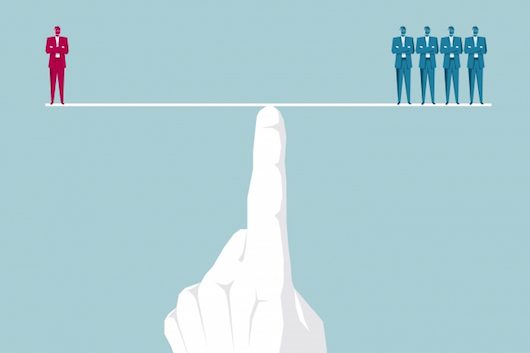
Ford FoundationThe Ford Foundation focuses its philanthropy on ending all forms of inequality. At the beginning of 2016, the Ford Foundation continues the fight against inequality with a revamped agenda and a partnership with the Cannes Film Festival.

Two years ago, the Ford Foundation sponsored 35 different initiatives. To better focus on inequality, this has been reduced to 15 in the following seven categories:

  • Civic Engagement and Government
  • Free Expression and Creativity
  • Equitable Development
  • Gender, Racial and Ethnic Justice
  • Inclusive Economies
  • Internet Freedom
  • Youth Opportunity and Learning

Under Inclusive Economies are initiatives such as impact investing and economic security, while engaging government and equitable resources are listed under Civic Engagement and Government. The other five categories cover drives such as social justice storytelling, natural resources and climate change, rights of women and girls, digital rights and access and pathways to youth success.

Institution building is another key goal of the foundation. From 2016 to 2020, the Ford Foundation plans to invest $1 billion around the world to create a network of organizations against inequality. This initiative – called BUILD – is designed to magnify each institution’s impact by aligning their goals and bringing them together.

To bring the issue to the forefront and get the attention of the world’s creative leaders, on Feb. 2, 2016, the Ford Foundation announced a two-year partnership with the Cannes Film Festival through its JustFilms grants. Like BUILD, JustFilms creates a network against inequality, in this case, a network of documentarists, storytellers and independent filmmakers.

The 2016 Cannes Film Festival takes place from May 11 to May 22 and is the one of the world’s most prominent independent film festivals. In its partnership with JustFilms, Cannes Film Market will bring some of the most talented documentary makers from the global south to the event.

By bringing in filmmakers from a largely neglected region of the world, JustFilms hopes that they can connect these storytellers with the larger industry. Once connected, their stories and perspectives can spread around the globe and reach people in developed nations.

Cannes Film Market’s head of industry programming, Julie Bergeson, was grateful for the foundation’s contribution to fighting inequality. She said, “Ford has created an incredible legacy in tackling social injustice and inequality. Their efforts have lead to revealing insights and sometimes startling exposures from filmmakers around the world.”

In changing the focus of its grants, the Ford Foundation has highlighted inequality as one of the most pressing issues of the 21st century. In partnering with Cannes, they have taken a step to raise awareness by bringing forth perspectives from the developing world.

There is much more to be done but there is reason to hope. The fight to end inequality will be long but the Ford Foundation is fully committed.

– Dennis Sawyers

Sources: Ford Foundation, Nonprofit Quarterly, The Chronicle of Philanthropy 1, The Chronicle of Philanthropy 2, Variety
Photo: The Chronicle of Philanthropy

February 28, 2016
https://borgenproject.org/wp-content/uploads/borgen-project-logo.svg 0 0 Borgen Project https://borgenproject.org/wp-content/uploads/borgen-project-logo.svg Borgen Project2016-02-28 01:30:562024-12-13 18:05:45The Ford Foundation Fights Against Inequality
Activism, Global Poverty

Bill Gates’s Breakthrough Energy Coalition

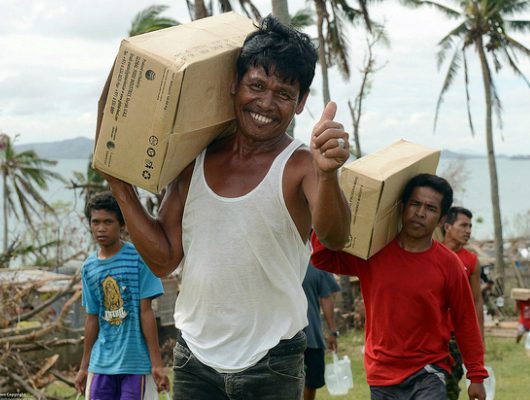
Breakthrough Energy CoalitionParis hosted the global climate conference with heads of government and businesses in attendance. This was the 21st conference of this kind, and many maintain that it was the most productive thanks to Bill Gates’s Breakthrough Energy Coalition.
At the climate event, known as COP-21, Gates announced his plan to help address climate change. It is a collection of some of the most influential entrepreneurs, and it is known as the Breakthrough Energy Coalition.

The group includes well-known business leaders such as Richard Branson, Jack Ma and Jeff Bezos.

The coalition, led by Gates, pledges to work in tandem with national governments to increase funding for clean energy research. They will also invest in risky clean energy projects that have a long return on investment but a high potential for success.

Many of the ideas coming from existing clean energy research and development are too insecure for traditional investors. They do not want to put money into an idea that might never make it to the market. This difficult journey from innovative idea to commercial product is known as the “valley of death,” and Gates’s coalition plans to bridge it.

The Breakthrough Energy Coalition will invest in those risky ideas and be patient with the returns. Gates cites flow batteries and solar paint as two such existing products that need private sector investment. If successful, solar paint could transform any surface into a solar panel.

A crucial component of this plan is national governments. The research and development for clean energy technology must start with the government because only they have the mandate and resources to do so. Business alone cannot lead the charge.

Furthermore, government-funded programs have successfully created whole new industries that from space, defense and medical research. Gates’s coalition believes governments are key to creating the clean energy industries of the future.

In association with Gates’ announcement, President Obama and leaders around the world pledged to increase public-sector spending for research and development in clean energy. This pledge, in combination with Gates’, will constitute the biggest investment in clean energy in history.

The public sector initiative is known as Mission Innovation, including 20 nations. Each participating country agrees to double its existing funding for clean energy technology within the next five years.

This pledge will increase the budget of the 20 nations to $20 billion for clean energy. These new funds will go to research and development, and the creation of new ideas and technologies.

Gates’ Breakthrough Energy Coalition will then use their business acumen to wisely invest in technology that has the greatest potential. With patient and consistent investment, the products will bypass the “valley of death.”

These historic investments from government and businesses reflect the urgency for action. Both realize the impact climate change can have on their respect areas. It can cause unrest and war for governments, and a loss of profits for businesses.

The developing world, though, has the most to lose. Man-made climate change is primarily caused by industrialization from the developed world, but affects the developed world in a greater magnitude. This harsh irony will be reduced with the teaming up of the Breakthrough Energy Coalition and Mission Innovations.

Clean energy will allow the developing world to grow and avoid the ravages of climate change. Bill Gates’ Breakthrough Energy Coalition will not only address climate change, but also fight poverty.

– Andrew Wildes

Sources: Breakthrough Energy Coalition, Mashable, The Guardian
Photo: Here & Now

February 8, 2016
https://borgenproject.org/wp-content/uploads/borgen-project-logo.svg 0 0 Borgen Project https://borgenproject.org/wp-content/uploads/borgen-project-logo.svg Borgen Project2016-02-08 01:30:042024-05-27 09:28:36Bill Gates’s Breakthrough Energy Coalition
Activism, Development, Global Poverty, Refugees and Displaced Persons

Ikea Builds 10,000 Shelters for Syrian Refugees

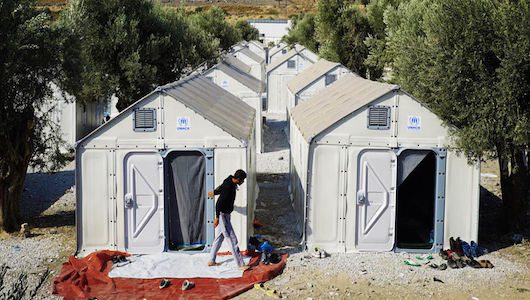
syrian_refugeesShowing no signs of stopping, the surge of Syrian refugees poses many issues for European and Middle Eastern countries, mainly housing, as the Northern hemisphere gears up for winter.

According to the International Organization for Migration (IOM), since the start of 2015 more than 750,000 migrants have arrived by sea to Europe. The large amount of refugees has not only sparked international interest but also a crisis as many European countries struggle to cope with the influx of refugees fleeing to Europe for a better life.

The IKEA Foundation, in collaboration with Better Shelter, has partnered to create safer, more reliable housing options for the thousands of Syrian refugees fleeing to Europe.

Focusing on cost-effectiveness, IKEA developed a tent that costs approximately $1,000. The tent can comfortably house a family of five and only takes four to eight hours to assemble. The structures come in two sizes: 57 square feet or 188 square feet of living space and will last up to three years. Comparatively, the United Nations (UN) shelters only last three months.

“This is just a tiny part of humanitarian aid. But it’s an important one when it comes to allowing displaced people to live with dignity,” said Johan Karlsson, the main Swedish Industrial designer.

Additionally, the shelters are equipped with solar panels that are durable against extreme temperatures. The solar panels were developed in response to the cited lack of electricity among refugee shelters.

A woman by the name of Mayada, one of many refugees seeking asylum, came to a camp in Jordan ten months ago. She said she never imagined having to live without the most basic necessities, particularly electricity.

“Nowadays electricity is life, and without it even the most simple things become a struggle,” she told visitors from the UN Refugee Agency.

The absence of light and power makes everyday living activities difficult, as well as dangerous, particularly for women. Mayada’s daughter is too scared to go to the bathroom at night and has to wake her parents to accompany her. The solar panels will help to quell their fears.

With the arrival of winter and light disappearing earlier in the day, basic daily functions, as well as communication among refugees, become more difficult.

“You can’t visit friends, the kids can’t do their homework. By nine or 10 o’clock most of the camp is in bed,” Mayada said.

In addition to the solar panels, the tents will also have mosquito nets, windows and a door that locks. The lock option for doors is a simple solution to help prevent sexual assault among refugee women traveling across the Middle East and Europe.

“People tell us it will make a huge difference to them just to be able to switch a light on again, making them feel more at home,” UN Refugee Agency Energy Advisor Paul Quigley said.

The UN has ordered 10,000 of the units to help reduce the Syrian housing crisis. Europe will receive 755 units and 2,600 homes will go to Iraq.

Mayada said when electricity is made more available to the refugee camps, she will no longer have to put on a brave face for the sake of her kids, particularly her daughter.

“I wish I could give [IKEA] all a big kiss between their eyes! It will mean everything to us!” Mayada said.

– Alyson Atondo

Sources: PBS, UNHCR, Business Insider, BBC
Photo: Google Images

January 16, 2016
https://borgenproject.org/wp-content/uploads/borgen-project-logo.svg 0 0 Borgen Project https://borgenproject.org/wp-content/uploads/borgen-project-logo.svg Borgen Project2016-01-16 01:30:122024-12-13 18:05:29Ikea Builds 10,000 Shelters for Syrian Refugees
Activism, Charity, Global Poverty

A Look at the Chan Zuckerberg Initiative

Chan_Zuckerberg_InitiativeMark Zuckerberg, co-founder and CEO of Facebook, isn’t a stranger to making large donations. He and his wife, Dr. Priscilla Chan, have already donated $1.6 billion to philanthropic causes.
But on Tuesday, Zuckerberg and Chan announced plans for something far greater.

In a Facebook post, the couple disclosed first the birth of their daughter Maxima, and then, more notably, a new project: the Chan Zuckerberg Initiative.

The new philanthropy is Zuckerberg’s pledge to donate 99 percent of his Facebook shares towards charitable donations over the course of his lifetime. It’s a stake that is currently valued at $45 billion.

According to Reuters, Zuckerberg said he intends to invest up to $1 billion of his shares each year over the next three years into the Initiative.

“Our initial areas of focus will be personalized learning, curing disease, connecting people and building strong communities,” wrote the couple. To date, however, they have not outlined specific organizations or causes they will fund.

Their drive in creating this Initiative came from the impending arrival of their new daughter. In a video, Zuckerberg stated, “Having this child has made us think about all of the things that should be improved in the world for her whole generation. The only way that we reach our full human potential is if we’re able to unlock the gifts of every person around the world.”

Overshadowing their intentions is the unique structure of the Initiative. Zuckerberg and Chan elected to create the Initiative as a limited liability company. That means, unlike a traditional charitable or philanthropic foundation, the Initiative can make political donations, lobby lawmakers, invest in businesses and recoup any profits from those investments.

According to Leslie Lenkowsky, professor of public affairs and philanthropy at Indiana University, “They are instead trying to achieve philanthropic purposes using a business model.”

Despite all this, Bill Gates, the wealthiest person in the world (with an estimated net worth of $85.2 billion according to the Bloomberg Billionaires Index) and his wife congratulated Zuckerberg and Chan.

“The example you’re setting today is an inspiration to us and the world,” they said. “We can be confident of this: Max and every child born today will grow up in a world that is better than the one we know now. As you say, ‘Seeds planted now will grow.’ Your work will bear fruit for many decades to come.”

Past donations made by Zuckerberg and Chan include a 2010 donation of $100 million for the improvement of Newark public schools, which met with some controversy. More recent donations include $20 million to EducationSuperHighway, which helps connect classrooms to the Internet, and a new acute care and trauma center at San Francisco General Hospital, where Chan works as a pediatrician.

– Kara Buckley

Sources: BBC News, NY Times, Reuters 1, Reuters 2
Photo: Google Images

January 15, 2016
https://borgenproject.org/wp-content/uploads/borgen-project-logo.svg 0 0 Borgen Project https://borgenproject.org/wp-content/uploads/borgen-project-logo.svg Borgen Project2016-01-15 01:30:522020-06-23 12:32:08A Look at the Chan Zuckerberg Initiative
Activism, Advocacy, Refugees and Displaced Persons

5 Tips on How to Host Refugees at Your Home

How_to_Host_Refugees_at_Your_HomeWith recent global events, there are many refugees seeking a place to live and support from United States citizens. Here are five tips on how to host refugees at your home.
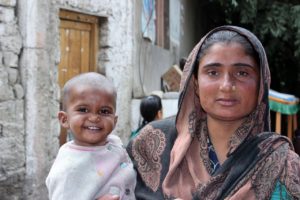
5 Tips on How to Host Refugees at Your Home

  1. Offer to host your home. There are many different charities and organizations that work to provide refugees a home such as VolunteerMatch, Integrated Refugee and Immigrant Services and World Relief. Through these organizations, you can fill out a form and get matched up with a refugee or refugees who need a place to call home. Some of the matches are temporary and only last a few months while others can be long-term and last a few years. The organizations also provide information on how to host refugees at your home.
  2. Share your knowledge. Once you have offered up your home, it is important that you teach refugees all they need to know about their new home. For example, teach them how to use household appliances, instruct them on basic housekeeping skills and introduce them to the community. They will need to know where the grocery store, the post office and other important places are located.
  3. Support them throughout the process. Make sure there is professional help available for the refugees such as counseling or a coordinator who can check in on them and see how they are doing as most have been through traumatizing experiences.
  4. Keep your boundaries. It is important to respect refugees and not force them to do things they may not feel comfortable with. Always give them the option to participate in an event or outing; never force them or make them feel like they have to take part.
  5. Think it through; don’t just go for it. Don’t offer up your home just for the sake of doing it. Make sure to think it through. As a host, you must understand that there are many challenges you may face and it might not go smoothly at first. Be sure you are prepared for all possible outcomes.

Hosting refugees can be a very rewarding experience and can make a huge difference in their lives.

– Jordan Connell

Sources: AOL, The Guardian, World Relief
Photo: Flickr

January 12, 2016
https://borgenproject.org/wp-content/uploads/borgen-project-logo.svg 0 0 Borgen Project https://borgenproject.org/wp-content/uploads/borgen-project-logo.svg Borgen Project2016-01-12 01:30:222020-06-23 13:22:225 Tips on How to Host Refugees at Your Home
Activism, Global Poverty

The Caterpillar Foundation Fights Poverty

Caterpillar FoundationThe “Together.Stronger.” initiative, started by the Caterpillar Foundation works to alleviate poverty across the globe. “The world’s nations have united around the UN’s Global Goals that will guide international development for the next 15 years, and now it’s time for citizens in all communities to unite as well,” the organization says.
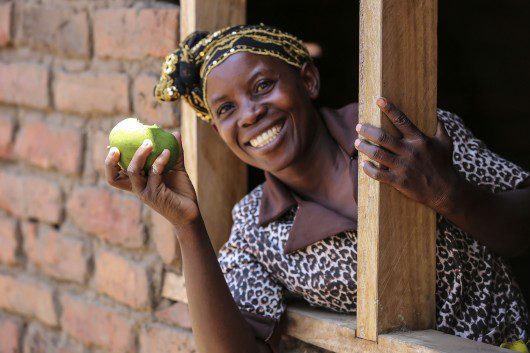


The “Together.Stronger.” approach is not one of competition, but one of collaboration towards a similar goal.

“No one individual, no one corporation, no one organization can do it themselves,” says Michele Sullivan, President of the Caterpillar Foundation. “But together, we are stronger.”

“Caterpillar has learned from its business and years of philanthropic work that the bigger the project, the better the team needs to be,” she says. “Together.Stronger. is our effort to build the best team possible… because ending extreme poverty is something that will take all of us.”

To accomplish this, the platform is based on three areas of focus:

  1. Stockholders: Delivering superior returns through the cycles.
  2. People: Attracting and developing the best talent.
  3. Customers: Taking pride in helping others succeed.

Caterpillar works to bring the world together to fix a problem that affects us all. With this in mind, the foundation works to create global citizens: a people that aren’t just citizens of a town or a country, but of the globe at large.

“The world is better when everyone stands together. Because together, we truly are stronger.”


– Katherine Martin

Sources: Caterpillar, Global Citizen, ONE, Scene7
Photo: Needpix.com

January 7, 2016
https://borgenproject.org/wp-content/uploads/borgen-project-logo.svg 0 0 Borgen Project https://borgenproject.org/wp-content/uploads/borgen-project-logo.svg Borgen Project2016-01-07 06:08:092024-12-13 18:05:31The Caterpillar Foundation Fights Poverty
Activism, Children, Global Poverty

Charitable Christmas Gift Giving Guide 2015

charitable_christmas_gift
Compassion International is a Christian organization dedicated to helping children who are living in poverty. Below are some charitable Christmas gift options from the organization’s “Gift Catalog” that allows people to give to families living in poverty.

1. HIV/AIDS Care. A $25 donation can go a long way to providing much needed medical care to those suffering from HIV/AIDs. According to the World Health Organization (WHO), HIV/AIDS was responsible for an estimated 1.1 million deaths in 2013 and children are the most susceptible.

Compassion International estimates that 1,000 children are infected with HIV every day. Medical breakthroughs have helped curb the global killer, but the disease continues to rage on. This charitable Christmas gift donation would help…

  • Educate families on prevention techniques
  • Treat children and families infected through antiretroviral means
  • Provide care for those indirectly affected

2. Water Wells. According to Water.org, 663 million people do not have access to potable water, one in every ten people. A $34 donation can help provide clean and safe access to water for those that need it by allowing them to have:

  • A borehole well construction
  • The ability to install a water store unit, including a pump and other hardware
  • Reduced cases of waterborne diseases and illnesses

3. Goats or Other Animals. What many people may think of as pets, people in developing countries think of as a life source. Having a goat, cow or chicken can mean milk, eggs, wool or food for people living in developing countries. A $100 donation for livestock would help those living in poverty to:

  • Generate a source of income by selling eggs, wool, or milk from the animal
  • Become self-sufficient and less reliant on others
  • Establish a business by rendering services

charitable_Christmas_gift

4. Mosquito Nets. According to WHO, 438,000 deaths were linked to malaria in 2015. Most of those were deaths of children under the age of five. However, nearly half of the world’s population, 3.2 million people, are at risk for the disease. An $18 charitable Christmas gift donation for a malaria net would help in the following ways:

  • A bed net treated with insecticide to eliminate malaria transmission
  • Training on how to use the net
  • Education on ways to prevent mosquito breeding areas

5. Food for a Baby and a Mother. Malnutrition is something that is all too real for families living in developing countries. According to The Hunger Project, 98 percent of the world’s undernourished people inhabit developing nations.

It is also estimated that 795 million people in the world do not have enough to eat. Of those 795 million, 214 million live in Africa and 525.6 million live in Asia according to The Hunger Project. A $15 monthly donation can help mothers and children receive the nutrition they need to retain their strength. It can also:

  • Ensure health for mothers and children by eating recommended food
  • Put on and keep weight for better health and development
  • Help mothers and children eat appropriately by providing “fortified nutritional supplements”

The suggestions provided are only a handful of options. There are, of course, many other charitable options that can help people in need. For other charitable Christmas gift giving ideas, visit Compassion International.

– Alyson Atondo

Sources: WHO 1, Water.org, THP, WHO 2, WHO 3, Compassion 1, Compassion 2
Photo: Flickr, Pixabay

December 11, 2015
https://borgenproject.org/wp-content/uploads/borgen-project-logo.svg 0 0 Borgen Project https://borgenproject.org/wp-content/uploads/borgen-project-logo.svg Borgen Project2015-12-11 01:30:172024-12-13 18:05:31Charitable Christmas Gift Giving Guide 2015
Activism, Development, Global Poverty

This Holiday Season, Fight Global Poverty at the Dinner Table

fight_global_poverty
As the holidays approach, many people’s thoughts turn to opportunities to donate to those in need. Those who wish to fight global poverty over the holidays can do so by cooking dinner with ingredients certified by Fair Trade USA.

Fair Trade USA is a nonprofit organization that acts as a third party between consumers and international suppliers. It uses “a market-based approach that gives farmers fair prices, workers safe conditions and entire communities resources for fair, healthy and sustainable lives,” according to the group’s website.

Fair Trade USA began in 1998 under the leadership of founder Paul Rice, and now operates in 80 countries across the globe.

When consumers buy Fair Trade USA-certified products, the proceeds aid the organization’s campaign to promote equality, dignity and self-sufficiency among farming communities that are mired in poverty.

According to the Consultative Group on International Agricultural Research (CGIAR), the solution to poverty and hunger around the world is not plowing more land and increasing crop production, but farming smarter.

In 2009, Frank Rijsberman, CEO of CGIAR, suggested reducing agriculture-based poverty by developing methods to achieve greater crop output from existing land and delivering this research to farmers in developing countries.

Fair Trade USA exemplifies Rijsberman’s advice, as it helps farmers generate their crops as efficiently as possible. Imports from developing countries are targets of exploitation because the producers lack the resources and knowledge to barter fair trade.

Fair Trade USA monitors the business transactions of farmers and their consumer clients to ensure the farmers aren’t disadvantaged.

When farmers receive fair prices for their crops, they have the means to improve their livelihood, send their children to school and afford medicine.

More than 570 million farms exist in the world, with 90 percent relying on family labor, so relieving agriculture-based poverty helps children get their education and significantly reduces poverty across the globe.

In addition to its poverty-reduction tactics, Fair Trade USA’s website offers a multitude of recipes involving its certified ingredients. Every turkey, cheesecake and bowl of sorbet helps fight global poverty by enabling a family to put food on its table.

– Sarah Prellwitz

Sources: Fair Trade USA, Global Agriculture, VOA News, WDRB, WSJ
Photo: Wheatsville Co-op

December 8, 2015
https://borgenproject.org/wp-content/uploads/borgen-project-logo.svg 0 0 Borgen Project https://borgenproject.org/wp-content/uploads/borgen-project-logo.svg Borgen Project2015-12-08 01:30:052024-05-27 09:28:30This Holiday Season, Fight Global Poverty at the Dinner Table
Activism, Global Poverty, Poverty Reduction

CEO of the Global Poverty Project Receives Humanitarian Award

Global_Poverty_Project
Hugh Evans, CEO and co-founder of the Global Poverty Project, received the Humanitarian Award at the 12th annual Billboard Touring Awards on November 19 for his efforts to end extreme poverty.

The award show was established in 2004 and is  sponsored by Billboard Magazine to honor the top entertainment artists and professionals, as well as recognize box office and entertainment achievements.

The Billboard Touring Awards honor the industry’s top achievers in categories including Top Festival, Top Arena, Top Manager and Top Comedy Tour.

Founded in 2008, the Global Poverty Project aims to connect everyone around the world using social media to express the need to end extreme poverty.

By joining the conversation, the Global Poverty Project believes it can grab the attention of government, businesses and NGO’s to restructure the systems and policies that are trapping people into poverty worldwide.

The Global Poverty Project began hosting the Global Citizens Festival in 2012 with the slogan, “We Are Not A Generation Of Bystanders.”

The annual festival in New York City brings both musicians and activists together and urges world leaders to make more contributions toward ending extreme poverty. Since launching the festival, the event has helped secure $1.3 billion commitments to help end extreme poverty.

“In an industry filled with people who are dedicated to helping others through the power of music, Hugh Evans stands out for his ability to rally both artists and executives around the common cause of ending global poverty,” said Ray Waddell, executive director of Content & Programming for Touring & Live Entertainment at Billboard.

This past year, a crowd of 60,000 people filled Central Park with live performances from Beyoncé, Ed Sheeran, Coldplay and Pearl Jam. High-profile leaders and activists including First Lady Michelle Obama, Vice President Joe Biden, Hugh Jackman, Bill Gates and members of the UN General Assembly were also in attendance.

Through combined efforts, the European Commission closed the festival by pledging $530 million dollars to aid the Syrian refugee crisis.

As the Global Poverty Project continues to gain activists, Evans shows the world that extreme poverty can end by 2030. “No movement is about an individual,” said Evans of his organization’s mission. “It’s about an amazing group of people coming together from different backgrounds.”

– Alexandra Korman

Sources: Billboard, Global Citizens
Photo: Flickr

November 26, 2015
https://borgenproject.org/wp-content/uploads/borgen-project-logo.svg 0 0 Borgen Project https://borgenproject.org/wp-content/uploads/borgen-project-logo.svg Borgen Project2015-11-26 01:30:012020-06-24 20:09:23CEO of the Global Poverty Project Receives Humanitarian Award
Page 17 of 56«‹1516171819›»

Get Smarter

  • Global Poverty 101
  • Global Poverty… The Good News
  • Global Poverty & U.S. Jobs
  • Global Poverty and National Security
  • Innovative Solutions to Poverty
  • Global Poverty & Aid FAQ’s
Search Search

Take Action

  • Call Congress
  • Email Congress
  • Donate
  • 30 Ways to Help
  • Volunteer Ops
  • Internships
  • Courses & Certificates
  • The Podcast
Borgen Project

“The Borgen Project is an incredible nonprofit organization that is addressing poverty and hunger and working towards ending them.”

-The Huffington Post

Inside The Borgen Project

  • Contact
  • About
  • Financials
  • President
  • Board of Directors
  • Board of Advisors

International Links

  • UK Email Parliament
  • UK Donate
  • Canada Email Parliament

Get Smarter

  • Global Poverty 101
  • Global Poverty… The Good News
  • Global Poverty & U.S. Jobs
  • Global Poverty and National Security
  • Innovative Solutions to Poverty
  • Global Poverty & Aid FAQ’s

Ways to Help

  • Call Congress
  • Email Congress
  • Donate
  • 30 Ways to Help
  • Volunteer Ops
  • Internships
  • Courses & Certificates
  • The Podcast
Scroll to top Scroll to top Scroll to top