• Link to X
  • Link to Facebook
  • Link to Instagram
  • Link to TikTok
  • Link to Youtube
  • About
    • About Us
      • President
      • Board of Directors
      • Board of Advisors
      • Financials
      • Our Methodology
      • Success Tracker
      • Contact
  • Act Now
    • 30 Ways to Help
      • Email Congress
      • Call Congress
      • Volunteer
      • Courses & Certificates
      • Be a Donor
    • Internships
      • In-Office Internships
      • Remote Internships
    • Legislation
      • Politics 101
  • The Blog
  • The Podcast
  • Magazine
  • Donate
  • Click to open the search input field Click to open the search input field Search
  • Menu Menu

Archive for category: Refugees

Global Poverty, Refugees

10 Facts About Refugees in Macedonia

Refugees in Macedonia
Tucked between Greece and the rest of Eastern Europe, Macedonia sees the majority of migrant foot traffic. Controversy and conflict with Greece have plagued Macedonia for generations. This well-known history between the two countries has continually contributed to the refugee crisis. These 10 facts about refugees in Macedonia show that the country is one of the largest players in Europe in terms of refugee numbers and routes.

10 Facts About Refugees in Macedonia

  1. In 2016, the border between Greece and Macedonia was closed off, effectively closing the major Balkan route for many refugees.
  2. Macedonia is a country vulnerable to severe floods and landslides, exacerbating the problem of an increased population in a small country. The EU Humanitarian budget has consistently contributed funds to Macedonia for a combination of the increased number of refugees and also because of the high rates of natural disasters.
  3. With the closing of the border between Greece and Macedonia, the influx of refugees decreased from 815,000 refugees in 2015 to only 89,197 in 2016.
  4. The European Commission has allocated 4.4 million euros to the country of Macedonia since the start of the refugee crisis. This allowed refugees to have access to basic necessities such as food and clothing.
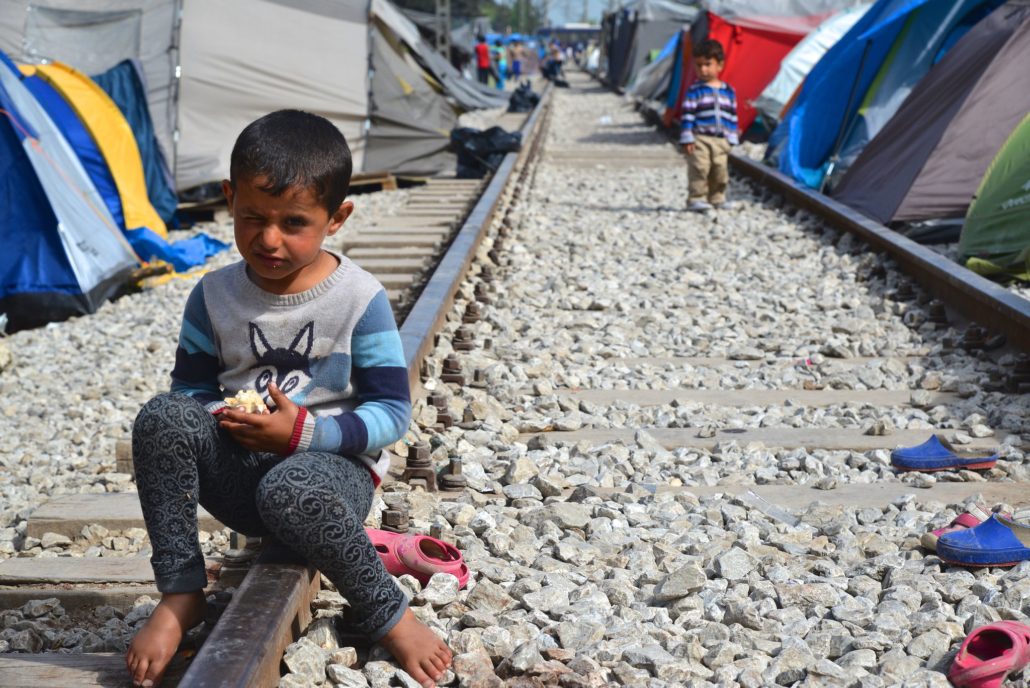
  5. A third of refugees in Macedonia are children. UNICEF has begun to set up child-friendly spaces where they are supplied with warm food and clothing.
  6. The 2016 closing of the Macedonia-Greece border left many migrants stranded in transit centers in Northern Macedonia, where living conditions were less than ideal. This changed the minds of many refugees, as traveling further North seemed impossible. Rather than continuing further into the EU, many migrants instead settled in Serbia or Hungary, in search of asylum.
  7. Greece has continually blocked Macedonian hopes of joining the EU. This conflict not only made the refugee crisis worse but contributed to the closing of the Greece-Macedonia border.
  8. The closure of the Greece-Macedonia border left around 13,000 refugees stranded at the border. To intensify the closing of the Greece-Macedonia border, Serbia closed its border with Macedonia the same year.
  9. The closure of many Balkan borders left thousands stranded. The Vinojug refugee center in Southern Macedonia has turned from a temporary transit center into a permanent home for hundreds of refugees. With the help of organizations such as UN Women, the once-temporary camp is turning into a home.
  10. Airbnb began a program designed for individuals all over the world to house refugees and migrants. Although the program is in the early stages, it has already been tested in Macedonia to house relief workers.

These facts about refugees in Macedonia showcase how the situation remains dire. Although the state of the refugee crisis in Macedonia seems to be looking up, there is still much to be done. With the number of refugees declining, there is hope for the future.

– Sophie Casimes

Photo: Flickr

July 9, 2017
https://borgenproject.org/wp-content/uploads/borgen-project-logo.svg 0 0 Borgen Project https://borgenproject.org/wp-content/uploads/borgen-project-logo.svg Borgen Project2017-07-09 07:30:442024-12-13 17:58:1910 Facts About Refugees in Macedonia
Global Poverty, Refugees

Love Locks Raise Funds for Refugees


For years, tourists have come to Paris to proclaim their undying love by placing a lock on the Pont Des Arts bridge, better known as “Lover’s Bridge.” However, the love locks are no more as Paris officials have begun removing the locks after several railings began collapsing due to the enormous weight.

However, the sad end to the love locks on the bridge was commemorated through a charity auction, hosted by Solipam, the Salvation Army and Emmaus Solidarite to raise money for refugees in France.

The auction comes at a time when numerous refugee camps are being burned down and protests are appearing throughout Paris to ward off the arrival of new refugees. In February, police took refugees’ blankets and sleeping bags and they were told to “get out of France,” a complete disregard of the government’s orders to assist the refugees.

Opposition to the government’s “open arms” for the refugees protested the auction. However, the protests did not deter the charity’s supporters but rather encouraged them to raise more money.

Originally thought to only sell for a total of about $100,000 USD, the charity auction raised more than twice that amount. The love locks were placed on unique displays, such as a recycled stone Eiffel Tower replica, a lock-covered fence on wheels and even small delicate glass displays. Displays were sold for as little as $165 USD and as much as $18,000 USD. At the end of the night, supporters raised over $270,000 USD.

Following the love locks auction, France continues to find a common ground between the opposition and supporters for helping refugees and find solutions for the increasing amount of refugees entering the country. As refugees reassemble at the former “Jungle” refugee center in Calais, France must decide if they will continue to help refugees in their country or try to evict them. The French government and some Paris officials have already begun helping the refugees arriving in Calais.

The love locks auction gave hope to refugees in France that they might finally receive help from the country.

– Amira Wynn

Photo: Flickr

July 9, 2017
https://borgenproject.org/wp-content/uploads/borgen-project-logo.svg 0 0 Borgen Project https://borgenproject.org/wp-content/uploads/borgen-project-logo.svg Borgen Project2017-07-09 07:30:392024-05-28 00:02:45Love Locks Raise Funds for Refugees
Global Poverty, Refugees

10 Important Facts to Know About Refugees in Finland

Refugees in Finland
In 2015, there were over a million migrants and refugees who sought a home in European countries to escape from war and poverty. Approximately 32,000 of them found refuge in Finland. Finland has bolstered enough of the refugee intake that the finance minister is now urging eastern EU countries to use their development funds to take responsibility for the growing refugee crisis and alleviate some of the pressure from western countries, such as Finland, who now face criticism as they increase deportations. Here are 10 facts about refugees in Finland.

10 Facts About Refugees in Finland

  1. More than 400 juvenile applicants in 2016 were found to be adults after medical tests were conducted to determine their biological age. The added protections and quicker processing time given to child refugees have caused this problem of falsity across the globe.
  2. Of those juvenile applicants, 74 percent were from Afghanistan, 11 percent were from Iraq and six percent were from Somalia.
  3. Of the refugees in Finland, 6,657 were forcibly returned to their country of origin (deported) in 2016, and only about 25 percent received assistance in their return. That number doubled from 2015’s reports, which has been attributed as much to the increase in the application as the increase in scrutiny by the Finnish Migration Board.
  4. For the first time since the Finnish Civil War that ended in 1918, the birth rate in Finland is lower than the death rate. However, the influx of migrants has caused the total population to continue to grow. Between 2014 and 2015, as an example of the magnitude of migration, the number of refugees in Finland went from 3,600 to 32,500.
  5. The Finnish Migration Board has peaked at an average processing time of ten months for refugee applications.
  6. It is becoming increasingly common for refugees in Finland to voluntarily leave the country. Besides family obligations or a sense of alienation, one of the most common reasons seems to simply be that it’s too cold for people accustomed to living in the Middle East. Eighty percent of voluntary removals are Iraqis.
  7. One of the most popular towns to house refugees is Punkalaidun, mostly populated by Burmese, Syrians and Ethiopians. The town is a model for cultural integration and has been awarded for their “promotion of ethical relations.” The work that they provide to refugees is unique. They specialize in the production of funeral supplies such as coffins.
  8. The distance between North Africa’s shore and Southern Europe can be extremely dangerous, but it is the journey that many refugees make to reach Finland. In 2015, more than 2,600 people died trying to cross this stretch of the Mediterranean Sea.
  9. Prime Minister Juha Sipilä has offered his own home in Kempele as a temporary home to 20 or so migrants.
  10. Since 1973, the Finnish Red Cross has been responsible for receiving quota refugees at the Helsinki Airport. Quota refugees forego reception centers because they’ve been approved for refugee status and sent to Finland by the U.N. Refugee Agency.

Finland is increasingly struggling to keep up with the flow of refugees from conflict areas across the world, most notably those in the Middle East. Refugees continue to risk their lives on the journey there, sometimes lying about their age or sacrificing months of processing time only to be turned away or to leave voluntarily because the conditions are so far from what they hoped. Even with this risk, the country is still a beacon for many hopeful people and a new home to a fortunate few.

– Brooke Clayton

Photo: Flickr

July 8, 2017
https://borgenproject.org/wp-content/uploads/borgen-project-logo.svg 0 0 Borgen Project https://borgenproject.org/wp-content/uploads/borgen-project-logo.svg Borgen Project2017-07-08 07:30:572024-12-13 17:58:1910 Important Facts to Know About Refugees in Finland
Global Poverty, Refugees

10 Important Facts About Refugees in Slovenia

Slovenia Refugees
Although small in size and population, Slovenia is a gateway to Central Europe for millions of migrants. Slovenia borders the countries of Croatia, Austria, Hungary and Italy, making it an ideal stomping ground for millions of refugees traveling north. Slovenia is also a member of the European Union (EU), which is idyllic for migrants seeking freedom and access to the western world. These 10 facts about refugees in Slovenia show how dire the situation has become.

10 Facts About Refugees in Slovenia

  1. The years 2015 and 2016 saw a sizable increase in refugees traveling through Slovenia to reach other countries in the European Union. The total number of immigrants who traveled to Slovenia in 2015 was 15,420. This was an 11 percent increase from the previous year.
  2. Slovenia is a country with moderate poverty rates for the region. Overall, 13.9 percent of citizens live at or below the poverty line. As you move closer to the various border countries, this percentage increases. The shared border with Croatia has a 17.3 percent poverty rate, representing the thousands of refugees crossing over into Slovenia.
  3. October of 2015 saw the largest peak in refugees entering the country, with 66,353 entering the country in that month alone.
  4. As a member of the European Union and the Schengen Area, Slovenia is an ideal state for refugees. Individuals are able to move freely between countries in the Schengen Area.
  5. Syria has consistently been the country represented most with refugees in Slovenia. Forty-five percent of refugees in Slovenia immigrated from Syria.
  6. To date, twelve other countries have contributed police force officials to assist with the refugee crisis in Slovenia.
  7. Medical care is offered at reception and accommodation centers across Slovenia. Refugees are offered preventative physical exams and urgent care. This is all included in the federal budget of Slovenia.
  8. The European Commission provided Slovenia 10.17 million euros to help supply more officials on the border with Croatia and to improve reception centers for refugees.
  9. Every day, there are more than 400 volunteers from nonprofits, humanitarian organizations and other assistance agencies who work at various refugee camps across Slovenia to provide food and care.
  10. By simply stating that they are seeking asylum, refugees are immediately taken care of by government officials and a set of procedures is followed. This includes fingerprinting the individual to deduce whether or not they have requested asylum in a country before. This procedure is internationally known as the Dublin procedure.

A small Balkan country with various minorities, Slovenia is doing all they can to help traveling refugees. These facts about refugees in Slovenia show the lengths that the Slovenian government is going to in order to assist refugees seeking security and freedom. Although the number of migrants has declined with the closure of borders, the Slovenians are still willing to help those seeking a brighter future.

– Sophie Casimes

Photo: Flickr

July 8, 2017
https://borgenproject.org/wp-content/uploads/borgen-project-logo.svg 0 0 Borgen Project https://borgenproject.org/wp-content/uploads/borgen-project-logo.svg Borgen Project2017-07-08 01:30:462024-06-04 01:17:4610 Important Facts About Refugees in Slovenia
Global Poverty, Refugees

10 Important Facts About Refugees in Lesotho


In response to apartheid in South Africa, refugees emerged in Lesotho in the 1960s. These refugees—the majority of whom were South African and children or teenagers—play a crucial role in defining Lesotho’s vibrant society. Here are 10 facts about refugees in Lesotho.

10 Facts About Refugees in Lesotho

  1. Home to fewer than 10,000 refugees, Lesotho began implementing projects to help grant loans and business training to refugees in 1983. Of the 17 businesses which ultimately emerged, only one was run by a woman.
  2. Lesotho has been incredibly welcoming to refugees, ensuring their integration into local Basotho communities and serving as a global paradigm of refugee inclusivity and acceptance.
  3. In 2005, in an attempt to solidify its commitment to refugee protection, Limakatso Ntlhoki of Lesotho held a four-day workshop intended to help people develop the skills for working with refugees and guaranteeing their protection.
  4. Lesotho has been deemed a “South African Development Community” (SADC) alongside fifteen other countries such as Botswana, Mozambique, Malawi and Zimbabwe. Recent statistics indicate that SADC countries are home to approximately 68 percent of international migrants living in South Africa.
  5. In June 2017, the Vodafone Foundation put forward a system for young refugees living in nations, including Lesotho, to gain free and unlimited access to online education using tablets.
  6. During apartheid, Lesotho’s rural regions served as a safe haven for a number of political refugees escaping the wrath of a government who rejected their ideas. However, when the country was threatened by South Africa, they helped a significant number of refugees flee and obtain safety.
  7. The 1983 Lesotho Refugee Act guarantees that the country will provide refugees with the rights laid out by the United Nations Convention and the 1967 Protocol relating to the Status of Refugees. They also incorporated the criterion outlined by the OAU Convention Governing the Specific Aspects of Refugee Problems in Africa, which rendered their definition amongst the most inclusive in terms of explicating the legal status of refugees in the world.
  8. The former Prime Minister of Lesotho, Chief Leabua Jonathan, attested to the United Nations General Assembly that Lesotho maintained full respect for human dignity, would not use violence towards refugees, and recognized their moral responsibility to help solve their problems through support and openness.
  9. In response to Lesotho’s refugee policies, nations such as India and Thailand praised the nation for its willingness to welcome individuals despite South African threats.
  10. In 2002, the United Nations Refugee Agency (UNHCR) returned 48 brick homes originally used to house refugees in Lesotho to the country’s government, thereby indicating the true end of apartheid and highlighting the ways in which the nation could be entrusted to maintain respectful living conditions for refugees without external intervention.

These 10 facts about refugees in Lesotho illuminate how the country has, since the 1960s, experienced tremendous success in its relationship with refugees. Ultimately, this undeniable altruism indicates that Lesotho ought to be lauded as an example of how to positively incorporate refugees into societies throughout the world.

– Emily Chazen

Photo: Flickr

July 7, 2017
https://borgenproject.org/wp-content/uploads/borgen-project-logo.svg 0 0 Borgen Project https://borgenproject.org/wp-content/uploads/borgen-project-logo.svg Borgen Project2017-07-07 07:30:332024-05-28 00:02:4110 Important Facts About Refugees in Lesotho
Global Poverty, Refugees

10 Facts About Refugees in Bolivia


Bolivia is a mountainous landlocked country in the heart of South America. With 36 languages and 51 indigenous groups, it is a mosaic of the diversity in the Andes. Since establishing independence in 1825, the country has experienced serious political turmoil, with the total number of revolutions and coups around 190. With so much chaotic political history, the incredible story of refugees in Bolivia is often forgotten. Here are 10 facts about refugees in Bolivia.

10 Facts About Refugees in Bolivia

  1. As the Holocaust intensified, so did measures across the world to prohibit Jewish refugees from immigrating into safer countries. In the famous case of transatlantic liner St. Louis where nearly 1,000 German Jews aboard were denied entry to Cuba, then the United States and finally Canada showed the shameful policy of turning people back to the countries they were fleeing to face certain death. While most countries were closing their borders, Bolivia opened its immigration policies, welcoming 30,000 Jewish refugees from 1938 to 1941.
  2. Bolivian consulates in capitals across Europe provided visas. The refugees then flew to Chile where they boarded a train to La Paz. Due to the large amount of Jewish refugees on this train route, it became known as El Expres Judio (the Jewish Express).
  3. Tin mining tycoon Mauricio Hochschild has been referred to as the “Bolivian Schindler” because he orchestrated the escape of between 3,000 and 9,000 Jews. He then put the men to work running the mines and created charities such as daycares for the children. This incredible effort was even larger than Oskar Schindler’s plan, which saved around 1,000 Jews.
  4. Uruguayan rock star Jorge Drexler is the grandson of German refugees escaping Nazi persecution, who were welcomed to Bolivia under the open door policy. He recently composed a song called “Bolivia” to commemorate this event.
  5. Bolivian President Evo Morales recently held the World Without Walls Conference on World Refugee Day, where he used very radical language for a head of state, saying that we should work towards “universal citizenship” and that is impossible for a person to be “illegal.”
  6. Bolivia is currently facing a crisis of climate refugees. When Lake Poopo dried up, it was the death of a cultural resource so important that locals referred to it as “mother” and “father.” It has led to nearly a thousand refugees coming down the mountain and forming shanty towns outside of La Paz. It is one of the most catastrophic events for refugees in Bolivia.
  7. Bolivia has also produced political refugees such as former consul general in Washington, D.C., Carlos Hugo Jiminez. He fled to Canada after becoming the target of death threats due to his political affiliation. As of 2016, he had been waiting for four years to receive his asylum status.
  8. The Bolivian government is a vocal advocate for statehood for refugees across the world. It is one of the countries to formally recognize Palestine as independent and is a vocal advocate for a Polisario-based state in the Western Sahara.
  9. Lack of economic opportunity and changing climate conditions are creating large flows of migrants from Bolivia across the Argentine border. The Argentine government has responded by calling for a special border police force and some right-wing lawmakers calling for a wall.
  10. Water access and extreme poverty are driving factors for immigration and refugees in Bolivia today. The glaciers of the Andes are melting at an extreme rate and, by most estimates, all of them will be gone by the end of the century. Thirty percent of the 2.3 million people from El Alto and La Paz depend on these glaciers for water.

Water protests have shut down entire cities in Bolivia, especially in the Cochabamba Water Wars of 2000. The melting of glaciers, drought and changing climate conditions could be a huge source of instability, refugees and immigration in the future. Bolivian President Morales shows commitment to the environment going as far as to legislate granting rights to the land and Earth itself. Regional and international partners will be necessary to tackle the climate challenges that will otherwise be left unaddressed and create more refugees in the future.

– Jared Gilbert

Photo: Flickr

July 7, 2017
https://borgenproject.org/wp-content/uploads/borgen-project-logo.svg 0 0 Borgen Project https://borgenproject.org/wp-content/uploads/borgen-project-logo.svg Borgen Project2017-07-07 07:30:172024-12-13 17:58:1810 Facts About Refugees in Bolivia
Developing Countries, Education, Global Poverty, Refugees

10 Facts About the Education of Refugees


According to the Office of the U.N. High Commissioner for Refugees (UNHCR), more than half of reported refugees, 6.1 million people, are under the age of 18. Given this large youth population, the lack of education of refugees has become a significant roadblock for these children and adolescents’ future successes. Here are 10 facts about the education of refugees at present.

10 Facts About the Education of Refugees

  1. The UNHCR reported in 2016 that of the 6.1 million school-aged refugees, 3.7 million had no access to education. 1.75 million of these had not received a primary education, and 1.95 million had not received a secondary education.
  2. Comparing the education of refugees to the global average, refugees are reportedly five times less likely to attend school.
  3. The global average of children attending primary school is 91 percent, while the average for refugee children is 50 percent. Secondary school is even less likely for refugees, with an average of 22 percent attending, where the global average is 84 percent. Only one percent of refugees receive a college- or university-level education. This global average is 34 percent.
  4. The education of refugees became more difficult when the refugee population grew by 30 percent in 2014 and is predicted to continue growing. The UNHCR predicts the need for 12,000 additional classrooms and 20,000 additional teachers annually.
  5. Refugees are displaced from their home country for an average 20 years. Because this exceeds school-age and because the education of refugees is difficult, the potential for refugee children and adolescents to access education is minimal.
  6. Of the 3.7 million out-of-school refugees, more than half come from Chad, Jordan, Turkey, Ethiopia, Kenya, the Democratic Republic of the Congo and Lebanon.
  7. Long-term conflict tends to reverse positive trends in education. For example, 94 percent of Syrian children in 2009 received an education, but this number dropped to 60 percent in 2016.
  8. Progress has been made towards the education of refugees in Lebanon, Jordan, Egypt, Iraq and Turkey through an increase in encouraging school enrollment and reinforcing the “double-shift system.” This means that two groups of students receive schooling at different times with the same faculty. A lack of funding threatens this system’s future as the uneducated refugee population increases.
  9. The education of refugees is primarily covered by emergency funds rather than long-term programs. Given the current refugee crisis, sustainable funding is crucial for the education of refugees.
  10. There are a number of potential solutions to the refugee education crisis. The main three proposed solutions are accelerated education programs, online courses and expanding vocational training. Each of these is promising because they offer the flexibility that makes school attendance a realistic option.

Education has the potential to provide a safe haven for refugees and may even prevent future conflict, but the education of refugees will require systematic changes to become sustainably successful.

– Haley Hurtt

Photo: Flickr

July 7, 2017
https://borgenproject.org/wp-content/uploads/borgen-project-logo.svg 0 0 Borgen Project https://borgenproject.org/wp-content/uploads/borgen-project-logo.svg Borgen Project2017-07-07 01:30:412020-05-15 20:35:1010 Facts About the Education of Refugees
Global Poverty, Refugees

10 Facts About Refugees in Tanzania


Since attaining its independence in 1961, Tanzania has historically been a steady and nonviolent nation. However, Tanzania’s stability has led it to become a sanctuary for refugees fleeing neighboring conflict-ridden countries. Despite the challenge of hosting so many refugees, Tanzania’s borders remain open and welcoming. Here are 10 facts about refugees in Tanzania:

  1. There are currently about 290,000 refugees in Tanzania, with the majority coming from Burundi and the remainder from the Democratic Republic of the Congo.
  2. An average of 700 refugees continues to arrive daily, straining the resources of the already overcrowded refugee camps.
  3. Burundian refugees arrive in Tanzania on the shore of Kakunga Beach. From there, they are carried by a series of boats to Kigoma Port, where they are bused to registration and granted asylum.
  4. Of the Burundian refugees taking shelter in Tanzania, about 78 percent are women and children.
  5. Tanzania is home to the world’s third largest refugee camp, Nyarugusu. Nyarugusu earned this status after it doubled in size due to the influx of Burundian refugees in April 2015.
  6. There are three primary refugee camps in Tanzania: Nyarugusu, Mtendeli and Nduta. All of these camps are at full capacity but continue to accept refugees.
  7. The camps, unprepared for the overflowing volume of refugees, have had to expand to nearby schools and churches for temporary shelters.
  8. Malaria is one of the biggest health risks to refugees in Tanzania, especially during the rainy season. Diarrhea, respiratory tract infections, and skin conditions are also very common.
  9. More than 100,000 refugees were vaccinated against cholera after an outbreak that killed 31 people. Since cholera is caused by unsanitary conditions and contaminated water, the camps have taken preventative measures by installing more sanitary regulations.
  10. In addition to creating sanitation standards, volunteers are providing hygiene education. These are both essential to prevent another outbreak as well as providing the refugees with knowledge they can employ once outside of the camps.

These 10 facts about refugees in Tanzania demonstrate the importance of aid and unity among borders. The dedication Tanzania has to help its neighbors is remarkable, and its effort to ensure that no individual is left behind is clear. Even as the camps begin to overflow, Tanzania continues to strive to give every refugee a fair chance.

– Kelly Hayes

Photo: Flickr

July 4, 2017
https://borgenproject.org/wp-content/uploads/borgen-project-logo.svg 0 0 Borgen Project https://borgenproject.org/wp-content/uploads/borgen-project-logo.svg Borgen Project2017-07-04 01:30:162024-12-13 17:58:1610 Facts About Refugees in Tanzania
Global Poverty, Refugees

Climate Refugees: Now Necessary for Island Nations to Find New Homes

Climate Refugees: Island Nations to Find New Home

The Maldivian people could soon be forced into refugee status, not by an oppressive government or violence, but by such strong climate change that in its power, will create climate refugees.

The Asian Development Bank reported that the Maldives is “hardest hit by climate change,” even though it is one of the lowest CO2 emitting nations in the world.

At this moment, less ice covers the Arctic than at any other time in history and sea levels are rising at a steady rate. The UN Intergovernmental Panel on Climate Change assessed that the world is approaching 10-13 feet of sea level rise by the end of the century. At that kind of level, the Maldives would essentially disappear.

Sea level rise is not unforeseen. Since 1992 the world has seen an average increase of three inches in sea levels, with some areas experiencing up to nine inches. Those responsible have no excuse not to act.

Residents of the Maldive islands have started informal talks of mass migration of climate refugees to Australia, Sri Lanka and India. Additionally, the Maldives established a relocation fund to help its citizens buy land overseas as the government realized that the need to relocate will occur sooner rather than later.

The Maldives is not the only country seeking refuge in Australia. Tuvalu, located in Oceania, requested that Australia prepare for the arrival of 12,000 climate refugees from the island in the near future.

Some of Tuvalu’s people have already left the islands to seek stability elsewhere, making them climate refugees. The Maldives prepare to face this same future.

Already, many villages in the islands of Oceania have been destroyed by natural disasters, displacing communities and halting, sometimes ending, people’s lives.

Those forced to relocate are in danger of losing their national and cultural identities, and many of the Maldivian people want to stay. If those in power do nothing, many will lose their homes and be forced to relocate.

– Ayah Alkhars

Photo: Flickr

July 2, 2017
https://borgenproject.org/wp-content/uploads/borgen-project-logo.svg 0 0 Borgen Project https://borgenproject.org/wp-content/uploads/borgen-project-logo.svg Borgen Project2017-07-02 01:30:532024-12-13 17:58:13Climate Refugees: Now Necessary for Island Nations to Find New Homes
Global Poverty, Human Rights, Refugees

3 Organizations That Support North Korean Refugees

Support North Korean Refugees
North Korea’s government is one of the most restrictive in the world. Unpaid labor is forced upon North Korean civilians, independent press and media are banned and the borders are guarded and monitored closely by both North Korean and Chinese guards. Human Rights Watch reports that North Korea contains prison camps holding hundreds of thousands of North Korean citizens of all ages. Conditions there include torture, sexual abuse and, for those accused of serious crimes, public execution. Discussed below are organizations that support North Korean refugees.

Liberty in North Korea

This organization helps North Koreans escape using calculated courses through China and Southeast Asia. To accomplish this, Liberty in North Korea leverages on-ground relationships and donor funding. The organization also has very systematic resettlement programs available to support North Korean refugees including translation, healthcare, integration and counseling services. Additionally, Liberty in North Korea educates, mobilizes and encourages others to support North Korean refugees via events and fundraisers. The organization has a thorough breakdown of how funds are distributed throughout the escape and resettlement process, and it claims that $3,000 will save and resettle one North Korean refugee.

North Korean Freedom Coalition

This organization partners with political leaders to support North Korean victims of human rights violations. It also hosts the annual North Korean Freedom Week, which raises awareness of the North Korean atrocities and gains support for the freedom of North Korean prisoners being unjustly held. This is a collaboration of several public and private members, including several different independent charities.

Helping Hands Korea (HHK)

This is a non-denominational Christian organization that provides food and basic necessities to North Koreans based on the level of support each requires. HHK also assists with the transport of refugees through Asia to safety. Although the spread of Christianity is not the primary goal of HHK, the organization provides each refugee a Bible and a message of hope.

The level of human rights violations in North Korea has not received the amount of attention it deserves, and further education is necessary to address these issues in a rational and effective way. North Korea continues to develop its weapon systems and actively test nuclear weapons and missiles, in violation of U.N. agreements. The U.S. has hinted that it is willing to use force in dealing with North Korea, but a war would cause an astronomical number of casualties, especially in South Korea. While China has increased its pressure on North Korea to denuclearize, it must take a stronger role in abolishing the inhumane treatment of North Korean citizens and support North Korean refugees.

– Emma Tennyson

Photo: Flickr

July 1, 2017
https://borgenproject.org/wp-content/uploads/borgen-project-logo.svg 0 0 Borgen Project https://borgenproject.org/wp-content/uploads/borgen-project-logo.svg Borgen Project2017-07-01 07:30:282024-12-13 17:58:143 Organizations That Support North Korean Refugees
Page 38 of 53«‹3637383940›»

Get Smarter

  • Global Poverty 101
  • Global Poverty… The Good News
  • Global Poverty & U.S. Jobs
  • Global Poverty and National Security
  • Innovative Solutions to Poverty
  • Global Poverty & Aid FAQ’s
Search Search

Take Action

  • Call Congress
  • Email Congress
  • Donate
  • 30 Ways to Help
  • Volunteer Ops
  • Internships
  • Courses & Certificates
  • The Podcast
Borgen Project

“The Borgen Project is an incredible nonprofit organization that is addressing poverty and hunger and working towards ending them.”

-The Huffington Post

Inside The Borgen Project

  • Contact
  • About
  • Financials
  • President
  • Board of Directors
  • Board of Advisors

International Links

  • UK Email Parliament
  • UK Donate
  • Canada Email Parliament

Get Smarter

  • Global Poverty 101
  • Global Poverty… The Good News
  • Global Poverty & U.S. Jobs
  • Global Poverty and National Security
  • Innovative Solutions to Poverty
  • Global Poverty & Aid FAQ’s

Ways to Help

  • Call Congress
  • Email Congress
  • Donate
  • 30 Ways to Help
  • Volunteer Ops
  • Internships
  • Courses & Certificates
  • The Podcast
Scroll to top Scroll to top Scroll to top