 Access to higher education in Uganda sits at the heart of one of the country’s most urgent development questions: how to turn a large youth population into a skilled, employed workforce. Uganda’s adolescents and youth aged 15 to 30 already account for about 31% of the population, roughly 14 million people, according to the Uganda Bureau of Statistics. Yet, only about 8% of adults continue education after high school, and 69% of those who stop point to cost as the main barrier, the World Bank reports. New financing schemes and bridging programs are now slowly widening that pathway.
The Weight of Poverty
Poverty shapes daily life for a large share of Uganda’s population. The World Bank estimates that about 51.5% of Ugandans lived below the international poverty line of $2.15 a day in fiscal year 2024–25, down modestly from 52.9% the year before. Agriculture accounts for 24% of GDP and employs roughly 72% of the labor force, with most workers relying on smallholder subsistence farming. The majority of jobs remain informal, low-productivity and vulnerable to climate shocks such as drought and floods, leaving household incomes unstable across much of the country.
Uganda’s national poverty rate, measured against the country’s own poverty line, stood at 20.3% according to the Uganda National Household Survey 2019/20, the latest available household survey. For families in this bracket, university fees, accommodation and the loss of a working-age child’s contribution to household income can make higher education feel out of reach before an application is ever made.
A Narrow Path After Secondary School
The path into a Ugandan university remains narrow. The National Council for Higher Education (NCHE) estimates the tertiary gross enrollment ratio at 5.3%, far below the Sub-Saharan African average of 9.4% and the global average near 38%. Most secondary leavers do not transition to tertiary study at all, and among the small group that does, Science, Technology, Engineering and Mathematics programs dominate the funded pathways. That leaves humanities students and learners from low-income or rural backgrounds with fewer financing options.
The cost of tuition, living expenses and transport often pushes higher education out of reach for households already balancing food, health care and basic schooling for younger children. NCHE Executive Director Prof. Mary Okwakol has described access for rural and economically disadvantaged students as the sector’s biggest challenge.
Government Loans Closing Some of the Gap
One direct response to the affordability gap in higher education in Uganda comes from the Higher Education Students’ Financing Board (HESFB), which Parliament created under the Higher Education Students Financing Act of 2014 and amended in 2024. The scheme provides loans and scholarships to Ugandan students admitted to accredited institutions who demonstrate financial need. Most loans cover Science, Technology, Engineering and Mathematics programs alongside a small set of humanities courses, and persons with disabilities can apply across both streams.
For the 2025/26 academic year, the Ministry of Education and Sports approved 2,047 of 7,125 applicants, according to a statement Minister of State for Higher Education John Chrysostom Muyingo delivered to Parliament on October 29, 2025. Beneficiaries include 1,196 male and 861 female students, plus 45 students with disabilities, up from 29 the previous year. The allocation formula reserves 60% of slots through a district quota and weighs the remaining 40% on socio-economic vulnerability, an attempt to spread access beyond urban centers. Parliament has since urged the Ministry to expand funding and strengthen rural outreach, citing persistent regional imbalance.
Higher Education Access Programme in Uganda
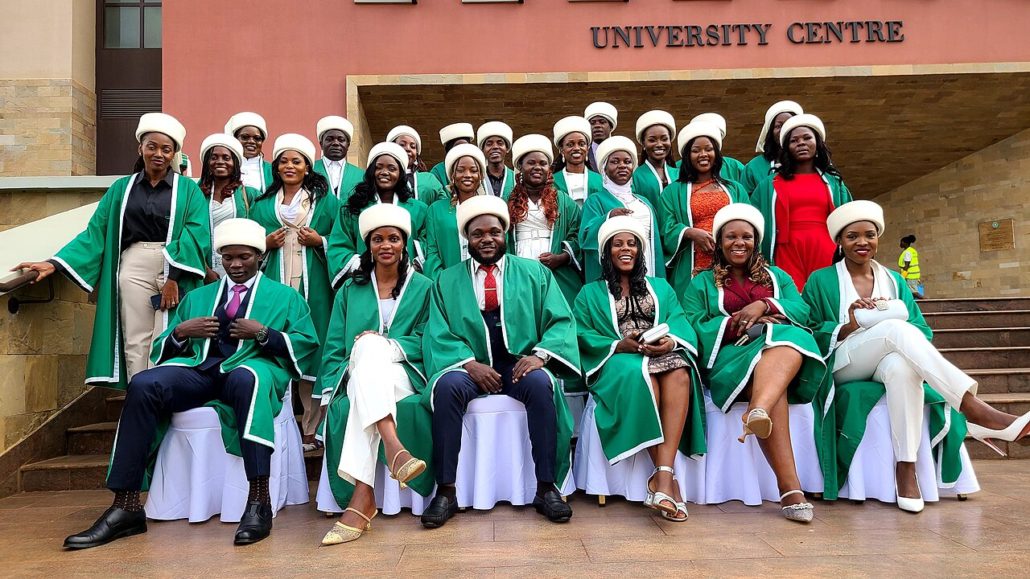
A second active solution targets students who miss direct university entry by a narrow margin. The Higher Education Access Certificate (HEAC), a one-year accredited bridging program, sits inside the Higher Education Access Programme (HEAP), a partnership between FAWE Uganda and the Mastercard Foundation. Sixty-five universities and 20 other degree-awarding institutions hold licenses to deliver HEAC, offering 89 accredited programs nationwide.
On May 9, 2026, NCHE confirmed that more than 7,000 students have enrolled in HEAC, 44% of them female. Phase II of HEAP, launched in April 2024 and running through 2034, targets 2,000 learners across 65 districts. The program reserves 80% of bursaries for young women and sets aside explicit places for refugees and persons with disabilities. FAWE Uganda awarded 700 bursaries across universities and Technical and Vocational Education and Training institutions in the academic year 2025/26 alone.
Early outcomes look promising. NCHE reports that HEAC graduates perform as well as, and sometimes better than, direct-entry students, and they show high employability within their first year of completion. International interest follows. A delegation from Zimbabwe’s Ministry of Higher and Tertiary Education visited Uganda from May 4, 2026, to May 9, 2026, to study the HEAC model for possible adoption.
Looking Ahead
Cost remains the dominant barrier to higher education in Uganda, and demand for both loans and bursaries far outstrips the supply of available slots. Even so, the combination of a national student loan scheme, an accredited bridging certificate and targeted scholarships shows that inclusive financing can move the needle. When degrees and diplomas reach students from low-income, rural, refugee and disability backgrounds and lead to formal work, higher education becomes less a privilege and more a route out of household poverty.
– Amna Al Harrazi
Amna is based in Dubai, UAE and focuses on Good News for The Borgen Project.
Photo: Wikimedia Commons