 The United Nations (U.N.) is an international, intergovernmental organization comprising 193 member states. The U.N. General Assembly meets every five years to discuss the Global AIDS Strategy. The U.N. designed this guide to outline the strategies each member state will employ to combat the global health threat and highlight inequalities that are preventing progress in the global response to the HIV crisis. Governments in Eastern Europe and Central Asia are approaching the crisis via the criminal justice system rather than treating HIV as a public health issue. However, the HIV epidemic in these regions continues to grow significantly, with approximately 2.1 million people living with the virus.
HIV and AIDS at a Glance
Human immunodeficiency virus (HIV) attacks the body’s immune system, and patients often experience flu-like symptoms before the virus progresses to acquired immunodeficiency syndrome (AIDS). This is the most severe stage of the disease, and once diagnosed, patients with AIDS often survive around three years.
The virus is transmitted through bodily fluids, such as blood and semen, meaning contracting the disease can be prevented by exercising careful protection strategies, such as wearing condoms during intercourse and only using clean needles and syringes.
Health care workers combating the HIV epidemic in Eastern Europe and Central Asia face a critical dispute between what is medically proven to help patients with HIV and what doctors are legally permitted to use. There is a ban on opioid agonist therapy (OAT), which is illegal in Russia, Turkmenistan and other countries in these regions, despite being a recognized tool used to prevent the spread of HIV among drug users.
Another example is the life-saving pre-exposure prophylaxis (PrEP) pill that scientists manufactured to prevent the acquisition of HIV, which is largely unavailable in many Central Asian countries, where the pill is considered unaffordable or completely missing from state funding budgets.
The 95-95-95 Target
The UNAIDS 95-95-95 target originates from the 2021-2026 strategy and is yet to be achieved by all member states, continuing in the 2026-2031 strategy. The goal is for 95% of those with HIV to receive a diagnosis, 95% of those diagnosed to be on antiviral therapy, and 95% of people undergoing treatment to achieve “viral suppression,” meaning they can no longer transmit the disease to others.
Promoting Harm Reduction Programs
Harm reduction programs, such as the Eurasian Harm Reduction Association (EHRA), are promoted by the U.N. to help combat HIV transmissions directly related to needle use.
EHRA’s “Sustainability of Services for Key Populations in the EECA Region” is one of the biggest projects combating the HIV epidemic in Eastern Europe and Central Asia. The project aims to reduce criminalization and promote harm reduction for drug users by advocating for the dissolution of certain drug policies, which prevent people from accessing HIV prevention strategies and seeking HIV treatment and care.
Programs like EHRA advocate against the use of drug registries and similar methods of drug-use restriction. In its Position Paper on Drug Policy, EHRA argued that “drug dependence should no longer be an aggravation but should be considered as a basis for social and medical care provision,” explaining that by criminalizing drug users, governments induce a fear of the legal system that directly prevents drug users from both achieving safe needle and syringe usage to prevent HIV transmission and seeking help when they contract the disease.
Integrating HIV Screening Into Primary Care
The HIV epidemic in Eastern Europe and Central Asia is predominantly driven by relations between heterosexual partners, people who partake in drug use, and sex workers. The transmission of HIV to thousands of people each year could be prevented if local health care clinics implemented regular testing policies.
In addition to the 95-95-95 targets, UNAIDS has also committed to a 30-80-60 plan, which requires communities to deliver 30% of testing and treatment services and 80% of prevention programs.
Despite the introduction of new policies, such as the European Standards of HIV Prevention and Care policy, developed in 2025 to raise expectations for the implementation of these obligations, progress has temporarily stalled. A UNAIDS report released following the Geneva Convention in June 2026 revealed that extreme funding cuts have led to a reduction in HIV testing, with programs falling by 22% between 2024 and 2025 and funding for condoms being cut by more than 90% in some areas. Officials, however, remain hopeful that stricter enforcement of the European Standards of HIV Prevention and Care policy will cause HIV prevalence to decline.
– Ruby Fraser
Ruby is based in Cannes, France and focuses on Global Health, Politics for The Borgen Project.
Photo: Flickr
 Historically, Latin American economies have left informal laborers and gig economy workers completely outside state regulatory safety nets. This structural gap traps millions of street vendors, domestic cleaners, and ride-hailing drivers in structural vulnerability. In
 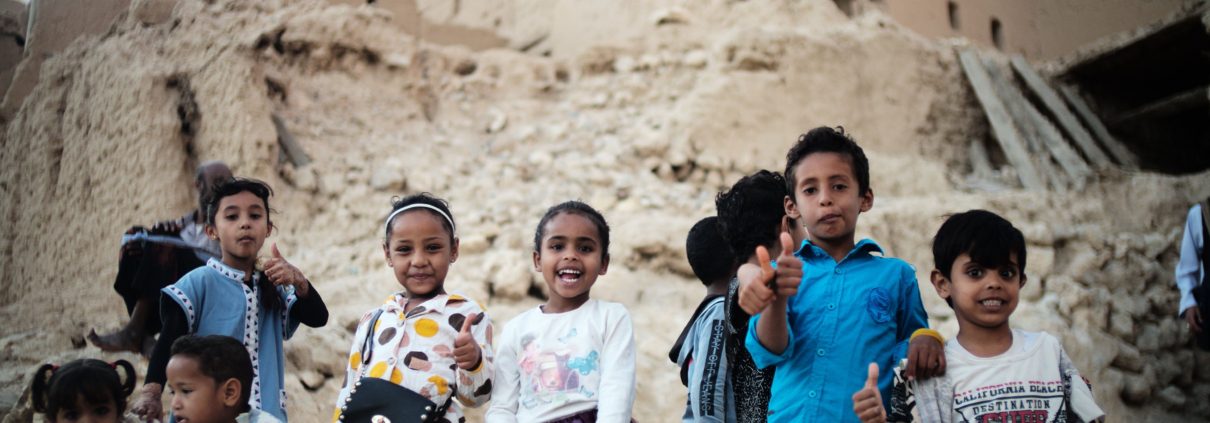 The World Bank recently approved a new 5-year framework aimed at supporting Yemen’s economic recovery through investments in jobs, infrastructure and essential services. The plan comes after a
  The
The