• Link to X
  • Link to Facebook
  • Link to Instagram
  • Link to TikTok
  • Link to Youtube
  • About
    • About Us
      • President
      • Board of Directors
      • Board of Advisors
      • Financials
      • Our Methodology
      • Success Tracker
      • Contact
  • Act Now
    • 30 Ways to Help
      • Email Congress
      • Call Congress
      • Volunteer
      • Courses & Certificates
      • Be a Donor
    • Internships
      • In-Office Internships
      • Remote Internships
    • Legislation
      • Politics 101
  • The Blog
  • The Podcast
  • Magazine
  • Donate
  • Click to open the search input field Click to open the search input field Search
  • Menu Menu

Archive for category: Politics and Political Attention

Information and news about politics.

Aid Effectiveness & Reform, Global Poverty, Politics and Political Attention

Fast For Families

Fast_For_Families
On the 11th day of a hunger strike, Vice President Joe Biden made a surprise visit to a Fast for Families strike tent on the National Mall in Washington. The Vice President then prayed with the group and encouraged their efforts to bring immigration reform.

The U.S. Senate passed a bipartisan immigration bill (S.744) in June. However, the House of Representatives has been deadlocked on the issue. Fast for Families supporters have vowed to fast until the House votes on the immigration reform bill that has already passed in the Senate. The Fast for Families effort in Washington is in conjunction with local fasts and events taking place in congressional districts all over the country.

The Vice President’s visit inspired the fasters as he addressed the crowd saying, “[w]e’re going to win this.” Vice President Biden and President Barack Obama have struggled to keep immigration issues in the spotlight since the President made a promise to bring immigration reform in his campaign.

Biden also said during his visit to the Fast for Families tent, that the 11 million undocumented men, women, and children working for citizenship are already Americans. Throughout the first eleven days, Fast for Families has been visited by many public officials including Rep. David Valadao (R-CA), Secretary of Labor Tom Perez, Secretary of Agriculture Tom Vilsack, House Minority Leader Nancy Pelosi (D-CA), and Reverend Jesse Jackson.

Fasters have vowed that they will continue fasting until they can no longer sustain themselves or are “medically prevented” from continuing. Long time immigration reform activists participating in the fast received the Vice President’s visit and message as inspiring. In fact, Biden’s visit, in connection with House Speaker John Boehner’s recent comments at a news conference on November 21 that immigration reform is not dead, has offered hope to immigration reform advocates and a sign that the change they hope for is coming.

For more information and Fast for Families updates, please visit fast4families.org.

– Daren Gottlieb

Sources: Time, Los Angeles Times, Fast for Families
Photo: Media Heavy
December 15, 2013
https://borgenproject.org/wp-content/uploads/borgen-project-logo.svg 0 0 Borgen Project https://borgenproject.org/wp-content/uploads/borgen-project-logo.svg Borgen Project2013-12-15 04:00:552024-06-05 01:53:41Fast For Families
Food & Hunger, Global Poverty, Politics and Political Attention, Water

5 Facts about Poverty in Yemen

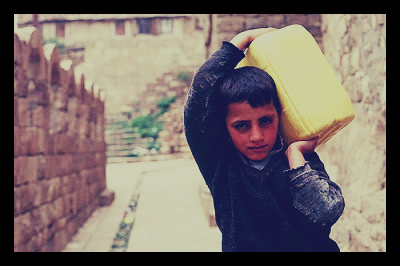
Poverty in Yemen
As one of the poorest countries in the Middle East, Yemen is currently faced with some of the most extreme poverty issues in the world. There are several issues that are unique to Yemen that contribute to this magnitude of poverty, issues that are on track to only get worse unless direct action is taken to mitigate these circumstances. If basic problems, such as lack of access to water, are not properly addressed, other matters, such as sub-par literacy rates, will continue to plague the region and exacerbate poverty in Yemen.


Top 5 Facts about Poverty in Yemen


1. Yemen’s population stands at 25.4 million and approximately 54% of those people live in poverty.  In other words, 54% of the population survives on fewer than 2 dollars per day.

2. Approximately 45% of the population is malnourished.

3. Life expectancy in Yemen is 64 years old, 14 years younger than the average life expectancy in the United States.

4. Major infectious diseases plaguing the country include Bacterial diarrhea, Typhoid fever, Dengue fever and Malaria, all of which are preventable, curable and in some cases largely unheard of anymore in the western world.

5. There is less than 1 physician for every 1,000 people in Yemen.


Major Causes Behind Poverty in Yemen Today


  • The dire water shortage: The use of the word ‘dire’ cannot be stressed enough. According to Maplecroft, a global risk analysis organization, Yemen is ranked as the seventh most water-stressed country on the planet. Even though there is a water shortage in Yemen, approximately 90% of the country’s water is put towards its largely ineffective agricultural practices. In Yemen’s capital city, Sana’a, tap water is only available once every four days for its 2 million people. Even worse, in Taiz, a major city in the south, tap water is only available every 20 days. It is estimated that in 10 years, Sana’a will literally run out of water for its citizens.
  • On the brink of famine: In mid-2012, several major humanitarian relief organizations issued a warning that 44% of the population’s food needs are not currently being adequately met. Five million of these malnourished Yemeni citizens require emergency aid and immediate action. The warning cited a surge in food and fuel prices and political instability as the cause behind the number of malnourished people doubling since 2009. Though there is food available in some cases, many Yemenis cannot afford to buy nourishment because they have been displaced from their homes due to conflict.
  • Lingering political instability: Like most of the Middle East, Yemen felt the effects of the Arab Spring in 2011. The initial uprising was centered on protesting high unemployment, economic conditions and government corruption, which included the then president’s plan to alter the constitution to allow the direct transfer of power to his son. Al-Qaeda also has a presence in the region, which further contributes to political instability. For these reasons and many others, the attempt to reach stability within the government and the region is an ongoing process. After significant fighting and the displacement of hundreds of thousands of citizens, a new president was placed in power after running uncontested in an election. The new president is responsible for overseeing the drafting and implementation of a new constitution and further presidential and parliamentary elections in 2014.

– Colleen Eckvahl


Sources: BBC: Yemen’s President cedes power, BBC: Yemen on brink of food crisis, Green Profit, Maplecroft, The World Bank


December 11, 2013
https://borgenproject.org/wp-content/uploads/borgen-project-logo.svg 0 0 Borgen Project https://borgenproject.org/wp-content/uploads/borgen-project-logo.svg Borgen Project2013-12-11 09:00:582018-01-11 14:34:255 Facts about Poverty in Yemen
Politics and Political Attention

7 Top Athletes Who Served in Congress

Who says Congress won’t play ball? From the field to the capital, here are seven famous athletes who went on to become politicians:

1. Jon Runyan (R-NJ) This former offensive tackle played in the National Football League (NFL) for 14 years, first as a Tennessee Titan, and later as a Philadelphia Eagle. In 2000, Runyan and the Titans played the XXXIV Super Bowl, losing narrowly. Now retired from football, Runyan currently serves in the U.S. House of Representatives.

2. Bill Bradley (D-NJ) Rhodes scholar and former presidential candidate Bill Bradley represented New Jersey in the U.S. Senate between 1979 and 1997. Before his political career, however, Bradley was a well-known basketball player, who won a gold medal in the 1964 Olympics. Later, he went to play for the Knicks, leading them to victory in two championships and earning himself a place in the Basketball Hall of Fame.

3. Bob Mathias (R-CA) Bob Mathias was only 17 years old when he won his first gold medal in the 1948 Olympics decathlon. When the 1952 Olympics rolled around, Mathias won again. During these four years, he set three world records, including youngest man to win an Olympic track and field title. Fifteen years later, Mathias was elected to the House of Representative, where he served two terms. Mathias died in 2006 at the age of 75.

4. Steve Largent (R-OK) A wide receiver for the Seattle Seahawks, Largent set multiple receiving records during his 14 seasons in the NFL, including most receptions. In 1995, a year after being elected to the House of Representatives, Largent was inducted into the Pro Football Hall of Fame. He retired from office in 2002.

5. Jim Bunning (R-KY) Perhaps one of the most famous athletes to enter politics, Bunning is best known for throwing a perfect game while playing for the Detroit Tigers in 1964. At the time, there had only been six other perfect games in Major League history. Bunning’s success won him a spot in the Major League Ball (MLB) Hall of Fame in 1996. Bunning also enjoyed a prolific career as a highly conservative politician, first in the House, from 1987 to 1999, and then in the Senate until 2011.

6. Jim Ryun (R-KS) Prior to joining the House of Representatives in 1996, Ryun ran the 1500 meters in three Olympic games, winning a silver medal in 1968, and setting world records in the mile, the 1500 meters and the 1800 meters. Ryun is the last American athlete to set a world record in the mile.

7. Jack Kemp (R-NY) Inducted into the Greater Buffalo Sports Hall of Fame, Kemp was a quarterback for the Buffalo Bills. During his seven years with the team, the Buffalo Bills won two American Football League championships and attended the playoffs four years running. In 1965, Kemp was elected AFL Most Valuable Player, and in 1984, the Buffalo Bills permanently retired his number. After his time with the Bills, Kemp served in the House of Representatives for 16 years, before becoming U.S. Secretary of Housing and Urban Development under President George H.W. Bush. Kemp died of cancer in 2009.

– Jordanna Packtor

Sources: Business Insider, Sports Illustrated Kids, John Runyan, Bill Bradley, New York Times, Pro Football Hall of Fame, Huffington Post
Photo: Sports Illustrated Kids

October 27, 2013
https://borgenproject.org/wp-content/uploads/borgen-project-logo.svg 0 0 Borgen Project https://borgenproject.org/wp-content/uploads/borgen-project-logo.svg Borgen Project2013-10-27 04:00:122024-05-25 00:29:467 Top Athletes Who Served in Congress
Global Poverty, Philanthropy, Politics and Political Attention

Is Big Philanthropy Democratic?

washington_dc
In an article in Dissent magazine, Joanne Barkan observes that big philanthropy “aims to solve the world’s problems–with foundation trustees deciding what is a problem and how to fix it. They may act with good intentions, but they define ‘good.’” For Barkan, the implication of this system is that the powerful and wealthy define the problem and how to solve it with little or no democratic controls. The article raises an interesting question: is big philanthropy democratic? It answers that question with a resounding “No.”

Barkan is quick to dismiss the laws and regulations that purportedly govern philanthropic organizations. These rules include restrictions on self-dealing, lobbying, and endorsing or supporting candidates for political office. Due to a variety of factors such as loopholes, deregulation, and lack of resources, these rules have been rendered ineffective in governing the operation of these organizations. And, of course, what has become something of a mantra in our society, the wealthier are able to get away with more indiscretion.

With little public oversight, these mega-organizations are free to govern themselves and raise tax-exempt funds from other wealthy donors. What is done with the money, of course, is up to the board of trustees that governs the organization. Although there is a 5 percent payout rule, which requires foundations pay out at least 5 percent of their endowment’s value each year, Barkan points out that this payout rule includes all reasonable expenses of administering the foundation, including salaries, trustee’s fees, travel, and receptions.  Salaries for philanthropic-executives can sometimes reach seven figures, allowing for something of a lavish lifestyle.

Another issue is the type of people that trustees choose to hire for their organizations. Traditionally, management consists of “insider” individuals that come from a business background–management consultants, businesspeople, lobbyists or scientists. Kavita Ramdas, Executive Director of the Program on Social Entrepreneurship at the Freeman Spogli Institute for International Studies at Stanford University, has pointed out that these hiring decisions are reflective of a metrics-driven and efficiency-seeking approach to social change—an approach that is not effective in handling, “the nuance and inherent humility of the social sciences.”

As government resources continue to shrink, those services once considered public will be controlled by private organizations. Philanthrocapitalism is filling the public void and its proving to be big business. In America today, there are 67 grant-awarding foundations with assets totaling more than $1 billion. Many will argue that these actors are using the money they have earned to fund humane endeavors. Others, like Barkan, see mega-philanthropies as another way for the wealthy to decide how to improve humanity and promote an agenda that serves their interests and ideas.

– Daniel Bonasso

Sources: Dissent Magazine, Reuters, Stanford Social Innovation Review
Photo: The Emily Dickinson International Society

October 12, 2013
https://borgenproject.org/wp-content/uploads/borgen-project-logo.svg 0 0 Borgen Project https://borgenproject.org/wp-content/uploads/borgen-project-logo.svg Borgen Project2013-10-12 22:15:082024-06-05 01:53:40Is Big Philanthropy Democratic?
Extreme Poverty, Global Poverty, Politics and Political Attention

Definition of Poverty: What Is It, Exactly?

define_poverty
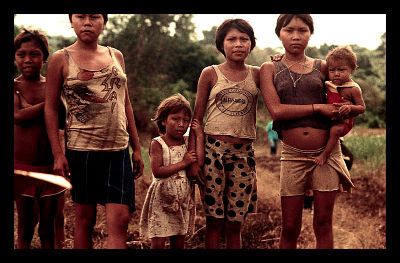
In the vaguest sense of the word, Merriam-Webster will tell you that general poverty is “the state of one who lacks a usual or socially acceptable amount of money or material possessions.” This is just about as much as anyone with a context clue for the word poverty could define it as. But what is it really? What does it mean to live in poverty? There are different types and levels, in a sense, of poverty. Each country tends to have different cut off points that determine whether they are truly impoverished or not. But it is generally accepted that those living in such a way that it is difficult to make ends meet, are impoverished. So what are the different levels?

There are several million people living at or nearby the poverty line just in the United States, but even our poverty line is higher than that of the world’s poorest countries. A person living alone and unmarried is allotted just over $11,000 or less to meet the poverty requirements set by the government. And while survival in our country would be absolutely difficult on this meager income, many people are living on even less. In fact, there are 2.4 billion people living at the poverty line of $2 a day, this comes to less than $3,000 income in an entire year. That is two dollars every day to feed themselves and their families. All that money to have a place to live and water to drink and clothes to wear. Defining poverty means looking at the fact that people are going without the full education or access to good jobs that they so desperately need to pull themselves out of this way of life. People living this way often have to choose one necessity over another in order to make sure that at least some of the needs are met and taking any government assistance when possible, like food stamps and welfare. And it gets even worse than that.

What about extreme poverty? This is recognized as living on less that $1.25 a day as defined by the World bank in 2008 and there are over 1 billion people living in this state. This level is decided by a lack of clean water, housing, food, health care and education. Some of the countries most beset by this issue include Africa, Afghanistan, and Haiti. Most things that other people take for granted, those living in extreme poverty must go without. People living in extreme poverty suffer much higher rates of infant and maternal mortality. 22,000 children around the world die every day in the poorest countries due to unchecked illness and succumbing to malnourishment. In fact 1 billion out of 2.2 billion children in the world are living in poverty conditions such as these. At this point every aspect of survival becomes a struggle. It is not simply a matter of going without health care to ensure that there is enough food in the house. It is instead going without reasonable amounts of anything at all and living a day by day existence.

What about social poverty, or social exclusion? Poverty is not only defined in a monetary fashion. Income poverty is the most commonly looked at, but there is such a thing as social poverty. This is defined as lacking cultural inclusion due to the inability to conform to society’s ideal norms due to a lack of education, skills, money, health care, child care, and a certain type of living condition. This multidimensional measurement of poverty brings all these into consideration to define itself as the inability to participate in the community socially whether on that national, local, or even familial level. While it is much more difficult to measure than what is called absolute poverty, it is still considered to be an important aspect of poverty by many in the world. It is thought that a quality of life should also be applied to standards of living.

All in all, while poverty is defined much in the same way that any word is, it is a constantly adjusting thing as it is an active part of life itself. It fluctuates regularly and changes to meet the times. Hopefully, with the right amount of work and education, it will also become a part of our past as opposed an all too realistic part of our present.

– Chelsea Evans

Sources: Merriam-Webster, Families USA, Global Issues, UNESCO, One Day’s Wages
Photo: Photo Brazil

August 18, 2013
https://borgenproject.org/wp-content/uploads/borgen-project-logo.svg 0 0 Borgen Project https://borgenproject.org/wp-content/uploads/borgen-project-logo.svg Borgen Project2013-08-18 12:25:552024-05-25 00:18:29Definition of Poverty: What Is It, Exactly?
Development, Politics and Political Attention

2012 USGLC Report on Reports: What We Can Learn

usglc
The United States Global Leadership Coalition (USGLC) has released a publication titled the “Report on Reports” every year since 2008. These publications are designed to analyze reports issued by different groups that address development and diplomacy, and to then come to a consensus about the best way to address certain areas.

The USGLC was established in 1995 and works with over 400 businesses and non-governmental organizations to create viable solutions for global development and diplomacy. They also work with religious leaders, academics, and community leaders in an effort to reach out to people from many different perspectives.

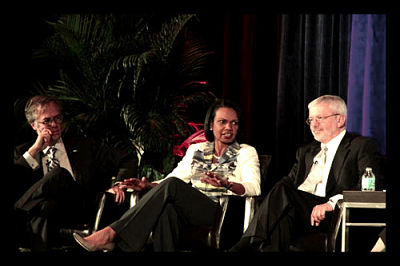
Members of the USGLC Advisory Board include Colin Powell, Madeleine Albright, Hillary Clinton, Henry Kissinger, and Condoleezza Rice.

The 2012 Report on Reports was issued in June of this year. The report, which analyzed more than 30 reports across the political spectrum, outlined six major areas of consensus that the USGLC wanted to focus on in order to improve the United States’ diplomatic relationships and development efforts across the globe.

The first area identified is to strengthen civilian power. The USGLC concluded that the civilian foreign service workforce must continue to grow in order to protect national security and promote our interests.

The second area of consensus is to ensure results-driven development, emphasizing transparency, accountability, and regular evaluations of all development efforts.

The third area is to leverage the private sector. Rather than focusing purely on public and governmental development efforts, the USGLC supports increased cooperation with private sector groups like academic institutions and foundations.

The fourth area identified is to maintain sufficient resources, particularly to support civilian contributions to national security.

The fifth area of consensus is to improve coordination among the players, especially streamlining government agencies to improve coordination, clarity of leadership, and consistency in our development and diplomacy.

The sixth and final area is simply to prioritize. The USGLC emphasizes that although the need for development will continue to increase, we must do our best to match that need with our efforts.

Clearly, the overall emphasis of the 2012 Report on Reports is increased civilian and private-sector participation in U.S. diplomacy and development efforts across the globe. The Center for Strategic and International Studies noted that this will require support for budget reallocation from both ends of the political spectrum to fund this increased participation in these efforts. Furthermore, the bipartisan emphasis of the Report on Reports indicates the need for policymakers to reach across political lines in order to pursue the best interests of both the United States and the developing world.

What does this mean for the United States and the way that it proceeds in its global development efforts? In simple terms, the 2012 USGLC Report on Reports seeks to expand the base of participants in global development by including the civilian and private sectors and also seeks to improve bipartisan cooperation about these efforts. As we move forward in the upcoming years, the USGLC’s recommendations will improve the efficiency, participation, and success of our diplomatic and developmental projects around the world.

– Sarah Russell Cansler

Sources: United Global Leadership Coalition, United States Global Leadership Coalition 2013 Reports on Reports, The Center For Strategic and International Studies
Photo: One

August 17, 2013
https://borgenproject.org/wp-content/uploads/borgen-project-logo.svg 0 0 Borgen Project https://borgenproject.org/wp-content/uploads/borgen-project-logo.svg Borgen Project2013-08-17 06:56:042017-11-30 10:46:282012 USGLC Report on Reports: What We Can Learn
Activism, Politics and Political Attention

5 Interesting Facts from Twiplomacy

twitter_opt
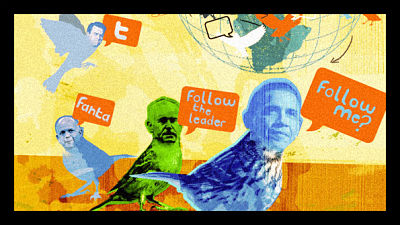
More than three-quarters of the 193 UN member countries are represented on Twitter, making the site a valuable communication tool with which leaders can succinctly speak to millions of citizens. Though it is clear that Twitter has become an increasingly important political medium, there has been little analysis of their Twitter activity. Twiplomacy is a global study of world leaders’ Twitter activity that seeks to examine how the site is utilized as a diplomatic tool. Listed below are five interesting facts from Twiplomacy that shed light on the Twitter usage of world leaders.

  1. Though a roughly 25% of world leaders and governments follow President Barack Obama and the White House, @BarackObama and the @WhiteHouse have only established mutual connections with four other world leaders, making them the least connected out of all world leaders.
  2. @CarlBildt, the Swedish Foreign Minister, has 44 mutual peer connections – the greatest number out of all world leaders. Next on the list is @eu_eeas, the European External Action Service, which has 36 mutual connections.
  3. @BarackObama is the most followed world leader on Twitter with 35,510,157 followers. The next most followed leader is Pope Francis with approximately 7.2 million followers.
  4. The most active world leader account on Twitter is @PresidencialVen, the Presidency of Venezuela, which averages 41.9 tweets per day. The most conversational leader is @AmamaMbabazi, the Prime Minister of Uganda, who replies to 96 percent of all tweets.
  5. 71 percent of African leaders are represented on Twitter, with ousted Egyptian President @MuhammadMorsi being the most followed leader on the continent. Morsi has 1.6 million followers.

Follow @Twiplomacy on Twitter to learn more about how world leaders connect on Twitter.

– Katie Bandera

Sources: Twiplomacy, Twitter
Photo: The Economist

August 2, 2013
https://borgenproject.org/wp-content/uploads/borgen-project-logo.svg 0 0 Borgen Project https://borgenproject.org/wp-content/uploads/borgen-project-logo.svg Borgen Project2013-08-02 04:50:412024-06-04 02:43:575 Interesting Facts from Twiplomacy
Politics and Political Attention

What is a Failed State?

failed_state_protests
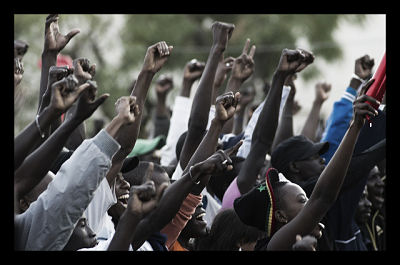
In an ever-globalizing world, state legitimacy is, at its core, the foundational property of a state’s ability to participate in global relations. Without legitimacy, an entity cannot enter into multi-lateral agreements or voice concerns; thus compromising economic and physical prosperity. Once a state possesses this legitimacy, however, it is by no means permanent. With a fluctuating political and economic landscape, exacerbated by global security concerns, states face both internal and external strife postured to compromise their legitimacy. As we have seen with Syria when this legitimacy is lost, the state is considered a failure.

Following World War I, the emergent world powers recognized the need to establish a global convention of nations. In theory, having a place where issues could be attended in a multi-lateral manner would dramatically decrease the likelihood for another world war.

Among political scientists, there is no universally agreed upon definition of a failed state. For most, however, the general understanding hinges upon the lacking of any criterion of which makes a state legitimate in the first place.

In 1933, leaders from across the globe gathered in Montevideo, Uruguay, to create a Convention on the Rights and Duties of States. At the Montevideo convention, global leaders convened a set of conditions which any state must meet in order to be admitted to the realm of the nations. Known as the Montevideo Criteria, a state must possess:

  1. A permanent population
  2. A defined boundary
  3. A legitimate government
  4. The capacity to enter into relations with other nations

Currently, the best example of an entity seeking statehood is Palestine. Despite being granted Observer status in November 2012, Palestine still lacks the legitimacy necessary to vote or propose resolutions in the U.N. With views on border legitimacy, questions on the Palestinian refugees and right of return, and whether or not Hamas is a legitimate government, anything more than Observer status is currently untenable.

For states such as Syria, Bashar al-Assads Ba’ath party has demonstrated a clear inability to provide for the Syrian people. With a fleeing populous, civil war, human rights violations, the global political community views Syria as a failed state.

To address the degree of conflict plaguing much of the world, Foreign Policy Group and the Fund for Peace organization have developed an interactive Failed State Index (FSI). Utilizing analytics on 12 separate primary social, economic, and political indicators the FSI provides a valuable resource in bringing attention towards states in danger of failing.

By bringing attention to states that are in danger of failing, the organizations hope to influence leaders so that resources can be channeled accordingly. To be sure, a failed state does not simply affect the state in question. When there is a humanitarian crisis, refugees flood over the border looking for safety in neighboring countries. If a volatile government takes over, security concerns become a security crisis.

Simply put, putting the label of “failed state” on a state in crisis is an important diagnostic in international relations. However, with no coherent definition of a failed state, the U.N. and other institutions are unable to fully address the issues.

– Thomas van der List 

Sources: Foreign Policy, Fund for Peace, Faculty of Law, CNN
Photo: Social Science Research Council

July 31, 2013
https://borgenproject.org/wp-content/uploads/borgen-project-logo.svg 0 0 Borgen Project https://borgenproject.org/wp-content/uploads/borgen-project-logo.svg Borgen Project2013-07-31 04:26:022024-06-04 01:07:57What is a Failed State?
Politics and Political Attention

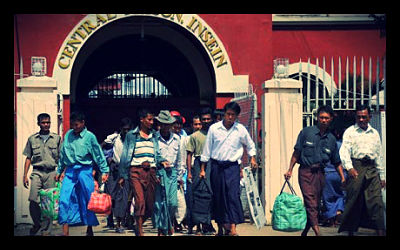
Myanmar to Release Political Prisoners

Prisoners_Myanmar
Myanmar has had a long history of political unrest and has taken thousands of political prisoners over the past few decades. In 2011 there were approximately 2,100 innocent prisoners, most of whom did not support the Burma’s military, or were members of the National League for Democracy (NLD).  But now, after decades of imprisonment for some, Myanmar President U Thein Sein has promised to release all of them by the end of the year. In doing so he acknowledged that the prisoners were indeed, still being held.

Most of the prisoners have already been released since 2010 when Thein Sein took power, but as of April 2013, 176 still remain, and Thein Sein has guaranteed that there are soon to be no political prisoners of conscience in Myanmar. He made the announcement during a speech at Chatham House in Britain (Burma’s former colonial power) on July 15, saying that a special committee was being appointed to go over every political inmate’s case. He was in London to discuss trade and military ties in order to boost Burma’s economy. The 2010 election was an important turning point for Burma, having replaced military rule with military backed civilian government.

The most noteable prisoner was Aung San Suu Kyi who won the Nobel Peace Prize in 1991 for her work as head of the NLD in the 1990 election, when it won 59% of the votes and 81% of parliament seats. But the NLD was never able to take power because Suu Kyi had already been detained under house arrest as a prisoner for speaking out against brutal dictator U Ne Win in July 1989.  She spent 15 of the next 21 years as a political prisoner, until her release in November, 2010.

Since he took office, Thein Sein has been working to promote human rights in Burma, which has seen much sectarian violence such as the recent fighting and killing between local Buddhists and the minority of Muslims. Rohingya Muslims in Burma have been said to be the most oppressed religious group in the world today.

At their meeting in London, English Prime Minister David Cameron discussed Burma’s ongoing violence with Thein Sein, asking him to do more to create peace in the region. Thein Sein promised a “zero tolerance” policy against anyone who fuels ethnic hatred.

– Emma McKay

Sources: New York Times, Freedom House, Biography.com, BBC
Photo: The Telegraph

July 31, 2013
https://borgenproject.org/wp-content/uploads/borgen-project-logo.svg 0 0 Borgen Project https://borgenproject.org/wp-content/uploads/borgen-project-logo.svg Borgen Project2013-07-31 04:19:232024-12-13 17:49:33Myanmar to Release Political Prisoners
Extreme Poverty, Politics and Political Attention

Agit8 Concert Promotes Anti-Poverty Campaign

Agit8 Concert Promotes Anti-Poverty Campaign
Musicians from around the world performed in London this past Wednesday to support Agit8, a music-based campaign focused on raising awareness for extreme poverty. The group was launched by the One Campaign, a group co-founded by Bono and Bob Geldof. The idea was to get modern groups to record newer versions of famous protest songs.

The Agit8 concert hoped to put pressure on leaders attending the G8 summit in Northern Ireland next week. Musicians that participated included Angelique Kidjo, Paloma Faith, U2, Will. i. am, Elvis Costello, and Green Day among others. Artists appeared to live and online to participate in the event.

One of the artists at the event remarked that Agit8 is a movement to push leaders to fulfill their promises and to be held accountable.  Ending poverty will grow economies around the world and result in a healthier and more educated global workforce.  The artists involved in the campaign want to motivate a new generation to fight against extreme poverty and hunger.

The One Campaign gathered the extraordinary group of musicians together to show the world that protest often leads to progress. History has shown that and British filmmaker Richard Curtis produced a film showing this that will also be shown in conjunction with the event.

– Amanda Kloeppel
Sources:The Irish Sun, NTD Television
Photo: Yahoo Finance

June 20, 2013
https://borgenproject.org/wp-content/uploads/borgen-project-logo.svg 0 0 Borgen Project https://borgenproject.org/wp-content/uploads/borgen-project-logo.svg Borgen Project2013-06-20 04:00:092020-07-03 00:24:44Agit8 Concert Promotes Anti-Poverty Campaign
Page 9 of 10«‹78910›

Get Smarter

  • Global Poverty 101
  • Global Poverty… The Good News
  • Global Poverty & U.S. Jobs
  • Global Poverty and National Security
  • Innovative Solutions to Poverty
  • Global Poverty & Aid FAQ’s
Search Search

Take Action

  • Call Congress
  • Email Congress
  • Donate
  • 30 Ways to Help
  • Volunteer Ops
  • Internships
  • Courses & Certificates
  • The Podcast
Borgen Project

“The Borgen Project is an incredible nonprofit organization that is addressing poverty and hunger and working towards ending them.”

-The Huffington Post

Inside The Borgen Project

  • Contact
  • About
  • Financials
  • President
  • Board of Directors
  • Board of Advisors

International Links

  • UK Email Parliament
  • UK Donate
  • Canada Email Parliament

Get Smarter

  • Global Poverty 101
  • Global Poverty… The Good News
  • Global Poverty & U.S. Jobs
  • Global Poverty and National Security
  • Innovative Solutions to Poverty
  • Global Poverty & Aid FAQ’s

Ways to Help

  • Call Congress
  • Email Congress
  • Donate
  • 30 Ways to Help
  • Volunteer Ops
  • Internships
  • Courses & Certificates
  • The Podcast
Scroll to top Scroll to top Scroll to top