• Link to X
  • Link to Facebook
  • Link to Instagram
  • Link to TikTok
  • Link to Youtube
  • About
    • About Us
      • President
      • Board of Directors
      • Board of Advisors
      • Financials
      • Our Methodology
      • Success Tracker
      • Contact
  • Act Now
    • 30 Ways to Help
      • Email Congress
      • Call Congress
      • Volunteer
      • Courses & Certificates
      • Be a Donor
    • Internships
      • In-Office Internships
      • Remote Internships
    • Legislation
      • Politics 101
  • The Blog
  • The Podcast
  • Magazine
  • Donate
  • Click to open the search input field Click to open the search input field Search
  • Menu Menu

Archive for category: Politics and Political Attention

Information and news about politics.

Development, Global Poverty, Politics and Political Attention

Guinea-Bissau: From Independence to Poverty

guinea-bissau_poverty
Guinea-Bissau is one of the poorest nations in the world, ranked 176 out of 187 countries on the United Nations Human Development Index in 2012. With a population of 1.5 million inhabitants, approximately 40 percent are under the age of 14-years old. In many communities, women and girls have limited education and health services.  Many fall victim to forced marriage, exploitation, sexual violence and childhood pregnancy.

Guinea-Bissau has had substantial military and political upheaval since its independence from Portugal in 1974. Shortly after, a military coup appointed Joao Bernardo “Nino” Vieira as its president in 1980. Vieira created a nice path to a multi-party system and market economy, but his regime was characterized by suppressing his political opposition and by purging political rivals.

Throughout the 1980s and 1990s, there were multiple coup attempts against Vieira, but they all failed to cast him out. He was elected as president in the country’s first free elections in 1994 only to be expelled from the country in 1999 after a military mutiny and civil war that started in 1998.

A transitional government turned over power to the opposing leader Kumba Yala after he was elected president in transparent polling in 2000. After only three years in office, Yala ended up being overthrown in a nonviolent military coup in 2003, and Henrique Rosa, a businessman at the time, was sworn in as interim president. Vieira came back to Guinea-Bissau, was re-elected in 2005 and pledged to pursue national reconciliation and economic development, but he was assassinated in 2009.

In an emergency election in June of 2009, Malam Bacai Sanha was elected, but he passed away in 2012 from a pre-existing illness. To determine his successor, there was supposed to be an election in April of 2012, but a military coup prevented it from taking place. Currently, Manuel Serifo Nhamadjo is the transitional president and the transitional government keeps postponing the new presidential election that was supposed to take place two years ago.

All of this political strife has led Guinea-Bissau’s economy to be severely harmed and it has been very difficult for it to recover. A UN human rights expert called out the Guinea-Bissau authorities on February 28 in her visit to the nation to inform them how crucial it is that they help out their own people that are in extreme poverty.  She said the population cannot wait any longer for the transitional state policies to become effective and that the government needs to work to ensure the welfare of future generations, especially those living in abject poverty.

Much of Guinea-Bissau suffers from low levels of school enrollment, illiteracy and unemployment. Development of Guinea-Bissau is mostly dependent on the investment in basic services like health and education.  The country cannot successfully improve the situation of the poor until its framework is improved first.

– Kenneth W. Kliesner

Sources: UN News Centre, The World Factbook
Photo: Tia Mysoa

March 5, 2014
https://borgenproject.org/wp-content/uploads/borgen-project-logo.svg 0 0 Borgen Project https://borgenproject.org/wp-content/uploads/borgen-project-logo.svg Borgen Project2014-03-05 12:13:332024-06-05 01:57:14Guinea-Bissau: From Independence to Poverty
Global Poverty, Politics and Political Attention

Establishment of Six Federal Regions in Yemen

Federal_Regions_in_Yemen
In recent years, the nation of Yemen has been mired in strife, partially due to the ousted president Ali Abdullah Saleh and Al-Qaeda factions within the country. The National Dialogue Conference established by the current president, President Abdrabbuh Mansour Hadi, not only led to Saleh’s departure in 2012, but also aimed to eradicate the territorial strife created by a centralized government.

The establishment of six federal regions in Yemen (Aden, Hadramawt, Saba, Janad, Azal and Tahama) created a sense of equality.

With their own political autonomy and a fair distribution of the oil resources in Yemen, the southern states of Aden and Hadramawt can profess egalitarian footing with the other four northern regions. The former capital of Sana’a will remain neutral; the port city of Aden will maintain its own level of autonomy.

Despite agreement from all delegates to create the six federations, southern secessionists are still displeased.

The possibility of the north arresting the oil reserves instills fears among southern separatists. Yemen’s political past stems from Saleh’s forced centralization of both the southern and northern regions in 1994 despite an initial union with the north in 1990.

After independence from the British in 1967, the southern region of Yemen remained independent laced with Marxist ideology.

An impoverished nation, Yemen has a dearth of food supplies. The Global Food Fund donated $36 million in order to raise food initiatives ranging from livestock to agriculture. The four-year plan aims to change the lives of small-scale farmers in rural region: 31 percent of these rural farmers produce a mere 10 percent of the amount of food they need.

From research to supply to guidance to construction, the initiative proposed by the Yemeni Ministry of Agriculture aims to combat malnutrition.  The initiative includes better irrigation, high-quality seeds and land development to facilitate farming methods.

Among struggles with food security, Yemen reported that 2.5 million children do not continue their education. Beyond education,  the Yemeni population is vulnerable to high infant and maternal mortality rates as well as infectious diseases.

With a hopefully better political climate, the government can focus on the undernourished Yemeni population, with reports that 46 percent of the population survived on scarce food supply in 2012.

Whether the formation of the six federal regions will placate external political figures also remains to be seen.

 – Miles Abadilla

Sources: Al-Jazeera, Al-Shorfa, BBC, Thomson Reuters
Photo: Alarabiya

February 26, 2014
https://borgenproject.org/wp-content/uploads/borgen-project-logo.svg 0 0 Borgen Project https://borgenproject.org/wp-content/uploads/borgen-project-logo.svg Borgen Project2014-02-26 16:38:592024-06-08 04:00:30Establishment of Six Federal Regions in Yemen
Economy, Global Health, Government, Politics and Political Attention

Is Global Governance Undermining Global Health?

Global governance
On February 11, The Lancet and the University of Oslo issued a joint commission calling for a political commitment to reform the current system of global governance in favor of one that prioritizes human health over wealth. The Commission of Global Governance for Health brought together 18 leaders of research and policy-making, drawn from a number of different backgrounds, to draft the report.

Data was gathered for two years on how socioeconomic inequality between nations is exacerbated by a system of global governance run by a handful of the wealthiest nations. This imbalance of political power between nations is exactly what the commission is trying to fight.

The main agenda it promotes is that health equity should be a top priority of all political, economic and social sectors.

Richard Horton, editor-in-chief of The Lancet, notes, “Economic growth alone will not deliver good health to the most vulnerable sectors of society without addressing the intertwined global factors that challenge or destroy health lives.”

The commission identifies seven areas where political and economic injustice affects population health:

  • The global financial crisis and ensuing austerity policies
  • Knowledge and intellectual property
  • Investment treaties
  • Food security
  • Transnational corporations
  • Migration
  • Armed violence

Within these areas, there are five key “dysfunctions” that are preventing improvements in health outcomes. They are:

  • Democratic deficits (“the exclusion of civil society and marginalized populations from national and global decision making”)
  • Weak accountability (“inadequate means to constrain power”)
  • Institutional “stickiness” (“decision-making processes that fail to adapt to the changing needs of people”)
  • Inadequate policy space for health (“health concerns are too often subordinated to other objectives, such as economic growth and national security”)
  • Absence of international institutions to protect and promote human health

So where does this leave people?

The Commission makes it quite clear that all of these challenges can only be addressed by moving beyond the health sector. In order to promote human health and address global inequities, they argue that people need to reform their current system of global governance in a number of ways:

1. Create a multi-stakeholder platform on governance for health (“a place for deliberation and debate to strengthen accountability for health”)
2. Form an independent scientific monitoring panel (“to measure and track progress in overcoming the political, economic, and social determinants of adverse health outcomes”)
3. Organize health equity impact assessments of all policies and practices
4. Strengthen existing mechanisms to protect health and build commitment to global solidarity and shared responsibility

It is the hope of the Commission of Global Governance for Health that this report will bring health inequities between nations to the forefront of global policy.

– Mollie O’Brien

Sources: Medical News Today, The Hindu
Photo: Masafumi Matsumoto

February 25, 2014
https://borgenproject.org/wp-content/uploads/borgen-project-logo.svg 0 0 Borgen Project https://borgenproject.org/wp-content/uploads/borgen-project-logo.svg Borgen Project2014-02-25 18:04:212014-02-25 18:04:21Is Global Governance Undermining Global Health?
Global Poverty, Government, Politics and Political Attention

Define Congress… Defining Can be Difficult

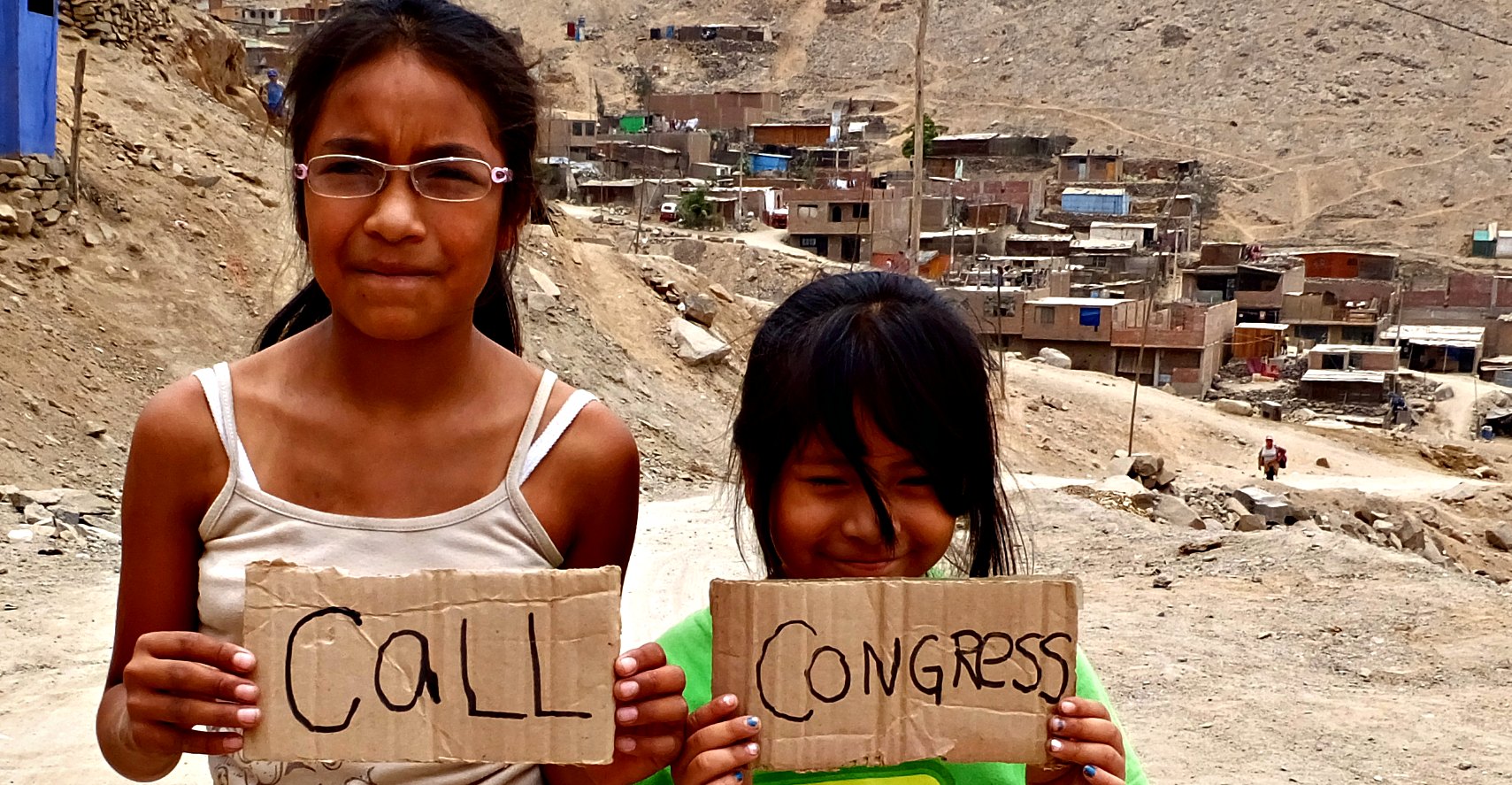
call_congress
Politics can be very confusing to follow, especially if one is unaware of the basics, but a quick description of the functions and structure of Congress can help advocates of poverty reduction get a brief overview of the complex size and scope of the United States Congress.

Let’s define Congress. The U.S. Congress makes up the legislative branch of the U.S. government, meaning it has the power to write and make laws. Additionally, it has the ability to approve all government spending, collect taxes, declare war, regulate commerce and provide for the general welfare. Under the American democratic system of checks and balances, it shares governing authority with the executive and judicial branches of the government.

Structure

Congress is made up of two parts, or chambers. The lower chamber, the House of Representatives, has 435 members. The amount of members per state varies by the state’s population, but currently each representative typically represents approximately 700,000 constituents. Each state must have at least one representative who serves two-year terms.

The upper chamber, the Senate, has 100 total members. Each state has two senators, regardless of its population. Senators face re-election every six years; however, elections are rotated so that no more than one senator per state is up for re-election in a single election cycle.

Making Laws

A “Congress” lasts two years and begins on January 3 of odd-numbered years. Each year is considered a “session” of Congress. As of 2014, the 113th Congress is serving its second session. At the end of this year, elections will be held to decide the 114th Congress, which will meet from 2015 to 2017. Unapproved bills remain alive between sessions of Congress but do not carry over into the next two-year congressional term.

After a bill’s introduction in either house, it goes for review to the legislative committee that covers the subject of the bill. The committee may refer the bill to a subcommittee, which may hold hearings on the bill and amend it before recommending it for approval in a new form to the greater committee. Once the bill clears the committee process, it goes to the House or Senate floor for debate.

The House and Senate must each approve the bill in identical form before the President has an opportunity to sign it into law. Therefore, should differences exist between the House and Senate versions, the two chambers of Congress will form a conference committee to hash out any discrepancies. The president then has ten days to sign or veto the bill.

Shared Authority

The Senate and the House of Representatives share identical legislative authority with a couple of exceptions. First, the House of Representatives originates all revenue-raising bills, initiates impeachment proceedings against federal officials and has the final authority to choose the president if no candidate wins in the electoral college.

The Senate has the authority to confirm federal and judicial branch appointments and also the authority to ratify treaties. The senate also conducts impeachment trials after the House of Representatives has initiated them.

– Martin Levy

Sources: About, Congress Link, Census Data
Photo: OSG’s AP Gov. and Politics


Learn how to call Congress.


February 19, 2014
https://borgenproject.org/wp-content/uploads/borgen-project-logo.svg 0 0 Borgen Project https://borgenproject.org/wp-content/uploads/borgen-project-logo.svg Borgen Project2014-02-19 08:15:012024-05-26 23:14:59Define Congress… Defining Can be Difficult
Global Poverty, Politics and Political Attention

Protesters Make Strides Against Ukrainian Government

Ukraine_Government_Protest_Movement
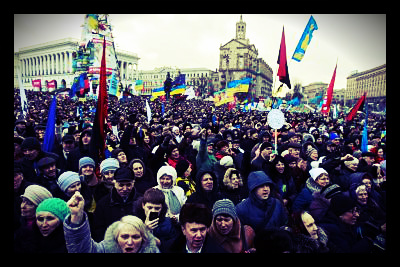
After nearly two months of protest movements ranging across cities of Ukraine, protesters have made landmark achievements towards a government void of corruption.

The social turmoil began when President Viktor Yanukovych backed out of a trade deal with the European Union and went on to receive a $15 billion bailout from Russia. However, anti-protest legislation introduced two weeks ago are what caused the protests to magnify and eventually turn violent.

Since then, opposition movements have placed significant political pressure on Ukrainian leaders. As of January 18, controversial anti-protest laws have been repealed and the very unpopular Prime Minister Mykola Azarov resigned from office.

Azarov’s resignation followed President Yanukovych offering of the Prime Minister job and other senior positions to opposition leaders. The opposition ended up rejecting the deal, asserting that they do not plan on letting up. They continue to press for new and early elections and there are still many negotiations to be made between the Ukrainian government and opposition.

So far, the opposition movements are calling for, “an end to government corruption, freedom for political prisoners and for Ukraine to be aligned with the European Union and not Russia.”

The Ukrainian government also recently signed in a conditional amnesty law for captured activists in which protesters would be given at 15-day deadline to leave the government buildings that are occupied. This also comes after recently allegations of the Ukrainian government for abducting and torturing citizens, including the opposition activist, Dmytro Bulatov.

As the situation in Ukraine has already been established as a human rights nightmare, it is increasingly becoming one with more information on government allegations surfacing. The United Nations Human Rights office has also gotten involved by condemning the cases of torture and is now calling on the Ukraine government to further investigate the situation.

Although the opposition movements in Ukraine have gained significant ground with the resignation of Prime Minister Azarov, the repeal of anti-protest legislation and now with the law of amnesty for all of the political prisoners (as long as protesters vacate government buildings), they are still calling for new elections.

It is unclear at this point, how much further the tension between the Ukrainian government and opposition will last. However, on an international scale, people are weighing in to attempt to resolve the issue.

As a consistent critical of the Ukrainian government’s handling of the past two months, U.S. Secretary of State John Kerry stated that, “Ukrainian president’s offers needed to improve if the opposition were to take them seriously.”

– Jugal Patel

Sources: BBC, BBC-2, Al Jazeera, Global News
Photo: Voice of America

February 9, 2014
https://borgenproject.org/wp-content/uploads/borgen-project-logo.svg 0 0 Borgen Project https://borgenproject.org/wp-content/uploads/borgen-project-logo.svg Borgen Project2014-02-09 21:20:382014-02-10 21:20:50Protesters Make Strides Against Ukrainian Government
Global Poverty, Politics and Political Attention

Sean Penn and Fellow Celebrities Help Haiti Home

Sean_Penn_Haiti_celeberties_help_aid
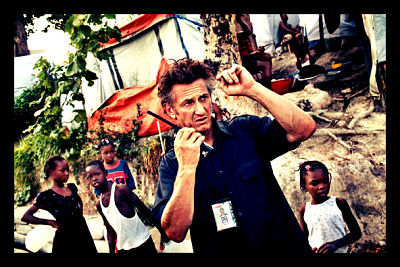
Sean Penn is best known for portraying the cult character Spicoli in “Fast Times at Ridgemont High” as well as his Academy Award winning roles in “Mystic River” and “Milk.” Penn has also been known for his humanitarian efforts, and over the years, he has yet to slow down.

Recently, Penn hosted the Help Haiti Home Gala in Beverly Hills’ Montage Hotel, where he helped raise $6 million for his charity, the J/P Haitian Relief Organization. Celebrities in attendance included Julia Roberts, Gwyneth Paltrow, Chris Martin, Anderson Cooper, Chris Hemsworth, Goldie Hawn and rumored girlfriend Charlize Theron.

Founding the origination in 2010, Penn acts as the Chief Executive Office Chairman of the Board of the J/P Haitian Relief Organization where he has conducted the Help Haiti Home Gala for its third annual year. J/P Haitian Relief Organization primary focus includes striving for improved medial aid, protection, and re-location of internally displaced persons (IDP) across the globe. The J/P Haitian Relief Organization has organized many camp management sites for thousands of IDP’s across the Haiti region.

The Help Haiti Home Gala also included a surprise guest appearance by U2 which saw Bono and his fellow band members perform such songs as “Vertigo” and “Desire” for the first time in four years. There were a plethora of various donations which were auctioned at the gala including a $1.4 million sculpture made out of discarded firearms which was purchased by CNN news anchor Anderson Cooper. Gwyneth Paltrow and Chris Martin also donated to the cause by outbidding Charlize Theron for a $650,000 Banksy art piece.

Penn was in high spirits following the event where he told People Magazine, “This town has been very supportive of me and, more importantly, what our organization is doing in Haiti. I got a lot of gratitude and no complaints.”

Since the inception of the J/P Haitian Relief Organization, Penn and company have built a tent city on a golf course which has served as a temporary home to nearly 60,000 people.  Of those people, nearly 80 percent of them have successfully returned homed, a primary goal of the organization. Penn’s organization has also provided educational, health, community development, and other economic opportunities for many Haitian citizens and continues to do so today.

– Jeffrey Scott Haley
Feature Writer

Sources: Haitian Relief Organization, M Starz, Crowdrise
Photo: The Accidental Activist

February 3, 2014
https://borgenproject.org/wp-content/uploads/borgen-project-logo.svg 0 0 Borgen Project https://borgenproject.org/wp-content/uploads/borgen-project-logo.svg Borgen Project2014-02-03 04:00:272024-06-11 02:21:36Sean Penn and Fellow Celebrities Help Haiti Home
Politics and Political Attention

Ukrainian Government and Opposition to Negotiate

Ukrainian Government
Following new legislation that outlawed the right of protest in Ukraine, people have taken to the streets in a display of anger and violence. The situation seems to have gotten out of hand for Ukrainian police and officials, as they are unable to peacefully control the protests. Resorting to brute force to hinder the people, the international community is beginning to call the situation a human rights violation for the people of Ukraine.

International leaders such as United States Vice President Joe Biden are stepping in to urge Ukrainian Prime Minister Mykola Azarov to resolve the issue peacefully. Biden also went on to state that relations between Ukraine and the U.S. may be hurt as a result of the Ukrainian government’s treatment of the issue. Unfortunately for Azarov, the people are calling for the resignation of Azarov as well as other government leaders.

Opposition and government leaders have met multiple times to try to reach agreements on the issue, but no progress has been made as of yet. After meeting with Ukrainian President Viktor Yanukovych, opposition leader Vitaly Klitschko states that the President disagreed to the demands of resignation for both he and his cabinet members. Nevertheless, Yanukovych is determined to continue negotiation talks to reach a resolution.

Recently, news sources in Ukraine reported Yanukovych “has promised a government reshuffle, an amnesty to detained activists and other concessions, after protests against his rule engulfed Ukraine.” However, opposition forces have denied Yanukovych’s offers and seek to continue protesting.

In the city of Lviv, hundreds of protestors gained control of regional governor Oleh Salo’s office and forced him to sign off a resignation letter. Opposition movements in various cities across Ukraine have also sought to gain control of regional government offices but have not been as successful.

Although negotiation talks have stalled, what is certain is that opposition forces are not expected to give in quietly to Yanukovych’s offerings. The protesters are calling for early elections to replace their government and until then, protests are expected to continue.

– Jugal Patel

Sources: Voa News, CNN, FOX
Photo: Microsoft

January 29, 2014
https://borgenproject.org/wp-content/uploads/borgen-project-logo.svg 0 0 Borgen Project https://borgenproject.org/wp-content/uploads/borgen-project-logo.svg Borgen Project2014-01-29 17:31:202024-05-26 23:08:27Ukrainian Government and Opposition to Negotiate
Developing Countries, Foreign Aid, Foreign Policy, Global Poverty, Politics and Political Attention

Foreign Aid in Tajikistan

Foreign Aid in Tajikistan
Sharing a common border with Afghanistan, Tajikistan is currently one of the poorest countries in the Commonwealth of Independent States. Ranking 125 out of 187 countries in the 2012 Human Development Index, Tajikistan also suffers from bad weather conditions which heavily affect rural areas and economic stability. Currently, the volume of imports to Tajikistan is twice as high as the country’s exports causing everyday commodities to rise in price, heavily affecting the lives of many Tajikistan citizens. This has forced approximately 1.5 million Tajiks to seek employment outside of the nation.

Luckily, in recent times, Tajikistan has been able to form lasting bonds with the European Union, the Government of Russia and select Western nations. With ongoing support, Tajikistan is aiming to increase their private sector and help boost an economy which pays very little to its workers.

For example, currently, university professors and doctors make an average of $70 to $150 a month, a fact that bothers many of its political leaders.

As of late though, The European Union has announced funding for the nation of Tajikistan to the tune of $250 million Euros which will be allocated for the betterment of education, health care and rural development. Currently, three quarters of the population live in rural areas where only 7% of land is arable. These funds will be put to use in hopes of boosting the economy and stabilizing food insecure communities.

These funds will also go towards the forthcoming cooperation program which will last from 2014 to 2020. Issues regarding water management, environmental resistance, rural development, poverty reduction and economic reforms will also be addressed.

This agreement partnership between the EU and Tajikistan has been in place since 2010. Although Tajikistan remains quite poor and lacking in sustainable resources, its location in the Middle East has peaked interest for many countries which has, not surprisingly, encouraged foreign support.

Tajikistan recently re-elected Emomali Rahmon as its leader for the next 7 years which has been received by mixed reviews. Since coming into power in 1992, Rahmon has made it a priority to establish lasting relationships with many countries in hopes to build support for the nation. Only time will tell what the future has in store for foreign aid in Tajikistan, but with recent improvements in government accountability, the future seems to be a brighter than usual.

– Jeffrey Scott Haley
Feature Writer

Sources: World Food Programme, Foreign Policy Journal, Azer News
Photo: Central Asia Online

January 26, 2014
https://borgenproject.org/wp-content/uploads/borgen-project-logo.svg 0 0 Borgen Project https://borgenproject.org/wp-content/uploads/borgen-project-logo.svg Borgen Project2014-01-26 18:38:552024-05-26 23:03:46Foreign Aid in Tajikistan
Global Poverty, Human Rights, Politics and Political Attention

Humanitarian Aid in Syria

humanitarian_aid_syria
Syria has been engaged in a civil war ever since 2011.  As different rebel groups continue to clash against the authoritative and repressive regime of President Bashar al-Assad, over 130,000 people have died.  Furthermore, over 9.3 million people are in need of humanitarian assistance, 6.5 million Syrians have been internally displaced from their homes while an additional 2.3 million Syrians have fled to neighboring countries.

Relief reception areas and displacement camps are set up inside Turkey, Iraq and Jordan, though refugees are also fleeing to Lebanon and Egypt.  It is clear that the magnitude of this crisis is beyond the financial capacity of Syria’s neighbors.  So how is the rest of the international community contributing?

The United States government has been the single largest contributor of humanitarian aid, providing more than $1.3 billion to Syria and its neighbors.  The European Union has also pledged more than $800 million while the U.K., Germany and Kuwait comprise the remaining top five donors contributing $670 million, $415 million and $333 million respectively.

Aid is distributed through dozens of different implementing channels with the largest coordinator of aid being the United Nations through its Office for the Coordination of Humanitarian Affairs.  The UN has 15 different organizations on the ground in Syria including World Health Organization, World Food Program, UN Children’s Fund (UNICEF) and the UN Refugee Agency (UNHCR).  There are also 18 registered international NGO’s including Action Against Hunger, Danish Refugee Council, Oxfam and SOS international.

These organizations provide food to almost 3.4 million people in the form of rations and flour delivered to households and bakeries.  Drinking water, sanitation services and shelter materials are also being distributed to refugee camps throughout the region.  Relief programs are furthermore providing medical supplies and emergency and basic health care in attempt to counter the loss caused by damaged hospitals and medical facilities.  The health sector of the relief effort has provided about 5.9 million people with health care and medical supplies.

The UN Syrian Humanitarian Assistance Response Plan requested $1.4 billion in 2013.  As a result, nations were able to contribute approximately 74% of the requested amount.  Moreover, in December of 2013, the UN announced that aid agencies needed nearly $13 billion for humanitarian relief operations in 2014.  This includes $6.5 billion just for the Syrian conflict, $2.3 billion of which will go to aid people within Syria while the remaining $4.2 billion will be allocated for Syria’s five neighboring countries.

As the world powers continue to search for diplomatic solutions to end the civil war, the humanitarian crisis will undoubtedly extend well beyond the duration of the conflict.

– Sunny Bhatt

Sources: Huffington Post, USAID, UNOCHA, Reuters
Photo: BBC

January 26, 2014
https://borgenproject.org/wp-content/uploads/borgen-project-logo.svg 0 0 Borgen Project https://borgenproject.org/wp-content/uploads/borgen-project-logo.svg Borgen Project2014-01-26 04:00:452024-05-26 23:05:45Humanitarian Aid in Syria
Aid Effectiveness & Reform, Foreign Aid, Foreign Policy, Global Poverty, Government, Politics and Political Attention

Corruption Stifles Aid in Malawi

Corruption_Stifles_Aid_Malawi
In the wake of the recent corruption scandal known as “Cashgate,” the British Department for International Development (DfID) has frozen aid to Malawi. Experts on foreign aid are concerned the freeze might prove catastrophic for both the health and education sectors in the small country.

In November 2013, it was discovered that governmental officials in Malawi had taken aid dollars for themselves to the tune of $250 million. After the failed assassination, Budget Director Paul Mphwiyo—who was thought to be a whistle blower—and the region’s police force found money stashed in the homes of several members of the government.

Nations responsible for supplying Malawi with foreign aid promptly suspended all funds that had gone to support the Malawian government directly. Additionally, The Guardian reports “the DfID went a step further” by freezing funds that affect healthcare and education.

Malawi receives nearly half of its budget from foreign sources, meaning that its people will soon be without essential services, experts warn. To make matters worse, the United Kingdom is the largest donor to Malawi.

The breakdown, however, illustrates a difficult challenge for all donor nations, not just the U.K. For example, amid rampant and violent corruption it is difficult to rationalize making contributions to a developing nation. Likewise, pulling the plug on necessary programs creates internal instability and hardship for the people who rely on those donations.

Most Malawians survive through subsistence farming, and nearly three-quarters live on $1.25 per day or less.

Malawi is now making attempts to be more transparent with donor money, and is trying, yet again, to inspire donor confidence. However, this latest breach of trust was, for the DflD, a point of no return.

The head of the Malawi branch of the DflD, Sarah Sanyahumbi, was quoted as saying, “This is not business as usual. As far as we are concerned, the line has been crossed, so once the line has been crossed you cannot go back to what you had before.”

For many of Malawi’s most vulnerable, this is unfortunate news. The future for the young and ill in Malawi remains unclear as of yet. However, it seems unlikely it will be good without a new agreement between nations.

– Chase Colton

Sources: The Guardian, International Business Times, The Borgen Project
Photo: Mideast Posts

January 24, 2014
https://borgenproject.org/wp-content/uploads/borgen-project-logo.svg 0 0 Borgen Project https://borgenproject.org/wp-content/uploads/borgen-project-logo.svg Borgen Project2014-01-24 15:44:072024-05-26 23:06:07Corruption Stifles Aid in Malawi
Page 7 of 10«‹56789›»

Get Smarter

  • Global Poverty 101
  • Global Poverty… The Good News
  • Global Poverty & U.S. Jobs
  • Global Poverty and National Security
  • Innovative Solutions to Poverty
  • Global Poverty & Aid FAQ’s
Search Search

Take Action

  • Call Congress
  • Email Congress
  • Donate
  • 30 Ways to Help
  • Volunteer Ops
  • Internships
  • Courses & Certificates
  • The Podcast
Borgen Project

“The Borgen Project is an incredible nonprofit organization that is addressing poverty and hunger and working towards ending them.”

-The Huffington Post

Inside The Borgen Project

  • Contact
  • About
  • Financials
  • President
  • Board of Directors
  • Board of Advisors

International Links

  • UK Email Parliament
  • UK Donate
  • Canada Email Parliament

Get Smarter

  • Global Poverty 101
  • Global Poverty… The Good News
  • Global Poverty & U.S. Jobs
  • Global Poverty and National Security
  • Innovative Solutions to Poverty
  • Global Poverty & Aid FAQ’s

Ways to Help

  • Call Congress
  • Email Congress
  • Donate
  • 30 Ways to Help
  • Volunteer Ops
  • Internships
  • Courses & Certificates
  • The Podcast
Scroll to top Scroll to top Scroll to top