• Link to X
  • Link to Facebook
  • Link to Instagram
  • Link to TikTok
  • Link to Youtube
  • About
    • About Us
      • President
      • Board of Directors
      • Board of Advisors
      • Financials
      • Our Methodology
      • Success Tracker
      • Contact
  • Act Now
    • 30 Ways to Help
      • Email Congress
      • Call Congress
      • Volunteer
      • Courses & Certificates
      • Be a Donor
    • Internships
      • In-Office Internships
      • Remote Internships
    • Legislation
      • Politics 101
  • The Blog
  • The Podcast
  • Magazine
  • Donate
  • Click to open the search input field Click to open the search input field Search
  • Menu Menu

Archive for category: Philanthropy

Information and news about philanthropy

Global Poverty, Philanthropy

Students Aim to End Global Poverty for Hult Prize

hult prizeWhat would you do if you were awarded one million dollars? Winners of the Hult Prize use the money to help alleviate global poverty. College students compete for the prize by coming up with innovative ways to solve the world’s biggest problems. A student at Hult International Business School, Ahmad Ashkar, came up with the idea to have teams of students from around the globe attempt to come up with a solution for particular issues. For 2015, the issue is “early childhood education.”


Hult International Business School, having partnered with former President Bill Clinton and the Clinton Global Initiative, held the first competition in 2010. The competition starts on a local/regional level with competitions being held in Boston, San Francisco, London, Dubai and Shanghai. Winners then go on to a six-week program packed with seminars on innovation and entrepreneurship called “The Hult Prize Accelerator.” Afterward, six teams go on to the Global Finals, where one team with an impactful idea is decided on as the best. The winning team then gets the opportunity to put their plans into action.

Last year, the issue to focus on was “non-communicable diseases in urban slums” such as diabetes or heart disease. A team of students from the Indian School of Business were declared the winners for their business concept “NanoHealth,” where a group of doctors receive a “Dox-in-Box,” a diagnostic tool that will help identify those at risk of disease. The goal is for NanoHealth to help up to 25 million people currently living in slums. Other finalists came from the University of Pennsylvania, MIT, HEC Paris, ESADE Business School and York University, and many of them are known to continue going forward with implanting their idea despite not winning.

The Hult Prize has been referred to as the “Nobel prize for students” by Muhammad Yunus, a winner of the Nobel Peace Prize.

“If you can create a real business, the beginning of a prototype, you can change the world,” he said.

This year’s winner will be decided on at the Clinton Global Initiative annual meeting in the fall.

– Melissa Binns

Sources: Huffington Post, Hult Prize, New York Times
Photo: NPR

March 20, 2015
https://borgenproject.org/wp-content/uploads/borgen-project-logo.svg 0 0 Borgen Project https://borgenproject.org/wp-content/uploads/borgen-project-logo.svg Borgen Project2015-03-20 04:00:032020-07-10 08:45:17Students Aim to End Global Poverty for Hult Prize
Activism, Philanthropy, Poverty Reduction

Ending Poverty Through Mobile Banking

mobile banking
With populations in the developing world on the steady rise and technology becoming more user-friendly, there is no doubt that technology will make drastic changes to the developing world in the next decade.

In a recent 2015 Gates Annual Letter published by the Bill and Melinda Gates Foundation, Gates declared that innovation will play a vital role in improving the lives of people in poor countries in the next 15 years.

Moreover, Melinda Gates argues that an increase in access to mobile banking through cell phones will provide impoverished people with the opportunity to save what they earn or perhaps borrow what they need at a low rate.

One of the many benefits of mobile banking is its socio-economic impact. The country of Kenya was known to have an underdeveloped banking infrastructure, high poverty rate and a large population of migrant people. Since the introduction of mobile banking in Kenya, financial inclusion is reported to have increased to 80 percent. Along with significant changes and improvements in global health and agricultural production, increased access to mobile technologies in developing nations is the starting point to something greater.

Developing countries are limited by the physical infrastructure of financial institutions, which means that a large part of their population is not included in a banking system. Financial inclusions have an important impact on the lives of people. Reports indicate that when poor people receive access to financial services, their cash management improves and creates better infrastructure for business and development of markets.

This change in the infrastructure in developing nations is a start to change the way people live in these countries. A small technological innovation like the mobile phone has made huge impacts in providing the opportunity to build a more developed economy in these countries.

Other innovations in technology have become popular in benefiting the developing world as well. Telecenters are an example of how technology has  changed in order to suit those living in remote areas. Telecenters range from innovations in the education sector to the medical industry.

For learning, distance education developed by technology has the ability to make every child a scholar. For health, telemedicine has the ability to change dysfunctional rural health-care systems by providing clinical health care at a distance.

Other small inventions, such as the Soccket and Lifestraw, have been developed to help those living in poverty-stricken areas and to improve the lives of those individuals.

This shows how a simple change in technology can change the lives of people living in poverty. These types of actions should be embedded in all development efforts that aim to challenge poverty through innovations of new technology.

Although technology does not end poverty, it allows people to create connections and relationships that together can break down the systems that keep people poor, and then it is up to humanity to end it.

– Sandy Phan

Sources: Bill Gates’ Blog, Consultive Group to Assist the Poor

February 2, 2015
https://borgenproject.org/wp-content/uploads/borgen-project-logo.svg 0 0 Borgen Project https://borgenproject.org/wp-content/uploads/borgen-project-logo.svg Borgen Project2015-02-02 12:00:542024-05-27 09:23:15Ending Poverty Through Mobile Banking
Economy, Philanthropy

Alaffia’s Beauty Products Make Global Impact


A premium skin-care company called Alaffia empowers local people in Togo by handcrafting beauty products prepared from Certified Fair Trade shea butter. Better yet, all of the sales from Alaffia’s beauty products contribute to the livelihood of West African communities.

Alaffia offers creams, soaps, lotions and hair-care products made from the indigenous shea tree. Alaffia operates at a local level, employing women in need and enabling youth to stay in school to complete their educations.

This company is essential to West African women because they have difficulty obtaining employment since they are oftentimes not able to access education. Exclusion from the workforce leaves them vulnerable and often unable to support their families. Alaffia directly employs around 500 women in co-ops throughout Togo to cultivate shea by hand. These women are compensated with fair wages for their work and they bring unique knowledge and handcrafting skills to the job.

The company was founded by Togolese native Olowo-n’djo Tchala in 2004 after he realized the need to combat gender inequality and poverty. Alaffia was founded on Tchala’s belief that everyone deserves equality, empowerment and beauty.

Furthermore, Alaffia uses its profits to sponsor philanthropic projects in Togo. One such project is called “Bicycles for Education,” which provides disadvantaged students with bikes to get to and from school. So far, it has helped more than 6,300 students in Togo. Alaffia donates metal roofs, seats, and school supplies to rural schools through its “School Supplies and Repairs” project to create a functional learning environment for youth.

Alaffia has also provided over 3,200 pregnant women with pre- and post-natal care, and has funded the planting of 25,000 trees to combat climate change.

While philanthropy and environmental benefits certainly set Alaffia apart from other major beauty companies, Alaffia products are also made with unrefined ingredients and contain no synthetic fragrances or genetically modified organisms. They are vegan, gluten free and an ideal alternative line for those with sensitive skin.

These products help Africans profit from their natural resources and create sustainable goods that help our planet, empower local communities, and improve education for students.

Alaffia products can be purchased at natural and organic food stores such as Lassen’s and Whole Foods.

– Jenn Hartmann

Sources: Alaffia, Thurston Talk
Photo: Hello Beautiful

January 24, 2015
https://borgenproject.org/wp-content/uploads/borgen-project-logo.svg 0 0 Borgen Project https://borgenproject.org/wp-content/uploads/borgen-project-logo.svg Borgen Project2015-01-24 16:00:402024-05-27 09:23:13Alaffia’s Beauty Products Make Global Impact
Charity, Global Poverty, Philanthropy

Mark Zuckerberg Giving to Ebola Relief

Ebola_relief

Facebook CEO Mark Zuckerberg, along with his wife Priscilla, has donated $25 million to help eradicate the Ebola epidemic sweeping the world. According to a Forbes article that quoted Zuckerberg, the disease has already infected 8,400 people and is projected to infect over a million in the coming months if it continues at this rate.

The money donated by Zuckerberg will be put toward the Center for Disease Control’s Global Disaster Response Fund. The money will support safe burials, services for the dead, the training of more medical staff, medical supplies and more. Approximately 150 members of the CDC will be heading to West Africa to address the issue in person.

Zuckerberg posted on Facebook, “We need to get Ebola under control in the near term so that it doesn’t spread further and become a long term global health crisis that we end up fighting for decades at large scale, like HIV or polio.”

Ebola has quickly become a topic of concern, constantly permeating airwaves and worrying the majority of the world. Accordingly, there are other wealthy philanthropists reaching out in the campaign against this deadly disease.

The Bill & Melinda Gates Foundation has donated $50 million to U.N. agencies and other groups giving supplies to those suffering from Ebola. Bill Gates’ business partner, Paul Allen, initiated the Tackle Ebola campaign, setting an example by giving $20 million. Allen strongly remarks, “A winnable battle should never be lost.”

Zuckerberg is considered one of the top philanthropists in the United States, he is involved in various charities and willing to donate financially. With contributions like Zukerberg’s, Ebola relief efforts can advance.

– Kathleen Lee

Sources: Business Insider, Forbes
Photo: Flickr

November 11, 2014
https://borgenproject.org/wp-content/uploads/borgen-project-logo.svg 0 0 Borgen Project https://borgenproject.org/wp-content/uploads/borgen-project-logo.svg Borgen Project2014-11-11 04:00:442020-08-01 18:10:38Mark Zuckerberg Giving to Ebola Relief
Activism, Advocacy, Philanthropy

5 Tips for Success in Philanthropy

cost to end world hunger
Unfortunately, there is no secret code to guaranteeing success in philanthropy. However, the following is a list of five tips for success in philanthropy.

1) Foster honest relationships between the donor and grantee.

Philanthropy is simply the love of humanity. The definition does not include any notion of wealth. However, wealth is often necessary to fund philanthropic efforts, and often times this creates a strange relationship between the donor and grantee. Kevin Starr, the managing director of the Mulago Foundation, describes how an imbalance of this relationship is created as a result of the inevitable focus on money philanthropic work calls for. However, clearly identifying the causes both the donor and grantee advocate for allows opportunity for a true partnership to bloom.

2) Have a business-like approach to your organization.

While philanthropic work is fueled by compassion and will, running a philanthropic foundation requires shifting mindsets and treating the organization like a business. “Business is about getting stuff done,” says Starr. In the end, applying the disciplines and practices of running a business to philanthropic efforts will lead to successfully and efficiently making progress.

3) Treat your grantees like customers.

This advice is strongly advocated by David Peery, the managing direct of the Peery Foundation. The organization(s) that a philanthropic decides to support is essentially the group he is investing in. Much like businesses invest in entrepreneurs to gain wealth, organizations invest in social entrepreneurs to achieve a lasting, positive social impact. Businesses value honest feedback and intentional communication, and nurturing this type of relationship between a donor and grantee will form a strong and honest partnership.

4) Have an adaptive philanthropy, not a rigid strategy.

Setting a vision and establishing targets are both necessary and wise. Adaptive philanthropy has a clear mission, but does not restrict itself to inflexible multi-year plans. All philanthropic efforts are dynamic processes, and none are immune to the tremendous number of factors that can complicate them. Risks and uncertainty should be expected in the process.

5) Measure the impact of your philanthropic efforts.

In the early days of philanthropy, people donated chunks of money toward a cause without considering the impact. Donors did not require their grantees to evaluate the impact of their programs, and grantees did not know how or what to measure. However, it is imperative to quantify the impact of an organization’s efforts, so that one can determine whether their philanthropic endeavors are working and creating a positive influence. This is often done through rigorous program monitoring and evaluation. For example, The Bill and Melinda Gates Foundation has appointed Jodi Nelson as the Director of Strategy, Measurement and Evaluation (SME) to measure its impact and ensure that it is operating with maximum efficiency.

– Christina Cho 

Sources: Stanford Social Innovation Review, Bill and Melinda Gates Foundation, Stanford Social Innovation Review 2
Photo: Huffington Post

July 13, 2014
https://borgenproject.org/wp-content/uploads/borgen-project-logo.svg 0 0 Borgen Project https://borgenproject.org/wp-content/uploads/borgen-project-logo.svg Borgen Project2014-07-13 11:10:562024-06-11 00:12:485 Tips for Success in Philanthropy
Global Poverty, Philanthropy

Top 5 U.S. Philanthropists

Bill_Gates_and_Warren_Buffett_US_Philanthropists
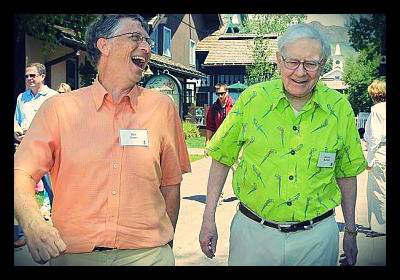
When you think of Bill Gates, is your first thought Microsoft or astoundingly wealthy billionaire? How about philanthropist? The latter may have slipped your mind completely.

Through the joint efforts of the Philanthropic Research Institute, a nonprofit organization focused on creating philanthropic awareness, Forbes compiled a list of America’s fifty top philanthropists that have given the most money away. Below are the top five U.S. philanthropists.

Bill Gates falls into the utmost categories of the elite, leading the way as the world’s richest person with a net worth of an estimated $76 billion. Gates has lead the way as the world’s most wealthy man fifteen out of the last twenty years.

1. Not only does Gates’ hold the spot as the world’s richest man, but with the collaboration of his wife, Bill and Melinda Gates have snagged the spot as the U.S. top philanthropists donating $1.9 billion in 2012. The Gates’ lifetime giving is estimated at a whopping $28 billion.

2. Not to be outdone, Warren Buffet makes a close second having donated $1.87 billion in 2012 with a net worth of $58.7 billion. He fell short of the Gates’ by only $35 million. However, Buffet has committed to donating the remainder of his fortune before or upon his death mandating that it be put to use within ten years following the donation.

3. George Soros, founder of Soros Fund Management LLC and Forbes’ number one hedge fund manager, has donated $763 million with a lifetime giving of $10 billion putting him comfortably in third place.

4. Facebook founder and CEO Mark Zuckerberg secured the fourth spot. With an estimated net worth of $23.4 billion, Zuckerberg donated $519 million in 2012 thus extending his lifetime giving to $549 million.

5. The Walton family, most notably known for Wal-Mart, are brought in at the final spot as the top five U.S. philanthropists. With a net worth of $144.4 billion, they gave $432 million dollars in 2012 bringing their lifetime giving to $4.6 billion dollars.

The total amount of money given by these top philanthropists towards philanthropic work in 2012 was more than $5.48 billion. That’s nearly one-fifth of what it would cost to end world hunger with the annual shortfall sitting at $30 billion per year.

Of the top philanthropists mentioned, no one donated more than 3.2 percent of their net worth but the astounding amount given by less than ten individuals cannot be ignored.

Forbes has reported that there are currently 1,645 billionaires in the world. It will take more than a call to action by the elite philanthropists. In order to put world hunger to an end, it will take a small step from everyone capable of helping.

Just think, how much is 3.2 percent of your net worth?  How can a portion of the money you spend regularly be used to make the life of someone stricken by poverty more sustainable? The answers do not lie solely in how much the monetarily elite of the world are donating, but the efforts made by those with the power to influence those groups.

– Janelle Mills

Sources: Philanthropic Research Institute, Forbes, The Borgen Project, BBC, Forbes
Photo: Skunkpot

April 21, 2014
https://borgenproject.org/wp-content/uploads/borgen-project-logo.svg 0 0 Borgen Project https://borgenproject.org/wp-content/uploads/borgen-project-logo.svg Borgen Project2014-04-21 04:00:302024-06-05 01:57:23Top 5 U.S. Philanthropists
Education, Global Poverty, Nonprofit Organizations and NGOs, Philanthropy

A Wider Circle: Good News from D.C.

A_Wider_Circle
A hundred million people are estimated to be homeless in the world and the number is only growing bigger with the rise and fall of economies. It is estimated that there are another 100 million “hidden homeless” worldwide, a number which takes into account those living in abandoned houses, cars, or houses and apartments with little to no furnishings.

Dr. Mark Bergel, now deemed a CNN Hero, founded his organization after noticing the very few furnishings in the houses of those struggling to make ends meet.

Bergel started his journey as a professor at American University and eventually took on his vision to help others as a full time job. He founded an organization called A Wider Circle in 2001, a nonprofit devoted to furnishing the homes of families living in poverty, free of charge.

Since it’s founding, A Wider Circle has furnished the houses of over 125,000 people, but Bergel’s mission does not stop there. He is also committed to providing an education for those who have asked for one.

Managers from the Greater Washington Area’s homeless shelters mentioned to Bergel that an education in “life skills” and how to cope with stress would be highly beneficial for the shelters’ frequenters.

So that is just what Bergel did.

He incorporated educational programs into A Wider Circle’s mission to help lift adults and children out of poverty by communicating the importance of life skills and helping to adjust the “whole person.”

“I want to help create the change that will enable people to rise out of poverty and enjoy the freedom and independence afforded to others. Poverty is a human problem, and human beings will solve it,” Bergel explained.

After many community service trips, Bergel came face to face with the truth that many people living below the poverty line often lived without beds, tables and couches. Bergel stated that “most apartments had nothing but a chair… There was nothing that would give these people a sense of hope, [or] a sense of dignity.”

With new furnishings and one less issue to worry about Bergel hopes to give families room to breathe and the ability to start fresh.

Currently, A Wider Circle has two full warehouses complete with donated furniture, toys, clothes and clean sheets. Families are able to stop in and choose what they need from the selection.

Since donating his own bed in 2008, Bergel has been sleeping on his floor or couch. He says he intends to do so until every family in the United States has enough beds for each family member.

Bergel’s foundation is not only helping people in the U.S. to live easier lives, but he is also bringing attention to a global issue — the “hidden homeless.” By helping the lives of the “hidden homeless” in the U.S. Bergel is one step closer to addressing this issue on a global scale, and by publicizing his work, we are one step closer to inspiring others to follow his lead.

– Becka Felcon

Sources: CNN, A Wider Circle
Photo: Brown University

April 17, 2014
https://borgenproject.org/wp-content/uploads/borgen-project-logo.svg 0 0 Borgen Project https://borgenproject.org/wp-content/uploads/borgen-project-logo.svg Borgen Project2014-04-17 04:00:522024-05-26 23:23:37A Wider Circle: Good News from D.C.
Advocacy, Charity, Global Poverty, Human Rights, Philanthropy

Lupita Nyong’o Shines in the Role of an Advocate

All eyes are on Oscar-winning actress Lupita Nyong’o as her newfound fame thrusts her into the global center stage. Born in Mexico as the child of prominent Kenyan politicians before later moving to the United States for college and graduate school, Nyong’o has had a truly global life thus far. Her travels have been the best education of all, bestowing upon her a rare sense of worldly wisdom and care for humanity. Her compassion and her astute perspective on the world makes her performances that much more extraordinary and poignant.

Before her role as Patsey in “12 Years A Slave,” Nyong’o starred in several other socially conscious films, one a drama about HIV/AIDS and another a documentary drawing attention to the treatment of Kenya’s albino population. Although she has not been in the public spotlight for very long, she has already managed to voice some groundbreaking thoughts regarding race, gender, beauty and charity, making it clear that she is a burgeoning beacon of the philanthropic spirit and a trailblazer for human rights advocacy.

Here are several thoughts from Nyong’o:

1. “You can’t rely on how you look to sustain you. What is fundamentally beautiful is compassion for yourself for those around you. That kind of beauty enflames the heart and enchants the soul.”

2. “As I look down on this Golden Statue, may it remind me and very little girls that no matter where you’re from your dreams are valid.”

3. “You have to allow for the impossible to be possible.”

4. “Human beings have an instinct for freedom.”

5. “Feel the validation for your beauty, but also get to the deeper business of feeling beautiful inside. There is no shade in that beauty.”

6. “I have phenomenal parents… to watch those two people do so much and mean so much to everyone but at the end of the day still have the humility to serve. I thank their example because at the end of the day I just feel it is my deeds that are more important than my fame.”

These words of wisdom from Nyong’o teach us that, above everything else, we are all equally deserving and capable of love, admiration, success and humanity. Beauty, in the sense of living a beautiful life of compassion and friendship, is something universally available and unhindered by the situations of one’s birth. May every person take Nyong’o’s message to heart, and begin to fully realize his or her amazingly valued position in the grand global community.

– Stefanie Doucette

Sources: The Independent, Huffington Post, Pinterest, The Root
Photo: The Advocate

March 26, 2014
https://borgenproject.org/wp-content/uploads/borgen-project-logo.svg 0 0 Borgen Project https://borgenproject.org/wp-content/uploads/borgen-project-logo.svg Borgen Project2014-03-26 04:00:252024-05-26 23:21:10Lupita Nyong’o Shines in the Role of an Advocate
Activism, Advocacy, Global Poverty, Philanthropy

Ben Affleck Testifies to the US Senate on DRC

ben_affleck_DRC
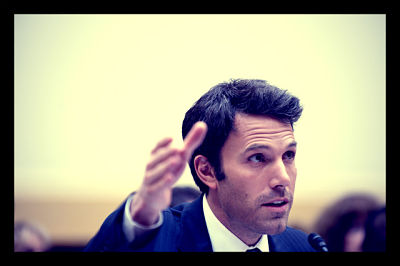
Ben Affleck may be famous for his role in movies such as Argo, The Town and Good Will Hunting, but nowadays he’s making an impact in a new role. Because of his philanthropic involvement in eastern Congo, Affleck went before the Senate Foreign Relations Committee to testify about the Congolese people and the need for U.S. involvement in the region. The hearing provided an opportunity for Affleck to draw increased media attention to the precarious human rights situation in the Democratic Republic of Congo and pressure lawmakers to do more to help.

Affleck first became involved in the Congo through his grant-making and advocacy organization, the East Congo Initiative (ECI). This organization seeks to increase investments in Congolese-led programs that create safe and sustainable communities. Additionally, ECI advocates for increased U.S. involvement in Congo while working against key problems such as rape and sexual violence as well as inadequate education and health resources for children. The East Congo Initiative also seeks to reintegrate former child soldiers back into their homes while leading community-level peace and reconciliation programs.

During his testimony, Affleck highlighted many of the struggles the Congolese people are enduring every day. For instance, Affleck cited UN reports that not only indicate that 2.9 million Congolese had been displaced internally, but also that 428,000 others have become refugees in neighboring countries. These people are being scattered throughout the region by the armed militia known as M23 that had previously taken over the capital of a northern Congolese province. A UN peacekeeping force recently coerced the M23 to surrender and sign a peace agreement. Affleck cited the UN group as evidence that “when the international community acts, and the Congolese government rises to the moment, these challenges are in fact solvable.”

Affleck finished his testimony by sharing a story about one of ECI’s partners, Theo Chocolate. An organic, fair-trade chocolate company, Theo imports more than 50% of its Chocolate from the DRC. Theo Chocolate’s business was connected to small folder farmers in the DRC by ECI and has helped support many of these small Congolese business operations. Through professionally directed investments, ECI was able to help spur economic development in the Congo and improve the lives of several Congolese people.

Through his charitable initiatives with ECI, Affleck is an example of how ordinary Americans can make a difference in influencing Congress and bring attention to the issues they care about. Affleck acknowledged, “I am, to state the obvious, not a Congo expert. I am an American working to do my part for a country and a people I believe in and care deeply about.” Through his actions, Affleck not only successfully drew the attention of the United States Senate to the plight of the Democratic Republic of the Congo, but he also gives hope for a better life to many impoverished people.

– Martin Levy

US Senate Committee on Foreign Relations, East Congo Initiative
Photo: Heritage

March 6, 2014
https://borgenproject.org/wp-content/uploads/borgen-project-logo.svg 0 0 Borgen Project https://borgenproject.org/wp-content/uploads/borgen-project-logo.svg Borgen Project2014-03-06 04:00:202018-01-30 13:14:11Ben Affleck Testifies to the US Senate on DRC
Activism, Advocacy, Global Poverty, Philanthropy, Poverty Reduction

6 Gates Foundation End of Poverty Quotes

end of poverty
At the beginning of this year, there was a huge reaction to the 2014 Annual Gates Foundation letter as Bill Gates predicted the end of poverty by focusing on three myths about poverty. With that in mind, here is a look back at six end of poverty quotes from the foundation. Each quote demonstrates the hope and passion the Gates Foundation has in their mission to make the world a better place and demonstrates how tirelessly they will continue to work for the cause in the future.

1. In 2009, Gates states the observations he has made regarding the world’s economic crisis and his opinion about the wealth gap. In light of Oxfam’s recent report about the inequity between the rich and poor, it is clear that Gates believes the wealthy have a responsibility to help those who are less fortunate.

“I am impressed by individuals who continue to give generously even in these difficult times. I believe that the wealthy have a responsibility to invest in addressing inequity. This is especially true when the constraints on others are so great. Otherwise, we will come out of the economic downturn in a world that is even more unequal, with greater inequities in health and education. There is no reason to accept that, when we know how to make huge gains over the long term.”

2. In 2010, Gates highlights the importance of innovation as a way to help people out of poverty. He discusses the “bleak” outcomes that can be avoided when innovation becomes a priority and when people choose to believe in innovation as a solution.

“With vaccines, drugs and other improvements, health in poor countries will continue to get better, and people will choose to have smaller families. With better training, and access to markets, farmers in poor countries will be able to grow more food. The world will find clean ways to produce electricity at a lower cost, and more people will lift themselves out of poverty.”

3. In 2011, Gates made a compelling argument for the importance of foreign aid and the responsibility of society as a whole to take care of its people, as this will produce a more stable, healthier and better world. During the year, Gates focused on providing vaccines by working with pharmaceutical companies, like GAVI, who raised over $3 billion and saved millions of lives.

“I believe it is the rich world’s enlightened self-interest to continue investing in foreign aid. If societies can’t provide for people’s basic health, if they can’t feed and educate people, then their populations and problems will grow and the world will be a less stable place. Whether you believe it a moral imperative or in the rich world’s enlightened self-image, securing the conditions that will lead to a healthy, prosperous future for everyone is a goal I believe we all share.”

4. In 2012, Gates showed his dedication to helping the poor become self-sufficient, especially in terms of the foundation’s global development and global health programs.

“The world faces a clear choice. If we invest relatively modest amounts, many more poor farmers will be able to feed their families. If we don’t, one in seven people will continue living needlessly on the edge of starvation. My annual letter this year is an argument for making the choice to keep on helping extremely poor people build self-sufficiency.”

5. In 2013, Gates looked forward to the continued innovation and success in making the lives of the poor even better.

“The lives of the poorest have improved more rapidly in the last 15 years than ever before, yet I am optimistic that we will do even better in the next 15 years. After all, human knowledge is increasing.”

6. And finally in 2014, Gates calls all who want to join him in changing the world. He, furthermore, predicts that there will not be any more poor nations by 2035, the year that Gates will turn 80.

“We all have the chance to create a world where extreme poverty is the exception rather than the rule, and where all children have the same chance to thrive, no matter where they’re born. For those of us who believe in the value of every human life, there isn’t any more inspiring work under way in the world today.”

– Julie Guacci

Sources: Gates Foundation: Annual Letter 2009, Forbes: Gates’ Life’s Goal, Gates Foundation: Conclusion, Forbes: Gates’ Second Coming, Gates Foundation: Annual Letter 2013, Gates Foundation: Annual Letter 2012, Gates Foundation: Annual Letter 2011, Gates Foundation: Annual Letter 2010
Photo: Gates Foundation

February 26, 2014
https://borgenproject.org/wp-content/uploads/borgen-project-logo.svg 0 0 Borgen Project https://borgenproject.org/wp-content/uploads/borgen-project-logo.svg Borgen Project2014-02-26 16:37:562019-12-11 12:29:286 Gates Foundation End of Poverty Quotes
Page 8 of 14«‹678910›»

Get Smarter

  • Global Poverty 101
  • Global Poverty… The Good News
  • Global Poverty & U.S. Jobs
  • Global Poverty and National Security
  • Innovative Solutions to Poverty
  • Global Poverty & Aid FAQ’s
Search Search

Take Action

  • Call Congress
  • Email Congress
  • Donate
  • 30 Ways to Help
  • Volunteer Ops
  • Internships
  • Courses & Certificates
  • The Podcast
Borgen Project

“The Borgen Project is an incredible nonprofit organization that is addressing poverty and hunger and working towards ending them.”

-The Huffington Post

Inside The Borgen Project

  • Contact
  • About
  • Financials
  • President
  • Board of Directors
  • Board of Advisors

International Links

  • UK Email Parliament
  • UK Donate
  • Canada Email Parliament

Get Smarter

  • Global Poverty 101
  • Global Poverty… The Good News
  • Global Poverty & U.S. Jobs
  • Global Poverty and National Security
  • Innovative Solutions to Poverty
  • Global Poverty & Aid FAQ’s

Ways to Help

  • Call Congress
  • Email Congress
  • Donate
  • 30 Ways to Help
  • Volunteer Ops
  • Internships
  • Courses & Certificates
  • The Podcast
Scroll to top Scroll to top Scroll to top