• Link to X
  • Link to Facebook
  • Link to Instagram
  • Link to TikTok
  • Link to Youtube
  • About
    • About Us
      • President
      • Board of Directors
      • Board of Advisors
      • Financials
      • Our Methodology
      • Success Tracker
      • Contact
  • Act Now
    • 30 Ways to Help
      • Email Congress
      • Call Congress
      • Volunteer
      • Courses & Certificates
      • Be a Donor
    • Internships
      • In-Office Internships
      • Remote Internships
    • Legislation
      • Politics 101
  • The Blog
  • The Podcast
  • Magazine
  • Donate
  • Click to open the search input field Click to open the search input field Search
  • Menu Menu

Archive for category: Philanthropy

Information and news about philanthropy

Activism, Advocacy, Global Poverty, Philanthropy, Poverty Reduction, Volunteer

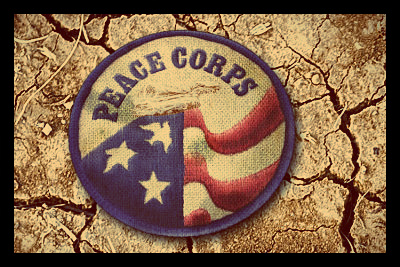
Peace Corps Preparation

peace corps
Since it was established by J.F.K in 1961, the Peace Corps has been fighting first-hand the systematic effects of global poverty. Beginning as a small handful of good samaritans in only six participating countries, it has since then extended its humanitarian influence to 139 countries with the help of more than 210,000 volunteers. If you’ve ever been curious about joining the Peace Corps yourself, here is some information you must read.

How to Apply for the Peace Corps:

The process of becoming an advocate against global poverty is not as daunting as it might seem. The first step is the online application, which asks for basic information and some statements regarding one’s motivation to volunteer abroad. This is then followed by a personal interview with a local recruiter, to see if the Peace Corps seems like a good fit. If all goes well, this could lead to a formal invitation, complete with destination, departure date and project assignment information.

Then comes the fun part – preparing for departure. In the weeks prior to leaving, the Peace Corps will request the volunteer receive comprehensive dental and medical exams, as well as an array of immunizations, to make sure they are good to go. On the day of departure, volunteers head to training at an orientation site within the United States. The training continues in the volunteer’s assigned country, where they will train for three months while also living with a host family to establish skills for their cultural and linguistic adaption.

What the Peace Corps Looks for:

It is true that the demands of being a Peace Corps volunteer require a specific type of person, and thus the application process is very selective. Living and working in another region of the world, often in extremely dire situations, is a job for those with an abundance of determination, adaptability, independence, social sensitivity and emotional maturity. Those who already have some experience with volunteer work usually make the best candidates, as they have probably developed the previously mentioned qualities within themselves. The Peace Corps, furthermore, has many partner organizations such as City Year and the Special Olympics which interested volunteers can explore.

There are also some logistical pre-requisites, concerning the volunteer’s education, skills and ability to deliver aid to a community. While it is still possible to join without one, 90% of Peace Corps jobs require a minimum of a bachelor’s degree. Many jobs require pre-existing skills, such as special education, engineering and urban planning as well as agroforestry. Others can be developed on site, such as a teaching English, youth development and health education. The Peace Corps looks comprehensively at every applicant, however, and there are opportunities for non-degree volunteers who have experience working in construction, agriculture and with other non-profit organizations. By and large, the most promising candidates are those with some understanding of another language.

The Life of a Volunteer:

There is not one, quintessential Peace Corps experience, as the regions and types of work are all so diverse. The Peace Corps works in many countries and continents worldwide, in both rural and urban areas, and volunteers are expected to immerse themselves entirely so as to best serve their assigned communities. Although it is possible to have a preference for a location, flexibility helps during the application process. Regional availability also varies quickly based on need. For example, the Philippines are asking for significantly more volunteers than usual, due to the effects of typhoon Haiyan. Once there, a volunteer will be assigned to one of six main areas of specialized aid, which are: education, youth in development, health, agriculture, environment and community economic development. The commitment is 24 months, plus three months of training, thus totaling 27 months. Living accommodations are provided by the Peace Corps, and also vary greatly depending on the norm for that region.

Why Volunteer:

Helping a community build a more sustainable future for itself is an incredibly rewarding experience, as many veteran volunteers can attest to. All countries where the Peace Corps works have requested the presence of volunteers and aid programs, thus proving that the need is strong.

The benefits of joining the Peace Corps extends after service, as well. Upon return, volunteers receive $7,425 as an “adjustment” allowance, to help re-establish their lives in the United States after over two years abroad. Eligibility for student loan deferral is also provided, as well as a number of scholarships and financial aid packages to graduate degree programs. Over 70 graduate schools are partnered with the Peace Corps, and seek out returning volunteers who wish to incorporate their development experiences into their course work, such as the Paul D. Coverdell Fellow Program. For those wishing to enter directly into a career at home, the Peace Corps is invaluable for its professional connections in fields like federal employment and other non-profit organizations.

– Stefanie Doucette

Sources: Peace Corps, Time, National Archives
Photo: Salon

February 21, 2014
https://borgenproject.org/wp-content/uploads/borgen-project-logo.svg 0 0 Borgen Project https://borgenproject.org/wp-content/uploads/borgen-project-logo.svg Borgen Project2014-02-21 21:11:262014-02-23 23:29:39Peace Corps Preparation
Activism, Advocacy, Charity, Global Poverty, Philanthropy

Charity Through Hip-Hop

Hip-Hop-Marley
Rap and hip-hop music has a rich and diverse culture with its roots linked all the way back to the era of slavery within United States history.  Hip-hop evolved into a music genre in the 1970s when DJs performed at block parties in the boroughs of New York City using the breaks of popular funk, disco and soul music.  As the genre progressed, hip-hop became an outlet of artistic expression for the youths growing up in the inner cities.

Hip-hop blessed the world with popular artists such as 2Pac, the Notorious B.I.G., KRS-One and Eminem, among others.  The lyrical content gave the rest of the world a lens in which we could try to understand and empathize with the people living in impoverished conditions within the inner city where kids had little to no economic opportunity, faced rampant drug infestations and constant battles with authorities.

As hip-hop music gained popularity, it gave some individuals a chance to make a living while creating work that inspired millions.  Since the hip-hop genre is directly infused with the universal struggle of the worlds poor and underprivileged, it is always great to hear about those individuals that were able to escape that life and use their fame and fortune to benefit others.  Here are a few prominent members of the hip-hop community that do just that:

  • Russell Simmons – the co-founder of the influential hip-hop music label Def Jam,  Russell Simmons is involved with over 20 different charities and foundations.  He is the founder of the Diamond Empowerment Fund which supports education initiatives in African diamond mining countries.  Simmons also created the Rush Philanthropic Arts Foundation which provides art and educational programming to New York City youth.
  • Nas & Damian Marley – These two artists collaborated on an album called Distant Relatives which features themes related to African ancestry and poverty.  Proceeds of this album were donated to various projects in Africa including building schools and raising AIDS/HIV awareness.
  • Immortal Technique – This underground artist combines gritty hip-hop with politically conscious messages in order to raise awareness of social issues plaguing the inner city and underdeveloped nations.  He collaborated with Omeid International to open the Amin Institute in Kabul, Afghanistan, an orphanage, school and medical facility for children.
  • Akon – Akon created the Konfidence Foundation to help kids in Senegal and the United States have a chance at an education and healthy life.  The foundation assists undeveloped schools in constructing key infrastructure projects so that they can become operational.  In Ecole Elementaire P.A.Y. Unite #3, the foundation completed construction on unfinished classrooms, drilled drinking wells, and provided educational materials.

 – Sunny Bhatt

Sources: Look to the Stars, Konfidence Foundation, Omeid International, Culture Bully
Photo: DrJays

February 12, 2014
https://borgenproject.org/wp-content/uploads/borgen-project-logo.svg 0 0 Borgen Project https://borgenproject.org/wp-content/uploads/borgen-project-logo.svg Borgen Project2014-02-12 01:36:132024-06-05 02:51:42Charity Through Hip-Hop
Global Poverty, Philanthropy

Zuckerberg $1 Billion to Silicon Valley Community Foundation

mark_zuckerberg_stock_donation_money
Mark Zuckerberg, founder of Facebook and inspiration for Jesse Eisenberg’s role  in The Social Network, has committed $1 billion  to the Silicon Valley Community Foundation (SVC). Audiences who remember the movie might be surprised by this contribution, considering the depiction of Zuckerberg in the film was essentially that of a ruthless and self-serving young man. The technology industry in general is often considered greed-oriented and profit-driven, rather than beneficial to humanity.  Chief Executive of the SVC fund, Emmet Carson, says the money will go to health and education.

The SVC Foundation helps identify organizations that are most effective with their aid, both in the US and internationally. Their mission, listed on their official website states, “We provide visionary community leadership by identifying emerging challenges in our region. We address those challenges through our grantmaking programs, our research and our ability to bring together diverse groups of problem-solvers. We build and energize a community of philanthropists who strengthen the common good.”

The organizations that the SVC funds have been studied in order to confirm that their work is making a tangible difference with the money they are given.

Featured on the SVC homepage is a spotlight section that is currently linking viewers to the top charities helping Typhoon Haiyan victims. The Silicon Valley Community Foundation partners with and researches these organizations to track what their relief funds actually do so that donors know their money is really making an impact. Much of what the foundation does revolves around investment management, and matching potential donors with charities that are involved with specific lines of aid ,disaster relief and medical research.

Zuckerberg’s donation to the foundation will be his second large donation in the past six months.

In December 2013, Zuckerberg donated almost $1 billion in Facebook stock to charity, and his 2014 donation makes him responsible for the largest cash or stock donation of anyone under 30 years of age. Wealth and technology have been criticized for their power to corrupt, but donations like these to organizations that do legitimate good for others definitely speak for themselves.

– Kaitlin Sutherby

Photo: CNN Money
Sources:
Philanthropy, Silicon Valley, Business Insider

February 4, 2014
https://borgenproject.org/wp-content/uploads/borgen-project-logo.svg 0 0 Borgen Project https://borgenproject.org/wp-content/uploads/borgen-project-logo.svg Borgen Project2014-02-04 20:48:082024-06-10 02:22:46Zuckerberg $1 Billion to Silicon Valley Community Foundation
Activism, Global Poverty, Philanthropy, Poverty Reduction, USAID

Clean Streets: Road to Entrepreneurship in Haiti

Throughout the developing world, infrastructure insufficiencies often create barriers for aspiring entrepreneurs. However, these shortcomings can also provide the platform for innovative and sustainable business opportunities.

Such is the case for entrepreneurs like Edouard Carrie, who started his company Environmental Cleaning Solutions S.A. (ECSSA) as a way to clean up Haiti’s streets and generate income. Founded in 2010, the company’s mission is simple yet profound: “to change a nation through recycling.” Via its material recovery facility in Port-au-Prince, ECSSA aims to collect over 80 tons of recyclable products per day.

Not only does it positively impact the environment, increased waste management also helps Haiti’s lowest income citizens.

For example, individuals can increase their income by collecting recyclable materials and thus afford schooling for their children, healthcare or other necessities. In addition, the various collection centers create jobs around the region.

The start-up has had great success in the three years since its conception. According to USAID, “ECSSA has grown to provide extra cash to over 6,000 Haitians who deposit bags of discarded bottles at 65 collection points throughout the Port-au-Prince region.” Furthermore, the company has shipped nearly 300 million plastic bottles to other countries for additional processing to create other products.

ECSSA’s growth would not have been possible without the support of both USAID and the Pan American Development Foundation (PADF).

PADF sponsors the Leveraging Effective Application of Direct Investments (LEAD) Business Plan Competition, a grant program that assists small and medium enterprises in finances, business development and access to capital. LEAD operates in Cap-Haitien, Saint-Marc and Port-au-Prince with a targeted focus on “industries and businesses with the greatest potential to create jobs, including construction, tourism, agribusiness and alternative energy.”

Outside assistance – such as that from LEAD and USAID – has allowed ECSSA to thrive and transform the landscape in Port-au-Prince.

“My company now has the capacity to increase its individual collectors from 6,000 people to up to 20,000,” Carrie said. “Additionally, the increase in collection points and processing capacity provide entrepreneurs the opportunity to grow their own businesses by serving as intermediary plastic collectors and suppliers for ECSSA.”

Not only cleaning the streets, ECSSA is clearing the way for sustainable environmental and business development throughout Haiti’s capital city.

– Mallory Thayer

Sources: USAID, Leveraging Effective Application of Direct Investments, Environmental Cleaning Solutions S.A.
Photo: United Nations Photo

January 31, 2014
https://borgenproject.org/wp-content/uploads/borgen-project-logo.svg 0 0 Borgen Project https://borgenproject.org/wp-content/uploads/borgen-project-logo.svg Borgen Project2014-01-31 04:00:332024-05-26 23:05:27Clean Streets: Road to Entrepreneurship in Haiti
Activism, Advocacy, Global Poverty, Nonprofit Organizations and NGOs, Philanthropy

5 Groups in the U.S. Addressing Climate Change

Climate_Change
A growing movement is spreading throughout the international community in regards to addressing the prevalence of climate change. Accordingly, thousands of organizations on a global scale have mobilized to spread awareness, understand key issues and articulate solutions.

In the United States alone, there are a plethora of organizations that have been able to make strides in addressing the issue. Here is a list of 5 prominent environmental organizations that are fighting climate change and reaching success.

1. 350.org: The influential global movement headed by author Bill McKibben works across nearly 200 countries. Much of their work specifically targets carbon emissions as the number 350 itself refers to the amount of atmospheric carbon (in parts per million) needed for a stable climate.

Currently, the number is nearly at 400 parts per million, which is quite overwhelming. In order to reduce the number on an international scale, 350 works on campaigns widely ranging from stopping the Keystone XL pipeline in the United States to fighting the development of coal power plants in India.

2. Chesapeake Climate Action Network: Focusing specifically on the Atlantic coast of the United States, the Chesapeake Climate Action (CCAN) is the first organization to address climate change impacts in the Maryland/Virginia region. The area is highly vulnerable as it is home to dozens of defense facilities, while also being low-lying and densely populated.

CCAN works at the grassroots level to spread awareness, introduce the general public into the political process and influence environmental legislation. More recently, their work has been focusing on making use of Virginia’s vast renewable energy potential in offshore wind and solar energy.

3. Sierra Club: As one of the oldest, largest and influential environmental organizations in the United States, the Sierra Club has been focusing on various environmental issues for the past century. They now have 64 local chapters nationwide, a network of 2.1 million supporters and an extremely dedicated team of individuals.

In the past, The Sierra Club was influential in the implementation of the Clean Air Act, Clean Water Act and Endangered Species Act. Currently, they are focused on leading the world towards a clean energy economy and away from the heavy reliance on the fossil fuel industry.

4. Climate Reality Project: Both founded and chaired by Al Gore, the former Vice President and Nobel Laureate has led a growing global network of over 5 million individuals. The Climate Reality Project focuses heavily on spreading awareness by introducing the international scientific consensus on climate change to the general public.

Some of their promising initiatives are centered on revealing the truth behind the climate denial movement, providing information on the costs of carbon pollution and training climate reality leaders to have the skills to mobilize communities for action.

5. Energy Action Coalition: With student activism on the steep rise, organizations form and collaborate to be as effective as possible. The Energy Action Coalition is a group of 30 youth led organizations that address current environmental issues. With their level of diversity and broad organizational inclusion, the Energy Action Coalition is able to reach success in mobilizing campus communities.

The combined efforts of students across America have been successful in organizing national Power Shift Summits and campaigns to stop the development of the Keystone XL pipeline.

However, one of their prominent successes is embedded within their commitment to establishing carbon neutral college campuses. Ultimately, the Energy Action Coalition has been able to solidify almost 700 campus commitments to carbon neutrality up to 2012.

– Jugal Patel

Sources: 350.org, Chesapeake Climate Action Network, Sierra Club, The Climate Reality Project, Sierra Club, Energy Action Coalition
Photo: Scientific American

January 30, 2014
https://borgenproject.org/wp-content/uploads/borgen-project-logo.svg 0 0 Borgen Project https://borgenproject.org/wp-content/uploads/borgen-project-logo.svg Borgen Project2014-01-30 04:00:542020-07-02 12:31:155 Groups in the U.S. Addressing Climate Change
Activism, Advocacy, Global Poverty, Philanthropy

10 Quotes from Business Executives on Poverty

Business_Executives_On Poverty
Too often there is a disconnect between the business world and those around the globe suffering from poverty.  These two worlds are perceived as either completely unrelated, or to a certain extent, antagonistic.  However, funding global development and combating poverty are smart business choices.

When business promotes development in ailing communities, healthy and prosperous people create new markets.  As stated by current Secretary of Defense Chuck Hagel, “We need to stop viewing it as aid.  It’s an investment.”

Viewing global aid in that vein, it becomes much easier to see how the determination it takes to create a successful business is quite similar to the dedication necessary to fight global poverty.

Here, then, are ten quotes from business executives that you should apply in your daily fight to end poverty worldwide.

1. “When your values are clear to you, making decisions becomes easier.” – Roy Disney

2. “Education’s purpose is to replace an empty mind with an open one.” – Malcolm Forbes

3. “Think P.I.G. – that’s my motto.  P stands for persistence, I stands for integrity, and G stands for guts.  These are the ingredients for a successful business and a successful life.” – Linda Chandler

4. “We’re here to put a dent in the universe.  Otherwise, why even be here?” – Steve Jobs

5. “Good business leaders create a vision, articulate the vision, passionately own the vision and relentlessly drive it to completion.” – Jack Welch

6. “Nothing so conclusively proves a man’s ability to lead others as what he does from day to day to lead himself.” – Thomas J. Watson, Sr.

7. “Apply yourself.  Get all the education you can, but then, by God, do something.  Don’t just stand there, make it happen.” – Lee Iacocca

8. “Someone is sitting in the shade today because someone planted a tree long before.” – Warren Buffet

9. “I believe if you show people the problems and you show people the solutions, they will be moved to act.” – Bill Gates

10. “Creativity often consists of merely turning up what is already there” – Bernice Fitz-Gibbon

– Taylor Diamond

Sources: ThinkExist, Thought Catalog, BrainyQuote
Photo: HEC

January 30, 2014
https://borgenproject.org/wp-content/uploads/borgen-project-logo.svg 0 0 Borgen Project https://borgenproject.org/wp-content/uploads/borgen-project-logo.svg Borgen Project2014-01-30 04:00:542024-05-26 23:08:1110 Quotes from Business Executives on Poverty
Activism, Advocacy, Global Poverty, Philanthropy

5 Motivational Bill Gates Quotes

Bill_Gates
As one of the richest men on the planet, a philanthropist extraordinaire with his own multi-million dollar fund and a proponent for the human race, billionaire Bill Gates shouldn’t only be perceived as the father of Microsoft — he’s a prominent source of inspiration and hope.

Following are five advocative quotes by the legendary man, certain to motivate and incite toward action:

1. “I believe that if you show people the problems and you show them the solutions they will be moved to act.”

2. “I’m a great believer that any tool that enhances communication has profound effects in terms of how people can learn from each other, and how they can achieve the kind of freedoms that they’re interested in.”

3. “People always fear change. People feared electricity when it was invented, didn’t they? People feared coal, they feared gas-powered engines… There will always be ignorance, and ignorance leads to fear. But with time, people will come to accept their silicon masters.”

4. “At Microsoft there are lots of brilliant ideas but the image is that they all come from the top – I’m afraid that’s not quite right.”

5. “The general idea of the rich helping the poor, I think, is important.”

What’s truly important to keep in mind here is that Mr. Gates, no matter how successful, is only human—much like everyone else. Due to his accomplishments, there probably isn’t a single person unfamiliar with his name in the modern day world.

However, Bill Gates himself pays attention to those in need; he donates money and funds research that is helping to alleviate global poverty.

These hand-picked quotes are only a sample of the reflective thoughts he produces; the encouraging simple truths they present should function as incentives for hard work.

– Natalia Isaeva

Sources: BrainyQuote, The Gates Notes
Photo: CNN

January 30, 2014
https://borgenproject.org/wp-content/uploads/borgen-project-logo.svg 0 0 Borgen Project https://borgenproject.org/wp-content/uploads/borgen-project-logo.svg Borgen Project2014-01-30 04:00:362020-07-02 12:31:325 Motivational Bill Gates Quotes
Activism, Advocacy, Global Poverty, Nonprofit Organizations and NGOs, Philanthropy, Volunteer

Nonprofit Careers

L_africa_children_doctors_smile
For many people the nonprofit sector, also known as the “third sector,” can offer an exciting and rewarding career. With the exception of where the funding comes from, nonprofit organizations often are run very similarly to for-profit organizations. They also have to adhere to the same policies and may even hire similarly qualified people. This article will provide an overview of the types of jobs available in the nonprofit sector as well as some of the things to consider when looking for a non-profit job.

Development

The development department is one of the largest and highest paying job categories in the nonprofit sector. Development professionals work on gathering the resources that fund the programs and initiatives run by the organization. These jobs are needed in order for the organization to stay alive thus affording the position to pay well and stay in the position of not likely to be cut. Jobs in development also tend to be less competitive than jobs in other departments. Such jobs here can include:

– Director of Development
– Fundraiser
– Proposal Writer
– Communication Professional

Program

Being part of the program department is exciting and rewarding, especially since those who work in this department get to put their organization’s mission into action. These are the people who will be developing and implementing disaster relief plans in developing countries, or providing services to people with mental health challenges. Unfortunately program careers are very competitive and have a high burn out. These jobs include:

– Program Manager
– Program Assistant
– Policy Analyst
– Technical Advisor

Administrative

Just like private sector companies, nonprofit sectors also need an administrative team to help organizations keep on their feet and run smoothly. These jobs are also good stepping-stones into programs careers or management level jobs.

– Human Resources
– Office Manager
– Receptionist

Important Things to Consider About Careers in the Nonprofit Sector

1. You’ll have to wear many hats – Nonprofits don’t always have the funds to hire a large staff, this means you may have to be the graphic designer, the social media coordinator and the grant writer.

2. You need to be passionate about the cause – Employers aren’t just looking for talented qualified workers, they are also looking for people who are passionate about the cause and will work hard to achieve the organization’s goals.

3. You’ll probably make less money – Nonprofits have less resources, this means your office may be less plush and your salary smaller.

4. Volunteer first – It’s important to volunteer or intern at a nonprofit to see if you like the culture and are actually passionate about the job. This also proves your commitment to an employer and can open up job opportunities.

5. Nonprofits are run like any other business – Managing finances and being cost effective are just as important to nonprofits as they are to businesses.

– Elizabeth Brown

Sources: Miami University, US News, Forbes
Gif: Borgen Project

January 29, 2014
https://borgenproject.org/wp-content/uploads/borgen-project-logo.svg 0 0 Borgen Project https://borgenproject.org/wp-content/uploads/borgen-project-logo.svg Borgen Project2014-01-29 04:00:222024-12-13 17:53:48Nonprofit Careers
Advocacy, Global Poverty, Philanthropy

Zach Braff’s Wish I Was Here

“I can’t do this all on my own” are the familiar musical lyrics that introduced each episode of “Scrubs” during it’s nine season run.  Though “Scrubs“ turned actor Zach Braff into a television and indie star, his new film project certainly shows how Braff cannot achieve his artistic goals “on [his] own.”

“Wish I Was Here” is a film written, directed and starring Zach Braff, picking up on the themes he first explored in his well-received debut film “Garden State” back in 2004.  The film follows a thirty-something actor, played by Braff, searching for a purpose in life and struggling to make ends meet for his two young children.

Other actors featured in the film include Kate Hudson, Anna Kendrick, Jim Parsons and “Scrubs” co-star Donald Faison. The film premiered to a standing ovation at the 2014 Sundance Film Festival.

What makes “Wish I Was Here” unique, however, is the fact that fans independently financed the film.  Braff, moreover, launched a Kickstarter campaign with a stated goal of $2 million since, according to the film’s Kickstarter page, Braff rejected traditional funding methods to avoid “signing away all artistic control.”

Braff also saw an opportunity for his fans to have a direct impact on the filmmaking process.

Incentives for donating to the film range from a production diary at $10 and a meet and greet with Braff for $600 to being cast in the film as a featured extra for $7,500.  These incentives, matched with the originality of the fundraiser, led to a final total of $3,105,473 donated by 46,520 individuals.

Though a $10 donation to Zach Braff’s film garners a production diary, 80% of the world’s population live off of less than $10 a day, with 660 million living on less than $2 a day.

What could you buy for the fight against global poverty with a $10 donation?

With $3, you could buy a bed net to protect one of the 18,000 children who die daily from mosquitos carrying deadly diseases while for $8.50, you could feed an entire family in a developing nation.  Though Braff’s film is no doubt an artistic achievement, it is easy to wonder what kind of impact his 46,520 backers could have made for global development.

– Taylor Diamond

Sources: Kickstarter, UNICEF, Global Issues
Photo: Bustle

January 28, 2014
https://borgenproject.org/wp-content/uploads/borgen-project-logo.svg 0 0 Borgen Project https://borgenproject.org/wp-content/uploads/borgen-project-logo.svg Borgen Project2014-01-28 18:43:372024-05-26 23:08:47Zach Braff’s Wish I Was Here
Activism, Advocacy, Charity, Global Poverty, Human Rights, Philanthropy

Martin Luther King Quotes on Poverty

Dr. Martin Luther King Jr will forever hold a place in the hearts of millions of people around the world. The immediate need for freedom from racism, discrimination and flat out brutality toward African Americans will forever be King’s message. However, Dr. King also used his platform to shed light on global poverty.

He expressed the need for poverty to be abolished and the need for nations to come together to combat this growing problem. Here are excerpts of Dr. King’s written documents concerning the dire need to end poverty.

Excerpts from Dr. King’s Nobel Peace Prize address in 1964:
“A second evil which plagues the modern world is that of poverty. Like a monstrous octopus, it projects it’s nagging, prehensile tentacles in lands and villages all over the world. Almost two thirds of the peoples of the world go to bed hungry at night. They are undernourished, ill-housed, and shabbily clad. Many of them have no houses or beds to sleep in. Their only beds are the sidewalks of the cities and the dusty roads of the villages. Most of these poverty-stricken children of God have never seen a physician or a dentist.”

“So it is obvious that if a man is to redeem his spiritual and moral ‘lag,’ he must go all out to bridge the social and economic gulf between the ‘haves’ and ‘have not’s’ of the world. Poverty is one of the most urgent items on the agenda of modern life.”

“There is nothing new about poverty. What is new, however, is that we have the resources to get rid of it.”

“The time has come for an all- out world war against poverty.”

“The rich nations must use their vast resources of wealth to develop the underdeveloped, school the unschooled, and feed the unfed. Ultimately a great nation is a compassionate nation. No individual or nation can be great if it does not have a concern for ‘the least of these.'”

Excerpts from Dr. King’s “Let My People Go” speech. Human Rights Day December 10, 1965:
“Africa does have spectacular savages and brutes today, but they are not black. They are the sophisticated white rulers of South Africa who profess to be cultured, religious and civilized, but whose conduct and philosophy stamp them unmistakably as modern-day barbarians.

We are in an era in which the issue of human rights is the central question confronting all nations. In this complex struggle an obvious but little appreciated fact has gained attention-the large majority of the human race is non-white-yet it is that large majority which lives in hideous poverty. While millions enjoy an unexampled opulence in developed nations, ten thousand people die of hunger each and every day of the year in the undeveloped world.”

An excerpt from “Where do we go from Here: Chaos or Community” written in 1967:
Sadly this is Dr. King’s last book before he was tragically assassinated.

“I am now convinced that the simplest approach will prove to be the most effective – the solution to poverty is to abolish it directly by a now widely discussed matter: the guaranteed income.”

“The curse of poverty has no justification in our age. It is socially as cruel and blind as the practice of cannibalism at the dawn of civilization, when men ate each other because they had not yet learned to take food from the soil or to consume the abundant animal life around them. The time has come for us to civilize ourselves by the total, direct and immediate abolition of poverty.”

Nearly fifty years after these words were breathed, they still reign true; especially since poverty continues to be a problem for millions of people in 2013. Let us not allow Dr. King‘s words to remain in the past. We must give them life again and continue to make this world a better place, as Dr. Martin Luther King did nearly fifty years ago.

– Amy Robinson

Sources: Nobleprize, RFKSA Film, Progress,
Photo: BAR Photography

January 28, 2014
https://borgenproject.org/wp-content/uploads/borgen-project-logo.svg 0 0 Borgen Project https://borgenproject.org/wp-content/uploads/borgen-project-logo.svg Borgen Project2014-01-28 09:15:452024-06-04 03:01:14Martin Luther King Quotes on Poverty
Page 9 of 14«‹7891011›»

Get Smarter

  • Global Poverty 101
  • Global Poverty… The Good News
  • Global Poverty & U.S. Jobs
  • Global Poverty and National Security
  • Innovative Solutions to Poverty
  • Global Poverty & Aid FAQ’s
Search Search

Take Action

  • Call Congress
  • Email Congress
  • Donate
  • 30 Ways to Help
  • Volunteer Ops
  • Internships
  • Courses & Certificates
  • The Podcast
Borgen Project

“The Borgen Project is an incredible nonprofit organization that is addressing poverty and hunger and working towards ending them.”

-The Huffington Post

Inside The Borgen Project

  • Contact
  • About
  • Financials
  • President
  • Board of Directors
  • Board of Advisors

International Links

  • UK Email Parliament
  • UK Donate
  • Canada Email Parliament

Get Smarter

  • Global Poverty 101
  • Global Poverty… The Good News
  • Global Poverty & U.S. Jobs
  • Global Poverty and National Security
  • Innovative Solutions to Poverty
  • Global Poverty & Aid FAQ’s

Ways to Help

  • Call Congress
  • Email Congress
  • Donate
  • 30 Ways to Help
  • Volunteer Ops
  • Internships
  • Courses & Certificates
  • The Podcast
Scroll to top Scroll to top Scroll to top