• Link to X
  • Link to Facebook
  • Link to Instagram
  • Link to TikTok
  • Link to Youtube
  • About
    • About Us
      • President
      • Board of Directors
      • Board of Advisors
      • Financials
      • Our Methodology
      • Success Tracker
      • Contact
  • Act Now
    • 30 Ways to Help
      • Email Congress
      • Call Congress
      • Volunteer
      • Courses & Certificates
      • Be a Donor
    • Internships
      • In-Office Internships
      • Remote Internships
    • Legislation
      • Politics 101
  • The Blog
  • The Podcast
  • Magazine
  • Donate
  • Click to open the search input field Click to open the search input field Search
  • Menu Menu

Archive for category: Nonprofit Organizations and NGOs

Information and stories about nonprofit organizations and NGOs

Developing Countries, Global Poverty, Government, Health, Nonprofit Organizations and NGOs

Myanmar Government Bans Doctors Without Borders

The Myanmar government banned Doctors Without Borders (DWB) from operating in one of its most impoverished states, following rumors of ethnic tension.

Most of the disenfranchised Muslim minority reside in the Rakhine State. The government accused the DWB of favoring this minority over its rival group, the Rakhine Buddhists. This tension led to widespread violence, killing 100 people and displacing nearly 140,000 others. The government regards Muslims as “interlopers” from Bangladesh, as opposed to a legitimate minority. President Thein Sein granted DWB permission to resume its work in other regions, but continued its ban on operations in Rakhine.

Presidential spokesman Ye Htut accused DWB of “not following their core principle of neutrality and impartiality.”

Rakhine State government accused the NGO of intentionally fueling tension between the minorities, according to Htut. The perception of bias led to large-scale protests in the state capital against DWB.

The organization responded to these accusations in a statement, asserting “services are provided based on medical need only, regardless of ethnicity, religion, or any other factor.”

This January, DWB released a statement contradicting the government on an alleged massacre in Rakhine. This reportedly “triggered” the ban on its operations in the region. The United Nations report the death of more than 40 Rohingya Muslims, and DWB confirmed treating 22 victims. Wounds occurred at the hands of state security forces, yet the government denounced these claims, reporting the death of one police officer.

Following the ban, the Ministry of Health plans to provide health services for the “whole community.” Myanmar President Thein Sein also dispatched the emergency response workers and ambulances to the region, replacing the DWB clinics.

These services cannot match those provided by the NGO. The national health services rank “among the most rudimentary in Asia,” according to the New York Times. The government also confines Muslims to their villages, preventing the group from receiving medical care.

Banning DWB deprives nearly 750,000 people of proper healthcare.

The NGO acted as the largest provider in northern Rakhine, a region largely populated with Muslim Rohingya. It managed five permanent clinics as well as 30 mobile units. Within these clinics, workers operated an intensive feeding center for undernourished children. Medical professionals report diagnosing more than 20 percent with acute malnourishment.

The government ban forced these centers to close, following the removal of DWB.

The organization also served those living in displaced camps outside the state capital, Sittwe. Tuberculosis, a disease endemic to Muslim neighborhood Aung Mingla, threatens the health of displaced Muslims. HIV and malaria also threaten resident health. With limited medical attention, the supplies of medicine continue to dwindle.

The government prevents these patients from leaving the area, surrounding the camp with “barbed-wire security posts and police officers.”

As head of the U.N. Office for the Coordination of Humanitarian Affairs in Myanmar, Mark Cutts expresses concern for the present healthcare shortage. Rather than antagonizing the government, though, the U.N. has chosen “quiet diplomacy.”

For the time, the International Committee of the Red Cross and other organizations can provide care. Myanmar deputy health director Dr. Soe Lwin Nyein plans to accept tuberculosis and HIV medication from DWB. These concessions help patients in the region receive more than the minimum government care, yet negotiations over the medicine distribution appear ongoing.

Cutts plans to coordinate with the government and reinstate DWB “as soon as possible,” protecting the minority from disease. As ethnic tension continues to incite violence, the government banned professionals in the best position to serve its people.

– Ellery Spahr

Sources: CNN, New York Times
Photo: Richard Roche

March 21, 2014
https://borgenproject.org/wp-content/uploads/borgen-project-logo.svg 0 0 Borgen Project https://borgenproject.org/wp-content/uploads/borgen-project-logo.svg Borgen Project2014-03-21 04:00:512024-05-26 23:21:15Myanmar Government Bans Doctors Without Borders
Activism, Advocacy, Global Poverty, Nonprofit Organizations and NGOs

Seattle Foundations

The city of Seattle is the headquarters of many great philanthropic organizations and nonprofits. With Seattle foundations like the Bill and Melinda Gates Foundation to our very own The Borgen Project, the city offers countless ways to get involved in the community or make an impact on a state, national or global level.

To help you in your quest to become an active citizen of the world around you, here are some Seattle foundations and non-governmental organizations to consider:

Bill and Melinda Gates Foundation

Led by Bill Gates and his wife, Melinda, the Foundation’s mission is to help people live healthy, productive lives and uplift those in battling extreme poverty and hunger. With an endowment of $40.2 billion, the Foundation is in the best position to provide dozens of grants to for initiatives such as childhood immunization, polio eradication and agricultural technologies.

Alliance for Education

Alliance for Education works to provide all children in the Seattle area with the tools they need to be successful in college while building a good career and happy life. The organization has a three-pronged attack focusing on fundraising, advocacy and community engagement. Raising $131 million since 1995, Alliance for Education invests in effective public school system-wide leadership, teacher effectiveness and academic rigor.

PATH

PATH has its headquarters in Seattle. However, it has offices in over 40 cities in 22 countries. Its goal is to ensure every person leads a healthy life by advancing technologies, improving health systems and promoting healthy behaviors. PATH takes on challenges in areas like maternal and child health, reproductive health, vaccines and immunization and emerging and epidemic diseases. PATH engages communities by speaking their language, going to where they live to spread information to promote healthy living.

Agros International

Agros targets areas dealing with significant poverty to provide them with the facilities they need to build a hard-working fulfilled life. Argos purchases land to support up to 200 families, dividing the land between them so they can build homes, establish a garden and cultivate cash groups. They establish a community with a democratically elected governing structure and provide them with financial tools to build and sustain their businesses. To promote proper nutrition, hygiene, basic healthcare and female empowerment, Argos provides educational programs to all families in the community.

These Seattle foundations offer many career and volunteer opportunities for those seeking to get involved in the non-profit sector. Alternatively, if you are just seeking to donate, you can be sure that your money will go to a great organization that helps people around the globe climb out the depths of poverty and poor health. To serve, visit their respective websites.

– Sunny Bhatt

Sources: Bill and Melinda Gates Foundation, Alliance for Education, PATH, Agros International
Photo: Cospick

March 12, 2014
https://borgenproject.org/wp-content/uploads/borgen-project-logo.svg 0 0 Borgen Project https://borgenproject.org/wp-content/uploads/borgen-project-logo.svg Borgen Project2014-03-12 07:40:532024-12-13 17:50:10Seattle Foundations
Advocacy, Developing Countries, Development, Global Poverty, Human Rights, Inequality, Nonprofit Organizations and NGOs, Violence Against Women, Women, Women & Children

Conditions for Garment Workers in Bangladesh

garment_workers_bangladesh
When people buy from brands like Nike and shop at stores like H&M and Gap, they do not pay much attention to how the products arrived at the stores. In many cases, these clothing products are produced in sweatshops in developing countries like Bangladesh, Cambodia, and Indonesia. Almost half of the population in Bangladesh lives off of less than a dollar a day.

Garment workers in Bangladesh toil day after day under extremely harsh conditions for low wages, sometimes handling dangerous chemicals with their bare hands and inhaling toxic fumes due to poor ventilation in many factories.

In April of 2013, an eight story building in Bangladesh called Rana Plaza collapsed leaving over 100 dead and over 2,000 injured.

The poor conditions of the factory itself and the lack of safety precautions taken to ensure its workers’ well-being were neglected and therefore led to the collapse. In addition to this incident, there has been a history of factory mishaps over the past couple of years in Bangladesh. In November of 2012, the Tazreen garment factory in Bangladesh caught fire and killed 112 of its workers.

At this time, the factory was producing goods for Walmart.

Besides the incidents themselves, it is also important to focus on the working conditions and the violations of human rights that happen daily in factories like these. According to the Institute for Global Labor and Human Rights, workers in the Tazreen factory work 72-81 hours per week. Their salary depends on their sewing skill; senior sewing operators earn at minimum 23 cents per hour and junior sewing operators earn 21 to 22 cents an hour.

As a majority of the workers are women, abuse is common and some are even denied maternity leave — blatant violations of human rights that have been occurring for years. Even after one tragedy, further precautions are not taken to ensure the safety of the workers.

An article from the Daily Mail accounts a Canadian journalist who worked undercover in Bangladesh and witnessed the atrocities of one of the smaller garment factories. She reported that when she first arrived at the sweatshop, a nine-year-old girl named Meem was in charge of training her.

The article also noted that there were “no fire extinguishers, only one exit – the front door – and little more than a hole in the ground, down a rat-infested hall, for the toilet.” These accounts present the harsh reality for many garment workers in Bangladesh.

Violations of human rights are happening elsewhere too—most recently in Cambodia. Workers there have started protesting in the city Phnom Penh for higher wages.

Sometimes people take things for granted because they are easily accessible. Organizations like the Clean Clothes Campaign have been established to spread awareness of this issue and to help those who have been detained for protesting for higher wages and better conditions. By not purchasing products from companies who outsource their work unfairly to other countries, a better future can be created for garment workers whose human rights have been violated.

– Kenneth W. Kliesner

Sources: BBC News, The New York Times 1, The New York Times 2, The Epoch Times
Photo: Demotix

February 26, 2014
https://borgenproject.org/wp-content/uploads/borgen-project-logo.svg 0 0 Borgen Project https://borgenproject.org/wp-content/uploads/borgen-project-logo.svg Borgen Project2014-02-26 22:19:382024-06-04 01:17:34Conditions for Garment Workers in Bangladesh
Activism, Advocacy, Global Poverty, Nonprofit Organizations and NGOs, Technology

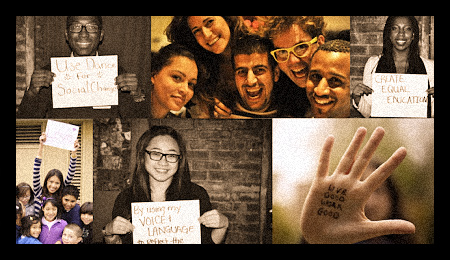
What is Social Change?

Social_Change
Social change is defined as “the alteration of mechanisms within the social structure, characterized by changes in cultural symbols, rules of behavior, social organizations or value systems.”  Such changes affect our way of life on both a macro and micro level, with the former involving major social institutions, and the latter our value and belief systems.

Collaborative efforts between groups or organizations are becoming major sources of social change by establishing social solidarity, pooling of resources and empowering larger scale and more long-term efforts for reaching specific goals.

A multitude of factors can cause social change, including:

  • technological and economic changes
  • social structure/modernization/urbanization
  • bureaucratization and institutions
  • conflict and competition
  • political and legal power
  • ideas/ideologies/attitudes/values
  • physical environment
  • population changes
  • isolation/contact

Activists for social change are no longer relegated to traditional outlets such as television, radio and newspaper.

Some use direct grassroots avenues such as “state and local ballot initiatives, electoral politics, lobbying and advocacy, direct action, media events and litigation.”  Others are achieving previously impossible endeavors by reaching millions of people globally through online and social media activism.

For example, Breakthrough, a United States and India-based non-profit human rights organization, uses “media, arts, pop culture and technology to reach mass audiences, challenge norms and make human rights real and relevant.”  Among its unique projects for social change was the launch of “America 2049” via Facebook games.

The game pits the player into the role of a special agent tasked with capturing a fugitive.

The player then faces a series of events forcing him or her to make tough decisions about pressing international issues.  The fugitive is played by Harold Perrineau, an American actor most known for his role in the television series “Lost.”  Perrineau talks about the importance of America 2049’s message, stating, “I hope that through playing America 2049, young people in particular will be inspired to help stop institutionalized hatred and intolerance – today.”

Alternately, there are those who are bringing social change by “injecting market principles into funding” and utilizing the strength of the business and economic sectors.

Toby Eccles, founder and development director of Social Finance, has pioneered such business models for change.  Social Finance is a United Kingdom-based non-profit organization that operates under the belief that “if social problems are to be tackled successfully, organizations seeking to solve them need sustainable revenues and investment to innovate and grow.”

Eccles developed innovative outcomes-based contracts known as Social Impact Bonds and, more recently, Development Impact Bonds.  In a talk he gave at Technology Entertainment Development Global in June 2013, Eccles said, “If you make the economic case, then the value of doing something would be completely compelling.”

Social Impact Bonds (SIBs) “aim to improve the social outcomes of public services by making payment for those services conditional on achieving independently measurable outcomes.”

The bonds allow for private investments to provide upfront funds for prevention and early intervention services to be delivered by seasoned service providers; the public sector only pays back if the intervention is successful.  Development Impact Bonds are the newest SIB spinoffs, where instead of governments being responsible for paying back investors, the onus is placed on international donors or development agencies.

– Rifk Ebeid

Sources: TED Talks, Encyclopedia Britannica, Sociology Guide, Social Finance, Salon
Photo: Be Social Change

February 25, 2014
https://borgenproject.org/wp-content/uploads/borgen-project-logo.svg 0 0 Borgen Project https://borgenproject.org/wp-content/uploads/borgen-project-logo.svg Borgen Project2014-02-25 04:00:502024-05-26 23:12:55What is Social Change?
Charity, Global Poverty, Nonprofit Organizations and NGOs

GiveWell Evidence-Based Research Assists Donors

give_well
The game of giving is changing. Charity funds and philanthropic organizations are no longer just donating money blindly, but rather are investigating the core causes of poverty and trying to support solutions that make the biggest social impact.

Charities are trying to donate money where it will do the most for the people receiving it rather than filtering it into numerous other accounts that trickle down to the beneficiaries in smaller and smaller amounts.

Foundations are looking beyond block grant funding and coming up with innovative specifications for how their money should be used to maximize its positive effect.

The Chronicle of Philanthropy issued a report stating that the fifty largest donators have given almost eight billion dollars in the past year towards global aid.

GiveWell is an organization that focuses entirely on analyzing data to determine just how useful giving is per dollar amount.

Who does the donation really help? Where does the money go? Who decides what to do with it? What are the tangible benefits of giving? Questions like this and the answers that accompany them are becoming a large part of the solution to global poverty.

Knowing who to give aid to, where the funding goes and how it actually makes a difference in the lives of the people receiving it gives charities and philanthropists a clear direction for their efforts.

GiveWell researches and evaluates different charitable foundations and shares their results with the public to help potential donators choose the best use of their giving power.

They provide links on their website to evidence that backs up their evaluations. Categories like distribution efficiency, funding, pros and cons, track record, and impact studies are all part of GiveWell’s investigations.

The financial situation in the past decade has generated a need to be as financially responsible as possible with funding, and governments in various nations have cut foreign aid spending.

Solving the problem of global poverty requires serious funding, especially when so much money is spent on other, less drastic goals. Creating mutually profitable businesses that cater to those struggling with lack of basic needs as well as giving money to communities that can use it to lift themselves out of financial devastation is key to saving the world’s poor.

Philanthropic practices and analytical giving techniques such as those provided at GiveWell can help make a huge difference in eradication of poverty in countries all over the world.

– Kaitlin Sutherby

Sources: Givewell, The New Yorker, The Guardian
Photo: 

February 23, 2014
https://borgenproject.org/wp-content/uploads/borgen-project-logo.svg 0 0 Borgen Project https://borgenproject.org/wp-content/uploads/borgen-project-logo.svg Borgen Project2014-02-23 04:00:522015-01-28 09:32:00GiveWell Evidence-Based Research Assists Donors
Advocacy, Global Poverty, Nonprofit Organizations and NGOs

The Launch of the Philomena Project

Philomena_project_adoption
The story of Philomena Lee, an Irish woman forced to give up her son for adoption over 50 years, was the inspiration for an Oscar-nominated film this year. The film, “Philomena,” stars Dame Judi Dench and depicts Lee’s search for her son that leads her to the United States.

On January 24, Lee launched the Philomena Project in Dublin, Ireland to campaign for the release of over 60,000 adoption files currently in the possession of the state, churches and private agencies. In Ireland, adoption was sometimes forced on unmarried mothers and neither child nor mother was given information on the identity or whereabouts of the other.

Lee was single and pregnant at the age of 18 and was sent to a home for unmarried mothers in Roscrea, Ireland run by the Catholic Church when Lee was forced into the adoption of her 3-year-old son, Anthony. When he was taken, she had no idea that he in fact had been sold by the abbey to an American couple.

Lee tried to get information about Anthony, but was not given any indication of where he was sent after his adoption. Anthony, in turn, went looking for his mother in Ireland many years later but was told by the abbey that his mother had left him.

Lee’s story brought attention to this reprehensible practice and after the film’s success, Lee joined forces with the Adoption Rights Alliance. Lee said that she and her daughter decided to found The Philomena Project after receiving such a large amount of responses to her story.

The Philomena Project seeks to get these previously withheld adoption files released, ones that prevent any mother and child who wish to be reunited from doing so.

Susan Lohan, co-founder of the Adoption Rights Alliance, has said Lee’s story has effectively “woken up many people to the crimes committed against thousands of unmarried mothers and their children under the guide of so-called legal adoption.”

Lohan has additionally vowed to end toleration of Ireland’s “deny ‘til we die” strategy and has named the state, private agencies and representatives of the Catholic Church as being in possession of information that people could use to find their natural families.

The Philomena Project hopes to have the Irish Government bring in legislation that would make the thousands of withheld files available to anyone who wants to find either their natural mother or child.

The backers of the Philomena Project have additionally asked the Catholic Church to cooperate with them and also plan on lobbying politicians in both Britain and the United States.

The project has also found support in Maeve O’Rourke, a lawyer from London, well-known for her campaigning for victims of Ireland’s Magdalene Laundries.

O’Rourke has said that “the right of a child to preserve her identity and family relations without unlawful interference is today recognized internationally, and without hesitation, as a basic human right.”

Lee has also expressed her “hope that this effort will help us find solutions that ensure every mother and child who wants to be reunited are able to come together once again.”

– Julie Guacci

Sources: BBC, The Irish Post
Photo: The Independent

February 3, 2014
https://borgenproject.org/wp-content/uploads/borgen-project-logo.svg 0 0 Borgen Project https://borgenproject.org/wp-content/uploads/borgen-project-logo.svg Borgen Project2014-02-03 04:00:542024-06-04 01:08:01The Launch of the Philomena Project
Activism, Advocacy, Global Poverty, Nonprofit Organizations and NGOs, Philanthropy

5 Groups in the U.S. Addressing Climate Change

Climate_Change
A growing movement is spreading throughout the international community in regards to addressing the prevalence of climate change. Accordingly, thousands of organizations on a global scale have mobilized to spread awareness, understand key issues and articulate solutions.

In the United States alone, there are a plethora of organizations that have been able to make strides in addressing the issue. Here is a list of 5 prominent environmental organizations that are fighting climate change and reaching success.

1. 350.org: The influential global movement headed by author Bill McKibben works across nearly 200 countries. Much of their work specifically targets carbon emissions as the number 350 itself refers to the amount of atmospheric carbon (in parts per million) needed for a stable climate.

Currently, the number is nearly at 400 parts per million, which is quite overwhelming. In order to reduce the number on an international scale, 350 works on campaigns widely ranging from stopping the Keystone XL pipeline in the United States to fighting the development of coal power plants in India.

2. Chesapeake Climate Action Network: Focusing specifically on the Atlantic coast of the United States, the Chesapeake Climate Action (CCAN) is the first organization to address climate change impacts in the Maryland/Virginia region. The area is highly vulnerable as it is home to dozens of defense facilities, while also being low-lying and densely populated.

CCAN works at the grassroots level to spread awareness, introduce the general public into the political process and influence environmental legislation. More recently, their work has been focusing on making use of Virginia’s vast renewable energy potential in offshore wind and solar energy.

3. Sierra Club: As one of the oldest, largest and influential environmental organizations in the United States, the Sierra Club has been focusing on various environmental issues for the past century. They now have 64 local chapters nationwide, a network of 2.1 million supporters and an extremely dedicated team of individuals.

In the past, The Sierra Club was influential in the implementation of the Clean Air Act, Clean Water Act and Endangered Species Act. Currently, they are focused on leading the world towards a clean energy economy and away from the heavy reliance on the fossil fuel industry.

4. Climate Reality Project: Both founded and chaired by Al Gore, the former Vice President and Nobel Laureate has led a growing global network of over 5 million individuals. The Climate Reality Project focuses heavily on spreading awareness by introducing the international scientific consensus on climate change to the general public.

Some of their promising initiatives are centered on revealing the truth behind the climate denial movement, providing information on the costs of carbon pollution and training climate reality leaders to have the skills to mobilize communities for action.

5. Energy Action Coalition: With student activism on the steep rise, organizations form and collaborate to be as effective as possible. The Energy Action Coalition is a group of 30 youth led organizations that address current environmental issues. With their level of diversity and broad organizational inclusion, the Energy Action Coalition is able to reach success in mobilizing campus communities.

The combined efforts of students across America have been successful in organizing national Power Shift Summits and campaigns to stop the development of the Keystone XL pipeline.

However, one of their prominent successes is embedded within their commitment to establishing carbon neutral college campuses. Ultimately, the Energy Action Coalition has been able to solidify almost 700 campus commitments to carbon neutrality up to 2012.

– Jugal Patel

Sources: 350.org, Chesapeake Climate Action Network, Sierra Club, The Climate Reality Project, Sierra Club, Energy Action Coalition
Photo: Scientific American

January 30, 2014
https://borgenproject.org/wp-content/uploads/borgen-project-logo.svg 0 0 Borgen Project https://borgenproject.org/wp-content/uploads/borgen-project-logo.svg Borgen Project2014-01-30 04:00:542020-07-02 12:31:155 Groups in the U.S. Addressing Climate Change
Activism, Advocacy, Global Poverty, Nonprofit Organizations and NGOs, Philanthropy, Volunteer

Nonprofit Careers

L_africa_children_doctors_smile
For many people the nonprofit sector, also known as the “third sector,” can offer an exciting and rewarding career. With the exception of where the funding comes from, nonprofit organizations often are run very similarly to for-profit organizations. They also have to adhere to the same policies and may even hire similarly qualified people. This article will provide an overview of the types of jobs available in the nonprofit sector as well as some of the things to consider when looking for a non-profit job.

Development

The development department is one of the largest and highest paying job categories in the nonprofit sector. Development professionals work on gathering the resources that fund the programs and initiatives run by the organization. These jobs are needed in order for the organization to stay alive thus affording the position to pay well and stay in the position of not likely to be cut. Jobs in development also tend to be less competitive than jobs in other departments. Such jobs here can include:

– Director of Development
– Fundraiser
– Proposal Writer
– Communication Professional

Program

Being part of the program department is exciting and rewarding, especially since those who work in this department get to put their organization’s mission into action. These are the people who will be developing and implementing disaster relief plans in developing countries, or providing services to people with mental health challenges. Unfortunately program careers are very competitive and have a high burn out. These jobs include:

– Program Manager
– Program Assistant
– Policy Analyst
– Technical Advisor

Administrative

Just like private sector companies, nonprofit sectors also need an administrative team to help organizations keep on their feet and run smoothly. These jobs are also good stepping-stones into programs careers or management level jobs.

– Human Resources
– Office Manager
– Receptionist

Important Things to Consider About Careers in the Nonprofit Sector

1. You’ll have to wear many hats – Nonprofits don’t always have the funds to hire a large staff, this means you may have to be the graphic designer, the social media coordinator and the grant writer.

2. You need to be passionate about the cause – Employers aren’t just looking for talented qualified workers, they are also looking for people who are passionate about the cause and will work hard to achieve the organization’s goals.

3. You’ll probably make less money – Nonprofits have less resources, this means your office may be less plush and your salary smaller.

4. Volunteer first – It’s important to volunteer or intern at a nonprofit to see if you like the culture and are actually passionate about the job. This also proves your commitment to an employer and can open up job opportunities.

5. Nonprofits are run like any other business – Managing finances and being cost effective are just as important to nonprofits as they are to businesses.

– Elizabeth Brown

Sources: Miami University, US News, Forbes
Gif: Borgen Project

January 29, 2014
https://borgenproject.org/wp-content/uploads/borgen-project-logo.svg 0 0 Borgen Project https://borgenproject.org/wp-content/uploads/borgen-project-logo.svg Borgen Project2014-01-29 04:00:222024-12-13 17:53:48Nonprofit Careers
Advocacy, Global Poverty, Nonprofit Organizations and NGOs

Poverty Advocacy, ONE Way

Poverty Advocacy
With a staggering amount of global poverty, ONE.org was established as a nonpartisan, nonprofit organization striving  to help lend a strong hand in the battle against destitution. Co-founded by U2 front-man Bono in May 16, 2004, the ONE Campaign strives to end extreme poverty and reduce the prevalence of preventable diseases, especially in Africa.

The roots of the ONE campaign lie in a previous organization created by Bono called DATA (Debt, Aids, Trade, Africa), which also strove to raise awareness about AIDS and other social issues in Africa. However, in 2008, DATA and ONE united simply as the ONE Campaign. Since its engenderment, ONE has already garnered the support of 3.5 million advocates.

The methods that ONE employs to fulfill its mission of eradicating global poverty and disease involve educating the public about such issues, raising awareness among politicians to push global poverty to the top of political agendas and collaborating with African policymakers rather than simply directing them. By raising awareness about global poverty among the general public and among politicians and policymakers, ONE makes global poverty more relevant and urgent in the eyes of individuals who may not have previously been concerned with such global issues.

Although ONE headquarters are currently located in Washington, D.C., London, Johannesburg, Brussels, Berlin and Paris, the message of the campaign permeates through any global boundaries, bringing the organization closer and closer to fulfilling their goal of assuaging poverty. Due to support of volunteers, ONE has been able to help reduce extreme poverty and preventable diseases.

For instance, over 7.5 million African residents today are able to gain access to AIDS medication whereas in 2005, only a paltry 50,000 Africans were able to access such life-saving treatments. Additionally, malaria has also been reduced by a staggering 75% within the past decade – no doubt with lobbying and contributions from the ONE Campaign.

– Phoebe Pradhan

Sources: ONE, Look to the Stars

January 25, 2014
https://borgenproject.org/wp-content/uploads/borgen-project-logo.svg 0 0 Borgen Project https://borgenproject.org/wp-content/uploads/borgen-project-logo.svg Borgen Project2014-01-25 04:00:502017-03-07 12:55:40Poverty Advocacy, ONE Way
Activism, Development, Education, Global Health, Global Poverty, Nonprofit Organizations and NGOs, Philanthropy

Why the GHIC Should be on Your Calendar

Global_Health_Innovation_Conference
On April 12, students, professionals and policy makers will come together for the Global Health and Innovation Conference (GHIC).  Taking place on campus at Yale University in New Haven, Connecticut, the conference will discuss methods and means of global healthcare development.

Topics to be addressed at GHIC range from the Key Note Address “Reducing Toxins to Protect Health: A Global Concern” to business innovations in healthcare delivery to student-researched projects about environmental sustainability.  By casting such a wide net of current and prospective advocates and leaders, the conference truly offers a diverse range of perspectives and solutions.

The conference is, furthermore, sponsored annually by Unite for Sight.  Unite for Sight is a nonprofit organization dedicated to providing quality eye care for those who are prevented access to such care.  The organization has helped over 1.7 million patients and performed 66,000 sight-restoring operations worldwide.  As such a dynamic agency for global healthcare, Unite for Sight has hosted the GHIC for the past 11 years.

Past reviews of the conference are overwhelmingly positive.  CNN has called the Global Health and Innovation Conference a “Meeting of Minds,” and as speakers vary from CEOs to undergraduate students, such a convergence seems apt.  The Consortium of Universities for Global Health has even dubbed the conference a “must attend” event.  With such strong praise, it is no wonder the conference is now officially the largest global health conference in the world.

There is something intriguing and engaging for all global health advocates at the conference.  Exhibitions by graduate programs in Public Health and International Affairs, such as Brandeis University’s Keller School of Social Policy and Management, offer wonderful opportunities to learn more about making global development into a professional goal.  Interactive workshops in sustainable architecture and global health writing are also sure to be great draws.

– Taylor Diamond

Sources: Unite for Sight, Consortium of Universities for Global Health
Photo: Pragzter

January 24, 2014
https://borgenproject.org/wp-content/uploads/borgen-project-logo.svg 0 0 Borgen Project https://borgenproject.org/wp-content/uploads/borgen-project-logo.svg Borgen Project2014-01-24 15:39:142024-05-26 23:05:39Why the GHIC Should be on Your Calendar
Page 50 of 60«‹4849505152›»

Get Smarter

  • Global Poverty 101
  • Global Poverty… The Good News
  • Global Poverty & U.S. Jobs
  • Global Poverty and National Security
  • Innovative Solutions to Poverty
  • Global Poverty & Aid FAQ’s
Search Search

Take Action

  • Call Congress
  • Email Congress
  • Donate
  • 30 Ways to Help
  • Volunteer Ops
  • Internships
  • Courses & Certificates
  • The Podcast
Borgen Project

“The Borgen Project is an incredible nonprofit organization that is addressing poverty and hunger and working towards ending them.”

-The Huffington Post

Inside The Borgen Project

  • Contact
  • About
  • Financials
  • President
  • Board of Directors
  • Board of Advisors

International Links

  • UK Email Parliament
  • UK Donate
  • Canada Email Parliament

Get Smarter

  • Global Poverty 101
  • Global Poverty… The Good News
  • Global Poverty & U.S. Jobs
  • Global Poverty and National Security
  • Innovative Solutions to Poverty
  • Global Poverty & Aid FAQ’s

Ways to Help

  • Call Congress
  • Email Congress
  • Donate
  • 30 Ways to Help
  • Volunteer Ops
  • Internships
  • Courses & Certificates
  • The Podcast
Scroll to top Scroll to top Scroll to top