• Link to X
  • Link to Facebook
  • Link to Instagram
  • Link to TikTok
  • Link to Youtube
  • About
    • About Us
      • President
      • Board of Directors
      • Board of Advisors
      • Financials
      • Our Methodology
      • Success Tracker
      • Contact
  • Act Now
    • 30 Ways to Help
      • Email Congress
      • Call Congress
      • Volunteer
      • Courses & Certificates
      • Be a Donor
    • Internships
      • In-Office Internships
      • Remote Internships
    • Legislation
      • Politics 101
  • The Blog
  • The Podcast
  • Magazine
  • Donate
  • Click to open the search input field Click to open the search input field Search
  • Menu Menu

Archive for category: Nonprofit Organizations and NGOs

Information and stories about nonprofit organizations and NGOs

Advocacy, Nonprofit Organizations and NGOs

FXB Village and a Holistic Approach to Poverty Reduction

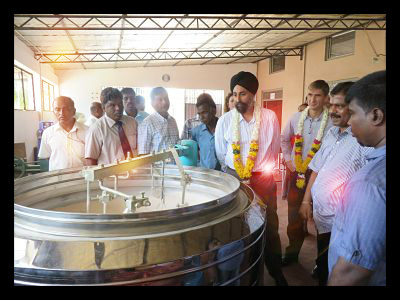
2014 marks the 25th anniversary of FXB Village, an innovative international NGO with a holistic approach to poverty reduction.

FXB Village provides sustained assistance to 80 to 100 families in impoverished locales for a three-year period. During this period, FXB Village provides families with training in a diverse range of fields, from healthcare to business. FXB’s goal is for families to be self-sufficient after the three years; according to FXB Village founder Albina du Boisrouvray, the NGO boasts an 86 percent rate in meeting this goal.

The case of Nite, a Ugandan widow, illustrates just how effective the FXB Village approach can be on the ground. According to du Boisrouvray, Nite was first enrolled in the program in 1994; FXB Village provided her with a cow, and school supplies for her 11 children.

FXB Village’s relatively small material investment went a long way in pulling Nite’s family out of poverty and into self-sufficiency. “After 10 years she had three cows, two pigs and some chickens, as well as land on which she was growing pineapples and coffee and a plot that she used to build a house for her eldest son. This had provided enough income to put all her children through school, two of whom went on to university, and one who got a job abroad,” said du Boisrouvray. Nite is just one of the 75,000 people that Du Boisrouvray says FXB Village has pulled out of poverty since its founding in 1989.

Du Boisrouvray, a French countess, founded FXB Village after her son Francois-Xavier Bagnoud- a search and rescue helicopter pilot- died in a helicopter accident in Mali. “When François died in 1986, I wanted to continue doing what he was passionate about: helping others,” she said. Du Boisrouvray sold off her jewels, artwork and real estate to fund the village-based program, which she believes can be a teaching tool for other NGO’s.

Said du Boisrouvray, “We help families in a way that they understand that participation is the key to eradicate poverty; they have to bring their will. It’s not just a one-way thing, it’s a participating activity hand in hand.” Du Boisrouvray has announced that she will release details of the FXB Village initiative in 2015, so that other NGO’s can draw information and inspiration from the FXB approach.

– Parker Carroll

Sources: IB Times 1, IB Times 2, Today
Photo: Flickr
January 3, 2015
https://borgenproject.org/wp-content/uploads/borgen-project-logo.svg 0 0 Borgen Project https://borgenproject.org/wp-content/uploads/borgen-project-logo.svg Borgen Project2015-01-03 04:00:272024-05-27 09:23:08FXB Village and a Holistic Approach to Poverty Reduction
Charity, Nonprofit Organizations and NGOs

Holiday Gifts that Keep Giving

According to the National Retail Federation, Americans are projected to spend over $600 billion on holiday gifts during the 2014 season alone. A staggering statistic when compared to the fact that an estimated $40 billion would be necessary to provide clean water and sanitation, reproductive health for women and basic education, health and nutrition to every person living in a developing country worldwide.

Fortunately, many nonprofits, online marketplaces and charitable organizations are doing something to help redirect some of the money that Americans spend each holiday season to those who need it most. If you’re in the market for a gift that does double-duty this year, check out the following stores and nonprofit organizations for ample meaningful gift ideas:

1. Heifer International:

Give the gift of an animal in your friend or family’s name and help provide a family in a developing country with both food and a reliable source of income. Heifer International

2. Books for Africa:

Honor a friend or family with a book donation through Books for Africa (BFA), a non-profit dedicated to increasing literacy rates and children’s access to books in Africa. For donations of $50 or more, BFA will send a hand-written thank-you note to your honoree. $50 provides 100 books for a classroom. Books for Africa

3. Oxfam America Unwrapped:

Browse an endless array of gifts online—from goats and honeybees, to books and school meal programs for kids—and give to a family or child in need on behalf of a friend or family member. In return, a free, personalized card will be sent to the ‘gift-giver,’ along with a photo of the gift and information about how specifically it makes a difference in the lives of people living in poverty. Oxfam America Unwrapped

4. JADEtribe:

100 percent natural and ethical, JADEtribe’s bags, clothing and accessories truly embody the phrase “fashion with a conscience.” Each piece is handcrafted by women in South East Asia, and proceeds from JADEtribe purchases directly improve the lives of the female artisans who contribute to the company’s extensive selection. JADEtribe

5. Global Goods Partners:

Artisans living in third-world countries have an opportunity to sell their beautiful handmade goods on this online marketplace. Purchase a gift from this site, and a high percentage of sales will go directly back to the artisan who made it. Global Goods Partners

6. Ten Thousand Villages:

A fair-trade retailer since 1946, Ten Thousand Villages has stores across the United States, and an extensive collection of jewelry, clothing, kitchen and household items, and home décor, among many other gift ideas. The store partners with artisans around the world, in Bangladesh, India, Nigeria, Cambodia and Peru, among dozens of other countries. Its mission: sustain livelihoods, empower women, preserve cultural arts, and build global relationships. Ten Thousand Villages for online purchases or to find a store near you.

7. The Little Market:

Lauren Conrad’s e-commerce site, which is filled with vibrant, handmade goods, was created to serve as a platform for female artisans living in third-world countries worldwide to reach a wider audience. The proceeds for items such as jewelry, clothing, bags and ceramics go directly back to the women who made them. The Little Market

8. Bead for Life:

Bead for Life was founded to empower women in Uganda by helping them start their own bead-making businesses. The Beading Program provides women in impoverished countries with a steady source of income, derived from handcrafted beaded jewelry. Invite friends and family to shop for the cause by hosting a Beading Party from your home; a customized inventory of jewelry will be sent directly to your doorstep beforehand. Or order beads online. Bead for Life

Whether you’re giving a life-changing gift of an animal to a family in need, or wrapping a selection of handmade bags, scarves and jewelry that will help support the livelihood and businesses of female artisans worldwide, choosing a gift from the above list automatically makes you an ally in the fight against global poverty. Why not send a feel-good present or two this year, when it’s guaranteed to touch the friend or family member you’re choosing to honor, and to alter the lives of the person, family or community on its receiving end?

– Elizabeth Nutt

Sources: The Borgen Project, Info Wars
Photo: Nugget Market

December 12, 2014
https://borgenproject.org/wp-content/uploads/borgen-project-logo.svg 0 0 Borgen Project https://borgenproject.org/wp-content/uploads/borgen-project-logo.svg Borgen Project2014-12-12 04:00:182024-05-27 09:23:05Holiday Gifts that Keep Giving
Economy, Food Security, Nonprofit Organizations and NGOs, USAID

VEGA Brings Economic Growth Globally

VEGA
The Volunteers For Economic Growth Alliance, or VEGA, is a nonprofit that brings its members together to execute economic growth projects overseas.

Founded in 2004, VEGA was originally an initiative of the United States Agency for International Development. The organization was meant to be a procurement partner.

Today, VEGA represents itself as a respected NGO alliance of 23 member organizations. Each member brings its expertise to the Alliance to allow VEGA programs to grow in development and scale.

Based in Washington, D.C., VEGA can effectively manage its programs stationed in developing nations.

With a mission to mobilize expertise and resources to promote sustainable economic opportunities, VEGA’s programs aim to scale the services of local organizations, create jobs, increase commerce and trade and improve management.

Volunteers from the U.S. offer their expertise to programs that are committed to serving women, youth and others who are ready to be entrepreneurs in order to lift themselves out of poverty.

Currently, VEGA manages 36 programs in 28 countries.

These programs include: Farmer-to-Farmer, Capacity Building of Cambodia’s Local Organizations, Competitive Agriculture Systems for High Value Crops and Kazakhstan Business Connections.

Though programs only run in 28 countries, members have worked in over 140 countries, bringing their values and skills to local partnerships.

The expertise that VEGA members bring to the team range in areas from agriculture and food security, to tourism development and financial services. Also included are environment and energy, enterprise development and trade and investment.

VEGA believes that economic growth that emphasizes innovation, local partnerships and integrated solutions is the best way to promote prosperity.

With the power of volunteers rallying behind this mission, the strength in collaboration has allowed this NGO to make an impact in economic growth for the developing communities it serves.

– Chelsee Yee

Sources: VEGA Alliance, ACDI VOCA, Africa Agribusiness Magazine

Photo: USAID

December 11, 2014
https://borgenproject.org/wp-content/uploads/borgen-project-logo.svg 0 0 Borgen Project https://borgenproject.org/wp-content/uploads/borgen-project-logo.svg Borgen Project2014-12-11 04:00:092024-06-05 01:58:19VEGA Brings Economic Growth Globally
Global Poverty, Nonprofit Organizations and NGOs

CDA Improves International Efforts

cdaCDA Collaborative Learning Projects is a nonprofit organization dedicated to improving the effectiveness of international actors who provide humanitarian assistance.

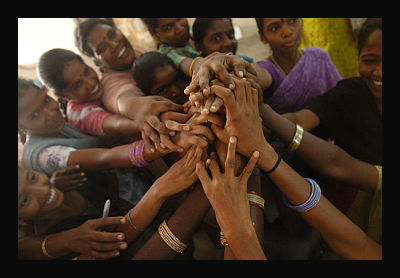
Working off the premise that experience is a good teacher, CDA facilitates collaborative learning processes to analyze the experiences of international efforts.

With this vision comes a mission to encourage communities to engage in peace practice and to support sustainable development.

CDA works with agencies and organizations to identify patterns and lessons across different contexts in order to improve effectiveness. So far its core staff has worked in over 90 countries with local and international partners.

Below is the implementation process of these CDA lessons that often produces new focus questions for improving effectiveness:

Step 1: Development of Training and Awareness Materials

The findings from a collaborative learning process are translated into a form that can be used in different briefings, exposure workshops and extended training events in order to make such findings accessible to other field practitioners.

Step 2: Building Individual Capacity

CDA training programs work not only with organizations but also with individual practitioners to develop the skills needed to implement CDA lessons into their own practices. Mentoring can play a big role in this area when it comes to knowing how to apply specific tools surrounding the framework of a specific organizational setting.

Step 3: Organizational Accompaniment

CDA works directly with partner organizations to incorporate the tools and concepts from its lessons into their routines so that the tools and concepts become a day-to-day practice. This may require training and various forms of coaching to ensure sustainability.

Step 4: Support for Improved Program Design

CDA lessons often require changes in the ways that programs are designed. Thus, it works with partner agencies to promote improvements that will result in better quality programming through design and implementation.

Step 5: Monitoring Progress and Impacts

CDA works with its partners to track the implementation of its skills, tools and concepts gained from CDA programs. This feedback ultimately tells if the application of CDA materials makes a positive difference in the effectiveness of programming.

Step 6: Implications and New Questions

When everyone comes together to share their experiences, new focus questions arise that add to the learning processes — and the cycle repeats!

Since its launch, CDA has been grounded in field experience rather than following a specific theory or model and develops the above process through which organizations learn with each other rather than relying on their experiences alone.

CDA is currently home to the Corporate Engagement Program, the Do No Harm Program and other peace practice programs. For more information, please visit the CDA website at www.cdacollaborative.org.

– Chelsee Yee

Sources: CDA Collarborative, ALNAP, Relief Web
Photo: Flickr

December 3, 2014
https://borgenproject.org/wp-content/uploads/borgen-project-logo.svg 0 0 Borgen Project https://borgenproject.org/wp-content/uploads/borgen-project-logo.svg Borgen Project2014-12-03 04:00:212020-07-23 17:53:02CDA Improves International Efforts
Global Poverty, Nonprofit Organizations and NGOs

Three Best World Hunger Nonprofits

best_world_hunger_nonprofits
It might be hard to believe that hunger kills more people every year than AIDS, malaria and tuberculosis combined. Roughly 800 million people in the world are chronically malnourished, with the majority living in developing countries. Here is a look at three nonprofit organizations that are fighting to end world hunger:

Action Against Hunger

This global humanitarian organization works not only towards ending global hunger, but also in creating long-term strategies that capitalize on self-sufficient workers. Malnutrition claims the lives of over a million children, although the disease is preventable and treatable. Most of Action Against Hunger’s funding goes directly to these life-saving programs. For every $1 they raise, $0.91 is spent on program activities. Charity Navigator has given the organization the highest four-star rating seven years in a row.

Stop Hunger Now

For the last 15 years, Stop Hunger Now has coordinated the distribution of food and other needed aid to children all over the world. They target vulnerable populations and aim to involve the global community in mobilizing the necessary resources. In 2005, the organization created the meal packaging program, which combines rice, beans, vegetables and the essential nutrients and vitamins all into one small package. With each meal costing roughly $0.29, SHN is able to ship and distribute the meals all over the world. In fact, one SHN packaging event can result in more than 1,000,000 meals.

CARE

A humanitarian organization that is fighting to end global poverty, CARE staff has worked in a multitude of countries serving some of the poorest communities and populations. Since it sent the first CARE package in 1946, the organization has been addressing the issues of food insecurity all over the globe. CARE often focuses on hunger caused by natural disasters and conflict. In countries such as Chad, Lesotho, Niger and South Sudan, CARE’s programs have helped reduce the risk of disasters and food insecurity by promoting environmental sustainability and empowering people economically.

– Leeda Jewayni

Sources: World Food Program, Action Against Hunger, Stop Hunger Now, CARE
Photo: Wesley-Luther

November 5, 2014
https://borgenproject.org/wp-content/uploads/borgen-project-logo.svg 0 0 Borgen Project https://borgenproject.org/wp-content/uploads/borgen-project-logo.svg Borgen Project2014-11-05 11:00:262024-12-13 17:49:35Three Best World Hunger Nonprofits
Aid Effectiveness & Reform, Nonprofit Organizations and NGOs, Women, Women and Female Empowerment

Caterpillar Foundation Donations

Caterpillar_foundation-donations
Founded in 1952, Caterpillar Foundation dedicates itself to transforming lives within the international communities where Caterpillar works.  It has been the champion for programs that support education, environment and emergency relief.

The program has donated over 550 million dollars to organizations that put poverty onto the path of prosperity “by investing in those proven to yield the best results – women and girls.”  Last year the foundation committed itself to a three year 29.2 million dollar commitment. Partnering with Opportunity International the joint venture looks to service 16.7 million people across Asia, Africa and Latin America.

The Caterpillar Foundation’s commitments will be leveraged through Opportunity International via microfinance loans, savings and financial training.  Due to Caterpillar’s strong commitment to women and girls, most of the money will be financed to women, or groups of women, looking to form working relationships.

As of August 2014, Caterpillar Foundation announced the allocation of an additional 11 million dollars to help with Africa’s water and energy needs. Five million dollars have been distributed to help programs that address public policy needs and lack of access to energy. Five million dollars will be used to extend an already existing water line in Tanzania and Ethiopia. The last million will help teach women and girls about the dangers of traditional cookstoves and the benefits of adopting clean cooking solutions.

Most recently Caterpillar has committed itself to another generous contribution of 2.5 million dollars to The Poverty Project.  This nonprofit organization has received wide acclaim since the implementation of its new strategy unveiled in 2012. Global Citizen is an online platform that serves as the basis for all the work performed by the registered Global Citizens. There are more than 250,000 global citizens that have partaken in 1.75 million actions that have contributed to more than 35 campaign victories and announcements.

The Poverty Project has since released a new strategy as of January 1 of this year. The strategy focuses on ending extreme poverty by 2030.  With its announcement of a new vision, The Poverty Project has also put forth a new theory of change and an updated framework. These proposals are all designed to create a movement of unstoppable Global Citizens.

This dynamic and effective strategy is what caught the eye of the Caterpillar Foundation.  Since the three main goals of this foundation are education, environment and emergency relief, the money given to The Global Poverty Project has all been earmarked for specific projects.

The Global Poverty Project has determined that universal sanitation brought into impoverished areas will increase the chances for women to receive an education, get a job or run a small business.  This is where the bulk of the money will go.  It will also be used to put restrooms inside homes and provide them with running water. The remainder of the money will be used to help educate the 31 million girls who currently do not attend school around the world.

– Frederick Wood II

Sources: Peoria Public Radio, Caterpillar, Global Poverty, Peoria Public Radio 2
Photo: Urban Times

October 10, 2014
https://borgenproject.org/wp-content/uploads/borgen-project-logo.svg 0 0 Borgen Project https://borgenproject.org/wp-content/uploads/borgen-project-logo.svg Borgen Project2014-10-10 12:00:322024-06-05 01:58:15Caterpillar Foundation Donations
Activism, Global Poverty, Nonprofit Organizations and NGOs

Global Citizen Festival Raises Awareness


In many ways, Global Citizen reflects the mission of The Borgen Project by uniting American citizens in the fight to end global poverty. Global citizen is a website and mobile application that was developed to help the general population find ways to tackle extreme poverty. It is a tool to draw attention to the suffering of the 1.2 billion people in the world who live on less than $1 per day and to act upon this injustice.

A Global Citizen is one who “identifies with being part of an emerging world community and whose actions contribute to building this community’s values and practices”. It is up to the citizens of the globe to request change for the most vulnerable populations. The systems that perpetuate a cycle of poverty must be brought to light.

Although Global Citizen does not ask for donations or charity, they work to learn more about pertinent issues that relate to extreme poverty and ways we can overcome them. Initiated by the Global Poverty Project, the Global Citizen Festival kicked-off this past September in New York City for its third annual gathering.

Accompanying United Nations Secretary-General Ban Ki-moon and Indian Prime Minister Narendra Modi were stars such as Jay Z, No Doubt, Sting, Foo Fighters, John Legend, the Roots and many more. Almost 60,000 people joined the celebration of global unity and aspiration to address the world’s most urgent problems. Tickets were free for all audience members, who assisted or volunteered in some way to help spread awareness about global poverty.

This year’s Global Citizen Festival efforts were aimed in improving access to education, vaccination and sanitation. Although not an official event for the U.N. General Assembly, the Global Citizen Festival has assembled a host of world leaders who have voiced their commitment to focus and address the issues of extreme poverty, climate change and sustainable development.

With less than 465 days to achieve all eight of the Millennium Development Goals, Ki-moon reassured the crowd that “a better world was around the corner.”

– Leeda Jewayni

Sources: United Nations, Global Citizen, MSNBC, Kosmos JournalE
Photo: MSNBC

October 8, 2014
https://borgenproject.org/wp-content/uploads/borgen-project-logo.svg 0 0 Borgen Project https://borgenproject.org/wp-content/uploads/borgen-project-logo.svg Borgen Project2014-10-08 15:00:522024-12-13 17:51:13Global Citizen Festival Raises Awareness
Global Poverty, Nonprofit Organizations and NGOs

The Aspen Institute

the aspen institute
All it took was one visit to Aspen, Colorado for Walter Paepcke (1896-1960) to see the potential that this area has as a gathering place for thinkers and leaders. Just four years after his visit, in 1949, Paepcke created what we now know as the Aspen Institute. There is now also another site for the institute; the Wye River on Maryland’s Eastern Shore houses another campus.

The Aspen Institute is an educational and policy studies organization, and focuses on creating leadership initiatives globally. The institute achieves this by doing four things continuously: seminars, young-leader fellowships, policy programs and public conferences and events. A recent network launched by the institute is aimed at educating people so that one day we can break the poverty cycle. This network is called The Two Generation Approach.

The Two Generation Approach recognizes that it is not usually good enough to just educate children, but parents must also be educated. How it works is by creating opportunities that address the needs of both parents and children. Three main components make up the approach: education, economic support and social capital.

Through focusing on education, programs with the Two Generation Approach give opportunities for children and parents. Giving the tools to parents to go back to school and get a degree that will land them a good job is the starting block to educating their children as well.

Economic support is also given to those in the program and these can include “housing, transportation, financial education and asset-building, tax credits, child care subsidies, student financial aid, health insurance … food assistance” and more. This relieves the parents of these stressors, so pursuing education can become their primary focus. Social capital is the last key component of the Two Generation Approach. Social capital research has proven that peer support and maintaining family relationships help lead to success.

Launching the Aspen Institute Ascend Network on April 24, 2014 required a lot of help. A group of around 60 national organizations teamed up with the Institute to represent 24 states creating two-generation approaches to end poverty.

The Aspen Institute website states that “[t]he goal of the Aspen Institute Ascend Network is to mobilize empowered two-generation organizations and leaders to influence policy and practice changes that increase economic security, educational success, social capital, and health and well-being for children, parents and their families.”

– Brooke Smith

Sources: NHSA, Aspen Institute, Aspen Institute 2
Photo: PRWeb

October 4, 2014
https://borgenproject.org/wp-content/uploads/borgen-project-logo.svg 0 0 Borgen Project https://borgenproject.org/wp-content/uploads/borgen-project-logo.svg Borgen Project2014-10-04 12:00:292020-07-10 11:56:46The Aspen Institute
Nonprofit Organizations and NGOs

Latter-Day Saint Charities

Jose Perez, a citizen of the Dominican Republic, contracted polio at only eight months old. He has not been able to walk since age 11 and depends solely on a wheelchair to go the eight kilometers to work each day. Without the humanitarian efforts of the Latter-Day Saint Charities, he would never have had access to a stable and working wheelchair. He thus would never have been able to get to work and provide for his family.

Latter-Day Saint Charities was established by the Church of Jesus Christ of Latter-Day Saints in 1996. The organization is inspired by the Bible and the acts of Jesus Christ, who selflessly gave himself to the betterment of other people. Despite being a Christian religion, the LDS Charities is a non-biased organization, and has helped people from 179 countries around the globe.

The current bishop, Gary E. Stevenson, reiterates on the LDS philanthropy website the organization’s motto, which states that donations are truly “changing and saving lives.” He is very proud of the work done and the humanitarian aid that has been donated. The charity reminds us that every single dollar donated goes directly to help the poor and needy.

According to the charity’s website, members state, “We provide emergency relief assistance in times of natural disasters. In addition, our primary community development programs include clean water, neonatal resuscitation training, vision care, wheelchairs, immunizations, food production and other health programs.”

According to the charity’s 2013 Annual Report, the charity made significant headway in dealing with these various issues. In 2013 alone, LDS provided over 66,000 people around the world with wheelchairs. They built water and sanitation systems in 36 countries and taught people valuable lessons about hygiene. In addition, Latter-Day Saint Charities worked alongside doctors around the world to aid in correcting vision issues and providing medical supplies. The facts go on and on.

There are three primary ways we, as people outside of the organization, can help. First, we can donate either online or by sending a check to the LDS office in Salt Lake City, Utah. Secondly, LDS suggests people can volunteer within their own churches, whether it be through media production or tracking records. Lastly, we can become full-time volunteers and missionaries around the world.

Whatever charity you choose, it’s important that as members of the same world, we do what we can to take care of each other.

– Kathleen Lee

Sources: LDS Philanthropy, LDS Charities
Photo: Mormon Church

September 22, 2014
https://borgenproject.org/wp-content/uploads/borgen-project-logo.svg 0 0 Borgen Project https://borgenproject.org/wp-content/uploads/borgen-project-logo.svg Borgen Project2014-09-22 04:00:472024-05-27 09:21:46Latter-Day Saint Charities
Global Poverty, Nonprofit Organizations and NGOs

Good360: a Supporter of Charities

good360
Founded in 1983, Good360 has been the nonprofit leader in product philanthropy since its start. Good360, formally known as Gifts In Kind until changing its name in 2011, quickly escalated and became the fastest growing and most efficient charity in the country according to The Nonprofit Times.

The basis of Good360 is it helps companies donate new, nonperishables like apparel, books, toys, personal care products, office and school supplies, and computers along with many other items. Only three years in, product donations valued at almost $44 million that had been distributed to qualified nonprofit organizations.

Because of some of the great work Good360 has done, it has been recognized by both the Committee Encouraging Corporate Philanthropy and Forbes for its success in helping companies drive their bottom lines while doing a social good at the same time.

Over time Good360 created something called Retail Donation Partner Program. This program is what allows local charities to partner with retail stores in their communities. This benefits not only the charities but the local retail stores as well in donating their surplus.

For example, the Washington Nationals baseball franchise  partnered with Good360 and collected donated toothbrushes for people impacted by the 2010 earthquake in Haiti.

With all these things that the company does and oversees there needed to be a set way of doing things. There are three ways to distribute product donations to the needy: warehoused donations, local retail donations and one-time local donations.

To understand fully how great the company is, it’s important to know how these processes work. The warehouse donations process created an efficient means of maintaining large quantities of product that are then broken up into smaller portions that are easier for charities to distribute.

The local retail donations  allow retailers to directly donate to charities in their community. This is beneficial because it helps smaller charities get products straight from local businesses on a continuing basis. This is also good because it creates strong connections between the retailers and charities.

The last way that Good360 distributes product donations is through one-time local donations. This basically entails finding homes quickly that need donations within the local community. This is beneficial because it helps reduce waste and companies don’t need to set up a certain amount that they will always donate each month. It can be an item that they have excess of and, rather than throwing it out, that product can go to a good home. When this happens, local charities are notified of the opportunities for donations in their community and then orders can be filled on a first-come, first-serve basis.

Good360 made it on the Forbes list of the 50 largest charities in the United States. Ranking at number 36, Forbes also gave it 100 percent in the fundraising efficiency category. Only seven of the 50 charities received a 100 percent in the same category.

– Brooke Smith

Sources: Good360, Forbes
Photo: flickr

September 19, 2014
https://borgenproject.org/wp-content/uploads/borgen-project-logo.svg 0 0 Borgen Project https://borgenproject.org/wp-content/uploads/borgen-project-logo.svg Borgen Project2014-09-19 13:29:432020-07-16 21:19:14Good360: a Supporter of Charities
Page 43 of 60«‹4142434445›»

Get Smarter

  • Global Poverty 101
  • Global Poverty… The Good News
  • Global Poverty & U.S. Jobs
  • Global Poverty and National Security
  • Innovative Solutions to Poverty
  • Global Poverty & Aid FAQ’s
Search Search

Take Action

  • Call Congress
  • Email Congress
  • Donate
  • 30 Ways to Help
  • Volunteer Ops
  • Internships
  • Courses & Certificates
  • The Podcast
Borgen Project

“The Borgen Project is an incredible nonprofit organization that is addressing poverty and hunger and working towards ending them.”

-The Huffington Post

Inside The Borgen Project

  • Contact
  • About
  • Financials
  • President
  • Board of Directors
  • Board of Advisors

International Links

  • UK Email Parliament
  • UK Donate
  • Canada Email Parliament

Get Smarter

  • Global Poverty 101
  • Global Poverty… The Good News
  • Global Poverty & U.S. Jobs
  • Global Poverty and National Security
  • Innovative Solutions to Poverty
  • Global Poverty & Aid FAQ’s

Ways to Help

  • Call Congress
  • Email Congress
  • Donate
  • 30 Ways to Help
  • Volunteer Ops
  • Internships
  • Courses & Certificates
  • The Podcast
Scroll to top Scroll to top Scroll to top