• Link to X
  • Link to Facebook
  • Link to Instagram
  • Link to TikTok
  • Link to Youtube
  • About
    • About Us
      • President
      • Board of Directors
      • Board of Advisors
      • Financials
      • Our Methodology
      • Success Tracker
      • Contact
  • Act Now
    • 30 Ways to Help
      • Email Congress
      • Call Congress
      • Volunteer
      • Courses & Certificates
      • Be a Donor
    • Internships
      • In-Office Internships
      • Remote Internships
    • Legislation
      • Politics 101
  • The Blog
  • The Podcast
  • Magazine
  • Donate
  • Click to open the search input field Click to open the search input field Search
  • Menu Menu

Archive for category: Hunger

Children, Global Poverty, Hunger

Addressing Hunger and Trauma Among Rohingya Children

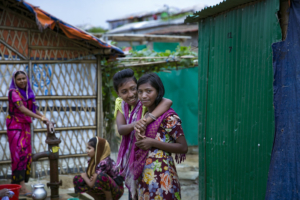
Hunger and Trauma Among Rohingya ChildrenIn the world’s largest refugee settlement in Cox’s Bazar, Bangladesh, the crisis impacting the Rohingya children is double-edged: widespread hunger and deep psychological trauma. The good news is that proven, scalable solutions range from community-run nutrition services to play-based mental health support. With sustained funding, addressing hunger and trauma among Rohingya children is not a slogan; it’s an achievable goal.

Keeping Children Alive With Integrated Nutrition Services

UNICEF and its partners operate Integrated Nutrition Facilities within the camps. There, children below the age of 5 are routinely weighed and measured, screened with MUAC colour tapes and put on treatment plans. In 2021, these facilities treated 6,923 children suffering from severe acute malnutrition.

The organization exceeded its annual target, providing ready-to-use therapeutic food, deworming treatments and follow-up care. It also offered counseling for parents on breastfeeding and complementary feeding, reaching 14,000 pregnant and lactating mothers with infant and young child feeding support. Indeed, these cost-effective, life-saving services are making a real difference.

Restoring Food Rations and Protecting Nutrition Budgets

When rations are cut, hunger spikes quickly. New International Rescue Committee (IRC) data reveal that between 2022 and 2023, the number of Rohingya refugees without adequate food jumped from 44% to 70%. Nearly half of young children displayed physical signs of malnutrition and fewer than one in six children ate three meals daily.

Restoring rations to prior levels and ensuring predictable funding would immediately blunt wasting and protect child development, whilst addressing hunger and trauma among Rohingya children.

Healing in Crisis

A large randomized controlled trial tested BRAC’s Home-Based Humanitarian Play Lab (HPL), which offered weekly peer-led sessions for Rohingya mothers and children under 2. The program significantly improved mothers’ mental well-being. It enhanced children’s developmental outcomes through simple, low-cost activities led by trained Rohingya “Mother Volunteers.” In settings where specialist care is scarce, HPL provides a practical, scalable way to deliver psychosocial support.

Similarly, BRAC’s broader Humanitarian Play Lab approach is home-based for ages 0–3 and centre-based for ages 3–5. It creates safe, culturally rooted spaces where trained Rohingya Play Leaders guide activities. These activities build language, problem-solving skills and resilience. Furthermore, evaluations in Cox’s Bazar show gains in children’s development and improvements in maternal mental health. The model is now being adapted to other countries, offering the kind of community-powered intervention donors can scale.

Furthermore, child-friendly spaces run with UNICEF support give children predictable routines to play, learn and feel safe. This is critical in protecting them from toxic stress. These hubs are also entry points for early learning, protection, nutrition and health services referrals.

Nutrition + Mental Health = Better Outcomes

None of these solutions works in isolation. In December 2021, UNICEF Bangladesh reported that one-third of Rohingya children under 5 were stunted due to poor diets and repeated illness. Combining nutrition services with caregiver counseling and play-based psychosocial support multiplies impact, helping children recover physically while stimulating their brains for long-term learning and well-being. Trained Rohingya community members are already delivering this integrated package.

– Arabella D’Aniello

Arabella is based in Toronto, Canada and focuses on Good News and Technology for The Borgen Project.

Photo: Flickr

September 2, 2025
https://borgenproject.org/wp-content/uploads/borgen-project-logo.svg 0 0 Hemant Gupta https://borgenproject.org/wp-content/uploads/borgen-project-logo.svg Hemant Gupta2025-09-02 01:30:512025-09-01 11:18:27Addressing Hunger and Trauma Among Rohingya Children
Global Poverty, Hunger, Poverty Reduction

Everything To Know About Hunger in Argentina 

Hunger in ArgentinaArgentina’s wealth was once the envy of the world. That is no longer the case. The perma–crises of the past 70 years have left the country’s economy in turmoil. Plagued by untamed inflation, poverty rates reached a 20-year high in 2024, with extreme hunger in Argentina peaking alongside it. To give a sense of the problem’s scale, a 2024 UN report found that the proportion of Argentines experiencing moderate to severe food insecurity had nearly doubled over the previous seven years, reaching 36%. A separate UNICEF report of the same year said more than 1 million children a day are skipping meals due to their families not being able to afford food. 

How Argentina Reached This Point

Hunger and poverty go hand in hand. Through the 20th century, the country that was once the jewel in Latin America’s economic crown faced an endless torrent of political instability in the form of coups, populist leaders and most devastatingly a military dictatorship. This instability left the country scarred and flailing. The financial crash of 2001 immediately dispelled any hopes that the start of the 21st century would be kinder to Argentina than the back-half of the 20th had been. The results of the crash still haunt the country today.

Inflation has been the primary bugbear of the Argentine economy. In April 2024, it surpassed a staggering 289% year-on-year. The economic libertarian Javier Milei took office in December 2023 with plans to reign in the country’s out-of-control economy. His strict austerity measures have helped pull back inflation to a five-year low, now under relative control (by Argentine standards), with prices going up just 1.5% in May. But as state spending tightened, poverty rose, as did hunger in Argentina.

In the first half of 2024, the number of Argentines living in poverty reached 52.9%, up from 41.7% in the back half of the previous year. Indec reported that the Basic Food Basket (BCA) rose by 18.6% in January 2024 and by 296.4% over the previous twelve months –– outpacing overall inflation, which stood at 254.2% over the same period. Meanwhile, the Neighborhood Price Index (IBP) from the Social, Economic and Citizen Policy Research Institute (ISEPCi) indicated that food prices surged by up to 69.7% from December 2023 to March 2024. As a result, 52% of households with children reported not purchasing essential foods due to financial hardship.

Solutions

As noted, Milei’s tight monetary controls and slashing of the state have to date been a double-edged sword. Cutting inflation was much-needed, but critics claim this approach has worsened life for Argentina’s already beleaguered lower-classes. Meanwhile, organizations like Food Banks Argentina (FBA) are working to counteract hunger in Argentina. FBA is a non-profit civil association that brings together food banks across the country. It operates in all major provinces and relies on a national network of 14,000+ volunteers to coordinate logistics, food rescue and delivery.

Through food recovery and efficient distribution, FBA provides nutritious meals to those who need them most. In 2024, it delivered more than 63 million plates of food, provided support to 4,449 social organizations and prevented the emission of more than 2 million kg of CO2 by rescuing fruits and vegetables, around 45% of which are usually wasted during production and distribution.

The Results

According to the latest national figures, Argentina’s poverty rate dropped to 38.1% in the back half of 2024. Milei has claimed this as evidence that his strict economic measures are having the desired effect. As of right now, it is too soon to say if he is right.

Regardless, Argentina’s extreme poverty –– and by proxy its extreme hunger –– is not going to disappear overnight as the result of any one measure or the work of any one organization. Any long-term solution to hunger in Argentina will require a multi-pronged approach that pairs sustained economic stability with robust social safety nets and stronger support for local initiatives fighting food insecurity on the ground. Organizations like FBA will play a pivotal part in that.

– Robert Darke

Robert is based in London, UK and focuses on Global Health and Politics for The Borgen Project.

Photo: Unsplash

August 18, 2025
https://borgenproject.org/wp-content/uploads/borgen-project-logo.svg 0 0 Jennifer Philipp https://borgenproject.org/wp-content/uploads/borgen-project-logo.svg Jennifer Philipp2025-08-18 03:00:292025-08-17 12:41:54Everything To Know About Hunger in Argentina 
Food Insecurity, Global Poverty, Hunger

Tackling Food Waste In Indonesia

Food Waste In IndonesiaAccording to the 2025 International Database Census, Indonesia has the fourth-largest population globally, with more than 283 million people living in the lush “Emerald of the Equator.” Compared to other populated nations in Asia, like India or Bangladesh, Indonesia has a relatively low population density—aside from the island of Java—with civilians spread across the different provinces of the archipelago. That said, Indonesia still has the highest population among the member states of the Association of Southeast Asian Nations (ASEAN), creating both challenges and opportunities for sustainable living.

Historically, Indonesia has had difficulty maintaining a sustainable relationship with food consumption, as well as with lumber, fossil fuels, land use and water. Even though Indonesia may appear to have enough resources to provide for everyone, more than 8% of its population—about 24 million people—lives in poverty. While facing numerous ecological issues and overconsumption, Indonesian federal policymakers have attempted to address these problems while managing other environmental challenges that have arisen in recent years.

Causes of Food Waste in Indonesia

On the surface, food waste may seem like an issue that can be tackled easily. However, many developed nations, especially the most populated ones, have had continuous trouble adapting to cultural factors, logistical issues and faulty manufacturing. For Indonesia specifically, these issues, along with harvest losses and the country’s climate, speed up the process of food waste compared to other nations.

Harvest loss is a detrimental issue for Indonesian produce farmers because significant amounts of their crops are lost before reaching the market due to a lack of access to modern technologies for harvesting, processing and storing crops. When these crops face exposure to Indonesia’s constant humid climate, the conditions quickly cause spoilage, either before or after they reach a retailer.

When citizens of Indonesia search for produce at vendors or markets, perceptions of food quality often influence high food waste. Much of consumer behavior has progressively been influenced by Western consumption patterns that suggest a lack of interest in food that may not appear aesthetically pleasing, leading to the discarding of large amounts of food. Unfortunately, this cultural phenomenon of waste does not only reside on the individual level.

According to information reported by news portal Tempo, the biggest contribution to wasted food comes from hotels, restaurants, catering, supermarkets and the behavior of people who like to leave their food. Aksamala Foundation research results in 2016 showed that 35% of restaurants in Jakarta throw away excess unsold food per day, with an average of 2-3 kilograms per restaurant. 

Consequences of Food Waste

Plenty of consequences have emerged from overconsumption, most notably food insecurity. When retailers have limited access to fresh produce or when produce spoils quickly, prices can rise due to supply issues. Although Indonesia may remain one of the world’s largest food producers, the amount of waste, if managed properly, can meet the food needs of more than 3 billion people; it still faces challenges within its supply chain when delivering food to those in impoverished areas who require immediate access to quality nourishment. Environmental and economic impacts are the two other major consequences of food waste.

The World Bank assessed in 2019 that Indonesia lost $29 billion in one year due to food waste. Furthermore, the Food and Agriculture Organization (FAO) has conducted a study that food waste accounts for 8% of greenhouse gas emissions, not to mention the amount of natural resources that go to waste when growing produce that immediately gets thrown out.

Spearheading a Sustainable Change

As of 2024, Indonesia has lowered its food waste per capita to 51.95 kg, compared to 2021 when the waste per capita was 75.66 kg. When tackling these issues, Indonesia relied on technological and digitalization methods, including artificial intelligence (AI) networks that can identify patterns, predict the molecular structure of bioactive compounds and predict the expiration of a commodity.

Other methods, such as data systems, have proven useful when tracking produce in transport from rural to urban areas, ensuring appropriate preservation. If an issue arises in the supply chain, it becomes easier to isolate and resolve. Many other traditional strategies carried out among the public consist of encouraging community efforts toward upcycling organic and non-organic waste through individual efforts or organizations like Waste4Change, supporting the country’s goals for a more sustainable future.

– Sam Barbagallo

Sam is based in Tewksbury, MA, USA and focuses on Good News and Technology for The Borgen Project.

Photo: Flickr

August 7, 2025
https://borgenproject.org/wp-content/uploads/borgen-project-logo.svg 0 0 Precious Sheidu https://borgenproject.org/wp-content/uploads/borgen-project-logo.svg Precious Sheidu2025-08-07 03:00:312025-08-06 16:19:08Tackling Food Waste In Indonesia
Children, Global Poverty, Hunger

Driving Down Child Malnutrition in Sudan: Life-Saving Peanut Paste

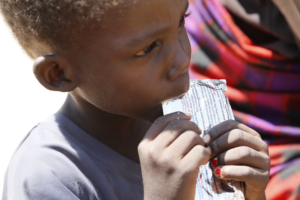
Peanut PasteTwo-year-old Alfred arrived at a UNICEF stabilization ward in Juba with an arm circumference far into the red zone of severe acute malnutrition (SAM). Eight weeks later, he walked out the door with a sachet of life-saving peanut paste in Sudan, beaming for the first time in months. This story reveals proof that a simple nut-based food can tip the scales between life and death for Sudanese children.

Child Malnutrition in Sudan

Sudan and South Sudan together form one of the world’s hungriest corridors. The conflict has displaced millions; crop failures have destroyed harvests and inflation has made staple foods unattainable. Insecurity has also crippled supply chains and closed health clinics, limiting access to screening, early treatment and food aid in the hardest-hit regions like Darfur and Upper Nile.

In July–August 2024, unprecedented floods across Sudan destroyed nearly 205,500 acres of farmland and displaced more than 44,000 people. This wiped out entire cropping seasons, deepening food shortages and pushing thousands more children into malnutrition.

According to UNICEF, more than two million children aged below 5 suffer from malnutrition, with 522,000 experiencing SAM. However, some actions can be taken: outpatient programs using ready-to-use therapeutic food (RUTF) routinely achieve 90% recovery rates.

What Exactly is in a Sachet?

RUTF is a blend of roasted peanuts, powdered milk, sugar, vegetable oil, vitamins and minerals sealed in a foil pouch. Since the product is energy-dense, has excellent shelf stability and requires no water or cooking, caregivers can administer the full treatment at home.

This not only frees up overwhelmed hospital beds but also shields children from unsafe water sources and health facility overcrowding. Nutritionists call it “medicine you can eat,” and parents know it simply as Sudan’s life-saving peanut paste. One 92-gram sachet supplies more than 500 kcal and a full day’s micronutrients.

Proven Results

  • Affordable. A six- to eight-week SAM treatment course costs about $69, far lower than prolonged inpatient care.
  • Mass impact. In crisis zones like Sudan, these sachets have enabled community-level treatment, reaching more children with fewer resources.
  • Fast recovery. Children with SAM often show dramatic improvement in just a few days of RUTF use, regaining strength, appetite and energy.

Every foil packet of life-saving peanut paste in Sudan delivers food and medicine in one lightweight dose, a huge advantage as clinics are distant and clean water is scarce.

The Takeaway

A single peanut pack has become the strongest shield against child malnutrition in Sudan. Alfred’s recovery exhibits that children survive and thrive when resources, farmers and determined mothers converge around a foil packet.

– Arabella D’Aniello

Arabella is based in Toronto, Canada and focuses on Good News and Technology for The Borgen Project.

Photo: Flickr

August 4, 2025
https://borgenproject.org/wp-content/uploads/borgen-project-logo.svg 0 0 Hemant Gupta https://borgenproject.org/wp-content/uploads/borgen-project-logo.svg Hemant Gupta2025-08-04 14:00:012025-08-04 13:34:30Driving Down Child Malnutrition in Sudan: Life-Saving Peanut Paste
Food Insecurity, Global Poverty, Hunger

Everything To Know About Hunger in Dominican Republic

Hunger in Dominican RepublicDespite decades of stable economic growth, hunger in the Dominican Republic remains an issue. Almost 5% of the population experiences undernourishment (ranking 92nd), and approximately 35% of the population faces moderate food insecurity. However, the rate of undernourishment has been on a steady decline for decades falling from 23% in 2004.

The Facts

In 2024, the Dominican Republic ranked 41st out of 127 countries on the Global Hunger Index. The index gave the Dominican Republic a score of 7.8 which they consider to be a “low” ranking. The hunger index is calculated using a weighted score of four categories: undernourishment, child stunting, child wasting and child mortality. The Dominican Republic has steadily decreased their Global Hunger Index score falling from a “moderate” hunger score of 15 in the year 2000.

The percentage of undernourished increases among those under the age of 5 to 7%. Anemia affects 61% of children aged between 6 and 11 months. Children have a higher health risk when exposed to the dangers of malnutrition. It can have many long-term effects on developing children, and in severe cases even cause death.

The World Food Programme (WFP) estimated that one out of three households in the Dominican Republic lacked access to a nutritious diet. However, food insecurity is most intense among those households facing extreme poverty, or the immediate fallout of a natural disaster.

The Why

Poverty, a weak agricultural structure, and natural disasters are the driving factors of hunger in the Dominican Republic. There is a strong correlation between poverty and food insecurity. Impoverished individuals often forgo meals in order to provide for children, pay bills or simply due to a lack of access. Natural disasters disrupt an already tenuous food system on the Caribbean island by destroying crops, flooding agricultural lands and drought.

Facts About Poverty in the Dominican Republic

The Dominican Republic is an upper-middle-income country and ranks 98 out of 189 countries on the Human Development Index. About 23% of the population lives on less than $6.85 USD per day. Approximately 3% of the population is living in extreme poverty. The financial strain of poverty exacerbates the difficulties of food insecurity by reducing purchasing power.

Natural Disasters

The Dominican Republic has experienced extreme storms and hurricanes, sometimes followed by intense droughts. This extreme weather destroys crops, and disrupts their food system. The global Climate Risk Index ranked the Dominican Republic number eight out of the 10 countries most at risk of extreme climatic events.

The country’s poor are the most vulnerable to these extreme weather events because they rely on small-scale agriculture for their livelihoods and sustenance. For example 90% of the direct-victims of storms Olga and Noel were under the poverty line.

The Good News

The Dominican Republic has experienced significant economic development in recent years averaging 5% growth in the last five years. This has lifted almost 3 million people out of poverty within the country.

The World Bank expected the Dominican Republic’s economy to grow by 4% in 2025. This economic growth is going to be key in the country’s financial ability to ameliorate the effects of increasing extreme weather events, and continuing to reduce poverty.

Solutions

Hunger in the Dominican Republic has been on the decline in recent decades. This is due, in no small part, to the work of NGOs like the World Food Programme (WFP). The WFP has a strategy of investing in the country to improve in three key sectors. It is:

  • Improving the quality of basic public services such as energy, water, social protection and health.
  • Increasing the number of high-quality jobs.
  • Increasing climate resilience.

The entire WFP budget for Dominican Republic programs it implements amounts to $1.89 billion. This funding has had a massive impact on hunger in the Dominican Republic by alleviating poverty and providing basic services. Since 2017, 1.3 million households have received cash assistance for health care, cement has replaced 9,000 dirt floors and 27,000 Dominicans have received job/business training.

Foreign aid, and the work of NGOs, are essential to the continued economic growth of the Dominican Republic. Sustaining a growing economy within the Dominican Republic is the key to eliminating hunger in the Dominican Republic.  

– Justin Doyle

Justin is based in Kamloops, BC, Canada and focuses on Global Health and Politics for The Borgen Project.

Photo: Unsplash

July 31, 2025
https://borgenproject.org/wp-content/uploads/borgen-project-logo.svg 0 0 Jennifer Philipp https://borgenproject.org/wp-content/uploads/borgen-project-logo.svg Jennifer Philipp2025-07-31 01:30:242025-07-31 01:25:28Everything To Know About Hunger in Dominican Republic
Children, Global Poverty, Hunger

#67Strong4Kids: Jennifer Garner Takes Strides of Hope

#67Strong4KidsJennifer Garner, an actress and Save the Children trustee, ran 67 miles in a powerful show of support for the organization’s global efforts to treat children suffering from malnutrition. Garner ran a mile each day for 67 days through the #67Strong4Kids campaign, a fundraising challenge to raise awareness for the $67 it would take to support a child with malnutrition. The challenge was to raise awareness of the costs to provide a complete, six-week course of therapeutic food that could save the life of a severely malnourished child.

Garner has been working as a Save the Children artist ambassador for more than a decade. On Sunday, June 22, she was joined in Santa Monica, California, by Peloton instructor Becs Gentry and hundreds of supporters who took strides of hope to raise awareness and funds for children suffering from malnutrition. This was the final stretch of the run, sponsored by Brooks Running. The attendance was to support the charity’s efforts to provide ready-to-use therapeutic food (RUTF) to children in danger of going hungry globally.

“I’m feeling emotional and just really grateful — grateful to people for seeing what I was doing and either joining in or cheering me on,” says Garner. “It just feels like a nice intention to be out there.”

Child Malnutrition

Around the world, one in five deaths among children aged below 5 is associated with severe acute malnutrition. This condition can cause permanent damage to children’s physical and cognitive development and make them more susceptible to illness.

Garner says, “With climate disruptions, conflict and inequality, more children than ever are suffering from the effects of severe malnutrition, a condition that is preventable and treatable. Our 67 runs may be behind us, but the race for kids’ futures is ongoing. Together, we can help. For only $67, a child can receive a six-week course of RUTF and along with it, a chance at a healthier future. Thank you for partnering with Save the Children by joining with Becs Gentry and me. You are part of the solution!”

As of June 22, the #67Strong4Kids campaign has raised $500,000 to support severely malnourished kids globally.

Garner’s Advocacy Efforts

Garner has advocated on Capitol Hill and brought Save the Children’s early childhood education programs to her state of West Virginia. She traveled to Arkansas, California, Kentucky, Mississippi, South Carolina, Tennessee and Washington to meet with lawmakers, press and philanthropists to raise awareness for the foundation.

Conclusion

Jennifer Garner shared that her decision to run every day “was a small promise that I could keep to myself every day, but would be meaningful for me.” She has set a groundbreaking example by taking strides of hope, where each stride counts.

Her drive to take initiative and accept the #67Strong4Kids challenge has inspired countless runners and fans. Through all of its participants, Save the Children has acquired some of the resources needed to support malnourished children globally.

– Abirame Shanthakumar

Abirame is based in Ontario, Canada and focuses on Celebs for The Borgen Project.

Photo: Wikimedia Commons

July 29, 2025
https://borgenproject.org/wp-content/uploads/borgen-project-logo.svg 0 0 Hemant Gupta https://borgenproject.org/wp-content/uploads/borgen-project-logo.svg Hemant Gupta2025-07-29 07:30:562025-07-29 01:35:59#67Strong4Kids: Jennifer Garner Takes Strides of Hope
Food Aid, Food Insecurity, Global Poverty, Hunger

Addressing Food Insecurity in Honduras: The CELAC 2030 Plan

Addressing Food Insecurity in Honduras Under the CELAC 2030 Plan The Community of Latin American and Caribbean States (CELAC) launched the Plan for Food Security, Nutrition and the Eradication of Hunger 2030 in 2024. With 33 countries participating, the project aims to tackle food insecurity and reinforce commitment to ending hunger.

As 43 million people—approximately 7% of the population—are still malnourished in the Latin American and Caribbean (LAC) region, CELAC emphasizes the right to food as a priority. Accordingly, the CELAC 2030 plan encourages governments to implement national policies that legally recognize the right to food as a human right. The plan is to further drive policies that allow sustainable food growth, access to adequate nutrition and support for local family farming. 

In March 2025, 26 countries met in Honduras to assess progress on the CELAC 2030 plan and launch the Food Security and Nutrition Platform to strengthen commitment. With the support of the FAO, World Food Programme and Inter-American Development Bank (IDB), the platform is expected to hold states accountable more effectively. With these continuous efforts, food insecurity has decreased over the past two years despite challenges from extreme weather. In line with this global movement and the CELAC 2023 plan framework, Honduras, one of the poorest countries on the continent, has also taken notable steps.

Efforts to Combat Food Insecurity in Honduras

With the national poverty rate at 64% and more than half of the population living in extreme poverty, 1.5 million people in Honduras suffer from food insecurity. Frequent climate shocks such as drought, flood and hurricane have also contributed to Honduras experiencing the highest increase in food insecurity in the LAC region over the past decade.

Another contributing factor is the structure of the agricultural sector. Only a small number of large-scale farmers grow competitive crops that dominate exports, while most farms are small-scale, producing primarily for personal consumption. As an example, 95% of coffee farms in Honduras practise family farming, with many struggling to access broader markets to earn sustainable incomes. In response, the Honduran Minister of Agriculture held the first CELAC coffee summit in 2024. This helped small-scale farmers gain access to bigger markets as it improved the local economy and expanded market opportunities. Honduras has also invested in agricultural research and technology to increase productivity and encourage sustainable farming.

Supporting Organizations

The World Food Programme (WFP) has supported these efforts by training smallholder farmers on how to access bigger markets and promoting local and sustainable food businesses. Additionally, it has assisted in disaster risk management, providing resources to prevent and respond to extreme weather. According to the WFP’s latest annual report, this support has directly benefited 1.4 million people and an additional 2.2 million people indirectly.

The Parliamentary Front Against Hunger has also played a role in addressing food insecurity. It has been involved in meetings regarding the CELAC 2030 plan, where it promoted stronger legislation and monitoring mechanisms and ways to improve resource allocation. Specifically in Honduras, its regional Parliamentary Front Against Hunger has supported various legislation to legally recognize and protect the right to food.

Looking Ahead

The CELAC 2030 Plan has set a clear roadmap to combat hunger and improve nutrition across the LAC region. This framework has also helped address food insecurity in Honduras through efforts such as supporting smallholder farmers, improving responses to climate-related challenges and introducing right-to-food legislation. While challenges remain, coordinated regional efforts like CELAC and the ongoing efforts of the Honduran government can potentially drive progress toward a more food-secure future.

– Lucy Cho

Lucy is based in Edinburgh, UK and focuses on Good News and Politics for The Borgen Project.

Photo: Unsplash

July 29, 2025
https://borgenproject.org/wp-content/uploads/borgen-project-logo.svg 0 0 Precious Sheidu https://borgenproject.org/wp-content/uploads/borgen-project-logo.svg Precious Sheidu2025-07-29 01:30:422025-07-28 17:00:51Addressing Food Insecurity in Honduras: The CELAC 2030 Plan
Food Insecurity, Global Poverty, Hunger

Everything to Know About Hunger in the Czech Republic 

Hunger in the Czech RepublicAfter decades of food insecurity, the Czech Republic underwent a remarkable transformation. Today, Czechia ranks among the nations with lowest levels of hunger worldwide – reporting 2.5% food insecurity and a poverty rate of 0.3% as of 2020. Everything to know about hunger in the Czech Republic begins with understanding how its past shaped its present. 

A Great Leap Backward 

The Communist Party of Czechoslovakia (KSČ) assumed power in February 1948. KSČ  nationalized private enterprises, prioritized heavy industry and reoriented trade. The Soviet model of central planning went hand in hand with limited innovation and perverse incentives.

Over the next 40 years, Czechoslovakia experienced a rare phenomenon of de-development. The 1961-65 period witnessed virtual economic stagnation and food shortages, as output for beef, pork and meat struggled to meet plan targets. Agriculture recorded poor performance between 1975 and 1980. A world recession, high input prices and restrictive domestic policies led to stagnation by the mid 1980s.

Unrest over economic growth and material conditions pushed out Communist regimes across East and Central Europe in 1989. Late to jump onto the bandwagon, Czechoslovak planners managed to keep food supplies in stores, delaying and defusing public discontent. The KSČ often compared Czechoslovak living standards to Poland and Hungary, where citizens stood in long lines for simple groceries, to dismiss demands for regime change.

A Return to Europe

The velvet revolution hit Czechoslovakia in November 1989, ushering in a liberal government. After implementing reforms for a market economy and parliamentary democracy, Czechoslovakia pursued a “return to Europe.” The President Václav Havel not only emphasized the benefits of European integration for Czechoslovakia, but demonstrated an impulse to join the EU to lend a hand to global security: “We can approach the richer nations of Western Europe, not as poor failures or helpless, recently amnestied prisoners, but as countries that can make a genuine contribution.” Czechia achieved membership of NATO in 1999 and the European Union (EU) in 2004.

Everything to know about hunger in the Czech Republic includes understanding how EU membership drove economic improvement and food security. The EU’s Cohesion Policy directed European funds to help Czechia’s development needs in four main areas: entrepreneurship and employment, research and education, the environment and transport. From 2014 to 2020, Czechia distributed funding across 10 operational programs. It invested 10% in the Rural Development Programme (RDP), 18% in Enterprise and Innovation, 12% in OP Research, Development and Education and 9% in OP Employment.

The EU’s Common Agricultural Policy (CAP) directed European funds to encourage a sustainable, resilient and diversified agricultural sector. Around 78% of the Czech population live in rural areas. The European Commission approved a CAP Strategic Plan for Czechia in November 2022. The Plan seeks to support Czech farmers and raise rural living standards. For the 2023-2027 period, Czechia can invest CZK 200 billion in direct payments, rural development and common market organization.

National Policies and Reforms

The Czech Ministry of Agriculture seeks to maintain normal levels of agricultural and food production. The Ministry petitioned the Czech government to increase funds for the Support and Guarantee Agricultural and Forestry Fund (PGRLF) and the RDP in March 2020. The PGRLF will receive CZK 1 billion and the RDP will get CZK 3.3 billion.

Czechia’s RDP focuses on sustainable farming practices and the management of natural resources. The second priority is increasing the competitiveness of agriculture and forestry as well as the food industry. It provides investment support to farms and creates new jobs to boost the rural economy.

The Ministry collaborates with the State Agricultural Intervention Fund (SZIF) to administer CAP’s direct payments, rural development and common market organization measures. The SZIF also manages national agricultural subsidies, OP Fisheries and food quality labels. The latter aims to promote organic farming products and improve the overall standard of food on shelves.

Global Anti-Hunger Effort

Along with 184 countries, Czechia committed to eliminating hunger and achieving food security at the World Food Summit in 1996. Minister for Agriculture Jan Fencl organized a follow-up meeting in 2002 to affirm the key objective to end extreme hunger and poverty. Fencl emphasized the Food and Agricultural Organization (FAO) as mediator and coordinator of mutual cooperation between countries. He also endorsed the concept of a global Alliance Against Hunger.

After 20+ years of democratic and economic development, Czechia now provides official development assistance (ODA) to a host of countries. Afghanistan, Moldova, Mongolia, Bosnia and Herzegovina and Ethiopia are the largest recipients of Czech ODA in 2012. Czechia allocated 19% of its bilateral ODA to agriculture and water supply. This helps ensure access to quality and basic food and water.

With Prosperity Comes Responsibility

Czechia recently achieved a high Global Food Security Index (GFSI). After analyzing food availability, quality and safety in 113 countries, the Economist Impact Report ranked Czechia 16th in GFSI in 2022 with 77.7 points. 

The work is not done. While the Czech government accomplished great strides domestically, its contribution toward global food security is underdeveloped. A step in the right direction, Czechia joined the Global Alliance Against Hunger and Poverty in February 2025. The Alliance aims to accelerate efforts to implement the Sustainable Development Goals (SDGs) 1 (No Poverty) and 2 (Zero Hunger).

Everything to know about hunger in the Czech Republic extends beyond its borders. While Czechia’s commitment to the Alliance demonstrates its recognition of the value of food security and nutrition, it can do more to align with international goals on hunger. 

– Alessandra Lewis

Alessandra is based in Westport, CT, USA and focuses on Business and Politics for The Borgen Project.

Photo: Unsplash

July 25, 2025
https://borgenproject.org/wp-content/uploads/borgen-project-logo.svg 0 0 Jennifer Philipp https://borgenproject.org/wp-content/uploads/borgen-project-logo.svg Jennifer Philipp2025-07-25 01:30:452025-07-24 11:49:28Everything to Know About Hunger in the Czech Republic 
Global Poverty, Hunger

CDB and the Global Alliance Against Hunger and Poverty

Global Alliance Against Hunger and PovertyThe Caribbean Development Bank (CDB) is a banking organization that is under the Board of Governors with a mission of reducing poverty and transforming lives through sustainable, resilient and inclusive development. Thus, providing a system for member Caribbean nations to borrow from and lend the necessary funding for developing their economies through the production and trade of resources. CDB was formed on Oct. 18, 1969, in Kingston, Jamaica and commenced operations the following year.

After electing its newest president in 2025, Daniel Best, the CDB is working to address geopolitical tensions and shifting financial conditions, while approving a historic $460 million from the Special Development Fund — an amount intended to sustain the organization for three years. Best is intending to start in his newly appointed position, hitting the ground running by looking to introduce three new financial products to support a just green transition and reduce investment risk for the private sector. Furthermore, he’s made it an utmost priority to address the United Nations (U.N.)  Sustainable Development Goals (SDGs) 1 and 2 by joining the Global Alliance Against Hunger and Poverty.

Integration with the Global Alliance Against Hunger and Poverty

The Global Alliance Against Hunger and Poverty is a governance structure that focuses on accelerating the achievement of specifically SDG 1 and 2—No Poverty (1) and Zero Hunger (2). Many board members of the CDB have reached out to the press, explaining that the organization sought to join the Global Alliance Against Hunger to address globalized poverty and food insecurity through sustainable agricultural practices. In addition, this decision could enhance domestic lives in the Caribbean by working with international programs and partners incorporated with the Global Alliance Against Hunger and Poverty.

Before publicly joining this fight alongside such an established organization, the CDB pledged to support the Alliance’s objectives through knowledge sharing, ethical engagement and the development of solutions tailored to the needs of vulnerable communities, including Indigenous populations and tribal groups. Both governance bodies have been made aware of the disproportionate poverty indigenous populations experience in not just the Caribbean, but all of Latin America. Of the 42 million Indigenous people living in the region, 43% live in poverty — more than twice the rate of non-Indigenous populations in Latin America — deepening their underrepresentation in areas such as the humanities and politics, according to Elizabeth Wong’s article Indigenous Erasure and Resistance in the Caribbean. Fortunately, the CDB and Global Alliance Against Hunger and Poverty are exploring strategies on how to address this long-established systematic oppression.

Furthering Progress

While addressing domestic issues with support from international partners is a strength of the Caribbean Development Bank, the organization also maintains a mutual aid agreement to advance the SDGs abroad. However, this task could be a lot more challenging, as in the last year, the World Bank has found a divergence in SDG 1 and SDG 2—which primarily have a close correlation with one another—in the past one to two decades. This could mean several things, ranging from poor or outdated data and analysis tools or genuine economic gaps in certain countries.

Moving Forward

The CDB appears to be in a position to be a key contributor in providing aid to address the issue and resolve weaker data systems among affected nations. As a region that many consider data poor, the integration of new data systems—if the U.N. can successfully achieve this—could improve the region’s capacity to properly track poor and malnourished environments. This could legitimize the organization’s influence, effectively resulting in its global expansion to provide improved analysis measures for more data-poor nations and regions.

– Sam Barbagallo

Sam is based in Tewksbury, MA USA and focuses on Business and Good News for The Borgen Project.

Photo: Flickr

July 16, 2025
https://borgenproject.org/wp-content/uploads/borgen-project-logo.svg 0 0 Precious Sheidu https://borgenproject.org/wp-content/uploads/borgen-project-logo.svg Precious Sheidu2025-07-16 01:30:352025-07-15 13:19:16CDB and the Global Alliance Against Hunger and Poverty
Education, Global Poverty, Hunger

Being Poor in Sudan

Being Poor in SudanBeing poor in Sudan is a reality shaped by a deep-rooted, complex issue that internal conflict and political instability have worsened. According to the World Bank, 46.5% of the population lives below the national poverty line.

Historical Context and Conflict

Sudan has struggled with internal conflicts for a substantial portion of its history, from the Mahdist Revolution (1881-1898) to the Sudanese Civil War (2023-present). These conflicts have driven many innocent bystanders into extreme poverty and deprivation. The current Civil War officially broke out on April 15, 2023, when a power struggle between two rival factions of the military triggered the conflict. The Sudanese Armed Forces (SAF), led by General Abdel Fattah al-Burhan, and the Rapid Support Forces (RSF), led by Mohamed Hamdan Dagalo, were at the center of this struggle. This conflict has rapidly escalated into one of the worst humanitarian crises in the world.

The Hunger Crisis

The effects of these long-standing conflicts have led to lasting damage to the country’s stability, devastating Sudanese infrastructure and agricultural lands. According to the nonprofit organization Action Against Hunger, 24.8 million people are living in food poverty and need aid, alongside hundreds of thousands living in famine-like conditions. This is nearly half of the population.

Hyperinflation has further exacerbated the hunger crisis. According to the International Monetary Fund (IMF), the annual inflation rate reached an astonishing 359% in 2021. Additionally, IMF data shows that businesses and traders raised prices by 200% last year. Sudanese citizens now struggle to find basic food staples like sorghum, rice, beans and sugar due to scarcity and high prices.

Unemployment and Economic Collapse

Being poor in Sudan means facing a daily reality of unemployment as ongoing conflict has led to the job market and economy crashing down. Before the war, unemployment rates in Sudan were already high. Since 2023, these rates have only increased. According to the International Food Policy Research Institute (IFPRI), the Civil War contributed to the estimated loss of more than 5 million jobs and $5 billion in Sudan’s economy in the first year of the war.

Education Crisis

The conflict has severely disrupted access to education. The conflict has destroyed or repurposed schools and has forced millions of children out of education. International organizations have made significant efforts to solve this problem. UNICEF has launched a ‘learning passport,’ delivering education through digital platforms. This initiative has reached more than 12,000 children around Sudan.

The Global Partnership for Education (GPE) has also launched multi-million dollar packages to assist with education, ensuring that all children can access education even during crises, by helping train teachers and distributing various materials. These packages have helped more than 285,000 children in Sudan.

International Developments, Positive Progress and Aid

Amidst all this seemingly negative news, there have been substantial efforts to progress, alongside these education initiatives to help fight being poor in Sudan. Many major international organizations have committed to helping in relief efforts:

  • The United Nations and UNHCR are both working to provide refugees and internationally displaced people with crucial protection services and emergency supplies.
  • Action Against Hunger works in regions that are facing extreme poverty. While it faces many security issues, the team tries their best to assist with food, water, hygiene and sanitation. According to this organization, it managed to provide 180,000 people with essential aid in a single year.

Looking Ahead

Being poor in Sudan today means struggling with hunger, unemployment, lack of education and ongoing displacement. The compounded effects of war, economic instability and food scarcity have fabricated a humanitarian emergency. However, the work of international aid agencies and education initiatives brings a glimmer of hope for millions of these vulnerable Sudanese citizens.

– Emma Dornan

Emma is based in Fife, Scotland and focuses on Good News for The Borgen Project.

Photo: Flickr

July 16, 2025
https://borgenproject.org/wp-content/uploads/borgen-project-logo.svg 0 0 Jennifer Philipp https://borgenproject.org/wp-content/uploads/borgen-project-logo.svg Jennifer Philipp2025-07-16 01:30:102025-07-15 13:11:49Being Poor in Sudan
Page 5 of 71«‹34567›»

Get Smarter

  • Global Poverty 101
  • Global Poverty… The Good News
  • Global Poverty & U.S. Jobs
  • Global Poverty and National Security
  • Innovative Solutions to Poverty
  • Global Poverty & Aid FAQ’s
Search Search

Take Action

  • Call Congress
  • Email Congress
  • Donate
  • 30 Ways to Help
  • Volunteer Ops
  • Internships
  • Courses & Certificates
  • The Podcast
Borgen Project

“The Borgen Project is an incredible nonprofit organization that is addressing poverty and hunger and working towards ending them.”

-The Huffington Post

Inside The Borgen Project

  • Contact
  • About
  • Financials
  • President
  • Board of Directors
  • Board of Advisors

International Links

  • UK Email Parliament
  • UK Donate
  • Canada Email Parliament

Get Smarter

  • Global Poverty 101
  • Global Poverty… The Good News
  • Global Poverty & U.S. Jobs
  • Global Poverty and National Security
  • Innovative Solutions to Poverty
  • Global Poverty & Aid FAQ’s

Ways to Help

  • Call Congress
  • Email Congress
  • Donate
  • 30 Ways to Help
  • Volunteer Ops
  • Internships
  • Courses & Certificates
  • The Podcast
Scroll to top Scroll to top Scroll to top