Driving Down Child Malnutrition in Sudan: Life-Saving Peanut Paste
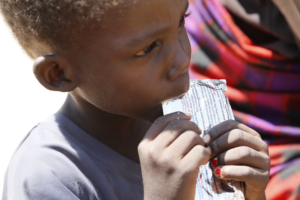 Two-year-old Alfred arrived at a UNICEF stabilization ward in Juba with an arm circumference far into the red zone of severe acute malnutrition (SAM). Eight weeks later, he walked out the door with a sachet of life-saving peanut paste in Sudan, beaming for the first time in months. This story reveals proof that a simple nut-based food can tip the scales between life and death for Sudanese children.
Child Malnutrition in Sudan
Sudan and South Sudan together form one of the world’s hungriest corridors. The conflict has displaced millions; crop failures have destroyed harvests and inflation has made staple foods unattainable. Insecurity has also crippled supply chains and closed health clinics, limiting access to screening, early treatment and food aid in the hardest-hit regions like Darfur and Upper Nile.
In July–August 2024, unprecedented floods across Sudan destroyed nearly 205,500 acres of farmland and displaced more than 44,000 people. This wiped out entire cropping seasons, deepening food shortages and pushing thousands more children into malnutrition.
According to UNICEF, more than two million children aged below 5 suffer from malnutrition, with 522,000 experiencing SAM. However, some actions can be taken: outpatient programs using ready-to-use therapeutic food (RUTF) routinely achieve 90% recovery rates.
What Exactly is in a Sachet?
RUTF is a blend of roasted peanuts, powdered milk, sugar, vegetable oil, vitamins and minerals sealed in a foil pouch. Since the product is energy-dense, has excellent shelf stability and requires no water or cooking, caregivers can administer the full treatment at home.
This not only frees up overwhelmed hospital beds but also shields children from unsafe water sources and health facility overcrowding. Nutritionists call it “medicine you can eat,” and parents know it simply as Sudan’s life-saving peanut paste. One 92-gram sachet supplies more than 500 kcal and a full day’s micronutrients.
Proven Results
- Affordable. A six- to eight-week SAM treatment course costs about $69, far lower than prolonged inpatient care.
- Mass impact. In crisis zones like Sudan, these sachets have enabled community-level treatment, reaching more children with fewer resources.
- Fast recovery. Children with SAM often show dramatic improvement in just a few days of RUTF use, regaining strength, appetite and energy.
Every foil packet of life-saving peanut paste in Sudan delivers food and medicine in one lightweight dose, a huge advantage as clinics are distant and clean water is scarce.
The Takeaway
A single peanut pack has become the strongest shield against child malnutrition in Sudan. Alfred’s recovery exhibits that children survive and thrive when resources, farmers and determined mothers converge around a foil packet.
– Arabella D’Aniello
Arabella is based in Toronto, Canada and focuses on Good News and Technology for The Borgen Project.
Photo: Flickr
