• Link to X
  • Link to Facebook
  • Link to Instagram
  • Link to TikTok
  • Link to Youtube
  • About
    • About Us
      • President
      • Board of Directors
      • Board of Advisors
      • Financials
      • Our Methodology
      • Success Tracker
      • Contact
  • Act Now
    • 30 Ways to Help
      • Email Congress
      • Call Congress
      • Volunteer
      • Courses & Certificates
      • Be a Donor
    • Internships
      • In-Office Internships
      • Remote Internships
    • Legislation
      • Politics 101
  • The Blog
  • The Podcast
  • Magazine
  • Donate
  • Click to open the search input field Click to open the search input field Search
  • Menu Menu

Archive for category: Hunger

Food & Hunger, Food Security, Global Poverty, Hunger

How to End Hunger

Saharan African
Between 2015 and 2016, world hunger rose by 20 million people, according to most recent estimates released in a 2016 U.N. report. This issue affects 815 million people worldwide. The single biggest cause of hunger is poverty, but there are also other heavily contributed factors. Since the turn of the century, food production has outpaced population growth, and the world now produces enough food to feed 1.5x the global population. The question of how to end hunger stretches beyond simply farming more effectively. To end hunger, we have to address the issue as more than a supply-demand deficiency.

Poverty

Only 11 percent of world hunger comes from developed countries; by far, the regions most afflicted by hunger are middle- and lower-income. In 2016, 22.7 percent of Sub-Saharan Africans were reported as malnourished. For those living on less than $2 per day, food can be too expensive to maintain a healthy diet. Economic hardship is further expounded by a lack of education and inadequate access to basic needs such as food, potable water and shelter. In this context, poverty and hunger have a cyclical nature. To reduce poverty, you have to reduce hunger and to reduce hunger, you have to reduce poverty. Take a look here to see how the Borgen Project plans to end poverty.

Armed Conflicts and Political Instability

Poverty is not the only factor in global hunger. Armed conflicts and political instability play a major role in keeping food out of hungry mouths. In recent years, conflicts have been rising, which may correspond to the increase of worldwide malnourished people.

War has also increasingly occurred in regions already vulnerable to disease and malnourishment, such as sub-Saharan and Eastern Africa. For example, South Sudan has been the site of a civil war since 2013. In 2017, the fighting played a major role in South Sudan undergoing the first declared famine in six years. Six million people (one in three residents of South Sudan) have been declared severely food insecure.

Violence takes away human capital, removing productive people from countries that need this capital the most. War destroys infrastructure, disrupts children’s schooling and creates more refugees. Peace is no easy task, but it’s a necessary one to achieve food security for all.

Steps Toward Ending World Hunger

The search for how to end hunger continues, despite the recent setbacks. Humanitarian organizations, such as Cooperative for Assistance and Relief Everywhere (CARE) have worked hard to fight hunger and alleviate the problems associated with it. CARE works in 94 countries and impacts 80 million people worldwide.

Other organizations have developed more atypical answers of how to end hunger. Freedom From Hunger, a charitable organization dedicated to ending world hunger through economic empowerment, has instituted savings and micro-financing programs to people at risk of food insecurity. The goal of these programs is to help people plan for the future and pull themselves out of poverty through education, financial services and monetary savings.

The road to ending hunger will be long and hard. There will be more setbacks, but at the end of the day, it’s up to the world to pave a better future.

– Peter Buffo
Photo: Flickr

September 2, 2018
https://borgenproject.org/wp-content/uploads/borgen-project-logo.svg 0 0 Borgen Project https://borgenproject.org/wp-content/uploads/borgen-project-logo.svg Borgen Project2018-09-02 01:30:242024-05-29 22:53:02How to End Hunger
Hunger

Top Ten Facts About Hunger in Armenia

Armenia

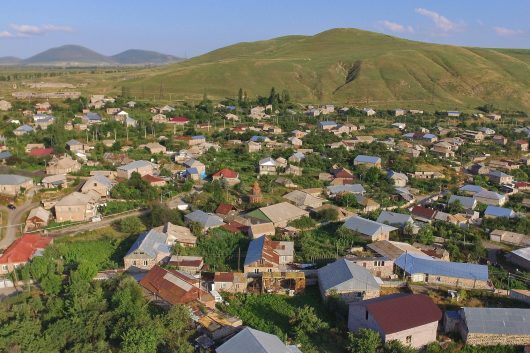
In Armenia, hunger has been a problem faced by its citizens since the country gained independence in 1991. However, through steady economic growth and the implementation of strategies from global agencies, the country’s hunger issue has been slowly reducing. Here are the top ten facts about hunger in Armenia:

  1. Hunger is closely related to poverty, as people that live under the poverty line tend to be the most food insecure. As of 2015, six percent of the Armenian population was undernourished. Hunger in Armenia tends to rise and fall as a result of the country’s economic stability. Since the global financial crisis of 2008, food insecurity in the country has almost doubled, as an estimated 16 percent of families were classified as food insecure in 2015.
  2. Armenia is a low to middle income, landlocked country that relies on imports for most food. Because of this, the country and its citizens are reliant on other countries for stability. When surrounding countries are in financial downturn, it takes a negative effect on Armenians as well. The country has had slow economic development since 1991 when borders with neighboring countries Turkey and Azerbaijan were established post-Armenian independence. Due in large to its slow economic growth, 29.4 percent of Armenians lived in poverty as of 2016.

  3. In Armenia, the effect of hunger is visible in two main ways: stunted growth and being overweight. Approximately 9 percent of Armenian children under five have had their growth stunted while 14 percent were overweight as of 2015. To some, it may be surprising that people can be overweight while still food insecure, but it is more common than one might think. Because many people who are food insecure are also impoverished, they tend to purchase food based on quantity over quality. This results in the intake of less-nutritious foods in low-income areas. In countries like Armenia, it has resulted in many of its poorer citizens becoming overweight.

  4. Armenia has reduced the country’s poverty rate from 54 percent in 1998 to 28 percent in 2008. After a brief rise and stagnation in the poverty rate, at approximately 32 percent after the global economic crises, the country’s poverty rate has again begun to fall.

  5. Organizations like the World Economic Forum and the World Bank are considering ways to reanalyze the causes behind Armenia’s hunger problems. More reasons for hunger, like education, health and labor, are being examined in addition to poverty.

  6. As Armenia’s hunger problem is examined from various perspectives, new solutions are being presented to combat the country’s food insecurity.

  7. One solution from the National Strategic Review of Food Safety and Nutrition is to apply healthcare, social protections and regional policies in order to reduce the disparities in hunger and malnutrition throughout Armenia. These policies will target hunger and food insecurity with strategies not traditionally used in the country.

  8. An additional solution is to raise public awareness about healthy nutrition and how to make better decisions about food choices. These public awareness and education campaigns would take place in remote communities where food education is not prevalent, giving way to unhealthy choices. The education campaign will also serve as a preventative measure against malnutrition and undernourishment by focusing on sustainable food choices.

  9. The solution to hunger and food insecurity in Armenia may be in the revision of policy that would protect the most underserved people. Part of this solution will include commencing vouchers to the unemployed, social assistance programs to children 3-5 years of age, as well as monetary and non-monetary plans to ensure nutritious food intake to beneficiary families of assistance programs.

  10. Armenia is a country still growing and recovering from many outside factors that have hindered the young country’s development. However, with newly proposed sustainable solutions and the promise of continued economic security, the country is beginning to address its hunger and food insecurity problem.

Armenia’s hunger problem is a complex and multi-causal issue. However, through steady advancement and changes to its economy and food programs, solutions are possible. These strategies are only a few of many to relieve hunger in the country. These top ten facts about hunger in Armenia are a brief way to understand a longstanding problem.

– Savannah Hawley

Photo: Flickr

August 12, 2018
https://borgenproject.org/wp-content/uploads/borgen-project-logo.svg 0 0 Borgen Project https://borgenproject.org/wp-content/uploads/borgen-project-logo.svg Borgen Project2018-08-12 18:38:072019-09-02 16:28:50Top Ten Facts About Hunger in Armenia
Food & Hunger, Hunger

What Exactly is Hunger?

what is hunger
Hunger is an easy enough concept to imagine. Most people in the world have experienced it at some level or maybe even gone an entire day without food. But what is hunger at a global level? When starvation and malnutrition are discussed, there is a major gap between the conception of hunger and how those without access to food experience it. In the end, hunger is a systemic problem in people’s lives; those who suffer from it are unable to consistently achieve proper nutrition and face food insecurity.

Facts and Figures

Hunger still affects more than 800 million world citizens. This number reflects about one in every nine people worldwide. Starvation and malnutrition are most common in developing countries, where 12.9 percent of the population suffers from undernourishment. The continent of Asia contains the highest number of hungry people, while Sub-Saharan Africa has the highest prevalence of malnutrition – one person in every four faces undernourishment. 

Famine: Extreme Hunger

The most extreme cases of hunger on a public scale are famines, where an excess of deaths occurs as a result of starvation or hunger-induced diseases. These diseases are often preventable with a proper diet, but although there is an excess of food worldwide, starvation and malnutrition originate in that food being inaccessible. Lack of access is often caused by a insufficient funding and war within an area, as seen in the South Sudan famine declared by the U.N. in February of 2017.

In daily life for undernourished people, hunger takes the form of reduced meals. In 2011, a drought in a Kenyan herding community caused sickly animals. As a result of not being able to afford enough to eat, one woman’s family was forced to cut back to just one or two meals per day as opposed to three. They also could no longer afford “luxuries” like milk. Even with access to water, there is no money to buy food if crops and animals cannot produce. 

The Costs of Hunger

New research shows that generations down the line will also be impacted by the costs of starvation. While it is well-known that young children are often the most vulnerable to malnutrition, Columbia University’s 2014 study of genes in roundworms after an initial starved generation found that small changes in an organism’s molecular makeup due to its health can be passed on. This means that even after hunger has been reduced, future generations may still see its effects in their own lives.

Combating Hunger

Fortunately, famine and malnutrition rates have decreased. The Global Goals of Sustainable Development include ending starvation and creating food security and sustainable farming as its number two goal, set to be achieved by 2030. The best strategies for ending hunger are supporting small farmers, targeting infant nutrition and utilizing biotechnology in crop creation.

Additionally, legislative action in the United States Congress is working toward alleviating starvation worldwide. The Food for Peace Modernization currently seeks to make the Food for Peace program more efficient – at no cost to taxpayers – so that it can provide food to nearly nine million more people. Understanding what hunger is can create measures like this worldwide and offer new chances for those suffering from hunger to find relief.

– Grace Gay
Photo: Flickr

August 10, 2018
https://borgenproject.org/wp-content/uploads/borgen-project-logo.svg 0 0 Borgen Project https://borgenproject.org/wp-content/uploads/borgen-project-logo.svg Borgen Project2018-08-10 01:30:142020-06-25 11:25:54What Exactly is Hunger?
Hunger, Nonprofit Organizations and NGOs

Key Organizations Fighting World Hunger

World Hunger
Over 815 million people suffer from hunger worldwide. The majority of these millions plagued by hunger come from lower income countries. Hunger and poverty are inextricably linked together in a cycle, poverty causing hunger through a lack of sufficient means, and hunger causing poverty due to high food prices and malnourishment, which affects performance in schools and in the workplace. Thus, in order to address hunger at any level, poverty must also be considered. There are a number of key organizations fighting world hunger as well as looking into its underlying factors.

Underlying Factors in World Hunger

In addition to stemming from poverty, world hunger can be the result of conflicts, climate change and economic and political issues that are seemingly unrelated. Long-term conflicts can interfere with food and agriculture production and also make humanitarian assistance very difficult. A poor economy can drive up prices, making food insecurity and hunger more prevalent. Natural disasters can decimate countries, leading to severe, temporary hunger; for example, El Nino is said to have been responsible for hunger in 20 million cases. Global climate change has also affected crop production as flooding or drought can destroy crops, which can lead to food insecurity.

In 2016, it was estimated that 10.7 percent of the world’s population faced chronic undernourishment.  This can lead to long-lasting physical and mental health impairments. Hungry people are 2.9 times more likely to have health issues. Over 3 million children die per year as a result of a hunger-induced illness such as stunting, vitamin deficiencies, and growth restriction (for babies and fetuses). There are also many diseases that can lead to death in which hunger is an underlying condition, and malnutrition magnifies the effects of all diseases including measles and malaria. Hunger can also exacerbate mental health issues; children who are hungry are four times more likely to need professional counseling.

Key Organizations Fighting World Hunger

In order to fight world hunger, there must be more education that inspires understanding and leads to action. A multitude of organizations exists to assist those experiencing food insecurity. The most influential organizations are those that address root issues rather than just addressing band-aid issues.

  1. Bread for the World addresses world hunger by lobbying world leaders to attack underlying causes, preaching that “we need to do more than just giving people a meal a day.”
  2. Results is another group that also uses education and lobbying as a tool to end world hunger through highly-trained advocacy volunteers.
  3. The Food Research and Action Center is a hub for an anti-hunger network of individuals and agencies seeking to improve public policies surrounding hunger and malnutrition in the U.S.
  4. Action Against Hunger eliminates hunger through detection and prevention measures as well as provides aid in treating malnutrition.
  5. The Hunger Project is committed to sustainable ways to end world hunger, empowering people to be self-reliant in the long run.
  6. Heifer International donates livestock to create long-term agricultural solutions and provide training in farming techniques.

These are but a few of the innovative organizations dedicated to helping the world’s hungry. The U.S., for example, assists in hunger reduction by providing emergency food aid, supporting long-term developmental agriculture programs and assisting with organizations in trying to achieve global food security.

In order to help reduce world hunger, it is important to support research and policy and give to dynamic organizations. When looking at where to donate, keep in mind creative initiatives, the desire to address the root causes of hunger and programs that promote self-sufficiency and sustainability in the long term.

– Jessie Serody
Photo: Flickr

July 18, 2018
https://borgenproject.org/wp-content/uploads/borgen-project-logo.svg 0 0 Borgen Project https://borgenproject.org/wp-content/uploads/borgen-project-logo.svg Borgen Project2018-07-18 07:30:312024-05-29 22:43:08Key Organizations Fighting World Hunger
Food & Hunger, Food Security, Global Poverty, Hunger

The State of International Food Insecurity

State of International Food Insecurity
World hunger and food insecurity are on the rise. Food insecurity is defined by the U.S. Department of Agriculture (USDA) as “a lack of consistent access to enough food for an active, healthy life” — the number of malnourished people grew from 777 million people to 815 million in 2016.

State of International Food Insecurity

The world population is projected to rise to around 10 billion people by 2050, and according to the U.N.’s “Sustainable Development Goal 2,” food production needs to grow by 50 percent for everyone to have enough food to survive on a day-to-day basis. It was estimated that global food insecurity had declined over the last decade — so why is it slowly growing now?

While food insecurity is a difficult and complex situation to solve, there are several factors that created the current state of hunger and malnutrition of society.

Why Has Global Food Insecurity Increased?

In 2017, there were a number of famine incidents that struck parts of South Sudan, Nigeria, Somalia and Yemen. Al Jazeera, a global news network that covers news in the Middle East, reported that nearly two million Nigerians have been displaced, and “Northeast Nigeria now faces one of the world’s worst food security crises, with around 3.8 million people who will face critical food insecurity and around 7.7 million in need of life-saving humanitarian assistance this year” due to Boko Haram attacks in the region. Violent conflicts around the world have also created a shortage in food production and availability for those hit hardest by food security issues.

The state of international food insecurity is not an optimistic one, but it does require action. Groups such as the United Nations World Food Programme and the Zero Hunger initiative fight to provide much-needed assistance to those living in the hardest-hit areas. Much of their work to help worldwide food security consists of coordinating efforts between governments, non-governmental organizations (NGOs), corporations and individuals.

Aid Organizations and Opportunities

On-the-ground groups such as the Lutheran World Relief focus on bringing water to communities while building cheap irrigation systems that provide water for crops and livestock. Another organization, the World Hunger Relief, Inc., focuses on teaching communities sustainable farming techniques and bringing vegetables to communities in food deserts. There is also work done out-of-country to help fight global hunger.

The Borgen Project works to influence policy in the U.S. so that aid can be given to those in need at a lower cost and quicker rate. The combination of overseas organizations and on-the-ground efforts has proved to be important in fighting hunger worldwide. But even if one doesn’t have time to join an organization to fight world hunger, there are many things every individual can do to help.

Some ways include: volunteering at food drives that aim to send food abroad or to communities in-need, donating to a local food bank, signing up to help sort food within food banks or food drives or writing to, emailing or calling elected officials to support food aid reform.

The Importance of Everyday Effort

The Borgen Project uses the latter strategy to facilitate policy changes over the years that make aid to foreign countries an easier task for the U.S. Even taking a few minutes out of a day to write an article or two about world hunger can raise awareness and help stop the tide of food insecurity.

All in all, today’s world has a growing population still facing the problem of global food insecurity. With the state of international food insecurity at risk, it is up to us as a society to step up and help others have a secure food source.

– Michael Huang
Photo: Flickr

July 8, 2018
https://borgenproject.org/wp-content/uploads/borgen-project-logo.svg 0 0 Borgen Project https://borgenproject.org/wp-content/uploads/borgen-project-logo.svg Borgen Project2018-07-08 01:30:482024-05-29 22:42:57The State of International Food Insecurity
Hunger

World Food Programme Fights Malnutrition in Cameroon

Malnutrition in Cameroon
Despite relative peace and political stability in Cameroon, it remains a country plagued by food shortages and malnutrition.

The Problem

Cameroon is home to 23.7 million people, 40 percent of whom live below the poverty line. Poverty is concentrated in four regions —  the Far North, the North, Adamaoua and the East. These same regions are those most severely impacted by food insecurity. In fact, OCHA (the United Nation’s Office for the Coordination of Humanitarian Affairs) reported a 189 percent increase in food insecurity between 2013 and 2016 and stated that 2.6 million people in Cameroon were food insecure in 2017.

In April 2018, the World Food Programme (WFP) reported that that number has risen to 3.9 million, 2.5 million of whom are living in one of the four aforementioned regions. In other words, 36.7 percent of the population in these four regions is food insecure.

Cameroon’s harsh climate makes growing crops extremely challenging. In the North, between 25 and 30 percent of the land is completely barren and unsuitable for cultivation. Furthermore, the dry season is long, during which severe water shortages are widespread and, when rain does come, ruinous floods become common.

Refugees and IDPs in Cameroon

The relative peace and stability of Cameroon make it attractive to refugees fleeing danger and violence in neighboring countries. Namely, refugees emanate from Chad (to the North/Northeast of Cameroon), Nigeria (to the North/Northwest) and the Central African Republic or C.A.R. (to the East).

At the end of 2017, the UNHCR (the U.N.’s Refugee Agency) reported that over 85,000 Nigerian refugees lived in the Far North region of Cameroon and about 231,000 refugees from C.A.R lived in the North, Adamaoua and East regions. Such dramatic population influxes take a severe toll on the already limited food supply of Cameroon.

In addition, Boko Haram — the major cause of most Nigerian refugees fleeing for Cameroon — has been active along the Nigerian-Cameroonian border; so, along with forcing Nigerians to flee violence and resettle in the Far North of Cameroon, Boko Haram violence also forces local Cameroonians from the Far North to flee south into the North and Adamaoua regions.

These internal Cameroonian refugees are officially referred to as Internally Displaced Persons (IDPs). Between 2014 and 2015, over 70 percent of farmers in the Far North region, fleeing Boko Haram violence or over-crowding caused by the influx of refugees, deserted their land to move elsewhere to a less crowded area.

However, rather than lessen the pressure placed on the already scarce food resources of the Far North, IDPs abandoning their farms only increases it, for much viable land is now not being farmed. As a result, the production of cereal crops, the main staple food of the region, was down over 50 percent between 2014 and 2015.

Efforts to Help & Reasons for Hope

The WFP is committed to helping achieve the U.N.’s Sustainable Development Goal (SDG) goal number two and to helping end hunger and malnutrition in Cameroon. To accomplish this, the organization chose to target the four above-named regions most impacted by food shortages and malnutrition in Cameroon.

Regional violence — such as that caused by Boko Haram — makes delivering food especially difficult, but the WFP has remained committed to helping in Cameroon nonetheless. The organization continues to raise money and increase the amount of food and nutritional supplies being sent to refugee camps. Furthermore, the WFP runs a supplementary feeding program that specifically targets childhood nutrition, as an estimated 31 percent of all children in Cameroon between the ages of six months and five years are chronically malnourished.

Despite continued challenges, the impact of WFP shows reasons for hope. In April of this year alone, the WFP helped over 292,000 people in Cameroon. Almost 75,000 CAR refugees living in East, Adamaoua and North regions, 47,500 Nigerian refugees and almost 17,000 Cameroonian IDPs in the Far North region received food rations or cash transfers from WFP.

– Abigail Dunn
Photo: Flickr

July 7, 2018
https://borgenproject.org/wp-content/uploads/borgen-project-logo.svg 0 0 Borgen Project https://borgenproject.org/wp-content/uploads/borgen-project-logo.svg Borgen Project2018-07-07 01:30:282024-05-29 22:43:01World Food Programme Fights Malnutrition in Cameroon
Aid, Developing Countries, Food & Hunger, Food Aid, Global Poverty, Hunger

Food Delivery in Developing Countries Promotes Food Security

Food Delivery in Developing Countries
In distressed communities, the poor often find themselves in situations where there is very little food, caused by issues such as war zones, natural disasters or a lack of healthy, sanitary markets. There are many different organizations that continue to aid in food delivery in developing countries in some of the most oppressed areas. Although these only offer temporary solutions and the main goal is to help the vulnerable learn how to grow their own sustainable, healthy foods, these organizations are there to help in the most urgent times of need.

Action Against Hunger a Pioneer of Food Delivery in Developing Countries

Action Against Hunger is possibly one of the most well-known and longest running food delivery programs working abroad. Founded in 1979, Action Against Hunger has been distributing food to countries such as Liberia, Guatemala, Bangladesh and Lebanon. Its efforts began with a French group responding to crises in Afghanistan.  

Action Against Hunger has many different programs to ensure the safe delivery of food. Its most notable programs include the Nutrition and Health Program, which treats malnourished children and boosts child survival. Through research and special screenings, Action Against Hunger can easily pinpoint the most extreme cases and the children who are most at risk of being harmed by starvation.

The Food Security and Livelihoods Program addresses the lack of nutritious foods that plague areas of poverty. The program enables vulnerable societies by improving their access to food, income and the economy. The Food Security and Livelihood Program educates small-scale farmers on how to increase food production and how to store and market their crops. Action Against Hunger considers each area’s specific needs and includes activities that help boost the local market.

In addition to responding to emergencies, this program also helps establish long-term solutions to continue fighting hunger. In times of violence or drought, Action Against Hunger helps communities replenish their food sources. Through the Food Security and Livelihood Program, Action Against Hunger also creates strategies such as small business assistance and veterinary services.

In 2016, Action Against Hunger improved food security, income and livelihoods for 2.6 million people in some of the most vulnerable situations around the world in countries such as South Sudan, Malawi and Iraq.

World Food Program USA Brings Food to Schools and War Zones

World Food Program USA tackles the issue of hunger by asking the question, “Why are people hungry?” and discovering the root causes behind hunger, such as poverty, conflict, natural disasters, climate change, lack of food access and lack of proper education. To help combat these specific situations, World Food Program USA has many different programs for food delivery in developing countries.

WFP’s School Meals Program provides food assistance to school-aged children in areas where school is often their only source of nutritious food. It provides school food assistance in countries such as Sudan, Tanzania, Bolivia and Mali. In 2016, WFP helped feed 16,404,640 children through school meals. More than 76,500 schools received assistance through WFP and 60 countries participated in the program.

WFP’s Emergency Response Program delivers food to war zones in countries such as Syria, Yemen and Iraq, along with natural disaster food delivery. Through these programs, it works with national governments, private sectors and civil society partners. WFP utilizes telecommunications systems to correlate relief and recovery on the ground.

Although many programs only provide temporary solutions to ending hunger, the most pressing issue is to ensure that those who have no other means are provided with their most basic needs: food, water, hygiene and a safe place to live. Through food delivery in developing countries, Action Against Hunger and World Food Program USA have not only helped combat starvation and malnutrition, but their programs have helped people in impoverished areas learn how to make, handle and market food, which will have a lasting effect on their livelihoods and generate a sustainable way of life for the future.   

– Rebecca Lee
Photo: Flickr

June 16, 2018
https://borgenproject.org/wp-content/uploads/borgen-project-logo.svg 0 0 Borgen Project https://borgenproject.org/wp-content/uploads/borgen-project-logo.svg Borgen Project2018-06-16 01:30:042024-05-29 22:42:45Food Delivery in Developing Countries Promotes Food Security
Global Poverty, Hunger, Poverty Reduction

How to Eradicate Extreme Poverty and Hunger

how to eradicate extreme poverty and hunger
Poverty is like a cancer for society — it is debilitating and does not have a cure-all solution. People in extreme poverty live on less than $1.90 a day and face poverty traps due to factors such as geographic location, malnutrition, effort required to meet daily needs, lack of education and poor governance. With so many ways for people to become poor, it’s not surprising that different regions need to focus on different issues when determining how to eradicate extreme poverty and hunger.

Poverty Eradication Across the Globe

According to the 2017 World Bank Annual Report, Europe and Central Asia focused 41 percent of the $5.3 billion they borrowed from the International Bank for Reconstruction and Development as well as the International Development Association on energy and extractives but only two percent on education.

In contrast, South Asia concentrated 14 percent of the $6.1 billion they borrowed on energy and extractives, and 12 percent on education. Despite such disparities between these two countries’ prioritization of their energy and education sectors, both areas took action to build resilience to climate change, invest in human capital and improve infrastructure.

Benefits of Migration

For poor households trapped by low-productivity and in oftentimes remote, rural locations, migration could be a viable solution to increasing their standard of living. Such families may not be willing to migrate because it would put their sources of subsistence at risk. However, there are large potential gains from migrating to a highly productive country like the U.S.

According to a study by Clemens, Montenegro and Pritchett in 2016, the annual gain from working in a high-productivity environment is more than four times the total lifetime value of the most successful anti-poverty program.

Cash Transfer Solutions

On the policy side, well-targeted and structured cash transfers have been an increasingly popular tool for alleviating poverty in low-income countries. Cash transfers not only provide safety nets by raising the incomes of the poor, but they also help them escape from ‘psychological poverty traps.’

Contrary to the common concern that welfare programs can discourage work, a study done by Banerjee et al. in 2016 found no systematic evidence that cash transfer programs affect the overall number of hours worked nor the propensity to work among the men and women in the seven programs carried out in the Honduras, Indonesia, Morocco, Mexico (which had two programs), Nicaragua and the Philippines.

There are also solutions that require the consideration of measuring poverty based on other factors besides income and consumption. One example would be the offshoring of low-skilled jobs. While these jobs do provide a steady source of income, they are often also unpleasant, risky and may lead to adverse health effects. So, although these jobs can provide a short-term safety net, they are not a long-term solution to poverty.

Small Changes, Big Outcomes

Specific strategy government programs that have lasting effects countering poverty involve multifaceted household-level interventions. In one study by Banerjee et al., implementation of an anti-poverty program at the household level in India, Ethiopia and Pakistan (as well as both the village and household level in Ghana, Honduras and Peru) led to at least a year’s worth of lasting impact after the short-term intervention of the program.

Statistically significant impacts were made in the areas of consumption, food security, productive and household assets, financial inclusion, time use, income and revenues, physical health, mental health, political involvement and women’s empowerment. The intervention consisted of six elements: a productive asset grant, temporary cash consumption support, technical skills training, high frequency home visits, a savings program and health education and services.

Pros and Cons of Policy Change

On the other hand, governments also need to be careful when deciding on policies that involve low-income countries. Bill Clinton admitted in 2010 that his policy to dump American tariff-free rice in Haiti was a mistake. By forcing Haiti to drop tariffs on imported subsidized U.S. rice, the damage done to rice farming severely hindered Haiti’s ability to be self-sufficient.

In response to the incident, Oxfam recommended that food aid should be bought in local markets inside the country receiving aid.

Oxfam also said the Haitian government should decentralise services away from the capital, make sure farmers have credit access and improve their land tenure system where farmers could be cheated by judges able to transfer land into the hands of ‘whoever offers the biggest bribe.’

Eradicating Extreme Poverty and Hunger

The same goes for humanitarian organizations in deciding what kinds of resources and assistance to provide. To answer the question of how to eradicate extreme poverty and hunger, these organizations need to first determine what consequences their intervention would lead to. By looking for methods to complement local capacities to combat poverty, humanitarians can prevent their efforts from displacing local businesses.

A great example is The Hunger Project — a global nonprofit organization dedicated to ending world hunger. With programs throughout Africa, South Asia and Latin America, this organization empowers women and men in rural villages to sustainably overcome hunger and poverty. Members of the community accomplish this feat by mobilizing and fostering effective partnerships to engage local government.

In conclusion, there are many factors to consider in different parts of the world when looking at how to eradicate extreme poverty and hunger. Auspicious solutions to poverty traps include migration, conditional cash transfers and multifaceted household-level programs. On the side of humanitarian organizations and the government, much deliberation is essential to providing goods, services and policies that complement and protect rather than displace local needs and markets.

– Connie Loo
Photo: Flickr

June 5, 2018
https://borgenproject.org/wp-content/uploads/borgen-project-logo.svg 0 0 Borgen Project https://borgenproject.org/wp-content/uploads/borgen-project-logo.svg Borgen Project2018-06-05 01:30:112019-10-19 17:27:01How to Eradicate Extreme Poverty and Hunger
Global Poverty, Hunger

The History of Poverty in Ireland

The History of Poverty in IrelandIreland’s political and religious history has had a great effect on the country’s history of poverty, which has continued throughout many centuries. There are still neglected political policies that cause great poverty today.

Early History of Poverty in Ireland

The history of poverty in Ireland began with the invasion by Great Britain in 1649. Oliver Cromwell governed Great Britain at that time, and he despised Roman Catholicism. He felt that the predominantly Catholic Irish people could not be trusted and sought to bring them to order. Cromwell executed those that would not comply and exported children to sugar plantations in the West Indies, hoping to decrease the population of the Irish. This population loss allowed Great Britain to gain control over Ireland.

In the 18th century, Ireland’s farmland became the property of English landlords. The landlords were not present to work the farms and only collected rent. The landlords would force multiple families to live on one piece of property to charge more rent. This overcrowding resulted in hunger, as the crop yields could not sustain multiple families and still provide income for rent. Those who could not pay were evicted and had nowhere to go.

Potato Famine a Major Cause of Poverty

The main crop produced on the farmlands was a staple of the Irish diet, the potato. However, potatoes are susceptible to disease, even though the crop needs little maintenance. This was the cause of the Great Potato Famine that began in 1845. The famine was caused by the water mold disease known as late blight, which resulted in crop failure three years in a row. This drove families further into poverty. There were many families that were unable to pay rent or feed their children. The Great Potato Famine was one of the most significant events in the history of poverty in Ireland. The famine caused more than one million deaths and reduced the population by nearly half.

Even though Great Britain impacted the history of poverty in Ireland by taking control of the farmland when the Great Famine was devastating Irish families, the government refused to intervene and provide help to Irish families. Charities and soup kitchens had limited resources to help those suffering from starvation. Those who did not perish from starvation or disease were forced to immigrate to other countries.

Poverty Issues Still Present Today

This history of poverty in Ireland has seemed to carry over to the present day. In 2010, it was estimated that 6 percent of the population is living below the poverty line and approximately 15 percent of people are at risk of falling below the poverty line. The poverty line is measured by the average income and anyone that makes less than 60 percent of the average income is considered to be living in poverty.

Advocacy group Social Justice Ireland (SJI) has studied the history of poverty in Ireland and seeks to correct the ongoing issue. SJI reports that more than 100,000 people with employment are still living below the poverty line. In addition, SJI has stated that to avoid poverty, a single adult must make an estimated €250 a week and a family of four must bring home approximately €579 a week to be over the poverty line. The difficulties that the working poor face in reaching these income levels are attributed to low pay that is not fairly regulated, either by employers or the government.

Another factor that causes the population to be employed and still below the poverty line is an unfair tax system that has always been a part of the history of poverty in Ireland. SJI strongly urges the government to take charge and break this ongoing cycle of poverty for the Irish people.

– Kristen Hibbett
Photo: Flickr

May 14, 2018
https://borgenproject.org/wp-content/uploads/borgen-project-logo.svg 0 0 Borgen Project https://borgenproject.org/wp-content/uploads/borgen-project-logo.svg Borgen Project2018-05-14 07:30:462019-11-10 09:12:36The History of Poverty in Ireland
Global Poverty, Hunger

Top 10 Facts About Hunger in Syria

Top 10 Facts About Hunger in SyriaThe crisis in Syria began in the March of 2011 when thousands of Syrians took to the streets protesting for a democratic government. Since then, there have been reports of horrific human rights violations. Syrians are either forced to live in fear or flee their country. Due to the political unrest and unfair treatment of Syrians, basic humanitarian needs such as food is not fulfilled. Hunger has increased dramatically in Syria and it is important for other nations to know the facts about hunger in Syria and realize the struggles and successes it experiences as a result of the hunger crisis.

Facts About Hunger in Syria

  1. One in three people is unable to meet their basic food needs because they live under the poverty line.
    Bread is the most basic food source in Syria, however, its prices have risen by 1000 percent in the most violent areas leaving thousands unable to provide for themselves or their families.
  2. Food production has decreased by 50 percent.
    Farmers were only able to plant wheat on an estimated 900,000 hectares of land in 2017 compared to 1.5 million hectares before 2011. This is a neverending cycle because farmers rely on the community to buy their produce in order to continue farming but when the community does not have money to buy food, there is a continuing lack thereof.
  3. More than 11 million Syrians have fled their homes seeking refuge.
    Constant displacement does not provide Syrians with food security. Being food secure is one of the most basic necessities but also somehow overlooked.
  4. Living under siege, 400,000 Syrians across Syria have little to no access to a food source.
    During a siege, all humanitarian resources are cut off from people thereby leaving them with no option but to starve to death or die of diseases without proper medical attention.
  5. Various food donation groups have been able to provide for certain besieged areas via airdrops.
    Although there are still more than 4.5 million people living in hard-to-reach zones throughout Syria, airdrops have been able to deliver food to approximately 4.2 million of those in need.
  6. The U.N. will need $ 3.2 billion to provide humanitarian assistance in Syria.
    After analyzing the number of refugees in need of humanitarian assistance in 2016, the U.N. was able to estimate the funds required to help the current refugees. However, this does not account for new refugees if the conflict continues.
  7. The rise of the Islamic State of Iraq and Syria (ISIS) has made it difficult to provide resources to Syrians.
    This group has created checkpoints and sealed off all roads into and out of besieged areas to prevent any aid from reaching the people located within.
  8. Before the crisis in 2011, Syria was a middle-income country; however, it now ranks as one of the poorest with one-third of the population living in poverty.
    This does not include refugees who sought shelter in neighboring countries but merely the remaining population living in Syria.
  9. Since the beginning of the Syrian war crisis, the World Food Programme (WFP) has donated more than $ 1.3 billion to support Syrian refugees.
    They do this by providing food rations, e-cards and vouchers to the Syrians who are in dire need of food and medical resources.
  10. For only one dollar, the WFP can feed a Syrian refugee for a day.
    When the cost of feeding refugees is so low, it is a wonder how we are still struggling to find ways to help them. This accentuates the necessity to donate anything, for every little bit counts.

There is still a long way to go for Syrian refugees, however, these top 10 facts about hunger in Syria highlight the good and the bad in this devastating crisis.

– Adrienne Tauscheck
Photo: Flickr

May 9, 2018
https://borgenproject.org/wp-content/uploads/borgen-project-logo.svg 0 0 Borgen Project https://borgenproject.org/wp-content/uploads/borgen-project-logo.svg Borgen Project2018-05-09 15:26:222024-12-13 17:58:44Top 10 Facts About Hunger in Syria
Page 41 of 71«‹3940414243›»

Get Smarter

  • Global Poverty 101
  • Global Poverty… The Good News
  • Global Poverty & U.S. Jobs
  • Global Poverty and National Security
  • Innovative Solutions to Poverty
  • Global Poverty & Aid FAQ’s
Search Search

Take Action

  • Call Congress
  • Email Congress
  • Donate
  • 30 Ways to Help
  • Volunteer Ops
  • Internships
  • Courses & Certificates
  • The Podcast
Borgen Project

“The Borgen Project is an incredible nonprofit organization that is addressing poverty and hunger and working towards ending them.”

-The Huffington Post

Inside The Borgen Project

  • Contact
  • About
  • Financials
  • President
  • Board of Directors
  • Board of Advisors

International Links

  • UK Email Parliament
  • UK Donate
  • Canada Email Parliament

Get Smarter

  • Global Poverty 101
  • Global Poverty… The Good News
  • Global Poverty & U.S. Jobs
  • Global Poverty and National Security
  • Innovative Solutions to Poverty
  • Global Poverty & Aid FAQ’s

Ways to Help

  • Call Congress
  • Email Congress
  • Donate
  • 30 Ways to Help
  • Volunteer Ops
  • Internships
  • Courses & Certificates
  • The Podcast
Scroll to top Scroll to top Scroll to top