• Link to X
  • Link to Facebook
  • Link to Instagram
  • Link to TikTok
  • Link to Youtube
  • About
    • About Us
      • President
      • Board of Directors
      • Board of Advisors
      • Financials
      • Our Methodology
      • Success Tracker
      • Contact
  • Act Now
    • 30 Ways to Help
      • Email Congress
      • Call Congress
      • Volunteer
      • Courses & Certificates
      • Be a Donor
    • Internships
      • In-Office Internships
      • Remote Internships
    • Legislation
      • Politics 101
  • The Blog
  • The Podcast
  • Magazine
  • Donate
  • Click to open the search input field Click to open the search input field Search
  • Menu Menu

Archive for category: Hunger

Global Poverty, Health, Hunger

What to Know About Hunger in India

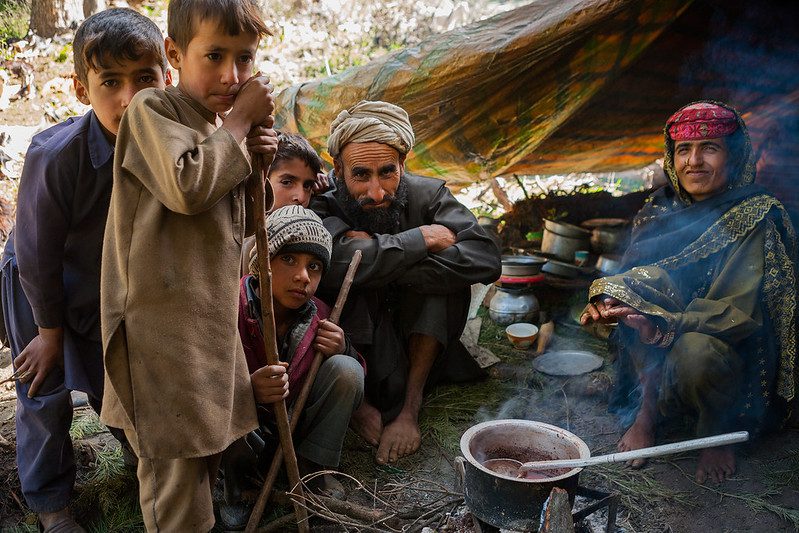
hunger in IndiaIndia has a constantly growing population of more than 1.3 billion. While its economy is booming, its unequal wealth distribution has created an issue for a large portion of the population. Over the past few decades, hunger in India has remained a prevalent issue for the population.
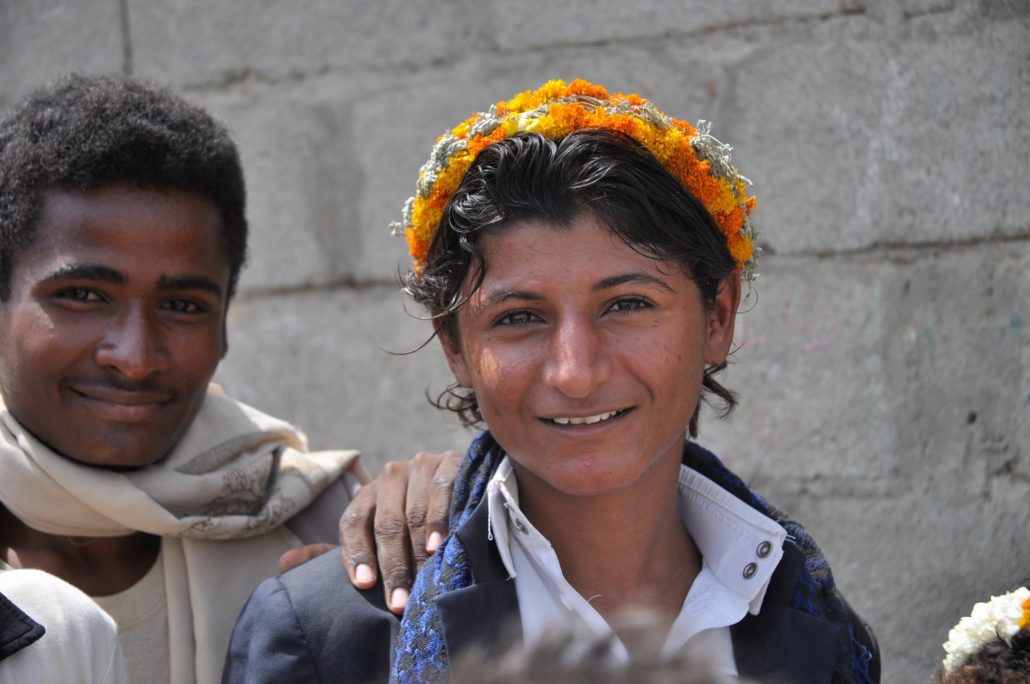
Undernourishment in India

Almost 195 million people (15% of the population) in India are undernourished. Undernourishment means that people are not able to supply their bodies with enough energy through their diet. In the 1990s, 190 million people in India were undernourished. That number remains the same today. Lack of proper diet leads to stunted growth for children; in India, 37.9% of children under the age of five experience stunted growth due to undernourishment.

Malnutrition in India

Malnutrition is one of the bigger implications of the overarching problems India has to deal with: a wide range of hunger, extreme cases of poverty, overpopulation and continually increasing population, a poor health system, and inaccurate national statistics due to the aforementioned overpopulation.

According to the 2018 Global Nutrition Report, India will not reach the minimum nutritional goals by 2025 set by the World Health Organization. With 46.6 million children stunted in growth, India “bears 23.8% of the global burden of malnutrition.” These goals include “reducing child overweight, wasting and stunting, diabetes among women and men, anemia in women of reproductive age and obesity among women and men, and increasing exclusive breastfeeding.”

Action Against Hunger

As a result of all these issues, there are organizations that are trying to help India in its pursuit to provide food to all. Action Against Hunger raises money through donations and uses these funds to provide sustainable food for impoverished areas of the world. For 40 years, they have been operating worldwide and have helped 21 million people in just the past year.

Action Against Hunger facilitates field testing and train small-scale farmers in sustainable practices. Additionally, the organization provides clean water to communities and helps populations in times of natural disasters or other conflicts.

Action Against Hunger launched its program in India in 2010. With a team of 144 workers, they helped over 75,000 people in just the last year. Much of their work has caught the attention of state governments. For example, they have partnered with the Indian state of Chhattisgarh to “offer technical support in the fight against malnutrition,” and plan to do so with other states as well. In Rajasthan, the organization executed the Community Management of Acute Malnutrition program. As a result, the Chief Minister of Uttarakhand recognized the organization for its advocacy efforts.

Moving Forward

While India may not reach the WHO goals in five years, progress continues to spread across the country. Each year, India is reducing the number of people who are malnourished. Organizations such as Action Against Hunger partnering up with local and state governments are the first step in helping pave the way for a hunger-free India.

– Shreya Chari 

Photo: Flickr

June 18, 2020
https://borgenproject.org/wp-content/uploads/borgen-project-logo.svg 0 0 Jennifer Philipp https://borgenproject.org/wp-content/uploads/borgen-project-logo.svg Jennifer Philipp2020-06-18 11:40:242024-05-27 23:53:41What to Know About Hunger in India
Developing Countries, Global Poverty, Hunger

5 Facts About Hunger in Haiti

hunger in Haiti
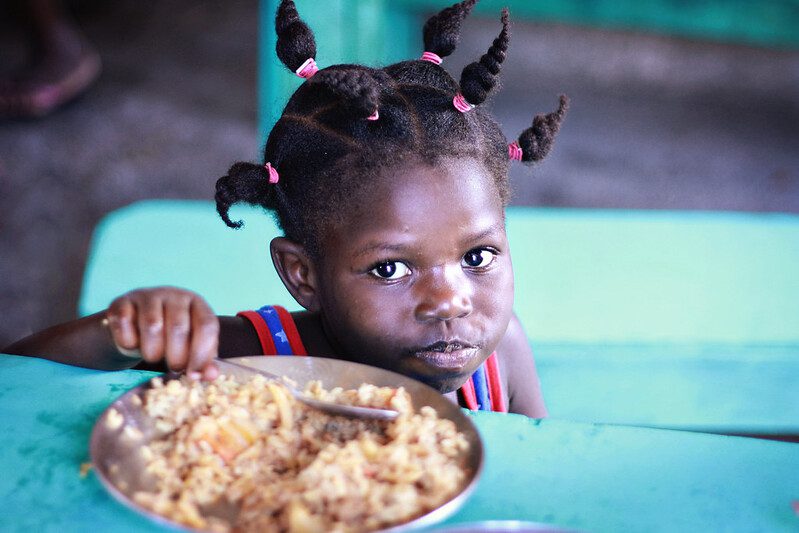
Haiti, a Caribbean country with a population of more than 11 million, is one of the most food-insecure countries in the world. Political and economic crises, combined with natural disasters and extreme weather events, have contributed to the rise of poverty and hunger in Haiti. About 1 million Haitians are severely food insecure, and more than one-fifth of Haitian children are chronically malnourished. Here are five facts about hunger in Haiti.

5 Facts About Hunger in Haiti

  1. Haiti is one of the most impoverished countries in the Americas. According to the World Food Program U.S.A., almost 60% of the Haitian population lives below the poverty line and 25% of it experiences extreme poverty. Furthermore, more than 5 million Haitians earn less than $1 per day. This means that about half of the population cannot afford to buy food and other necessities. The hunger crisis is most prevalent in regions with the highest levels of poverty, particularly in the northwest.
  2. One-third of Haiti’s population is in urgent need of food assistance. Around 3.7 million Haitians did not have reliable access to adequate food in 2019. According to the United Nations, this number increased from 2.6 million in 2018. In 2019, the U.N. Office for the Coordination of Humanitarian Affairs (OCHA) stated that, without immediate food assistance for Haitian people living in poverty, “1.2 million people will only be able to eat one meal every other day and about 2.8 million people might eat just one meal a day” in 2020.
  3. Frequent natural disasters and droughts contribute to widespread hunger. Haiti is one of the most weather-affected countries worldwide. In 2010, a magnitude 7.0 earthquake had a huge negative impact on food security in the region. In 2016, Hurricane Matthew was devastating for Haiti’s agricultural production and its citizens. It caused more than 800,000 people to require immediate food assistance. Severe droughts have also decreased agricultural production and left more people hungry and malnourished in recent years.
  4. Political instability and poor economic conditions have decreased the accessibility of food aid and caused food prices to rise. In the last year, political gridlock and corruption have created obstacles to the distribution of food aid, according to Global Citizen. Protests in major cities, violence and the economic recession have caused businesses and schools to close, blocking many citizens from access to affordable meals and food assistance. Also, in 2019, the cost of staple foods like rice, wheat flour, sugar, vegetable oil and beans rose by about 34%.
  5. Climate change and the COVID-19 pandemic are likely to exacerbate the hunger crisis in Haiti. As a small island state, Haiti is particularly vulnerable to the effects of climate change. Rising sea levels can bring about devastating floods. More frequent extreme weather events can devastate significant parts of the country’s agriculture and infrastructure. Therefore, climate change poses a significant threat to food security and agricultural production in Haiti. Unfortunately, this threat will only increase in future years. The COVID-19 pandemic also threatens to raise inflation further, increasing the prices of staple foods. Haiti imports about 80% of its rice, so the pandemic’s impact on global supply chains could further restrict access to staple foods.

Solutions

As the hunger crisis in Haiti continues to grow, multiple organizations have implemented programs to provide food and financial assistance. For example, the World Food Program U.S.A. delivers meals to 1,400 Haitian schools every day. This program benefits students in 1,400 schools, and the Haitian government plans to take over the initiative by 2030. Feed the Children also provides school meals, including three hot meals each week, in an effort to reduce hunger and motivate students to prioritize their education. While these student-focused food assistance programs help reduce malnourishment and hunger, they also motivate children to continue pursuing an education.

Furthermore, the United States has provided more than $5.1 billion to Haiti since the 2010 earthquake. In the last 10 years, U.S. assistance has helped fund food security programs, increase crop yields and improve child nutrition in Haiti. OCHA hopes to receive $253 million in humanitarian aid for Haiti in 2020. With the financial assistance they urgently need, impoverished Haitians can better prepare for natural disasters. They can also gain reliable access to sufficient food. Both of these necessities will be more necessary than ever in 2020 and beyond.

Overall, these facts about hunger in Haiti show that it is a growing issue that affects millions of people. Now, the current COVID-19 pandemic is amplifying this problem. However, with humanitarian aid and food assistance from NGOs and members of the international community, including the United States, food insecurity in Haiti can reduce.

– Rachel Powell
Photo: Flickr

June 17, 2020
https://borgenproject.org/wp-content/uploads/borgen-project-logo.svg 0 0 Kim Thelwell https://borgenproject.org/wp-content/uploads/borgen-project-logo.svg Kim Thelwell2020-06-17 01:30:302024-05-29 23:17:515 Facts About Hunger in Haiti
Food Security, Global Poverty, Hunger

Addressing Hidden Hunger in Singapore

Hunger in Singapore
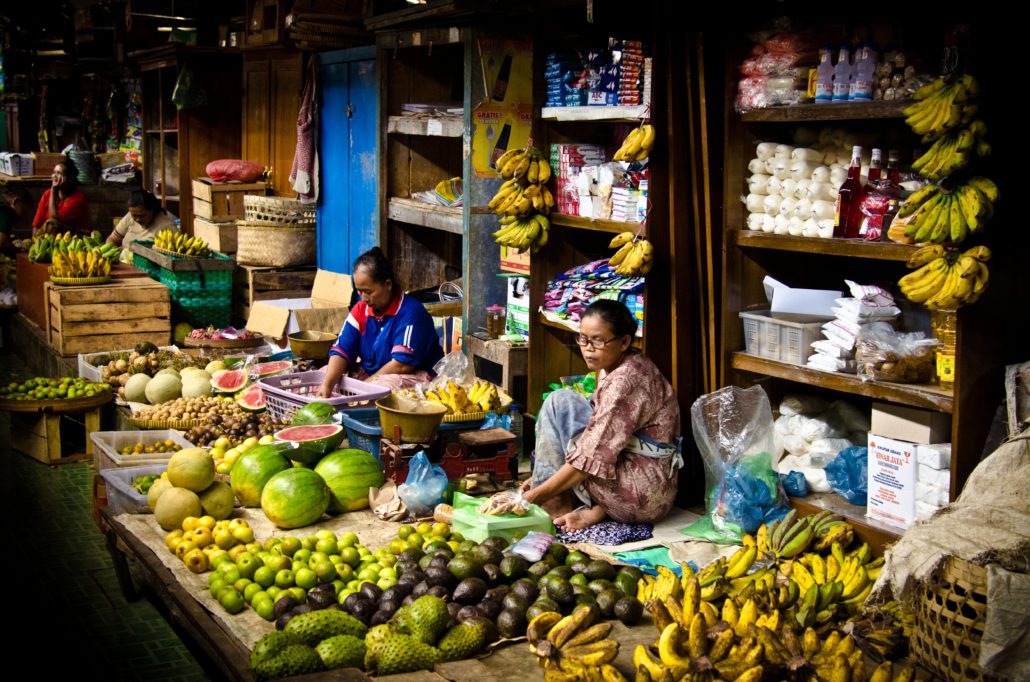
With one of the highest concentrations of millionaires in the world and a reputation for being a “Food Paradise,’” it is difficult to imagine that food security is an issue in Singapore. However, hunger persists despite Singapore’s reputation as an affluent and food-secure nation. This hidden hunger in Singapore is a result of food insecurity and has caused malnutrition throughout the country.

Hidden Hunger in Singapore

Singapore is ranked as the world’s most food-secure nation, yet many Singaporeans still struggle to access a sufficient and nutritious diet. This “hidden hunger,” or the high rate of malnutrition, has created a significant issue for the nation. According to the U.N., about 4.1% of Singaporeans experienced moderate to severe food insecurity between 2016 and 2018. Food security is more than having access to the amount of food needed to survive; it is having nutritionally adequate food that is vital for a person’s growth and development.

A large part of Singapore’s population experiences food insecurity first-hand. Researchers from the Lien Center for Social Innovation reported that only 2.5% of the survey respondents from four low-income neighborhoods had no food insecurity, while 80% of respondents experienced mild to moderate food insecurity. The researchers found that within the last 12 months, one in five low-income households in Singapore had to go a whole day without eating or could not eat when hungry due to a lack of resources.

However, food insecurity is not limited to low-income households. In fact, approximately 27% of the study participants had an average monthly income of $2,000 and above. This suggests that financial constraints are not the sole cause of food insecurity in Singapore.

Food Insecurity Leads to Malnutrition

This widespread hunger in Singapore leads to a high rate of malnutrition, especially in children and the elderly population. ONE (SINGAPORE) reported that one in 10 Singaporeans lack sufficient access to essentials, including healthy and nutritious food. This makes access to healthy food an unattainable reality for many.

Malnutrition as a consequence of an unhealthy or insufficient diet creates even more health-related issues for at-risk populations. ONE (SINGAPORE)’s website reports that upwards of 23,000 children in Singapore are malnourished as a result of food insecurity. This is a staggering number for such an affluent country. Around one in three elderly Singaporeans are at risk of being malnourished. In 2015, about half of the elderly population admitted to hospitals “were eating poorly,” making them more vulnerable to medical complications and other adverse outcomes.

Food Support Systems: Lacking Coordination

Despite the abundance and diversity of food assistance groups in Singapore, including nonprofit organizations, charities, soup kitchens, Meals-on-Wheels providers and informal volunteer groups, many people experiencing food insecurity remain hungry. According to the Lien Center for Social Innovation, more than half of the survey participants who experienced severe food insecurity received infrequent or no support at all.

In spite of the support systems in place (approximately 125 in 2018), the results of this report suggest they may be inefficient in addressing Singapore’s hidden hunger. Some attribute the inefficiency to the lack of coordination between systems. Many of these food support groups operated independently and there was no information-sharing network in place. This often created more problems: duplication of assistance, food waste and in some cases, little to no aid. In order to better coordinate efforts, stronger communication between different food aid organizations is needed.

Finding Common Ground

In 2018, officers from the Ministry of Social and Family Development started engaging several food aid organizations informally. This created the foundation for a multi-agency workgroup in 2019 which brings together food support organizations and agencies. The purpose of this workgroup is to provide a platform for collaboration to end food insecurity and food waste in Singapore.

While the workgroup is still in its infancy, it has made headway in coordinating efforts among the groups. The stakeholders have worked together to address food waste by compiling a list of sources that are willing to contribute unwanted food. In addition, they are working to map food groups and their needs in order to eliminate duplication of assistance and sourcing issues. These efforts make Singapore’s food assistance programs more efficient and effective.


Many helping hands devoted to alleviating hidden hunger in Singapore. However, the lack of coordination among these well-intentioned groups sometimes leads to mismatches between the providers and the beneficiaries. By recognizing the “hidden hunger” in Singapore and coordinating governmental efforts, the nation and its charities may be able to more efficiently address food insecurity in the nation.

– Minh-Ha La
Photo: Flickr

June 3, 2020
https://borgenproject.org/wp-content/uploads/borgen-project-logo.svg 0 0 Lynsey Alexander https://borgenproject.org/wp-content/uploads/borgen-project-logo.svg Lynsey Alexander2020-06-03 11:00:292024-05-29 22:58:04Addressing Hidden Hunger in Singapore
Hunger, War, Women

Women in the World’s Worst Humanitarian Crisis

Women in the World’s Worst Humanitarian Crisis
The Borgen Project has published this article and podcast episode, “Inside the Lives of Women Living Through World’s Worst Humanitarian Crisis,” with permission from The World Food Program (WFP) USA. “Hacking Hunger” is the organization’s podcast that features stories of people around the world who are struggling with hunger and thought-provoking conversations with humanitarians who are working to solve it.


Hunger is cruel to everyone, but it’s not completely blind. Women – especially in times of war – are more at risk of the suffering it bestows. Women are 60 percent more likely to suffer from hunger and its consequences. They eat last and least and are often forced to drop out of school or marry early when there isn’t enough food.

Yemen is no exception to this rule, and as the nation’s conflict drags into its fifth year, women find themselves in increasingly difficult circumstances. But women are resilient, and despite their suffering, they find ways to remain hopeful and strong.

In this episode of Hacking Hunger, we spoke with Annabel Symington, head of communications for WFP in Yemen. She’s been working in Yemen for the past year and offered us insights into the unique challenges, stories and strength of women living through this war.

Click below to listen to Annabel Symington provide stories about women in Yemen during the present war.


World Food Program USA · Episode 42: Inside the Lives of Women Living Through World’s Worst Humanitarian Crisis
Photo: Flickr


June 3, 2020
https://borgenproject.org/wp-content/uploads/borgen-project-logo.svg 0 0 Jennifer Philipp https://borgenproject.org/wp-content/uploads/borgen-project-logo.svg Jennifer Philipp2020-06-03 10:56:552020-06-04 06:48:09Women in the World’s Worst Humanitarian Crisis
Global Poverty, Hunger

Rick Steves on “How Can We End World Hunger?”

How Can We End World Hunger?
The Borgen Project has published this article and podcast episode, “How Can We End World Hunger? Travel Expert Rick Steves Visits Guatemala and Ethiopia to Explore Answers,” with permission from The World Food Program (WFP) USA. “Hacking Hunger” is the organization’s podcast that features stories of people around the world who are struggling with hunger and thought-provoking conversations with humanitarians who are working to solve it.


Rick Steves is no stranger to exploration. The renowned travel expert has built his career around investigating the nooks and crannies of Europe and sharing his discoveries with curious travelers. Recently, however, Rick ventured beyond Europe to explore one of the most pressing problems of our day: the problem of global hunger. He documents his journey in a new TV special, Hunger and Hope: Lessons from Ethiopia and Guatemala.

On this episode of Hacking Hunger, we caught up with Rick to discuss what this project taught him about the challenges and innovative solutions to solving global hunger and the inspiring people and organizations (including WFP) he met along the way. Listen and discover what he found.

Click the link below to listen to Rick Steves’ views on how the world can end hunger.


World Food Program USA · Episode 41: How Can We End World Hunger? Travel Expert Rick Steves Explores Answers
Photo: Flickr
May 28, 2020
https://borgenproject.org/wp-content/uploads/borgen-project-logo.svg 0 0 Jennifer Philipp https://borgenproject.org/wp-content/uploads/borgen-project-logo.svg Jennifer Philipp2020-05-28 09:53:302020-05-28 09:53:30Rick Steves on “How Can We End World Hunger?”
Global Poverty, Hunger

Combating Intensified Hunger in Zimbabwe

Since the beginning of the COVID-19 crisis, Zimbabwe has faced crippling issues of hunger, starvation and high malnutrition rates. The World Food Programme (WFP) recorded in December 2019 that 7.7 million people living within Zimbabwe were food insecure. Moreover, Global Citizen reported that approximately 90% of children between the ages of 6 months and 2-years-old may die without food aid. Here is some information about intensified hunger in Zimbabwe.

COVID-19 is Intensifying Hunger

The population of people lacking sustenance in Zimbabwe–half of its total population–has only grown since the conception of COVID-19. There has been an increase of nearly 10 million people surviving on less than one meal a day since COVID-19.

Reginald Moyo, a resident of Cowdray Park, Bulawayo, Zimbabwe told The Borgen Project that the “majority of the people don’t have permanent jobs and they [live] by hand to mouth, so [with] a month without working[,]…they are now facing starvation.” Many people are working to address this growing crisis. The people of Zimbabwe, international organizations and the Chinese government have provided aid to Zimbabweans in need.

Efforts from International Organizations

On May 4, 2020, the U.N. entities of Zimbabwe, working with the Food and Agriculture Organization of the United Nations (FAO), released an official food analysis report in response to the growing hunger in Zimbabwe. The report stated that “The total funding required to assist the 3.7 million people by the international humanitarian community for July 2019 to April 2020 amounts to USD 331.5 million.” The effects of COVID-19 have intensified hunger in Zimbabwe and increased the need for assistance. The Global Humanitarian Response Plan (GHRP) requested an additional 6.7 billion USD to combat hunger in order to protect lives.

However, aid is not only monetarily based. In 2002, the nonprofit group Action Against Hunger set a goal to provide food aid, healthcare, sanitation/hygiene needs and water to countless Zimbabweans in need. It estimated in 2018 that its efforts aided 25 Zimbabweans through nutrition and health programs; gave 52 people water, food and healthcare; and dispensed 3,187 people with food. Action Against Hunger not only gave the required resources for survival but also provided education on how local Zimbabwe efforts could improve hunger in their country.

Response from Zimbabwe’s Government

On March 30, 2020, President Mnangagwa reopened the markets to aid small-scale farmers and traders in the difficulties they faced since the beginning of the COVID-19 pandemic. While this may seem to not directly address hunger in Zimbabwe, the decision has determined their survival in the upcoming months. Prior to this change, farmers and traders could not go outside or attend to their crop which limited their income as well as their food supply.

The Borgen Project interviewed Nkocy Thando, a farmer living in rural areas within the Bulawayo area of Zimbabwe. Thando stated that since the markets have opened up again, locals have been able to “work when they open in the morning to three [in] the afternoon.” He expressed his immense gratitude for this change and stated that he felt that “all would be okay soon.”

Aid from China

The Chinese Embassy and the private sector are also combating hunger in Zimbabwe by addressing COVID-19 needs. RFI, a worldwide French news and current affairs broadcast reported that China’s efforts have included:

  1. Completing an upgrade worth $500,000 to the Wilkins Infectious Diseases Hospital, which is the main COVID-19 center in Harare, Zimbabwe.
  2. Two Chinese firms providing 1,000 goggles, 50,000 masks and 510 protective suits to a charity that the First Lady, Auxillia Mnangagwa, runs.
  3. The Chinese Embassy equipping Zimbabwe with 7,600 suits for protection, 166,000 masks, 20,000 testing kits, 12,000 pairs of gloves and five ventilators.
  4. The China International Development Cooperation Agency donating $3 million to UNICEF Zimbabwe.

Diverse Responses

There are many organizations working to address the existing and intensifying issues of hunger, starvation and high malnutrition rates in Zimbabwe. However, their solutions range from governmental mandates reopening markets to increased funding for poverty-reduction organizations in the United Nations (UN). While the current responses to hunger in Zimbabwe seem mainly focused on COVID-19 efforts, they still are making a difference in combating intensified hunger in Zimbabwe.

– Alexis LeBaron
Photo: Flickr

May 23, 2020
https://borgenproject.org/wp-content/uploads/borgen-project-logo.svg 0 0 Jennifer Philipp https://borgenproject.org/wp-content/uploads/borgen-project-logo.svg Jennifer Philipp2020-05-23 01:30:482024-12-13 18:02:05Combating Intensified Hunger in Zimbabwe
Hunger

Hunger, War and an American Dream

Hunger War and an American Dream
The Borgen Project has published this article and podcast episode, “Hunger, War and an American Dream,” with permission from The World Food Program (WFP) USA. “Hacking Hunger” is the organization’s podcast that features stories of people around the world who are struggling with hunger and thought-provoking conversations with humanitarians who are working to solve it.


In the early 1990s, Abdi Nor Iftin was a child. Just like other children across the globe, he loved playing outdoors, bickered with his brother and dreamed of being a Hollywood star. Unlike most other children, however, Abdi was starving – simply because he was living in Somalia during a time of drought and civil war.

Abdi lived through the unthinkable, but he was one of the fortunate ones; he survived. Rescued from the brink by perseverance, luck and humanitarian aid, he’s now a successful author living in the U.S. with a story he’s eager to tell.

“I want the world to know both what I went through and how I was helped,” Abdi says. “Maybe then, we can prevent these tragedies from happening again.”

Click on the link below to learn more about Abdi’s inspiring journey.


World Food Program USA · Episode 40: Hunger, War And An American Dream

Photo: Flickr

May 22, 2020
https://borgenproject.org/wp-content/uploads/borgen-project-logo.svg 0 0 Jennifer Philipp https://borgenproject.org/wp-content/uploads/borgen-project-logo.svg Jennifer Philipp2020-05-22 06:47:352020-05-26 10:34:11Hunger, War and an American Dream
Global Poverty, Health, Hunger

Tackling the Challenge of COVID-19 in Egypt

COVID-19 in Egypt
Egypt’s rich history and fantastic architecture, such as the Pyramids of Giza and other attractions, often convince travelers across the globe to visit. However, the recent COVID-19 pandemic has caused tourism, a beneficial economic endeavor in Egypt, to reduce. Those in government positions are working quickly to try and appease the challenges that COVID-19 has caused in Egypt. Here is some information regarding the economic impact of COVID-19 in Egypt and possible solutions to ease the hardships that the population is facing daily.

Tourism

The Egyptian economy heavily relies on tourists between January and March before the summer. The climate temperatures during those months favor travelers who do not wish to encounter the intense heat while exploring the area. This industry makes up 12% of Egypt’s workforce. COVID-19 in Egypt is complicating revenue that tourism generates for Egypt’s economy because of the travel restrictions it caused. In fact, projections have determined that Egypt’s GDP could reduce between 0.7% and 0.8% due to COVID-19 measures such as travel restrictions. The loss of visiting tourists could make up two-thirds of this GDP reduction.

Children

Egypt lies within the North African region’s borders. The United Nations Children’s Fund (UNICEF) says the area contains nearly 25 million children in need, including refugees and internally displaced children. Estimates claim that this area could lose 1.7 million jobs in 2020 because of the virus in the region. Increases in poverty may occur with an additional 8 million, about half being children.

UNICEF in the Middle East and North Africa asked governmental and nongovernmental partners for $93 million in support to help children in the region. Additionally, UNICEF has included Egypt on the list of countries with potentially vulnerable populations due to limited access to nutritional food because of COVID-19. UNICEF’s Regional Nutrition Team will send follow up calls to Egypt to aid those with limited access to food.

Confirmed Cases

As of May 21, 2020, the worldwide cases of COVID-19 reached around 5 million. In Egypt, there are 14,229 COVID-19 cases and there have been 680 deaths. The nation implemented several restrictions to help curb the spread of the virus. For example, the Egyptian government has only allowed essential businesses to remain open following strict guidelines.

Curfew

On March 25, 2020, one of the government’s most restrictive orders included implementing a curfew to combat the virus spread. Enforcement of the curfew remains effective from 7:00 p.m. to 6:00 a.m. Shops that the government has allowed to stay open can operate until 5:00 p.m. During these hours, all forms of transportation are not available to provide service. Violators of the order could receive fines or possible imprisonment. Additionally, the Government of Egypt extended the suspension of incoming commercial passenger flights into Egypt for two weeks beyond March 31, 2020.

One Step at a Time

Egypt is continuing to try to flatten the curve of COVID-19 through the implementation of strict guidelines. Moreover, UNICEF is providing aid to Egypt’s vulnerable people. The nation is diligently working to combat the virus with hopes of having people visit again and see what Egypt’s culture has to offer to the world.

– Donovan Baxter
Photo: Flickr

May 21, 2020
https://borgenproject.org/wp-content/uploads/borgen-project-logo.svg 0 0 Jennifer Philipp https://borgenproject.org/wp-content/uploads/borgen-project-logo.svg Jennifer Philipp2020-05-21 08:38:362020-05-21 08:38:36Tackling the Challenge of COVID-19 in Egypt
Global Poverty, Hunger

The State of Hunger in North Korea

State of Hunger in North Korea 
Hunger in North Korea is a well-known issue. While the picturesque depiction of the country’s capital city Pyongyang might show the improved food conditions of North Korea’s elites, food shortages still loom over the poor, rural populace. Multiple factors such as North Korea’s climate and governmental mismanagement contribute to the state of hunger in North Korea. The famine of 1990, for example, is one of the most well-documented famines in North Korea’s history.

The Causes of Food Shortages in North Korea

Just like many other aspects of North Korean life, the central government distributes the country’s food. In 2017, the U.N. estimated that 17.5 million, or 71.5 percent of the population, relied on the North Korean government’s pubic distribution of food for their family. The Food Procurement and Distribution Authority of the North Korean government sets average monthly rations for the upcoming month. According to this recommendation, the North Korean authorities review food availability in the country, and after this, they make decisions on whether the country needs to import food. However, recent statistics suggest that food rationing became more challenging between 2018 and 2019. Compared to the average of 1,529 kcal per day rations in 2018, an average North Korean family received 1,393 kcal per day in 2019.

The North Korean famine of the mid-1990s demonstrates the extensive damage food insecurity can have on a country’s population. North Korea suffered a major famine due to multiple factors including the fall of the Soviet Union, over-fertilization of farmland, multiple natural disasters and mismanagement of the food distribution system. Some researchers estimate that 600,000 to 1 million people died because of this famine. At the time, this was at least 2.3 percent of the North Korean population.

People know the children who grew up during this time as the Lost Generation. These children suffered from growth defects such as stunting, wasting and malnutrition due to the state of hunger in North Korea at that time. In September and October 1998, a joint survey that UNICEF and the World Food Program (WFP) conducted found that 62.3 percent of 1,762 North Korean children experienced stunting. However, the surveyors cautioned that they did not randomly select the children they surveyed. 

The Continuing Hunger

The impact and continuation of the great famine still shadow over North Korea. In 2019, WFP and the Food and Agriculture Organization (FAO) estimated that 10.1 million people in North Korea are either food insecure or in urgent need of food assistance. The same report pointed to multiple factors such as international sanctions, environmental conditions and governmental mismanagement as roots of hunger in North Korea. Historically, the North Korean government responded to the agricultural shortage by importing most of its food from other communist countries such as the Soviet Union and China. However, the Soviet Union and many other previously communist countries adopted the market economy. As a result, this made it much harder for North Korea to rely on the previous socialist-style barter system which supplied much of its food production and raw materials for its industry.

A Solution to Alleviate Hunger in North Korea

Food aid to North Korea is more than a simple international aid. There are multiple countries sending aid to North Korea, including China, South Korea, Russia, Canada and numerous other European countries. South Korea fulfilled its promise to donate $4.5 million to the WFP in 2019. In addition, South Korea announced that it will further provide 50,000 tons of rice as food aid to North Korea. The United States used to be the biggest provider of food aid to North Korea between 1995 and 2008. It provided over $1 billion in assistance, about 60 percent of which was food aid. However, the accountability of the North Korean regime’s use of this food aid is troubling.

Many skeptics of the food aid to North Korea believe that much of the past aid only fed North Korean leaders and the country’s military. David Beasley, the executive director of the World Food Program, still asked the international community to support food aid to North Korea. Beasley said in an interview with the Guardian that “the concerns have been about not helping the regime. We make the case: don’t let innocent children suffer because of politics.” Beasley’s statement highlights the moral conundrum that many aid providers face when sending food aid to North Korea. However, the question of accountability is not something that one can ignore. In 2019, a North Korean farmer testified that she and her family did not receive or benefit from the food throughout the years.

The state of hunger in North Korea is both a humanitarian and a political issue. Donors of food aid to North Korea wish to help the starving populace of North Korea. However, the same donors also want to hold the North Korean regime accountable. On the one hand, people of North Korea are still suffering from malnutrition. Meanwhile, there are signs that the North Korean government is only providing food and aid to its rich and elite populace. However, the international community also hopes that the devastation of the great North Korean famine will not repeat itself. Many hope for the day when hunger will be a story of the past in North Korea.

– YongJin Yi
Photo: Flickr

May 16, 2020
https://borgenproject.org/wp-content/uploads/borgen-project-logo.svg 0 0 Lynsey Alexander https://borgenproject.org/wp-content/uploads/borgen-project-logo.svg Lynsey Alexander2020-05-16 07:30:362024-05-29 23:15:53The State of Hunger in North Korea
Global Poverty, Hunger

The Strategy to Relieve Hunger in China

Hunger in ChinaWith a 2023 population of 1.4 billion, the second-largest economy globally and home to 862,400 million millionaires, it may be easy to forget about poverty and hunger in China. The most recent poverty estimates for China date back to 2020, when the government claimed rural poverty was eliminated according to the National Poverty Line. However, 1.6 million people still fall below the International Poverty Line. Despite this, China is classified as an upper-middle income economy, and by that standard, almost a quarter of the population—almost 348 million people—would be considered to be living below poverty. 

Climate Disasters

The challenges faced by the poor have been exacerbated by severe weather conditions in China’s agricultural heartland. In June 2024, a combination of heat and drought severely impacted the region, followed by heavy rains, floods and landslides in July that resulted in the evacuation of tens of thousands of people. This is just the most recent of extreme weather catastrophes resulting from climate changes that are unlikely to slow down. These most recent floods resulted in direct economic losses of $13 billion, affecting 32 million people. The expected impact on food security, especially because of the effect on the country’s grain supply, was not lost on the Chinese government. Acknowledged as the greatest greenhouse gas emitter globally, China struggles with the need to transition to green energy while meeting the high demand for power.  

Hunger in China

Historically, China has seen more than its share of food crises and famines. China currently is feeding almost 20% of the world’s population, with less than 10% of the world’s arable land and 6% of its water resources. It is the largest agricultural importer globally, although—as with many other economies—both COVID-19 and the war in Ukraine have stressed this dependence on other countries even further. In addition to the insufficiency of its natural resources, other factors impacting food supply are agricultural inefficiencies, consumer habits, food safety, supply chain issues and international trade dynamics, among others. 

The 2023 Global Hunger Index identified China as one of 20 countries with a GHI score in the Low category, but that was because there was insufficient data to calculate a score. Based on the indicators of the percentage of the population undernourished, and percent children younger than 5 who suffered from child wasting, child stunting and child mortality, China has seen a steady decline in these hunger-related issues since 2000. 

Increasing Food Security

Despite these improvements, food security is seen by the Chinese government as essential to minimizing grievances and threats to regime stability. Since becoming China’s president over a decade ago, Xi Jinping has focused on the country’s agricultural self-sufficiency, diversification and technology, with food security a national priority. The regime’s multifaceted strategy identified its greatest challenges as diminishing arable land, decentralized governance, changing consumer demands, workforce dynamics, productivity and technological issues, climate change, food waste and geopolitical dynamics.

In June of this year, China addressed one aspect of food security—the need for “absolute” self-sufficiency in staple grains—by implementing a Food Security Law. This law includes the protection of farmland and places accountability on provincial and central governments to incorporate food security in their development and economic planning. The intention is to decrease imports and expand the use of science and technology to increase food production. This builds on the country’s 14th Five-Year Plan (2021-2025) to increase grain and meat production, with “poverty eradication in rural areas, food security and seed development” as top priorities. 

– Staff Reports
Photo: Flickr
Updated: September 10, 2024

April 30, 2020
https://borgenproject.org/wp-content/uploads/borgen-project-logo.svg 0 0 Jennifer Philipp https://borgenproject.org/wp-content/uploads/borgen-project-logo.svg Jennifer Philipp2020-04-30 14:04:442024-09-19 10:41:53The Strategy to Relieve Hunger in China
Page 33 of 71«‹3132333435›»

Get Smarter

  • Global Poverty 101
  • Global Poverty… The Good News
  • Global Poverty & U.S. Jobs
  • Global Poverty and National Security
  • Innovative Solutions to Poverty
  • Global Poverty & Aid FAQ’s
Search Search

Take Action

  • Call Congress
  • Email Congress
  • Donate
  • 30 Ways to Help
  • Volunteer Ops
  • Internships
  • Courses & Certificates
  • The Podcast
Borgen Project

“The Borgen Project is an incredible nonprofit organization that is addressing poverty and hunger and working towards ending them.”

-The Huffington Post

Inside The Borgen Project

  • Contact
  • About
  • Financials
  • President
  • Board of Directors
  • Board of Advisors

International Links

  • UK Email Parliament
  • UK Donate
  • Canada Email Parliament

Get Smarter

  • Global Poverty 101
  • Global Poverty… The Good News
  • Global Poverty & U.S. Jobs
  • Global Poverty and National Security
  • Innovative Solutions to Poverty
  • Global Poverty & Aid FAQ’s

Ways to Help

  • Call Congress
  • Email Congress
  • Donate
  • 30 Ways to Help
  • Volunteer Ops
  • Internships
  • Courses & Certificates
  • The Podcast
Scroll to top Scroll to top Scroll to top