• Link to X
  • Link to Facebook
  • Link to Instagram
  • Link to TikTok
  • Link to Youtube
  • About
    • About Us
      • President
      • Board of Directors
      • Board of Advisors
      • Financials
      • Our Methodology
      • Success Tracker
      • Contact
  • Act Now
    • 30 Ways to Help
      • Email Congress
      • Call Congress
      • Volunteer
      • Courses & Certificates
      • Be a Donor
    • Internships
      • In-Office Internships
      • Remote Internships
    • Legislation
      • Politics 101
  • The Blog
  • The Podcast
  • Magazine
  • Donate
  • Click to open the search input field Click to open the search input field Search
  • Menu Menu

Archive for category: Health

Information and stories on health topics.

Health

Doctors Without Borders: Equitable Access to HIV Treatment

Doctors Without Borders

Nonprofit medical aid conglomerate Doctors Without Borders, or Medecins Sans Frontieres, requests increased access to treatment for Western and Central African countries. Although not the highest-risk demographic, less than one-third of the afflicted receive life-saving medicines.

Eastern and Southern Africa hold half of the world’s HIV-infected population. As a result, intervention, prevention and treatment overwhelmingly pour into this region of the world, leaving others without equitable aid. Dr. Cecilia Ferreyra, HIV adviser for Doctors Without Borders, reports that in the last five years, “the number of people on life-saving HIV treatment worldwide doubled.” Yet, 4.5 million people in Western and Central Africa do not receive treatment.

The plea from the organization came a day before an important U.N. meeting discussing the prevention of AIDS. On June 10, a U.N. press release indicated the member states would implement a bold course of action to end AIDS as a public health threat by 2030. With a goal like this, areas of concern can now be reached with renewed vigor.

It seems Doctors Without Borders has been effective in lobbying the UN for increased attention to regions with a lower HIV prevalence. In the press release, UNAIDS stated, among its other goals, that it would set “an action agenda for getting to 90-90-90,” referring to the percentage of people who know their HIV-positive status, receive antiretroviral treatment and reach viral suppression. Its goals also promise UNAIDS will be “leaving no one behind” in the quest to completely eliminate AIDS.

The U.S. specifically has committed to introducing a $100 million Key Populations Investment Fund that is intended to bridge the gap between PEPFAR and those who don’t normally receive financial help. It aims to assist people facing discrimination, such as sex workers, gay men, intravenous drug users, transgender people and prisoners. This could help regions like Western and Central Africa in which stigmatization prevents those with HIV from receiving proper treatment.

Despite the region-specific challenges faced by Western and Central Africa—which (besides stigma) includes a shortage of well-trained medical staff, service shortcomings and high fees—the spread of HIV/AIDS is certainly slowing. The goal of ending AIDS by 2030 encompasses the entire globe, not just the areas in dire need.

– Connor Borden

Photo: Flickr

July 11, 2016
https://borgenproject.org/wp-content/uploads/borgen-project-logo.svg 0 0 Borgen Project https://borgenproject.org/wp-content/uploads/borgen-project-logo.svg Borgen Project2016-07-11 01:30:572024-12-13 17:54:37Doctors Without Borders: Equitable Access to HIV Treatment
Global Health, Global Poverty, Health

Global Soap Project: Changing the World with Suds

HealthHygiene-related illnesses cause more than 1.8 million deaths worldwide and the Global Soap Project (GSP) is taking a stand to reduce this number by taking advantage of the 2.6 million bars of soap are thrown away in hotels daily.

Founder Derreck Kayongo was inspired to provide hope to refugees around the world with his own experience as a refugee when he fled a civil war in Uganda for the U.S. at age ten.” Ask any refugee anywhere in the world, they’ll tell you that they lose dignity right off the bat,”  Kayongo stated in a passionate talk hosted by Keppler Speakers.

Since its inception in 2009, GSP has been improving the lives of people in 32 countries by distributing clean soap and educating communities on hygiene. The life-saving organization targets victims of disaster, refugees, the homeless and mothers and children living in extreme poverty. The goal? Making an impact on global health.

The Global Soap Project has implemented educational programs providing access to information otherwise unattainable, such as how and when to use soap and its importance to sanitation, hygiene and long-term health. The GSP and its partner, Clean the World, collects unused soap from hundreds of hotels that have united with the organization.

Then, GSP recycles and redistributes them, with help from organizations such as the Centers for Disease Control and Prevention (CDC), Partners in Health and CARE.

The organization has created a micro-loan program that offers financial and training support to local, small-scale soap makers. To support this initiative, hotels send boxes of unused soap to GSP, where they are recycled, inspected and given to NGO’s for shipment to affiliations in impoverished areas.

NGO’s are not charged for the provided soap. After distribution, NGO partners relay reports of successful dispersion and educational programs. In Kenya, the Global Soap Project has had a sizable impact. The organization distributed soap to more than 300 families in Lindi, located within one of the largest slums in Africa. GSP also allocated soap to 1,320 students in Kenya.

https://youtu.be/htSyaFAGY4U

According to the GSP, a head teacher from a receiving school, commented on the organization’s success and expressed gratefulness. He stated, “Most of my kids know how to use soap after toilet, after eating, after playing, after classes, and you will find them with soap in their hands and in school compound. So thank you HHRD and GSP for this so unique gift, because it has brought a big impact in our school.”

Within the international community, world health has been a topic of concern. The World Bank has worked with organizations such as WHO and UNICEF gathering the most recent information about hygiene in developing and impoverished areas.

According to the World Bank, hygiene and hand washing have an immense impact on the quality of health and the ability to avoid deadly sicknesses like diarrhea and pneumonia. With over 4 billion cases of diarrhea per year, about 1.6 million of those are found in children under the age of five.

The GSP’s ideals are solidified by the World Bank, as it is suggested that, “public health promotion and education strategies are needed to change behaviors.” School health programs are imperative in ensuring that students have sanitation standards that can be translated into community principals.

The organization promotes involvement by accepting donations and volunteers and makes it easy for hotels to contribute. It has grown exponentially, expanding as a global leader in health promotion and implementation and continues to serve around the world. “Our soap doesn’t just mean health,” Kayongo says, “it means hope.”

– Kimber Kraus

Photo: Flickr


July 5, 2016
https://borgenproject.org/wp-content/uploads/borgen-project-logo.svg 0 0 Borgen Project https://borgenproject.org/wp-content/uploads/borgen-project-logo.svg Borgen Project2016-07-05 01:30:202020-05-30 13:16:21Global Soap Project: Changing the World with Suds
Children, Disease, Global Poverty, Health

The Economic Importance of Breastfeeding

Breastfeeding
The importance of breastfeeding is not limited to health benefits. Higher rates of breastfeeding reap economic benefits too, which in turn can alleviate the strain of poverty in developing nations.

According to a series of studies published in The Lancet, a British medical journal, if a greater number of women breastfed from birth through at least six months of their baby’s life, it could save nearly 820,000 lives and billions of dollars.

The United States Department of Agriculture (USDA) estimates that if 50 to 75 percent of mothers breastfed through six months, the U.S. alone would save $3.6 billion each year.

The actual savings could be even higher, as these figures come from the cost savings of only three illnesses that are most common among children who are not breastfed. Breastfeeding reduces the risk factor of many other diseases and health complications as well.

In poorer countries, breastfeeding substantially reduces the number of childhood deaths from preventable diseases such as pneumonia and diarrhea.

These diseases are most commonly found in children in poor and underdeveloped countries, which typically already suffer huge economic losses from health problems.

Not only can breastfeeding greatly reduce the risk of these health problems, it can also save millions that would be spent treating these diseases after the fact.

The continued evidence of the importance of breastfeeding is greatly heartening. The difficulty is in getting this critical information to the women who need it most.

As a Huffington Post article explains, the real and current battle involves increasing awareness and education specifically to poorer mothers about the importance of breastfeeding.

Investments in healthcare programs in developing countries should continue focusing on health education, with a strong priority on basic elements of women’s health.

By increasing awareness of women’s health, including the importance of breastfeeding, countries can save many precious lives and valuable resources.

– Emily Milakovic

Photo: Flickr

June 29, 2016
https://borgenproject.org/wp-content/uploads/borgen-project-logo.svg 0 0 Borgen Project https://borgenproject.org/wp-content/uploads/borgen-project-logo.svg Borgen Project2016-06-29 01:30:312024-12-13 18:06:10The Economic Importance of Breastfeeding
Global Health, Global Poverty, Health

Five Movies About Global Health

Global_Health
There are many inspiring and thought-provoking movies about global health that highlight the very real crises faced today. The following movies about global health explore some of the most dire issues, including women’s health, AIDS, polio, the right to safe drinking water and the realities of providing medical treatment in conflict situations.

  1. Blue Gold. Water shortages are a very real concern. Access to clean drinking water is also a dire problem in many parts of the world, and the demand for water only increases as the world’s population increases. Blue Gold considers the ramifications of this as corporations, governments and militaries try to control the water supply and people fight back for the right to clean water.
  2. A Closer Walk. The film examines the devastation wrought by AIDS throughout the world. A Closer Walk is narrated by Glenn Close and Will Smith, it explores the effects of AIDS in different regions, and what it means to live with and to fight against AIDS.
  3. Grace Under Fire. This is a notable film addressing the health issues women face globally, particularly in conflict areas. Grace Under Fire focuses on the regional conflict in the Democratic Republic of Congo (DRC), where half  a million women are reported to have been raped. Dr. Grace Kodindo, an advocate for women’s health and reproductive rights, is followed throughout this film as she talks to both medical professionals and regular people about the access to care for women in the DRC.
  4. Living in Emergency: Stories of Doctors Without Borders. Medecins Sans Frontieres, also known as Doctors Without Borders, gave film crews permission for the first time in this documentary to film the doctors as they work in conflict areas. Living in Emergency: Stories of Doctors Without Borders provides an intense look at what it is like to provide medical care in emergency situations where violence is always a threat.
  5. Last Child: The Global Race to End Polio. Although polio has long been eradicated in developed countries, the fight continues in countries such as India, Nigeria and Haiti. Last Child: The Global Race to End Polio highlights the significant strides that have been made thus far. It also addresses the obstacles health workers have faced in eradicating polio, raising the question of whether the disease could spread again.

Each of these movies about global health provides a thought-provoking look at one of the major health crises affecting our planet today.

– Katherine Hamblen

Photo: Flickr

June 22, 2016
https://borgenproject.org/wp-content/uploads/borgen-project-logo.svg 0 0 Borgen Project https://borgenproject.org/wp-content/uploads/borgen-project-logo.svg Borgen Project2016-06-22 01:30:112024-05-27 09:33:54Five Movies About Global Health
Children, Education, Global Poverty, Health

Early Childhood Development Now, Success Later

Child_Education

Children can be underestimated. They are born with the ability to absorb the world around them, and their experiences shape them in unique ways. The effects of early childhood development can have a significant impact on their success when it is time for school and future careers.

By age three, children’s brains are 82 percent of their adult size. It is vital to exercise the brain in its earliest years in order to reach developmental milestones later. Everyday activities like talking, reading and singing strengthen young children’s minds.

Trillions of neural synapses, or brain-cell connections, form in the first few years of a baby’s life. Connections will be lost indefinitely if a child is not stimulated with interaction and early experiences.

Playing, speaking and singing to babies prepares them to have a larger vocabulary, succeed in school and even increases their chance of graduating high school.

“The evidence is vast: exposing children before the age of five to stimulating environments strengthens their language development, social and emotional health, problem solving abilities, memory function, use of logic, analytical skills and ability to cope with new situations – leading to significantly better performance later in school,” said Alice Albright, Chief Executive Officer of Global Partnership for Education, in a Huffpost Education blog.

Albright points out that countries around the world have recently embraced the evidence and began to invest in their early childhood development programs.

Although early childhood development is important purely for the well-being of children, research has shown profound economic benefits as well. According to the Huffpost blog, for every dollar countries spend on pre-school programs, there is a $7 to $8 of economic, health and social progress.

Successful initiatives begin well before pre-school, with pre-natal maternal health, proper nutrition for breastfeeding mothers and adult caregiving skills.

Many cultures around the world benefit from classes that train the community to provide nurturing and age-appropriate activities in pre-school. Particularly low-income and disadvantaged communities often need extra efforts to create an engaging environment that will strengthen the cognitive development of children under two.

Quality early childhood care feeds a child’s ability to reach their full potential and contribute to their society.

Some obstacles developing countries encounter in establishing Early childhood care and education (ECCE) programs are a lack of funding, limited country capacity and low social demand. Organizations like Global Partnership for Education combat these barriers by providing technical and financial support, providing grants to finance the programs and supporting capacity development and knowledge sharing by pointing to the evidence.

Even though children do not talk back initially, they will learn and understand faster if they are engaged and spoken to. It is vital to educate populations around the world on the impact of early childhood care on development because it is not always prioritized simply for lack of knowledge. Quality ECCE can transform the resilience of communities and reap economic benefits.

– Emily Ednoff

Photo: Flickr

June 9, 2016
https://borgenproject.org/wp-content/uploads/borgen-project-logo.svg 0 0 Borgen Project https://borgenproject.org/wp-content/uploads/borgen-project-logo.svg Borgen Project2016-06-09 01:30:182024-12-13 18:06:04Early Childhood Development Now, Success Later
Global Poverty, Health

Cricket Without Boundaries Raises Awareness

Cricket Without Boundaries

Cricket Without Boundaries (CWB) is a U.K. based charity, founded in 2005. The organization is dedicated to raising awareness about the HIV/AIDs epidemic occurring in various impoverished communities.

CWB does this through integrating lessons about HIV and AIDs with cricket instruction. These cricket programs are designed to, “break down the barriers of discrimination, empower individuals and educate about HIV/AIDs prevention and testing.”

This charity is currently involved in five African countries: Botswana, Cameroon, Kenya, Rwanda and Uganda. Within these countries, CWB offers cricket coaching programs as well as comprehensive sexual education.

The organization aims to go beyond the traditional approach to understanding sexual education as a method for fighting transmitting STIs. This traditional method involves abstinence, being faithful to a single partner, condom use and testing (ABC and T). CWB includes this approach in its lessons but also understands that HIV spreads despite abstinence and faithfulness.

The charity wants to provide accurate sexual education to both genders to further protect women and girls (among the most vulnerable) from HIV. By eliminating the gender gap in sexual education, CWB has a stronger impact in these communities.

By focusing on prevention and healthy sexual relationships, the organization has successfully educated thousands of adults and children. CWB trains various coaches within these countries to create a sustainable community-level program.

The charity states that it has, “coached over 65,000 children, who will be the next generation of cricketers, passing on skills and knowledge in cricket grounds, schools and communities, both about cricket and about the disease.”

By utilizing sport to build a supportive community that educates both adults and children about HIV/AIDS, Cricket Without Boundaries provides a model of disease prevention that can be applied globally.

CWB has gained traction over the years in major news sources such as BBC and CNN. In 2014, CNN conducted interviews within one of the charity’s projects in Rwanda.

Eric Hirwa, a member of Rwanda’s national cricket team, is among the individuals interviewed who train and educate hundreds of Rwandan children each week. The most recent UNAIDS data estimated 210,000 people living with HIV in the country.

This same report estimated 85,000 children to be orphaned as a result of AIDS and 3,000 deaths due to the virus. Rwanda is just one example of the vulnerable communities CWB targets.

Funding Cricket Without Boundaries and other similar organizations can significantly improve the current state of the HIV/AIDS crisis in the developing world.

– Saroja Koneru

Photo: Flickr

June 3, 2016
https://borgenproject.org/wp-content/uploads/borgen-project-logo.svg 0 0 Borgen Project https://borgenproject.org/wp-content/uploads/borgen-project-logo.svg Borgen Project2016-06-03 01:30:512024-12-13 17:54:29Cricket Without Boundaries Raises Awareness
Education, Food Security, Global Poverty, Health

Greater Access to Education for Girls in African Countries

girls in african countries

The U.N. Millennium Development Goal of achieving universal education has played a vital role in advancing education for boys and girls in African countries, however, obstacles still remain.

In addition to increasing access to education, the U.N. Millennium Development Goals also included overcoming extreme poverty, promoting gender equality and women’s rights, reducing child mortality and improving maternal health, combating HIV and malaria, creating a sustainable environment and advocating for global partnership. These goals are not isolated in nature, but rather each builds upon the next.

“Children who don’t have access to clean water and who aren’t taught proper hygiene practices like hand-washing with soap are more likely to be ill and absent from school,” according to Canadian Feed the Children (CFTC). “Combined with lack of proper nutrition – and often, the schools are the one place they have a guaranteed daily meal – children’s susceptibility to preventable, waterborne disease increases dramatically. Disease also spreads much more rapidly in schools without proper hygiene and sanitation.”

Canadian Feed the Children is a registered Canadian charity that works with local partners to establish food security and education in developing countries. The organization believes that “education is the best investment in prosperous, healthy and equitable societies.”

With more children having access to an education, more resources are needed; such as books, maps, research and reference materials, blackboards and writing materials. Infrastructure becomes a challenge when the number of students outgrows the number of available classrooms.

Additionally, kitchens and latrines are essential components for health and hygiene and each must be outfitted with their own supplies and equipment. A productive learning environment requires the availability of meals and safe, clean facilities.

When schools are overpopulated, understaffed and lacking necessary supplies, it is difficult to recruit teachers. Many times underqualified and unpaid volunteers step in to teach in impoverished communities, which can do more harm than good.

Crop failure, parents’ illness and rising prices are some of the barriers families living below the poverty line are facing when they sacrifice the education for one or more of their children in order to feed the family. Most often, it is the girls who are chosen to miss out.

Schools lacking a latrine present another obstacle for girls, for whom modesty and safety are important.

“For many girls, the need to leave the classroom several times a day makes going to school anxious and unpleasant. For older girls, menstruation in an environment where there is no toilet and no water causes embarrassment and further complicates matters. And where toilet facilities are not available or located far away, there is a much higher risk of violence for girls. The risks and hassle just aren’t worth it – and they drop out. There are so many barriers to girls’ education, toilets shouldn’t be one of them,” said Amboka Wameyo, CFTC’s Regional Program Manager – Africa.

Girls in African countries like Ghana, Ethiopia and Uganda endure early or forced marriage, the burden of chores, pressure to care for siblings and long-distance walks to school leaving them vulnerable to rape or violence. The dropout rate for girls around age 12 increases dramatically, sometimes reaching 100 percent.

According to Canadian Feed the Children, every year a girl attends school translates into a 15 percent increase in their income as they become less vulnerable to the threat of domestic violence and poverty.

Girls in African countries must be given the opportunity to improve their lives and subsequently contribute to the alleviation of the poverty cycle in their communities.

– Emily Ednoff

Photo: Flickr

May 26, 2016
https://borgenproject.org/wp-content/uploads/borgen-project-logo.svg 0 0 Borgen Project https://borgenproject.org/wp-content/uploads/borgen-project-logo.svg Borgen Project2016-05-26 01:30:042020-06-19 16:52:42Greater Access to Education for Girls in African Countries
Development, Global Poverty, Health

Sharon Njavika Starts a New Social Enterprise

EnterpriseFor Sharon Njavika, the idea of starting her own business began while she was studying abroad in Staffordshire, England. How We Made it in Africa notes that Njavika was one of the only black females in the city and therefore had limited to access to hair and skincare products that fit her needs.

She would have to travel to the next town over to get her hair chemically straightened and recalls becoming frustrated with the constant upkeep of her looks, which she believed were necessary in order to fit in with her surrounding culture.

Njavika told How We Made it in Africa, “one time my friend was doing my hair and I got a bad wound from the chemical relaxer. It was a big flesh wound, and the experience was traumatic.” After this incident, Njavika ditched the chemicals and started looking for a more natural way to manage her hair.

As an HCD (Health, Community and Development) graduate, Njavika utilized her practice of health and well-being to create her own social enterprise, AJANI handmade. Journalist Banke Falade recognizes that AJANI handmade markets natural hair products specifically for black hair as well as general natural hair care.

Njavika writes, “The business model is grounded in perpetuating messages and images of worth, beauty, agency and capacity by and for African women. Through participating in and facilitating conversations online and otherwise, we aim to address the sometimes ignored, often dynamic, social narratives that affect young African women.”

Njavika’s business is based in Kenya, where a growing number of women are embracing the natural look.

However, Njavika social enterprise faces some challenges, such as limited access to financing, raw materials and high quality packing materials. The young entrepreneur also keeps a full-time job in order to cover her personal expenses and fund the growing business.

An African blog writer commented, “she has such a passion and drive for this new company that I can only see it developing, growing and thriving in the months and years to come. I think the aspect that most caught my attention is the fact that AJANI Handmade is much more than just selling beauty/care products. They focus on self-love, confidence, well-being and supporting black women.”

Njavika focuses on perpetuating messages of beauty and self-worth, demonstrating the principles that drive her social enterprise, AJANI handmade.

– Megan Hadley

May 16, 2016
https://borgenproject.org/wp-content/uploads/borgen-project-logo.svg 0 0 Borgen Project https://borgenproject.org/wp-content/uploads/borgen-project-logo.svg Borgen Project2016-05-16 01:30:042024-12-13 18:06:00Sharon Njavika Starts a New Social Enterprise
Global Poverty, Health

World’s First Vaccine for Dengue Fever

Health_vaccine

Over the past several decades, the global health community has taken on the challenge of eradicating diseases such as polio, tuberculosis and malaria.

Dengue fever (pronounced den’gee), a mosquito-borne viral infection, is another agenda item, which the World Health Organization (WHO) notes “has rapidly spread in all regions” putting about half of the world’s population at risk.

Similarly, the Center for Disease Control and Prevention (CDC) calls dengue fever a “leading cause of illness and death in the tropics and subtropics.”

The WHO estimates that nearly 400 million people are infected with dengue fever each year. Close to 500,000 individuals who have developed severe dengue fever or dengue hemorrhagic fever will require hospitalization and about “2.5 percent of those affected die.”

Symptoms of severe dengue fever include sharp abdominal pain, persistent vomiting, rapid breathing, bleeding gums, fatigue, restlessness and blood in vomit. The WHO highlights that the first 24-48 hours after initial symptoms begin can be lethal without proper medical attention and care.

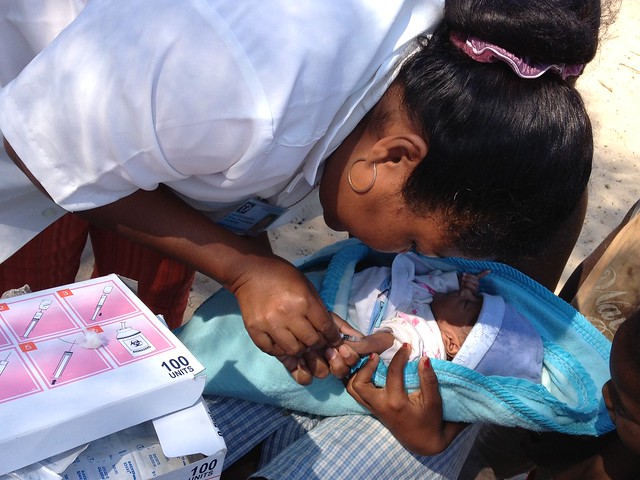
Currently, there is no cure for dengue fever. However, the WHO has now approved a vaccination called Dengvaxia, which took 20 years to be developed at a cost of $1.8 billion.

Dengvaxia, developed by Sanofi Pasteur is being released in the Philippines this month in the first ever public immunization program for the virus. The Philippines has had the highest rates of dengue fever in the pacific region with over 200,000 cases reported in 2013.

A report in the Seattle Post-Intelligencer notes that the vaccination “prevents dengue hospitalizations by 80 percent and severe dengue cases by 93 percent.” The program was launched in Manila’s Marikina city to hundreds of public school children and is being administered in three courses, separated by six months.

The Philippines Health Secretary Janette Garin called the program a “historic milestone”. Garin continued, “We are the first country to introduce, adopt and implement the first-ever dengue vaccine through (the) public health system and under a public school setting.”

– Michael A. Clark

Photo: Flickr

May 4, 2016
https://borgenproject.org/wp-content/uploads/borgen-project-logo.svg 0 0 Borgen Project https://borgenproject.org/wp-content/uploads/borgen-project-logo.svg Borgen Project2016-05-04 01:30:222024-12-13 17:54:21World’s First Vaccine for Dengue Fever
Advocacy, Global Poverty, Health

How GMOs Could Potentially End Poverty and Hunger in Africa

Hunger_Africa

One of the major ways extreme poverty and hunger can be terminated is an increase in agricultural activity. Genetically modified organisms, or GMOs, could potentially be a part of solving the poverty challenge.

Food products with GMOs are genetically engineered to increase crop yields, lower costs for food production, reduce the need for pesticides, enhance nutrient composition and food quality, resist pests and disease and increase food security.

Technological advancement has also made it possible for GMOs to withstand environmental stressors, allowing them to grow in conditions where they may not otherwise be able to thrive.

Though there are risks and controversies surrounding the use of GMOs, they could play a role in creating a new green revolution in Africa. African governments and donors can initiate the use of GMOs in Africa, according to the Center for Global Development (CGD).

Primarily, governments in Africa can develop cost-effective regulatory policies for these organisms. The policies would cover developing, testing, commercializing and importing genetically modified crops—most areas. Clear strategies would reduce uncertainty for potential investors by ensuring breakthroughs that occur can be distributed to farmers.

African governments can also exchange experiences and information about GMOs among each other. A platform to share information would help governments make cost effective decisions and learn potential opportunities and risks associated with GMO traits under certain conditions.

Pursuing South-South cooperation on GMO trade and regulatory policies is another tactic African governments can execute. Though the European Union is the largest market for African agricultural exports, trade with emerging markets is growing at a much faster rate. Thus, African governments should coordinate with countries like Argentina, Brazil, India and China to develop regulations for trading GMOS.

Lastly, the CDG says that donors should provide technology-neutral support for research and development for food security. Donors should also build capacity to facilitate trade in GMOs. African countries need support for research on modified staple crops, which donors can provide. In addition, EU donors should also provide technical and financial support due to its role as a major market.

Genetic modification is just one of many technologies that can improve agricultural productivity in Africa and the investments required to implement them could improve agricultural productivity as a whole.

– Kerri Whelan

Photo:  Flickr

April 28, 2016
https://borgenproject.org/wp-content/uploads/borgen-project-logo.svg 0 0 Borgen Project https://borgenproject.org/wp-content/uploads/borgen-project-logo.svg Borgen Project2016-04-28 06:37:222024-12-13 18:05:58How GMOs Could Potentially End Poverty and Hunger in Africa
Page 161 of 212«‹159160161162163›»

Get Smarter

  • Global Poverty 101
  • Global Poverty… The Good News
  • Global Poverty & U.S. Jobs
  • Global Poverty and National Security
  • Innovative Solutions to Poverty
  • Global Poverty & Aid FAQ’s
Search Search

Take Action

  • Call Congress
  • Email Congress
  • Donate
  • 30 Ways to Help
  • Volunteer Ops
  • Internships
  • Courses & Certificates
  • The Podcast
Borgen Project

“The Borgen Project is an incredible nonprofit organization that is addressing poverty and hunger and working towards ending them.”

-The Huffington Post

Inside The Borgen Project

  • Contact
  • About
  • Financials
  • President
  • Board of Directors
  • Board of Advisors

International Links

  • UK Email Parliament
  • UK Donate
  • Canada Email Parliament

Get Smarter

  • Global Poverty 101
  • Global Poverty… The Good News
  • Global Poverty & U.S. Jobs
  • Global Poverty and National Security
  • Innovative Solutions to Poverty
  • Global Poverty & Aid FAQ’s

Ways to Help

  • Call Congress
  • Email Congress
  • Donate
  • 30 Ways to Help
  • Volunteer Ops
  • Internships
  • Courses & Certificates
  • The Podcast
Scroll to top Scroll to top Scroll to top