• Link to X
  • Link to Facebook
  • Link to Instagram
  • Link to TikTok
  • Link to Youtube
  • About
    • About Us
      • President
      • Board of Directors
      • Board of Advisors
      • Financials
      • Our Methodology
      • Success Tracker
      • Contact
  • Act Now
    • 30 Ways to Help
      • Email Congress
      • Call Congress
      • Volunteer
      • Courses & Certificates
      • Be a Donor
    • Internships
      • In-Office Internships
      • Remote Internships
    • Legislation
      • Politics 101
  • The Blog
  • The Podcast
  • Magazine
  • Donate
  • Click to open the search input field Click to open the search input field Search
  • Menu Menu

Archive for category: Health

Information and stories on health topics.

Global Poverty, Health

Researchers Begin to Fight Hypertension in South Asia

Hypertension in South Asia
The Duke Global Health Institute will begin a study this year to find cost-effective ways to fight hypertension in South Asia.

The study will enroll 2,500 people from 30 rural communities in Bangladesh, Pakistan and Sri Lanka, where heart attacks and strokes caused by hypertension, also known as high blood pressure, are major causes of death.

“High blood pressure is the leading risk factor for premature deaths globally,” the study’s lead researcher, Tazeen Jafar said. “The findings from [our study] are likely to provide a roadmap for effective blood-pressure lowering strategies that are sustainable…and have the potential for saving millions of lives and reducing human suffering in South Asia and possibly beyond.”

According to the World Health Organization, 82 percent of premature deaths caused by non-communicable diseases like hypertension occur in developing countries. That’s 28 million deaths per year, and health officials say these deaths are entirely preventable.

Jafar’s study will focus on four strategies. The first is to educate patients about the beneficial effects of diet and exercise on hypertension. In addition to regular weekly exercise, diets high in whole grains, fruits and vegetables while low in sodium, saturated fat, cholesterol and alcohol are considered to be the easiest ways to measurably reduce blood pressure.

His team will also attempt to improve referrals to specialists, train doctors to manage high blood pressure with cost-efficient medication and develop special services at clinics to serve patients with hypertension.

They will then compare their results to traditional health care systems to find out if they can effectively fight hypertension in South Asia within the economic means of patients in developing countries.

Reducing hypertension and other non-communicable diseases will be a priority for policymakers over the coming years, as they work towards achieving the sustainable development goals of the 2030 Agenda.

An economic impact study from the U.S. Institute of Medicine suggested related diseases in Brazil have caused up to $72 billion in productivity loss — a problem that persists because these diseases are passed down between generations. For countries in South Asia facing similar consequences, fighting hypertension-related deaths is more than a matter of public health, it is an economic imperative.

– Ron Minard

Sources: Duke University, Mayo Clinic, WE Forum, WHO
Photo: Torange

February 3, 2016
https://borgenproject.org/wp-content/uploads/borgen-project-logo.svg 0 0 Borgen Project https://borgenproject.org/wp-content/uploads/borgen-project-logo.svg Borgen Project2016-02-03 01:30:132024-12-13 18:05:37Researchers Begin to Fight Hypertension in South Asia
Health, Malaria, United Nations

UN Millennium Development Project Reaches Malaria Goal

Millennium_Development
The United Nations (U.N.) gathered in New York late last November to celebrate positive progress on the 2015 Millennium Development Goals made to curb one of the world’s deadliest diseases: malaria. Global leaders, diplomats, and health experts were also present to witness the good news.

“Today, we celebrate major advances in our fight against malaria,” U.N. Secretary-General, Ban Ki-moon said in a message.

In 2000, a set of eight universally-agreed goals to rid the world of extreme poverty and disease by 2015 was developed by the UN Millennium Development Goals (MDG). The program saw much success, particularly regarding malaria.

“The world’s success in rolling back malaria shows just what can be achieved with the right kind of determination and partnerships,” said Mogens Lykketoft, the President of the UN General Assembly. “It provides bold inspiration to all nations that seek to create a healthy environment for their children and adults. We can and we must eliminate malaria by 2030.”

In order to achieve the 2030 target, the UN says that they will need full cooperation from the Roll Back Malaria Partnership and the World Health Organization (WHO). “In it, we have the path forward,” said Lykketoft. “I urge all members states to fully support implementation of this strategic plan.”

The UN announced that it surpassed MDG goals to “bring reversing malaria incidence by 2015.” Their progress is responsible for 6.2 million averted malaria deaths, 97 percent of which are young children.

Over 100 countries are declared “free” of malaria. Another 55 are on track to reduce new malaria cases by at least 75 percent by the end of the year. African countries are even seeing fewer malaria cases, a historical statistic for a continent that has struggled against the disease.

Despite the progress made, WHO estimates that approximately 214 million people were infected with malaria in 2015. Of that staggering number, 472,000 people lost their lives, a large percentage of which were children under the age of five.

Advancements in technology, as well as new measures, have helped reduce malaria deaths by up to 20 percent in African children since 2000. About 95,000 newborn deaths related to malaria pregnancy have also been averted between 2009 and 2012.

Although health ministers will move away from the eight Millennium Development Goals and transition to a new set of 17 Sustainable Development Goals (SDGs) next year, the Roll Back Malaria Partnership is “urging continued commitment to achieve malaria elimination by 2030” while also helping to advance development across government sectors.

“Under MDGs, we have seen what can be achieved when we join our efforts and come together in a coordinated fashion,” said Herv Verhoosel, Representative from the Roll Back Malaria Partnership Secretariat in New York.

“As we set our sights on elimination, we stand to avert nearly 3 billion cases of infection and generate some $4 trillion in additional economic output over the next 15 years,” he said. “But we must ensure political commitment and predictable financial resources necessary to carry us over the finish line.”

– Alyson Atondo

Sources: San Antonio Post, UN 1, UN 2
Photo: Flickr


January 17, 2016
https://borgenproject.org/wp-content/uploads/borgen-project-logo.svg 0 0 Borgen Project https://borgenproject.org/wp-content/uploads/borgen-project-logo.svg Borgen Project2016-01-17 01:30:132024-06-11 02:48:17UN Millennium Development Project Reaches Malaria Goal
Children, Developing Countries, Global Poverty, Health

American Academy of Pediatrics: Remember the Children

American Academy of Pediatrics Asks UN to Remember The Children
The American Academy of Pediatrics (AAP) wrote an open letter to the U.N. last month to ensure that all children be counted in the post-2015 global development agenda.

The letter, entitled “All Children Count But Not All Children Are Counted,” was addressed to the U.N. Statistical Commission and Inter-Agency Expert Group on Sustainable Development Goals (SDG) Indicators. It included two recommendations in response to the “leave no one behind” item of the post-2015 agenda:

  1. Ensure that children living outside of households and/or without parental care are represented in disaggregated data.
  2. Improve and expand data collection methodologies to ensure all children are represented.

The AAP argues that there is limited data on the number of children living in developing countries and that they should be represented in all data and estimates.

Today, many children in developing countries are born into conditions that pose many risks to their health and well-being, giving them a small chance for survival. About 29,000 children under the age of five die every day (that’s 21 each minute), mainly from preventable causes, according to UNICEF.

Lack of representation in data and estimates of hard-to-reach areas could further complicate the situations of vulnerable children as it would prevent them from getting the solutions they need.

According to the AAP, the children that are most at risk are those without parental care because of trafficking, conflict, disaster or armed group recruitment. Given the current state of international conflict and disaster, the risk of children not being counted has increased especially with the Syrian refugees.

UNICEF has also taken notice of the elevated risk and has requested $624 million to give water and school supplies for almost 500,000 children (2.6 million people total) that have been affected by the Syrian refugee crisis.

With its letter, the AAP addresses a critical issue that we are being faced with now: protecting children around the world. Children in suffering countries, who are incapable of protecting themselves, deserve our attention.

“Indeed, all children count, but not all children are counted,” AAP said.

– Ashley Tressel

Sources: AAP Publications, Lumos, UNICEF 1, UNICEF 2
Photo: Flickr

December 21, 2015
https://borgenproject.org/wp-content/uploads/borgen-project-logo.svg 0 0 Borgen Project https://borgenproject.org/wp-content/uploads/borgen-project-logo.svg Borgen Project2015-12-21 05:22:082024-12-13 18:05:29American Academy of Pediatrics: Remember the Children
Education, Global Poverty, Health

Do You Know Enough About Antibiotic Resistance?

antibiotic
Antibiotic resistance poses one of the greatest threats to global health and so-called “superbug” infections continue to grow. The latest World Health Organization (WHO) survey shows widespread confusion surrounding antibiotic resistance in developing countries.

The WHO reveals that those most affected by and at risk for antibiotic-resistant infections are confused about them. This poses a challenge to the treatment and eradication of antibiotic-resistant infections, which are propagating all over the world.

“Antibiotic resistance is occurring everywhere in the world, compromising the treatment of infectious diseases and undermining many other advances in health and medicine,” says the WHO.

According to the Alliance for the Prudent Use of Antibiotics, bacteria become resistant either by a genetic mutation or by acquiring resistance from another bacterium.

The survey, carried out in September and October 2015, covered 12 countries including Barbados, China, Egypt and India. The statistics cover the countries’ use of antibiotics and knowledge of antibiotics and antibiotic resistance.

The results were below expectations. Although respondents acknowledged that antibiotic resistance is a threat to them and their families, they did not fully understand how it affects them or what they can do to protect themselves.

According to the findings, “64 percent of respondents believe antibiotics can be used to treat colds and flu, despite the fact that antibiotics have no impact on viruses.”

Almost one-third of respondents believe they should stop taking antibiotics when they feel better, rather than for the full course of the prescription, which is also incorrect.

This uncertainty is occurring at a time when the threat of antibiotic resistance is reaching a peak. Deaths caused by antibiotic-resistant infections, known as “superbugs,” are growing faster than we are able to respond to them. The death rate for patients with infections caused by common but resistant bacteria treated in hospitals can be about twice that of patients with infections caused by the same non-resistant bacteria, says the WHO.

With results as pronounced as these, the WHO has started a new campaign to increase global awareness and improve understanding of the problem of antibiotic resistance.

– Ashley Tressel

Sources: WHO 1, WHO 2, WHO 3, TUFTS
Photo: Joint Programming Initiative on Antimicrobial Resistance

December 12, 2015
https://borgenproject.org/wp-content/uploads/borgen-project-logo.svg 0 0 Borgen Project https://borgenproject.org/wp-content/uploads/borgen-project-logo.svg Borgen Project2015-12-12 01:30:102024-05-27 09:28:34Do You Know Enough About Antibiotic Resistance?
Children, Development, Education, Global Poverty, Health

Girl Up Campaign Volunteers: Addressing Global Poverty

girl_up
Sydney Faler and Molly Foulkes of Dundee-Crown High School in Illinois started the Girl Up Dundee student club at their school with the hope of helping girls in need across the globe.

The club is a member of the U.N.’s Girl Up campaign which aims to help girls have access to education, health care, safe living conditions as well as social and economic opportunities. The U.N.’s program helps girls in Guatemala, India, Malawi, Liberia and Ethiopia, which are among the toughest places for girls to live.

In the beginning, Faler and Foulkes wanted to do something positive, but they were not sure how to make a difference. Inspired by Emma Watson’s U.N. speech on gender equality, they decided to start the club as a way to collect support and resources for girls.

Foulkes said, “It’s a way for me as a high school student, where I don’t really have that voice, to be able to impact something globally.”

Their sentiment proved to be a common one, as the club started with 35 members and has more people joining every week. In the digital age, students seem more aware of problems in the world and they wish to have a positive impact.

Foulkes said that “we’re becoming a more globalized nation and world. It’s important to realize there are so many more people out there than just our community.” With the planet becoming smaller due to everyone connecting through the internet and social media, issues that were previously unknown are now being brought to the forefront.

People everywhere are coming together to help each other, as evidenced by the growing popularity of the Girl Up student club, which is just one of 1,000 registered Girl Up clubs in the United States. The U.N.’s Girl Up club is also represented in 51 countries around the world.

So far this year, the Dundee-Crown chapter of the Girl Up student club has raised over $300 for girls in Guatemala. The funds will provide bicycles for girls in Guatemala, so they can get to school safely. With access to education, the girls will likely be healthier, more financially responsible and better qualified for good jobs.

Most Guatemalan girls in the Girl Up-supported regions only receive about three years of schooling. This lack of education means that most girls never learn to read and write. In addition, without access to education, girls are more at risk for early marriage and childbearing, thus continuing the cycle of poverty.

In order to help break the cycle, Faler and Foulkes also plan to host a gala event with local community members so they can spread their message. Foulkes said that “a lot of people don’t really understand what we’re doing.”

They believe that once they inform others, they will reach their goal of raising $500 to help more girls in need. These two high school students’ actions are having positive impacts for girls who desperately need it.

– Andrew Wildes

Sources: Daily Herald, Girl Up
Photo: Cloud Front

December 8, 2015
https://borgenproject.org/wp-content/uploads/borgen-project-logo.svg 0 0 Borgen Project https://borgenproject.org/wp-content/uploads/borgen-project-logo.svg Borgen Project2015-12-08 01:30:412020-06-24 20:36:39Girl Up Campaign Volunteers: Addressing Global Poverty
Development, Education, Global Poverty, Health

Eradicating Extreme Poverty: The 10 Percent Mark

eradicating_extreme_poverty
As the world turns its focus toward the home stretch of ending the likes of world hunger and preventable diseases, eradicating extreme poverty also lands on the agenda. According to the World Bank, extreme poverty will reach an all-time low of less than 10 percent by the end of this year.

However, as great as this news is, millions are still suffering, and it is important to remember the end goal of completely eradicating extreme poverty, both through what has been proven to work and new innovations.

Jim Yong Kim of the World Bank said that “this is the best story in the world today, these projections show us that we are the first generation in human history that can end extreme poverty.”

Knowing this, it is so important to take these findings and act on the opportunity; now is not the time to relax. According to the World Bank, 702 million people (or 9.6 percent of the world) will still be living below the poverty line. Most of these people currently live in sub-Saharan Africa and Asia.

But the progress can be clearly seen when compared with past numbers. In 2012, 902 million people (or 13 percent) still lived in poverty, and that number was higher still at 29 percent in 1999. Since the pledge made by the leaders of the world 15 years ago, more than one billion people have been lifted out of poverty.

Kim believes this steady decline has occurred thanks to a combination of economic growth in developing countries as well as more countries investing in their health and education systems. Resiliency among communities has also been increased through societal safety nets, which help to prevent people from falling back into poverty.

As mentioned above, the work is not over as long as one person still lives in poverty. The world and organizations focused on poverty need to continue to be proactive if they want to be able to completely eradicate extreme poverty.

As Kim says, “This new forecast of poverty falling into the single digits should give us new momentum and help us focus even more clearly on the most effective strategies to end extreme poverty.”

– Drusilla Gibbs

Sources: Al Jazeera 1, Al Jazeera 2, World Bank
Photo: Christianity Today

December 8, 2015
https://borgenproject.org/wp-content/uploads/borgen-project-logo.svg 0 0 Borgen Project https://borgenproject.org/wp-content/uploads/borgen-project-logo.svg Borgen Project2015-12-08 01:30:152024-12-13 18:05:22Eradicating Extreme Poverty: The 10 Percent Mark
Development, Global Poverty, Health

New Zero TB Cities Project Launched in India

zero_tb_cities
An alliance of international and domestic health organizations has created the Zero TB Cities project in an effort to drastically reduce tuberculosis (TB) infections around the world. Chennai, India is one of the coalition’s first targets.

According to the World Health Organization, 2.6 million people in India are infected with TB, accounting for 23 percent of global TB cases.

Pamela Das, Executive Editor of The Lancet said in an Editorial, “The goal is to help communities move to zero deaths from tuberculosis in their own way, and create ‘islands of elimination,’ which will hopefully reverse the overall tuberculosis epidemic.”

The project will be using a comprehensive method at a community level to tackle the disease. The “island of elimination” strategy is a simple strategy that pushes for better use of current tools and methods for attacking TB.

Zero TB Cities relies on the collaboration between local governments, institutions and grassroots associations to provide life-changing treatment. The partnership of the Municipal Corporation of Chennai, Chennai-based REACH and the National Institute of Research in Tuberculosis (NIRT) will conduct the project.

Although TB is an airborne disease, Tom Nicholson, head of the project, said that it can be controlled and has been in the past.

According to Dr. Suvanand Sahu, Deputy Executive Director of the Stop TB Partnership in Geneva, the transmission of TB is much higher in cities because people live in close proximity to each another and infection spreads quickly.

In Chennai, the project will actively search for people infected with TB and treat them to interrupt transmission cycles and reduce mortality. The project will also provide preventative TB treatments for people in high-risk areas and routine monitoring for early and accurate diagnosis.

Nicholson, an associate in research at the Duke Center for International Development (DCID) in Durham, said he believes that any city can reach “pre-elimination phase”. This phase refers to a relatively TB free environment found in wealthy countries as a result of Zero TB Cities.

– Marie Helene Ngom

Sources: TheHindu, Indread, TBfacts
Photo: Flickr

December 6, 2015
https://borgenproject.org/wp-content/uploads/borgen-project-logo.svg 0 0 Borgen Project https://borgenproject.org/wp-content/uploads/borgen-project-logo.svg Borgen Project2015-12-06 01:30:342020-06-24 20:27:39New Zero TB Cities Project Launched in India
Development, Global Poverty, Health, Sanitation, Water

Water, Sanitation and Hygiene: Better Nutrition for The Poor

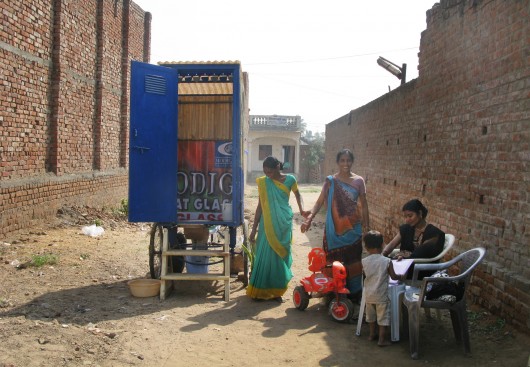
sanitation_and_hygieneExtreme poverty makes access to clean water and nutritional food difficult for millions of people. Sanitation and hygiene also suffer as survival becomes the focus.

However, poor sanitation and hygiene often lead to diseases which cause diarrhea and fluid loss. These conditions can also result in malnutrition as more food is being expelled rather than processed and used. With a little help and knowledge, sanitation, hygiene and clean water can reverse the tide of disease and improve nutrition.

Take for example the situation in the Yarou Plateau village in Mali from the USAID blog:

“People used to use any open space for bathroom needs. Flies could easily find fecal matter lying around, and from there land on food, spreading diseases like diarrhea and intestinal worms. Fecal matter in open areas also contaminated the groundwater, which villagers use for drinking and preparing food. Diarrhea can worsen malnutrition, and the undernourished already have weakened immune systems — making them more susceptible to intestinal infections and more severe episodes of diarrhea.”

To combat the malnutrition these diseases cause, the World Health Organization has set some global targets for 2025:

  1. 40 percent reduction in the number of children under the age of five who have had their growth stunted
  2. 50 percent reduction in the number of women of a reproductive age who experience anemia
  3. 30 percent reduction in babies born with a low birth weight
  4. A halt in the increase of childhood obesity
  5. 50 percent increase in breastfeeding exclusivity during the first six months of a baby’s life

USAID says malnutrition “is an underlying factor in almost half of all child deaths” and also increases a child’s chance of dying from preventable illnesses such as pneumonia and diarrheal disease. These diseases cause anemia, loss of appetite and a decrease in the body’s ability to properly absorb nutrients.

Two years ago, conditions in the Yarou Plateau village changed for the better. The village has improved its sanitation by building more than 60 latrines and fixing ones they already had.

In addition to Yarou Plateau, more than 179 other villages have been able to improve sanitation and hygiene through support from USAID’s project WASHplus.

The program works not only to improve water, sanitation and hygiene but also to reduce “diarrheal diseases and malnutrition.” WASHplus introduces and promotes proper hand washing, water treatment and food preparation and storage.

Where proper sanitation and hygiene practices are initiated and properly implemented, the poor and those living in underdeveloped countries can avoid illness and get the nutrition they need to grow, thrive and break the cycle of poverty.

– Drusilla Gibbs

Sources: USAID, WHO
Photo: Flickr

December 5, 2015
https://borgenproject.org/wp-content/uploads/borgen-project-logo.svg 0 0 Borgen Project https://borgenproject.org/wp-content/uploads/borgen-project-logo.svg Borgen Project2015-12-05 01:30:502024-05-27 09:28:26Water, Sanitation and Hygiene: Better Nutrition for The Poor
Development, Global Poverty, Health, Technology

Why Drones Could Soon Be Delivering Health Care

DronesPending Aviation Authority approval, drones could soon be used to deliver healthcare to patients in developing countries.

Drones, or unmanned aircraft, can be controlled by remote or autonomously. They can be used for a variety of things including surveillance, leisure and weaponry. Now, the potential has been unlocked for drones to help the field of healthcare.

Timothy Amukele, a pathologist at Johns Hopkins, is one of the people exploring this possibility. Recognizing that access in many third world countries is inadequate and expensive, he thought, why not drones?

“If we now have a cheaper way to move samples, it’s a good thing, especially for patients who are hard to reach, whether they live in rural areas or places without good roads,” Amukele said.

In order to stabilize health throughout Africa, access to medicine is necessary. One of the main reasons medicine becomes undeliverable is poor road conditions.

According to the Africa Development Bank, in 2010 only 34 percent of rural Africa had adequate road access. That small percentage is further crippled by the fact that those roads are poor quality and the government was unwilling to grant money for their repair.

Right now, helicopters or motorcycles are the best means of transportation throughout rural Africa. While motorcycles are cheaper to operate, they also have their disadvantages.

Motorcycles are smaller, eliminating the possibility for large amounts of cargo to be transported. Helicopters, on the other hand, make more sense because they are larger and avoid roads altogether. However, the operational costs are excessive.

Drones, potentially, are a solution to that logistical issue. The unmanned aircraft do not need to deal with traveling across haphazard roads. They are also significantly less expensive to operate, as they do not require fuel.

Drones can also help alleviate the number of patients a physician has to help for non-threatening medical issues. According to the World Bank, Bhutan only has one physician for every 3,333 people.

Having the ability to send drones to deliver medicine would cut down on the number of patients a physician would have to see. This would free up time for doctors to be able to attend to patients in desperate need of care.

Even though the idea of drones providing healthcare services is new, there are many positive attributes. Still, more must be achieved and learned to allow for this conception to become a reality.

– Alyson Atondo

Sources: MIT, The Conversation, Washington Post, Benzinga
Photo: Flickr

December 5, 2015
https://borgenproject.org/wp-content/uploads/borgen-project-logo.svg 0 0 Borgen Project https://borgenproject.org/wp-content/uploads/borgen-project-logo.svg Borgen Project2015-12-05 01:30:122024-12-13 18:05:28Why Drones Could Soon Be Delivering Health Care
Global Health, Global Poverty, Health

Lights, Camera, Global Health Film Festival

Global_Health_Film_festival
The Global Health Film initiative held its first festival last month to use film and media as a catalyst for discussion and change on global health issues. The festival included film production workshops, in-depth panel discussions and pitching opportunities.

The inaugural event was held in London this year on Oct. 30-31. The festival – Films to Inspire Change, began a new era of global health discussion, incorporating art and expression into the previously science-only forum.

According to the Global Health Film initiative, workshops at the festival included:

  • Film for social change in low-resource settings ( by Medical Aid Films)
  • Guerrilla filmmaking and global health (by What Took You So Long?)
  • Crowdfunding for global health film (by Dartmouth Films)
  • Impact of global health film (by BRITDOC Foundation)
  • Innovation at grass roots: filmmaking in low resource settings (by BBC Media Action)
  • Media training for health advocate (by Rockhopper TV)

One of the films featured at the festival, “Body Team 12,” follows the first female member of the Ebola response teams in Liberia. Another, “Fire in the Blood,” documents the battle to make AIDS drugs cheap enough for poor countries to afford them (Sci Dev Net). “TB Unmasked” and “TB Silent Killer” cover tuberculosis, while “Outbreak” exposes the “hidden” beginning of the Ebola outbreak in West Africa.

In order to facilitate discussions such as those sparked at the festival, the Global Health Film initiative also developed two labs this year to support global health advocates and produce films that highlight critical global health issues. The Global Health Film Lab houses nine fellows and gives them the training and tools they need to produce their own change-inspiring films.

The initiative also holds screenings for new films that present new ideas in the global health field. Past screenings include “Girl Rising,” which promotes the education of girls in developing countries, and “Open Heart,” which tells the story of Rwandan children with rheumatic heart disease.

These films continue to raise awareness and present otherwise widely-ignored information in a way that evokes an emotional response.

– Ashley Tressel

Sources: SciDev, Global Health Film 1, Global Health Film 2
Photo: Pixabay

November 28, 2015
https://borgenproject.org/wp-content/uploads/borgen-project-logo.svg 0 0 Borgen Project https://borgenproject.org/wp-content/uploads/borgen-project-logo.svg Borgen Project2015-11-28 04:47:492024-12-13 18:05:26Lights, Camera, Global Health Film Festival
Page 163 of 212«‹161162163164165›»

Get Smarter

  • Global Poverty 101
  • Global Poverty… The Good News
  • Global Poverty & U.S. Jobs
  • Global Poverty and National Security
  • Innovative Solutions to Poverty
  • Global Poverty & Aid FAQ’s
Search Search

Take Action

  • Call Congress
  • Email Congress
  • Donate
  • 30 Ways to Help
  • Volunteer Ops
  • Internships
  • Courses & Certificates
  • The Podcast
Borgen Project

“The Borgen Project is an incredible nonprofit organization that is addressing poverty and hunger and working towards ending them.”

-The Huffington Post

Inside The Borgen Project

  • Contact
  • About
  • Financials
  • President
  • Board of Directors
  • Board of Advisors

International Links

  • UK Email Parliament
  • UK Donate
  • Canada Email Parliament

Get Smarter

  • Global Poverty 101
  • Global Poverty… The Good News
  • Global Poverty & U.S. Jobs
  • Global Poverty and National Security
  • Innovative Solutions to Poverty
  • Global Poverty & Aid FAQ’s

Ways to Help

  • Call Congress
  • Email Congress
  • Donate
  • 30 Ways to Help
  • Volunteer Ops
  • Internships
  • Courses & Certificates
  • The Podcast
Scroll to top Scroll to top Scroll to top