• Link to X
  • Link to Facebook
  • Link to Instagram
  • Link to TikTok
  • Link to Youtube
  • About
    • About Us
      • President
      • Board of Directors
      • Board of Advisors
      • Financials
      • Our Methodology
      • Success Tracker
      • Contact
  • Act Now
    • 30 Ways to Help
      • Email Congress
      • Call Congress
      • Volunteer
      • Courses & Certificates
      • Be a Donor
    • Internships
      • In-Office Internships
      • Remote Internships
    • Legislation
      • Politics 101
  • The Blog
  • The Podcast
  • Magazine
  • Donate
  • Click to open the search input field Click to open the search input field Search
  • Menu Menu

Archive for category: Global Poverty

Key articles and information on global poverty.

Global Poverty

Smog From China is Crossing Borders

Smog From China is Crossing BordersSmog in China is an ongoing issue. China’s ongoing process of industrialization has resulted in extreme amounts of pollution in many of its cities. Because of the national dependence on particularly dirty fossil fuels, millions of citizens wear surgical masks when venturing outside because the air is just too dirty to breathe safely.

Until recently, the problem has been largely confined to China itself. Those afraid of global climate change, however, have been calling attention to the issue for years. Now, smog from China is crossing borders and affecting its Japanese neighbors. This presents another challenge to test Chinese-Japanese already strained relations.

Associate Professor Toshihiko Takemura of Kyushu University, who studies pollution for the University, explained that in Kyushu, “the level of air pollution has been detectable in everyday lives since a few years ago.”

China is notorious for quashing public dissent on sensitive issues like government shortcomings. However, in recent weeks, there have been uncanny amounts of focus put on environmental shortcomings by both state television and party officials.

Hopefully, the new Chinese Premier will work hard to drastically reduce China’s levels of pollution, bettering the health of the country’s citizens while improving relations with China’s estranged neighbor.

– Jake Simon

Source: news.com.au
Photo: Japan Times

February 23, 2013
https://borgenproject.org/wp-content/uploads/borgen-project-logo.svg 0 0 Borgen Project https://borgenproject.org/wp-content/uploads/borgen-project-logo.svg Borgen Project2013-02-23 11:33:392024-06-10 02:52:41Smog From China is Crossing Borders
Global Poverty

Everything You Need to Know About Malnutrition

Malnutrition is not necessarily about not having enough to eat, but rather not having the right minerals and vitamins in what you eat. This World Food Program (WFP) video says everything you need to know about malnutrition – in two minutes.

The cycle of malnutrition starts in the womb, malnourished mothers give birth to children with health problems who grow up to be adults with health problems, then raising the next generation, and so on. The goal of the WFP is not just to treat malnutrition, but to also help it from happening in the first place. WFP realizes that it costs half as much to help a child under two, than it does to wait until the child is older and in need of greater assistance.

In raw figures, WFP indicates it would cost $3.6 billion to provide the special foods needed to treat all the moderately malnourished infants and toddlers in the world. Seemingly a large sum of money, but it is less than half of the $10 billion that Europeans spend on ice cream annually. Thus, the amount needed to treat malnourished is attainable.

Relatively, the fight against malnutrition is not that daunting; the world has the ability and the means, “the challenge is to do it.”

– Mary Purcell

Source: Youtube

February 23, 2013
https://borgenproject.org/wp-content/uploads/borgen-project-logo.svg 0 0 Borgen Project https://borgenproject.org/wp-content/uploads/borgen-project-logo.svg Borgen Project2013-02-23 09:15:442024-12-13 17:53:42Everything You Need to Know About Malnutrition
Global Poverty

Free Oxford Course on Climate Change

Free Oxford Course on Climate Change
Oxford University, one of the top-rated British schools, boasting such notable alumni as Stephen Hawking, Kris Kristofferson, and Dr. Seuss is now offering a free online course on climate change titled “An Introduction to the Science of Climate and Climate Change.”

The course, conducted entirely online, is being made available through the website www.climate.net, which is a global program that aims to educate the public about climate science, thereby increasing awareness of climate change-related issues.

The course content outlines the basics of climate science and modeling, which considers specific variables involving climate change in an attempt to paint a wider picture of the possible effects on local ecosystems and weather patterns. In addition to having a greater understanding of climate science and modeling, this course on climate change will also allow for a deeper interpretation of the modeling results. Once completed with an overall score of 90 percent or higher, there is also the option to take the advanced course titled “Constructing and Applying High Resolution Climate Scenarios.” This course is tutor-supported, allowing for instructor feedback that enables the student to have a better grasp of the production and/or analysis of climate-related data.

This course is a wonderful opportunity for anyone looking to be better informed on the often confusing climate-related issues that dominate the daily news. And even better, it educates those looking to separate truth from fiction in regards to global warming, annual rainfall, and food security, all issues that underpin global poverty.

– Brian Turner

Source: Climate Education
Photo: The Telegraph

February 23, 2013
https://borgenproject.org/wp-content/uploads/borgen-project-logo.svg 0 0 Borgen Project https://borgenproject.org/wp-content/uploads/borgen-project-logo.svg Borgen Project2013-02-23 06:00:462024-06-05 01:34:58Free Oxford Course on Climate Change
Global Poverty

5 Reasons Why Social Responsibility Matters in Business

5 Reasons Why Social Responsibility Matters in BusinessBusinesses and economic systems are bending under the expectations and obligations to be socially responsible. On a global level, governments and private corporations must be more and more accountable for their impact on the environment, and for who they help or hurt.

Here are 5 reasons why social responsibility matters in business:

1. Consumers Look For Corporate Social Responsibility (CSR)

  • More than 88% of consumers think companies should try to achieve their business goals while improving society and the environment
  • 83% of consumers think companies should support charities and nonprofits with financial donations

2. Employees Look For and Perform Better for Socially Responsible Businesses

  • 32% of employees would seriously consider leaving their job if their company gave no/little money to charity
  • 65% would seriously consider leaving their job if their company harmed the environment
  • 83% would seriously consider leaving their job if their employer used child labor in sweatshop factories
  • CSR practices are seen as important to employee morale (50%), loyalty (41%), retention (29%), recruitment of top employees (25%) and productivity (12%)

3. It is a competitive advantage (Harvard Business Review)

  • Every company needs “a unique position – doing things differently from competitors.” Philanthropic projects show a particular and distinctive identity.
  • “CSR can be much more than a cost, a constraint, or a charitable deed – it can be a source of opportunity, innovation, and competitive advantage.”

4. Capitalism focused strictly on profit is no longer viable

  • Investors will sever business ties with companies that are caught damaging the environment or engaging in socially damaging practices.
  • A fourth sector of the economy is emerging – “for-benefit.” Different from non-profit, for-profit, or governmental sectors, this is a group that operates on earned income but gives top priority to an explicit social mission over profit for the sake of profit.

5. It is a moral obligation

  • Domestically – businesses need to give back to the communities and nations that provided them the opportunity to succeed
  • Globally – economic and security concerns/events can immediately have a negative global impact. Investing, developing, and doing-no-harm will strengthen all sectors of business.

– Mary Purcell

Source: Movingworlds.org
Photo: Chieforganizer.org


February 22, 2013
https://borgenproject.org/wp-content/uploads/borgen-project-logo.svg 0 0 Borgen Project https://borgenproject.org/wp-content/uploads/borgen-project-logo.svg Borgen Project2013-02-22 15:15:522024-06-04 02:43:495 Reasons Why Social Responsibility Matters in Business
Global Poverty

Poverty Reduction Can Take Many Paths

Poverty Reduction Can Take Many Paths
With a need as immense as reducing global poverty, there are many different ways one can choose to affect change and inspire others to get involved. Poverty reduction can take many paths and many methods can be employed in the fight. One compelling and effective approach is the use of documentary film as a means of educating and emotionally inspiring others.

In an effort to raise awareness and ignite involvement, the non-profit organization Global Citizen has partnered with Development and Aid World News Service (DAWNS) to provide two $1,000 grants for humanitarian documentaries.

By going to the Global Citizen website, interested parties can vote for the 12 finalists who have started projects to impact and create a better understanding of the complex effects of extreme poverty.

One film follows 15 grassroots organizers in Cameroon who are mobilizing communities through peacebuilding, social justice, human rights and more. Another tries to tell the day-to-day story of war victims in Somalia. Many others address women’s issues, such as a film based in Libya which consist of interviews with Nobel Peace Prize winners, or an entry from Gambia focusing on the largely female impoverished agricultural population, or in the Hindu culture of India where boys represent status and girls are regarded as a financial drain on the family, or in Sub-Saharan Africa where maternal death is still systemic.

Finalist Nosarieme Garrick, an African woman living in America, focuses on innovations on the African continent evolving from younger generations. Her series will follow unexpected and “hopeful” developments in the humanitarian, music, fashion, film, arts and business sectors. Garrick wants to change the perception of “her” continent. “Africa is a growing force to be reckoned with. As young people return back from the diaspora, and democracies become more stable, the former image of the “Hopeless Continent” is in desperate need of shedding.”

Anyone can affect change in a way that speaks to them; it’s just a matter of taking that first, crucial step.

– Mary Purcell

Source: Global Poverty Project


February 19, 2013
https://borgenproject.org/wp-content/uploads/borgen-project-logo.svg 0 0 Borgen Project https://borgenproject.org/wp-content/uploads/borgen-project-logo.svg Borgen Project2013-02-19 19:40:222024-05-24 23:42:25Poverty Reduction Can Take Many Paths
Developing Countries, Development, Foreign Policy, Global Poverty, Human Rights, United Nations

Who is Benefiting From Land and Water Grabbing?

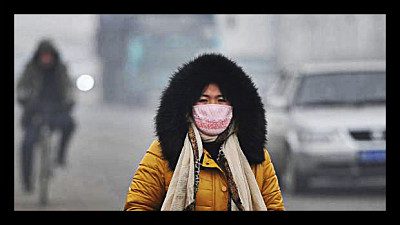
Who is Benefiting From Land and Water Grabbing?It is assumed that the already existing gap between developed and developing nations is large and apparent enough that wealthier nations would try and fill this gap and bring these opposite ends closer together. According to an ABC Environmental article, however, wealthy nations are instead competing over ‘land’ and ‘water grabbing’ to appease their growing populations and the “stressed” supply of basic necessities such as food and water. Investors in a foreign land, or better yet, the land-grabbers, are countries and investment firms from biofuel producers to large-scale farming operations (agricultural investors).

Since 2000, the major countries that have contributed to this land purchasing are the U.S., Malaysia, the U.K., China, and the U.A.E. Experts aren’t sure of these investors’ motives but it is clear that they are only focusing on buying land where there is clear access to water.

‘Land grabbing’ is defined by Paolo D’Odorico, a professor at the University of Virginia, as “a deal for about two km2 or more that converts an environmentally important area currently used by local people to commercial production.” According to an environmental study, 454 billion cubic meters sums up the ‘water-grabbing’ per year by corporations on a global scale, which is about 5 percent of the world’s annual water consumption. According to the public database Land Matrix “1,217 deals have taken place, which transferred over 830,000 square kilometers of land” since 2000, with 62 percent of such deals happening in Africa alone.

From 2005 to 2009, during a major food price crisis, land purchases, which fall under a very low level of regulation, skyrocketed. In 2011, the Food and Agricultural Organization of the U.N. released guidelines that advise investors to consider the people and communities whose land is being used. However, such guidelines are viewed as humanitarian concerns and have little enforcement, meaning that they aren’t strict enough to have corporations and investors abide by them or even care for them.

Governments who are interested in and have been leasing and selling land to foreign countries and investors are mainly those in Eastern Africa and Southeast Asia. They are interested in these sales because they want to modernize their farming and believe this is the way to do it. However, the reality is that the resulting development from such ‘land and water grabbing’ depends on the investors’ terms and conditions, as well as their sense of morality.

The main problem is that the majority of these sales are happening in poor countries in which there are high rates of hunger and where resources valuable to the local populations are being purchased by wealthier developed nations or even by private corporations. The main question of the matter is this: Who is benefiting from land and water grabbing? Are these sales helping the local people since it is their land? Or are these purchases only concerned about foreign benefits and the population concerns of developed nations?

– Leen Abdallah

Source: ABC
Photo: Water Governance
February 19, 2013
https://borgenproject.org/wp-content/uploads/borgen-project-logo.svg 0 0 Borgen Project https://borgenproject.org/wp-content/uploads/borgen-project-logo.svg Borgen Project2013-02-19 17:33:172024-06-07 04:44:44Who is Benefiting From Land and Water Grabbing?
Global Poverty

The Top 3 Suprising Health Benefits of Globalization

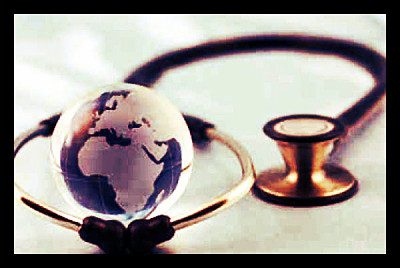
global health 2_opt
Contrary to popular opinion, globalization has several little known and widely unpublicized effects on overall health and longevity. Previously, this phenomenon was primarily centered around the interconnectedness of people, ideas and economic capital; however, recent findings show that it might not be operating within the preconceived limitations and that there may actually be some health benefits of globalization.

Researchers at the University of Netherlands and Luephana University collaborated to analyze the mortality rates of globalized versus non-globalized countries. Utilizing the Maastricht Globalization Index (MGI) as a barometer to measure the various associations between globalization and health in a nation, scientists were able to determine-via statistical analysis-certain positive outcomes. Their results were unexpected, and what emerged from the study were three surprising health benefits of globalization.

  1. Infant Mortality Rates – In comparing the MGI to infant mortality rates, research values overwhelmingly showed that those countries with greater globalization levels also had reduced infant mortality rates. Scientists theorized that the converse relationship between the two might have to do with the higher educational, GDP and neo-natal care levels of a globalized versus non-globalized nations.
  2. Under Five Mortality Rates – Following the completion of the study, researchers were also able to determine that under-five mortality rates were decreased in those nations exhibiting higher levels of globalization. In regards to under-five mortality rates, the decreased numbers of female smokers was a significant contributor to the health benefits of globalization.
  3. Adult Mortality Rates – Even more surprising, the MGI showed a significant correlation between higher rates of globalization and lower rates of adult mortality in a nation. These health benefits of globalization were the most unexpected, and researchers found that improved access to sanitation was the greatest statistical contributor.

It appears that based upon these findings, there is a certain amount of scientific evidence highlighting the health benefits of globalization. Thus, advocating for the increased economic stability and food security factors of global poverty reduction is exactly what is needed to combat infant, under five, and adult mortality rates.

– Brian Turner

Source: Globalization and Health

Photo: Imperial International Public Health

February 18, 2013
https://borgenproject.org/wp-content/uploads/borgen-project-logo.svg 0 0 Borgen Project https://borgenproject.org/wp-content/uploads/borgen-project-logo.svg Borgen Project2013-02-18 11:31:212020-04-10 19:54:45The Top 3 Suprising Health Benefits of Globalization
Global Poverty

10 Countries with the Shortest Life Expectancy

LifeExpectancy

The 10 countries with the shortest life expectancy can be found in one continent, Africa, with the exception of Afghanistan. Short life expectancy in sub-Saharan Africa can be caused by famine, poor governments, low levels of education (research has suggested that education correlates with healthcare awareness), availability of clean water and the existence of widespread AIDS. In Afghanistan, the main reason for short life expectancy has been due to infant mortality and women not surviving through childbirth. According to The Guardian, better access to healthcare in the last decade has helped cut infant mortality rates in Afghanistan.

What can we do? Well, donating and persuading our government to give more foreign aid helps solve the poverty issue. Once these countries move up, they can begin to fund higher levels of education, afford advanced agricultural tools which can help sustain growth, and improve healthcare.

(Listed top-to-bottom from the country with the shortest life expectancy)

  1. Chad: 48.69
  2. Guinea-Bissau: 49.11
  3. South Africa: 49.41
  4. Swaziland: 49.42
  5. Afghanistan: 49.72
  6. Central African Republic: 50.48
  7. Somalia: 50.80
  8. Zimbabwe: 51.82
  9. Lesotho: 51.86
  10. Mozambique: 52.02

– Leen Abdallah

Source: CIA World Factbook, The Guardian, Econs Guide
Photo: Google: Short Life Expectancy

February 18, 2013
https://borgenproject.org/wp-content/uploads/borgen-project-logo.svg 0 0 Borgen Project https://borgenproject.org/wp-content/uploads/borgen-project-logo.svg Borgen Project2013-02-18 11:22:042024-05-24 23:42:1210 Countries with the Shortest Life Expectancy
Global Poverty

“Frequency of Peace”: World Radio Day

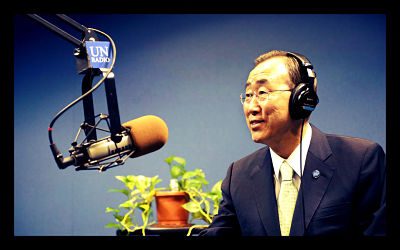
Ban-Ki-Moon-World-Radio-Day

February 13 was World Radio Day. Started in 2011 by the U.N. Educational, Scientific and Cultural Organization (UNESCO), World Radio Day is meant to commemorate the establishment of United Nations Radio in 1946. Since then, there have been unbelievable strides in mass-media and communication. According to UNESCO however, the radio still manages to reach 95 percent of the world, a feat neither television or the internet can claim to have achieved.

But what is it about the radio that has enabled it to be such a helpful tool for developing countries in times of war and general disconnect? Wave frequencies can be produced with the simplest transmitters. The actual radio itself, being portable and in many cases, battery-operated, makes it much more available than television and computers in villages and other rural areas where electrical outlets are hard to come by, let alone a stable flow of electricity.

Secretary-General Ban Ki-moon commended the use of radio “as a channel for life-saving information”. Discussing his life growing up in a Korean village, Ban Ki-moon stresses the importance of the radio for emergency instructions in times of war as well as the main source of information and knowledge for many. Whether it delivers breaking news or issues warnings to those living far from civilization, radios save lives.

UNESCO Director-General Irina Bokova gave a speech on World Radio Day that focused on the wide-spread use of radios not just on a global scale but in smaller communities. Even though the areas the waves reach may not be extensive, it gives the younger generation an opportunity to learn and experiment with technology. Community radio, Bokova says, helps address poverty and social exclusion as well as empowers marginalized rural groups, young people, and women.

As UENSCO optimistically revives the meaning and purpose of the radio, evidence of its pricelessness can be found everywhere. In November of last year, the non-profit THNKR, which is a Youtube channel that showcases people doing amazing things around the world that have the potential to change the way we think and view each others’ and our own potential, posted a video of Kelvin Doe. Kelvin, better known from his radio name as DJ Focus, comes from Sierra Leone. He has become quite famous over the past year for his talent and gift of being a self-taught engineer. By scraping together whatever metals he could, he built his own FM transmitter and generator. With his own radio station, DJ Focus broadcasts music, has an open forum and enjoys entertaining over the radio like any other 16-year-old would, taking full advantage of everything his small radio has to offer.

– Deena Dulgerian

Source:UN News Centre

February 17, 2013
https://borgenproject.org/wp-content/uploads/borgen-project-logo.svg 0 0 Borgen Project https://borgenproject.org/wp-content/uploads/borgen-project-logo.svg Borgen Project2013-02-17 10:46:102024-12-13 17:53:41“Frequency of Peace”: World Radio Day
Global Poverty

Energy 101 at Georgia Tech

Energy-101
Whether it’s the annoying news reporter or that obnoxious know-it-all in your Air Pollution class, people everywhere seem to be making up facts and statistics about our energy consumption. Does charging your phone from a laptop save more energy than if you were to charge it from a wall plug? Would using solar energy to power factories actually reduce air pollution?

Energy 101, a free online class offered by the Georgia Institute of Technology, sheds light on “the driving forces of energy used in transportation”, the production of energy-efficient products, and the process of converting renewable resources into a more desired form.

Dr. Sam Shelton, a veteran in energy systems, teaches the course. Aside from his multi-million dollar funded research and development, he is the founder of two companies that produce and market energy-efficient products. He was also a leading developer in the 1980s of the first commercial solar energy systems and investigated the efficiency of offshore wind farms.

The format of the Energy 101 is as simple as they come: over the span of nine weeks, lectures are taught in 5-12 minute videos. Quizzes are also given and upon finishing the program, students will receive a Certificate of Completion.

But what use is studying the complexities of thermodynamics to the average curious cat? For one thing, Dr. Shelton stresses the ‘no experience necessary’ aspect of the class. You don’t need to be able to understand physics or be able to use mathematical formulas to do well in the class. The information from this class can be put to use in a variety of settings from an elementary school classroom in Arkansas to sustainable farming training in Cambodia.

Understanding the truth about how we use energy and where it comes from will help dictate our policies on diverting our focus to the right alternatives.

Before even listening to one lecture, Dr. Shelton lets his potential students in on an unexpected secret, “Building nuclear, wind and solar energy systems does not save any oil in the U.S..” This only goes to illustrate the new and exciting information students of Energy 101 can look forward to learning that will enlighten them on the truth about energy consumption in the world.

– Deena Dulgerian

Source: Coursera.org

February 17, 2013
https://borgenproject.org/wp-content/uploads/borgen-project-logo.svg 0 0 Borgen Project https://borgenproject.org/wp-content/uploads/borgen-project-logo.svg Borgen Project2013-02-17 09:38:482024-12-13 17:49:13Energy 101 at Georgia Tech
Page 2174 of 2176«‹21722173217421752176›»

Get Smarter

  • Global Poverty 101
  • Global Poverty… The Good News
  • Global Poverty & U.S. Jobs
  • Global Poverty and National Security
  • Innovative Solutions to Poverty
  • Global Poverty & Aid FAQ’s
Search Search

Take Action

  • Call Congress
  • Email Congress
  • Donate
  • 30 Ways to Help
  • Volunteer Ops
  • Internships
  • Courses & Certificates
  • The Podcast
Borgen Project

“The Borgen Project is an incredible nonprofit organization that is addressing poverty and hunger and working towards ending them.”

-The Huffington Post

Inside The Borgen Project

  • Contact
  • About
  • Financials
  • President
  • Board of Directors
  • Board of Advisors

International Links

  • UK Email Parliament
  • UK Donate
  • Canada Email Parliament

Get Smarter

  • Global Poverty 101
  • Global Poverty… The Good News
  • Global Poverty & U.S. Jobs
  • Global Poverty and National Security
  • Innovative Solutions to Poverty
  • Global Poverty & Aid FAQ’s

Ways to Help

  • Call Congress
  • Email Congress
  • Donate
  • 30 Ways to Help
  • Volunteer Ops
  • Internships
  • Courses & Certificates
  • The Podcast
Scroll to top Scroll to top Scroll to top