• Link to X
  • Link to Facebook
  • Link to Instagram
  • Link to TikTok
  • Link to Youtube
  • About
    • About Us
      • President
      • Board of Directors
      • Board of Advisors
      • Financials
      • Our Methodology
      • Success Tracker
      • Contact
  • Act Now
    • 30 Ways to Help
      • Email Congress
      • Call Congress
      • Volunteer
      • Courses & Certificates
      • Be a Donor
    • Internships
      • In-Office Internships
      • Remote Internships
    • Legislation
      • Politics 101
  • The Blog
  • The Podcast
  • Magazine
  • Donate
  • Click to open the search input field Click to open the search input field Search
  • Menu Menu

Archive for category: Global Poverty

Key articles and information on global poverty.

Global Poverty

U.S. AID Sponsors A NEAT Way To Help Nepali Farmers

NEAT Nepal Blog_opt
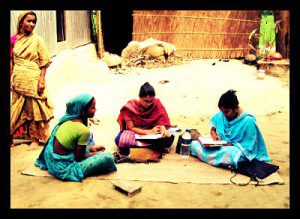
After a decade of armed insurgency by Maoists, tension in Nepal has increased making some impoverished areas more susceptible to insurrection. The Nepal Economic Agricultural and Trade Activity (NEAT), a USAID funded program, has addressed this problem with a new campaign which involves circulating agricultural training materials throughout impoverished communities in Nepal.

By attempting to decrease poverty, reduce conflict and improve lives, NEAT has targeted the illiterate and semiliterate with training materials. The program is working with 67,510 food insecure and disadvantaged households in 20 districts. Combining photos and written descriptions, the 263,000 pieces outline different ways to increase the quality and quantity of 13 different crops and three types of livestock.

The effect of this type of aid is not only a stronger economy in rural and impoverished areas of Nepal, it is also an improved resistance to insurgency and other roots of violence.

This program falls in line with USAID’s newly implemented efficiency program, USAID Forward, which works toward cutting its global footprint. Programs such as NEAT are made from Nepali people who can more easily assess their country’s problems and work toward a sustainable solution.

Thus far, NEAT has helped Nepali farmers increase their household incomes by a total of $8.5 billion,, with 99 percent of them reporting that they had increased access to markets for their crops. The project is slated to close in August 2013.

– Pete Grapentien

Source: FinChannel.com
Photo: Nepal Santoshs

April 5, 2013
https://borgenproject.org/wp-content/uploads/borgen-project-logo.svg 0 0 Borgen Project https://borgenproject.org/wp-content/uploads/borgen-project-logo.svg Borgen Project2013-04-05 12:34:292024-05-23 23:15:51U.S. AID Sponsors A NEAT Way To Help Nepali Farmers
Children, Development, Foreign Aid, Global Poverty

China: A Model for Ending Poverty

China_Foreign_Aid_Africa
It is predicted that by 2015 China will decrease the number of its citizens living in poverty by 50 million. Other developing countries are taking note of China’s success and, with the help of foreign investment, hope to employ the same methods. With its growing economy and monetary assistance, China is, by example, taking a leading role in foreign aid and assisting the developing world.

China’s representative for the World Food Programme, Brett Rierson, explains how China used a bottom-up method of alleviating poverty. The Chinese government focused on aiding poor farmers by implementing policies that permitted farmers to keep a higher percentage of their profits and allocating foreign investment and technology to small villages. Investment in infrastructure, as well as improving nutrition education, women’s health, and agriculture production, are also factors responsible for China’s success story.

A majority of China’s aid goes to countries in Asia and Africa. These developing countries can mimic China’s strategy by investing in infrastructure and farming communities. Deborah Brautigam, director of the international development program at Johns Hopkins University in Baltimore, reminds us that it was China’s decision to invest in agriculture that helped reduce poverty, not just foreign assistance. African countries have the potential to lift themselves out of poverty, but it depends on how they invest the money they received from foreign aid.

China formerly received foreign aid from Western countries and is now ready to begin investing in other developing countries. With China’s help, the United Nations is on track to reaching the Millennium Development Goal of ending extreme poverty by 2030.

-Mary Penn
Source: SCMP
Photo: The Guardian

April 4, 2013
https://borgenproject.org/wp-content/uploads/borgen-project-logo.svg 0 0 Borgen Project https://borgenproject.org/wp-content/uploads/borgen-project-logo.svg Borgen Project2013-04-04 14:48:542020-05-04 08:04:43China: A Model for Ending Poverty
Global Poverty

The Sound of Change Concert featuring Beyonce and Women Empowerment

chime
Chime for Change is throwing a huge concert that will elicit large crowds because of the musical artists performing. Those who have the privilege of attending The Sound of Change concert on June 1, 2013 in London will see and hear performances by Beyonce, a member of the Chime for Change founding committee, John Legend, Florence and the Machine, Ellie Goulding, Iggy Azalea, Timbaland, Laura Pausini, and Rita Ora.

However, the driving force behind this concert is not the showcasing of musical talents or putting on a great show but rather raising funds and bringing attention to problems plaguing women globally, especially in the areas of health, education, and justice. In between the musical performances, attention will be directed towards women’s issues and personal stories of women across the globe. In addition to drawing attention to the issues,the Chime for Change organization and Gucci are ensuring that all proceeds from ticket sales are given to nonprofit organizations that are helping empower women.

Chime for Change is an organization founded by Gucci that brings together the voices of women across the globe to create discussion and raise funds and awareness for girls’ and women’s empowerment. In bringing this concert to London, as well as broadcasting it online for people all over the world to view, Chime for Change is putting girls’ and women’s issues on a world stage. Discussion of these issues are sure to occur as the result of this concert, which is one of the main points of the Chime for Change campaign. According to Ariana Huffington, an advisory board member of Chime for Change, as well as the Editor-in-Chief of The Huffington Post, the organization “brings together a range of voices, from women’s advocates and experts to business leaders and philanthropists” working to make girls’ and women’s issues a top priority.

Mixing fashion (Gucci) and charity work seems to be a winning combination. The Sound of Change concert will surely draw a large crowd and bring issues plaguing  girls and women everywhere to the front and center.

– Angela Hooks
Sources: Elle, Huffington Post

April 4, 2013
https://borgenproject.org/wp-content/uploads/borgen-project-logo.svg 0 0 Borgen Project https://borgenproject.org/wp-content/uploads/borgen-project-logo.svg Borgen Project2013-04-04 07:51:202020-05-04 08:09:46The Sound of Change Concert featuring Beyonce and Women Empowerment
Global Poverty

USAID’s NEAT Program in Nepal

USAID's NEAT Program in NepalThe United States Agency for International Development (USAID) recently completed another phase of their Nepal Economic, Agriculture, and Trade Activity (NEAT) project by creating a packet containing important agricultural information that is to be distributed to disadvantaged farmers in Nepal. USAID is working with Nepal’s Ministry of Agriculture Development in a joint effort to improve food security in the region while also helping farmers sell their crops in markets more easily.

The information packets were made to be durable and they contain information on 13 types of crops. The information was prepared for illiterate and semi-literate farmers so charts and photos are used throughout the information packet. Another focus of the NEAT effort is to make it easier for farmers to take their goods to market to sell while also making seeds and fertilizers more easily available to the nearly 70,000 farmers that the program helps.

Overall, the farmers have experienced a gain of $85 million since the program began and nearly all of the program participants have increased market access for their goods. While the NEAT initiative will end this August the resources that USAID has compiled will continue to be helpful for farmers and the aid centers that they have established will continue to be staffed and will offer help to the Nepalese farmers. This is just one more great program that USAID has undertaken to fight poverty worldwide and promote food security.

– Kevin Sullivan

Photo: The Borgen Project

April 3, 2013
https://borgenproject.org/wp-content/uploads/borgen-project-logo.svg 0 0 Borgen Project https://borgenproject.org/wp-content/uploads/borgen-project-logo.svg Borgen Project2013-04-03 11:15:472020-06-01 05:57:47USAID’s NEAT Program in Nepal
Global Poverty

BRICS Advance Plans for Development Bank

BRICS Advance Plans for Development Bank
The BRICS countries met in Durban, South Africa last week to finalize plans for the establishment of a New Development Bank that would be led by the quickly developing countries. While the negotiations were not finalized and a plan wasn’t cemented, officials claim that progress is being made.

The BRICS are a group of large, quickly industrializing countries; Brazil, Russia, India, China and South Africa. Early last year they made the announcement that they would consider creating a separate development bank run by the leaders of the developing world for the developing world.

While South Africa’s Minister of Finance stated that the negotiations had been completed the day before the meeting, they apparently were not. However, they say that progress was made and that the New Development Bank will be established soon and that they are pleased with the rapid materialization of a concept that only came into their discussions one year ago.

One of the issues remaining is where the central bank will be built, as each country would obviously like to have such a large institution and the profit and recognition that would come along with it. In response to significant pressure from activist groups and student and humanitarian groups, representatives of the five countries made statements condemning the abuse of humanitarian rights in Syria and pleaded that aid workers and organizations be allowed to freely access the region to provide help for those suffering.

– Kevin Sullivan

Source: Voice of America
Photo: Post

April 3, 2013
https://borgenproject.org/wp-content/uploads/borgen-project-logo.svg 0 0 Borgen Project https://borgenproject.org/wp-content/uploads/borgen-project-logo.svg Borgen Project2013-04-03 09:00:002020-06-01 05:58:59BRICS Advance Plans for Development Bank
Global Poverty, Health

New Vaccine Aimed at Preventing Endemic

New Vaccine Aimed at Preventing Endemic
Throughout many developing nations, foot and mouth disease is considered an endemic in livestock; especially in Asia, Africa, and parts of South America. Previously, the only vaccines for foot and mouth disease were very fragile and had to be created inexpensive labs with the proper equipment, and needed to be kept refrigerated in order to stay “alive,” preventing possibilities of any long-distance transportation.

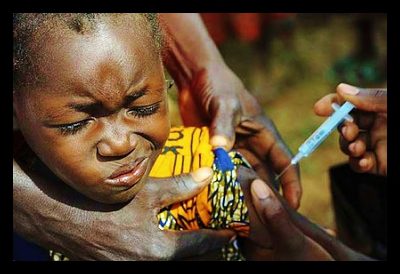
Now, researchers have created a synthetic version of the foot and mouth vaccine that does not require refrigeration, making it much more accessible to rural areas where the disease is common. The new vaccine can be transported and even created in developing countries since it can withstand varying temperatures.

Within the last few years, the UK, South Korea, and Japan were all victims of an outbreak of the virus that had originated in Asia. The foot and mouth outbreak in the UK cost the country an estimated 8 billion pounds.

The researchers’ goal of having the foot and mouth vaccine distributed globally in order to stop the virus at the source instead of waiting for an outbreak will now be much more practical with this synthetic version. Scientists say that the new version could be widely available within 6 to 8 years. Researchers are also working on synthetic vaccines for diseases that affect human populations, including polio and human hand, foot, and mouth disease.

– Christina Kindlon

Source: Guardian

April 2, 2013
https://borgenproject.org/wp-content/uploads/borgen-project-logo.svg 0 0 Borgen Project https://borgenproject.org/wp-content/uploads/borgen-project-logo.svg Borgen Project2013-04-02 14:00:592020-06-01 05:59:15New Vaccine Aimed at Preventing Endemic
Global Poverty

The Unequal Reality

The Unequal RealityThe next global development agenda has been set. The President of Indonesia, Susilo Bambang Yudhoyono, hosted the meeting to determine such an agenda; he also served as the co-chairman to the UN High-Level Panel for the post-2015 plan with an emphasis on eradicating extreme poverty. Despite the general success of the UN Millennium Development Goals which includes pulling people out of poverty since the 1990s, an increasing number of children are attending schools, and much fewer children are dying due to curable causes: “political will and commitment can bring about real change.”

The issue is that the majority of these successes are happening on the surface, on the “aggregate” levels as opposed to on the extremely low levels. A report done by Save the Children evinces the hidden inequality behind improvements arguing that only wealthier parts have been directly affected by these successes. For example, rich women in Indonesia now have a skilled attendant; however, between 2007 and 2010, children in poorer households continued to experience severe malnutrition despite overall nutrition improvements.

“Aggregate targets” are dictating such unequal distribution of improvement vs. worsening because governments are naturally choosing to aid and invest in what is easier to help; “this means that those close to the poverty line experience improvements while the very poorest are left behind.” Children are the most vulnerable group affected by such inequality because they are dependent on others for development and growth. Therefore, price increases affect their meal intakes, health budget cuts could cause deaths, and low-quality schools have the potential of keeping these children in poverty. In order to fight off inequality, there is a need for quality services such as availability and equal access to schools and health facilities to all kinds of people.

– Leen Abdallah

Source: South China Morning Post

April 2, 2013
https://borgenproject.org/wp-content/uploads/borgen-project-logo.svg 0 0 Borgen Project https://borgenproject.org/wp-content/uploads/borgen-project-logo.svg Borgen Project2013-04-02 12:00:042020-06-01 06:00:15The Unequal Reality
Global Poverty

Emily Oster’s Ted Talk on AIDS in Africa

Emily Oster
Emily Oster, a University of Chicago economist, uses the dismal science to rethink conventional wisdom, from her Harvard doctoral thesis that took on famed economist Amartya Sen to her recent work debunking assumptions on HIV prevalence in Africa.

Emily Oster re-examines the stats on AIDS in Africa from an economic perspective and reaches a stunning conclusion: Everything we know about the spread of HIV on the continent is wrong.

She brought up an opinion that more exports means more AIDS and that effect is really big, by testing new data and information about prevalence over time. The data that Emily Oster offers suggests that if you double export volume, it will lead to a quadrupling of the new HIV infection. And this has important implications both for forecasting and for policy. From a forecasting perspective, if we know where trade is likely to change, we can actually think about which areas are likely to be heavily infected with HIV and we can go and try to deploy pre-emptive preventive measures there. Likewise, as we are developing policies to try to encourage exports, if we know there is this externality, we can think about what the right kinds of policies are.
But it also tells us that even though poverty is linked to AIDS in the sense that Africa is poor and they have a lot of AIDS, it is not necessarily the case that impoving poverty in the very short run is going to lead a decline in HIV prevalence.

And she also questioned the HIV prevention case in Uganda, the only country in Sub-Saharan Africa with successful prevention. It is true that there was a decline in prevalence in Uganda in 1990s and they had an education campaign for it. But there was actually something else that happened in Uganda in that period. Their exports went down a lot in the early 1990s and actually that decline lines up really closely to HIV infections at that time, according to Emily Oster.

– Caiqing Jin (Kelly)

Source:Ted Talk
Photo:Flickr

April 2, 2013
https://borgenproject.org/wp-content/uploads/borgen-project-logo.svg 0 0 Borgen Project https://borgenproject.org/wp-content/uploads/borgen-project-logo.svg Borgen Project2013-04-02 10:00:402024-05-24 23:46:43Emily Oster’s Ted Talk on AIDS in Africa
Extreme Poverty, Global Poverty, Health

Disabilities are Key in Tackling Global Poverty

Poverty_Disabled
The UN’s Millennium Development Goals (MDGs) laid out a number of goals in tackling global poverty by 2015 but left a glaring omission in the equation to aid the world’s poor: serving those who are disabled.

Nearly 70% of the world’s disabled population resides in developing countries, and the World Health Organization (WHO) estimates that 575 million of those disabled live below the poverty threshold. Preventable diseases, such as polio and measles, that are not treated properly in poor and developing countries leave a high number of the population with lifelong disabilities.

Other conditions, such as civil war, lack of health care, and malnutrition also contribute to the problem. In developing nations, a disability is “often seen as a curse, the result of bad luck or witchcraft.” Because of this, disabled individuals and even their families are often shunned from the social community and are left without means to support themselves, and lack access to education and healthcare. In the worst cases, disabled people are left to die.

Although the MDGs include many aid programs with worthy recipients, the disabled population is completely left out although they are some of those who suffer the most. This crucial omission means that this large demographic is left out of specific aid programs. For example, many school-aged children have benefited from MDG education initiatives – but what about the 61 million children who still lack access to education, a majority of whom are disabled?

The UN has somewhat recognized this with the United Nations Convention on the Rights of Persons with Disabilities in 2008. It will be most important for development leaders, when evaluating post-2015 development goals, to include disabled people throughout the developing world in their plans and programs.

– Christina Kindlon

Source: The Guardian

April 2, 2013
https://borgenproject.org/wp-content/uploads/borgen-project-logo.svg 0 0 Borgen Project https://borgenproject.org/wp-content/uploads/borgen-project-logo.svg Borgen Project2013-04-02 10:00:012020-05-04 07:43:21Disabilities are Key in Tackling Global Poverty
Foreign Aid, Foreign Policy, Global Poverty

Foreign Aid Creates Jobs in the US

Foreign_Aid_Job_Creation_USAID
There are many disputing ideas on whether or not America should continue to invest in foreign aid, especially while in the throes of an economic recession. While spending US funds to support countries and people that most citizens will probably never visit or meet may seem counter-intuitive, foreign aid will be a factor in pulling America out of its recession. Lifting developing countries out of poverty creates more customers to buy American products, which in turn creates jobs in America.

Foreign aid job creation is not merely speculation. Currently almost half of US exports go to developing countries and this number can be expected to increase as these new, developing markets continue to open. This will greatly improve the US economy since one in five American jobs, like cell phone chips and food production, are export-based. American businesses recognize the opportunity to grow by alleviating world poverty. In 2012, over 50 US corporations delivered a letter to Congress in support of continuing funding for foreign investment. These corporations included Google, Cisco, Coca Cola, Johnson & Johnson and Caterpillar.

These corporations are aware of the huge potential payoffs of foreign investment. For example, the US has given Mexico $1.7 billion in aid over the past 45 years and now exports $16.3 billion in goods to their neighbor every year. The US has also seen its investment in Brazil offer an enormous return. America exports $35.4 billion annually to Brazil after giving $2.8 billion in aid from 1960-2005. Given that a majority of the United States’ top trading partners had previously accepted aid from the US, it is obvious that foreign aid is a good investment.

Foreign aid does not have to be strictly a question of moral obligation; it is also financially and developmentally smart. Many Congressmen are now referring to foreign aid as investment for this very reason. It may take many years until US citizens see the financial benefits of foreign investments but the eventually, revenues from these new markets will be well worth the wait. Foreign aid is less than 1% of United States’ budget and has the potential to create jobs to bring the US out of rough economic times. Contact your Congressional representatives and ask them to support funding for foreign aid.

– Mary Penn

Source: Orange County Register
Photo: Soda Head

April 1, 2013
https://borgenproject.org/wp-content/uploads/borgen-project-logo.svg 0 0 Borgen Project https://borgenproject.org/wp-content/uploads/borgen-project-logo.svg Borgen Project2013-04-01 12:16:012020-06-01 06:01:39Foreign Aid Creates Jobs in the US
Page 2149 of 2161«‹21472148214921502151›»

Get Smarter

  • Global Poverty 101
  • Global Poverty… The Good News
  • Global Poverty & U.S. Jobs
  • Global Poverty and National Security
  • Innovative Solutions to Poverty
  • Global Poverty & Aid FAQ’s
Search Search

Take Action

  • Call Congress
  • Email Congress
  • Donate
  • 30 Ways to Help
  • Volunteer Ops
  • Internships
  • Courses & Certificates
  • The Podcast
Borgen Project

“The Borgen Project is an incredible nonprofit organization that is addressing poverty and hunger and working towards ending them.”

-The Huffington Post

Inside The Borgen Project

  • Contact
  • About
  • Financials
  • President
  • Board of Directors
  • Board of Advisors

International Links

  • UK Email Parliament
  • UK Donate
  • Canada Email Parliament

Get Smarter

  • Global Poverty 101
  • Global Poverty… The Good News
  • Global Poverty & U.S. Jobs
  • Global Poverty and National Security
  • Innovative Solutions to Poverty
  • Global Poverty & Aid FAQ’s

Ways to Help

  • Call Congress
  • Email Congress
  • Donate
  • 30 Ways to Help
  • Volunteer Ops
  • Internships
  • Courses & Certificates
  • The Podcast
Scroll to top Scroll to top Scroll to top