• Link to X
  • Link to Facebook
  • Link to Instagram
  • Link to TikTok
  • Link to Youtube
  • About
    • About Us
      • President
      • Board of Directors
      • Board of Advisors
      • Financials
      • Our Methodology
      • Success Tracker
      • Contact
  • Act Now
    • 30 Ways to Help
      • Email Congress
      • Call Congress
      • Volunteer
      • Courses & Certificates
      • Be a Donor
    • Internships
      • In-Office Internships
      • Remote Internships
    • Legislation
      • Politics 101
  • The Blog
  • The Podcast
  • Magazine
  • Donate
  • Click to open the search input field Click to open the search input field Search
  • Menu Menu

Archive for category: Global Poverty

Key articles and information on global poverty.

Global Poverty, Nonprofit Organizations and NGOs

Heifer International: Sustainable Aid

heifer_opt-1
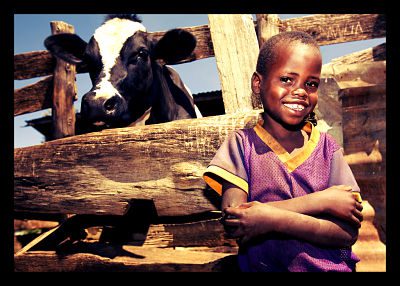
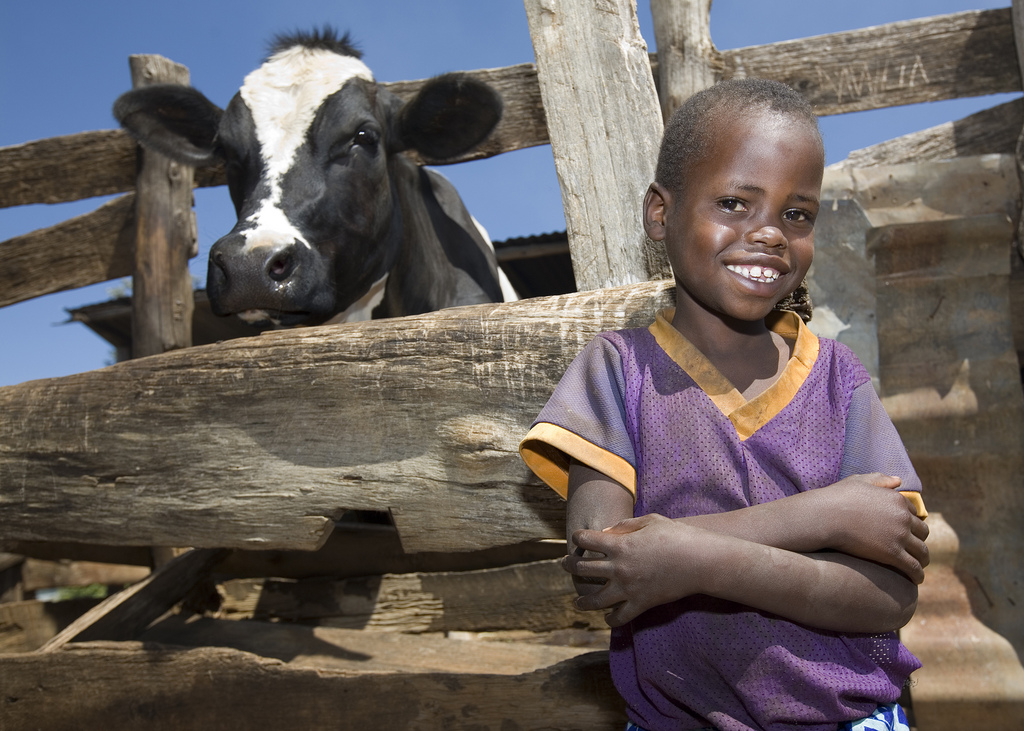
Many foreign aid organizations and donors provide temporary aid in the form of food, supplies, or direct cash donations. Heifer International is a different kind of organization; Heifer works to provide livestock for impoverished and hungry families so that they will be able to sustain themselves rather than depending on temporary aid. In order to help these people to help themselves, cows, goats, chickens, bees, llamas, and plenty of other options are given in terms of livestock to be donated. These animals help to provide both sustenance and stability to families in need. Agricultural products that the family does not put to use, such as milk, eggs, or honey can also be sold at market for extra income.

Heifer’s goal in this is to ultimately create sustainability for families to allow them to then further their opportunities in life such as provide for education and comfortable living. One of their hopes is also that as one family or group advances in the community that they will share their gift with others around them, allowing the community as a whole to become self-sufficient. With gifts of livestock comes training from Heifer employees, ensuring that the families will make the most of their new additions.

The organization’s projects span the globe, from Cambodia to China to India and Honduras. Their goals with specific projects vary, but include empowering and education of women, environmental conservation, and natural disaster response. A major success story involves a Filipino farmer, Rogelio Abes Jr., who took advantage of Heifer’s gifts and knowledge. Not only did he expand his own farm and income, he shared his livestock and farming techniques with others in the community, and inspired others to rise above poverty through hard work and generosity.

In terms of financials and accountability, Charity Navigator gives Heifer three out of four stars. The organization is entirely transparent with their records and policies, and more than 70% of their income goes to program expenses, while 20% goes to fundraising expenses. Only 6.4% goes toward administrative expenses while the CEO earns .03% of expenses. The only financial issue that arises is the disparity between revenue and program expenses in the past few years, where revenue is significantly higher than program expenses.

On the whole, however, Heifer is working hard against hunger and poverty in many different ways, from school education programs to their Read to Feed initiative that encourages children to read in order to fundraise money for the organization.  Their goals for sustainability seem to be the right direction for food aid to be headed in – while temporary aid can be helpful, it can also breed dependency, and the most important thing is to get people out of situations of poverty and hunger and allow them to be self-sufficient.

– Sarah Rybak

Sources: Heifer International, Charity Navigator
Photo: Heifer International

July 6, 2013
https://borgenproject.org/wp-content/uploads/borgen-project-logo.svg 0 0 Borgen Project https://borgenproject.org/wp-content/uploads/borgen-project-logo.svg Borgen Project2013-07-06 04:47:302024-05-24 23:58:30Heifer International: Sustainable Aid
Global Poverty

Poverty in Iraq

Poverty in Iraq
Poverty in Iraq? Many countries in the Middle East are dominated by oil production and exporting, and Iraq is no different. 95% of its exports are from oil. Like other resource-rich countries, however, this abundance of profit potential has not translated to a higher standard of living for the average Iraqi citizen. Furthermore, economic progress and social development has been hindered by ethnosectarian violence, severe setbacks in infrastructure, and poor educational quality. A number of complex challenges face Iraq today.


3 Main Causes of Poverty in Iraq


  1. Social and political instability by civil war. The occupation of Iraqi territory beginning in 2003 removed some of the barriers to outright sectarian violence by the institution of democracy. Iraq has traditionally been separated into three regions associated with people groups who took residency within: Kurds (15% of the population) in the north, Shia Arabs (45-55%) in the south, and Sunni Arabs (30%) in the region in between and to the west. Tens of thousands of Iraqis died in the five years following the invasion of Iraq, but sectarian violence — usually in the form of terrorist attacks — persists today. Not only has this endangered Iraqi civilians to the extent of displacing up to 2.2 million people since 2003, but it also makes trade and business incredibly dangerous. The simple act of moving goods about the country is disrupted by armed violence.
  2. Degradation and destruction of infrastructure. Both the ongoing civil war and the invasion of 2003 significantly damaged communication and transportation means. While the International Reconstruction Fund for Iraq asserts that Iraq’s infrastructure was among the best in the Middle East before the 1990s, today for most Iraqis there is limited access to electricity, sanitation, and clean water supply. An Oxfam briefing from 2007 reported that most homes in Baghdad and major cities receive only two hours of electricity per day. Furthermore, where there may be working roads and aid to be given, armed groups and Iraqi security forces may abruptly surround an area during military operations: “Sudden changes in access to towns and cities … pose major constraints on NGOs’ ability to deliver a humanitarian response.”
  3. Destabilized education system. Like infrastructure, the education system in Iraq was an example to other countries in the region before 1990s. However, with the displacement that followed the invasion, the state of education administration suffered. According to Oxfam, 92% of children surveyed had learning impediments “largely attributable to the current climate of fear.” Save the Children UK reported that over 800,000 children were not in school, an increase of 200,000 students in 2004. Displacement not only removed much-needed teachers from schools, but also brought large amounts of internally displaced refugees to seek shelter in school facilities in some communities. While the regime change has sparked an overhaul in curriculum and gender equality, the accompanying instability has undermined those improvements.

The situation in Iraq has been discussed by a number of NGOs, focusing on reform of programs already in place. For example, the Public Distribution System (PDS) is a universal ration program, but its main obstacle lies in targeting and distribution. It does not effectively target those who are at greatest risk for slipping into absolute poverty. A number of reports assert that if the Iraqi government used funds available to it from oil exports, these difficulties could be addressed. However, until ethnosectarian violence can be resolved and security restored, steps forward will be accompanied by backward steps as well.

– Naomi Doraisamy

Source: CIA World Factbook, Library of Congress, Oxfam/NCCI, World Bank,
Photo: AlTahreer News

July 6, 2013
https://borgenproject.org/wp-content/uploads/borgen-project-logo.svg 0 0 Borgen Project https://borgenproject.org/wp-content/uploads/borgen-project-logo.svg Borgen Project2013-07-06 04:15:522024-12-13 17:49:25Poverty in Iraq
Global Poverty

Ugandan Teen Fights Poverty

Eunice_Namugerwa_TED_Uganda_chicken_farm
Within Uganda, in a town called Kampala, there is a slum by the name of Kisenyi. There are many languages spoken in this region, and it is a rough place to live. There is poverty abound, and hunger in many of the people. There are piles of garbage and sewage flowing around the houses. The houses are small, wooden shacks that are inhabited by the families of Kisenyi. If a foreigner visited Kisenyi, they would be begged by the children to give them money in order to get sugarcane so they can have lunch. There are many businesses, but the businesses are hard to keep going. The children do whatever drugs they can get their hands on. Despite this, some of the children have large dreams. Indeed, there is a lot of hope in the slums, and Ugandan teen, named Eunice Namugerwa, has provided the inhabitants with even more hope. Poverty may be a thing of the past in Kisenyi in some years, due to people like Eunice.

Eunice decided to start a chicken farm in Kisenyi, out of necessity, and this led to her speaking at TEDx Kampala, which is part of the larger TED Talks. TED has the mission, “ideas worth spreading.” Many experts, or even inspiring people, are invited to talk at TED in order to have a large audience for their brilliant stories or ideas. The idea of TED is to create a dialogue among movers and shakers of the world, to fight issues like poverty, disease, and hunger. This can lead to change on a local level, through those who experience the TED talks. TEDx Kampala was an independently organized TED event, but it was a high honor for Eunice to be invited to tell her story. It occurred on March 10th, 2012. It followed TED’s idea of “Technology, Entertainment, Design,” but focused primarily, of course, on social issues.

In August 2012, Eunice started her chicken farm in the Kisenyi slum in order to support her family and raise some income. The other options she considered were a fashion boutique and a “piggery.” Although she was only 18, little did she know she would soon inspire others and spread her idea into the future. In 2004, her father died of HIV, and in 2012, her mother was suffering too much to work, so Eunice was forced to try to make income for her family. Eunice commented on the issues in Kisenyi, which includes disease, the environment, and child abuse. She did not want to have to beg for money, so she turned to the idea of a chicken farm.

A primary school teacher named Tiarna Elmer donated about $576 so Eunice could start her farm. Eunice started the farm and began selling the eggs. The business grew quickly, and today, Eunice has 200 chickens on her farm. In addition to the farm, they have also started a DVD shop. Soon, Eunice will be earning about $385 a month or more, which is an incredible amount in the Kisenyi slums. Although it seemed like a far-fetched idea at first, with a little starter capital, Eunice now has a budding business and can inspire others with her entrepreneurial spirit. She gives hope to others stuck in poverty to start their own businesses, and hopefully, she also inspires nonprofit charities to donate money for start-up businesses, because they will help lift those in the slums out of poverty.

– Corina Balsamo

Sources: IPS News, All Africa, TED
Photo: RNW

July 5, 2013
https://borgenproject.org/wp-content/uploads/borgen-project-logo.svg 0 0 Borgen Project https://borgenproject.org/wp-content/uploads/borgen-project-logo.svg Borgen Project2013-07-05 10:06:172024-06-04 01:07:57Ugandan Teen Fights Poverty
Global Poverty

Obama Visits Senegalese Slave Quarters

ObamaSlaves_opt

Four centuries after the first African slaves were shipped from Africa to the Americas, Barack Obama, the first African American U.S. President, visited one of the major slave shipping points of the triangular trade: Goree Island.

Obama started off his week-long trip through Senegal, South Africa and Tanzania with a private tour of the Goree Island Slave House. Built in 1776 by the Dutch on Goree Island off the Senegal coast, it is contested whether the ‘House of Slaves’ (Maison des Esclaves) was really a major slave-trading point; some historians suggest that the island was more of a merchant port, and the slave house a merchant’s home. However, despite the controversy over its effective role in the slave trade, there is no doubt that slaves walked through the “door of no return,” never to come back.

Now turned into a museum and classified by UNESCO as a World Heritage site, the House of Slaves reminds all its visitors of the brutality and cruelty inflicted upon other human beings during the slave trade.

“It’s a very powerful moment… to be able to come here and to fully appreciate the magnitude of the slave trade, to get a sense in a very intimate way of the incredible inhumanity and hardship that people faced”, stated Obama, who is believed to have at least one enslaved ancestor. First Lady Michelle Obama, a descendant of slaves, did not wish to comment on their visit to the House of Slaves.

More than just diplomatic, Obama’s visit to the Slave House is highly significant for many, both African and American. It is an acknowledgment of the dark history of slavery of the United States, a reminder of the considerable transformation that American society has undergone in the past decades.

The desegregation of American society and the election of the first African American  President in the history of the U.S. has made Africans very supportive and proud, although there is some disappointment that the President seems less involved with the continent than his predecessors Georges W. Bush and Bill Clinton.

Moved by the living testimony of the slave trade evoked by the Goree Island Slave House, Obama emphasized the importance of the defense of human rights and praised the U.S. Supreme Court for the same-sex marriage ruling. He was accompanied by Senegalese President Macky Sall, who paradoxically declared that Senegal was “still not ready to decriminalize homosexuality”.

Obama’s visit to Goree Island and then to South Africa raises the question of the place of aid to Africa in American foreign policy priorities. That question has yet to be answered.

– Lauren Yeh

Source: Yahoo! News, PolicyMic, LA Times
Photo: Washington Post

July 5, 2013
https://borgenproject.org/wp-content/uploads/borgen-project-logo.svg 0 0 Borgen Project https://borgenproject.org/wp-content/uploads/borgen-project-logo.svg Borgen Project2013-07-05 10:00:002017-11-30 11:09:44Obama Visits Senegalese Slave Quarters
Global Poverty

The Brookings Institute Analyzes the Post-2015 High Level Panel Report

2015_High_Level_Panel_Report_MDG
As the expiration date for the Millennium Development Goals nears there is much discussion and debate surrounding the post-2015 agenda. With the release of the High Level Panel Report there has been commentary galore about the nature of the new framework and the goals it encompasses. The Brookings Institution, a research institution focused on innovative policy solutions, provided a comprehensive analysis of the Report.

In brief the High Level Panel Report established the purpose of the post-2015 agenda being, “to end extreme poverty in all its forms in the context of sustainable development and to have in place the building blocks of sustained prosperity for all.” The Report concludes that the post-2015 agenda must focus on five main issues: Leave no one behind, put sustainable development at the core, transform economies for jobs and inclusive growth, build peace and effective, open and accountable institutions for all, and forge a new global partnership. The Panel believes these five elements are the key to ending poverty sustainably in the very near future.

The Brookings Institution has a cautiously positive and optimistic analysis of the High Level Panel Report. The focus on not only educational access but the substantive learning process is welcomed. Despite not directly articulating a strategy for combating inequality Brookings acknowledges the first prong “Leave no one behind” as a potentially effective method of encompassing this issue.

Brookings Institute also applauds the emphasis on data and measurement as a good lesson learned from the MDGs. Having definite goals and timelines is key to success. As the analysis says there is still a long way to go in defining the post-2015 agenda but the comprehensive and inclusive focus of the High Level Panel Report is a very encouraging step towards a poverty free future.

– Zoë Meroney

Sources: Brookings Institution, post2015hlp
Photo: Interaction

July 5, 2013
https://borgenproject.org/wp-content/uploads/borgen-project-logo.svg 0 0 Borgen Project https://borgenproject.org/wp-content/uploads/borgen-project-logo.svg Borgen Project2013-07-05 09:55:472024-12-13 17:49:40The Brookings Institute Analyzes the Post-2015 High Level Panel Report
Food & Hunger, Global Poverty

World Bank Admits Poverty and Climate Change Link

climate_opt
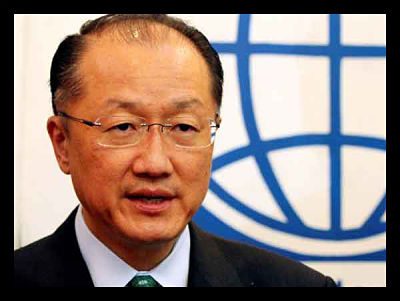
Poverty and climate change are related problems, says World Bank president Jim Yong Kim. The World Bank has doubled its spending on researching adaptation to climate change to $4.6 billion, but it is also calling for the world’s wealthier countries to invest in similar research. The organization also recently released a report on the subject, which presents some shocking scenarios that the organization feels are likely to occur if global temperatures continue to increase. The Thai capital of Bangkok, for example, could experience floods in as much as forty percent of the city if temperatures rise by just 3.6 degrees Fahrenheit, which is expected to happen within the next three decades. Those who live in slums, the report suggests, will be the most affected by a natural disaster. But this hypothesis has implications not just for the poor or for the people of Thailand, but for the world over. Jim Yong Kim, the president of World Bank has said that it is “impossible to tackle poverty without dealing with the effects of a warmer world” for the following reasons:

1. Access to food. Many crops have a difficult time thriving in extremely hot conditions. While agricultural scientists are working, sometimes controversially, to create versions of popular crops that can adapt to such climates, the World Bank’s report estimates that as many as ninety percent of people in Sub-Saharan Africa could be malnourished by 2050.

2. Access to clean water. The report also suggests that extreme heat may lead to droughts throughout South Asia, reducing the availability of clean drinking water in places like India, Pakistan, and Afghanistan.

In addition to research, the World Bank spends $7 billion per year (not including the $20 billion received from other banks and partners dedicated to this issue) in helping developing countries cut their greenhouse gas emissions.

– Samantha Mauney

Sources: The Saudi Gazette, Counter Currents
Photo: IFAD

July 5, 2013
https://borgenproject.org/wp-content/uploads/borgen-project-logo.svg 0 0 Borgen Project https://borgenproject.org/wp-content/uploads/borgen-project-logo.svg Borgen Project2013-07-05 04:57:132016-12-05 16:42:17World Bank Admits Poverty and Climate Change Link
Global Poverty

The Rwandan Genocide 101

Rwandan Genocide
On April 6, 1994, Rwandan President Juvénal Habyarimana — an ethnic Hutu — was returning from Tanzania when his plane was shot down over the Rwandan capital of Kigali. Whether his assassination was carried out by the Tutsi-led Rwanda Patriotic Front or Hutus searching for a reason to wipe out the Tutsi minority remains a mystery. In the 100 days following, over 800,000 Tutsis were slaughtered largely at the hands of Hutu extremists.

A History of Ethnic Conflict
For hundreds of years the African country of Rwanda has been composed of three main ethnic groups: the Hutus, who made up a majority of the population; the minority Tutsis; and a very small population of hunter-gathers, the Twa. The Hutus and the Tutsis have had a long history of conflict, beginning with the colonization of Rwanda by European powers. The Germans were the first to colonize the country and believed the minority Tutsi to be superior to the majority Hutu as they were believe to have more “European characteristics” such as lighter skin and taller stature. In 1916, Belgium took control of Rwanda and solidified this divide by issuing identity cards based on ethnicity. For the next 20 years, the Tutsis were privilege to better jobs, better educational opportunities and better all around treatment by the Belgian colonists despite their making up only around 10% of the total population.

By 1959, the Hutus had had enough. Riots ensued and over 20,000 Tutsis were killed while others fled for neighboring Uganda, Burundi and Tanzania. When Rwanda was eventually granted independence from Belgium in 1962, the tables were turned and the Hutus gained control. In the decades to come, the Tutsis would be blamed for every ill facing the country.

The Rwandan Genocide
Fast forward to April 6, 1994. Within twenty-four hours of the attack on president Habyarimana’s plane, Hutu extremists had taken over the Rwandan government, blamed the Tutsis for the attack, and begun the killing campaign. Starting in Kigali and quickly spreading to the rest of the country, Hutu extremists began slaughtering Tutsis in droves. Soldiers and police encouraged civilians to kill their Tutsi neighbors, often offering incentives like food or access to the land of those they killed. No Tutsi was safe from those who wanted them dead. Men, women and children were tortured and killed, mostly with machetes due to the expensive nature of bullets. Thousands of women were raped and tortured before being killed. To make matters worse, the Hutu extremists refused to allow the bodies of those they killed to be buried. Instead, they were left to rot where they were killed or thrown into rivers and streams. In all, over 800,000 Rwandans were brutally murdered between April 7 and mid July 1994. Only when the Rwandan Patriotic Front captured Kigali and declared a ceasefire did the killings end.

Rwanda Today
In 2000, Paul Kigame, former Tutsi leader of the RPF, became president and remains in power today. The Kigame government has invaded the Democratic Republic of the Congo twice with the intention of destroying the some two million Hutus who have lived in hiding there since 1994. While the genocide has ended, tension between the two groups still runs deep and simmers just below the surface.

In 1979, president Jimmy Carter declared, “Out of our memory … of the Holocaust we must forge an unshakeable oath with all civilized people that never again will the world stand silent, never again will the world … fail to act in time to prevent this terrible crime of genocide.” Yet just 15 years later, the Rwandan genocide unfolded on television screens while some of the most powerful nations on earth stood by and watched. What will it take to create a world where “never again” doesn’t so quickly become “never again unless”?

In the words of the philosopher Hannah Arendt: “The sad truth is that most evil is done by people who never make up their minds to be good or evil.”

– Erin Ponsonby

Source: BBC, United Human Rights Counsel
Photo: Guardian

July 5, 2013
https://borgenproject.org/wp-content/uploads/borgen-project-logo.svg 0 0 Borgen Project https://borgenproject.org/wp-content/uploads/borgen-project-logo.svg Borgen Project2013-07-05 04:00:182017-06-21 12:18:36The Rwandan Genocide 101
Global Poverty

Youth Needed to Boost Agriculture in Nigeria

Nigerian_youth_farmers_boost_agriculture
In Nigeria, over 70 percent of the population lives on the equivalent of $0.07 or less. This is a sad and startling fact considering that the country has the third largest economy in all of Africa, that it has plentiful oil resources, and that, in 1980 less than thirty percent of people there were living in poverty. Thus, in a time where we are making such strides toward reducing poverty around the world, it is unsettling when a country with so much potential begins to regress.

Some believe that the government should take a more active role in assuring that such resources are used wisely and to the benefit of the citizens of the country. Concerning agriculture, one of the largest industries in Nigeria, however, many are suggesting that the government take a smaller role. Dr. Akinwumi Adesina, the Minister of Agriculture in Nigeria, is trying to get Nigerians to see the industry as a business in which government should have a minimal role. This is an especially welcomed opinion for those who have criticized the government’s handling of the sector.

Innovation is sorely needed. Emmanuel Omole, the CEO of an agricultural development company in Lagos, is insisting that the main way such innovation can take hold is for youth to be attracted to the industry. Youth must feel that the sector is a lucrative one. Negative connotations associated with the industry (that it is “dirty,” for instance) must also die.

Not only are many Nigerians ready to welcome youth input, but their presence is also sorely needed. Present agriculturalists are aging out of the industry, leaving a labor void that, if addressed properly, could help improve the lives of the nation’s young people, or could severely affect the economy if left unfilled.

Despite the fact that food production is such a large part of the Nigerian economy, because most of the farming there is done on a small scale without much large-scale manufacturing, the country still spends a great deal of money to bring international food into the country. From 2007 through 2010, Nigeria spent the equivalent of $628 billion USD importing food alone. Even though it is one of the African countries most blessed with fresh water, the nation spent 97 billion naira on importing fish.

– Samantha Mauney

Sources:  NGR Guardian News, All Africa, poverties.org
Photo: WordPress

July 5, 2013
https://borgenproject.org/wp-content/uploads/borgen-project-logo.svg 0 0 Borgen Project https://borgenproject.org/wp-content/uploads/borgen-project-logo.svg Borgen Project2013-07-05 01:22:552024-05-25 00:20:49Youth Needed to Boost Agriculture in Nigeria
Global Poverty

Cashew Smuggling and the Funding Gap

Cote-d'Ivoire-cashew-smuggling
For arable countries in sub-Saharan Africa, the money made on agricultural exports is often invaluable. It can strengthen a government’s budget, benefit farmers who harvest the crops, and improve the overall the standard of living. When this source of money is removed, however, development can slow down for lack of funds.

In Cote d’Ivoire, the increasing importance of cashew exports is undermined by rampant smuggling. A United Nations panel estimated that in 2011, 150,000 tons of cashews were smuggled from Côte d’Ivoire, a trend that is unlikely to change unless foreign purchasers of the nuts crack down on smuggling practices.

Why do Ivorian cashew farmers smuggle cashews? Farmers are often unable to find desirable export prices on raw, unprocessed cashews, and instead sell to neighboring Ghana. Cashews are usually smuggled alongside cocoa, cotton, and coffee on an elaborate smuggling route through the northern and southern borders.

The export loss is staggering. The U.N. estimated that in 2011 alone Côte d’Ivoire lost US $130 million from its national economy and $3 million in fiscal revenue. The U.N. Panel asserted that the money gained from smuggling practices may be used by groups to purchase weaponry illegally, and stated that it was aware that the smuggling of cocoa to Ghana was in a number of cases escorted directly by Ivorian military forces.

Economists pinpoint the reason for low export prices as the low processing capacity for the six main nut processing factories. Less than one percent of the country’s cashews are processed, meaning shelled and sometimes roasted, in-country. Raw cashews net a lower market price. When farmers are unable to legally export their crop for the price they want, they turn to buyers in Ghana. Ultimately, this practice widens the funding gap for Ivorian infrastructure and development projects, growing obstacles to a more stable economy. Ultimately, for this country plagued with political instability and an unstable economy, the revenue created by legal cashew exports could help the country address its biggest challenges.

– Naomi Doraisamy

Source: African Development Bank Group, IRIN News, IRIN News
Photo: Jerry’s Nut House

July 4, 2013
https://borgenproject.org/wp-content/uploads/borgen-project-logo.svg 0 0 Borgen Project https://borgenproject.org/wp-content/uploads/borgen-project-logo.svg Borgen Project2013-07-04 05:17:252017-02-22 12:49:09Cashew Smuggling and the Funding Gap
Global Poverty

Poverty and Overpopulation

poverty_and_overpopulation

Early this year the 7 billionth baby was born on Earth, thereby sparking a new round of discussion about the need to implement measures to control population growth.

Developing countries have the highest fertility rates worldwide, with women often having 6-7 children. Bill Gates noted that areas with the highest reproductive rates also have the worst health conditions. Thus, he explains, in order to guarantee that they have 2 children survive into adulthood, women in areas with poor health conditions have more children since only 80-90% of their babies will make it to school age.

The answer to the population problem, Gates says, is to improve global health. If health demographics improve because of better access to vaccines, healthcare, affordable drugs, and hospitals, more children will reach school age. Thus, families will not need to have as many children in order to ensure that some of them survive and, with the institution of family planning programs, fertility rates will drop.

However, in between the improvement in global health and the reduction in fertility rates there is a “demographic transition” in the population. With better health, more children will survive and live longer. However, before women start utilizing family planning programs, there is a sort of ‘lag time’ where both birth and survival rates are high. Thus there forms a bulge in the population that does not decrease until women stop having as many children. This means that even after there are improvements in global health, population may increase before it begins to steadily decline as a result direct result of lower fertility rates.

Hans Rosling says that in order to create a sustainable population for the future, there must be improvements in global health today that ensure that 90% of children everywhere in the world make it to their 5th birthday. Not implementing these measures today could mean the difference between 8.3 billion people and 9.3 billion people living on Earth in the near future.

– KC Harris

Source: The Borgen Project Slate TED
Source: A Matter of Instinct

July 4, 2013
https://borgenproject.org/wp-content/uploads/borgen-project-logo.svg 0 0 Borgen Project https://borgenproject.org/wp-content/uploads/borgen-project-logo.svg Borgen Project2013-07-04 04:00:052024-05-24 23:58:55Poverty and Overpopulation
Page 2122 of 2161«‹21202121212221232124›»

Get Smarter

  • Global Poverty 101
  • Global Poverty… The Good News
  • Global Poverty & U.S. Jobs
  • Global Poverty and National Security
  • Innovative Solutions to Poverty
  • Global Poverty & Aid FAQ’s
Search Search

Take Action

  • Call Congress
  • Email Congress
  • Donate
  • 30 Ways to Help
  • Volunteer Ops
  • Internships
  • Courses & Certificates
  • The Podcast
Borgen Project

“The Borgen Project is an incredible nonprofit organization that is addressing poverty and hunger and working towards ending them.”

-The Huffington Post

Inside The Borgen Project

  • Contact
  • About
  • Financials
  • President
  • Board of Directors
  • Board of Advisors

International Links

  • UK Email Parliament
  • UK Donate
  • Canada Email Parliament

Get Smarter

  • Global Poverty 101
  • Global Poverty… The Good News
  • Global Poverty & U.S. Jobs
  • Global Poverty and National Security
  • Innovative Solutions to Poverty
  • Global Poverty & Aid FAQ’s

Ways to Help

  • Call Congress
  • Email Congress
  • Donate
  • 30 Ways to Help
  • Volunteer Ops
  • Internships
  • Courses & Certificates
  • The Podcast
Scroll to top Scroll to top Scroll to top