• Link to X
  • Link to Facebook
  • Link to Instagram
  • Link to TikTok
  • Link to Youtube
  • About
    • About Us
      • President
      • Board of Directors
      • Board of Advisors
      • Financials
      • Our Methodology
      • Success Tracker
      • Contact
  • Act Now
    • 30 Ways to Help
      • Email Congress
      • Call Congress
      • Volunteer
      • Courses & Certificates
      • Be a Donor
    • Internships
      • In-Office Internships
      • Remote Internships
    • Legislation
      • Politics 101
  • The Blog
  • The Podcast
  • Magazine
  • Donate
  • Click to open the search input field Click to open the search input field Search
  • Menu Menu

Archive for category: Global Poverty

Key articles and information on global poverty.

Global Poverty, Women and Female Empowerment

Single Mothers and Poverty in Latvia

Latvia is a country with one of the widest income gaps in the European Union. This gap was expanded by the global economic crisis, which caused income levels in the country to decline by 19%. The IMF confirms that the economic recession very severely damaged the economy of Latvia. According to the Fund, “the richest 20 percent of the population (in Latvia) earn seven times more than the bottom 20 percent.” The IMF warns that these adverse conditions put Latvians at a higher risk of poverty.

The Baltic Center for Investigative Journalism notes that the country does not provide adequate government-funded support for its poor. In fact, the small Baltic nation spends less on social welfare programs than any other European Union member state. For example, when compared to her northern neighbor Estonia, which spends 40% more per capita on social protection programs annually for the poor than Latvia, the lack of poverty-reduction programs from the Latvian government is quite conspicuous.

One of the most “at risk” groups in post-recession Latvia are single mothers. The cost of living has increased over the last few years, due in a large part to changes in tax policies which caused the price of heat and water utilities to rise significantly. The Baltic Center’s report highlights the struggles of a single mother living in Saldus, a town in western Latvia, trying to make ends meet in a small apartment with her two young children.  The mother can’t afford to buy or run a refrigerator, so the family lives off of a meager subsistence of room temperature dry foods and water. The tiny apartment also does not have a shower, so the children are forced to wash in the gym locker rooms at the primary school, a school where they attend classes with no supplies because their mother doesn’t have the money to buy them.

The plight of single mothers in Latvia has prompted many of them to leave the country. The income provided from a minimum wage job in Latvia is simply not enough to support a woman with one or more children, even in the smallest of living spaces. The mother in the Baltic Center article earns only three euros a day and has been forced to ask her friends for donations to keep her family afloat. Three euros a day is hardly enough money for a single, childless woman to survive in a developed country, let alone a mother responsible for a family.

As the Latvian government comes out of the recession, politicians should propose welfare programs for single mothers living below the poverty line. Failure to confront this critical social issue will only result in increased emigration and a more extreme wealth gap.

– Josh Forgét

Sources: Baltica, The Washington Post
Photo: Baltica

July 18, 2013
https://borgenproject.org/wp-content/uploads/borgen-project-logo.svg 0 0 Borgen Project https://borgenproject.org/wp-content/uploads/borgen-project-logo.svg Borgen Project2013-07-18 05:00:042024-06-04 02:43:56Single Mothers and Poverty in Latvia
Global Poverty

Poverty Reduction Efforts Must Address Climate Change

Global_poverty_and_climate_change_opt-1
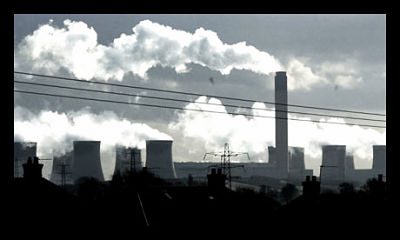
The World Bank has recently warned that global poverty could worsen due to climate change, if left unchecked. Climate change is responsible for a number of negative effects that can exacerbate poverty, including stronger storms and increased global temperatures.

Stronger storms can lead to poverty by causing destruction to homes, businesses, and crops. Likewise, increased temperatures can negatively affect crop yields by worsening droughts.

Overall, the World Bank has predicted a “two degree rise in average global temperatures” and sea levels rising to the point that “portions of Asia will be permanently underwater.” If not mitigated, these effects of climate change could decrease crop yields and displace millions of people, increasing poverty throughout the globe.

Already, 300,000 people die each year from the negative effects of climate change. Those most vulnerable to the impacts of climate change are those who live in extreme poverty and in countries that lack the resources necessary to respond to food shortages and natural disasters. One of the most concerning aspects of a changing global ecosystem is that “climate change threatens to undermine, and even reverse, the progress we’ve made to reduce poverty and promote development” due to increased droughts and destructive storm systems.

In order to prevent an increase in poverty in the future, policies must be developed to reduce the negative effects of climate change now. Technologies are available in both developed and developing countries that produce energy without generating greenhouse gasses. While the green technologies may be more expensive than fossil fuels, their use will help reduce the amount of carbon released into the atmosphere. A reduction of greenhouse gasses in the atmosphere will help reduce climate extremes and the poverty that it could potentially create.

– Jordan Kline

Sources: Mother Nature Network, The Journal, WWF

July 17, 2013
https://borgenproject.org/wp-content/uploads/borgen-project-logo.svg 0 0 Borgen Project https://borgenproject.org/wp-content/uploads/borgen-project-logo.svg Borgen Project2013-07-17 12:00:522013-10-21 11:42:32Poverty Reduction Efforts Must Address Climate Change
Global Poverty

USAID Helps Boost Pakistan Mango Exports

Pakistani_mango_USAID_opt
The US Agency for International Development (USAID) has helped boost Pakistan mango production and exports to international markets. This has led to a 75% increase in farm revenues and the creation of hundreds of jobs across the country. Through USAID, the U.S. government is supporting Pakistan’s mango farmers by creating new market opportunities, infrastructure upgrades, and access to international certifications. The programme’s achievements were celebrated in Islamabad on Monday at the 3rd Annual Mango Conference.

According the USAID, limitations to Pakistan’s export supply chain and lack of farm infrastructure for processing mangoes have been holding back the nation’s mango sector. The USAID Firm Project has invested $5.8 million in Pakistan’s mango production, providing the means for new infrastructure and marketing assistance to help farmers sell their products globally. $1.6 million has also been invested in small and medium sized farms to work with USAID to develop commercially feasible fresh and dried mango businesses.

The program has helped 26 mango orchards receive the Global GAP certification required for exports to high-end markets. 15 on-farm mango processing facilities have been established, with around 2,500 jobs created and 3,700 farmers trained in the process. Mango sales have increased about $20.5 million with a five-fold increase in exports of mangoes to the international market.

“We are thankful to the US government for their support to mango growers and producers, which has led to increased productivity and jobs for Pakistani people. A relationship that is based on trade, not just aid is one that we will look forward to in our relationship with the United States,” said Qasim Niaz.

Richard Olson, the US ambassador to Pakistan expressed that the US government will continue to focus on its partnership with Pakistan in strengthening the country’s private sector.

– Ali Warlich

Source: Tribune, Daily TImes
Photo: The News Tribe

July 17, 2013
https://borgenproject.org/wp-content/uploads/borgen-project-logo.svg 0 0 Borgen Project https://borgenproject.org/wp-content/uploads/borgen-project-logo.svg Borgen Project2013-07-17 11:17:452024-05-25 00:03:59USAID Helps Boost Pakistan Mango Exports
Global Poverty, Poverty Reduction

Poverty in Cape Verde

Cape_Verde_poverty

Cape Verde is a small archipelago island nation in the Atlantic Ocean off the northwest coast of Africa. The country is mired in absolute poverty, with 30% of its citizens below the poverty line. The World Bank estimates that 14% of the population is living in extreme poverty. With a crisis of this magnitude, the government of Cape Verde is dependent on the receipt of international aid to maintain relative stability.

Poverty in Cape Verde is precipitated by a number of factors, but the main inhibitors of economic growth are a gross lack of a natural resources and a limited economic base. Due to repeated droughts, Cape Verde is beleaguered by water shortages and poor soil. Due to a lack of domestic agriculture, over 82% of the country’s food supply is imported. The nation’s narrow economic base stems from over dependence on tourism as the sole source of economic revenue.

The World Bank has agreed to provide significant amounts of funding to Cape Verde and has developed an economic strategy to alleviate the poor conditions there. The World Bank’s plan is four-fold, involving an improvement in the quality of education and healthcare, a diversification of the economic base (exploiting tuna fishing as an additional source of income), an improvement of the already existing infrastructure, and the institution of welfare programs for the disadvantaged.

These changes will have to be implemented from the top down in order for them to be successful. The World Bank is working with the government of Cape Verde to implement these much needed changes. This combination of economic diversification, aid, and development will most assuredly provide a way for Cape Verde to rise out of extreme poverty.

– Josh Forgét 

Sources: The World Bank, The CIA World Factbook
Photo: Cape Verde Against Poverty,

July 17, 2013
https://borgenproject.org/wp-content/uploads/borgen-project-logo.svg 0 0 Borgen Project https://borgenproject.org/wp-content/uploads/borgen-project-logo.svg Borgen Project2013-07-17 06:20:242020-07-02 12:00:20Poverty in Cape Verde
Global Poverty

Rice Farming Must Adapt to Climate Change

rice_farms_climate_change

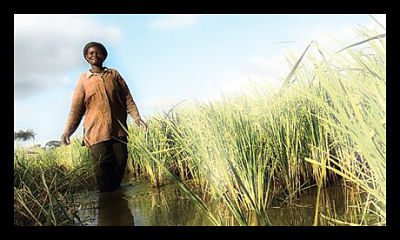
Climate change is having a profound effect on coastal rice farming. The resulting increase in pests, diseases, water scarcity, and salinity has been devastating to farmers.

Research conducted over the past decade demonstrates a strong relationship between climate change and the prevalence of disease and pests in rice paddies. Crop stressors like irregular rainfall often increase the virulence of rice blights such as brown spot and blast. Extreme weather, like flooding or drought, forces farmers into asynchronous, or unseasonal, cropping. Such practices, along with the weather events themselves, often lead to pest population explosions.

Water scarcity is another factor affecting rice production. As rice requires a certain amount of water to grow, even less-severe droughts can take a toll on production yields. Climate change continues to cause more frequent and more severe droughts, and rice farmers are starting to feel the pressure of drying rice paddies.

As higher temperatures and lower rainfall cause a decrease in ground water, sea levels continue to rise and intrude into fresh water areas. These factors cause a noted increase in salinity. Rice, particularly higher-yielding hybrids, is only moderately tolerant of salt. Thus, increases in the salinity usually see a decrease in yields for the affected paddies.

Drastic decreases in production are causing some farmers to abandon their fields. Several governments and NGOs, like Practical Action, a UK-based development organization, are launching initiatives to help these rice farmers cope with the growing challenges of climate change.

Practical Action partnered with farmers in southern Sri Lanka, a country that has seen significant effects of climate change over the past 20 years. The organization participated in farmer-led trials of traditional varieties of rice to assess each type’s resistance to temperature, pests, and salinity. The varieties were held against standards of crop duration, plant height, grain quality, and overall yield.

Sri Lanka has over 2,000 traditional varieties of rice. Most of these varieties had been abandoned for modern rice types and hybrids, but new climate challenges are turning many farmers back to indigenous varieties. The traditional rice is nutritional, some even having medicinal properties, and according to tests are more resilient in the face of climate change.

In fact, of the ten varieties tested by farmers in the Practical Action program, four scored high enough to now be officially promoted through farmer organizations as hardy and saline tolerant. The traditional rice cannot, generally, produce the high yields of hybrids, but its resilience and popularity in the consumer market still enable a farmer to generate profit.

It seems that for an agricultural community faced with emerging climate challenges, revisiting traditional methods could be the best solution.

– Lauren Brown

Sources: Practical Action
Photo: International Land Coalition

July 17, 2013
https://borgenproject.org/wp-content/uploads/borgen-project-logo.svg 0 0 Borgen Project https://borgenproject.org/wp-content/uploads/borgen-project-logo.svg Borgen Project2013-07-17 05:45:082024-05-25 00:01:01Rice Farming Must Adapt to Climate Change
Global Poverty

Rising Debt Means Falling Aid

falling_aid_usa
While some economies may be taking the first steps towards recovery, the repercussions of the global economic crisis are still being felt in the majority of countries. And one of the biggest casualties of the continued recession could be progress on the Millennium Development Goals (MDGs). Increased spending over the last few years led to rapid progress on many of the MDGs, however, a recent report entitled “Putting Progress at Risk” by Oxfam International shows that the majority of developing countries are now spending well below the amount required to continue with progress on the various social issues promoted by the MDGs.

While cuts necessitated by the global economic crisis have been made by developing countries – in such areas as agricultural spending, maintenance of water facilities, and wages for teachers and nurse – the problem is exacerbated by the effect the economic crisis has had on developed nations.

The report tracks the spending of 52 developing nations by using data from the Government Spending Watch database. The data shows that these countries have lost a combined $140 billion in revenues during the economic crisis. Unfortunately, at the same time as revenue generation in these countries is declining, international aid is also falling. As a result, countries are being forced to choose between increased borrowing and rising debt, and cutting funding to their own development programs. According to the Government Spending Watch database, only 20% of these countries are meeting targets for agricultural spending, and 40% are reaching the level the World Health Organization recommends for spending on health.

This combination of rising internal debt, and falling external aid, has many developing countries trapped and unable to generate enough revenue to support development, and yet needing that development to happen in order to promote future growth. Developed nations must hold to their initial pledges for aid, otherwise all the progress so far seen could slip away.

– David Wilson

Source: Caledonian Mercury, Oxfam

July 16, 2013
https://borgenproject.org/wp-content/uploads/borgen-project-logo.svg 0 0 Borgen Project https://borgenproject.org/wp-content/uploads/borgen-project-logo.svg Borgen Project2013-07-16 04:54:242020-07-02 12:06:50Rising Debt Means Falling Aid
Global Poverty

Boosting African Economies

_africa_aid_growth
In their joint op-ed for the Washington Times, former Congressional representatives Howard Berman and Connie Morella refer to US development efforts, saying, “We’re not just talking altruism. We’re talking sound, smart business.”

Berman, a Democrat, and Morella, a Republican, collaborated the op-ed entitled “A Smart Investment in Africa”, which was published Monday, July 1 in the Washington Times. Their overall message: help the developing world.

The article pointed out how in this globalized age, our security and economy have never been more closely tied with that of the African continent. Over half of US exports go to the developing world. This fact, combined with the vast population of the developing world, makes these countries the biggest potential for growth of American businesses and innovations. Investments in the continent of Africa advance economic and governmental reforms, which give American businesses a better foundation with which to expand into the continent.

The former Congressmen also pointed out that, while Americans are often given an image of Africa as a continent fraught with conflict and despair, African economies are growing at an astounding rate, like much of the developing world. Seven of the most rapidly expanding economies in the world are in Africa. As these economies expand and Africans are lifted out of poverty, American businesses will be able to market their products to the vast amounts of new wealthier consumers.

The article also highlighted how important US investment in Africa is for America’s security interests. Extremist groups, such as Al-Qaeda and its affiliates, are looking for ways to take root in Africa, and countries without the economic capacity to build strong infrastructure or security forces are the most vulnerable to these forces. Investing in African economies gives countries the resources and stability to resist extremist influence.

The security benefits of bolstering African economies are exemplified clearly in The World Bank report entitled “Breaking the Conflict Trap” which argues that an unequal distribution of wealth exacerbates societal tensions and “increases the perception of relative deprivation.” Therefore, reduction of poverty in African countries will reduce conflict in these areas which are critical to US security interests.

The former Representatives pointed out in their op-ed on Monday just how important US aid to Africa is, not just for humanitarian reasons, but for the future of US economic and security interests.

– Martin Drake
Source: Washington Times, World Bank

July 15, 2013
https://borgenproject.org/wp-content/uploads/borgen-project-logo.svg 0 0 Borgen Project https://borgenproject.org/wp-content/uploads/borgen-project-logo.svg Borgen Project2013-07-15 11:00:422020-07-02 12:08:06Boosting African Economies
Global Poverty

Zimbabwe Election 2013: A Repeat of 2008?

zimbabweelections_opt
In recent years, aid to Zimbabwe from the United States has made important strides towards improving life for the people. USAID has supported anti-retroviral treatment, improved access to healthcare, and has even reduced the spread of HIV/AIDs to under 15%. Most recently we have been attempting to transform the country into a democratic nation in order to support growth and success. The people are trying to assist with this change, but the government may be getting in their way.

On June 18th, the Senate Foreign Affairs Committee gathered for a hearing regarding the upcoming elections in Zimbabwe. The 2008 elections were a disaster, flanked with repression and violence across the African country. As a result of that and of U.S intervention and aid, Zimbabwe’s president, Mugabe, signed a new constitution into law that divides the power between him and Prime Minister Tsvangirai and brings about a 2 term, of 5 years each, maximum for each elected president.

The good news is that this means the Zimbabwean people will finally have the chance to shape the government according to their needs, gaining health care and education reforms. The bad news is that the current government may not be so ready to hand over the reigns to the people.

Part of the agreement the U.S reached with Zimbabwe was that the elections had to be held by the end of July. And, while the elections could seriously improve the relationship between our country and theirs, rushing into things could damage any chances Zimbabwe has of actually making progress. Therefore SADC has requested that we give them more time to make sure everything is ready and the elections will be fair.

Acting Assistant Secretary of the Foreign Affairs Committee, Donald Yamamoto, brought forth his arguments before the other panel members. He cited the recent illegal arrests, detentions, and instances of harassment as evidence that efforts are already underway to intimidate voters and sway the election. “Zimbabwe must decide whether it will support a credible electoral process or continue to repress its people and isolate itself from the international community”. This decision does not just decide whether the people stay repressed in poverty, but also whether Zimbabwe becomes involved in trading and business with the rest of the world, including the U.S.

There has also been concern that without enough time, it will be less likely that all the new voters will be registered, inspection of voters’ rolls will take place, and that other needed electoral and democratic reforms will be adhered to. This would make the credibility of the election outcome very questionable and set back the governmental improvements another 5 years.

However, important changes are already underway. For the first time ever, the youth of Zimbabwe are getting together to debate politics and learn about the issues that affect them. If given the chance they could make a noticeable difference in the way things are done and how their country works with the rest of the world.

– Chelsea Evans

Source: Donald Yamamoto, Earl Gast, Dr. Todd J Moss, Reuters
Photo: Zimbabwe Election Watch

July 15, 2013
https://borgenproject.org/wp-content/uploads/borgen-project-logo.svg 0 0 Borgen Project https://borgenproject.org/wp-content/uploads/borgen-project-logo.svg Borgen Project2013-07-15 10:00:452020-06-26 14:32:51Zimbabwe Election 2013: A Repeat of 2008?
Global Poverty

The Thai Government’s Costly Rice Subsidy

Rice Subsidy
For five decades, Thailand was the world’s leading rice exporter. In past two years, however, since the implementation of a costly rice subsidy program, the country has incurred a 4.4 billion loss in rice exports, thereby opening a gap that Vietnamese and Indian exporters have been able to exploit.

At the end of 2011, as elections approached, Thai President Yingluck Shinawatra decided to implement a rice subsidy benefitting four million farmers. By buying their rice at a price 50% higher than the world market price and thus increasing the farmers’ revenue, he ensured himself heightened popularity with the people.

The original idea, according to the Wall Street Journal, was for the plan to “…first function as a welfare handout by replacing private rice dealers with inflated government payments to farmers. Then, in phase two, the world’s top rice exporter would drive up global rice prices by withholding its crops from the market. Once prices rose high enough, Bangkok could recoup the investment by selling off its stockpiles.”

Unsurprisingly, this attempt to manipulate market prices failed as exporters from India and Vietnam rushed in to increase their share of rice exports and boost their own productivity.

In 2012, market prices remained low and Thailand lost its position as leading rice exporter to India, as its exports dropped by 37%.

Mid-June, the government announced a reduction of the rice subsidy from $485 per ton to $388 per ton, though the price still remained higher than the world market price. This 20% price reduction angered peasants, who constitute a majority of the governing party’s traditional electorate.

Monday July 1st, the government decided to reestablish the price of the subsidy to its initial level and reexamine the question in order to placate peasants who withdrew their demonstration threats.

The loss in Thai rice exports due to the subsidy can be evaluated at 35 percent between 2011 and 2013. In 2012 alone, Thai arrived in third position, exporting 6.9 million tons of rice versus 9.5 million for India and 7.8 million for Vietnam. The ill-planned subsidy program has been disastrous for Thailand so far, and promises to deepen government debt if the Thai government does not take action.

In the meantime, the government must quickly find a way to deal with the 17 million tons of Thai rice amassed in stockpiles. With little time left before the excess rice goes bad in one to two years, the government might already have to bring down prices in order to sell its surpluses, virtually guaranteeing that its investments will never be returned.

– Lauren Yeh

Sources: WSJ, Le Monde, Global Voices Online
Photo: Rice Wisdom

July 15, 2013
https://borgenproject.org/wp-content/uploads/borgen-project-logo.svg 0 0 Borgen Project https://borgenproject.org/wp-content/uploads/borgen-project-logo.svg Borgen Project2013-07-15 06:03:312024-05-25 00:01:38The Thai Government’s Costly Rice Subsidy
Food & Hunger, Food Aid, Global Poverty, Health

“Nutrition for Growth” and Hunger Alleviation

Nutrition for Growth
With last month’s G8 Summit, and the ‘Nutrition for Growth’ summit hosted in London before that, a lot of the focus has been on large amounts of international aid earmarked to combat global hunger and malnutrition.

Small-scale, localized projects play just as large a role as international aid efforts, and possibly more beneficial. The original Green Revolution increased crop yields dramatically, but at no small environmental cost. If this large-scale intervention played its role, multiple small-scale projects could produce the same results.

One such project fighting food insecurity is the Soil, Food, and Healthy Communities (SFHC) program in Malawi. This program began ten years ago with efforts to educate local farmers and diversify their crops. The original aim of the project was to improve the health, food security, and soil fertility of poor households in Northern Malawi. This goal was additionally tied into participatory research, testing legume systems and looking at more sustainable approaches to achieving greater food security.

By introducing a variety of different legume options, as well as agricultural techniques, the quality and quantity of food can both be increased, as well as improving soil quality through organic input. This Ecohealth approach, focusing on the health of the entire system and humans’ interaction with it, can be simultaneously beneficial to the communities’ short-term needs, as well as allowing for longer-term sustainability.

Ten years on from the initiation of the project there have been many encouraging signs of success. The introduction of semi-perennial rotation systems, and the diversification of crops, led in some cases to annual return yields double that of the previous system. In addition to these straightforward agricultural benefits, a further goal of SFHC was to educate the local populace regarding nutrition.

The introduction of diverse legumes into the crop rotation system improves soil quality and yield, and also diversifies the local diet. This additional food production can then directly influence the health of the children of the community. As a result of this project, child malnutrition has been reduced by two-thirds over the past ten years in a hospital catchment area serving about 70,000 people and covering 600-square kilometers. This is largely due to farmers now producing soybeans, groundnuts, and other legumes, and incorporating them into the local diet.

– David Wilson

Sources: The Guardian, Winnipeg Free Press

July 15, 2013
https://borgenproject.org/wp-content/uploads/borgen-project-logo.svg 0 0 Borgen Project https://borgenproject.org/wp-content/uploads/borgen-project-logo.svg Borgen Project2013-07-15 05:16:442020-06-26 14:34:18“Nutrition for Growth” and Hunger Alleviation
Page 2119 of 2161«‹21172118211921202121›»

Get Smarter

  • Global Poverty 101
  • Global Poverty… The Good News
  • Global Poverty & U.S. Jobs
  • Global Poverty and National Security
  • Innovative Solutions to Poverty
  • Global Poverty & Aid FAQ’s
Search Search

Take Action

  • Call Congress
  • Email Congress
  • Donate
  • 30 Ways to Help
  • Volunteer Ops
  • Internships
  • Courses & Certificates
  • The Podcast
Borgen Project

“The Borgen Project is an incredible nonprofit organization that is addressing poverty and hunger and working towards ending them.”

-The Huffington Post

Inside The Borgen Project

  • Contact
  • About
  • Financials
  • President
  • Board of Directors
  • Board of Advisors

International Links

  • UK Email Parliament
  • UK Donate
  • Canada Email Parliament

Get Smarter

  • Global Poverty 101
  • Global Poverty… The Good News
  • Global Poverty & U.S. Jobs
  • Global Poverty and National Security
  • Innovative Solutions to Poverty
  • Global Poverty & Aid FAQ’s

Ways to Help

  • Call Congress
  • Email Congress
  • Donate
  • 30 Ways to Help
  • Volunteer Ops
  • Internships
  • Courses & Certificates
  • The Podcast
Scroll to top Scroll to top Scroll to top