• Link to X
  • Link to Facebook
  • Link to Instagram
  • Link to TikTok
  • Link to Youtube
  • About
    • About Us
      • President
      • Board of Directors
      • Board of Advisors
      • Financials
      • Our Methodology
      • Success Tracker
      • Contact
  • Act Now
    • 30 Ways to Help
      • Email Congress
      • Call Congress
      • Volunteer
      • Courses & Certificates
      • Be a Donor
    • Internships
      • In-Office Internships
      • Remote Internships
    • Legislation
      • Politics 101
  • The Blog
  • The Podcast
  • Magazine
  • Donate
  • Click to open the search input field Click to open the search input field Search
  • Menu Menu

Archive for category: Global Poverty

Key articles and information on global poverty.

Global Poverty, Sustainable Development Goals, United Nations

G20 Summit Aims for Sustainable and Inclusive Development

Sustainable Development

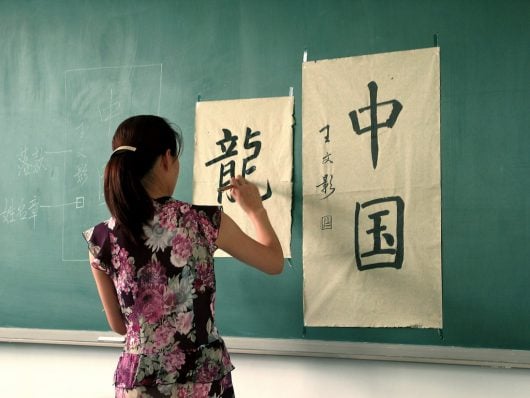
From Sept. 4 to 5, heads of state and government from nineteen countries and the European Union will gather in Hangzhou, China for the 11th G20 summit. The theme of this year’s conference is “Towards an Innovative, Invigorated, Interconnected and Inclusive World Economy”, a motto which many officials and experts find encouraging.

In an interview with the Xinhua News Agency, China’s state-owned media outlet, Atsushi Sunami, the vice president of the National Graduate Institute for Policy Studies (GRIPS) in Tokyo, explained that the G20 summit could forge consensus on implementing the 2030 Agenda for Sustainable Development. Adopted by the U.N. last fall, the 2030 Agenda includes 17 Sustainable Development Goals (SDGs) and aims to end poverty and hunger by the end of the third decade in the 21st century.

Sunami also called on countries to work together and build innovation across borders. The conference in Hangzhou, in his view, could jump-start the dialogue on open innovation and inclusive development.

Also speaking with Xinhua, Peter Thompson, who will be the president of the upcoming 71st Session of the U.N. General Assembly, voiced his support for the summit’s theme as well as the U.N.’s desire to work with the G20 organizers. “We will certainly be doing our part here at the United Nations in terms of the G20 outcome to make sure it’s built into the international implementation plans,” he said.

Likewise, Daniel Funes de Rioja, President of the International Organization of Employers (IOE), expressed his hope that the G20 summit will be a step in the direction of inclusive development. “Prosperity requires growth, investment, technology and innovation, with employment and social coverage for all,” according to de Rioja.

Indeed, while the G20 is primarily a forum for leaders of the developed world, developing countries are also starting to make their voices heard.

Senegal, which will be present at the summit in Hangzhou, sees the G20 as a platform to call attention to African issues as well as an opportunity to explore solutions. Alioune Sarr, the country’s commerce minister, told China Central Television (CCTV) that the conference will highlight the necessity of poverty eradication and inclusive development on the continent.

The G20 has consistently underscored the importance of international cooperation when it comes to solving the world’s problems, and the renewed emphasis on inclusive development and shared prosperity is certainly a welcome change.

– Philip Katz

Photo: Flickr

August 29, 2016
https://borgenproject.org/wp-content/uploads/borgen-project-logo.svg 0 0 Borgen Project https://borgenproject.org/wp-content/uploads/borgen-project-logo.svg Borgen Project2016-08-29 01:30:462024-05-27 23:53:31G20 Summit Aims for Sustainable and Inclusive Development
Children, Food & Hunger, Global Poverty, Hunger

Hunger in Zimbabwe: Overcoming Child Malnutrition

Hunger in Zimbabwe

Thousands of children are facing starvation and hunger in Zimbabwe due to the worst drought in two decades. According to the World Food Programme, nearly four million Zimbabweans are struggling to meet their basic food needs.

Zimbabwe is considered a food-deficit country, ranked 156 out of 187 on the Global Hunger Index. Although food insecurity affects people of all ages, it is even more detrimental to children.

Studies show that proper nutrition is critical to children’s physical and emotional development. Children struggling with hunger are more likely to repeat a grade in primary school, experience impairments in language and motor skills, or have social and behavioral problems.

In Zimbabwe, only 17.3% of children between the ages of two and six receive the recommended minimum diet for adequate nutrition. A child suffering from malnutrition is more likely to contract diseases, such as HIV, or suffer from stunting. Currently, one in every three Zimbabwean children suffers from chronic malnutrition or stunting. Stunting alone contributes to more than 12,000 deaths per year.

Hunger in Zimbabwe has become a major issue, particularly for low-income families and their children. Struggling families are often pressured to accept a dowry for their young daughters. This provides food for the rest of the family, as well as a potentially more food-secure situation for their daughter.

Approximately one out of every three girls in Zimbabwe are married before their 18th birthday. Girls living in the poorest 20% of households were more than four times as likely to marry before the age of 18 than those living in the wealthiest 20% of households.

Both poverty and hunger in Zimbabwe have resulted in an unsafe environment for children.

In order to combat hunger in Zimbabwe, the World Food Programme has implemented the Protracted Relief and Recovery Operation (PRRO). The three primary focus areas of the operation are disaster response, food assistance and nutrition.

The disaster response and risk reduction program are designed to support food-insecure households affected by severe drought during the growing season.

Food Assistance for Assets provides cash and in-kind transfers, along with activities that promote self-reliance. It empowers vulnerable communities to move away from a dependence on food assistance.

The health and nutrition promotion is responsible for the Moderately Acutely Malnourished treatment, which assists pregnant and nursing women and children under the age of five. A stunting prevention program was also established in the same district.

With the help of the World Food Programme and other international organizations, hunger in Zimbabwe is decreasing and children are able to live healthier and happier lives.

– Kristyn Rohrer

Photo: Flickr

August 29, 2016
https://borgenproject.org/wp-content/uploads/borgen-project-logo.svg 0 0 Borgen Project https://borgenproject.org/wp-content/uploads/borgen-project-logo.svg Borgen Project2016-08-29 01:30:432024-06-07 05:07:37Hunger in Zimbabwe: Overcoming Child Malnutrition
Global Poverty

How Doctors Without Borders is Fighting HIV in Mozambique

HIV in MozambiqueDoctors Without Borders (DWB) is an international organization that works to improve global health conditions. One of their current missions is fighting HIV in the sub-Saharan African nation of Mozambique. In Mozambique, one in ten adults is estimated to be HIV positive. DWB is focusing its efforts on increasing treatment and reducing the spread of the disease for sex workers and truck drivers — two demographics that are particularly at risk for infection. Their highway corridor project is estimated to reach and positively impact 3,800 sex workers and 4,500 truck drivers.

In the port city of Beira, cargo trucks are continuously moving through docks, loading and unloading cargo. The cargo is then transported to many areas of central and southern Africa. This highway corridor used for cargo transportation is also at risk for spreading HIV. DWB offers weekly HIV testing and counseling for truck drivers along the highway as far as the border of Malawi. Additionally, the organization is responsible for distributing free condoms at truck stops.

The organization has also implemented several strategies for sex workers, who are ten times more likely to be HIV positive than the general population.

Most strategies fighting HIV in Mozambique focus on educating these workers and increasing access to HIV prevention and treatment. Another important tactic includes distributing free condoms to women who engage in sex work. DWB also encourages sex workers to get tested for HIV and even provides on the spot testing in Beira.

If a woman’s test result is negative, she is offered the option to join a program called PrEp, which stands for pre-exposure prophylaxis. In this program, patients receive an anti-AIDS drug that aims to block the virus in women who face a high risk of infection. Although PrEP is relatively new for fighting HIV in Mozambique, it has been shown to significantly reduce one’s chance of infection.

If tests results come back positive, women are referred to a clinic for further treatment. They also have a chance to talk with DWB’s “peer educators,” who are current or former sex workers employed by DWB to speak publicly about HIV prevention and treatment. Women feel comfortable talking to them because they do not make them feel ashamed of their work and all information discussed is kept confidential.

Hearing HIV discussed in public settings greatly reduces the shame and discrimination that is often associated with the disease. In 2010, Mozambique experienced a 58 percent increase in the number of people receiving antiretroviral treatment for HIV. This does not reflect an increase in the number of people infected, but rather an increase in willingness to be tested and receive treatment.

To increase access to treatment, DWB employs people to speak publicly about their own experiences in order to reduce shame surrounding the issue, which is a key step in fighting HIV in Mozambique. The organization also offers a training program for nurses that will allow them to be able to prescribe antiretroviral treatments for patients. Not only does this increase access to treatment, but it also creates jobs and more self-sufficient communities.

Both sex works and truckers in Mozambique often engage in unsafe sex practices that make them vulnerable to HIV infection and transmission during their travels. Through the numerous initiatives mentioned above, DWB is working to improve the quality of life for these two groups as well as for all HIV patients.

– Nathaniel Siegel

Photo: Flickr

August 29, 2016
https://borgenproject.org/wp-content/uploads/borgen-project-logo.svg 0 0 Borgen Project https://borgenproject.org/wp-content/uploads/borgen-project-logo.svg Borgen Project2016-08-29 01:30:422024-05-27 09:34:53How Doctors Without Borders is Fighting HIV in Mozambique
Global Poverty, Water

Water Quality in Palestine: Gaza in Crisis

Water Quality in Palestine

Gaza is one of the most densely populated urban areas in the world, with 1.8 million people confined in a 140-mile radius. The only water resource, the Coastal Aquifer, is insufficient for the needs of the population. Water access and water quality in Palestine leaves a lot to be desired.

The World Bank reported on the poor water quality in Palestine, as well as the lack of access to sanitation services that reached crisis proportions. Due to said conditions, Palestinians in Gaza are forced to over-extract water from the Coastal Aquifer in order to stay alive. They obtain water at a rate equivalent to twice the aquifer’s yearly sustainable yield, causing the water to become contaminated.

In 2008, WHO estimated that 26% of diseases in Gaza were water-related, a statistic that could be higher now that 90-95% of Gaza water is polluted and unfit for human consumption. Due to the contamination, high levels of nitrite were found in the groundwater at levels far above the WHO accepted guideline of 50mg per liter. Such dispersion has increased cases of methemoglobinemia, a blood disorder that impedes the flow of oxygen in young infants.

Why Palestinians in Gaza Lack Water Facilities

The water quality in Palestine remains unsanitary due to Israel’s blockade of Gaza, and military operations hinder the possibility of Palestinians restoring their water facilities. Wells, cisterns and roof water tanks have been destroyed and damaged, most notably during the Israeli attacks in 2008 and 2014.

During the 2008 Operation ‘Cast Lead,’ Israel caused U.S. $6 million worth of damage to Gaza’s water supply and wastewater facilities. In 2014 the Israeli attack on Gaza resulted in heavy destruction of infrastructure; the total damage was estimated to be $4.4 billion and included water and sanitation facilities.

The loss of water facilities has had a lasting impact on the Palestinians in Gaza. The continued blockade by Israeli security forces prevents the import of equipment and spare parts needed to repair and improve the water supply and sanitation systems. Even simple sanitation items such as chlorine are not permitted.

Furthermore, water main and sewage conduits are routinely crushed by Israeli tanks and armored vehicles. Water tanks are also shot at and damaged by Israeli soldiers.

Addressing the Issue Through the BDS Movement

In 2007 Palestinians founded “Lifesource,” a collective working at the grassroots level to organize for water justice.

The mission of Lifesource is to:

  1. Educate Palestinians about their water rights and enable communities to take an active role in improving the situation.
  2. Promote and utilize nonviolent popular resistance tactics for the human rights to water and sanitation.
  3. Connect popular movements locally and globally to support Palestinian water rights.

In 2009 “Lifesource” partnered with the global campaign Boycott, Divestment and Sanctions (BDS).

Lifesource led a program called “BDS for Palestinian Water Justice,” supporting boycott divestment and eschewing sanctions that infringe on Palestinians right to water and sanitation. The BDS Movement works to increase economic and political pressure on Israel to end the occupation and colonization of Palestinian land. By organizing demonstrations that target companies that have contracts with Israel, companies are pressured to break ties with Israel, thus deterring the country from continuing to occupy Palestine. Their work led to some success: water companies profiteering from human rights violations, such as Eden Springs and Veolia, lost important contracts and had to downsize or close their doors.

Although Lifesource came to an end in 2012, the BDS movement is still up and running, giving Palestinians in Gaza hope that their basic human needs will continue to be addressed.

– Marcelo Guadiana

Photo: Flickr

August 28, 2016
https://borgenproject.org/wp-content/uploads/borgen-project-logo.svg 0 0 Borgen Project https://borgenproject.org/wp-content/uploads/borgen-project-logo.svg Borgen Project2016-08-28 01:30:432024-12-13 17:55:39Water Quality in Palestine: Gaza in Crisis
Activism, Global Poverty, Refugees, Refugees and Displaced Persons

A Unique Struggle: 10 Facts About Palestine Refugees

10 Facts About Palestine Refugees
The Arab-Israeli conflict has continued for more than 65 years. The absence of a Palestinian state has led to major difficulties in providing aid for their refugees. Palestine refugees differ from other refugee populations in the world and have a unique status as a result. In order to understand the struggle of refugees involved in this conflict, consider these 10 facts about Palestine refugees:

1. One in three refugees is Palestinian.

There are nearly 7.2 million Palestine refugees worldwide. The number of Palestinian refugees is nearly double that of Syrian refugees (3.8 million).

2. There are three main groups of Palestinian refugees.

The largest group is comprised of Palestinians who were displaced in 1948. Another major group are those who were displaced from the West Bank and Gaza Strip in 1967. The third group refers to internally displaced Palestinians.

Internally displaced refugees include both: Palestinians who remained in areas that later became the state of Israel, and Palestinians living in the West Bank and Gaza Strip who lost their homes due to demolition, revocation of residency rights or the construction of Israeli settlements.

3. There is a specific U.N. relief organization for Palestine refugees.

The U.N. Relief and Works Agency for Palestinian Refugees (UNRWA) began operations in 1950. All other refugee populations worldwide are protected by the U.N. High Commissioner for Refugees (UNHCR).

4. There are specific criteria for qualifying for UNRWA assistance.

The UNRWA provides aid for Palestine refugees who “lost both home and means of livelihood as a result of the 1948 conflict.” The other primary groups of refugees do not qualify for aid under the UNRWA mandate.

5. Palestinians are one of the only populations whose descendants also qualify as refugees.

As a result of Palestinian descendants gaining refugee status, there are currently 5 million refugees who qualify for UNRWA services. When the UNRWA began operations, the agency responded to the needs of only 750,000 Palestinian refugees.

6. There are 58 UNRWA recognized Palestine refugee camps.

There are 58 official and six unofficial refugee camps across Jordan, Lebanon, Syria, the Gaza Strip and the West Bank.

One-third of the registered Palestine refugees live in refugee camps. Camps typically have poor socioeconomic conditions, are extremely overcrowded and lack adequate roads and sewer systems.

7. Palestine refugee camps in Gaza comprise one of the highest population densities in the world.

More than half a million Palestine refugees live in the eight recognized refugee camps in Gaza. The number of refugees in the area continues to rise due to wars and bombings. Over 70 percent of Gaza’s total population are refugees.

8. Jordan has the most Palestinian refugees of any country.

There are over 2 million registered Palestine refugees living in Jordan. The number of refugees living in the Gaza Strip and West Bank combined is fewer than the amount living in Jordan.

9. Palestine refugees are granted citizenship in Jordan.

Jordan is the only host country that has granted Palestinian refugees full citizenship rights. Other host countries have been known to bar Palestinians from basic rights, such as health and educational services.

10. No Palestinian has ever lost their refugee status.

Palestinian refugees have been refused the right to return to their place of origin; Israeli officials have declared that such a right is not legitimate. The number of Palestine refugees has increased by more than six times the amount originally accounted for in 1948. This is a result of Palestinians being able to retain their refugee status.

These 10 facts about Palestine refugees are by no means an exhaustive list, however, it offers insight into the current situation. Palestinians are the largest and longest-standing group of refugees in the world. Palestinian refugees have suffered for over six decades and will continue to suffer until their basic needs and rights are met.

– Kristyn Rohrer

Photo: Pixabay

August 27, 2016
https://borgenproject.org/wp-content/uploads/borgen-project-logo.svg 0 0 Borgen Project https://borgenproject.org/wp-content/uploads/borgen-project-logo.svg Borgen Project2016-08-27 01:30:402024-12-13 17:54:49A Unique Struggle: 10 Facts About Palestine Refugees
Global Poverty

Caterpillar in Cameroon: Increasing Energy Access in Doula

Energy Access in Doula
Caterpillar, the globally-recognized U.S. construction equipment company, is leading the fight against energy poverty in the Central African country of Cameroon. Priding itself on its commitment to sustainability and social change, Caterpillar has increased energy access in Doula, Cameroon’s largest city. The company plans to expand its reach by joining hands with Altaaqa Global.

Altaaqa Global is a rental dealer of Caterpillar products, and the company’s goal is to ensure that electricity is dependably supplied to vulnerable communities. Through its new customer development program, Altaaqa Global and Caterpillar plan to increase energy access by providing local employees with the technical knowledge needed to manage Doula’s natural gas power plant.

As Fahah Y. Zahid, the chairman of Altaaqa Global, explains, “We have always aimed to play an active role in spurring growth and progress not only by providing a reliable supply of electricity but also by transferring knowledge to locals. We hope that the Customer Development Program yields a globally competitive workforce that will drive the continuous growth of Cameroon.”

Plagued by a lack of energy access, Doula faces extreme poverty, which affects 13 percent of the city’s population, as well as a 30 percent unemployment rate. Caterpillar and Altaaqa Global’s work is thus crucially important because providing Doula citizens with electricity will lead to greater economic growth.

In May 2015, the Government of Cameroon announced that it wanted to achieve “economic emergence” by 2035. Thanks to Caterpillar and Altaaqa Global, the government’s target may be within reach.

While Caterpillar increases energy access in Doula with the help of Altaaqa Global, more people will use the newfound electricity to gain an education, start their own businesses or find jobs. As a result of these new opportunities, Doula’s residents can effectively contribute to Cameroon’s success and help the country become the economic powerhouse it has the potential to be.

– Kristina Evans
Photo: Pixabay

August 27, 2016
https://borgenproject.org/wp-content/uploads/borgen-project-logo.svg 0 0 Borgen Project https://borgenproject.org/wp-content/uploads/borgen-project-logo.svg Borgen Project2016-08-27 01:30:352024-12-13 17:54:54Caterpillar in Cameroon: Increasing Energy Access in Doula
Children, Global Poverty

Scottish Government Proposes Bill to End Child Poverty

End child povertyThe Scottish government proposed a new bill that takes a great step to end child poverty. The bill in question is designed to halve child poverty in Scotland by 2030. On August 8, 2016, Equalities Secretary Angela Constance launched an eight-week consultation on the plans.

About one in five children in Scotland live in poverty. The bill proposes protecting families’ income by law, aiming for less than 10 percent of children to live in relative poverty, less than 5 percent in absolute poverty and less than 5 percent in persistent poverty or a low income, materially deprived home.

Relative poverty is where a family earns less than 60 percent of the national average, while absolute poverty is where earnings are less than 60 percent of the average wage in 1999. Persistent poverty is where families have been living in poverty for three out of a four-year period.

Targets outlined in the bill include ensuring more people are paid the living wage; families have access to more free or cheaper childcare and free school meals. Additionally, the government is offering better-paid jobs and greater security to parents. The measures are in place to boost family income in Scotland over the next 14 years.

The Child Poverty Action Group (Cpag), which is a group of campaigners against child poverty, welcomed the consultation into how to reduce child poverty in Scotland.

John Dickie, director of Cpag, said the bill is a “great opportunity” to help tackle the problem, but he also warned that political leaders must take responsibility as well. Dickie called for the new laws to include duties for political leaders to annually report progress. Cpag stated that the bill is not a solution to child poverty, but it would help keep child poverty in Scotland a top priority.

Constance stated that to end child poverty isn’t only a job for the government, but also the entire population of Scotland. She proposed that the government would work together with local governments, businesses and people living in poverty to help tackle child poverty in Scotland. Constance is confident that the jobs being created in Scotland will provide a real route out of poverty.

– Jacqueline Venuti

Photo: The Daily Record

August 27, 2016
https://borgenproject.org/wp-content/uploads/borgen-project-logo.svg 0 0 Borgen Project https://borgenproject.org/wp-content/uploads/borgen-project-logo.svg Borgen Project2016-08-27 01:30:322024-05-27 23:53:00Scottish Government Proposes Bill to End Child Poverty
Global Health, Global Poverty

Harvard Medical School Gets $20 Million for Global Health

Harvard Medical SchoolHarvard Medical School recently received a generous and philanthropic gift of $20 million. Billionaire and medical technology tycoon, Ronda E. Stryker and her husband, William D. Johnston supplied the donation, which will allow Harvard Medical School’s Department of Global Health and Social Medicine to expand its research facilities.

The Department of Global Health and Social Medicine dedicates itself to training impactful healthcare workers and policy makers as well as develop important partnerships with medical and social experts. This camaraderie and dedication creates an effective network that promotes and delivers quality healthcare necessities to areas in need.

Chair of the University’s department and professor Paul Farmer said in a press release, “This gift gives us the ability to solidify our foundation of collaborative research, care delivery and education for global health equity, while also providing crucial flexibility to respond to the needs of the communities we serve, as defined by the people within them.”

Stryker and Johnston’s gift will also grant funding for junior faculty and fellows focused in the fields of global epidemic research, including studies on diseases such as HIV and Ebola.

Faculty and fellows belonging to the department are grateful for the flexibility and resources provided by Stryker and Johnston’s donation. Harvard Medical School Dean, Jeffrey S. Flier said in the press release that it will allow the school to “continue to improve the lives of people throughout the world.”

Recently, the Department of Global Health and Social Medicine served as cosponsors and partners to the Rwanda Human Resources for Health Program (HRH), which works toward expanding the health workforce in Rwanda.

Essentially, this $20 million donation will not only serve to alleviate financial struggles facing applicants seeking to join the Harvard Medical School’s global health initiatives, but will also fund various University projects and further their progress in global health and well-being.

– Jenna Salisbury

Photo: Flickr

August 27, 2016
https://borgenproject.org/wp-content/uploads/borgen-project-logo.svg 0 0 Borgen Project https://borgenproject.org/wp-content/uploads/borgen-project-logo.svg Borgen Project2016-08-27 01:30:252020-06-12 10:59:02Harvard Medical School Gets $20 Million for Global Health
Activism, Aid, Aid Effectiveness & Reform, Global Poverty

Senate Debates the Purpose of Assisting the Developing World

U.S. Assistance to the Developing World
“Could each of you tell me the purpose of the United States giving economic assistance to other countries?” These were the words Senator Bob Corker used to kick off the debate over the effectiveness of current U.S. allocations, and the purpose of U.S. assistance to the developing world.

In general, all of the witnesses agreed that the purpose of U.S. assistance to the developing world is to promote economic growth and the conditions that sustain it, but each participant expressed nuances regarding how this goal can be accomplished.

Dr. Jeffrey Herbst, CEO of Newseum, believes that the key to improving U.S. assistance is to ensure the accountability of recipient governments. In his introductory remarks, he recommended that countries meet certain performance outcomes or be subject to the withdrawal of aid.

“If the recipient country is not committed,” said Herbst, “to private sector growth and a dynamic economy, then no matter what the design of foreign assistance is…the aid is not going to have a significant effect.”

But this is also a matter of perspective. Alicia Phillips Mandaville, Vice President of Global Development at InterAction, explained that many of the factors affecting program success are overlooked due to a lack of technical tools. Mandaville emphasized growth diagnostics and cost-benefit analyses to determine the real obstacles to growth and whether those can be overcome in the long term.

For instance, Mandaville pointed out that one common barrier to growth in West African countries is poor infrastructure. Roads there are congested and do not accommodate large transport vehicles, so the perceived solution is to simply make an infrastructure investment.

However, from a technical point of view, high transport costs are created not by the macro-situation, but rather by its surrounding actors. “The problem is that there are three different ministries allowed to set up safety checkpoints,” Mandaville explained. “So you’ve tripled the instances for graft, and you’ve slowed down speed by threefold.”

Mandaville and Herbst’s examples underscore this trend of awarding targeted aid programs to countries with strong records of good governance.

To round out this idea, Dr. Todd Moss of the Center for Global Development stressed that the future of U.S. assistance lies in the public-private partnership. Highlighting initiatives such as USAID’s “Power Africa,” he expressed that “the deployment of commercial capital for public policy purposes” is the greatest enabler of economic growth.

To date, “Power Africa” has secured funds from private actors such as the Africa Finance Corporation ($25 million) and SolarNow ($2 million), combining them with government contributions like those from the Swedish Development Agency ($1 billion).

The conclusion, then, is clear: the purpose of U.S. assistance to the developing world is to enable growth in countries committed to democratic governance. This assistance will compete with that of other donors (such as China) by enforcing metric-contingent funding, and it will promote the public-private investment model as its vehicle for deployment.

These changes are a signal to prospective governments that the U.S. is committed to producing results and not just “buying friends.”

– Alfredo Cumerma

Photo: Flickr

August 26, 2016
https://borgenproject.org/wp-content/uploads/borgen-project-logo.svg 0 0 Borgen Project https://borgenproject.org/wp-content/uploads/borgen-project-logo.svg Borgen Project2016-08-26 01:30:342024-12-13 17:54:52Senate Debates the Purpose of Assisting the Developing World
Activism, Children, Global Poverty

The Plight of Youth in Gaza: Their Dire Need for Improvement

Youth in Gaza
The ongoing power struggle between the Israeli government and Hamas has adversely affected youth in Gaza. The situation has been exacerbating since the 2007 Israeli blockade on the Gaza strip. Moreover, youth unemployment rates have risen to a staggering 60 percent, with a nearly 80 percent dependency on foreign aid.

An analysis conducted by the International Labor Organization (ILO) accentuates that the youth in Gaza working between the ages of 10-17 has soared to 9,700. Many are below the legal age of 15, and this figure is presumed to be much more in reality.

With rising food prices and varying degrees of income disparity over the years, the plight of the youth has only intensified. The deficiency in the labor market has made it difficult for people to find work. As a result, young children work for meagre amounts to support their families, without even the basic provision of insurance.

“I have to work to earn extra money – my father is ill, and my mum has no food for us,” exclaims 7-year-old Imad Awadallah.

Humanitarian aid has benefited many young children, but the British government’s recent probe into Palestinian authorities may show a prolonged misuse of this aid.

SOS Children’s Villages has been providing care and early education to young children in Rafah since 1999. Their youth home has also helped young people with basic training to adjust to the challenges that adult life entails.

United Nations Relief and Works Agency for Palestine Refugees (UNRWA) has also provided outstanding education in Gaza for the past few years. For three years, the El-Wedad Society for Community Rehabilitation has been spearheading the push for children’s rights. They visit families and highlight the vitality of education through seminars and sessions.

It is imperative to ensure mobility and efficiency in the provision of aid. While channeling humanitarian aid, collaboration with the Palestinian government is necessary.

Countries in the region have reached out to those impoverished children. Notably, an envoy from the Jordan Hashemite Charity Organization arrived on June 16 with medical supplies. Also, many in Karara will receive help through the Turkish Crescent’s inception of the first aid station.

Moreover, the initiatives organized by Gaza’s Social Affairs Ministry of Labor will enhance a variety of skills, such as sewing and carpentry, which will help make the youth more self- sufficient. Thus, there should be an increased propensity to remain in school–increasing literacy rates are vital to increasing the diversity of the labor market.

The deployment of peacekeepers serves a dual purpose: 1) It is a necessary precaution to ensure the steady flow of aid and 2) it protects vulnerable groups (such as young children) in the more turbulent areas. Aid workers must also be well trained and experienced to safeguard the interests of the children.

Businesses that use exploitation and child labor have the potential to be blacklisted by the U.N., as it is a violation. Potential creditors must also refrain from investing in such businesses.

Considering the revolts in 2014, possible cessation of hostilities between the Hamas and Israeli government is indefinite. However, we can create awareness by supporting NGOs like Save the Children and Islamic Relief USA. Alleviating the harsh situations faced by the youth in Gaza will positively impact all involved.

– Shivani Ekkanath

Photo: Flickr

August 26, 2016
https://borgenproject.org/wp-content/uploads/borgen-project-logo.svg 0 0 Borgen Project https://borgenproject.org/wp-content/uploads/borgen-project-logo.svg Borgen Project2016-08-26 01:30:132024-12-13 17:54:41The Plight of Youth in Gaza: Their Dire Need for Improvement
Page 1765 of 2163«‹17631764176517661767›»

Get Smarter

  • Global Poverty 101
  • Global Poverty… The Good News
  • Global Poverty & U.S. Jobs
  • Global Poverty and National Security
  • Innovative Solutions to Poverty
  • Global Poverty & Aid FAQ’s
Search Search

Take Action

  • Call Congress
  • Email Congress
  • Donate
  • 30 Ways to Help
  • Volunteer Ops
  • Internships
  • Courses & Certificates
  • The Podcast
Borgen Project

“The Borgen Project is an incredible nonprofit organization that is addressing poverty and hunger and working towards ending them.”

-The Huffington Post

Inside The Borgen Project

  • Contact
  • About
  • Financials
  • President
  • Board of Directors
  • Board of Advisors

International Links

  • UK Email Parliament
  • UK Donate
  • Canada Email Parliament

Get Smarter

  • Global Poverty 101
  • Global Poverty… The Good News
  • Global Poverty & U.S. Jobs
  • Global Poverty and National Security
  • Innovative Solutions to Poverty
  • Global Poverty & Aid FAQ’s

Ways to Help

  • Call Congress
  • Email Congress
  • Donate
  • 30 Ways to Help
  • Volunteer Ops
  • Internships
  • Courses & Certificates
  • The Podcast
Scroll to top Scroll to top Scroll to top