• Link to X
  • Link to Facebook
  • Link to Instagram
  • Link to TikTok
  • Link to Youtube
  • About
    • About Us
      • President
      • Board of Directors
      • Board of Advisors
      • Financials
      • Our Methodology
      • Success Tracker
      • Contact
  • Act Now
    • 30 Ways to Help
      • Email Congress
      • Call Congress
      • Volunteer
      • Courses & Certificates
      • Be a Donor
    • Internships
      • In-Office Internships
      • Remote Internships
    • Legislation
      • Politics 101
  • The Blog
  • The Podcast
  • Magazine
  • Donate
  • Click to open the search input field Click to open the search input field Search
  • Menu Menu

Archive for category: Global Poverty

Key articles and information on global poverty.

Children, Global Poverty, USAID

Breastfeeding to Combat Malnutrition in Ghana

Malnutrition in GhanaMalnutrition in Ghana has cost its economy $2.6 billion annually or 6.4% of gross domestic product (GDP) due to increased health care costs, additional burdens on the educational system and lower productivity by its workforce, according to a new United Nations report.

In the Northern Region, malnutrition is much more prevalent with 20 percent of children under five being underweight. As a result, there is a high stunting rate of 32.4 percent. The region is also plagued by high rate of micronutrient deficiencies such as anemia and vitamin A deficiency.

The USAID Resiliency in Northern Ghana (RING), a collaborative project dedicated to sustainably reducing poverty and improving livelihoods and nutritional status of vulnerable populations, called for exclusive breastfeeding to combat malnutrition in Ghana.

“Mothers should stick to [exclusive] breastfeeding for the first six months after which they can introduce the sour foods to children,” nutrition officer of the USAID-RING Project, Kristen Kappos underscored.

Kappos also implored health workers, volunteers and farmers to continue raising people’s awareness on breastfeeding within their operational zones.

As far back as 1991, Ghana adopted the Baby-Friendly Hospital Initiative (BFHI) to promote and support the practice of exclusive breastfeeding. However, exclusive breastfeeding rate has remained unchanged for two decades at 64.7%, far lower than the World Health Organization would prefer.

According to a recent study, knowledge gaps in key nutritional areas, especially infant and young child feeding, are the main reason leading to a low rate of exclusive breastfeeding in Ghana.

About 26% of the mothers studied were unable to define exclusive breastfeeding and 22% of them said breastmilk only was not sufficient to meet the nutritional needs of the child. They believed that the child may not be satisfied and could die if fed with only breastmilk for six months. Nearly 90% of the mothers did not know that breast milk could be expressed, stored safely and given to the child when the mothers were absent.

In addition, cultural factors also create challenges for mothers to breastfeed. The majority of the mothers showed a lack of confidence in expressing and storing breastmilk, a taboo in the local context.

Interventions must be designed to increase women’s confidence and dispel their misconceptions regarding breast milk, USAID-RING Project urged. Meanwhile, Hajia Ayishetu Bukari, Central Gonja district director of Ghana Health Service, also emphasized the need for employers to create and maintain conducive workplaces for exclusive breastfeeding practices.

– Yvie Yao
Photo: Flickr

November 1, 2016
https://borgenproject.org/wp-content/uploads/borgen-project-logo.svg 0 0 Borgen Project https://borgenproject.org/wp-content/uploads/borgen-project-logo.svg Borgen Project2016-11-01 01:30:572024-06-04 01:17:44Breastfeeding to Combat Malnutrition in Ghana
Global Poverty, Hunger, Women and Female Empowerment

Fighting Hunger in Asia Through Female Empowerment

Hunger in Asia
According to UNICEF, “In 2015, more than half of all stunted children under five lived in Asia.” Further, the organization notes that the wasting rate in Southern Asia is close to being “a critical public health emergency.” In light of these concerning statistics, research has illuminated how an interdisciplinary female-focused approach to fighting hunger in Asia is the key to success for both child nutrition and the overall health of the community.

Gender inequality is more prevalent in South Asia than other parts of the continent, with a gender inequality index measuring .0536. This is on a scale from 0 being completely equal to 1 being not equal — the ratings in Singapore and The Republic of Korea are 0.088 and 0.125 respectively. Data suggests that improvements in women’s equality may hold the key to reducing South Asia’s current child undernutrition rate of 36%.

Groundbreaking research carried out in 1998 by the International Food Policy Research Institute in Washington, D.C., showed that gender inequality plays a large role in malnutrition.

While analyzing global data, the authors Smith and Haddad showed that improvement in women’s status and improvement in women’s enrollment in secondary education was responsible for over half of the reductions in child malnutrition.

Other major factors, such as food availability and improvements in a health environment, contributed to only 26% and 19% of the malnutrition reductions, respectively.

Further publications such as the World Bank Global Monitoring Report of 2007 highlight how creating diverse opportunities for women can directly combat hunger in Asia. Education benefits child nutrition by increasing access to information for expectant and current mothers and child malnutrition decreases when women have more control of the household’s resources.

Nutrition is not only important for child growth but is also an investment in preventative health. The danger of not supporting female-focused initiatives is potent, due to the foundational importance of nutrition on well-being.

Over 5 million individuals are currently living with HIV in Asia, according to UNAIDS, with 19,000 new infections in children in 2015 alone. In malnourished patients, HIV quickly progresses toward AIDS due to the immune system’s lack of essential nutrients.

Other opportunistic infections, such as tuberculosis, which is present in its “latent” non-active form in one-third of the world’s population, can then thrive in the absence of a functional immune system and can threaten entire communities.

However, focused efforts are being made to improve nutrition with an interdisciplinary approach. CARE International, a U.K. based company, sponsored the Shouhardo Project in Bangladesh to fight child malnutrition through women’s empowerment.

By implementing community initiatives to confront early marriage, prevent violence against women, give more power to women in business transactions and have more political power in the local sphere, outcomes changed.

Before the project began, less than 25% of women reported being involved in decisions to buy or sell family assets, or use savings. At the end of the study period, almost 50% of women were included in such decisions. As a result, the data collected showed a 30% drop in child stunting.

More initiatives in Asia are focusing on women’s role in child well-being, such as the Every Woman Every Child movement, which recently launched a campaign to use mobile phones to educate women on nutrition for their children in India.

India’s Self-Employed Women’s Association (SEWA) has partnered with the Food and Agriculture organization of the U.N. to boost economic opportunities for women in rural areas, with the direct goal of fighting nutrition through such avenues.

These programs are evidence of why female leadership is so important, especially in an area where gender inequality is prominent. As such initiatives develop and are supported, communities will see unprecedented gains in the fight against hunger.

– Patrick Tolosky
Photo: Flickr

November 1, 2016
https://borgenproject.org/wp-content/uploads/borgen-project-logo.svg 0 0 Borgen Project https://borgenproject.org/wp-content/uploads/borgen-project-logo.svg Borgen Project2016-11-01 01:30:442020-05-28 15:04:15Fighting Hunger in Asia Through Female Empowerment
Global Poverty, Water

Water Quality in Jamaica

Water Quality in Jamaica
The Government of Jamaica has revealed that the series of dry weather that the country is experiencing will continue to affect the country. “That is a problem that is critical in Jamaica right now,” said Albert Gordon, director general of the Office of Utilities Regulation and chairman of the Organization of Caribbean Utility Regulators (OOCUR).

The recent drought caused the National Water Commission (NWC) to take action by strategically shutting off water in certain areas during scheduled times. With disparities between urban and rural areas, water availability varies with each area, often revealing the country’s need of proper water storage facilities and distribution systems to improve accessibility and water quality in Jamaica.

Water Quality in Jamaica: Regional Assessment

  • Water in Rural Jamaica: Access to household running water remains something that most residents living in rural Jamaica have been without for most of their lives. The Minister of Water Robert Pickersgill expressed that some parishes are experiencing more severe signs of drought with as low as eight percent rainfall since May of 2016. Schools, particularly in rural Jamaica, that lack drinking water and hand washing facilities create high risks for children and staff to environmental health hazards.
  • Water in Urban Jamaica: Water storage levels at the Mona Reservoir have depleted significantly to 32.8 percent. This reservoir serves as a critical source of water for the island. In addition, water levels at the Hermitage Dam have depleted by 44.2 percent of its capacity. Individuals living in the outskirts of the urban area or in illegal settlements have little or no access to piped water supply. According to Gordon, the government of Jamaica needs assistance in tackling their current water issues. “There are things that need to be strengthened. We don’t have a water sector law that can facilitate more people coming in and providing alternatives to NWC (National Water Commission),” said Gordon. “How do we incentivise others to come in? Because NWC cannot do it.”

Government Involvement in Water Quality in Jamaica

Access to water will be one of the main issues discussed at the 14th Annual Conference Organization of Caribbean Utility Regulators (OOCUR) in Montego Bay set to happen Oct. 26 to 28. The conference will feature presentations from the Inter-American Development Bank (IDB) on the benefits of international water investments as well as the importance of public-private water partnership to improve water quality in Jamaica.

While there are no immediate plans to build additional dams or reservoirs, mitigation measures have been employed to assist southern farmers who have been most affected by the drought. Trucking via the Rapid Response Unit and through the National Irrigation Commission allows access to water by the gallon in these areas.

– Shanique Wright

Photo: Flickr

November 1, 2016
https://borgenproject.org/wp-content/uploads/borgen-project-logo.svg 0 0 Borgen Project https://borgenproject.org/wp-content/uploads/borgen-project-logo.svg Borgen Project2016-11-01 01:30:432024-05-27 23:54:09Water Quality in Jamaica
Global Poverty

Seaweed Farming Aids Food Security in South America

Seaweed Farming Aids Food Security in South America
Seaweed is a nutrient-rich food source that has always been part of many South American indigenous groups’ diets, especially in the Chilean area.

The aquatic plant is currently seeing a revival in the diets of the area. The Inter Press Service (IPS) reports that the wild supply is being harvested from the ocean at a high rate. As a solution, seaweed farming is becoming a new industry. There are over 700 known varieties of seaweed in Chile but only 20 are currently used commercially.

A report by the Food and Agriculture Organization (FAO) of the U.N. states that 25 million tons of algae and seaweed are harvested around the world each year. These seaweeds are used as food, cosmetics and fertilizers. Seaweeds are also used as thickeners and animal food ingredients.

Aquaculture could go a long way in helping to improve hunger in Latin America and the Caribbean. Although the region managed to reduce its proportion of undernourished by 60% between 1990 and 2014, FAO reports that hunger still affects 37 million people or 6.1% of the population.

Aquaculture, which includes fish and seaweed farming, provides direct employment to more than 200,000 people and indirect employment to another 500,000 in the area of Latin America and the Caribbean. Brazil, Chile, Ecuador and Mexico account for more than 80 percent of the regional aquaculture production, but most of the countries in the area practice some form of aquaculture farming.

FAO reports that marine aquaculture products contribute to food security and the alleviation of poverty. Most workers are employed in small- or medium-sized fisheries and family businesses.

Chile’s seaweed industry alone employs 30,000. Seaweed provides food and food security to rural areas where the poverty rate stands at 47% poverty according to a TakePart article. The most grown, harvested and cooked species of seaweed in the country is cochayuyo. It is high in protein and is often found being used in place of meat in traditional dishes.

TakePart reports that not only is seaweed helping to make the poverty-stricken less hungry; the plant is making its way into the kitchens of fancy restaurants. In particular, vegans are regular consumers of kelp. Chile is a leader of environmentally friendly cultivation of seaweed in the local area; they offer incentives to farmers to replant. This will hopefully further help the poor out of poverty.

Many women are active in seaweed farming and as TakePart points out: “Across the globe, when women gain economic independence, childhood malnutrition goes down, and education goes up.”

– Rhonda Marrone

Photo: Flickr

November 1, 2016
https://borgenproject.org/wp-content/uploads/borgen-project-logo.svg 0 0 Borgen Project https://borgenproject.org/wp-content/uploads/borgen-project-logo.svg Borgen Project2016-11-01 01:30:392024-06-07 05:07:38Seaweed Farming Aids Food Security in South America
Global Health, Global Poverty

Vaccination Can Combat Poverty by Saving Lives

Vaccination can Combat Poverty
Vaccination has perpetually been a vital aspect of the fight against poverty. Global health is one of the most imperative causes and immunization is the foundation for global health. Consequently, organizations like GAVI, WHO, MSF and UNICEF have put in their combined efforts into promoting this cause. Their endeavors have also highlighted how vaccination can combat poverty.

The efficient provision of vaccination and immunization schemes has been augmented by the exponential progress that the medical field has experienced over the past few years.

An estimated 2-3 million children, 1.5 million of which are under the age of five, die every year due to diseases that could have been averted by more readily available vaccines.

There are numerous underlying reasons for why vaccination can combat poverty. These mainly revolve around lowering infant mortality rates, dedicating more medical facilities and improving health care services.

Moreover, the rapid yellow fever outbreak that has plagued Angola, along with neighboring Kinhasas and Kwango, is being closely monitored by MSF. As yellow fever can lead to death for 15-50 percent of associated cases, Congolese people in the region are especially threatened.

Fortunately, the entire city of Matadi was successfully vaccinated. This move has culminated in the establishment of more vector-control activities for the people. This will especially be efficacious in improving awareness on household protection.

The inaccessibility of the pneumococcal vaccine has endangered the lives of countless children in developing countries. This malady affects millions of children all over the world.

Despite Pfizer’s advancement in this aspect, MSF has tried to rebuff its patent application as it sees it as a form of monopolistic competition because it restricts the development of the vaccine by other entities.

Furthermore, higher prices for the vaccine will be detrimental as it would not be affordable for people from lower socio-economic backgrounds. Therefore, it is imperative that vaccines of this nature be both affordable and easily accessible.

Vaccination has also played a pivotal role in the U.N. health agency’s emergency response in Nigeria. The polio vaccination programs have been an integral aspect.

Similarly, the Gombe state government of Nigeria approved the polio immunization of 900,000 individuals who have traveled from disputed areas under the control of the Boko Haram militant group. Vaccination can combat poverty by this method as it is a precautionary regulation that can alleviate the pressures of mass influx.

In addition to this, the steady progression that has been made with regards to Zika vaccine trials has accentuated the sense of urgency that is needed to address this crucial issue.

Consequently, the recently proposed approval for the performance of Zika clinical trials on humans will pave the way for a breakthrough that could help thousands of communities in the Americas. The upcoming launch of the leprosy vaccine in India also echoes this resonance of hope.

The GAVI Alliance has invested an exorbitant amount of $800 million for bolstering health care sectors in developing countries. Such maneuvers will hopefully result in stimulating the interests of private and public sectors in the country towards the cause.

– Shivani Ekkanath

Photo: Flickr

November 1, 2016
https://borgenproject.org/wp-content/uploads/borgen-project-logo.svg 0 0 Borgen Project https://borgenproject.org/wp-content/uploads/borgen-project-logo.svg Borgen Project2016-11-01 01:30:382020-05-26 11:11:27Vaccination Can Combat Poverty by Saving Lives
Global Poverty

Architects for Society: Sustainable Housing for Refugees

Architects for Society Designs Sustainable Housing for Refugees
Architects for Society (AFS) defines itself as, “a group of experienced architects from the U.S., Canada, Europe, the Middle East and India who are committed to engage practitioners, policy-makers, and the public in a collaborative dialogue.” In other words, its members use innovative design techniques to develop the environment of vulnerable communities. The organization’s sustainable housing designs are helping to make strides in contributing to the global refugee crisis.

Currently, the world is struggling to cope with a global refugee crisis. A record number of people worldwide have been forced from their homes due to violence, lack of economic opportunity and a plethora of other reasons. The global community has faced many challenges in supporting displaced peoples, included economic and social problems. Architects for Society, as an organization, is looking for answers to these problems.

The nonprofit was founded in 2015 and have since focused on designing sustainable housing, schools, youth and community centers. The organization’s staff is made up of experienced architects who have been educated on design research and production.

The AFS website also features art by several members of the team that aims to educate on current global issues. The organization states, “A key component of our education programs will be to promote the interest of these communities in a positive light and stimulate the public to support development efforts.”

This year, the Minnesota-based nonprofit developed a design called the “Hex House.” The design is meant to serve refugee communities, as it is affordable, self-supporting and versatile. The organization describes the homes as “both dignified and cost-effective.”

The structures are 431 square foot units mostly made of steel and foam Structural Insulated Panels (SIPs). Each unit is said to cost between $15,000-$20,000 but differs from other emergency housing in that it is designed to last between 15-20 years.

Shaped like a hexagon, the homes can be arranged in various ways and can be combined to create larger dwellings. They are equipped with modern conveniences, a bedroom, kitchen, bathroom and living space.

AFS designers carefully thought through the provision of utility services when designing the Hex House. Rainwater is collected through a gutter system that filters the water into a storage tank. Each side of the home is equipped with a ventilation system that can be adjusted according to the direction of the wind. Power is stipulated by solar panels.

Another aspect of the design is its versatility. The homes are user-friendly in a way that allows for anyone to put it together using basic tools. Hex Houses are designed to be flat packed and delivered to emergency sites in trailers or trucks, which could potentially solve safety and humanitarian issues for those living in refugee camps. Considering that the average time spent in a refugee camp is 17 years, the Hex Houses could solve issues for many people.

The designs are still in their first stages in terms of tangible effects, but funding for the development of a Hex House prototype is ongoing and AFS will move forward with the project as finances allow.

AFS’ groundbreaking designs offer a humanizing solution for people stuck in dehumanizing situations. Recognizing that, “there are natural and man-made catastrophic event affecting the living conditions of large population groups,” Architects for Society sustainable housing could easily contribute to a solution for the global refugee crisis.

– Peyton Jacobsen

Photo: Flickr

November 1, 2016
https://borgenproject.org/wp-content/uploads/borgen-project-logo.svg 0 0 Borgen Project https://borgenproject.org/wp-content/uploads/borgen-project-logo.svg Borgen Project2016-11-01 01:30:382020-05-26 11:13:43Architects for Society: Sustainable Housing for Refugees
Developing Countries, Development, Global Poverty, Poverty Reduction

African Development Bank: Youth and Women Support in Sahel

African Development Bank Embarks on Youth and Women Support in Sahel
The African Development Bank has been ardent in their commitment to support women’s empowerment and employment opportunities for youth in Sahel. Alberic Kacou, vice president for Corporate Services and Human Resources at the African Development Bank, noted that the prevailing global economic challenges were a harbinger for African countries to diversify their economies and reduce poverty during a recent speech.

Affirmative Finance Action for Women in Africa (AFAWA)

The African Development Bank launched the Affirmative Finance Action for Women in Africa (AFAWA). This program will invest $300 million in funded support for women. There is also an additional $3 billion to support African countries with women involved in business. Women will have an opportunity to empower themselves and create an independent path for other young African girls to pursue.

Jobs for Youth in Africa

In collaboration with the International Institute of Tropical Agriculture (IITA), the African Development Bank launched the Jobs for Youth in Africa program to put an end to youth unemployment by creating 8 million agribusiness jobs within a five-year span.

The program will stimulate the creation of 25 million jobs within the next ten years. A total of $3 billion will be used to fund young entrepreneurs in Africa and facilitate the enhancement of skills to better network youths with industrial development.

Program Offers Youth Training

The training centers and facilities provided by the African Development Bank and the IITA will assist African youths to tackle work in the agricultural sector. The initiative also seeks to encourage unemployed African youths to become involved in agriculture in order to make it a catalyst for development in Africa.

Second Strategy in Effect

Akinwumi Adesina presented five development priorities for the institution in September 2015. The “Feed Africa” initiative is aimed to amplify job creation and make the agriculture sector a lucrative industry. The African Development Bank plans to reduce Africa’s imported food dependency by 2025.

The Benefit of Farmers

Another solution to improve the agricultural sector in Africa is to support local farmers by forming partnerships in the production of goods and reduce the amount of food being imported. This will enable the country to “feed itself” and decrease the high levels of youth unemployment. The removal of regional trade barriers will help to maximize Africa’s agricultural potential in food production.

These dynamic programs created by the African Development Bank will prove influential towards the welfare and positive development of African communities for youth and women.

– Shanique Wright

Photo: Flickr

November 1, 2016
https://borgenproject.org/wp-content/uploads/borgen-project-logo.svg 0 0 Borgen Project https://borgenproject.org/wp-content/uploads/borgen-project-logo.svg Borgen Project2016-11-01 01:30:332024-12-13 17:55:52African Development Bank: Youth and Women Support in Sahel
Global Poverty, United Nations

Montreal Protocol Amendment Implemented in 2016

Montreal Protocol Amendment Implemented in 2016
The Montreal Protocol, ratified by the United States in 1988, is an international treaty and aims to provide security and the foundations to eradicate the use of ozone-depleting substances. The initiative is also the only universal treaty to be ratified by all member states of the U.N. An amendment brought by all member states of the U.N. in October agreed to new plans to decrease the use of greenhouse gasses found in air conditioning and refrigeration technology.

Collaboration on plans to develop the Montreal Protocol Amendment to phase out hydrofluorocarbons (HFCs) began a year prior to its passage by world leaders. HFC emissions are most prevalent in refrigeration and air conditioning technologies and have the vast potential to drastically increase global temperatures, as warned by Environmental Protection Agency Administrator (EPA), Gina McCarthy.

The United States has already taken action to eliminate the use of HFCs, as demonstrated by the Clean Air Act (CAA) and President Obama’s Climate Action Plan (CAP). The EPA reports that the president’s CAP initiative also calls for investment in more energy-efficient and environmentally safe alternatives to decrease amounts of greenhouse gas.

The EPA predicts HFC gas emissions to increase 20 times the current level over the decades in the near future. Timely attention to the phasing out of HFC emissions, due to the extremely high potency of the gas in ozone-depleting processes, is imperative to the success of environmental protection and sustainability. Sustaining current emissions of HFCs into the environment also has the potential to counterbalance existing efforts to phase out other ozone-depleting substances, as reported by the EPA.

However, in a press release from the president’s Office of the Press Secretary, results of the plans set forth to cut HFC and other greenhouse gas emissions in the private sector equate to, “taking 210 million passenger vehicles off the road for a year.” The World Bank also states, “consequences of climate change could cause an additional 100 million people into poverty by 2030.”

U.N. Sustainable Development Goals outline universal climate action as pivotal to ensuring beneficial development for countries in both the global north and south. The World Bank’s Climate Change Action Plan also provides a framework for global regions, recognizing variations in challenges and needs, to administer support and action plans should challenges arise due to the declining state of nature.

– Amber Bailey

Photo: Flickr

November 1, 2016
https://borgenproject.org/wp-content/uploads/borgen-project-logo.svg 0 0 Borgen Project https://borgenproject.org/wp-content/uploads/borgen-project-logo.svg Borgen Project2016-11-01 01:30:322024-12-13 17:56:04Montreal Protocol Amendment Implemented in 2016
Global Poverty

Is There or Isn’t There Poverty in Kuwait?

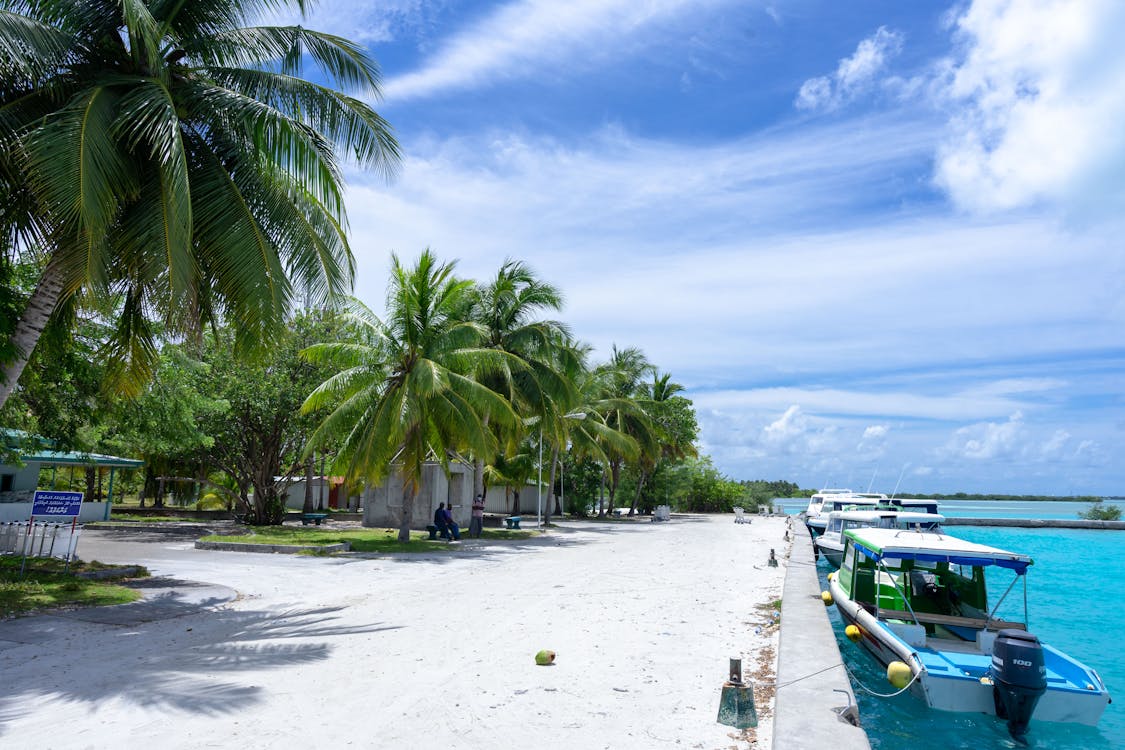
Free People Making Hammock on Sandy Ground Stock Photo

Kuwait is a country in the northwestern part of the Persian Gulf, bordered by Iraq and Saudi Arabia. It is home to more than four million people and has the world’s sixth-largest oil reserves.

What Is Life Like for Disadvantaged People in Kuwait?

Statistical tables published by organizations such as the United Nations Children’s Fund (UNICEF), the World Health Organization (WHO) and the CIA World Factbook don’t show any measurable poverty in Kuwait. In addition, the Nations Encyclopedia flatly states that “poverty is almost nonexistent” in Kuwait. Anecdotal evidence, though, suggests that there is at least some poverty in Kuwait. For example, one set of anecdotes comes in response to a question on Quora: “What is life like for poor people in Kuwait?”

Respondents said, first of all, there is poverty in Kuwait, even if it goes unacknowledged. They counted among the poor: laborers, shepherds working in deserts, illegal immigrants and maids, some of whom were abused by their sponsors and employers. The common denominator for many people experiencing poverty is that they are noncitizens. They frequently come from tribal families who settled in the country only in the last 30 years. Many of these relatively recent arrivals were not granted citizenship and as noncitizens, they often face serious economic challenges.

Kuwaiti citizens, on the other hand, have greater access to the country’s wealth, which comes from its oil. For example, around 90% of Kuwait’s citizens work in the public sector, which is largely funded by oil revenues. All citizens are eligible for help from the country’s extensive social services. These services include care for the needy, direct transfers to widows and students and help for families in a variety of circumstances — divorce, old age, disability, parental death, illness and financial difficulty.

Kuwait’s Oil Reserve

For most of its young history—it won its independence in 1961—Kuwait could afford generous state welfare because it has 6% of world oil reserves. Additionally, oil makes up 95% of its export revenues and 95% of government income. With oil prices worldwide falling by about 50% since 1970, Kuwait had to tighten its belt. Like other Arab states, Kuwait has taken steps to reduce spending and increase revenues.

Kuwait’s Economic Strategy

In August 2016, Kuwait said it was prepared to lower fuel and public utilities subsidies and freeze or at least slow the growth of wages in the public sector. Kuwait also has other means to handle the shortfall in oil income in the short term. Like the other Gulf states, Kuwait has extensive sovereign funds at its disposal. In total, the nation, as of 2024, has more than $923 billion in assets, one of the largest in the world. Kuwait can use this if it needs to, though the long-term solution for Kuwait’s economy is to diversify its sources of income and grow the private sector, according to economists.

All in all, life in Kuwait seems promising despite the oil price issue. Or not. A few years ago, before the belt-tightening, a blogger in the Kuwait Times, Thaar Al-Rasheedi, claimed that 90% of Kuwait’s citizens led poor and miserable lives. Even with apparent high salaries, Al-Rasheedi said, “there is hardly a citizen who still has a single dinar by the 15th of the month.” He went on to say that the problem is that rents are too high, installment loans are too high and there are in general “soaring prices right under the government’s nose and with its consensus.” “In fact,” Al-Rasheedi concluded, “we are experiencing intentional poverty on the last 15 days of each month!”

Is there poverty in Kuwait? It could depend on who you ask.

– Robert Cornet

Photo: Pexels
Updated: May 27, 2024

November 1, 2016
https://borgenproject.org/wp-content/uploads/borgen-project-logo.svg 0 0 Borgen Project https://borgenproject.org/wp-content/uploads/borgen-project-logo.svg Borgen Project2016-11-01 01:30:282024-05-27 12:28:40Is There or Isn’t There Poverty in Kuwait?
Global Poverty

Riders for Health Delivers Medical Services to Doors in Africa

Riders for Health
One of the largest barriers to medical services in rural areas, such as Sub-Saharan Africa, is unreliable transportation. More than 60% of Africans live on dirt roads and paths.

Riders for Health works alongside other health-focused organizations and ministries in managing fleets of motorcycles and four-wheeled vehicles that health workers use to reach people living in remote locations. They deliver supply chain distribution, mobilizing outreach volunteers, sample transport and emergency referrals. Riders for Health trains participants as mechanics to prevent motorbikes and vehicles from keeping communities without health care. They have reached people across seven countries — 14.5 million people have gained health care access; 2.9 million have contact with health professionals yearly, and roughly 400,000 blood and sputum samples have been transferred between laboratories and health centers by Riders for Health.

The organization’s mission is to prevent death by an easily preventable, or curable disease, due to distance, terrain or poverty. Ministries of health, international and African NGOs, private-sector organizations, local community-based organizations and religious groups have worked with Riders for Health to deliver medical services to about 21 million people.

Across Sub-Saharan Africa, The World Health Organization estimates millions of lives are unnecessarily lost yearly because of preventable and treatable diseases. Spanning the country, roughly 12,000 children die daily from illnesses, like pneumonia, diarrhea, measles, malaria and malnutrition. Most cases aren’t due to vaccines and medicines not existing, but unreliable transportation prevents millions of people from getting the medical services they need. British racing journalist Barry Coleman and his wife Andrea found this notion unacceptable, so they started Riders for Health together.

However, the organization was forced to shut down the front doors of their U.K. branch earlier this year. Riders for Health continues to operate in Liberia, The Gambia, Lesotho, Zimbabwe, Nigeria, Kenya and Malawi. Unfortunately, the U.K. program launched in 1996 was cut due to lack of funds, according to the Official MotoGP charity Riders for Health.

In the late 1980s, Coleman visited Somalia and found piles of new-looking motorbikes and broken down vehicles, due to poor maintenance. He saw the risks women and children faced because they lacked sufficient healthcare delivery. His wife recalled children needing immunizations and women dying during childbirth, while cars, motorcycles and ambulances sat miles away at the ministry of health car parks.

Riders for Health has equipped outreach health professionals to visit almost six times more people while spending double the amount of time with their patients. Now every month, Riders for Health can hold 3,500 more health-education meetings a month across the continent. Bubacarr Jallow, a community health nurse for Riders for Health, started the program with a Yamaha AG100 and continues to deliver medical services four years later. He’s traversed over 50,000 kilometers, covering more than 10,000 people in 13 villages.

– Rachel Williams

November 1, 2016
https://borgenproject.org/wp-content/uploads/borgen-project-logo.svg 0 0 Borgen Project https://borgenproject.org/wp-content/uploads/borgen-project-logo.svg Borgen Project2016-11-01 01:30:232024-05-27 23:53:49Riders for Health Delivers Medical Services to Doors in Africa
Page 1739 of 2163«‹17371738173917401741›»

Get Smarter

  • Global Poverty 101
  • Global Poverty… The Good News
  • Global Poverty & U.S. Jobs
  • Global Poverty and National Security
  • Innovative Solutions to Poverty
  • Global Poverty & Aid FAQ’s
Search Search

Take Action

  • Call Congress
  • Email Congress
  • Donate
  • 30 Ways to Help
  • Volunteer Ops
  • Internships
  • Courses & Certificates
  • The Podcast
Borgen Project

“The Borgen Project is an incredible nonprofit organization that is addressing poverty and hunger and working towards ending them.”

-The Huffington Post

Inside The Borgen Project

  • Contact
  • About
  • Financials
  • President
  • Board of Directors
  • Board of Advisors

International Links

  • UK Email Parliament
  • UK Donate
  • Canada Email Parliament

Get Smarter

  • Global Poverty 101
  • Global Poverty… The Good News
  • Global Poverty & U.S. Jobs
  • Global Poverty and National Security
  • Innovative Solutions to Poverty
  • Global Poverty & Aid FAQ’s

Ways to Help

  • Call Congress
  • Email Congress
  • Donate
  • 30 Ways to Help
  • Volunteer Ops
  • Internships
  • Courses & Certificates
  • The Podcast
Scroll to top Scroll to top Scroll to top