• Link to X
  • Link to Facebook
  • Link to Instagram
  • Link to TikTok
  • Link to Youtube
  • About
    • About Us
      • President
      • Board of Directors
      • Board of Advisors
      • Financials
      • Our Methodology
      • Success Tracker
      • Contact
  • Act Now
    • 30 Ways to Help
      • Email Congress
      • Call Congress
      • Volunteer
      • Courses & Certificates
      • Be a Donor
    • Internships
      • In-Office Internships
      • Remote Internships
    • Legislation
      • Politics 101
  • The Blog
  • The Podcast
  • Magazine
  • Donate
  • Click to open the search input field Click to open the search input field Search
  • Menu Menu

Archive for category: Global Poverty

Key articles and information on global poverty.

Global Health, Global Poverty, Health

Teethsavers International: Promoting Oral Health

teethsaversinternTeethsavers International is a nonprofit organization focused on caring for children in developing countries by promoting a healthy smile, thereby improving overall health. Their primary purpose is to teach children, adults and educators about dental techniques that are simple, inexpensive and realistic considering a lack of normal dental equipment.

Background

The phrase “teach a few to teach many” is Teethsavers International’s motto. Their strategy to reach as many children as possible is to teach a few people from each country, so that they may educate to their own villages.

Teethsavers International took it upon themselves to come up with their own techniques and ways to educate on oral hygiene, in order to effectively reach as many as possible. Their desire to facilitate change is clear when comparing their expenses in developing countries to those of the U.S.

By The Numbers

For example, dental school in the U.S. for four years can cost $110,000 while Teethsavers dental school costs $2,500 for one year. A tooth filling in the U.S. costs $75 where a Teethsavers Atraumatic Restorative Filling (ART) is two dollars.

These realistic techniques are paramount for these educators to understand. There is an extremely large amount of children unable to receive any kind of dental care, leading to many oral diseases, including tooth decay and gum diseases. Tooth decay is the single most chronic childhood disease, as it is 20 times more common than diabetes and four times more common than early childhood obesity.

To put in perspective the importance of educating people in developing countries, consider the ratios of dentists to patients around the globe. Compared with the U.S., where there is one dentist to every 1,900 people, in Belize there is one to 7,100 people, in Zambia there is one to every 57,000 people and in Malawi there is one to every 105,000 people.

Local Impact

Recently, Teethsavers International ventured to a primary school in Kabwabwa. They used songs, visual dialogue and interactive activities to teach the children and their parents about the importance of oral hygiene and how a person’s mouth is truly the “window” to their overall physical health.

The Teethsavers International Director, Fred Sambani, directly spoke to the primary school, as well as helping pass out toothbrushes, and the school was very thankful. The Kabwabwa Primary school head teacher, Joyce Mgusha said “We are very happy that they have distributed toothpaste and toothbrushes to pupils. These instruments will motivate them to clean their teeth and have good health. When pupils are in good health they tend to perform well in class.”

Teethsavers is a wonderful organization with a vision and they are effectively taking steps to facilitate change by creating happy and healthy smiles.

– Emilie Cieslak
Photo: Pixabay

July 24, 2019
https://borgenproject.org/wp-content/uploads/borgen-project-logo.svg 0 0 Kim Thelwell https://borgenproject.org/wp-content/uploads/borgen-project-logo.svg Kim Thelwell2019-07-24 14:30:552024-06-06 00:26:18Teethsavers International: Promoting Oral Health
Global Poverty

Global Metrics Create a Better Understanding of the World

Global MetricsWhile there are many websites that offer a detailed analysis of the problems facing the world’s poor and their solutions, a deeper understanding of global metrics and indexes will help curious supporters conduct their own research and make informed decisions on the economic, political and social statuses of impoverished countries around the world. Often times, a combination of multiple indicators from multiple governmental and NGO bodies is necessary to form a full picture of a country’s attitudes towards impoverished populations, the economy and governance.

The Three Main Global Metrics

To understand the economy of a country, researchers will look at global metrics such as gross domestic product (GDP), Gini index and the unemployment rate. The GDP is a broad metric measuring the total value of goods produced in the domestic market of the economy. The Bureau of Economic Analysis (BEA) cites the GDP as “the most popular indicator of [a] nation’s overall economic health.” What the BEA fails to mention is that GDP ignores wealth inequality, quality of life and overall happiness of the labor force.

The Gini index, on the other hand, measures only income inequality. The Organization for Economic Co-operation and Development (OECD) defines the Gini index as “the extent to which income…among individuals or households within an economy deviates from a perfectly equal distribution.” Scores closer to 100 indicate a more unequal society while a score closer to zero indicates a more equal society.

The unemployment rate measures more than just the amount of population able to work but not working. More specifically, it measures the number of people in the labor force looking for a job but who remain unemployed. These three indicators working together can paint a more accurate picture than one alone, but without indicators of political and social health, the overall analysis of a country remains foggy.

Other Important Global Metrics

To better understand the political situation of a country, readers can consult indexes and indicators from a multitude of NGO and governmental watchdogs.

  1. Freedom House creates a comprehensive guide to the status of democracy in each country yearly. Freedom House breaks down its analysis into three categories: “freedom rating, political rights and civil liberties.” Along with these three categories, Freedom House also offers an overview of the key issues facing a countries democracy or lack thereof.
  2. The Economist also offers a comprehensive Democracy Index, which takes into account five categories. These include the “electoral process and pluralism; civil liberties; the functioning of government; political participation and political culture.” Freedom House ranks countries from free to not free whereas The Economist ranks each country in a list that helps give global context to each situation.
  3. The U.N.’s Human Development Index (HDI) measures indicators of social happiness to round out the political and economic indicators and give a completely holistic view of a country. HDI takes into account a number of complex factors but, in short, it consists of “a summary of average achievements in key dimensions of human development [such as] a long and healthy life, being knowledgeable and [having] a decent standard of living.” With a broad scope, HDI can look at metrics that other indexes cannot, such as education and life expectancy. Along with HDI, the World Happiness Report (WHR) offers a holistic analysis of how politics, economics and other indicators of happiness can shed light on a particular country or region. The WHR reports that they “focus on the technologies, social norms, conflicts and governmental policies” that change reports of happiness.

Overall Data Collection

A good place to start for general research into specific countries is the CIA World Factbook. The Factbook includes a summary of the country in question and will provide global metrics mentioned such as GDP, ethnic groups, population growth rate, government type and even electricity access. Global metrics are relatively intuitive, but using only one will offer a narrow view into a specific sector of a countries society.

For instance, according to the CIA World Factbook, the real GDP growth rate of Ethiopia is the fifth highest in the world in 2017, but 29.6 percent of the Ethiopian population lived below the poverty line and the unemployment rate was ranked 180 out of 218 countries studied. Just looking at the real GDP growth rate would lead to the assumption that the economy of Ethiopia thrives and that all members of society benefit from the expansion. However, other global metrics tell a different more concerning story.

Freedom House, along with its democracy in the world report, also operates a number of programs around the world in the interest of freedom. Freedom House’s “Latin America Program” seeks to help “citizens defend their rights against government abuses in Latin America and the Caribbean.” Freedom House has similar programs in both Southeast Asia and sub-Saharan Africa that work towards the political rights of citizens through improving factors such as the rule of law and civic knowledge and engagement. In this way, Freedom House goes beyond just identifying factors that exacerbate global poverty. It goes a step further and also implements programs to fight it.

Having a well-informed viewpoint on the factors that allow for systemic ills in nations across the world helps supporters make informed decisions about how to combat global poverty whether through advocacy, donation or personal action. Some NGOs go beyond observing and documenting poverty to implementing plans to combat it. Whichever approach is used, global metrics help people to stay informed from many different approaches to help enact change.

– Spencer Julian
Photo: Flickr

July 24, 2019
https://borgenproject.org/wp-content/uploads/borgen-project-logo.svg 0 0 Kim Thelwell https://borgenproject.org/wp-content/uploads/borgen-project-logo.svg Kim Thelwell2019-07-24 07:30:482024-06-11 23:16:51Global Metrics Create a Better Understanding of the World
Global Poverty, Poverty

Poverty in Hong Kong and Local Protests

Poverty in Hong Kong
Hundreds of thousands of people have flooded the streets of Hong Kong to voice discontent with their government. Sparked over a proposed extradition law that would allow the Chinese government to detain Hong Kong citizens in mainland China, the protests have brought a conversation about government, business and human rights to the forefront of international affairs. Hong Kong has long been a haven for big businesses and policies that allow huge gaps in the wealth of its citizens. In fact, this gap is the widest it has been in more than four decades. In the city that has the world’s third-largest concentration of people worth more than $30 million, over 20 percent of people fall below the poverty line. Poverty in Hong Kong has divided the nation.

Facts and Figures

  1. More than 1.3 million people are living in poverty in Hong Kong. These citizens are surviving on as little as the equivalent of $510 a month, which is very low in one of the world’s most expensive cities. These skyrocketing levels mark a seven-year high.
  2. Many of Hong Kong’s children (17.5 percent) live below the poverty line. More than one-third of children in low-income families can afford to eat two meals a day with meat or fish.
  3. For half the population, monthly rent is 70 percent of the median household income. The Economist Intelligence Unit (EIU) recently named Hong Kong the number one most expensive city to live in, along with Paris and Singapore.
  4. The government blames the problem on its aging population and Hong Kong’s improving economy. Chief Secretary Matthew Cheung Kin-Chung claims the government is doing its part, and that changing demographics are the reason for the rising numbers.

Government Involvement

Hong Kong’s economy has been steadily growing with a 1.3 percent growth in the first quarter of 2019. This is a good thing, but in the context of a booming economy, the alarming poverty in Hong Kong is concerning, notes Labour Party lawmaker Fernando Cheung Chiu-hung.

Something is not working. The government has adopted policies that tend to favor citizens with assets. The government taxes salary, but not capital gains and dividends. Around 50 percent of the population owns homes in a volatile housing market, which the administration’s pro-cyclical land mentality fuels. On top of that, there are strikingly low returns on the government’s social welfare, universal education and public health care policies.

Some people, such as local politics expert and South China Morning Post reporter Alice Wu, go as far as to say that officials are not only negligent about poverty in Hong Kong but deliberate with their often-harmful policies. On the streets of the city, “cardboard grannies” use old boxes as makeshift homes to survive. More than 80 percent of them are over 60 years old, and they are often subject to fines and punishment from the Food and Environmental Hygiene Department officers. In July 2018, one woman received a find for the equivalent of $192 USD for littering. Some concerned citizens then decided to launch an online petition, and only then did authorities discard her fine, proving advocacy to be a key tool for correcting local injustices.

Humanitarian Aid

Outside of government intervention, many organizations are looking to help Hong Kong’s poor. One NGO, Crossroads Foundation, empowers local charities dedicated to ameliorating poverty by providing funding or equipment. These groups are diverse, ranging from organizations like Bring Me A Book, which gives impoverished children access to books, to the Salvation Army Hong Kong, which brings shelters or charity shops to those in need. Another nonprofit, Habitat for Humanity, found that citizens living in poverty often reside in hazardous conditions. In 2016, it set out to find safe housing for 15 million residents by 2020, giving hope to Hong Kong’s poor.

– Natalie Malek
Photo: Flickr

July 24, 2019
https://borgenproject.org/wp-content/uploads/borgen-project-logo.svg 0 0 Kim Thelwell https://borgenproject.org/wp-content/uploads/borgen-project-logo.svg Kim Thelwell2019-07-24 02:31:402024-05-29 23:14:00Poverty in Hong Kong and Local Protests
Education, Global Poverty, Technology

Microsoft is Improving Education in Malaysia

education in Malaysia

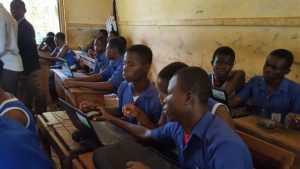
In March 2019, Malaysia’s Minister of Education, Dr. Maszlee bin Malik, recently partnered with Microsoft’s STEM4ALL initiative to provide a higher level of STEM education in Malaysia. STEM4ALL stays true to its name, targeting all students across the country equally to encourage interest in STEM fields and ensure graduates possess a wide span of technological information to take into future careers.

Malaysia’s Current Educational System

In 2018, Malaysia had 9,404 children under the age of 18, which is 29 percent of the total population in 2018. Out of those children, 2,565 of them are under the age of five when many children are starting pre-school or kindergarten. Pre-school is not compulsory in Malaysia, but it is available.

Malaysia currently has six years of primary compulsory education, from ages six to 12. Secondary education is not compulsory as of 2018. Primary enrollment had increased from 2,770,340 to 2,795,058 between 2015 to 2017. Unfortunately, primary school enrollment rates dropped to 2,693,318 students enrolled in 2018. Secondary enrollment in 2018 was lower at 2,041,798 students.

Microsoft’s STEM4ALL

Microsoft has been known for assisting educational programs throughout South Asia within recent years with notable programs in India and Sri Lanka. STEM4ALL is Microsoft’s latest venture to emphasize STEM education throughout primary and secondary schools around the country. The campaign targets students, parents, educators and lawmakers around the country to put STEM education at the forefront of school materials to keep up with the current demand in technological field advancements.

The program encourages after-school STEM programs in multiple schools around Malaysia, impacting an estimated 100,000 students. Microsoft’s campaign is working to target all students regardless of social situations. STEM4ALL is meant to reach both urban and rural school areas to improve education in Malaysia overall. The program hosted a panel to discuss Malaysian STEM education and discussed the impact of AI on the educational and workforce environments throughout the country.

Key Events from the STEM4ALL Conference

The panel discussion, hosted by the Prime Minister of Education, included two prominent students in the world of technological advancements. The two students were Serena Zara Taufiq, the CEO of an outreach for children with autism called ‘Serena’s Secrets,’ and Chloe Soh Ke Er, who debuted her latest robot to help with agricultural management at the conference.

The conference focused on the recent impact of AI and technology on future job environments. Artificial Intelligence is shaping career paths around the world, and Microsoft is working to ensure that all students are gaining an efficient skillset to keep up with technology changes. Using new technologies will also improve learning techniques through classrooms in Malaysia.

Microsoft School Partnerships

Microsoft recently began funding the AI Business School for current business leaders throughout Malaysia. The classes will infuse more technological skills into the current business world to keep up with changes in current job markets. Students who succeed in the STEM classes will have more opportunities in the business world to use their education.

Through STEM4ALL, Microsoft has also partnered with Universiti Teknikal Malaysia Melaka as a pilot school for the ‘Microsoft Professional Program for Data Science Curriculum’ (MPP). This is the largest version of the MPP program in the educational world. MPP is starting with 250 students to gain Microsoft data science certifications and improve the overall quality of education in Malaysia. The program’s goals align with the national goal to educate 20,000 data scientists by 2020.

Microsoft’s STEM4ALL campaign is expected to have a massive impact on the students of Malaysia. The campaign impacts all students regardless of major and education track. It ensures that proper technological knowledge is embedded in school systems across the country. The program will also ensure that education in Malaysia is adapting positively with the ever-changing technological environment in the workforce inside and outside the country’s borders.

– Kristen E. Bastin
Photo: Flickr

July 24, 2019
https://borgenproject.org/wp-content/uploads/borgen-project-logo.svg 0 0 Kim Thelwell https://borgenproject.org/wp-content/uploads/borgen-project-logo.svg Kim Thelwell2019-07-24 01:30:532019-11-21 12:40:59Microsoft is Improving Education in Malaysia
Developing Countries, Global Poverty, Health

5 Ways to Combat Iron Deficiency in Developing Countries

Ways to Combat Iron Deficiency in Developing CountriesAnemia is most prevalent in developing countries. Pregnant women and young children are the most likely to contract anemia. A person with anemia can suffer from fatigue, increased risk of mortality and irreversible cognitive damage. As of now, iron deficiency is the leading cause of anemia. The following list offers five ways to combat iron deficiency in developing countries.

5 Ways to Combat Iron Deficiency in Developing Countries

  1. Giving Pregnant Women Iron: Studies have shown that giving pregnant women iron increases healthy child outcomes and reduces the risk of anemia in their children. Pregnant women in Indonesia who took iron during their pregnancy reduced their children’s risk of mortality by 40 percent. Similarly, Chinese women who took iron supplements throughout their pregnancy found that child mortality rates decreased throughout the first seven years of life.
  2. Cooking with Iron: A major problem in developing countries is the lack of nutrition in their diets. A staple food in many developing countries is rice, which offers little to no nutritional value. The need for developing countries to include iron in their daily diets is evident. One way to accomplish this is through the usage of a recent technological innovation: the iron fish. The iron fish is an invention that when boiled, releases the recommended daily amount of iron.
  3. Biofortification: Iron deficiency is largely caused by malnutrition. Many people in developing countries have little access to nutritious food sources such as vegetables, dairy and fruit, as these items tend to be costly. To combat this problem, scientists have tried to find ways to infuse the starchy staples of developing countries with iron.  Geneticist Alex Johnson has led the charge in biofortification. He has sought to create a genetically modified rice that will produce more iron. The field tests of Johnson’s rice have been promising. These results suggest that through genetically modified food, people in developing countries can have healthier diets.
  4. Iron Supplements and Powders: Researchers believe that it would be possible to rid the world of iron deficiency through the usage of iron supplements. Iron supplements are cost-effective and can cost as little as 15 cents. The World Health Organization suggests that women and children who inhabit areas where the anemia level exceeds 20 percent to take daily iron supplements. For infant children who do not have access to healthy foods, the World Health Organization prefers to recommend micronutrient powders. Micronutrient powders have reduced anemia by 31 percent and iron deficiency by 51 percent. Micronutrient powders and iron supplements have both had enormous success in decreasing iron deficiency, but it has yet to be determined which approach is more effective.
  5. Deworming: Intestinal worms are cited as the most common intestinal disease in the developing world. The Copenhagen Consensus has suggested deworming as a way to decrease malnutrition and iron deficiencies.  Recent studies have shown an increased correlation between the number of individuals who suffer from hookworm infections to those who suffer from anemia. Hookworms drain necessary nutrients from the body and hinder the body’s ability to hold iron, and as a result, a person can become anemic. By eradicating these worms before they have a chance to do permanent damage, developing countries can take a proactive approach to their anemia problem.

Iron deficiency continues to be the leading cause of anemia in the world. While this threat remains imminent, the good news is that the world has equipped itself to fight this epidemic.

– Gabriella Gonzalez
Photo: Flickr

July 24, 2019
https://borgenproject.org/wp-content/uploads/borgen-project-logo.svg 0 0 Kim Thelwell https://borgenproject.org/wp-content/uploads/borgen-project-logo.svg Kim Thelwell2019-07-24 01:30:242024-05-29 23:10:005 Ways to Combat Iron Deficiency in Developing Countries
Global Poverty

Top 5 Documentaries about Poverty and Where to Find Them

Documentaries About PovertyDocumentaries are a form of film or television which take advantage of the entertainment platform to inform audiences of important issues through a more gripping means. They range in topics from technological innovation to the controversial beauty industry. Many documentaries have also focused on another major issue of today: global poverty. Below is a list of the top five documentaries about poverty as of 2019 and where to find them.

Top 5 Documentaries About Poverty and Where to Find Them

  1. The End of Poverty?: Directed by Philippe Diaz, who is well known within the genre, the documentary debuted in 2008 and became notorious for its unique historical perspective on global poverty. It highlighted the ways poverty has amassed through the years, beginning as early as the 16th century and concluding with present day. The film describes how poverty thrives in today’s world through interviews with historians, economists and impoverished families from around the world. This documentary can be viewed on Amazon Prime.
  2. Dilli: This 2011 documentary about the slums of Delhi focuses on the hardships of individuals in the area. Though relatively short, coming in just longer than 30 minutes, the film has a firm impact on the audience. Through interviews with citizens, ranging from old to young, directors Sushmit Ghosh and Rintu Thomas depict these daily trials. The film received critical acclaim, winning 1st place in the Short Documentary category of the Los Angeles Movie Awards. This documentary about poverty can be viewed now on Youtube.
  3. Poor No More: This 2010 documentary focuses on the poverty of Canada’s working-class by following the journey of native citizens. It puts Canada under a lens in comparison with Ireland and Sweden in terms of their respective job markets. The documentary takes a moment to focus on poverty within a different context—within the context of a country which is generally presumed as wealthy and well structured. The documentary can be viewed on Youtube.
  4. Hauling: This documentary, which premiered in 2010, follows the daily life of the Claudine family, a household of 27 children, whose income is dependent on the recycling system of Sao Paulo, Brazil. Every day, they collect the leftover wood, plastic and cardboard of the city in exchange for meager payment from the local recycling plant. The film brings forth the discussion of poverty in Brazil and the ways which their citizens persevere. The film can be viewed on Amazon Prime.
  5. The True Cost: This 2015 documentary focuses on the fashion industry and the way it uses impoverished nations to obtain cheap labor and goods. The film highlights the controversy of the fashion industry and the way it abuses the environment and ignores basic human rights. This documentary about poverty can be found on Netflix.

Art and media can become a platform for the voiceless. In these five documentaries about poverty, the lives of the underprivileged are documented for the rest of the world to face. If people want to help, but they don’t quite know where to start, then they must take the first step to get informed. Any of these documentaries could be a place to start.

– Eleanora Kamerow
Photo: Flickr

July 23, 2019
https://borgenproject.org/wp-content/uploads/borgen-project-logo.svg 0 0 Kim Thelwell https://borgenproject.org/wp-content/uploads/borgen-project-logo.svg Kim Thelwell2019-07-23 14:43:082024-12-13 18:01:50Top 5 Documentaries about Poverty and Where to Find Them
Children, Education, Global Poverty

8 Facts about Education in Sweden

Education in Sweden

The Swedish education system is ranked among the best in the world. With its emphasis on individual learning and the personal liberty to enroll children in a diverse selection of schools, many perceive Sweden as a country with a phenomenal educational infrastructure. However, Sweden still trails behind other Nordic countries, such as Finland and Norway, in global education rankings. These eight facts about education in Sweden provide an insight into the successes and shortcomings of a unique approach to maximizing the potential of Swedish youth.

8 Facts About Education in Sweden

  1. The Swedish educational system is decentralized. The federal government grants localities autonomy in designing the course curriculum. However, the federal government sets standardized goals and objectives for Swedish localities to follow.
  2. Education in Sweden is divided into four levels of schooling. Children may attend an optional preschool program (förskola) from 1-5 years of age. Children are then offered a place in kindergarten (förskoleklass) when they turn six years old. Following kindergarten is compulsory schooling, which is divided into three levels. Elementary school (lågstadiet) comprises the first three years of compulsory school, then middle school (mellanstadiet) for years 4-6 and finally junior high school (högstadiet) for years 7-9. After compulsory school, Swedish students may attend an optional senior high school (gymnasium) for three years.
  3. Following an amendment to the law in the 1990s, the Swedish government permitted the development of publicly-funded charter schools (friskola) which act independently of the municipality. These schools are defined by an individualized approach to learning, an open-classroom layout, no uniform policy and unconventional teaching methods. Independent schooling is popular in Sweden; in 2010, approximately 12 percent of compulsory school students and 24 percent of senior high school students attended either tuition-based private schools or charter schools.
  4. Sweden has a Sami population of 20,000-35,000 people. The Sami people are indigenous to Northern Sweden and other Nordic countries and specialize in the production of reindeer meat. Along with preserving their right to the development of the Sami language, traditions and crafts, the Swedish government allows Sami children to attend specialized Sami schools (Sameskolan) during the years of Swedish compulsory school.
  5. Play and recess compose an integral part of the early years of education in Sweden. In accordance with the goals of the government, pre-school teachers incorporate the domains of STEM into the classroom curriculum by having the children participate in communal exercises rather than teaching the subjects at the chalkboard.
  6. The Swedish government has been working hard to compete with the educational systems of other European countries. In 2014, Sweden invested a larger share of its GDP on education (6.8 percent) compared to other member countries of the OECD (5.6 percent).
  7. As part of a new curriculum made for all Swedish schools, including Sami language schools, special schools and upper secondary schools, the grading system changed to the A-F scale that is commonly used in the United States. Prior to 2011, the Swedish grading system had four grades ranging from Pass with Special Distinction (MVG) down to Did Not Pass (IG).
  8. According to the World Population Review, Sweden ranks tenth in the world in education, trailing behind its Nordic neighbors, Finland and Norway.  Sweden’s top university, the Karolinska Institute, is ranked 40th in the world.

– Grayson Cox
Photo: Flickr

July 23, 2019
https://borgenproject.org/wp-content/uploads/borgen-project-logo.svg 0 0 Kim Thelwell https://borgenproject.org/wp-content/uploads/borgen-project-logo.svg Kim Thelwell2019-07-23 14:26:522019-12-17 14:31:408 Facts about Education in Sweden
Global Poverty, Malaria

New Insecticide Removes Malaria-Spreading Mosquitoes

insecticide removes malaria-spreading mosquitoesScientists from the University of California, Riverside have discovered that a new type of insecticide removes malaria-spreading mosquitoes safely. Unlike common insecticides, this new technology is comprised of a neurotoxin (PMP1) that is toxic to the Anopheles but has no effect on humans or any other living organism. The development of this insecticide is a leap forward for the scientific community, as it has the potential to drastically reduce the number of individuals—roughly 220 million—who contract malaria each year.

Impact of Malaria

Malaria is one of the world’s deadliest diseases. Scientists estimate that malaria kills over 425,000 individuals per year, mainly those living in South America, Africa, and South Asia. Children and pregnant women are at the greatest risk for malaria transmission because pregnancy decreases immunity and children have not yet developed partial immunity. However, cases occur in individuals of all ages and gender. One of the most common and effective solutions for malaria prevention is to provide individuals with bed nets to prevent mosquito bites during sleep. The most foolproof method is the treatment of bed nets with an insecticide that kills mosquitoes on contact. Past insecticides have shown some negative side effects such as rashes, blisters and itching. The new proposed insecticide removes malaria-spreading mosquitoes with PMP1 and has no side effects, making it a safe way to protect individuals from the Anopheles mosquito.

Finding and Isolating the Bacteria

While the development of the PMP1 insecticide is a relatively new innovation, scientists have long understood the ability of the Paraclostridium Bifermentans bacteria to subdue the Anopheles mosquito. However, they have been unable to understand the protein that enables this protection in the past. Sarjeet Gill, professor of molecular, systems, and cell biology at the University of California, Riverside, led a research team to study this effect. The team placed the bacteria under radiation, creating several strains of Paraclostridium Bifermentans that could not produce PMP1. They compared these radiated nontoxic strains to the non-radiated toxic strains, which helped them identify PMP1, the protein in the toxic strains that is lethal to the Anopheles. They plan to use PMP1 to produce the insecticide.

The team has applied to patent their new discovery and are looking for partners to help them develop and manufacture the new insecticide for use in countries with high malaria risk. The insecticide has immense promise with no negative side effects, and because it is plant-based, not synthetic chemical-based. This means that it is highly unlikely that the Anopheles will develop a resistance to the insecticide.

Conclusion & Impact on the Global Poor

The new insecticide laced with PMP1 has the potential to drastically improve living conditions for those at risk of malaria transmission. Malaria affects millions of individuals living in poverty every year, as many of these individuals do not have access to proper insecticide-treated bed nets. However, the when new insecticide removes malaria-spreading mosquitoes, it should provide an easy and affordable way to ensure that individuals living in poverty will be protected without negative side effects and with a very minimal chance of the Anopheles mosquito developing resistance. The insecticide is an extremely promising innovation, one that has the potential to end the spread of malaria.

– Kiran Matthias
Photo: Wikimedia

July 23, 2019
https://borgenproject.org/wp-content/uploads/borgen-project-logo.svg 0 0 Kim Thelwell https://borgenproject.org/wp-content/uploads/borgen-project-logo.svg Kim Thelwell2019-07-23 12:13:092024-05-29 22:40:01New Insecticide Removes Malaria-Spreading Mosquitoes
Education, Global Poverty

8 Facts About Education in Uruguay

Read more
July 23, 2019
https://borgenproject.org/wp-content/uploads/borgen-project-logo.svg 0 0 Kim Thelwell https://borgenproject.org/wp-content/uploads/borgen-project-logo.svg Kim Thelwell2019-07-23 11:57:582026-06-01 22:35:128 Facts About Education in Uruguay
Developing Countries, Education, Global Poverty, Technology

Coding in Ethiopia: Ethiopia’s Youngest Coder

Coding in Ethiopia

Ethiopia is primarily an agricultural country, with more than 80 percent of its citizens living in rural areas. More than 108.4 million people call Ethiopia home, making it Africa’s second-largest nation in terms of population. However, other production areas have become major players in Ethiopia’s economy. As of 2017, Ethiopia had an estimated gross domestic product of $200.6 billion with the main product coming from other sources than agriculture.

Today, 1.2 million Ethiopians have access to fixed telephone lines, while 62.6 million own cell phones. The country broadcasts six public TV stations and 10 public radio shows nationally. 2016 data showed that over 15 million Ethiopians have internet access. While 15 percent of the population may not seem significant, it is a sharp increase in comparison to the mere one percent of the population with Internet access just two years prior.

Coding in Ethiopia: One Girl’s Success Story

Despite its technologically-limited environment, young tech-savvy Ethiopians are beginning to forge their own destiny and pave the way for further technological improvements. One such pioneer is teenager Betelhem Dessie. At only 19, Dessie has spent the last three years traveling Ethiopia and teaching more than 20,000 young people how to code and patenting a few new software programs along the way.

On her website, Dessie recounts some of the major milestones she’s achieved as it relates to coding in Ethiopia:

  • 2006 – she got her first computer
  • 2011- she presented her projects to government officials at age 11
  • 2013-she co-founded a company, EBAGD, whose goals were to modernize Ethiopia’s education sector by converting Ethiopian textbooks into audio and visual materials for the students.
  • 2014-Dessie started the “codeacademy” of Bahir Dar University and taught in the STEM center at the university.

United States Collaboration

Her impressive accomplishments continue today. More recently, Dessie has teamed up with the “Girls Can Code” initiative—a U.S. Embassy implemented a project that focuses on encouraging girls to study STEM. According to Dessie, “Girls Can Code” will “empower and inspire young girls to increase their performance and pursue STEM education.”

In 2016, Dessie helped train 40 girls from public and governmental schools in Addis Ababa, Ethiopia how to code over the course of nine months. During those nine months, Dessie helped her students develop a number of programs and projects. One major project was a website where students can, according to Dessie, “practice the previous National examinations like SAT prep sites would do.” This allows students to take practice tests “anywhere, anytime.” In 2018, UNESCO expanded a similar project by the same name to include all 10 regions in Ghana, helping to make technology accessible to more Africans than ever before.

With the continuation of programs like “Girls Can Code” and the ambition of young coders everywhere, access to technology will give girls opportunities to participate in STEM, thereby closing the technology gender gap in developing countries. Increased STEM participation will only serve to aid struggling nations in becoming globally competitive by boosting their education systems and helping them become more connected to the world in the 21st century.

– Haley Hiday
Photo: Flickr

July 23, 2019
https://borgenproject.org/wp-content/uploads/borgen-project-logo.svg 0 0 Kim Thelwell https://borgenproject.org/wp-content/uploads/borgen-project-logo.svg Kim Thelwell2019-07-23 11:53:252024-06-06 00:15:30Coding in Ethiopia: Ethiopia’s Youngest Coder
Page 1251 of 2162«‹12491250125112521253›»

Get Smarter

  • Global Poverty 101
  • Global Poverty… The Good News
  • Global Poverty & U.S. Jobs
  • Global Poverty and National Security
  • Innovative Solutions to Poverty
  • Global Poverty & Aid FAQ’s
Search Search

Take Action

  • Call Congress
  • Email Congress
  • Donate
  • 30 Ways to Help
  • Volunteer Ops
  • Internships
  • Courses & Certificates
  • The Podcast
Borgen Project

“The Borgen Project is an incredible nonprofit organization that is addressing poverty and hunger and working towards ending them.”

-The Huffington Post

Inside The Borgen Project

  • Contact
  • About
  • Financials
  • President
  • Board of Directors
  • Board of Advisors

International Links

  • UK Email Parliament
  • UK Donate
  • Canada Email Parliament

Get Smarter

  • Global Poverty 101
  • Global Poverty… The Good News
  • Global Poverty & U.S. Jobs
  • Global Poverty and National Security
  • Innovative Solutions to Poverty
  • Global Poverty & Aid FAQ’s

Ways to Help

  • Call Congress
  • Email Congress
  • Donate
  • 30 Ways to Help
  • Volunteer Ops
  • Internships
  • Courses & Certificates
  • The Podcast
Scroll to top Scroll to top Scroll to top