• Link to X
  • Link to Facebook
  • Link to Instagram
  • Link to TikTok
  • Link to Youtube
  • About
    • About Us
      • President
      • Board of Directors
      • Board of Advisors
      • Financials
      • Our Methodology
      • Success Tracker
      • Contact
  • Act Now
    • 30 Ways to Help
      • Email Congress
      • Call Congress
      • Volunteer
      • Courses & Certificates
      • Be a Donor
    • Internships
      • In-Office Internships
      • Remote Internships
    • Legislation
      • Politics 101
  • The Blog
  • The Podcast
  • Magazine
  • Donate
  • Click to open the search input field Click to open the search input field Search
  • Menu Menu

Archive for category: Global Poverty

Key articles and information on global poverty.

Food & Hunger, Food Insecurity, Food Security, Global Poverty

Tackling Hunger in Finland

Hunger in Finland
Despite enjoying one of the world’s most advanced social-democratic welfare systems and the lowest human insecurity rates, there are still major struggles with poverty and hunger in Finland.

First Signs

The first signs of hunger in Finland emerged following a financial crisis in the 1990s which resulted in roughly 100,000 Finnish people reportedly hungry during the years 1992 and 1993. As a result, the foundation for a network of charity-based food aid provisions proliferated in Finland during the 1990s. Several spikes occurred in CFA rates in the late 1990s, with the largest increase at the turn of the century.

What is interesting about this particular response to food insecurity in Finland is that, in principle, the Nordic welfare state “is assumed to provide universal social security against social risks, such as poverty, for all its citizens.” However, at-risk people in Finland have received support largely through charity-based food aid, indicating that the current welfare state falls short of feeding everyone.

Giving Back

In 2013, EVIRA, the Finish Food Safety Authority, improved food safety regulations by allowing food and retail industries to donate food to charity with greater ease. This new food waste redistribution project was part of a new wave of social innovations in the greater E.U. which operated in efforts to reduce food insecurity and ecological waste.

As of 2014, the CFA in Finland had 400 distributors “including parishes, FBOs, unemployment organizations and other NGOs.” It reached roughly 22,000 Finnish people every week.

At-Risk Populations

Statistics Finland’s research shows that the number of people at risk for severe poverty and homelessness was 890,000 in 2017, which is roughly 16.4% of the population. Findings from the European Anti Poverty Network (EAPN) Poverty in Finland Report from 2019 show that the number of people living on minimum income benefits and experiencing livelihood problems such as food shortages continues to be a growing problem. The share of Finns turning to food banks every week was roughly 20,000 in 2019. The risk of poverty and malnutrition is highest amongst single mothers and older women living alone, according to the National Council of Women in Finland. Finland is also among one of the most racist countries in the E.U., making it even harder for migrants, especially women, to achieve success in the current economic climate. As a result, many migrants in Finland are poor and at risk of food insecurity.

A Hopeful Horizon

Progressive social reform strategies such as Finland’s Housing First strategy with the extensive food aid provision network in the country have the power to eradicate hunger in Finland. In fact, Finland’s Housing First strategy already accomplished a lot in regard to shelter insecurity in the country. Perhaps a stronger state role in providing food aid could be the extra push necessary to completely tackle the stagnating food insecurity problem.

– Jasmeen Bassi
Photo: Unsplash

August 5, 2020
https://borgenproject.org/wp-content/uploads/borgen-project-logo.svg 0 0 Kim Thelwell https://borgenproject.org/wp-content/uploads/borgen-project-logo.svg Kim Thelwell2020-08-05 15:52:252020-08-05 15:52:25Tackling Hunger in Finland
Global Poverty, Health

5 Facts About Healthcare in Romania

Healthcare in Romania
Romania is a country of around 20 million people located in Southeastern Europe. Since the fall of communism in 1989, the country has transitioned to a democracy with more personal freedoms and a better economic outlook. Economic trends have improved since Romania joined the European Union in 2007. Even though Romania has enjoyed high levels of growth in recent decades, it remains plagued by corruption and the emigration of skilled professionals to other European nations. These issues create problems for healthcare in Romania. Here are five facts about healthcare in Romania.

5 Facts About Healthcare in Romania

  1. Healthcare in Romania ranks last in Europe. Romania regularly falls around last place in the European Health Consumer Index. It has an underfunded and inefficient system, which consistently fails to provide quality care. Worse than being inadequate, Romanian hospitals are often dangerous. Poorly trained staff often do not follow proper medical procedures and expose patients to unsanitary conditions. In a maternity ward in 2018, an antibiotic-resistant superbug infected 39 babies.
  2. The government plays a large role in the failures of healthcare in Romania. Romania has a program of universal health insurance. There is a mandatory payroll tax which the country uses to provide coverage to the entire population. Romania consistently spends around 4% of its GDP on healthcare, which is one of the lowest rates in the E.U. In addition to health insurance, the government also operates a majority of the hospitals in the country, many of which are aging and chronically underfunded. The country has built very few new hospitals since the end of communism. While Romania has opened the door to private insurance and hospitals over the past few decades, they have yet to take off.
  3. Low salaries are driving corruption. Despite having universal health coverage in practice, many Romanians end up having to pay out of pocket to get quality care. Underpaid hospital staff usually receive bribes to get their attention. This has created a system where the wealthy patients receive better treatment, while those unable to pay experience neglect. This culture of bribery has become a huge problem for many Romanian hospitals.
  4. There is a shortage of doctors in Romania. Romania’s entrance to the E.U. allowed more than 15,000 doctors to leave the country in search of jobs with better pay in other European countries. There is an acute shortage of healthcare professionals in the country, with around 30% of positions unfilled. The situation is worse in rural areas where salaries are lower and there is less oversight. Medical graduates and skilled doctors may continue to leave the country as long as hospitals have unfavorable working conditions.
  5. Nonprofits are filling in the gaps in healthcare in Romania. Even though the Romanian government has been unable to improve healthcare infrastructure, nonprofits are taking important action. The Give Life Association is one such group, having already built a state-of-the-art leukemia diagnosis lab and facilities to triple Romania’s organ transplant capacity. The Give Life Association is a private organization that raises funds to build important public medical infrastructure. Its current project is a major new hospital in Bucharest, Romania. The cause has drawn widespread attention in Romania, raising over $30 million from 300,000 people and 4,000 companies. The organization estimates that it will complete the new hospital in 2021.

Ending corruption would go a long way to improving the quality of healthcare in Romania. Recently, there have been signs that the government understands this and is willing to take meaningful action to end bribes and raise salaries for doctors. As a whole, medical salaries have been growing much quicker than the national average. There are hopes that higher wages will reduce the impact of bribes and entice skilled doctors to stay in the country. It will be a long process to correct the deeply flawed healthcare system in Romania. However, progress is possible if the government and the private sector work together toward reform.

– Jack McMahon
Photo: Flickr

August 5, 2020
https://borgenproject.org/wp-content/uploads/borgen-project-logo.svg 0 0 Kim Thelwell https://borgenproject.org/wp-content/uploads/borgen-project-logo.svg Kim Thelwell2020-08-05 14:42:442024-05-27 09:34:245 Facts About Healthcare in Romania
Global Poverty

Healthcare in Peru: An International Perspective

healthcare in peruPeru carries a heavy history of periodic instability that has made the establishment of an accessible healthcare system perilous. The country suffers from an inequitable distribution of healthcare workers. It also struggles with the partition between private and governmentally-sponsored healthcare, the provisions of which skew inequitably toward the wealthy. Peru’s wealth gap shows the richest 20% in the nation controlling nearly half of its income and the poorest 20% earning less than 5%. This inequality is quite literally killing Peruvians. According to the 2007 National Census of Indigenous Peoples conducted by the Peruvian government, over 50% of census-interviewed communities did not have access to any form of health care facility.

Healthcare in Peru by the Numbers

  • The life expectancy in Peru is 74 years, landing the country at 126 out of 224 countries.
  • The probability of a child in Peru dying before the age of five is 1.4%, compared to 0.1% in the United States.
  • Peru spends 5.5% of its GDP on healthcare, compared to the U.S.’s 17.1%, ranking the country at 128 out of 224 countries.
  • In Peru, there are one and a half hospital beds available per 1,000 individuals. This is a number that is especially dire during the coronavirus pandemic.
  • Peru clocks in at just under one and one-quarter of a physician per every 1,000 Peruvians in need of medical care.

Structure of Healthcare in Peru

Due in part to fluctuating governmental structures and rulers, Peru currently operates with a decentralized health care system administered by five entities. Two of these entities provide 90% of the nation’s healthcare services publicly, while three provide 10% of the nation’s healthcare in the private sector. This distribution results in considerable overlap and little coordination, depleting the healthcare system of resources and providers. In fact, many healthcare providers in Peru work an assortment of jobs across different subsectors.

As healthcare is a necessary sector of the economy, Peru’s healthcare worker density is increasing, even as health worker outmigration also increases. But since these workers are not equitably distributed, coastal and urban areas monopolize the majority of these providers. Lima and tourist coasts boast the highest distribution of healthcare workers, while rural and remote areas such as Piura and Loreto are home to few health providers.

Impact of the Healthcare Structure on Women

The detrimental effects of inequitable healthcare distribution are most visible in the country’s astonishing maternal mortality rate. The World Bank’s 2017 data showed that 88 out of 100,000 mothers in Peru die from pregnancy-related causes. However, Peru’s efforts have substantially reduced the number from 10 years before when the maternal mortality rate in Peru was 112 per 100,000 mothers in 2007.

The burden of maternal mortality rests squarely upon the shoulders of poor, rural, and Indigenous women. They are dying from largely preventable causes in a massive breach of human rights. These women disproportionately face countless barriers to pregnancy wellness and birth healthcare, including a dearth of emergency obstetric and neonatal services, language barriers and a lack of information regarding maternal health. Peru has implemented policies in recent years to reduce the rate of maternal mortality, such as the increase of maternal waiting houses for rural pregnant women to reside in as they approach birth.

The only cause of premature death that precedes neonatal disorders as a result of inadequate neonatal obstetrics is lower respiratory infections. This type of infection is the most likely cause of premature death, and it has remained so since 2007. This illness, too, disproportionately impacts women and children. They are the most likely groups to die from household air pollution, a type of pollution caused by the burning of solid fuels for cooking and heating purposes. In Peru, 429 out of an estimated 1,110 yearly childhood deaths are caused by acute lower respiratory infections resulting from household air pollution. Combined, neonatal disorders and lower respiratory infections cause more death and disability than any other factor in Peru. These are shortening the lives of Peruvian women and children by almost 20%.

Moving Forward with Healthcare in Peru

The healthcare system in Peru is one that suffers many flaws. It is straining to support its people, especially in the midst of a worldwide pandemic. While the going is slow, the country is striving to reform its healthcare system. Peru is doing this by reforming its healthcare system in the direction of universal coverage – an achievable but certainly strenuous goal. Since vigorously implementing healthcare reform in the late 90s, Peru reports coverage of 80% of its population with some form of health services. While this number is far from ideal, it is evidence that the Peruvian government is not only cognizant of but concerned about its healthcare failures, and it is striving for a fuller coverage future.

– Annie Iezzi
Photo: NeedPix

August 5, 2020
https://borgenproject.org/wp-content/uploads/borgen-project-logo.svg 0 0 Lynsey Alexander https://borgenproject.org/wp-content/uploads/borgen-project-logo.svg Lynsey Alexander2020-08-05 14:00:562024-05-29 23:18:25Healthcare in Peru: An International Perspective
Global Poverty

Corruption in Ecuador

Corruption in EcuadorEcuador is a country that faces a multitude of pervasive problems. One such problem is the high rate of corruption taking place within the country. According to Transparency International, Ecuador ranked 93rd out of 180 countries for corruption. On top of that, former President Rafael Correa of Ecuador was convicted of corruption in April 2020.

Corruption’s Impact on the Poor

Corruption has a widespread impact on many different social classes. However, corruption disproportionately impacts those in poverty. Money that could be used to help provide public services to the people who need it has been lost due to corruption. Money that the U.N. provides to impoverished nations has been wasted by corrupt governments as well.

While corruption in Ecuador is a serious problem, the Ecuadorian citizenry has been vocal about corruption through their voting behavior. Various international organizations have also attempted to prevent corruption in Ecuador alongside current President Lenín Moreno.

The International Republican Institute (IRI)

The IRI has offered to lend a helping hand in the fight against corruption in Ecuador. One way that the IRI has helped Ecuador is through its Vulnerabilities to Corruption Approach (VCA). The IRI has used the VCA to help Ecuadorian municipalities make their local authorities more transparent with their citizenry and shifted their focus to important anti-corruption issues. The IRI initiated the VCA in Cuenca, Ecuador, as well as four other cities. The reason for this approach is that these cities have a more serious corruption problem compared to others in Ecuador. At the national Local Transparent Governments Conference, the leader of Cuenca, Ecuador’s anti-corruption unit, shared different methods used for preventing corruption with more than 150 different nationally and locally elected officials.

Changes Within the Government

The people of Ecuador have also tried to stop corruption by voting for new candidates. The 2019 local elections throughout Ecuador brought forth a great amount of change because of this. This is abundantly obvious considering that many of the candidates that were voted for in the local elections came from third parties or were entirely new to Ecuadorian politics. This is why many of them attended the Local Transparent Governments Conference. These candidates simply did not know or have the experience needed to identify corruption or prevent it.

Current President Moreno has also made efforts to reduce corruption in Ecuador. One example of this was the conviction of the former vice president for accepting bribes that amount to $13.5 million. Convictions like this are only possible because President Moreno has allowed high-level corruption cases to be investigated.

Due to the help of the IRI, the votes of the Ecuadorian people and actions within the government, the people of Ecuador are making strides to reduce corruption within their country.

– Jacob E. Lee
Photo: Flickr

August 5, 2020
https://borgenproject.org/wp-content/uploads/borgen-project-logo.svg 0 0 Lynsey Alexander https://borgenproject.org/wp-content/uploads/borgen-project-logo.svg Lynsey Alexander2020-08-05 14:00:082020-08-07 02:50:21Corruption in Ecuador
Global Poverty

Preventing a COVID-19 Global Food Emergency

COVID-19 global food crisis
On June 9
, United Nations Secretary General António Guterres released a new U.N. policy brief regarding global access to proper nutrition and a potential COVID-19 global food emergency. The brief explained that if countries do not act now, a global food emergency will be inevitable. Millions of people were dealing with hunger and malnutrition before the pandemic, but current statistics show that hunger is more rampant than ever due to the pandemic’s effects.

According to the U.N., there is enough food to feed the global population of 7.8 billion people, but 820 million people remain hungry. Of these people, 144 million children are stunted due to malnutrition – more than one in five children worldwide. A “stunted” child has physical and cognitive growth failure that develops over a long period of time due to limited access to food and health care. Similarly, there are currently 47 million children classified as “wasting.” Wasting children have a dangerously low weight-to-height ratio due to acute food shortages or disease. The growth of 700,000 children will be stunted for every percentage point drop in the global GDP, making the pandemic’s economic impact even greater.

As of May, 368 million schoolchildren were missing out on daily school meals that they depended on for food. While these numbers are already high, they are predicted to continue to rise if countries do not act now to avoid a global food emergency. The U.N. policy brief posed three recommendations to save lives and create sustainable food production.

Essential Food Services

Measures to control COVID-19 outbreaks are affecting global food supply chains. Border restrictions and slowing harvests in some parts of the world are leaving millions of seasonal workers without jobs. Also, these factors constrain the transport of food to markets.

Governments are forcing the closure of many meat and dairy processing plants and food markets due to virus outbreaks among workers. Farmers have been buying perishable produce or dumping milk as a result of supply chain disruption and falling consumer demand. Because many people cannot buy fresh fruits and vegetables, dairy, meat and fish, they are suffering from malnutrition.

To combat these challenges, countries should require that food and nutritional services, and the processing and transport of their goods, are considered essential and remain open during the pandemic. Additionally, governments should provide protections for people working in this sector.

Meal Protections

The policy brief stated that countries should strengthen social protection systems for nutrition, including the millions of children missing out on meals at school. There needs to be a focus on vulnerable groups like children, pregnant or breastfeeding women and the elderly so they can access safe and nutritional foods.

Food Systems

Food systems are a major contributor to climate change. In general, countries need to transform food systems to achieve a more sustainable world. Food systems contribute to 29% of all greenhouse gas emissions, including 44% of all methane emissions. Not only are these realities damaging on their own, but they are exacerbated by additional challenges due to the COVID-19 pandemic. Countries should be aware of their environmental impact and reconsider how they produce, market, process and consume food and how they dispose of waste. Per the U.N. policy brief, countries are strongly urged to consider the recommendations to avoid a COVID-19 global food emergency.

What Is Being Done, and How You Can Help

Across the world, food systems must be protected not only for consumers but also for humanitarian efforts. The United Nations World Food Program (WFP) is dedicated to helping millions of people around the world. Thirty million men, women and children depend on WFP for daily survival as it is their only source of food. WFP is responding by increasing food production, supporting the global response and monitoring data. Data is essential to creating the right solutions at the right time. Donations are always needed and now more than ever to provide millions with the necessary food.

As WFP states “Hunger won’t stop because of a virus, so neither will we.”

 – Anna Brewer
Photo: Flickr
August 5, 2020
https://borgenproject.org/wp-content/uploads/borgen-project-logo.svg 0 0 Lynsey Alexander https://borgenproject.org/wp-content/uploads/borgen-project-logo.svg Lynsey Alexander2020-08-05 13:50:232020-08-05 16:38:42Preventing a COVID-19 Global Food Emergency
Global Poverty

Improving Healthcare in Burkina Faso

Burkina Faso's Healthcare System
Healthcare in Burkina Faso is not often in the eye of the media. War and violence have heavily affected the country and taken a toll on its healthcare system. Due to the escalation of violence and lack of financial means, roughly 1.5 million people have seen a significant reduction in their access to healthcare since 2019.

Funding and Outcomes

Violence is not the only problem that affects Burkina Faso’s healthcare system. Healthcare in Burkina Faso also suffers from a past and present lack of financial means to hire healthcare workers. The 5% government funding towards the healthcare system reflects this, which was $82 per person as of 2016. To compare, the United State’s government funding is at 17.7% and Canada’s is 11.6%.

The inability to hire experienced medical personnel has lead to less than one physician per 10,000 people, 3.57 nurses per 10,000 people and 2.39 midwives per 10,000.

This lack of experienced medical personnel strongly affects the outcomes of Burkina Faso’s healthcare system. For example, the minimum accessibility to midwives has led to a 21/1,000 stillbirth rate. Burkina Faso’s healthcare system also has a 49% chance of infant mortality.

Access to Resources

Though war and violence have put a strain on Burkina Faso’s healthcare system, there is also the issue of an inability for households to access resources. More than 45% of Burkina Faso’s population lives on less than $1.25 per day, and as a result, many are not able to afford and access proper food and water. The fact that 10.4% of children under 5 suffer from acute malnutrition illustrates this. Acute malnutrition is a form of undernutrition that can range in severities and cause growth stunting. This affects 30.2% of children in Burkina Faso.

Additionally, there are roughly 3 million people in Burkina Faso who cannot access improved water sources, which causes many digestive issues as well as dehydration. Another issue that Burkina Faso’s healthcare system has to bear is poor sanitation. Poor sanitation can lead to increased transmission of diseases. For example, only 22% of people have access to a toilet, which causes over 2,800 childhood deaths per year for children under 5.

Overall, the low individual income for the citizens of Burkina Faso acts as a barrier between them and healthcare. The fact that healthcare in Burkina Faso does not receive the necessary funding to hire experienced medical personnel, purchase quality products and afford and access technology negatively impacts the quality of care that each individual obtains.

Work to Improve Healthcare in Burkina Faso

Though Burkina Faso’s healthcare system has a long way to go, the United States and the rest of the world have been providing aid. For example, USAID is currently granting amazing services to Burkina Faso in the form of efforts to alleviate child hunger, provide malaria treatment and implement prevention programs targeting children under 5 and pregnant women. As one of the largest donors in the fight against malaria, the United States has contributed to a 62% reduction in mortality from it over the past five years.

In 2018, the World Bank approved an $80 million International Development Association grant and $20 million from the Global Financing Facility (GFF) in Support of Every Woman, Every Child. This money went toward supporting government efforts to increase accessibility and quality of health services in Burkina Faso.

Burkina Faso’s Efforts

Health minister Nicolas Meda has been working to achieve improvement to Burkina Faso’s healthcare system. In 2018, he welcomed the support of the Burkina Faso Reference Group. With the help of the group, the government identified four main goals it wished to achieve; expanding the current access to family planning, ensuring proper food and nutrition, eliminating infectious disease and revitalizing primary healthcare. Meda also wants to limit the household spending on healthcare to 20% instead of its 32% average which could increase households’ abilities to spend money on food, education, etc.

Global Context

Burkina Faso is a country that highlights the importance of foreign aid and healthcare protections. Without U.S foreign aid, the state of Burkina Faso’s healthcare system could be much worse than it is today. Through continued efforts, healthcare in Burkina Faso should continue to improve.

– Hope Arpa Chow
Photo: Pixabay

August 5, 2020
https://borgenproject.org/wp-content/uploads/borgen-project-logo.svg 0 0 Kim Thelwell https://borgenproject.org/wp-content/uploads/borgen-project-logo.svg Kim Thelwell2020-08-05 13:49:202024-05-29 23:22:16Improving Healthcare in Burkina Faso
Global Poverty, Women

6 Things to Know About Obstetric Violence

Obstetric Violence
Of all topics concerning women, obstetric violence is one of the most taboo. Obstetric violence involves patients experiencing abuse, neglect or disrespect at the hands of their OB-GYN, particularly during childbirth. A study by the WHO which followed and interviewed over 2000 women pre- and post-childbirth in Ghana, Nigeria and Guinea concluded that 42% of respondents experienced discrimination or verbal or physical abuse. This abuse includes slapping, mocking, forced episiotomies and unnecessary medication or cesarean sections. Here are six things to know about obstetric violence.

6 Things to Know About Obstetric Violence

  1. Power disparities between doctors and patients discourage women from objecting to or speaking out against abusive practices. According to the Latin American Journal of Nursing, the unequal power relationships with patients leads to “the loss of the woman’s autonomy and her right to decide on matters related to her body.” As a result, women are prone to experiencing different forms of violence during labor and delivery care.
  2. Obstetric violence is not limited to pregnant women. It can occur during any OB-GYN visits and includes invasive practices, denial of pain, refusal of treatment, verbal humiliation and non-consensual touching. According to another study by the WHO, 49.9% of women in Ghana reported undergoing vaginal examinations performed without their permission.
  3. Specific groups of women are more likely to be mistreated than others. Ethnic minority, low income, unmarried, adolescent and migrant women are more likely to be mistreated by an OB-GYN. According to the WHO, “Younger, unmarried women were more likely to have non-consented vaginal examinations.” The midwives and doctors often justified abusive treatment as punishment for women they found “uncooperative.”
  4. Obstetric violence discourages women from consulting maternal health services or OB-GYNs. This could cause medical complications to go unnoticed and untreated, potentially leading to maternal or child mortality. Women who experience abusive treatment from medical professionals may also suffer serious complications, however. The abuse often leads to permanent emotional, mental and physical damage. It also presents a health hazard at the community level, as the prevalence of obstetric violence encourages the idea that such treatment is normal.
  5. Countries have recently started defining obstetric violence. In 2006, Venezuela defined it as the “appropriation of the female body and reproductive processes by health professionals.” Similarly, Argentina’s definition is “cruel, dishonorable, inhuman, humiliating threatening treatment by health professionals, causing physical, psychological and emotional harm to assisted women.” Defining mistreatment by health professionals in legislation is the first step to combatting it on a legal level.
  6. NGOs such as Make Mothers Matter (MMM) are fighting obstetric violence. MMM “works in synergy with grassroots organizations around the globe” to empower women. It recognizes the potential women have as leaders for change. The NGO places emphasis on the importance of proper treatment of women and mothers at the hands of their OB-GYN being crucial for child wellbeing and development. In addition, MMM exposes the dangers of obstetric violence and spreads awareness to bodies of governments capable of creating real change.

Obstetric violence violates fundamental women’s rights. Fighting it will involve recognizing the role gender inequality has in creating hierarchical dynamics between doctor and patient. Efforts by governments and NGOs to end mistreatment by OB-GYNs will improve the physical and mental welfare of women and children around the world.

– Mathilde Venet
Photo: Flickr

August 5, 2020
https://borgenproject.org/wp-content/uploads/borgen-project-logo.svg 0 0 Kim Thelwell https://borgenproject.org/wp-content/uploads/borgen-project-logo.svg Kim Thelwell2020-08-05 12:50:162020-08-05 12:11:496 Things to Know About Obstetric Violence
Global Poverty, Health

8 Facts About the Fight Against HIV in Eswatini

HIV in Eswatini
Swaziland or Eswatini, as it was officially renamed in 2018 by King Mswati III, is a tiny landlocked country in Southern Africa. It has the highest prevalence of HIV in the world, with the disease infecting about 31% of its sexually-active population. In 2018, HIV infected about 8,000 new adults and caused approximately 3,000 new fatalities. However, recent data suggests that the country has found ways to slash the new rate of infections by almost 45%. Here are eight facts about the fight against HIV in Eswatini.

8 Facts About Eswatini’s Fight Against HIV

  1. Mode of transmission: Heterosexual sex is the primary way HIV is transmitted, with about 94% of all new cases coming from it. The disease affects sex workers, adolescent girls and young men and women significantly more than other demographics.
  2. Poverty and education: Almost 59% of people in Eswatini live below the poverty line. Some regions have still not been able to recover from the regional droughts of 2015 and 2016. Due to poor economic conditions, young girls are often unable to continue their education. As a result, they are less empowered to negotiate for safer sex and sometimes also have to resort to prostitution. Rampant poverty also means that many suffering from the disease cannot afford proper healthcare.
  3. Most affected age group: Adults between the ages of 15 and 49 are most affected by HIV. Over the long term, this has induced major cultural changes surrounding death and illness. It has also led to an expansion of services such as life insurance and mortuary.
  4. Impact on women: HIV has affected women disproportionately. 35.1% of women in Eswatini are living with HIV, compared to 19.3% of men. This stems from widespread gender inequality in the country. Gender-based violence and men indulging in more than one partnership at the same time increase the risk of women contracting HIV. King Mswati withheld royal assent on The 2015 Sexual Offences and Domestic Violence Bill, which could offer more protection to women. The bill finally passed in 2018, however. This is an essential first step for improving gender equality in Eswatini.
  5. Condition of children: About 11,000 children (0-14 years) were living with HIV in Eswatini as of 2018. Only 76% of these children were on ARV treatment. Approximately 45,000 children have also been orphaned due to AIDS-related illnesses. Fortunately, the number of new infections and AIDS-related deaths have reduced to fewer than 1,000 each year.
  6. Increase in circumcision: The proportion of men opting to be circumcised increased significantly in recent years. Circumcision is a scientifically-proven way of reducing the transmission of the virus. The rate of male circumcision in the productive age group (15-49 years) more than doubled from 7% in 2007 to 19% in 2010.
  7. The 90-90-90 model: UNAIDS has developed the 90–90–90 testing and treatment targets to help Eswatini and other countries across the world address HIV and AIDS. Local and national efforts are working towards the following three goals by 2020: 90% of people living with HIV will be aware of their HIV-positive status, 90% of those who have been diagnosed with HIV will continuously and consistently receive antiretroviral therapy (ART) and 90% of all people who are receiving ART will have viral suppression. The 90-90-90 model is a world-renowned global benchmark to curb the spread of HIV in geographies with high prevalence.
  8. Availability of condoms: Targeted mass media campaigns promote condom use and sexual health services distribute condoms across the county. These efforts have resulted in about 51 condoms per year per male available in Eswatini. However, in spite of increased availability, condom use has actually declined. This suggests that a change in mentality is more important than increasing the distribution of condoms.

It is clear that Eswatini has made great strides in the fight against HIV in recent years. However, the high HIV prevalence indicates the government needs to address significant problems such as poverty, gender inequality and risky cultural practices, which contribute to a high risk of HIV infection. Moving forward, a greater focus must be placed on combatting HIV in Eswatini.

– Akshay Anand
Photo: Flickr
August 5, 2020
https://borgenproject.org/wp-content/uploads/borgen-project-logo.svg 0 0 Jennifer Philipp https://borgenproject.org/wp-content/uploads/borgen-project-logo.svg Jennifer Philipp2020-08-05 12:00:372024-05-29 23:18:378 Facts About the Fight Against HIV in Eswatini
Foreign Aid, Global Poverty, Refugees

Humanitarian Aid for the Rohingya Refugee Crisis

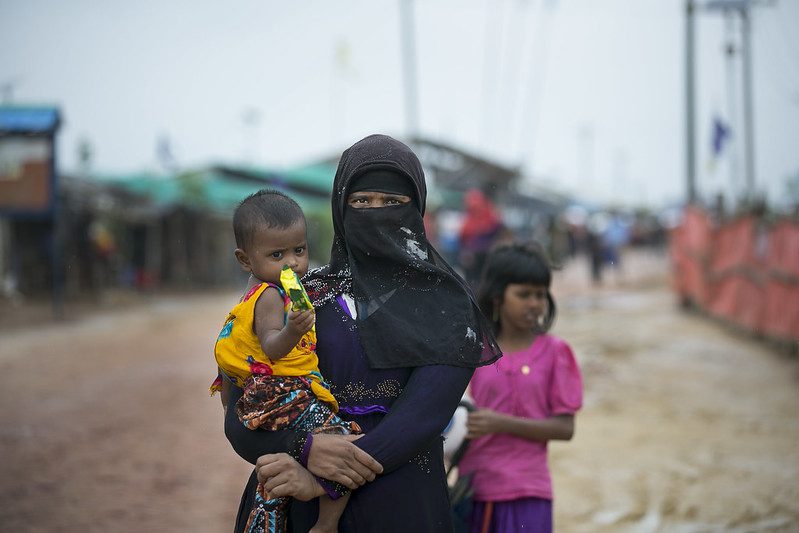
Humanitarian Aid for the Rohingya Refugee CrisisThe Muslim Rohingya population in Myanmar, a Buddhist country, has been severely discriminated against throughout history. Discriminatory policies in Myanmar deny citizenship to the Rohingya people. Additionally, Rohingya individuals cannot obtain birth certificates, receive an education or be employed legally. In August of 2017, violent attacks and persecution against the Rohingya people forced hundreds of thousands of Rohingya to seek refuge in Bangladesh. Almost one million Rohingya refugees currently live in refugee camps in the Cox Bazar region of Bangladesh.

Many organizations and international agencies are providing aid and support to the Rohingya refugee crisis. In addition to improving access to basic needs such as food, water, and shelter, UNICEF and the UNHCR have recognized access to education as a top priority.

The UNHCR

The United Nations High Commissioner for Refugees (UNHCR) is supporting the refugee population with basic needs such as food, water, shelter, and health services, including mental health resources. One of the largest challenges that the refugee camps face is flooding from annual monsoons in the Cox Bazar region. The UNHCR was able to relocate over 24,000 Rohingya and provide more than 150,000 monsoon preparation kits in anticipation of the monsoon season. These efforts continued through 2019 with the additional construction of 50 miles of infrastructure including bridges and roads and the distribution of post-disaster kits.

The UNHCR also provides first aid training for refugees and has trained more than 1,200 individuals. They also lead sessions to raise awareness about emergency preparedness within communities and have reached more than 80,000 Rohingya through these programs. Providing the Rohingya with access to education is one of the main goals for the UNHCR. Many children were not receiving any formal education in Myanmar due to discriminatory policies. The UNHCR has reached 502,000 refugee children with some form of education by building 1,602 learning areas and bringing 1,251 teachers to the area.

UNICEF

In collaboration with the government of Bangladesh, UNICEF has recently launched a plan to increase access to education for Rohingya refugee children in the Cox Bazar region. The curriculum will be tested on 10,000 children in grades six through nine during the first half of 2020. From there, it will expand for all ages. Education is a key factor to help the integration of the Rohingya people into society in Myanmar. Refugees are already at a significant disadvantage as a result of discrimination and consequential displacement. They lack basic resources such as nutritious food, proper housing and medical services. Access to education can help Rohingya refugees to reintegrate into society instead of further exacerbating disparities. It can increase their chances of finding employment and decrease poverty rates.

UNICEF has also been running informal education programs that have reached 315,000 refugee children in 3,200 learning centers. Subjects studied include English and Burmese language, Math and life skills or science depending on the level. The majority of children are still at levels one and two which are comparable to pre-primary to second-grade level. UNICEF has programs in place for adolescent education as well which include vocational and life skills. Education can tackle the Rohingya refugee crisis by reducing the chances of children being exposed to trafficking, child marriage and abuse as well as empowering refugee children.

Southeast Asian Governments

Two boats carrying hundreds of Rohingya refugees set out in February 2020 but were stuck at sea for months after setting out to find refuge. Many countries have denied them entry, leaving the refugees stranded without sufficient supplies of food or water. Bangladesh has taken in over one million Rohingya refugees since the violence and persecution began in Myanmar. However, in April 2020 the Foreign Minister Abdul Momen stated that Bangladesh would not allow any more Rohingya into the country. Momen cited the COVID-19 pandemic, as well as the numerous refugees already in Bangladesh, as reasons for this decision.

Other Southeast Asian governments such as Malaysia and Thailand have also failed to assist the refugees. The Malaysian officials who initially found one of the boats attempted to bring it back to international waters but about 50 refugees were able to swim to shore and are currently detained in Malaysia. The UNHCR has requested access in order to support these refugees with humanitarian aid with no response from Malaysia.

Nearby governments should cooperate to provide assistance to Rohingya refugees in their own countries. They need to provide resources such as health services and basic needs, especially during a global pandemic. These governments should be cooperating with international agencies to address the Rohingya refugee crisis in Myanmar.

– Maia Cullen
Photo: Human Rights Watch

August 5, 2020
https://borgenproject.org/wp-content/uploads/borgen-project-logo.svg 0 0 Lynsey Alexander https://borgenproject.org/wp-content/uploads/borgen-project-logo.svg Lynsey Alexander2020-08-05 12:00:062024-05-29 23:18:23Humanitarian Aid for the Rohingya Refugee Crisis
Global Poverty

5 Technologies Improving Healthcare in Rural Areas

Improving Healthcare in Rural AreasWhether it’s a smartphone or a calculator, many people have technology right at their fingertips. With the world continuing to advance technologically, rural areas tend to be left behind. However, some technological advancements are benefitting rural areas in particular. Technological advancements in the medical world are saving lives and improving healthcare in rural areas.

5 Technologies Improving Healthcare in Rural Areas

  1. Virtual health services – Virtual health services launch the list as one of the most popular, accessible healthcare advances. Prior to telehealth technology, all prescriptions were provided by a live pharmacist. Today, patients may communicate with their doctors and request prescriptions remotely. Live chat and video rooms provide healthcare for remote patients from the comfort of their homes. A recent survey found around 67% of U.S. adults are willing to try virtual healthcare; although, only around 20% have tried telehealth so far. It seems telehealth is here for good and here to stay.
  2. Virtual reality – Virtual reality is also improving healthcare in rural areas. Purdue University created augmented reality technology that may assist inexperienced doctors and surgeons. This newly emerging technology allows a more experienced medical professional to see the patient and lead the responder through the procedure. Preliminary trials show doctors in rural areas benefit from virtual reality technology. With fewer tools and materials to work with, feedback from a better trained professional can be critical. Juan Wachs, the leader of Purdue’s augmented reality research team, hopes that this new technology will decrease “the number of casualties while maximizing treatment at the point of injury.”
  3. 3D printing – Another healthcare advancement that benefits patients in remote locations is 3D printing. Before 3D printing became widespread, prosthetics would take weeks to make and could cost as much as $15,000. While the price of a prosthetic varies, 3D printing greatly reduces the cost. For example, biomechanics professor Dr. Jorge Zuniga from the University of Nebraska 3D printed a prosthetic hand for around $50. When 3D printing emerged, not only did prices decrease significantly, so did production time. A Canadian company called Nia Technologies predicts that a 3D printed model can be done in six hours. Therefore, 3D printing is particularly beneficial to patients in need of urgent care or with limited funds. As a result, advancements in prosthetic production benefit people in both rural and urban areas.
  4. Electronic medical records (EMRs) – EMR is a networking system created by Sanford Health in South Dakota. EMR keeps track of patient and treatment data. This database helps establish a standard treatment for common medical conditions. Additionally, EMR reminds medical professionals to follow up with their patients. For example, if a nurse finds a patient has high blood pressure, EMR prompts the nurse to follow up with their patient, ensuring the patient checks in with their primary care provider. So far, Sanford Health’s EMR program has been implemented at 45 hospitals and over 300 small clinics; about two million individuals living in the Dakota areas are benefitting from the EMR platform. Technology like EMR may be used to increase efficiency and quality of treatment in other rural areas as well.
  5. Mobile Stroke Units (MSUs) – Mobile stroke units also benefit patients in rural areas. An MSU is an ambulance-like vehicle that specializes in diagnosing and caring for patients who suffer from strokes. In places like rural Australia, MSUs are crucial for patients since strokes require urgent care. While 77% of urban patients have access to stroke units in hospitals or clinics, only 3% percent of rural patients have access. With the aid of Mobile Stroke Units, rural patients have a better chance of getting critical care in time.

Because rural areas are difficult to reach, healthcare is often less accessible. Travel costs are a barrier to healthcare, particularly for people in poverty. However, innovative technological advancements like these continue to improve the quality, cost, and accessibility of healthcare in rural areas.

– Karina Wong
Photo: Flickr

August 5, 2020
https://borgenproject.org/wp-content/uploads/borgen-project-logo.svg 0 0 Kim Thelwell https://borgenproject.org/wp-content/uploads/borgen-project-logo.svg Kim Thelwell2020-08-05 11:42:242020-08-05 11:42:245 Technologies Improving Healthcare in Rural Areas
Page 1051 of 2170«‹10491050105110521053›»

Get Smarter

  • Global Poverty 101
  • Global Poverty… The Good News
  • Global Poverty & U.S. Jobs
  • Global Poverty and National Security
  • Innovative Solutions to Poverty
  • Global Poverty & Aid FAQ’s
Search Search

Take Action

  • Call Congress
  • Email Congress
  • Donate
  • 30 Ways to Help
  • Volunteer Ops
  • Internships
  • Courses & Certificates
  • The Podcast
Borgen Project

“The Borgen Project is an incredible nonprofit organization that is addressing poverty and hunger and working towards ending them.”

-The Huffington Post

Inside The Borgen Project

  • Contact
  • About
  • Financials
  • President
  • Board of Directors
  • Board of Advisors

International Links

  • UK Email Parliament
  • UK Donate
  • Canada Email Parliament

Get Smarter

  • Global Poverty 101
  • Global Poverty… The Good News
  • Global Poverty & U.S. Jobs
  • Global Poverty and National Security
  • Innovative Solutions to Poverty
  • Global Poverty & Aid FAQ’s

Ways to Help

  • Call Congress
  • Email Congress
  • Donate
  • 30 Ways to Help
  • Volunteer Ops
  • Internships
  • Courses & Certificates
  • The Podcast
Scroll to top Scroll to top Scroll to top