
• Link to X
  • Link to Facebook
  • Link to Instagram
  • Link to TikTok
  • Link to Youtube
  • About
    • About Us
      • President
      • Board of Directors
      • Board of Advisors
      • Financials
      • Our Methodology
      • Success Tracker
      • Contact
  • Act Now
    • 30 Ways to Help
      • Email Congress
      • Call Congress
      • Volunteer
      • Courses & Certificates
      • Be a Donor
    • Internships
      • In-Office Internships
      • Remote Internships
    • Legislation
      • Politics 101
  • The Blog
  • The Podcast
  • Magazine
  • Donate
  • Click to open the search input field Click to open the search input field Search
  • Menu Menu

Archive for category: Gender Equality

Gender Equality

Gender Roles: Hindering the Potential of Women in Africa

Potential of Women in AfricaOver 60 percent of women living in developing countries make a living from working in agriculture. However, only 10 percent of women in Africa own livestock and approximately one percent own their own land.

Women who work in agriculture do not generally receive training or supplies in return for their work. These disparities demonstrate that the potential of women in Africa isn’t fully recognized—although women are responsible for the majority of production, they are not able to influence the policies that affect them.

Kenya suggested a bill for political parties to attempt to reserve 30 percent of parliamentary seats for women, but the bill was not passed. Involving women in these political decisions could significantly improve the economy since the majority of work is done by women.

The economy of Africa could be improved by involving more women in policy changes or by investing in those who do agricultural work. Gender roles are not only hindering the potential of women in Africa, but they are also hindering Africa’s potential. About 90 percent of Sub-Saharan Africa’s food is tended to by women who have little say in the economy that affects their work.

While women in Africa do the lion’s share of work, they are not valued the same as men. The potential of women in Africa is great. Women will typically work a day that is 50 percent longer than their male counterparts and in less than favorable conditions. In a society that revolves around men, the women are the force of the economy, though they remain largely ignored.

These women not only deal with harmful pesticides and rudimentary tools but also suffer considerable abuses at home after their difficult days of work.

The violence against women in Africa includes rape, sexual harassment, forced pregnancy, forced marriage, forced sterilization and much more. A cultural practice called female genital mutilation (FGM) causes infection, injuries, and death in women across Africa.

Approximately 130 million girls have already been subjected to this practice, though measures are being taken to prevent further mutilation. This violation of women’s human rights in Africa is illegal but often carried out in secret to continue the cultural tradition.

FGM is considered a way for women to be socially accepted and can only be ended by educating those who enforce it and stopping the stigma surrounding the tradition. Linah Jebii Kilimo, the chairwoman of Kenya’s Anti-FGM board, calls this “the worst form of gender-based violence.”

Those subjected to gender-based abuses are forced to stay with their husbands because women in Africa are not financially supported by the vast amount of work that they do. Husbands must provide the necessary financial security. Many of these women are illiterate and uneducated, though women who have received a secondary education are better able to provide for themselves and control their personal lives.

The 1979 United Nations Convention on the Elimination of All Forms of Discrimination Against Women assisted women and governments in changing abusive practices but has not been entirely successful.

Many cultures still practice FGM and forced marriages despite laws against such practices. Rwanda’s gender desks at police stations have provided legal assistance to women who are victims of any type of violence, a system that should be expanded to other countries in Africa. By expanding these gender desks, many women would be able to take better action to improve the situation of gender-based violence in their cultures.

Greater investment in the potential of women in Africa could equate to a significant boost for the economy. Countries could benefit by improving conditions for women and improving gender equality as well.

– Amanda Panella

Photo: Flickr

July 19, 2016
https://borgenproject.org/wp-content/uploads/borgen-project-logo.svg 0 0 Borgen Project https://borgenproject.org/wp-content/uploads/borgen-project-logo.svg Borgen Project2016-07-19 01:30:142024-05-27 09:33:53Gender Roles: Hindering the Potential of Women in Africa
Children, Gender Equality, Women and Female Empowerment

Afghanistan’s Sesame Street Debuts Female Muppet

Afghanistan's Sesame StreetAfghanistan’s Sesame Street is debuting its first Afghan Muppet character, who just happens to be a girl.
According to PBS Newshour, although Afghanistan’s Sesame Street has been running for about five years, it has mostly included international versions dubbed into local languages, with only short sequences filmed locally.

The character is a six-year-old with multi-colored hair, wearing a headscarf with her school uniform, reported the New York Times. The debut of a female character is noteworthy for Afghanistan, where women’s rights are strictly curtailed.

Also notable is the extremely low rates of both education and literacy for girls in Afghanistan, with 85 percent of girls receiving now formal schooling, and a literacy rate of 24 percent, reported Newshour.

Under these circumstances, having a bright and curious female character like Zari debut to audiences in Afghanistan is a positive step. The Huffington Post reports that Afghanistan’s Sesame Street is the most watched show by young children in the country. Sesame Workshop, the non-profit that produces Sesame Street, recorded that 81 percent of children aged three to seven have seen it.

Sherrie Westin, Sesame Workshop’s executive vice president of global impact and philanthropy, spoke to Reuters about her excitement in introducing a female character. She thinks she may just have the power to change some minds, including fathers’ attitudes about educating daughters.

Westin told Reuters, “The exciting part about Zari is that she is modeling for young girls that it is wonderful to go to school and that it’s ok to dream about having a career.”

Specifically, Zari will appear in segments about health, exercise and well-being, reported the Huffington Post. One segment will feature Zari visiting her doctor for a check-up, and asking how she can become a doctor herself. Zari will interview various kinds of professionals for the show.

She will also speak directly to viewers and interact with kids in person on the show, said the New York Times.

According to Huffington Post, Sesame Workshop is working with the Afghan education ministry to try to reduce any resistance to the notion of an empowered female character on a popular children’s show.

Sesame Street changed attitudes in the U.S. when it debuted almost 40 years ago. As Westin told Reuters, “Part of the power of the broadcast and Zari’s potential as a role model is to reach children and parents where they may not have access to other educational content.”

– Katherine Hamblen

Photo: Flickr

July 4, 2016
https://borgenproject.org/wp-content/uploads/borgen-project-logo.svg 0 0 Borgen Project https://borgenproject.org/wp-content/uploads/borgen-project-logo.svg Borgen Project2016-07-04 01:30:502024-12-13 17:54:28Afghanistan’s Sesame Street Debuts Female Muppet
Gender Equality, Global Poverty, Technology

The Poverty Stoplight: A Technological Aid Revolution

Poverty_Aid

In Paraguay, where the poverty rate is 35 percent, the challenges of providing strategic and meaningful aid seem overwhelming. However, the Poverty Stoplight, a newly developed technology to help families self-assess poverty in their lives, is transforming communities.

In the words of Martin Burt, founder of Fundación Paraguaya and creator of the Poverty Stoplight, the technology “enables poor people to self-diagnose their own level of poverty in 30 minutes using a smartphone or tablet.” The app works through a survey that utilizes images as well as a color-coded system to identify extreme poverty with red, poverty with yellow, or no poverty with green. Families complete the survey by examining their poverty level in a number of different areas: Income and Employment, Health and Environment, Housing and Infrastructure, Education and Culture, Organization and Participation and Interiority and Motivation.

These six categories encompass 50 different indicators of poverty in Paraguay and therefore provide a multidimensional understanding of the circumstances faced by families in disadvantaged areas. Once they receive their results, families work with local community support to come up with a plan for improvement in red or yellow areas.

The international community also recognized the Poverty Stoplight for its efficacy in supporting gender equality. Many of the aid plans for families in impoverished communities include microfinance efforts to provide opportunities for women as well as training to reduce sexual harassment. Thanks to the technology of the Stoplight, many Paraguayan women are lifting their families out of poverty as owners of their own micro-franchises.

The color-coding mechanism of the Poverty Stoplight works beyond helping families describe their living situation by creating maps of countries, regions, even neighborhoods, that reflect the level of poverty in any given category. These maps help struggling families to identify others who face the same challenges or those who may have already overcome them, providing an opportunity for support and mentorship.

The Poverty Stoplight maps also allow governments and aid organizations to more fully understand the problems in these areas so that strategic plans can better support those who need it. By encouraging people to think of themselves “less as beneficiaries [of aid] and more as empowered agents of change,” the Poverty Stoplight is a respectful, insightful, and exciting tool for change.

In 2014, with only $1.5 million in donations and funds, the Poverty Stoplight helped improve the welfare of 18,000 Paraguayan families, an estimated 92,000 people. The low-cost nature of the technology, as well as it’s comprehensive strategies for assessing poverty in any given community, make it incredibly versatile.

As this revolutionary tool continues to eliminate poverty in Paraguay, it is migrating to other regions around the world. Nongovernmental organizations (NGOs) in 18 different countries have already integrated this new technology into their support initiatives, demonstrating the name Poverty Stoplight is quickly making for itself as a means of revolutionizing our modern strategies for identifying and alleviating poverty.

– Kathleen Kelso

Photo: Flickr

June 12, 2016
https://borgenproject.org/wp-content/uploads/borgen-project-logo.svg 0 0 Borgen Project https://borgenproject.org/wp-content/uploads/borgen-project-logo.svg Borgen Project2016-06-12 01:30:582024-12-13 18:06:03The Poverty Stoplight: A Technological Aid Revolution
Education, Gender Equality, Global Poverty

Outdoor Classrooms: Opportunities for Rural Nepalese

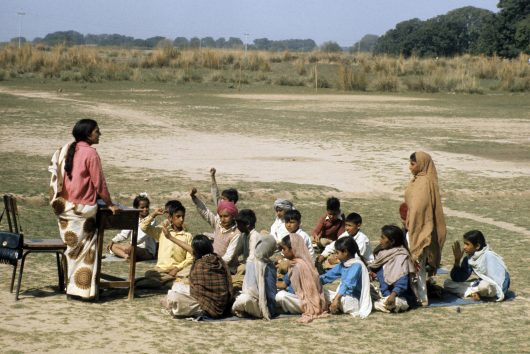
Outdoor_ClassroomFor villagers in Eastern Nepal, the indigenous knowledge they have acquired through generations of living and farming locally can be a new source of livelihood, via participation in the ‘Vertical University‘ initiative.

The project involves a series of interconnected villages whose microclimates provide a trail for learning about ecosystems and biodiversity. This program also employs villagers as teachers in these outdoor classrooms. The innovative effort comes at a dire time for socioeconomic progress in Nepal, with the 2015 earthquake pushing more than 1 million Nepalese below the poverty line.

The Vertical University trail, which stretches across Eastern Nepal, encompasses the living grounds of 150,000 individuals and 107 different habitat types. Visitors travel from one outdoor learning space to the next, absorbing locals’ knowledge of native species and diverse habitats as they go.

The founder of the Vertical University is an organization called KTK-BELT. This group engages important local actors, like farmers and teachers, in “community-based biodiversity conservation.” The Vertical University initiative represents conservation in action, resulting in a 100-acre land trust and critical tools for preventing deforestation.

For Nepalese community members, the project represents more than an opportunity for environmental conservation. This project has been instrumental in providing locals with economic and educational opportunities.

The outdoor classrooms are free and open to visitors at all times, as the local Nepalese have mapped and tagged the indigenous knowledge they can offer. For Nepalese youth, the opportunity to be involved in the process can mean acquiring valuable educational skills or receiving a stipend to pursue further education.

Young girls in particular benefit from programs like this because they face deeply entrenched gender stereotypes regarding education. Most girls find themselves restricted to domestic tasks. However, the Vertical University teaches them to catalog species for the trail, as well as survey local farmers and communities.

Not only do girls lack in schooling, but there’s also a dire overall need for education funding in Nepal. The country’s educational system is quite young relative to global advancement in education.

Additionally, schools in rural areas lack in productivity, effective learning and testing. The lack of quality education offered in rural schools is also a widespread problem for public schools as a whole. Females, Dalits, Muslims and other minority groups suffer in particular. However, outdoor classrooms offer a viable solution.

Adult community members in the Vertical University villages receive the additional economic opportunities borne from protecting the environment. Creating the trails led to the discovery of a variety of natural products, such as essential oils and soapnuts. The locals can then sustainably produce and sell those products. They also learn a variety of education skills, which can compensate for the low rates of higher education in Nepal.

The many facets of the project translate into various opportunities for the Nepalese living within the Vertical University belt. Education funding and employment as mappers of indigenous knowledge are just the beginning. People have repurposed barren land for permaculture and highlighted the danger of poaching. They have also mapped and labeled 6,600 plants in areas frequently devoid of Internet access.

Co-founders Rajeev Goval and Priyanka Bita created the project through a Kickstarter campaign. The power of crowdfunding has enabled the education and livelihoods of countless villagers within the region. This is especially important for Nepal, as it is still reeling from the 2015 earthquake.

In creating outdoor classrooms and employing local farmers to map and catalog their indigenous knowledge, the KTK-BELT Vertical University represents a conservation approach with both involves the community and fights global poverty. Its ability to provide education funding in Nepal, a country where that funding can change the lives of girls and disadvantaged youth, creates widespread change.

– Charlotte Bellomy

Photo: U.N. Multimedia

May 30, 2016
https://borgenproject.org/wp-content/uploads/borgen-project-logo.svg 0 0 Borgen Project https://borgenproject.org/wp-content/uploads/borgen-project-logo.svg Borgen Project2016-05-30 01:30:412024-12-13 18:06:06Outdoor Classrooms: Opportunities for Rural Nepalese
Education, Gender Equality, Global Poverty, Women, Women and Female Empowerment

The UN Unites Gender Equality and Global Education

Gender Equality
International Women’s Day 2016 rekindled awareness of the progress of the Sustainable Development Goals (SDGs), particularly the fifth goal to achieve gender equality.

While the number of impoverished women has decreased by 50 percent since 1995 and 90 percent of girls attend primary school, the lack of access to secondary school and the prevailing workplace gender gap beg the question: How will gender equality be achieved by 2030?

Fast Company reported that in North Africa and the Middle East, millennial women have as few employment opportunities as did their mothers and grandmothers and they are three times less likely to run a business than their male counterparts. Ellen Johnson Sirleaf, the first female president of the Republic of Liberia, estimated that full gender equality will require a minimum of 80 years.

One of the surest catalysts to accelerate gender equality is to give women and girls better access to education. Educated women lead healthier lives, provide for their families and better contribute to society. Consequently, in order for the world to complete the fifth SDG, it must achieve worldwide quality education as well.

“Education is key to opening up so many opportunities for girls. We can’t emphasize that enough,” Terri McCullough, director of No Ceilings: The Full Participation Project, told Bustle.

On March 8, the U.N. Statistical Commission met with the Economic and Social Council and the U.N. General Assembly to discuss electing gender equality as a global education indicator.

Indicators enable world leaders to monitor the progress of the SDGs within their countries to ensure the goals remain on track. Both gender equality and global education require reaching out to the 510 million women who remain illiterate.

If approved, the official statement would read, “Extent to which (i) global citizenship education and (ii) education for sustainable development, including gender equality and human rights, are mainstreamed at all levels in (a) national education policies, (b) curricula, (c) teacher education and (d) student assessment.”

Establishing gender equality as a global education indicator will help countries analyze each factor of global education and pinpoint where progress is lacking. One major barrier between women and education is negative cultural perception of educated females.

In order to help more girls receive an education, countries must change the public opinion of girls and education. The Global Education Monitoring (GEM) Report launched an Instagram campaign to investigate the pervasiveness of gender bias in textbooks worldwide. GEM Report will also host a side-event at the May 2016 Women Deliver Conference to improve training for female teachers.

The balance of gender equality and education benefits men as well as women. Mandisa Shields of The Daily Orange pointed out that when women are not qualified to work in the fields of their choice, men are required to fill the vacant positions, weakening the labor force. As a result, countries suffer both academically and economically.

The ultimate goal of each country is absolute eradication of global poverty, a goal that depends on the full completions of the other SDGs. At the announcement of the SDGs, Irish president Michael Higgins told the U.N., “We cannot achieve the new Sustainable Development Goals if we do not achieve gender equality.”

– Sarah Prellwitz

Sources: Daily Orange, EFA Report, Bustle, Fast Company, Irish Aid

April 3, 2016
https://borgenproject.org/wp-content/uploads/borgen-project-logo.svg 0 0 Borgen Project https://borgenproject.org/wp-content/uploads/borgen-project-logo.svg Borgen Project2016-04-03 01:30:192024-12-13 18:05:51The UN Unites Gender Equality and Global Education
Gender Equality, Global Poverty

What Gender Means for World Peace

World Peace
The evidence clearly suggests that world peace and gender equality go hand-in-hand. According to Foreign Policy, “there is a strong and highly significant link between the state’s and women’s security…the best predictor of a state’s peacefulness is not its level of wealth, its level of democracy, or its ethno-religious identity; the best predictor of a state’s peacefulness is how well its women are treated.”

In their investigative book “Sex and World Peace,” four scholars found out that the larger the gender gap with respect to the treatment of men and women in a population, the more probable it is for a country to get involved in interstate issues as well as have higher levels of violence.

Regarding economic growth, national wealth, corruption and social welfare, the best prognosticators are those which manifest the situation of women. According to Foreign Policy, “what happens to women affects the stability, prosperity, bellicosity, corruption, health, regime type and power of state.”

The empirical results are abundant. WomanStats database rated countries based on numerous sections respecting women’s security from 0 (best) to 4 (worst). In this categorical system, no country received a 0, in regards to the physical security of women.

The world average was 3.04, “attesting to the widespread and persistent violence perpetrated against women worldwide, even among the most developed countries,” announced Foreign Policy. The United States received a 2.0 due to the predominance of rape and domestic violence.

Gender-based assault is sadly intrinsic in many cultures and it remains rooted in the countries associated with underdevelopment.

The fundamental objective facing the 21st century is to eradicate violence against women and remove barriers that prevent them from development and empowerment.

“The countries of the world must try a different path, one that we have every empirical reason to believe will lead to greater well-being, prosperity and security for the entire international system. Sex and world peace, then, with no question mark,” said Foreign Policy.

– Isabella Rölz

Sources: Foreign Policy, Woman Stats, Columbia University Press (2016) Sex and World Peace,

March 30, 2016
https://borgenproject.org/wp-content/uploads/borgen-project-logo.svg 0 0 Borgen Project https://borgenproject.org/wp-content/uploads/borgen-project-logo.svg Borgen Project2016-03-30 01:30:292020-06-20 23:16:38What Gender Means for World Peace
Gender Equality, Global Poverty, Women and Female Empowerment

Workplace Gender Equality in Honduras

latin america genderWorkplace gender equality is vital for economic growth. With women making up 50 percent of the working population, but only contributing 37 percent to the GDP, it’s important to realize that their financial success is crucial for the global economy.

In order to see this success, women will need proper training and economic incentives to be economically stable. One small business owner, Daniel Vàsquez, moved his plantain processing plant from Tegucigalpa to Valle de Jamastràn in order to tap into the markets of smallholder farmers, both male and female alike.

Vàsque’s business, Dartma, processes the plantains that are used to make chips and other snack foods throughout small convenience stores in rural Honduras. His business model prioritizes gender equality throughout the workplace and was created by TechnoServe, a nonprofit that focuses on business solutions to poverty.

Dartma purchases produce from male and female farmers, and has a gender-balanced sales and production staff—individual talent determines who works where.

Vàsquez explains broadly, “There’s balance. Women are more creative in some areas, they’re detail-oriented, they’re better at product quality control. Men are better at activities requiring physical strength, like carrying materials.”

After implementing TechnoServe’s goals towards gender equality in the workplace, Dartma saw a 20 percent increase in revenue after one year. With more growth, he hopes to one day provide parental leave to his female employees.

According to global management firm McKinsey Global Institute (MGI), advancing women’s roles in the workforce can contribute $12 trillion in global growth by 2025.

For women to contribute more to the economy, there must be more gender equity at work. This requires adequate training that provides the skills females need to perform well in higher-productivity jobs, along with equal benefits and pay from the employer.

An MGI report states that in order to achieve gender equality at work, there must be economic development and a change in society’s attitude towards gender equality.

Over the last 30 years, these social attitudes have already improved, which has contributed to a 19.7 percent increase in female workforce participation last year, according to the same report. If this growth is maintained, nearly 240 million people will be added to the world’s labor force by 2025.

Daniel Vàsquez shares why he values the women who work for him and supports gender equality in the workplace. He states, “The main benefit of buying raw materials from women is that they deliver a higher quality product, they always deliver the right order and on time. The other benefit is that the money reaches their hands and they invest it in their children.”

– Kelsey Lay

Sources: McKinsey Global Institute, TechnoServe
Photo: Latin Correspondent

January 16, 2016
https://borgenproject.org/wp-content/uploads/borgen-project-logo.svg 0 0 Borgen Project https://borgenproject.org/wp-content/uploads/borgen-project-logo.svg Borgen Project2016-01-16 01:30:372024-05-27 09:28:27Workplace Gender Equality in Honduras
Gender Equality, Women and Female Empowerment

Gender Equality in Rwanda Ranks in Top 10

gender_equality_in_Rwanda
When people think of gender equality they often do not associate it with Rwanda. But, according to the World Economic Forum’s (WEF) annual report, people should.

Gender equality in Rwanda outperformed many expectations, scoring high in the graded categories of economics, health, education and politics. Additionally, the country placed in the top ten for the second year in a row. They even improved their spot by one, coming in at sixth place.

As a continent, Africa has some of the worst performing countries in the world. Numerous African countries scoring in the bottom 20 supplement that fact. Chad, Mali and Guinea are some of the countries that have yet again found themselves in the bottom 20.

Impressively, Rwanda beat out many well-developed countries. They boast better scores than France (15th) Germany (11th) and even the United States (28th).

The country has continued to see success in bridging the gender equality gap. According to WEF’s Global Gender Gap Report, an impressive 88 percent of women in Rwanda hold jobs. Comparatively, the percentage of women in the United States who have jobs is only 66 percent.

While Rwanda’s placement on the index is certainly praiseworthy, the question remains – how did the country outperform 139 others?

Saadia Zahidi, a member of the WEF, explains: “There are quite a few theories for this and certainly one of them is that after the genocide there has been much lower numbers of men who are able and willing to be working. So, that has changed the dynamics.”

The genocide that Zahidi talks about occurred in 1994. It was aimed at the country’s minority group, the Tutsi’s, and claimed the lives of over one million civilians. Many women became widowed as a result.

After the genocide ended, women came together and demanded change. They successfully re-wrote parts of the constitution and ensured that 30 percent of political roles would be held by women. They also called for marriage equality and land ownership rights.

In terms of political opportunities, Rwanda has the highest percentage of women in Parliament, something that remains to be celebrated.

Of course, there is still much that needs to be done in order to continue to eliminate the gap between genders. However, Zahidi remains confident that the divide in gender equality in Rwanda will continue to close.

– Alyson Atondo

Sources: The World Economic Forum 1, Huffington Post, QZ.com, Washington Post, The World Economic Forum 2
Photo: Flickr

December 2, 2015
https://borgenproject.org/wp-content/uploads/borgen-project-logo.svg 0 0 Borgen Project https://borgenproject.org/wp-content/uploads/borgen-project-logo.svg Borgen Project2015-12-02 01:30:462024-12-13 18:05:28Gender Equality in Rwanda Ranks in Top 10
Children, Education, Gender Equality, Global Poverty

Room to Read: 10 Keys to Improving Global Education

Room to Read 10 Findings to Improve Global Education
Room to Read set out to change the lives of children around the world by focusing on literacy and gender equality. Fifteen years later, the non-profit has educated almost 10 million children.

Their other accomplishments include publishing more than 1,000 books in local languages, building more than 1,900 schools, establishing more than 17,000 libraries and providing more than 31,000 girls with education and life skills.

Room to Read facilitates education programs in Bangladesh, Cambodia, India, Laos, Nepal, South Africa, Sri Lanka, Tanzania, Vietnam and Zambia. Through monitoring and evaluating their programs, Room to Read has revealed 10 keys to their success:

  1. Children read faster and with greater comprehension when they benefit from systematic reading instruction that focuses on phonics.
  2. Children are more likely to read when their teachers have been trained in how to conduct reading activities, such as reading aloud and shared reading.
  3. Children prefer illustrated fiction books, such as folklore and fantasy.
  4. Libraries are well-run and effective when they are monitored and evaluated consistently.
  5. Access to libraries makes students want to read more at school and at home.
  6. Transparency leads to greater community involvement and participation.
  7. Advocacy and partnerships with local governments are crucial to improving instructional methods and professional development for educators.
  8. Parent and guardian engagement in their daughters’ education is essential.
  9. Life skills education is directly associated with lower dropout rates and higher advancement rates among girls.
  10. Identifying risk factors and implementing early warning systems can prevent girls from dropping out of school and provide them with needed support.

“Achieving our milestone of 10 million children impacted through Room to Read’s programs is a time to celebrate and further our mission,” said Erin Ganju, Room to Read’s CEO and co-founder. “By sharing our findings on what works in global education, we hope to deliver a quality education to every child in every corner of the globe.”

– Marie Helene Ngom

Sources: Roomtoread, PRNewswire, AnnualReport
Photo: Flickr

December 1, 2015
https://borgenproject.org/wp-content/uploads/borgen-project-logo.svg 0 0 Borgen Project https://borgenproject.org/wp-content/uploads/borgen-project-logo.svg Borgen Project2015-12-01 01:30:142024-05-27 09:28:26Room to Read: 10 Keys to Improving Global Education
Gender Equality, Global Poverty, Women and Female Empowerment

Launch of W20 for Women’s Economic Empowerment

W20
On September 6, financial leaders from the G20 countries met to discuss issues within the global economy. During this meeting, they launched W20, an engagement group focused on advancing women’s economic empowerment.

W20 will work in conjunction with U.N. Women, the IMF and other international bodies to promote women’s involvement in financial decision-making and monitor the G20’s commitment to women’s education and entrepreneurship initiatives.

Because G20 countries hold two-thirds of the world’s population and produce 85 percent of the world’s GDP, holding these countries accountable to their pledges for gender equality sets the standard for how women should be treated globally.

The launch included speakers such as the U.N. Women Deputy Executive Director Lakshmi Puri, IMF Chief Christine Lagarde and Turkish Prime Minister Ahmet Davutoglu.

Generally, speakers remarked on the connection between women’s economic empowerment and the well-being of a community, and thus a country. In the words of Davutoglu, “If the women are smiling… you can be sure that their country is happy.”

With the 2014 pledge from the G20 to improve gender equality in the labor force, international bodies and governments have much to do, and the assistance of W20 will be a critical resource in guiding their success.

If the goal is reducing the gender gap in labor force participation by 25 percent, more than 100 million women will be added to the labor force. To do so, issues of maternal health, unpaid care work and access to education must be addressed.

In addition, the recently-passed Sustainable Development Goals include gender-sensitive targets in 12 of the 17 goals, adding further significance to the launch of the W20.

“Addressing the significant underinvestment in gender equality and women’s empowerment is critical in and of itself,” Ms. Puri said at the launch.

“The W20 has the potential to influence economic governance and promote gender-inclusive economic growth in a more potent way than has ever been possible in the G20 until now.”

The W20 will be led by Gulden Turktan, one of the founders and the president of the Women Entrepreneur’s Association. The two-day inaugural summit will be held on October 7-8 in Istanbul.

– Priscilla McCelvey

Sources: UN Women, US News   

Photo: Wikipedia

October 1, 2015
https://borgenproject.org/wp-content/uploads/borgen-project-logo.svg 0 0 Borgen Project https://borgenproject.org/wp-content/uploads/borgen-project-logo.svg Borgen Project2015-10-01 01:30:512020-06-29 11:54:31Launch of W20 for Women’s Economic Empowerment
Page 34 of 39«‹3233343536›»

Get Smarter

  • Global Poverty 101
  • Global Poverty… The Good News
  • Global Poverty & U.S. Jobs
  • Global Poverty and National Security
  • Innovative Solutions to Poverty
  • Global Poverty & Aid FAQ’s
Search Search

Take Action

  • Call Congress
  • Email Congress
  • Donate
  • 30 Ways to Help
  • Volunteer Ops
  • Internships
  • Courses & Certificates
  • The Podcast
Borgen Project

“The Borgen Project is an incredible nonprofit organization that is addressing poverty and hunger and working towards ending them.”

-The Huffington Post

Inside The Borgen Project

  • Contact
  • About
  • Financials
  • President
  • Board of Directors
  • Board of Advisors

International Links

  • UK Email Parliament
  • UK Donate
  • Canada Email Parliament

Get Smarter

  • Global Poverty 101
  • Global Poverty… The Good News
  • Global Poverty & U.S. Jobs
  • Global Poverty and National Security
  • Innovative Solutions to Poverty
  • Global Poverty & Aid FAQ’s

Ways to Help

  • Call Congress
  • Email Congress
  • Donate
  • 30 Ways to Help
  • Volunteer Ops
  • Internships
  • Courses & Certificates
  • The Podcast
Scroll to top Scroll to top Scroll to top
