• Link to X
  • Link to Facebook
  • Link to Instagram
  • Link to TikTok
  • Link to Youtube
  • About
    • About Us
      • President
      • Board of Directors
      • Board of Advisors
      • Financials
      • Our Methodology
      • Success Tracker
      • Contact
  • Act Now
    • 30 Ways to Help
      • Email Congress
      • Call Congress
      • Volunteer
      • Courses & Certificates
      • Be a Donor
    • Internships
      • In-Office Internships
      • Remote Internships
    • Legislation
      • Politics 101
  • The Blog
  • The Podcast
  • Magazine
  • Donate
  • Click to open the search input field Click to open the search input field Search
  • Menu Menu

Archive for category: Gender Equality

Gender Equality, Global Poverty

Specialized Healthcare for Transgender Troops

transgender_troops
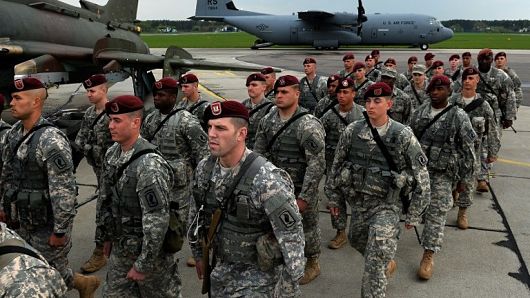
A new study published earlier this month in the New England Journal of Medicine should dispel financial worries about allowing transgenders in military troops.

As the Pentagon moves to allow transgender people to serve in the U.S. military, debate has risen concerning the potential specialized healthcare they might require. This new study shows that the total cost of providing transition-related healthcare to transgender troops would be $5.6 million per year.

While that’s a high number, taken in the context of the entire U.S. military budget, it’s almost microscopic. The Defense Department’s annual healthcare budget currently sits at around $48 billion. When placed against this number, the potential $5.6 million required for transgender troops amounts to less than one-hundredth of a percent.

“Under any plausible estimation method, the costs are minimal,” Aaron Belkin, the study’s author, said in a statement. “Having analyzed the cost that the military will incur by providing transition-related care, I am convinced that it is too low to warrant consideration in the current policy debate.”

One of the criticisms being leveraged against this move is that the military will become a “magnet employer” for those seeking free health care. Belkin, however, denies this as a possibility, noting that the military has grown smaller over the years and that the Australian military has seen no negative impact from implementing the same reform.

According to the study, over roughly the past four years, 13 out of 58,000 total Australian troops underwent gender transition surgery. This averages out to around 1 soldier per 11,154 a year. In the United States, that ratio would be around 192 soldiers undergoing gender transition surgery annually out of a total 2,136,779 troops.

“What the research shows is that if you’re going to lift the ban, it doesn’t make sense to do so unless you also provide medically-necessary care,” Belkin said.

– Alexander Jones

Sources: Nejm, USA Today, Wall Street Journal
Photo: Russia Insider

August 15, 2015
https://borgenproject.org/wp-content/uploads/borgen-project-logo.svg 0 0 Borgen Project https://borgenproject.org/wp-content/uploads/borgen-project-logo.svg Borgen Project2015-08-15 01:30:512024-06-05 03:46:42Specialized Healthcare for Transgender Troops
Gender Equality, Global Poverty, Health

Beijing’s Ban on Smoking

Ban_on_Smoking
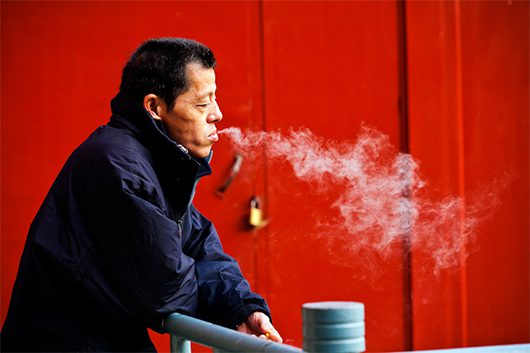
Though the June 1st ban on smoking wasn’t the first of its kind in Beijing, it may be one of the most effective. The ban comes at a time when China has the highest number of male smokers. It is estimated that one-third of all cigarettes sold globally are produced by China National Tobacco Corporation, with 43% of tobacco produced in China.

The high rates of smoking in China, and in particular Beijing, are especially concerning. About 60% of male doctors smoke and few associate the habit with health problems other than vascular ones. Without the widespread knowledge and dissemination of the risks associated with tobacco smoking, people often have little incentive to stop.

China’s smoking problem is also largely a cultural one, concentrated in masculinity. While an estimated 45% of men smoke, only about 2.1% of Chinese women do. However, when looking at the plethora of health problems that stem from smoking, men, women, and children are all affected. The high volume of smokers combined with the thick covering of smog cloaking entire cities creates a pocket of pollution where the effects of second-hand smoke are exacerbated.

The latest ban introduced in Beijing bans all smoking in indoor places with an added level of severity-fines. People who act against the ban are subject to fines of $32 and businesses that allow people to smoke on their premises will be fined $1,600. In the past two months, about $16,000 has been collected in fines from the ban, but in the coming months that amount may rise. The Beijing Municipal Commission of Health and Family Planning has discussed the possibility of increasing fines for individuals to $800. What’s more is that any person who violates the law three times is subject to being publicly named on a government website, a clause that aims to shame.

Upon the initial implementation, support was strong and people seemed excited. However, as is the case with most past similar bans, the popularity fades and as the attention slips away so does the people’s enthusiasm and commitment. On the contrary, this particular ban has shown more promise. Almost two months post-implementation, the ban still sees support from pop culture icons and a visible decline in indoor smoking. With Beijing getting a little extra focus from the Chinese government for being the capital, perhaps this particular ban will see greater success than past ventures. If the abstinence continues, Beijing will be able to serve as an example to other cities around the country, and the overall rate of smoking will likely decline.

Although such a decline in vast numbers of Chinese smokers will affect the nation’s economy slightly, the overall benefits to health seen in both men and women will create a healthier working class that will reciprocate any losses by boosting the workforce and spending. Also as smoking rates decline, women will face fewer health risks imposed by their male counterparts, which will make for a more fair environment for women, although China continues to struggle in gender equality, it is a step. Like all newly implemented programs and policies, the ban can only restrict smoking so far, but it is a very positive step for Beijing and for China. In order for China to fully reap all of the rewards from smoking reduction, a cultural change is needed, which is often times the harder of the two to enact.

– Emma Dowd

Sources: BBC, CNN, FP
Photo: Flickr

August 7, 2015
https://borgenproject.org/wp-content/uploads/borgen-project-logo.svg 0 0 Borgen Project https://borgenproject.org/wp-content/uploads/borgen-project-logo.svg Borgen Project2015-08-07 01:30:292020-02-28 08:36:42Beijing’s Ban on Smoking
Advocacy, Children, Developing Countries, Education, Gender Equality, Global Poverty

Harry Styles Speaks In Video About Education

Harry_Styles

On July 27, Harry Styles of One Direction spoke in a video sanctioned by his campaign, action/1D, about his views on global education and those who deserve a better quality of life.

“I want to live in a world where every child can go to school,” Styles said at the beginning of the video.

Styles, along with bandmates Louis Tomlinson, Liam Payne and Niall Horan, recently launched the action/1D campaign to inspire fans and promote awareness for global education, poverty, climate change, disease and inequality.

With action/1D, supporters can get involved in the campaign by posting pictures and videos that correspond to a topic related to the cause. Fans of One Direction can also catch the boys in videos where each band member will begin with the phrase: “I want to live in a world where…”

In Styles’ video, he spoke about how much he enjoyed school, and the children that he met in Ghana who dream of getting an education. These children cannot afford school, Styles said, and they spend their days working instead of learning.

“At the moment, they have to work all day every day just to earn enough to eat,” Styles said.
The “What Makes You Beautiful” singer brings light to a continuing problem.

According to UNICEF, there are almost 624,000 children not in primary school. Those who do receive an education do not learn the tools required to be successful in secondary school or professional work.

“Often, the school environment is not conducive to learning: classes are overcrowded, water and sanitation facilities are lacking and trained teachers and school books are in short supply,” UNICEF reports.

For those children with disabiliites, education is even more difficult to attain. According to the 2010 national census, 20% of children with physical disabilities are not attending school.

In addition, gender inequality does not provide for an equal amount of girls in school as boys. The national average amount of education is seven years, and in Northern Ghana, girls attend school for just three years.

“Making education available to 100 percent of people around the world is one way to ensure that poverty declines,” the article said.

Along with The Borgen Project, Styles and other members of action/1D agree that education a key to ending extreme poverty. One Direction’s campaign, which is associated with a similar organization, action/2015, seeks to create a world where education, along with health, climate change and inequality, are no longer a problem.

This year, two U.N. summits will gather some of the most influential people in the world. During each conference, these leaders will formulate plans to fix these issues.

With the help of these conferences, numerous humanitarian organizations and Styles, extreme poverty just might end; as Styles pointed out in his video, this change can begin with education.

“Going to school could literally change their lives, but for now, all they can look forward to is a life of struggle, and they deserve so much more,” he said.

Action/1D asks fans of the band to group together to make a difference. To contribute to the cause and to learn more about the campaign, visit the action/1D website.

– Fallon Lineberger

Sources: Action/1D 1, Action/1D 2, Action/2015, The Borgen Project, United States Census, Twitter, UNICEF
Photo: Sugarscape

August 6, 2015
https://borgenproject.org/wp-content/uploads/borgen-project-logo.svg 0 0 Borgen Project https://borgenproject.org/wp-content/uploads/borgen-project-logo.svg Borgen Project2015-08-06 07:45:042024-06-04 01:17:41Harry Styles Speaks In Video About Education
Developing Countries, Gender Equality, Global Poverty

Do Gender Equality Programs Work in Developing Countries?

gender_equality_programs
Until now, there has been no method to assess the effectiveness of Gender Equality Programs (GEPs) in developing countries. In July 2015, UN Women published a research report entitled “The Effect of Gender Equality Programming on Humanitarian Outcomes.” The researchers developed a unique assessment tool, Gender Intensity Measure, to analyze data and determine the degree to which gender equality and women’s empowerment are perceived to be effective by the beneficiaries of GEPs.

The research, commissioned by UN Women, was conducted by the Institute of Development Studies at the University of Sussex in 2013 and co-funded by the Department of Foreign Affairs, Trade and Development of Canada. IDS collected and analyzed information from four case-study locations: Nepal, the Philippines and two sites in Kenya: the county of Turkana and the Dadaab refugee camps.

The research study surveyed over 2,000 households in crisis and focus groups in the four locations. The Gender Intensity Measure interviewed women as well as men, humanitarian workers and community leaders to determine how gender-sensitive programs promote gender equality and empower women—and why.

The report confirms that the quality of life for all community members is improved with GEPs. The study measured improved humanitarian outcomes as well as gender equality for all community members. Specific examples of the effectiveness of GEPs from each of the four sites include:

In Nepal, women were able to afford school fees and supplies for their children because of programs that promote income-earning opportunities for women.

In the Philippines, hunger was decreased by 37 percent in households where women reported being more satisfied with the availability of gender equality programming.

In Dadaab refugee camps, 70-90 percent of pregnancy deliveries were attended by skilled personnel due to programs encouraging women to utilize safer delivery options.

In Turkana, the proportion of literate children per household rose by 4.8 percent, due to increasing the Gender Intensity Measure from low to high.

In the Philippines, Nepal and Turkana, women noted greater decision-making power when humanitarian services were considered to be gender-equal.

In Dadaab, women noted greater empowerment and young girls’ aspirations increased when women held leadership roles in the implementation of humanitarian services.

“The Effect of Gender Equality Programming on Humanitarian Outcomes” also provides guidance as to how to increase the effectiveness in the future. For example, two issues that need improvement are increasing awareness of GEPs and the involvement of men and boys in order to empower women.

Prior to this unique research, GEPs were measured only on paper by how well they prioritize gender equality programming according to the Inter-Agency Standing Committee Gender Marker. The Gender Marker rated aid proposals only to see if they were designed well, meaning if they would satisfactorily benefit women, men, girls and boys equally. The Marker also predicts (but does not measure) the effectiveness of a program.

Humanitarian programs that promote gender-sensitive programming are crucial to achieving the Millennium Development Goals. “Empowering women and girls is not only the right thing to do: It’s also smart economics and vital to ending poverty and boosting shared prosperity,” according to the World Bank.

– Janet Quinn

Sources: U.N. Women 1, U.N. Women 2, WHO Western Pacific Region, IRIN, World Bank
Photo: Why Poverty

August 6, 2015
https://borgenproject.org/wp-content/uploads/borgen-project-logo.svg 0 0 Borgen Project https://borgenproject.org/wp-content/uploads/borgen-project-logo.svg Borgen Project2015-08-06 01:30:402024-06-07 04:47:23Do Gender Equality Programs Work in Developing Countries?
Gender Equality, Global Poverty

Ultimate Frisbee Encourages Prosperity in Chennai

Ultimate Frisbee Encouraging Prosperity in Chennai - TBPUltimate frisbee has been adopted in the slums of India as a team-building exercise to encourage unity and prosperity. The Bill & Melinda Gates Foundation sponsored the Sundance Institute Short Film Challenge in 2015, which gave immediate attention to “175 Grams,” a movie about ultimate frisbee and the team united by the sport.

Sports have rules and require dexterity. Ultimate frisbee gives players the freedom to set their rules without referees. It is a leisure sport in the United States, where teams wear matching uniforms and have decorated discs. Often times, events are scheduled at parks, where participants plan day-long activities.

The challenge by Sundance asked for submissions of videos or fictional narratives featuring positive stories about individuals or groups who are beating poverty. There were 90 countries that participated, but a moviemaker in India named Mirle won the competition with his documentary of teens in India’s slums who play ultimate frisbee.

Of the 1.1 billion residents in India, approximately 231,631,442 have been recorded as living in poverty, as of 2010. In coastal areas, fishermen live in depleted conditions. The environment deteriorates because it is vulnerable to natural disasters.

Manu Karan spent time in Boulder, Colorado and returned to Chennai, a city on the coast, in 2007 to complete his MBA program. He had learned how to play ultimate frisbee while in Colorado and brought the game back with him, becoming the founder and president of Chennai Ultimate Frisbee.

The city has 300 players and is home to most of India’s participants in the sport. Children of fishermen, ragpickers and shopkeepers watch other players and eventually join the fun.

Ultimate frisbee cut into bad habits adopted by teens, bringing purpose to lives that had previously felt directionless. These adolescents would often steal mangoes and get into fights on the streets. But all, even those who didn’t have shoes, televisions or enough money to play other sports, were welcome to play ultimate frisbee.

This sport can lift people out of poverty and halt repetitive bad habits. A code of ethics is passed on to both participant and bystander. “175 Grams,” the film created for the Sundance Institute Short Film Challenge, features a team called Fly Wild, where a certain player is determined to continue schooling and maintain a humble reputation.

Teams contain a mixture of social divisions. Many players have different backgrounds, speak different languages, follow different religions and have different amounts of wealth. Men and women are mixed together in teams. There are usually three women for every four men.

Because of this sport, teenagers are learning how to respect others and dress professionally. Nongovernmental organizations such as Pudiyador and IndiCorps are using the sport to educate youth about leadership practices, the importance of unity and gender equality.

Facing separate creeds used to be intimidating, but ultimate frisbee essentially forces others to interact or reconcile, ignoring these differences for the sake of sport. People from the slums and people from upper-middle class families inspire each other. The poor aspire to learn English and desire higher education and opportunity.

Dan Rule, the coach of Australian ultimate players, helped to develop low-cost ways to keep Chennai’s under-23 team players in shape since they do not have access to a gymnasium or other basic equipment. The players of the Australian ultimate team also donated cleats to the players.

It has been seven years since the game was introduced to Chennai. The players of India’s first under-23 team are scheduled to fly to London in mid-July for an opportunity to compete for the World Championship. They have already won 11th place in competition for the World Championship in Dubai.

There are approximately five million people enjoying the sport in the United States. Ultimate frisbee creates family ties, inspires children and gives adults the opportunity to share their excitement for the game.

Fly Wild and U23 are responsible for shaping lives. People in impoverished India are encouraged to rise out of poverty. Teams are inspiring and uniting the youth of their communities through the sport.

– Katie Groe

Sources: Global Post, Fast Company, Rural Poverty Portal, Huffington Post
Photo: Global Post

July 29, 2015
https://borgenproject.org/wp-content/uploads/borgen-project-logo.svg 0 0 Borgen Project https://borgenproject.org/wp-content/uploads/borgen-project-logo.svg Borgen Project2015-07-29 18:01:492024-12-13 17:52:08Ultimate Frisbee Encourages Prosperity in Chennai
Activism, Education, Gender Equality, Global Poverty

Coldplay Stands Up for Girls Living in Poverty

Coldplay-Girls-Living-in-Poverty
Today, 62 million adolescent girls around the world are not receiving an education.

Together, Global Poverty Project and the band Coldplay would like to change this. As partners, the dynamic duo will encourage countries to vote in favor of global education, ideally announcing their support at the Global Citizen Festival in September, where Coldplay will perform.

If countries fund continued education, extreme poverty can be alleviated. An annual $39 billion will provide these girls with 12 years of free, sustainable education – the same amount it costs to fund eight days of global military spending. Continued education has the power to provide the impoverished with sustainable livings, better health and overall independence.

In the past several years, Coldplay has positively used their fame to shed light on the issue of global poverty. As a headliner at the 2015 Global Citizen Festival this September, the English band will bring attention to the Global Goals, a set of 17 initiatives that seek to end extreme poverty, inequality and climate change. The first goal is to end poverty, but the fourth goal is to ensure unbiased, quality education for all humans.

Due to gender inequality, girls are often refused an education. Not only is providing girls with an education a basic human right, but it will also help to break the cycle of extreme global poverty. Girls that go to school are more likely to postpone unwanted marriages and pregnancies, are less susceptible to HIV and AIDS and gain knowledge and skills that lead to a sustainable life with increased earning.

Coldplay is calling on world leaders to support global education to ensure that all humans are granted access to quality education, especially girls that are held back by outdated gender inequalities. Through social media, partnerships with honorable nonprofits and their earned fame, Coldplay chooses to stand up for the girls, understanding that education has the power to end global poverty.

– Sarah Sheppard

Sources: Global Citizen, Global Goals, UNICEF
Photo: Under the Gun Review

July 24, 2015
https://borgenproject.org/wp-content/uploads/borgen-project-logo.svg 0 0 Borgen Project https://borgenproject.org/wp-content/uploads/borgen-project-logo.svg Borgen Project2015-07-24 19:30:032024-12-13 17:52:00Coldplay Stands Up for Girls Living in Poverty
Gender Equality, Global Poverty, Human Rights

Human Rights and Gender Equality on the Rise in Central and West Africa

Human Rights and Gender Equality on the Rise in Africa-TBP
Recently in Dakar, Senegal, UNAIDS and the Alliance Nationale Contre le Sida, or ANCS, held a three-day capacity workshop. This workshop was designed to discuss the continued political, legal, cultural and social challenges that hinder efforts addressing the HIV epidemic in Africa.

So then, why are human rights and gender equality so important? According to UNICEF, “A lack of respect for human rights fuels the spread of HIV and exacerbates the impact of the epidemic … at the same time, HIV undermines progress in the realization of human rights and hampers the scale-up of high-impact interventions.” Without proper education of human rights and gender equality, atrocities like gender-based violence not only increase the vulnerability of the area, but also the likelihood of transmitting the HIV infection.

The discussions focused on the fact that human rights, gender equality and the involvement of people living with HIV were rarely factored into the national programs and planning aimed at reducing or preventing HIV. In the few instances where human rights, gender equality and the involvement of people living with HIV were included, they were not addressed at the cost and budgeting phase; with little ability to track progress, these programs were not evaluated or taken to scale.

Over fifty participants from ten countries across Western and Central Africa, including Burkina Faso, Cameroon and Chad, participated in the workshop.

Participants stressed the importance of different approaches and tools for ensuring the inclusion of programs to advance human rights and gender equality. Each country elaborated on individual national action plans with specific commitments to integrate these human rights and gender programs into their national HIV/AIDS response.

Leopold Zekeng, deputy director of the UNAIDS Regional Support Team for West and Central Africa, said, “Unless the legal and social environments are protective of the people living with and vulnerable to HIV, people will not be willing or able to come forward for HIV prevention and treatment. Human rights need to be at the core of our Fast-Track efforts towards ending the AIDS epidemic in the region.”

At the end of the meeting, the delegation concluded that human rights and full access to services for everyone in West and Central Africa should be the core of the “Fast-Track” declaration, now named the Dakar Declaration, which aims at scaling up the HIV response in West and Central Africa. With this new plan, one hopes to see positive and significant change—such as erasing AIDS from the region by 2030.

– Alysha Biemolt

Sources: UNICEF, UNAIDS, HRW

July 15, 2015
https://borgenproject.org/wp-content/uploads/borgen-project-logo.svg 0 0 Borgen Project https://borgenproject.org/wp-content/uploads/borgen-project-logo.svg Borgen Project2015-07-15 08:03:382024-05-27 09:25:42Human Rights and Gender Equality on the Rise in Central and West Africa
Food Security, Gender Equality, Global Poverty, Nonprofit Organizations and NGOs, Women

Bangladesh Rural Advancement Committee

women_in_povertyBangladesh Rural Advancement Committee (BRAC) leader Sir Fazle Hasan Abed won the World Food Prize in 2015 for his achievements in promoting global food security. The primary objective of BRAC is to alleviate global poverty through methods that reduce maternal mortality and invest in maternal health, family planning, services to women, empowerment to women, agriculture and other livelihoods. Bangladesh achieved the Millennium Development Goal of halving hunger by 2015, according to recognition by the United Nations.

Outreach has reached 11 other nations making BRAC the leading anti-poverty advocate and activist in the world. BRAC has given 150 million people an opportunity to improve. Abed has lead BRAC for 43 years, starting in 1972 when the committee focused on helping Bangladesh recover from war with Pakistan. It now has a large staff of about 110 thousand people in the countries of Bangladesh, Afghanistan, Pakistan, Philippines, Sir Lanka, Liberia, Sierra Leone, South Sudan, Tanzania, Uganda and Haiti.

Many success stories stem from BRAC, such as the increase in the rate of immunized Bangladeshi children from 2 percent in 1986, to 70 percent in 1990. BRAC gives those in poverty microfinance, health, education, agriculture and livestock services.

The committee gave $1.5 billion small loans to those in need with $100 to $150 per person. The organization nurtures the eight percent of Bangladesh’s poorest in two-year programs created to lift them out of poverty and receive loans. BRAC uses grants, monthly salaries and health services benefiting families, as they are educated about budgeting in and out of the country. Their methods such as this have assisted 180 thousand people out of poverty.

According to statistics last year, Bangladesh is a leader amongst least developed countries (LDC) fighting for gender equality. The amount of women in parliament has increased, rising from only 10 percent in 1991, to 20 percent in 2011.

The key to success in Bangladesh has been women’s labor in agricultural and exporting positions. There were two million women working in ready-made garment (RMG) factories, which is the top export sector, reeling in a profit of $2 billion a year.

The life expectancy of women increased from 54.3 years in the 1980s, to 69.3 years in 2010. Secondary school enrollment for girls has increased, rising from 1.1 million in 1991, to 3.9 million in 2005. Today, girls are less likely to be married at a young age and fertility rates have fallen. An increase in nutritional intake and higher incomes are another result of benefiting women.

Bangladesh is ranked 100 out of 128 when it comes to gender equality. There is still some work to be done, and Abed knows this. He received the Trust Women 2014 Hero award for promoting women’s rights, becoming the first man to receive this award.

Abed was selected among 160 nominations from 45 countries. The award is given to an innovator whose activity has aided women to learn and sustain their rights. After receiving the World Food Prize in 2015, Abed upholds his goal in helping women when he stated in an article by Environmental News Service, “the real heroes in our story are the poor themselves and, in particular, women struggling with poverty.”

A work in progress within BRAC is teaching mothers in Bangladesh how to make oral rehydration fluid in order to fight diarrohoeal deaths. BRAC is particularly proud of halving the number of child mortality since the 1980s. The organization has been working on training midwives in order to reduce mortality rates of both mother and child.

BRAC’s microfinance has been especially empowering women. Microfinance is essential in rural and social development. Of the borrowers in Bangladesh, 92 percent are women and 90 percent live in a rural area.

Bangladesh has increased gender equality in two particular educational levels. Youth literacy and secondary schooling has improved greatly with higher girl to boy ratios. The country has reduced the gender gap faster than the global average and hopes are high to reserve one third of Bangladesh’s parliament for women by 2020.

However, women will continue have challenges to come. The employment rate of women in 2010 was 58 percent, which is ranked 30 percent lower than men. Women are also still unable to own land, and lack necessary tools to perform productively on the agricultural scale. They also face early and forced marriage, maternal deaths, abandonment, and hold a small amount of job opportunities.

Even so, BRAC has successfully impacted the country and Africa. Its microfinance and two-year nurturing programs have generated success. The fertility rate and child survival has improved in Bangladesh and it’s still reaching to further help women. Results for women’s equality in Bangladesh are expanding beyond borders as people leave poverty with the support of BRAC.

– Katie Groe

Sources: The Daily Star, IRIN, Harvard University SAI, The Guardian, Environment News Service
Photo: IPS News
July 13, 2015
https://borgenproject.org/wp-content/uploads/borgen-project-logo.svg 0 0 Borgen Project https://borgenproject.org/wp-content/uploads/borgen-project-logo.svg Borgen Project2015-07-13 11:37:012024-06-04 01:08:12Bangladesh Rural Advancement Committee
Children, Education, Gender Equality, Global Poverty, Inequality, United Nations

Effects of Gender Relations in Textbooks

Gender-Relations

The effort to educate the world’s poor is making strides with the United Nation’s new commitment to education, as well as the resourcefulness of people who see a need for their communities. The U.N. proposes that 90% of children have been reached. However, the majority of students are boys and many children who do not attend school are girls.

Getting to school is not the only challenge for girls. Part of the problem are the curricula’s textbooks that depict gender inequality. This is evident in countries like Thailand, Pakistan, Bengal and Kenya.

The stories, images or examples either do not include women or describe them in submissive, traditional roles like cleaning, cooking and serving men. The men are depicted as the ones who hold positions as political leaders, drivers, teachers or doctors. Often, history books leave out influential women in history or do not accurately portray the lives of women. For example, a Thai book shows only a man receiving a land title, when in reality a large portion of the women hold their own land titles. While these biases are subtle, studies have shown that they still reinforce negative stereotypes of women.

Rae Blumberg, who has done extensive research on gender relations in textbooks, insists that “When girls don’t see themselves in textbooks, they’re less likely to envision themselves doing great things.” There are already low percentages of women working in government and leadership positions in these poor nations. The textbooks only “reinforce, legitimate and reproduce patriarchal gender systems” that keep women out of these positions.

The lack of accurate portrayals of women in these positions can discourage young girls from getting an education or trying hard in class. However, educating women and young girls is the key to raising communities out of poverty. For instance, by keeping young girls in school, child marriage can be reduced. There are links between education and lower birth rates and birth mortality. Education can also protect children from diseases and malnutrition through the provision of health information, such as prevention techniques. With an education, girls can make a living and be positive contributors to their community, the economy and their family.

It is important to keep young girls in school. While changing cultural norms that prevent girls from attending school will take time, addressing bias in textbooks is a reasonable start. By replacing the textbooks or having conversations about the bias, more girls can succeed in getting an education that will hopefully eliminate gender biases.

– Katherine Hewitt

Sources: The Guardian, Manushi-India.org NPR, UNESCO Reuters Blogs
Photo: Fabius Maximus

July 9, 2015
https://borgenproject.org/wp-content/uploads/borgen-project-logo.svg 0 0 Borgen Project https://borgenproject.org/wp-content/uploads/borgen-project-logo.svg Borgen Project2015-07-09 08:03:052024-06-05 03:00:37Effects of Gender Relations in Textbooks
Education, Gender Equality, Global Health, Global Poverty

Cash Incentive Improves Malawian Girls’ School Attendance

girls_school_attendance

Global poverty is connected to the lack of access to education that many young girls face. In Malawi, a program offers cash incentives to young girls and their families in order to encourage school attendance. The results have exceeded expectations of the girls’ school attendance, and there are also additional health benefits for these young women.

Young girls are often not encouraged to attend school because their parents do not understand the value of education for girls or would prefer for them to help out at home. A recent extreme case in Pakistan is a clear example. A father strangled his three girls to death because he did not want to “waste money” on their education and felt that the girls were a burden to his family.

While stories such as this one are shocking, the conditional cash transfer program in Malawi works to help alleviate the barriers to education for young girls and their families. On the other hand, the father of the young girls in Pakistan refused to provide them with any money, and their school fees had to be paid for by their maternal grandparents.

The Zomba Cash Transfer program in southern Malawi offers girls and young women aged 13 to 22 and their parents up to $15 per month if the girls attend school regularly. An additional group in the study received the money without conditions, and a control group did not receive any money.

Improvements in school attendance were observed after 18 months. There was no significant difference between the two groups that received the cash payments, suggesting that education can be valued without forced restrictions if families can afford to send their children to school.

In addition to the increased school attendance, there were changes in the sexual behavior of these young girls. Girls had less sex and chose safer, younger partners. Child marriage and teenage pregnancy were also reduced. Most significantly, the International Center for Research on Women states that there was a “reduction by 60 percent of HIV prevalence rate and [a decrease of the] HSV2 (herpes simplex virus) infection.”

The program targeted 23,561 households in seven of Malawi’s districts and has the potential to be scaled up even further. In addition to sending their children to school, families used the money to buy food, medicine and farming supplies, and to travel to the hospital to buy antiretroviral drugs to treat HIV/AIDS. The money can help lift families out of poverty and empower young girls. With proper education, these girls can then participate fully in society and help break the devastating cycle of poverty for their own children.

David Bull, Executive Director of UNICEF U.K., believes that investing in education for girls benefits everyone in society. Girls will specifically benefit from the obtainment of skills to participate in society and protect themselves. However, businesses will also be able to hire more qualified women and broaden their customer base. When half of a country’s population is prevented from participating fully in the economy, economic growth will be stunted.

Global health and development, as well as the protection of human rights for girls, are central global goals. While conditional cash transfer programs need to be further evaluated to understand their sustainability and long-term effects, there is promise for great improvements in gender equality.

– Iliana Lang

Sources: Boston University, Daily Mail, The Guardian, International Center for Research on Women, National Center for Biotechnology Information, University of North Carolina at Chapel Hill
Photo: Camfed

July 4, 2015
https://borgenproject.org/wp-content/uploads/borgen-project-logo.svg 0 0 Borgen Project https://borgenproject.org/wp-content/uploads/borgen-project-logo.svg Borgen Project2015-07-04 07:02:132024-12-13 17:51:35Cash Incentive Improves Malawian Girls’ School Attendance
Page 36 of 40«‹3435363738›»

Get Smarter

  • Global Poverty 101
  • Global Poverty… The Good News
  • Global Poverty & U.S. Jobs
  • Global Poverty and National Security
  • Innovative Solutions to Poverty
  • Global Poverty & Aid FAQ’s
Search Search

Take Action

  • Call Congress
  • Email Congress
  • Donate
  • 30 Ways to Help
  • Volunteer Ops
  • Internships
  • Courses & Certificates
  • The Podcast
Borgen Project

“The Borgen Project is an incredible nonprofit organization that is addressing poverty and hunger and working towards ending them.”

-The Huffington Post

Inside The Borgen Project

  • Contact
  • About
  • Financials
  • President
  • Board of Directors
  • Board of Advisors

International Links

  • UK Email Parliament
  • UK Donate
  • Canada Email Parliament

Get Smarter

  • Global Poverty 101
  • Global Poverty… The Good News
  • Global Poverty & U.S. Jobs
  • Global Poverty and National Security
  • Innovative Solutions to Poverty
  • Global Poverty & Aid FAQ’s

Ways to Help

  • Call Congress
  • Email Congress
  • Donate
  • 30 Ways to Help
  • Volunteer Ops
  • Internships
  • Courses & Certificates
  • The Podcast
Scroll to top Scroll to top Scroll to top