• Link to X
  • Link to Facebook
  • Link to Instagram
  • Link to TikTok
  • Link to Youtube
  • About
    • About Us
      • President
      • Board of Directors
      • Board of Advisors
      • Financials
      • Our Methodology
      • Success Tracker
      • Contact
  • Act Now
    • 30 Ways to Help
      • Email Congress
      • Call Congress
      • Volunteer
      • Courses & Certificates
      • Be a Donor
    • Internships
      • In-Office Internships
      • Remote Internships
    • Legislation
      • Politics 101
  • The Blog
  • The Podcast
  • Magazine
  • Donate
  • Click to open the search input field Click to open the search input field Search
  • Menu Menu

Archive for category: Food & Hunger

Information and stories on food.

Advocacy, Food & Hunger, Poverty Reduction

Hunger in Rwanda: The Good and the Bad

Hunger in Rwanda: The Good and the Bad
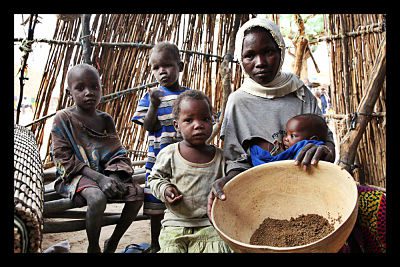
In Rwanda, poverty and hunger continue to pose a major challenge for the rapidly developing country. Based on the UNDP Human Development Index for 2011, the country ranks 166 out of 187 while maintaining one of the highest population densities in Africa. The large population puts a strain on proper healthcare as well as the already limited natural resources of the country. Although the government of Rwanda, together with the World Food Program, has found that nutrition levels and food security have been improving over the last seven years, the situation is still far from optimal.

Some of the major challenges Rwanda faces with regard to poverty and hunger could be solved by foreign aid investments or direct cash donors from developed nations and foreign aid organizations. 83.7% of the population survives on $2 a day or less, and without proper disposable income, it is impossible to support families with proper food, water, and nutrition.

Up to 90% of the population engages in subsistence agriculture. This, combined with the extreme crowding and limited access to land, makes subsistence farming inefficient.

WFP’s country director for Rwanda, Jan Delbaere, weighs in on the topic, explaining that “during 2012, WFP bought 23,000 metric tons of food in Rwanda, mostly for operations in neighboring countries. This is a clear sign that Rwanda is more than self-sufficient for its staple crops. However, households with only a small area of land for cultivation simply cannot afford to access enough nutritious food to live healthy, active lives or to provide for their basic needs from their land alone.”

The WFP remains committed to supporting the government in Rwanda to increase food security and food production programs, and the country itself has chosen to sign the “Comprehensive Africa Agriculture Development Program (CAADP) compact and to secure funding, thus confirming malnutrition and food insecurity as one of the government’s key priorities.” In spite of its food insecurity, Rwanda’s GDP has been growing by 7.2% annually since 2010. With proper investment and aid, these issues can be solved, and the country set further on the right track to stability.

– Sarah Rybak

Source: WFP,Hope in Action
Photo: ESB Blog

June 20, 2013
https://borgenproject.org/wp-content/uploads/borgen-project-logo.svg 0 0 Borgen Project https://borgenproject.org/wp-content/uploads/borgen-project-logo.svg Borgen Project2013-06-20 08:28:292024-05-24 23:56:42Hunger in Rwanda: The Good and the Bad
Advocacy, Children, Developing Countries, Food & Hunger

Nutrition for Growth Summit Combats Hunger

malnutrition
United Nations officials met with key country leaders at the Nutrition for Growth summit held in London last week to discuss pledged funds and political agreements in the fight against global hunger.  Millions of infants and pregnant women are at risk for stunting and deaths from malnutrition; the Nutrition for Growth summit was a key step in securing hope and help in the fight against malnutrition. UN Secretary-General Ban Ki-moon sent a video message confirming the organization’s commitment to ending hunger and malnutrition in all forms worldwide.

One in four children will grow up stunted by chronic malnutrition. In today’s world, this number must be reversed. There is no reason for children to suffer from malnutrition. Commitments of funds and political support will help millions of children and boost the economies of some of the world’s most vulnerable countries. The UN is committed to do whatever it takes to see the goals reached and hunger ended.

The Nutrition for Growth summit brought together leaders from governments, the private, and non-profit sector. It was hosted by the governments from Brazil and the United Kingdom as well as the Children’s Investment Fund Foundation (CIFF). The event resulted in renewed commitments to continue to fight stunting and malnutrition worldwide. Funds pledged at the event exceeded $4 billion.

Stunting in children robs them of their health and their ability to grow up to be productive, contributing citizens. The summit focused on eliminating that prognosis for children. UNICEF also strengthened its desire to invest in fighting malnutrition and to continue to support programs working in over 65 countries to combat malnutrition.

Also signed at the summit was the Global Nutrition for Growth Compact which formalizes commitments to make nutrition a top political and socio-economic priority for donors and countries. It will focus on scientific knowledge, innovation to nutrition, and transparency and monitoring of results. Strong nutrition is key for individuals, nations, and economies to grow and become successful and the Nutrition for Growth summit is another step towards the elimination of global hunger and malnutrition.

– Amanda Kloeppel

Source: UN News Centre

June 18, 2013
https://borgenproject.org/wp-content/uploads/borgen-project-logo.svg 0 0 Borgen Project https://borgenproject.org/wp-content/uploads/borgen-project-logo.svg Borgen Project2013-06-18 07:19:072024-06-10 03:29:02Nutrition for Growth Summit Combats Hunger
Development, Food Security, USAID

No Annual Food Aid and Development Conference

usaid_food_crisis_aid_international_foreign_policy_un_budget_cut_opt

Federal budget constraints are beginning to take a toll on development and food aid efforts for the world’s poor.

After 14 years of meeting annually to discuss global development and food aid, the United States Agency for International Development (USAID) and the U.S. Department of Agriculture (USDA) confirmed this week there will be no International Food Aid and Development Conference (IFADC) in 2013 because of the current federal government budget constraints.

According to Food Business News, the agencies said, because of “U.S. government agencies facing a difficult budget environment and being urged to minimize conference events in light of these budget constraints.”

Previous IFADCs pulled together 700 or more participants from around the world, representing major food assistance program stakeholders. Meetings included representatives from U.N. agencies including the World Food Programme, officials from recipient countries, private charitable organizations, and USDA and USAID staff for the meetings in Kansas City every year.

Instead of multiple days of conference meetings as in previous years, USDA and USAID will replace the Kansas City conference with a one-day public meeting in Washington in November 2013. The meeting will be held as an add-on to the Food Aid Consultative Group meeting.

“We know that this is not a complete substitute for the IFADC and that we will have to be creative and thoughtful in how we organize this event. USDA and USAID will reach out to stakeholders during the planning of the one-day meeting,” conference organizers said.

– Liza Casabona

Source: Food Business News
Photo: Guardian

June 18, 2013
https://borgenproject.org/wp-content/uploads/borgen-project-logo.svg 0 0 Borgen Project https://borgenproject.org/wp-content/uploads/borgen-project-logo.svg Borgen Project2013-06-18 05:17:542021-06-21 17:21:12No Annual Food Aid and Development Conference
Development, Food & Hunger, Food Security

Vaccine Could Limit Cattle Deaths in Africa

Maasai_cattle_fever_opt

A research group in Belgium is developing a new type of vaccine against bovine malignant catarrh fever (BMCF). BMCF is a virus that kills thousands of cattle across the world and specifically has been a major problem for cattle herders in East Africa. In East Africa wildebeest carry the virus and spread the infection to cattle. The disease is often fatal and can infect up to 40% of a heard in any sporadic outbreak. The Maasai people of East Africa, who herd large numbers of cattle, have been hit hard by this disease, losing seven to ten percent of their cattle to BMCF every year.

No vaccines have been found so far, however, researchers at the Faculty of Veterinary Medicine’s Immunology Vaccinology lab at the University of Liege, claim they have altered the BMCF virus so that it does not develop after infection. The original virus causes an uncontrollable division of white blood cells, much like cancer. In the genetically engineered virus, the researchers have managed to stop the production of the protein that leads to this uncontrollable division. Researchers exposed the new virus to rabbits who did not show signs of BMCF and were protected against any other strains of the BMCF virus they came in contact with. Research leader Benjamin Dewals claims, “…we have generated a virus that does not induce BMCF, does not persist in the infected host and protects against a subsequent infection with a virulent virus.”

This study shows promise for the future eradication the BMCF disease, however Dewals recognizes it may take 5 to 10 years to develop a vaccine for cattle specifically. George Russell, a specialist in cattle infections, states, “…such a vaccine will need to be demonstrated in cattle and the protection conferred will need to be evaluated in terms of dosage and duration of protection…” Despite the challenges that lie ahead, this discovery represents a big step forward in the effort to ultimately find a cure for this disease.

– Catherine Ulrich

Source: AllAfrica
Photo: Hope4Africa

June 14, 2013
https://borgenproject.org/wp-content/uploads/borgen-project-logo.svg 0 0 Borgen Project https://borgenproject.org/wp-content/uploads/borgen-project-logo.svg Borgen Project2013-06-14 08:11:372020-06-26 21:35:50Vaccine Could Limit Cattle Deaths in Africa
Development, Food & Hunger, Food Aid, Food Security

3D Printers to End World Hunger?

3D_Printer

NASA recently invested $125,000 in a project aimed to solve the challenges of supplying food in space missions. The project would astronauts to create their own food in space by utilizing 3D printers.

Just as a paper printer shapes ink to form letters, a 3D printer uses different materials to create a 3D object. To produce food for its astronauts in space, NASA is looking to print edible materials with 3D printers, including powdered forms of carbohydrates, proteins, and other nutrients. 3D printers could be beneficial for long space voyages because powdered substances could last up to 30 years.

While NASA may be looking to use 3D food printers for space travel, there is great potential for the use of 3D printers here on Earth, namely to end world hunger. With the long shelf life of food produce by 3D printers, the concern of food being wasted due to spoilage disappears. The powdered forms of the nutrients are also easier to transport because they exist in a more compact state.

The nutrients used in a 3D printer can also be retrieved from unconventional sources. For instance, insects could be used as a source of protein, which the UN has noted recently as a way to fight world hunger. Insects are rich in protein, emit less greenhouse gases than livestock, and are easy to harvest. Whether or not insects are used as the protein source of printed foods, the 3D printer could allow for better transportation and longevity of nutrients, which would help considerably in the fight to end world hunger.

– Jordan Kline

Source: Food and Agriculture Organization of the United Nations,National Geographic,Time Magazine
Photo: Wikipedia

June 14, 2013
https://borgenproject.org/wp-content/uploads/borgen-project-logo.svg 0 0 Borgen Project https://borgenproject.org/wp-content/uploads/borgen-project-logo.svg Borgen Project2013-06-14 04:00:422020-06-26 21:36:503D Printers to End World Hunger?
Food & Hunger, Food Security

What a Waste

Food-waste-Surplus-tomato-global_poverty_world_hunger_opt
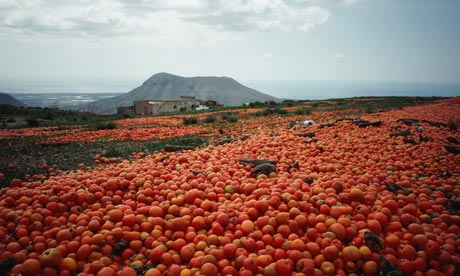
Here’s an interesting stat: one-third of all food grown globally is lost to spoilage and waste. Without any increases in crop yield or technology, 50% more people could be fed by the food already produced.

When faced with the realities of poverty and global hunger, the obvious fix is to produce more. Genetic modification, hybrid-seeds, increased fertilization… These are the solutions that come to mind and are being promoted throughout the world as well as being introduced to developing regions where food shortages are most acute. But in many cases, increased yields due to these methods won’t actually lead to any real gains in production. Not in areas where fruits already rot on the vine due to a lack of pickers to harvest them, or where a lack of serviceable infrastructure prevents farmers from efficiently transporting their product to market.

If this food spoilage and waste could be eliminated, or even reduced, the benefits could far outweigh those of slow, albeit persistent, methods of improving crops and yield. This change though will require a concerted effort. Currently, the majority of agricultural funding is channeled into research and development, with the focus being on production. The cynic could claim this is because the industry has an economic interest in increasing output, as it would lead to increased sales of seeds and other of their own products. But regardless of the reason, it is a route that needs exploring.

On February 19th, the U.S. State Department hosted a conference on ‘Food Security and Minimizing Post-harvest Loss: Markets, Applied Research, and Innovation.’ This conference was a positive step, as it demonstrated the administration’s acknowledging the seriousness of this issue, while also bringing together scientists and politicians from all over the world to address it. More steps like this need to be taken, and funding needs to be provided for research into food storage. If we can save even a portion of that lost third, the gains will be immediately apparent.

– David Wilson
Source: Mother Earth News
Photo: Guardian

June 13, 2013
https://borgenproject.org/wp-content/uploads/borgen-project-logo.svg 0 0 Borgen Project https://borgenproject.org/wp-content/uploads/borgen-project-logo.svg Borgen Project2013-06-13 04:00:382020-06-26 21:29:43What a Waste
Food Aid, Human Rights, Refugees and Displaced Persons

The Life of a Refugee

Last week the U.N. office of the High Commissioner for Refugees (syrian-child_refugee_war_syria_global_poverty_development_undp_optUNHCR) said more than 1.5 million Syrian civilians had fled their country to escape the civil war that had been raging there for almost two years. Dan McNorton, a spokesman for the UNHCR, said the actual number of refugees is probably much higher due to concerns some Syrians have regarding registration. In addition, approximately 4 million people have been internally displaced since the beginning of the conflict. So what does this mean for the Syrian people who are now refugees? What can be expected in the life of a refugee?

The UNHCR defines a refugee as a person who,

owing to a well-founded fear of being persecuted for reasons of race, religion, nationality, membership of a particular social group or political opinion, is outside the country of his nationality, and is unable to, or owing to such fear, is unwilling to avail himself of the protection of that country.

Like the Syrian refugees, many are often caught between a rock and a hard place. If they stay, they put themselves and their families in serious danger. If they flee, instability and uncertainty greet them at every turn. The UNHCR was created in 1950 to lead and coordinates international efforts to protect and assist people facing this difficult decision.  They protect the basic human rights of refugees and aim to ensure all refugees are given the opportunity to seek asylum in another country.

The starting point for many is often a UN refugee camp, intended to create a safe haven until they can begin their lives anew. Unfortunately, it is all too often the end of the road as well. Those who live in the camps are usually provided basic life sustaining necessities, but many will never leave. They become trapped in a state of dependence on these camps.

Currently, the largest and oldest camp (designed to house around 90,000 people) is home to almost half a million people, mostly from Somalia. It was intended to be a temporary solution for the influx of refugees from Somalia when the country descended into civil war more than 20 years ago, but the remoteness of its eastern Kenyan location and threats to security have prevented the UNHCR from further developing the camp for those who have permanently settled there. Education and sanitation is limited and the camp is extremely overcrowded.

The Syrian refugees have fled mostly to the neighboring countries of Jordan and Lebanon. Just last week Oxfam issued an urgent appeal for funds to assist those who are fleeing the conflict. Rick Bauer, the regional humanitarian coordinator for Oxfam said, “The sad reality is that the vast majority of Syrian refugees are not going home soon. He added that Oxfam is “starting to really worry about the health of Syrian refugees”.

“The aid effort must be properly funded and focused on providing refugees with affordable and decent places to stay, where they can live with dignity. That’s priority number one for refugees and host communities alike,” he said.

Priority number one indeed. But for the sake of Syrians who find themselves in a refugee camp, we hope they do not stay long.

– Erin N. Ponsonby

Source: CNN, UNHCR, Raw Story
Photo: MWB

June 9, 2013
https://borgenproject.org/wp-content/uploads/borgen-project-logo.svg 0 0 Borgen Project https://borgenproject.org/wp-content/uploads/borgen-project-logo.svg Borgen Project2013-06-09 04:00:362024-06-10 03:27:21The Life of a Refugee
Food Aid, Food Security

Achieving Food Security in South-East Asia

South_east_aisa_farming_opt

Home to 600 million people, the region of South-East Asia is a source of precious resources and a strong work force. Still, many suffer from hunger and malnutrition, which is why it is important to achieve food security in this region. Boosting the agriculture sector in this region is essential to economic growth and development. With the growing obstacles of climate change and depletion of natural resources it is important to focus on creating long-lasting policies and reform on the agriculture sector of this region.

However, farmers are going to need a lot of help from the government to achieve food security in this region. Farms require investment in knowledge and tools as well as having a say in the government. In South-East Asia most farms are very small, usually 2 hectares of land or less, and run primarily by women. The government should focus on policies that support farmer’s organizations, empower and educate women as well as raise awareness about property rights.

World leaders have begun to take steps to implement some of the policies stated above at the World Economic Forum on East Asia taking place in Myanmar. They have proposed a new initiative called New Vision for Agriculture, which is trying to facilitate a public-private collaboration to achieve food security as well as environmental stability. It urges for an increase in investment in agriculture to boost economic growth. It highlights innovative ways for the public and private sectors to work together to achieve the best outcome. Exceptional effort from all actors is necessary to reach the common goal of food security in South-East Asia.

– Catherine Ulrich

Source: WE Blog
Photo: Trend Southeast

June 8, 2013
https://borgenproject.org/wp-content/uploads/borgen-project-logo.svg 0 0 Borgen Project https://borgenproject.org/wp-content/uploads/borgen-project-logo.svg Borgen Project2013-06-08 04:30:122020-06-27 03:32:35Achieving Food Security in South-East Asia
Development, Food & Hunger, Food Security, USAID

Partnership to Develop Climate-Resilient Crops

three-nations-create-climate-resilient-crops
The United States, Australia, and India have come together to develop climate-resilient varieties of rice and wheat that make up two of the “big three” crops that are imperative to feeding people worldwide. The United States Agency for International Development (USAID) is supporting a new public-private research partnership between the Australian Centre for Plant Functional Genomics (ACPFG) and India’s Vibha Agrotech.

With ACPFG’s unique gene technologies that are already in use and Vibha’s field evaluation and rice transformation capabilities, farmers will acquire new rice and wheat varieties that will allow more stable crop production when facing sudden drought and evolving salt-water intrusion. The most successful varieties evaluated will eventually be transferred into the varieties that the farmers already grow.

While the research and crop growth will take place in Australia and India in the preliminary stages, the technologies will eventually be available to developing countries globally. The climate-resilient crops will be most useful in countries where climate change and subsequent stresses impact cereal yields and will help to ensure that farmers will have a good harvest despite these unpredictable climate changes.

The partnership is part of Feed the Future, the US Government’s global hunger and food security initiative. According to Dr. Julie Howard, USAID’s Chief Scientist in the Bureau for Food Security and Senior Advisor to the Administrator on Agricultural Research, Extension and Education, in order to ensure food security, global food production must increase by 60% by 2050. Unfortunately, climate change is already affecting yields globally. “That means we must use all the tools available to us to grow more food on less land and with less water,” she said.

– Kira Maixner

Source: Business Standard
Photo: Rising Pyramid

June 1, 2013
https://borgenproject.org/wp-content/uploads/borgen-project-logo.svg 0 0 Borgen Project https://borgenproject.org/wp-content/uploads/borgen-project-logo.svg Borgen Project2013-06-01 05:43:302024-12-13 17:49:22Partnership to Develop Climate-Resilient Crops
Advocacy, Food & Hunger

Just Falafel & World Food Programme to Raise $1M

falafel

A fast food retail chain in the UAE, Just Falafel, has joined forces with the World Food Programme (WFP) to raise $1 million over the next three years. The money will go to fight hunger worldwide.  Over the next three years, $500 will be donated to the WFP for every new Just Falafel franchise opening worldwide. Franchisees will be encouraged to match the $500 donation, doubling the impact and allowing the WFP to feed twice as many people.

Business predictions estimate over 1,000 franchises will open before the end of 2016. With the matching donation program from both Just Falafel and the franchisees, the goal of raising $1 million is very much in reach.  Nearly 900 million people worldwide do not have enough to eat to lead active, healthy lives.  This makes hunger and malnutrition the number one health risk worldwide and gives organizations like Just Falafel a reason to contribute to fighting hunger.

As estimates report 1 in 8 people in the world are malnourished and many of these in the Middle East and Asia, Just Falafel has a personal connection to the cause.  Giving back to their communities is deeply rooted in the values and mission of Just Falafel. The partnership with the WFP takes that connection one step further and formalizes their commitment to fighting hunger.

WFP’s regional head of private partnerships and business development, Ashraf Hamouda, commended Just Falafel for their initiative and act of generosity to help fight hunger.  The WFP is working hard to end hunger, but they can’t do it alone and partnerships like this allow them to continue to fight.  Social Media will be a major player in Just Falafel’s strategy to raise awareness as well as promote new franchisees.

– Amanda Kloeppel 

Source: Trade Arabia

May 31, 2013
https://borgenproject.org/wp-content/uploads/borgen-project-logo.svg 0 0 Borgen Project https://borgenproject.org/wp-content/uploads/borgen-project-logo.svg Borgen Project2013-05-31 04:30:462020-06-26 14:23:20Just Falafel & World Food Programme to Raise $1M
Page 74 of 78«‹7273747576›»

Get Smarter

  • Global Poverty 101
  • Global Poverty… The Good News
  • Global Poverty & U.S. Jobs
  • Global Poverty and National Security
  • Innovative Solutions to Poverty
  • Global Poverty & Aid FAQ’s
Search Search

Take Action

  • Call Congress
  • Email Congress
  • Donate
  • 30 Ways to Help
  • Volunteer Ops
  • Internships
  • Courses & Certificates
  • The Podcast
Borgen Project

“The Borgen Project is an incredible nonprofit organization that is addressing poverty and hunger and working towards ending them.”

-The Huffington Post

Inside The Borgen Project

  • Contact
  • About
  • Financials
  • President
  • Board of Directors
  • Board of Advisors

International Links

  • UK Email Parliament
  • UK Donate
  • Canada Email Parliament

Get Smarter

  • Global Poverty 101
  • Global Poverty… The Good News
  • Global Poverty & U.S. Jobs
  • Global Poverty and National Security
  • Innovative Solutions to Poverty
  • Global Poverty & Aid FAQ’s

Ways to Help

  • Call Congress
  • Email Congress
  • Donate
  • 30 Ways to Help
  • Volunteer Ops
  • Internships
  • Courses & Certificates
  • The Podcast
Scroll to top Scroll to top Scroll to top