• Link to X
  • Link to Facebook
  • Link to Instagram
  • Link to TikTok
  • Link to Youtube
  • About
    • About Us
      • President
      • Board of Directors
      • Board of Advisors
      • Financials
      • Our Methodology
      • Success Tracker
      • Contact
  • Act Now
    • 30 Ways to Help
      • Email Congress
      • Call Congress
      • Volunteer
      • Courses & Certificates
      • Be a Donor
    • Internships
      • In-Office Internships
      • Remote Internships
    • Legislation
      • Politics 101
  • The Blog
  • The Podcast
  • Magazine
  • Donate
  • Click to open the search input field Click to open the search input field Search
  • Menu Menu

Archive for category: Food Security

Agriculture, Food Security, Global Poverty

Eliminating Food Scarcity in Nigeria With Mechanized Agriculture

Food Scarcity in NigeriaAgriculture is the lifeblood of Nigeria. The country has vast fertile land, perfect for raising livestock and cultivating crops such as yams, maize and cocoa. Agriculture makes up more than 20% of the country’s GDP and farming is the number one source of employment. Nigeria’s agricultural output potential is massive, but it is rarely realized due to high poverty rates.

However, this is changing. Through recent programs, mechanized agriculture is reaching Nigeria’s hardworking farmers, enabling them to vastly increase their yields. With the continued success of these programs, food scarcity in Nigeria is set to decrease exponentially.

The Unique State of Nigeria’s Agriculture

Out of Nigeria’s population of 232 million, more than 60% are multidimensionally poor. This means that farmers are forced to operate on a community scale rather than expanding their work to a commercial level. About 80% of Nigeria’s farmers operate on this smaller scale and still, they account for more than 90% of agricultural output.

Usually, farmers in Nigeria can barely provide for themselves and their communities. Their work is essential, but never enough. The domestic demand for farm products in Nigeria is so large that, despite being Africa’s top rice producer, the country still imported 2.9 million tons of rice in 2014. As a result of poverty, Nigerian farmers rarely have access to basic modern farming inputs, such as fertilizer, pesticides or mechanization, including tractors.

How Mechanized Agriculture Is Making a Difference

In 2018, a deal was made between John Deere, the American tractor company, its distributor, the Tata Group and Alluvial, a Nigerian agricultural company that works with smallholder farmers. Together, the two companies formulated an agreement that has been revolutionary for Nigeria’s small farmers.

At Alluvial’s request, John Deere has agreed to begin leasing 300 tractors to smallholder farmers of Nigeria within the Niger Delta region, an area of significant food scarcity that is home to more than 100,00 farmers. These 300 tractors are now available to lease at only $100 per acre of land for use in their everyday farming duties.

With this project, Alluvial’s goal is to unite Nigeria’s smallholder farmers into a commercial workforce. Furthermore, the aim is to supply them with the materials needed to expand their agricultural operations. Alluvial’s owner, Dimieari Von Kemedi, hopes to raise these farmers to a level where their crops can be sold across Nigeria and, eventually, beyond Africa.

What Is Next?

The Nigerian government has begun investing more in its farmers. In May of 2018, the government bought 10,000 more tractors to lease to farmers. Alluvial’s initiative has already inspired more change than was ever anticipated. 

And even now, the initiative continues. Nigeria’s federal government has been continuously purchasing more tractors and other farming equipment to sustain agricultural growth. In September of 2025, the government distributed 2,000 more tractors and 9,000 other pieces of machinery.

Many people in Nigeria are still going hungry and farmers are still struggling to keep up with demand. But this initiative, which began in 2018, has introduced a potential solution that is still being implemented today. As long as projects like this continue, positive change is inevitable.

– Lucas Cain

Lucas is based in Pittsburgh, PA, USA and focuses on Good News and Technology for The Borgen Project.

Photo: Pexels

April 9, 2026
https://borgenproject.org/wp-content/uploads/borgen-project-logo.svg 0 0 Hemant Gupta https://borgenproject.org/wp-content/uploads/borgen-project-logo.svg Hemant Gupta2026-04-09 01:30:532026-04-08 12:32:19Eliminating Food Scarcity in Nigeria With Mechanized Agriculture
Food Security, Global Poverty, Sustainable Development Goals

SDG 14 in South Africa: Fisheries and Sustainability

SDG 14 in South AfricaMore than 3 billion people depend on the ocean for food and work. Nearly 60 million people have direct employment in fisheries and millions more work in processing and distribution. Fish and seafood account for more than 20% of the dietary protein intake for more than 3 billion people worldwide. Protecting these marine resources is the primary focus of Life below water (SDG 14), one of the United Nations’ 17 goals in the 2030 Agenda.

In South Africa, where unemployment rates are among the highest globally and poverty rates remain widespread, the health of marine ecosystems provides an undeniable economic opportunity. Efforts to protect life below water and reach SDG 14 in South Africa have not only become environmental priorities, but a broader strategy to support livelihoods for all generations.

Marine Resource Management Challenges

South Africa’s marine environment continues to face growing pressure through the exploitation of marine resources, changing weather patterns and plastic pollution. Overfishing remains one of the most significant threats to ocean ecosystems, with 34% of South Africa’s fish stocks either depleted or heavily depleted. Nearly half of South Africa’s marine sources are already fully exploited with another 15% overexploited, putting substantial pressure on key economic species like rock lobster and tuna. Local marine ecosystems are being reshaped along the country’s expansive coastline, driven by changing weather patterns. Fisheries are highly dependent on ecosystem health as the food web drives biodiversity and biomass.

Sardines play a crucial role in the region’s marine food web supporting a large portion of the country’s pelagic fishing industry. However, sardine biomass declined 25% of its historical maximum since 2004 along South Africa’s west coast, significantly impacting fish stocks up the food chain. As populations decline, annual catch quotas are reduced with significant decreases in employment opportunities in fisheries, processing plants and export sectors.

Only 46% of South Africa’s 122 million tons of plastic waste is recycled, leaving an estimated 79,000 tons every year to enter rivers, oceans and the environment. This makes South Africa one of the largest contributors of land-based marine plastic pollution. Beyond plastics, 86% of sewage treatment did not meet safety standards and continues to release effluent contaminants into rivers. These environmental pressures have consequences beyond biodiversity by threatening coastal economies that rely heavily on ocean resources. With unemployment in South Africa reaching around 32%, fisheries and marine tourism provide important sources of income.

How SDG 14 Initiatives Are Combating Challenges

In response to SDG 14, South Africa continues to invest in research and collaboration efforts to improve scientific understanding, expand marine protection efforts, and promote sustainable resource management. Most notably, South Africa has increased marine protected areas from 0.4% to 5.4% of its Exclusive Economic Zone, protecting more than 1.5 million hectares of marine critical habitat. 

Researchers at the University of Cape Town play a key role in this effort by tracking ocean conditions to inform fisheries policies. One major initiative is the Marine and Antarctic Research for Innovation and Sustainability (MARIS) program. The Benguela Current system alone supports fisheries valued at more than $1 billion annually, highlighting the importance of research programs such as MARIS in guiding sustainable marine policy. Another key focus is the implementation of ecosystem-based fisheries management in the Benguela Large Marine Ecosystem through three primary objectives:

  1. Capacity and skills for research, management and compliance
  2. Sufficient finances for research, management and monitoring 
  3. Effective data management between the monitoring and legal enforcement teams

The nutrient-rich Benguela current supports hundreds of thousands of livelihoods across southern Africa. To ensure sustainable fisheries policies and regulations within the marine park is critical. As Melrus managing director Tomas Kjelgaard states: “It’s very important for us to have a long-term business. If we overfish like they have done in many places during the last 20 years, then we don’t have a business the day after tomorrow.” To protect the livelihoods of future fishermen, continued cooperation between government agencies, local stakeholders and neighboring countries such as Namibia and Angola is essential.

Government-led education campaigns continue to spearhead community-driven initiatives in South Africa. Particularly, coastal cleanup programs removed 111.85 tonnes of waste from beaches and waterways during volunteer cleanup campaigns in 2024 and has employed more than 200,000 volunteers across the country. Additionally, academic programs such as SEAmester have helped train more than 500 students from 15 institutions, supporting next generation of marine scientists and securing employability across the sector.

The Future of South Africa’s Life Below Water

As South Africa continues to strive towards reaching the SDG 14, oceanic health and prosperity are becoming increasingly important toward reducing poverty and supporting sustainable economic development in South Africa. Despite universal challenges of overfishing, the changing climate and pollution, ongoing targeted research, informed policy decisions and community initiatives show that progress is possible. With expanding marine protected areas, stronger fisheries management, and education programs training the next generation of ocean stewards, South Africa is charting a course toward a healthier ocean and stronger coastal communities.

– Alyssa Forget

Alyssa is based in Dundas, Ontario, Canada and focuses on Good News for The Borgen Project.

Photo: Unsplash

April 1, 2026
https://borgenproject.org/wp-content/uploads/borgen-project-logo.svg 0 0 Jennifer Philipp https://borgenproject.org/wp-content/uploads/borgen-project-logo.svg Jennifer Philipp2026-04-01 01:30:322026-03-31 12:22:24SDG 14 in South Africa: Fisheries and Sustainability
Agriculture, Food Security, Global Poverty

Food Systems in Russia: A Taste of Success

Food Systems in RussiaRussia has 11 time zones, 140.13 million people and 17.1 million km2 of territory, which is an incredible logistical challenge but one that the Russian people have faced with optimism and endeavor. Ensuring that people’s food needs are met is one of the core commitments of the state and Russia has enshrined this in a dedicated Food Security Doctrine (as of 2010). In a world of struggle and setbacks, take a look at these feats regarding food systems in Russia for inspiration and resolve.

Key Statistics Regarding Food Systems in Russia

  • Russia covers 95% of its grain demand from homegrown produce.
  • The state provides significant monetary and institutional support for agriculture; this has grown to R300 billion a year (2018 figures)!
  • The ruble value of domestic food production has gone up in leaps and bounds since 2000, with roughly a 600% increase by 2018; output has matched economics, with domestic production showing significant success (e.g. meat has doubled).
  • The focus is on sustainable development with a ban on all GMO products and seeds, except for research in the laboratory.

What’s the History?

Following the breakdown of the Soviet Union, Russia experienced a period of collapse internally. Mass poverty and malnutrition struck the population. When it came to food production, output declined in the organized farms sector and shifted to home production and imports: by the mid-1990s, Russia’s cities depended on foreign imports for more than 80% of all meat stocks, for instance.

People also became vulnerable to price increases in the international trading system. What happened is that as imports became progressively more expensive, so domestic producers became progressively more competitive. This was the germination of domestic advantage and recovery, but state aid hugely bolstered it following the falling out from 2014 events in Crimea. For the first time in post-Soviet history, Russia had the impetus and will to bring about change from within – on a massive scale. Investment had already started in 2000, with a strategy for agricultural development, but now it was a critical need.

The Russian Federation itself “[r]ecognizes that hunger and malnutrition are the perverse manifestations of persistent, structural poverty and inequality, and recognizes the need to end poverty and hunger in all their forms and dimensions.”

The Food Security Doctrine

Interwoven in all this is the Food Security Doctrine, which at its heart commits to self-sufficiency; quality of life through reliable provision of food; sustainable development and modernization of the agriculture and fisheries sectors, including infrastructure; good management of the environment; food safety, including adequate regulation, as well as sanitary, epidemiological, veterinary and phytosanitary surveillance; specialist skills and sector training. It presents extraordinary ambition and the results have followed: currently self-sufficiency measures show that Russia produces 165.6% of its necessary grains (making it an exporter); 100.1% of meat and meat products; 84% of milk and dairy products; and 97.4% on eggs.

The Food Bank Rus Charity

Where poverty does exist, NGOs are working to fill the gap. The Food Bank Rus charity is an organization that collects food and products and distributes them to people in need: people who have had to leave their homes, living in isolation, or simply going without. That includes families in difficult situations or pensioners. It also helps people in emergency situations such as those suffering natural disasters or accidents. About 673,000 kg of food and essential goods were donated to refugees from Donetsk and Lugansk in just a few months in 2022.

Looking Ahead

Food systems in Russia are protected through a highly organized institutional set-up, with action on assessment of food needs, the needs of farmers (especially large farms), and distribution networks to get food out there to people who need it. It is especially laudable in a country with challenging climatic conditions and a world where people profit from food. The key goals of “safe, quality and affordable” products are good news for the nation. So, whether it’s blini, pelmeni or beef Stroganoff, you know that food miles are minimal, food safety is paramount and the government is making sure you have food for the future.

– Gergana Manassieva

Gergana is based in Bristol, UK and focuses on Good News and Politics for The Borgen Project.

Photo: Wikimedia Commons

March 19, 2026
https://borgenproject.org/wp-content/uploads/borgen-project-logo.svg 0 0 Jennifer Philipp https://borgenproject.org/wp-content/uploads/borgen-project-logo.svg Jennifer Philipp2026-03-19 01:30:512026-03-18 13:08:06Food Systems in Russia: A Taste of Success
Food Security, Global Poverty, Hunger

Hunger in Kericho: Nishkam Projects’ Feeding Program

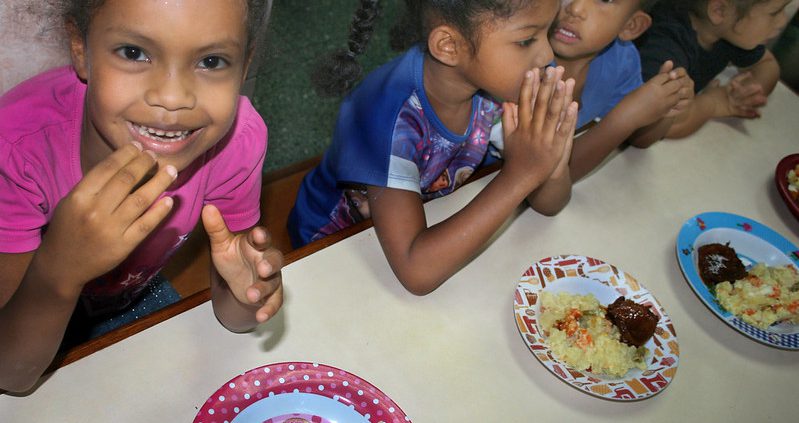
Tackling Hunger in Kericho: Lessons from Nishkam Projects’ Feeding Programme For a young child in Kericho, Kenya, tackling hunger can make the difference between success and opportunity within the education system or being trapped in a cycle of poverty. For many, days start without breakfast and school meals may be their only meal in a day, highlighting the urgent need for these meals to be fulfilling and regular. Without this, learning becomes more difficult, attendance dips and concentration wanes, reinforcing cycles of disadvantage that children themselves have no power to escape.

This systemic challenge is reflected in recent regional data. Kenya’s regions of Kericho and Tharaka Nithi experienced sharp increases in poverty from 2021 to 2022 and the figures have been slowly climbing since. Poverty in Kericho County increased from 39.8% in 2021 to 47.8% in 2022.

Time and time again, a pattern emerges where children are frequently the first to suffer the consequences of this economic instability.

The Importance of School Meals

Simply put, school meals can hold the key to unlocking a truly accomplished education and a pathway out of poverty. School meal programmes protect households from hunger and mitigate the effects of rising food costs by offering a consistent supply of food at no cost to families, saving 10–20% of their yearly food expenses.

The development of jobs is another indication of the economic potential. Globally, for every 100,000 students fed, school lunch programs provide around 1,591 cooking job opportunities. Every $1 invested in feeding programs yields $7 to $35 in economic benefits, making them widely recognized as high-return investments in decreasing poverty.

Hungry children are less likely to attend school on a regular basis and are more likely to fall behind when they do, according to several studies. Hunger impairs focus, memory and engagement, which undermines the very education that would provide a means of escaping poverty. Therefore, food insecurity not only reflects existing inequality; it actively perpetuates it. School meals are increasingly understood as being much more than a simple plate of food.

Nishkam Projects Kericho

Against this backdrop of rising food insecurity, Nishkam Projects Kericho has become a locally based response to child hunger that prioritises community and humanity. The organisation collaborates with local communities and schools to provide children from low-income homes with regular meals so that hunger will not deter them from attending school.

The Sikh values of communal duty and sewa (selfless service) have shaped a larger humanitarian legacy that encompasses Nishkam’s work in Kericho. Instead of seeing hunger as a temporary crisis, the organization approaches it as a structural issue that requires ongoing dedication and long-term presence.

This philosophy is articulated by Bhai Sahib Mohinder Singh Ji, Chairman of the Guru Nanak Nishkam Sewak Jatha and philanthropist, recently honored by Kipsigis elders in Kericho for his leadership in peace and service.

He explains the deeper motivation behind the initiative: “When people become disconnected from God, they become disconnected from creation — and when that happens, compassion disappears.” Nishkam Projects’ work seeks to bring back these connections, foster community and place compassion at the forefront of action. By incorporating its feeding program within educational institutions such as Highlands Primary School, the organization promotes a broader ethic of care while addressing pressing nutritional needs.

It centers around notions of mutual responsibility. Poverty exists when wealth is not shared, and inequality increases when individuals and communities no longer feel obligated to one another. As Bhai Sahib Ji illustrates: “When people lose that connection, greed takes over. They want more and more, and they stop wanting to share.”

In a world where widespread poverty and food waste coexist, this insight resonates strongly. Each year, a significant amount of food is wasted, despite the fact that millions of children lack access to even one consistent meal. By basing its feeding programs on seva, Nishkam Projects frames hunger as a societal issue that can be addressed through collective action.

Positive Impacts

The classroom at Highlands Primary School in Kericho demonstrates the effects of regular school meals. As Bhai Sahib Mohinder Singh explains: “Children are the most vulnerable, and they are our future. If you want a good future, you must look after the children.” He adds that hunger affects children with particular force because of their dependence on others. “If there is no compassion, they are the first to suffer.” By embedding feeding within the school day, Nishkam’s programme protects children from the immediate effects of food insecurity while also supporting long-term development goals.

A basic daily meal acts as a stabilising factor, supporting education, strengthening households and helping interrupt cycles of hunger that can pass from generation to generation. Nishkam Projects Kericho sees education as the key to long-term development, while feeding programs address urgent hunger. In this way, food serves as a foundation rather than an endpoint. It stabilizes children’s lives so learning, growth and future opportunities become possible.

Without education, efforts to alleviate hunger risk becoming recurrent. With it, communities can begin to escape chronic poverty. Bhai Sahib Mohinder Singh emphasizes that “good education, value-led education,” must accompany material support.

The Principle of Langar

This legacy of sharing food is embedded at the heart of another Sikh tradition: Langar. A centuries-old practice, Guru Ka Langar began in Punjab in the fifteenth century by Guru Nanak Dev Ji. Langar embodies the Sikh virtues of sharing, community, inclusivity and the fundamental oneness of mankind.

Food is prepared collectively, shared freely and consumed side by side, with no distinction between those who give and those who receive. As Bhai Sahib Ji explains: “We prepare langar and everyone sits in the same line, at the same level, sharing the same meal.” By eliminating social status symbols, langar reframes food distribution as a gesture of solidarity rather than charity. No hierarchy places one group above another. Instead, the shared meal affirms Bhai Sahib Ji’s idea: “The wealthy person and the poor person are brothers.”

In the context of tackling hunger in Kericho, this approach carries particular significance. Food insecurity is often associated with stigma, reinforcing feelings of shame and exclusion among those who are struggling. By maintaining dignity and encouraging a sense of belonging, Langar actively counters this trend.

By basing its feeding programs on the philosophy of langar, Nishkam Projects provides more than just food. It provides a framework for addressing poverty that prioritizes equality, respect and shared humanity.

Nishkam Peace Festival, Kericho

Beyond schools and feeding programs, Nishkam’s dedication to ending hunger in Kericho reaches into the community’s broader social fabric.

This was particularly visible during Kericho’s Nishkam Peace Festival, when children from different schools gathered for a day of performances. Spoken-word, dance and music brought families and community members together.

The langar practice was central to the celebration. A free community meal, prepared and served in the same spirit of equality that guides Nishkam’s broader work, was extended to all children. The reasoning behind such initiatives is straightforward, as Bhai Sahib Ji observes: “Helping others becomes natural if we see all of humanity as one family.”

The Peace Festival in Kericho demonstrated how community, culture and langar can come together to promote harmony.

Looking Ahead

The demand for solutions that address both the material and social dimensions of poverty continues to grow. Nishkam Projects Kericho illustrates how combining values-driven action with practical programs can support children and communities facing food insecurity.

– Prubleen Bhogal

Prubleen is based in London, UK and focuses on Good News and Politics for The Borgen Project.

Photo: Needpix

March 14, 2026
https://borgenproject.org/wp-content/uploads/borgen-project-logo.svg 0 0 Precious Sheidu https://borgenproject.org/wp-content/uploads/borgen-project-logo.svg Precious Sheidu2026-03-14 07:30:472026-03-13 13:29:51Hunger in Kericho: Nishkam Projects’ Feeding Program
Food Security, Global Poverty

Innovations in Poverty Eradication in Madagascar

Poverty Eradication in MadagascarMadagascar is a unique and vibrant environment that contains some of the most exotic creatures in the world and the people are just as fascinating as the animals; they embrace nature and live off the land. But in contrast to the rich nature and culture, food security and living conditions in Madagascar are far from ideal for most of the population.

Despite Madagascar’s unparalleled biodiversity, factors such as deforestation, changing weather patterns, natural disasters and poor economic conditions have ravaged the land. Around 71% of Madagascar’s population lives below the poverty line. However, through new projects and initiatives, there have been plenty of innovations in the journey to eradicate poverty in the country. Here are three recent innovations in poverty eradication in Madagascar.

A New Scientific Approach To Increasing Food Availability

Poverty in Madagascar is harming wildlife as much as the people, especially the coral reefs. Overfishing has immensely decreased the fish population, which has left algae unchecked. Without fish to control the algae, it has overgrown the reefs and corals. Without the coral reefs, the fish lose their habitat where they sleep, eat and find protection from predators.

But scientists now have a new, creative solution to tackle this issue. Emma Gibbons is the Executive Director of Reef Doctor, a U.K.-based nonprofit stationed in southwest Madagascar. Gibbons and Reef Doctor are leading a team that aims to increase the fish population by building coral reefs in the Bay of Ranobe. Here is how they do it:

First, the team drops large pieces of limestone into the water. Then, they plant stacks of flat stones called ARMS (autonomous reef monitoring structures) in real coral reefs to accumulate coral, sponges, algae and other reef life. Then, they move the ARMS to the constructed reefs, and the life begins to spread. 

As of October 2025, Emma Gibbons’ team has successfully constructed two of these artificial reefs. Evaluations of these reefs detected hundreds of species thriving within them. The reefs have accumulated life, helping sea life repopulate and bringing more food to the people of Madagascar.

Reef Doctor’s work in Madagascar has created hope for those living on the coast, because for these people, fishing is life. Without as many fish to catch, more than 50,000 fishers are left with a shortage of food and income. This is disastrous for the economy, too; fishing on the coastline of Madagascar produces 5-7% of the national GDP. While this issue persists, Reef Doctor’s work is still an extremely positive development in the fight for poverty eradication in Madagascar.

Gfoundation Prepares To Dispatch Surgeons To Aid in Health Crisis

Gfoundation is a nonprofit organization founded in South Korea to partner up with churches and local organizations across the globe to take on global issues like poverty. Since 2019, they have worked in developing countries like Ethiopia, Mongolia, Namibia and Madagascar to distribute goods, offer education, and provide free health care to those who need it the most.

Gfoundation’s most notable work in Madagascar is its Doctors for Doctorless Program (D4D), which targets Madagascar’s health care crisis. Dr. Jae-Hoon Lee is a surgeon with an extensive resume of activism work in Madagascar, and he is the one responsible for the D4D program, a three-year initiative developed for the Madagascar Government.

This program involves sending qualified doctors and surgeons to underprivileged communities to ensure citizens are no longer dying in preventable ways. These doctors will primarily focus on reducing deaths from appendicitis and C-sections. So far, Dr. Jae-Hoon has worked with the National Institute of Public and Community Health (INSPC) to turn this program from an idea to a reality. 

Currently, 20 D4D doctors are trained and ready to help the people of Madagascar, but Gfoundation is still seeking donations so they can purchase ultrasound machines, so these doctors are yet to be dispatched.

New Collaborative Methodology Aims To Improve Infrastructure

In 2024, Madagascar, in collaboration with Bhutan, Chile and Tonga, started development of the Global Methodology for Infrastructure Resilience Review. This methodology is a five-step framework for creating infrastructure that can resist poverty and natural disasters. A detailed game plan to strengthen infrastructure is a game-changer for Madagascar, because natural disasters are a huge cause of the high poverty rate. Madagascar’s infrastructure is hit with roughly $100 million USD worth of damage every year, and right now, the government cannot keep up with damage repair.

The five-step plan is as follows:

  • Stakeholder Mapping: The most influential establishments in society map out a plan for improvement.
  • Review of Policies: Rewrite obsolete regulations and incorporate more informed disaster relief strategies.
  • Identify Vulnerabilities: Study the weakest points of the infrastructure and test potential new infrastructure.
  • Principles for Resilient Infrastructure: Assess the current level of infrastructure resilience and create rules for implementing improvements.
  • Developing a Plan: Use research and data collection to assign tasks and execute a plan.

This process was implemented in 2024 and rural developers in Madagascar have since use it to ensure that all new infrastructure is much more resilient to disasters.

Looking Ahead

Though conditions remain difficult for poverty-stricken communities across the globe, progress is occurring every day. These three examples are proof that poverty eradication in Madagascar is ever-progressing. Madagascar’s fascinating culture and diversity aren’t going anywhere as long as efforts stay diligent.

– Lucas Cain

Lucas is based in Pittsburgh, PA, USA and focuses on Good News and Technology for The Borgen Project.

Photo: Unsplash

March 5, 2026
https://borgenproject.org/wp-content/uploads/borgen-project-logo.svg 0 0 Jennifer Philipp https://borgenproject.org/wp-content/uploads/borgen-project-logo.svg Jennifer Philipp2026-03-05 01:30:102026-03-04 12:01:04Innovations in Poverty Eradication in Madagascar
Developing Countries, Food & Hunger, Food Security, Global Poverty

Boosting Food Security: The Golden Yolk Project in the Bahamas

The Golden Yolk ProjectThe Bahamas, an island country situated in the Atlantic Ocean, comprises approximately 700 islands and has a population of 399,440 as of 2023. With a tropical climate all year round due to the Gulf Stream, the Bahamas’ population continues to suffer from food malnutrition. The Golden Yolk Project initiative involves increasing sustainable egg production, boosting food security, decreasing malnutrition rates and improving employability rates in the country. It is a government-invested scheme which targets lower-middle-income families across the Bahamas.

Malnutrition Across the Bahamas

A very small number of the food consumed in the Bahamas is naturally grown and produced across the region, meaning the population is highly reliant on imported food sources. According to the Global Nutrition Report, obesity rates across the Bahamas are considerably high, with 41% of women (above the age of 18) and 27.4% of men living with obesity. According to the International Trade Administration, the Bahamas imports almost 90% of its food, totaling around $1 billion a year.

These include meat, beef, dairy, eggs, fruit, vegetable juices and oil products. These foods are highly processed and have led to unhealthy dietary challenges. Due to rising and fluctuating prices of imported food, low- and middle-income families are facing food insecurity. Hands for Hunger reports that one in 10 people in the Bahamas lives below the poverty line and experiences extreme food insecurity.

The Golden Yolk Project

Hon. Clay Sweeting (former Minister of Agriculture, Marine Resources and Family Island Affairs) launched an egg production project in February 2023. The initiative aims to boost egg production across the Bahamas so the country can achieve sustainable and affordable access to food. According to the Regional Statistics Caribbean Community (CARICOM), the Government of the Bahamas invested more than $15 million in the project to:

  • Boost annual egg production and restrict imported eggs
  • Reduce malnutrition rates
  • Provide employability opportunities
  • Increase agricultural production rates through new infrastructural development

Ongoing Work/Targets

  • Implementation Across Islands: The project will be carried out on 12 islands in the Bahamas: Grand Bahama, Abaco, Bimini, Berry Island Andros, Eleuthera, Exuma, Cat Island, San Salvador, Long Island, Ragged Island and Inagua.
  • Job Creation: The project will create a total of 90 jobs, 51 of which will be across the islands.
  • Construction of a New Feed Mill: The government will finance a new state-of-the-art feed mill. A feed mill is a series of machines that use grains to produce nutritional animal feed for different animals.
  • Supportive Environment for Farmers: The government will contract the facility to farms, which will be required to sell eggs to different distributors in the Bahamas.
  • Increase in Egg Production: According to CARICOM, officials say the project will produce 13 million eggs annually across the islands while providing technical support and resources to farmers contracted to manage the facility.

Looking Forward

Malnutrition across the Bahamas remains an ongoing issue, particularly for low- and middle-income families experiencing fluctuating prices for imported food products. Obesity is also a visible problem across the country. Effective solutions, such as the Golden Yolk Project, will facilitate sustainable food production with newly funded technical equipment to enhance food security and reduce malnutrition across the Bahamas.

The former Minister of Agriculture, Marine Resources and Family Island Affairs told The Tribune Business that the goal is to raise egg production to 28 million from 700,000 per year once the project becomes operational.

– Zara Ashraf

Zara is based in London, UK and focuses on Good News and Technology for The Borgen Project.

Photo: Unsplash

February 23, 2026
https://borgenproject.org/wp-content/uploads/borgen-project-logo.svg 0 0 Hemant Gupta https://borgenproject.org/wp-content/uploads/borgen-project-logo.svg Hemant Gupta2026-02-23 03:00:442026-02-23 01:01:53Boosting Food Security: The Golden Yolk Project in the Bahamas
Food & Hunger, Food Security, Global Poverty

From Rice to Resilience: Food Systems in Laos

Food Systems in LaosAs the Lao People’s Democratic Republic (PDR) moves into the latter half of the 2020s, climate volatility, demographic growth and a rural development model anchored in subsistence agriculture are pushing food systems in Laos to a turning point. Though the country has achieved measurable progress in reducing absolute poverty and stimulating macroeconomic growth, the deeper transformation required for food system resilience remains elusive. In particular, the interconnected challenges of infrastructural isolation, market inaccessibility and nutritional insecurity continue to delimit the horizons of sustainable rural development.

The World Food Programme (WFP) reports that more than 7.5 million people live across more than 10,000 villages, many of them in topographically complex and infrastructurally marginal zones. Geography shapes food security in practical, immediate ways. As farmers increasingly experience “unpredictable weather patterns that affect their crops and livelihoods,” Laotians often depend on seasonal conditions to move food, farm inputs and essential services. As a result, households secure food not only through production or income, but through roads, rivers and rainfall.

A Rice-Based Rural Economy 

Most Laotians still depend on agriculture for their livelihoods, and rice remains both a cultural staple and the foundation of daily diets. The UN Common Country Analysis notes that the nation’s agricultural sector is “predominantly subsistence and rice-based.” This singular dependence creates vulnerabilities. When households and districts depend on a monocultural system, they reduce dietary diversity and weaken ecological resilience, which leaves rural communities more exposed to nutritional shortfalls and environmental shocks.

To supplement rice-based diets, many households gather forest products, cultivate home gardens and raise small-scale livestock or fish farming. These practices often improve nutrition, but environmental degradation, resource scarcity and changing weather patterns can quickly undermine them. National planning also tends to overlook these systems, and the poorest or most remote communities often cannot reap their benefits.

The Confluence of Changing Weather and Demographic Growth

Despite its economic momentum, Laos continues to struggle with entrenched food insecurity. Roughly one-third of children under five experience stunting. Demographic change will likely intensify these pressures: projections suggest the population will reach 9 million by 2035, increasing demand for land, water and food. 

Therefore, food systems in Laos face a distribution challenge as much as a production challenge. The country must deliver food reliably and affordably throughout the year, not merely grow more of it. Rising input costs, deteriorating soil quality and climate-induced variability in rainfall are already placing new strains on production, storage and distribution networks. Limited infrastructure exacerbates these stresses and turns climate shocks into prolonged disruptions.

Poverty and Market Disconnection

Food insecurity in Laos is strongly correlated with rural poverty and spatial exclusion. WFP estimates that 18% of the population lives on less than $1.25 USD per day, while the International Fund for Agricultural Development (IFAD) highlights the persistence of multidimensional poverty in the country’s mountainous north and east. In regions where roads are impassable for months at a time, where agricultural extension services are non-existent, and where markets are distant or unresponsive, households face a compound disadvantage. When crops fail or prices spike, these communities have few alternatives and limited buffers to absorb shocks.

Even as national poverty rates have declined, geographic inequality remains a defining feature of rural life. Almost one-third of rural Laotians are considered multidimensionally poor, with food insecurity operating as both a cause and a consequence of that deprivation.

Toward Integrated and Adaptive Food Systems

In response to these structural challenges, the Lao government and international development agencies have begun advancing a more integrated approach to food system resilience. Rather than treating agriculture, nutrition and infrastructure as discrete policy domains, current strategies increasingly view them as interdependent elements within a broader development framework.

Two initiatives that IFAD supports exemplify this systemic orientation:

  • Agriculture for Nutrition Phase II ($48.3 million USD): This is a multi-pronged initiative focused on enhancing household nutrition through diversified production and income generation.
  • Partnerships for Irrigation and Smallholder Agriculture ($166.27 million USD): It aims to strengthen irrigation networks, value chain linkages and climate-resilient farming practices.

Both initiatives depart from conventional aid models by recognizing that food security cannot be resolved in silos. Instead, they promote structural enablers such as market access, climate-smart agriculture and inclusive governance that can buttress systemic resilience.

Looking Ahead

Food systems in Laos capture many food security challenges that landlocked and climate-exposed countries across the Global South now face. The food system remains deeply local, rooted in subsistence farming and traditional ecological knowledge, while at the same time highly exposed to global market fluctuations and reliant on external aid.

The imperative now is to construct a food system that is not only productive, but adaptive. This requires all-weather infrastructure, diversified production systems and governance mechanisms that extend beyond national averages to address subnational disparities. It also necessitates a reorientation of food security policy from the distribution of calories to the cultivation of resilience.

– Lola Chambers

Lola is based in Vancouver, British Columbia, Canada and focuses on Global Health and Politics for The Borgen Project.

Photo: Wikimedia Commons

February 20, 2026
https://borgenproject.org/wp-content/uploads/borgen-project-logo.svg 0 0 Jennifer Philipp https://borgenproject.org/wp-content/uploads/borgen-project-logo.svg Jennifer Philipp2026-02-20 03:00:532026-02-21 03:42:38From Rice to Resilience: Food Systems in Laos
Agriculture, Food Security, Global Poverty

How Foreign Aid Drives SDG 15 in Papua New Guinea

SDG 15 in Papua New GuineaPapua New Guinea is a large island nation located north of Australia and east of Indonesia and is one of the world’s 18 megadiverse countries. It is home to the world’s third-largest intact tropical rainforest, which covers approximately three-quarters of the country’s land area and supports a wide range of endemic plant and animal species. These ecosystems play a central role in the national economy, as approximately 85% of the population depends on semi-subsistence agriculture, hunting and gathering for their livelihoods. The country’s biodiversity also sustains freshwater resources used for irrigation and household consumption. With around 87% of the population living in rural areas, environmental degradation poses a direct threat to food security and income generation.

Environmental vulnerability in Papua New Guinea intersects closely with widespread poverty and food insecurity. Around 40% of the population lives below the national poverty line, while hunger levels remain classified as serious. An estimated 28.7% of the population is undernourished, and chronic malnutrition affects nearly half of all children under five, with 47.6% experiencing stunted growth. Child mortality remains high at approximately 4%. These indicators highlight the extent to which livelihoods and human development depend on healthy land-based and freshwater ecosystems.

Sustainable Development Goal 15 focuses on the protection of terrestrial ecosystems, the prevention of land degradation, the sustainable management of forests and the conservation of biodiversity. In Papua New Guinea, progress on SDG 15 extends beyond environmental outcomes and directly shapes agricultural productivity, water availability and long-term development prospects. As pressures on forests and biodiversity intensify, foreign aid has emerged as a critical mechanism for supporting conservation efforts while addressing poverty and food insecurity, especially among rural and Indigenous communities. Here is more information about the progress of SDG 15 in Papua New Guinea.

Papua New Guinea’s Current SDG 15 Status

Papua New Guinea currently holds an official orange rating for SDG 15, indicating that significant challenges remain despite some measurable progress. The country is currently meeting its targets on imported deforestation and remains close to achieving its long-term goals for permanent forest loss reduction. However, progress across SDG 15 indicators remains uneven. Data shows stagnation in the mean area protected in terrestrial sites critical to biodiversity, suggesting that conservation gains have not expanded sufficiently to match ecological pressures.

Foreign Aid Finances Forest Conservation and Community Action

Foreign aid has played a central role in advancing Sustainable Development Goal 15 in Papua New Guinea through conservation-driven financing mechanisms. Under the REDD (Reducing Emissions from Deforestation and Forest Degradation) and Benefit Sharing Guidelines finalized in 2025, 60% of forest conservation finance goes directly to customary landowners and local communities. This framework aims to ensure that forest protection delivers tangible economic benefits for rural populations, reducing reliance on activities that contribute to deforestation.

In a major milestone, Papua New Guinea received approval from the Green Climate Fund for $63.4 million USD in results-based payments linked to verified reductions in deforestation and forest degradation. These payments correspond to emissions reductions of approximately 17 million tonnes of carbon dioxide equivalent achieved through the country’s national REDD+ programme. The six-year initiative supports sustainable forest management and community-led climate action across six high-risk provinces, including East Sepik, West Sepik, Western, Hela, Chimbu and West New Britain. Around 60% of the total funding is directed toward community development activities, with a focus on customary landowners, women’s land rights and inclusive decision-making.

Foreign Aid Supports Community Livelihoods

Foreign aid has also supported biodiversity conservation through direct grant mechanisms designed to strengthen rural livelihoods. The Papua New Guinea Biodiversity and Climate Fund has set a target to distribute at least $1 million annually in grants to local communities Funded by the Global Environment Facility(GEF), livelihood projects are supported that offer alternatives to income previously derived from industrial logging and other environmentally damaging activities.

Grant-supported initiatives promote deforestation-free farming of high-value crops such as vanilla, cocoa and coffee. These commodities provide stable, long-term income opportunities while reducing pressure on forest ecosystems. By aligning biodiversity protection with household income generation, these programs seek to make conservation economically viable for rural and Indigenous communities.

Foreign Aid Improves Food Security and Agricultural Sustainability

Foreign aid initiatives linked to SDG 15 in Papua New Guinea have also contributed to food security by restoring degraded land and improving agricultural productivity. Agroforestry programs promote soil fertility, water retention and stable local water cycles, which are critical for subsistence gardens that supply a significant share of household food consumption in rural areas.

The Australian Centre for International Agricultural Research has supported these efforts by strengthening the Papua New Guinea Resource Information System. Improved access to soil and land-use data enables farmers and policymakers to adopt more sustainable agricultural practices. As part of the 2025–26 forest conservation drive, technical assistance has also targeted smallholder farmers, helping them increase yields without expanding cultivation into primary forests.

Efforts to protect inland wetlands further reinforce food security by safeguarding freshwater ecosystems. These initiatives help preserve freshwater fish stocks, which serve as a primary source of protein for many riverine communities and remain closely linked to healthy land and forest systems.

Looking Ahead

Papua New Guinea is likely to continue facing significant challenges in meeting its Sustainable Development Goal 15 targets in 2026. However, recent developments indicate that sustained progress on biodiversity protection remains achievable. Foreign aid in the form of financial and technical assistance has contributed to improved conservation outcomes while supporting rural livelihoods and food security.

Papua New Guinea’s experience working toward SDG 15 also highlights the role of international cooperation in accelerating  progress. Support from external partners and neighboring developed countries has enabled the expansion of conservation financing, technical capacity and community-based initiatives that may not have been feasible through domestic resources alone.

If sustained, these partnerships offer a pathway to protect Papua New Guinea’s land-based ecosystems while addressing poverty and food insecurity among Indigenous and rural communities. The country’s progress illustrates how targeted foreign aid can strengthen environmental protection efforts while eradicating poverty and advancing inclusive development outcomes.

– Pranav A Menon

Pranav is based in Kochi, India  and focuses on Good News and Technology for The Borgen Project.

Photo: Unsplash

February 19, 2026
https://borgenproject.org/wp-content/uploads/borgen-project-logo.svg 0 0 Jennifer Philipp https://borgenproject.org/wp-content/uploads/borgen-project-logo.svg Jennifer Philipp2026-02-19 01:30:092026-02-19 01:19:41How Foreign Aid Drives SDG 15 in Papua New Guinea
Food Security, Global Poverty, Hunger

Everything To Know About Hunger in Rwanda

Hunger in RwandaDespite significant development progress over the past decades, hunger in Rwanda remains an ongoing challenge, affecting millions of people and posing a major obstacle to the country’s economic and social growth. Structural barriers, such as changing weather patterns, continue to undermine long-term food security for vulnerable households.

The State of Food Security in Rwanda

Rwanda has made notable progress in reducing hunger, however food insecurity continues to affect a significant portion of its population. According to data obtained in 2022, food insecurity remains a reality for approximately 20.6% of the population, with the majority experiencing moderate levels of insecurity. In 2024, the overall Dietary Energy Supply gradually increased by 1.7%, indicating some “improvement in national food energy availability.” Currently, 32.4% of children under the age of five suffer from chronic malnutrition.

Root Causes of Hunger

Hunger in Rwanda is driven by a complex combination of environmental and economic factors:

  • Climate and Environmental Shocks: Rwanda’s tropical climate and hilly terrain make it vulnerable to droughts, flood and soil erosion. These events can reduce crop yields, disrupt harvests and increase the risk of food shortages.
  • Inflation and Economic Pressure: In 2023, inflation forced nearly one million households into food insecurity. Price increases for perishable foods mean families must cut back on essentials and/or switch to cheaper, less nutritious options.
  • Limited Dietary Diverse Foods: Many households lack access to “nutritionally diverse diets.” Only 19.5% of young children receive a minimum acceptable diet, contributing to persistent malnutrition.
  • Population Density and Growth: Rwanda is one of the most densely populated countries in Africa, and its rapidly growing population increases pressure on the country’s limited land and resources.

Who Is Most Affected?

Rural populations, women and children are disproportionately affected by food insecurity. Children under the age of five are increasingly vulnerable to chronic malnutrition, which may chronically impact physical and cognitive development.

According to the United Nations Refugee Agency, refugees fleeing Rwanda’s neighboring countries also face acute food insecurity. Limited access to land and employment opportunities around refugee camps leads many to heavily depend on humanitarian food assistance. However, due to a lack of funding, refugees are at a greater risk of nutritional deficiencies.

Government and Policy Responses

The Rwandan government has invested in programs and policies to strengthen food security and agricultural production, including:

  • World Food Day: World Food Day is a celebration which highlights community efforts to boost production, support vulnerable families and improve nutrition.
  • Seeds and Fertilizer Distribution: Rwanda’s Ministry of Agriculture and Animal Resources aims to increase the production of rice and potatoes, targets 63,570 tonnes of fertilizer and registers two million farmers for subsidized inputs in 2026.
  • Girinka (One Cow per Family): Girinka is a program which gives cows to families, “improving nutrition through milk consumption and creating income-generating opportunities.” Since 2006, it has distributed 467,984 cows to households.

International Support and Challenges

By supporting refugees, assisting vulnerable rural communities and working with farmers, international partners like the United Nations World Food Programme (WFP) play a crucial role in addressing hunger in Rwanda by providing “specialized nutritious food, for the prevention and treatment of malnutrition, to vulnerable groups.” However, funding gaps and global crises have strained humanitarian assistance, leading to ration cuts for refugee camps.

Looking Ahead: Challenges and Opportunities

As aligned with Sustainable Development Target 2, Rwanda has seen measurable successes regarding access to food, but progress remains uneven as the changing climate, inflation and demographic trends continue to pose significant risks. According to the WFP, to sustain gains and close the gap, it is critical to boost agricultural activity, invest in infrastructure and improve nutrition education. 

Sustained investment, enhanced regional cooperation and targeted programs could help build a more food-secure Rwanda. Community leaders and international partners must continue collaborating to ensure that everyone in Rwanda, citizens and refugees, have access to enough nutritious food that supports long-term health.

– Sara Aboulela

Sara is based in Toronto, Canada and focuses on Celebs and Politics for The Borgen Project.

Photo: Wikimedia Commons

January 24, 2026
https://borgenproject.org/wp-content/uploads/borgen-project-logo.svg 0 0 Jennifer Philipp https://borgenproject.org/wp-content/uploads/borgen-project-logo.svg Jennifer Philipp2026-01-24 01:30:582026-01-24 02:33:32Everything To Know About Hunger in Rwanda
Food Security, Global Poverty, Hunger

The Impact of Technology on World Hunger

World Hunger
Food scarcity remains a critical global issue and a barrier to eradicating world hunger, affecting millions of people. As the world population grows, traditional methods of food production and distribution face immense pressure. Fortunately, technological advancements offer powerful, innovative solutions to combat hunger. By improving agricultural practices, optimizing supply chains and empowering local communities, technology provides hope for a future free from hunger. This article explores the significant ways technology is making a difference in the global fight for food security.

Technology Improves Crop Yields and Resilience

Modern agricultural technology, known as AgTech, is a critical weapon in the fight against world hunger. By directly addressing food production challenges, these innovations are empowering farmers to produce more food sustainably for a growing population. Farmers can leverage digital agriculture tools, such as GPS-guided tractors, drones and soil sensors, to manage fields with remarkable accuracy, applying water, fertilizers and pesticides only where needed. For example, according to OnFarm, an AgTech resource such as IoT helps to generate 4 million crop-related data points each day to prevent future crop loss. This precise application conserves vital resources, minimizes environmental impact and maximizes output from every acre, directly contributing to feeding more people and securing food supplies.

Drones offer aerial views of crop health, allowing farmers to proactively identify and mitigate problems such as pests or nutrient deficiencies before they devastate harvests. Furthermore, breakthroughs in biotechnology have led to the development of crops specifically engineered for resilience against drought, pests and disease. These robust crops ensure more stable and abundant harvests, even in the face of unpredictable climates, providing a vital safeguard against famine and food shortages in vulnerable communities.

Technology Reduces Food Waste in Supply Chains

A significant portion of the world’s food is lost or wasted between the farm and the consumer. Technology offers effective solutions to make supply chains more efficient and reduce this loss. Innovations in food preservation, such as advanced packaging and processing techniques, play a crucial role. For example, lyophilization, or freeze drying, reduces food scarcity by keeping food fresh for longer periods. Additionally, blockchain technology provides transparent and traceable supply chains, allowing businesses to monitor food from its origin to the store shelf. This transparency helps identify weak points where food loss occurs and ensures accountability. Smart logistics platforms use data analytics to optimize transportation routes and storage conditions, further minimizing spoilage and ensuring that more food reaches those in need.

Technology Empowers Small-Scale Farmers

Small-scale farmers produce one third of the world’s food, yet many lack access to vital information and resources. Mobile phone technology is bridging this gap. Through simple text messages or dedicated smartphone apps, farmers can receive real-time weather forecasts, current market prices, and expert agricultural advice. This information empowers them to make informed decisions, such as when to plant, harvest or sell their crops. Mobile phone banking platforms also provide access to financial services, enabling farmers to secure loans for better seeds and equipment. By connecting smallholders to larger markets and critical data, technology helps increase their productivity and income, strengthening local food systems and building economic resilience.

Build a Hunger-Free Future

Technology is not a single solution, but a powerful collection of tools that can fundamentally change how we produce, distribute, and access food. From the fields where crops grow to the supply chains that deliver them, innovation is driving efficiency, reducing waste and empowering communities. By supporting and scaling these technological solutions, the world can create a more sustainable and equitable food system for everyone. Every person’s support for organizations that implement these technologies can help accelerate this progress. Together, people can harness the power of innovation to end world hunger.

– Kelly Schoessling

Photo: Unsplash

November 20, 2025
https://borgenproject.org/wp-content/uploads/borgen-project-logo.svg 0 0 Jennifer Philipp https://borgenproject.org/wp-content/uploads/borgen-project-logo.svg Jennifer Philipp2025-11-20 06:36:192025-11-20 07:00:57The Impact of Technology on World Hunger
Page 2 of 17‹1234›»

Get Smarter

  • Global Poverty 101
  • Global Poverty… The Good News
  • Global Poverty & U.S. Jobs
  • Global Poverty and National Security
  • Innovative Solutions to Poverty
  • Global Poverty & Aid FAQ’s
Search Search

Take Action

  • Call Congress
  • Email Congress
  • Donate
  • 30 Ways to Help
  • Volunteer Ops
  • Internships
  • Courses & Certificates
  • The Podcast
Borgen Project

“The Borgen Project is an incredible nonprofit organization that is addressing poverty and hunger and working towards ending them.”

-The Huffington Post

Inside The Borgen Project

  • Contact
  • About
  • Financials
  • President
  • Board of Directors
  • Board of Advisors

International Links

  • UK Email Parliament
  • UK Donate
  • Canada Email Parliament

Get Smarter

  • Global Poverty 101
  • Global Poverty… The Good News
  • Global Poverty & U.S. Jobs
  • Global Poverty and National Security
  • Innovative Solutions to Poverty
  • Global Poverty & Aid FAQ’s

Ways to Help

  • Call Congress
  • Email Congress
  • Donate
  • 30 Ways to Help
  • Volunteer Ops
  • Internships
  • Courses & Certificates
  • The Podcast
Scroll to top Scroll to top Scroll to top