• Link to X
  • Link to Facebook
  • Link to Instagram
  • Link to TikTok
  • Link to Youtube
  • About
    • About Us
      • President
      • Board of Directors
      • Board of Advisors
      • Financials
      • Our Methodology
      • Success Tracker
      • Contact
  • Act Now
    • 30 Ways to Help
      • Email Congress
      • Call Congress
      • Volunteer
      • Courses & Certificates
      • Be a Donor
    • Internships
      • In-Office Internships
      • Remote Internships
    • Legislation
      • Politics 101
  • The Blog
  • The Podcast
  • Magazine
  • Donate
  • Click to open the search input field Click to open the search input field Search
  • Menu Menu

Archive for category: Food Insecurity

Food & Hunger, Food Aid, Food Insecurity, Global Poverty, Hunger

Two Nonprofits Tackle Hunger in Kenya

Hunger in KenyaKenya is currently home to 46 million people, and more than 35% of Kenyans suffer from food insecurity and malnutrition each year, with 2.6 million facing a food insecurity crisis. The state of food insecurity in this country is serious, with the country ranking 86 out of 117 countries on the 2019 Global Hunger Index. Children are especially at risk, with slightly less than a third of those who are food insecure suffering from stunted growth.  This is one of the many common issues related to hunger and poor nutrition. The rampant hunger in Kenya is a dire situation. However, there are some efforts to address this crisis.

The Farming Issue

Nearly 75% of Kenyans rely on agriculture for all or part of their incomes. The industry makes up about a third of the Kenyan economy, but only one-fifth of the land in Kenya is suitable for farming. A lack of reliable irrigation forces farmers to rely on rain as their primary water source. Reliance on nature makes planting and harvesting unpredictable and risky. This, combined with the population boom in Kenya over the past 25 years, means that the food supply is limited at best and extremely vulnerable to weather patterns and natural disasters like droughts and floods.

Domestic farmers are the main food providers in Kenya. The industry needs a robust workforce to keep up with the heavy demands of an ever-increasing population. However, the younger generation is uninterested in farm work and current farmers are getting too old for the job. Conversely, lack of employment also perpetuates hunger in Kenya. Millions of Kenyans are unemployed or underpaid and many cannot afford to buy food in the first place. Poor infrastructure and high domestic taxes levied on farmers for transporting their goods are the cause of such steep food prices. These exorbitant transportation fees leave much of the population hungry.

Despite all of this, the issue of hunger in Kenya has generally improved over the past decades. Further, many organizations continue to battle this crisis and expand food access to the millions of struggling Kenyans.

World Vision

The Christian nonprofit World Vision tackles child poverty and injustice worldwide. The organization first branched out to Kenya in 2017. Upon arrival, World Vision volunteers saw villages suffering from drought and hunger. They noticed people eating animals like hyenas and vultures and mourning the loss of their livestock, the remains of which were everywhere.

In the first year of its project, World Vision reached 3.5 million individuals. The organization was able to provide clean water, health care and nutritional support. World Vision knows that hunger in Kenya is far from solved and does not plan on slowing down its efforts. The nonprofit hopes to expand water and nutrition access as a way to help alleviate the suffering in Kenya.

Action Against Hunger

The “world’s hunger specialist,” Action Against Hunger, is a nonprofit working “to end hunger in our lifetimes.” It provides global aid to children and families to treat and prevent malnutrition. The organization has worked in Kenya since 2002.

Its work has included implementing programs to assist refugees and improve health, water, sanitation and childcare. The nonprofit has been able to expand access to health treatments, screenings and services for those suffering from malnutrition. It also supported thousands of herders by providing livestock vaccinations and training animal health experts.

In 2019, the organization reached more than 1.9 million people with its nutrition and health programs and nearly 50,000 people with its water, sanitation and hygiene initiatives. Additionally, Action Against Hunger aided more than 40,000 people with its food security and livelihood programs. This all added up to more than 2 million people in 2019 alone, a significant effort for a team of only 43 employees.

Looking Ahead

Hunger in Kenya is a severe issue that has cost the lives and livelihoods of millions of individuals and families. Children are at severe risk of malnutrition and related diseases while the farming industry is struggling to provide even a portion of the country’s necessary food supply. Aggressive and comprehensive government or international intervention to shore up farmers and expand their capacity to produce are absent. It is organizations like World Vision and Action Against Hunger that have to pick up the slack. Fortunately, these organizations have been able to reach and save the lives of millions of Kenyans. The issue lives on, but the efforts of nonprofits continue to provide hope.

– Connor Bradbury
Photo: Flickr

January 4, 2021
https://borgenproject.org/wp-content/uploads/borgen-project-logo.svg 0 0 Jennifer Philipp https://borgenproject.org/wp-content/uploads/borgen-project-logo.svg Jennifer Philipp2021-01-04 14:24:542022-04-13 01:05:39Two Nonprofits Tackle Hunger in Kenya
Developing Countries, Food Insecurity, Foreign Aid, Global Poverty

Dual Disasters: International Aid to El Salvador

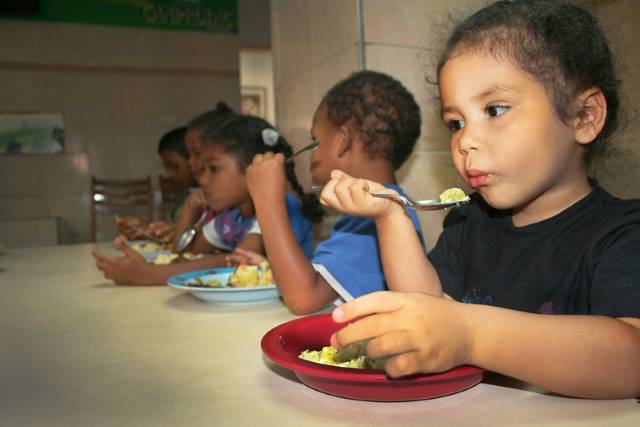
International Aid to El SalvadorEl Salvador faces threats from multiple angles as heavy tropical flooding has been compounded by the ongoing COVID-19 crisis. While El Salvador has managed to curtail infection rates by imposing strict restrictions, in October 2020, more than 32,000 people had COVID-19, with around 1,000 deaths. Due to the stringent measures to protect against the pandemic, economic growth has been stifled and poverty reduction efforts have waned. Organizations are stepping in to provide international aid to El Salvador.
Dual Disasters in El Salvador

In May and June of 2020, the tropical storms Amanda and Cristobal wreaked havoc on the people of El Salvador. Nearly 150,000 people were affected by heavy rain, flooding and severe winds. Developing countries such as El Salvador have poor building infrastructure and during natural disasters homes are more likely to be destroyed by storms. The World Food Programme (WFP) has estimated that about 380,000 people in El Salvador do not have sufficient access to nutritious food due to the dual disasters that have weakened infrastructure and the economy. An estimated 22,000 farmers have suffered from the destruction of flooding, with over 12,000 hectares of agricultural crops being destroyed.

COVID-19 Pandemic Increases Poverty

El Salvador has been moderately successful with poverty reduction, marked by a consistent decline in poverty over the past 13 years, as poverty rates plummeted from 39% to 29% between 2007 and 2017. Extreme poverty was cut from 15% to 8.5% over this time period as well. Additionally, El Salvador has increased its level of equality and is now the second most equal country in Latin America.

Despite this positive trend in poverty reduction, El Salvador has suffered from forced economic restrictions due to the pandemic. Its GDP is projected to decrease by 8% this year due to economic restrictions, a weakened international market and diminished funds sent from El Salvadorians abroad in the United States. Additionally, low income and marginalized individuals are becoming more vulnerable to health issues and wage deficiencies and are falling victim to predatory loans. El Salvador’s economic shutdown and destruction from tropical storms have prompted calls for international aid to alleviate the crisis.

Swift Action to Mitigate COVID-19

El Salvador has seen relatively low COVID-19 cases as a result of its swift response to the pandemic. It adopted strict containment measures faster than any other Central American country and invested heavily in its health system. The government has provided cash distributions to the majority of households, food for low income households and payment deferrals for rent and mortgages in order to curb the effects of the pandemic on citizens.

International Aid to El Salvador

Requests for international aid to El Salvador have been granted in the form of assistance from USAID and the WFP. These organizations are providing disaster relief and bringing in resources to those affected by the storms and the COVID-19 pandemic. USAID has donated $3 million to be dispensed by cash in stipends for vulnerable citizens to buy food. This stipend will boost local economies and reinforce food security for impoverished citizens affected by the dual disasters.

– Adrian Rufo
Photo: Flickr

January 4, 2021
https://borgenproject.org/wp-content/uploads/borgen-project-logo.svg 0 0 Yuki https://borgenproject.org/wp-content/uploads/borgen-project-logo.svg Yuki2021-01-04 03:18:382021-01-04 03:18:37Dual Disasters: International Aid to El Salvador
Aid, Food & Hunger, Food Aid, Food Insecurity, Global Poverty

Alimenta La Solidaridad Fights Food Insecurity

Alimenta la SolidaridadVenezuela has a convoluted political, economic and social situation. The present humanitarian crisis in Venezuela has placed the country fourth for the largest food crisis in the world. The nonprofit organization Alimenta La Solidaridad (Feed Solidarity) chooses to tackle this issue head-on.
The Situation in Venezuela

According to the World Food Programme, one in every three Venezuelans requires food assistance. Venezuela’s deteriorating situation has decreased household access to food as well as the purchasing power of the people. In 2019, an estimated 2.3 million Venezuelans suffered from food insecurity and approximately 9.3 million required immediate food assistance.

The current food dilemma is expected to worsen due to the current economic crisis. Already, the plight has increased childhood malnutrition and starvation. Children in Venezuela rarely obtain vital nutrients for proper growth and adequate cognitive development.

A Nonprofit to the Rescue

Alimenta La Solidaridad was determined to combat the rampant food insecurity in Venezuela. Since 2016, it has provided more than 7 million meals to Venezuelan children in need. The program started mainly in Distrito Capital, the capital’s state, but it has gradually expanded nationwide. It now operates in 14 additional states, has a total of 188 dining rooms across the national territory and gives food assistance to more than 14,000 children.

The nonprofit recognizes the necessity to contribute its part to society. Alimenta La Solidaridad aims to find sustainable solutions to the food-related challenges that plague many low-income Venezuelan families. This organization works exhaustively to soften the effect of the nutritional deficiencies that many children in this program endure.

How Alimenta La Solidaridad Works

Alimenta La Solidaridad operates through donors with the help of mothers and fathers from the communities. The nonprofit gathers people willing to share their homes to provide the space for community kitchens. Volunteers cook, organize the children, clean and manage the daily operations of this effort. The organization is “more than a plate of food.” When people with Alimenta La Solidaridad get together, they create a place of transformation. Sometimes, they create activities that turn into opportunities for the development and empowerment of children. Mothers in the program also receive growth opportunities.

Alimenta La Solidaridad provides training courses that will empower mothers. The new skills are then put right back into the organization. These mothers often end up taking on one of the most important roles within the organization. They do not only make the initiative possible but they also teach the children to grow in the values of co-responsibility, involvement and service.

Alimenta La Solidaridad aids the outside communities as well. The initiative contributes to the reduction of criminal indexes within the surrounding areas. Further, the organization promotes community organizations and volunteer work. The organization utilizes these avenues of aid as a way to fulfill its mission of providing daily meals to children suffering from food insecurity in Venezuela.

Hope for the Fight

Despite the dire reality in Venezuela, many organizations across the nation are trying to find ways to help. Alimenta La Solidaridad is the perfect example of an organization that managed to provide aid despite bleak circumstances. The nonprofit’s dedication and goodwill have led to a model based on responsibility and empowerment. This method boosts the sense of involvement and level of voluntary service within Venezuelan communities in need. Food insecurity has met its match with the hopeful spirit of the resilient Venezuelan people.

– Isabella León Graticola
Photo: Flickr

December 23, 2020
https://borgenproject.org/wp-content/uploads/borgen-project-logo.svg 0 0 Kim Thelwell https://borgenproject.org/wp-content/uploads/borgen-project-logo.svg Kim Thelwell2020-12-23 13:34:302024-05-30 07:53:25Alimenta La Solidaridad Fights Food Insecurity
COVID-19, Food Insecurity, Global Poverty, World Hunger

Hunger Initiatives in South Africa

Hunger InitiativesFood insecurity is a significant topic in Africa due to the ongoing coronavirus pandemic and environmental factors, such as drought. Recently, many South Africans have experienced rapid food shortages. However, various hunger initiatives in South Africa are taking off during this time.

The Issue

In South Africa alone, 4 million migrants are at risk of descending into poverty. The number of South Africans currently living in poverty, 40% of the population, is expected to increase within the next five years. Those already in poverty do not have access to basic medical supplies and other life-saving resources. The COVID-19 pandemic only exacerbates these issues further. Many people grapple with economic fallout as a result.

Poverty disproportionately affects South African women, especially as heads of households. Around half of female-headed households are below the poverty line as opposed to 33% of male-run households.

Hunger initiatives in South Africa have proven essential in helping vulnerable groups like women and children.

Ladles of Love

Many food-based charities have dedicated their efforts to providing meals to those grappling with the impacts of the coronavirus pandemic. A soup kitchen called Ladles of Love is one such organization. The soup kitchen operates on the basis of Seva, the art of selfless service. The soup kitchen volunteers serve more than 200 meals a week to those in need.

Recently, Ladles of Love was featured in the Guinness Book of World Records for its efforts to provide healthy meals to the impoverished and hungry. The charity broke both the South African record and the world record for most sandwiches made in an hour. The previous world record was 57,000 — Ladles of Love eclipsed that by making more than 68,000 additional sandwiches. The charity also surpassed the South African record by 18,000. As a result of this, Ladles of Love could make more than 300,000 sandwiches and garner publicity and awareness for its cause.

67 Minutes

Ladles of Love is part of the social media movement 67 minutes. The movement, started in memory of Nelson Mandela, emphasizes the importance of making a difference. The 67 minutes campaign encourages people to prioritize helping others for 67 minutes. The number 67 is significant because Nelson Mandela fought for social justice reform in South Africa for 67 years. As such, the campaign uses that number as a baseline for its work. Through social media, Ladles of Love increased publicity for the movement. More people are aware of the severe issue of hunger in South Africa. This will hopefully generate more funding and education about the topic in other parts of the world.

Action Against Hunger

Organizations like Action Against Hunger have a world-reach goal in mind. The global nonprofit strives to end hunger and malnutrition within “our lifetime.” The group focuses on both preventative and reactionary measures to help provide food for those in need, especially children and families. Action Against Hunger works to empower people to help themselves rather than rely on its services. The organization believes that education, empowerment and innovation can crush world hunger.

Looking Ahead

Since the quarantine began, many South Africans have struggled to make ends meet. Most people were furloughed from their jobs and left without stable sources of income. Furthermore, the pandemic has impacted students especially hard. The government suspended its school nutrition programs and school students can no longer receive steady meals. Despite this, the government has attempted to rectify the situation by providing more than 1 million food packages for residents and constituents.

Many South Africans struggle to cope with the effects of the coronavirus pandemic, changing weather patterns and rising poverty levels. Ladles of Love, the 67 minutes campaign and Action Against Hunger provide support for struggling citizens. These organizations and other hunger initiatives work tirelessly to alleviate food insecurity among the impoverished population.

– Xenia Gonikberg
Photo: Flickr

December 13, 2020
https://borgenproject.org/wp-content/uploads/borgen-project-logo.svg 0 0 Kim Thelwell https://borgenproject.org/wp-content/uploads/borgen-project-logo.svg Kim Thelwell2020-12-13 01:30:192022-03-31 08:09:14Hunger Initiatives in South Africa
Food Insecurity, Global Poverty

The State of Hunger in Lesotho

Hunger in Lesotho
Despite the government’s commitment to Sustainable Development Goal 2, hunger in Lesotho is worsening. Most recently, drought has ravaged Lesotho, exacerbating the problem and diminishing any effects of progress. This El-Niño-induced drought has left Lesotho in a food security crisis, causing 30% of the population to face acute food insecurity. On top of this, 508,125 people in Lesotho are already food insecure.

Pervasive Hunger in Lesotho

More than half of the population in Lesotho lives on less than $1 a day, which is categorized as extreme poverty. Nearly 80% of the population lives in rural areas and approximately 70% of those people engage in subsistence farming. As a result, agriculture provides not only the majority of the food for families but also provides much of their income. Countries with high rates of subsistence farming are even more susceptible to food insecurity than others. When subsistence farmers do not produce sufficient yields, they struggle with no food and no income to purchase food. This can quickly turn into a food crisis implicating the health and lives of many people.

On top of the high rates of subsistence farming, the climate in Lesotho makes it challenging to maintain high crop yields. Droughts are not a rare event. Weather in Lesotho is very unpredictable, with inconsistent rainfall and persistent droughts common. Despite many citizens engaging in subsistence farming, only 10% of the land is arable. Soil erosion is especially pervasive in Lesotho, exacerbated by droughts. All of these factors contribute to the state of hunger in Lesotho and stand as reasons why hunger in the country is particularly concerning.

Negative Effects of Hunger

Hunger can and does kill many people every year. Aside from food standing as a necessity for the survival of human beings, there are other negative ramifications associated with hunger in Lesotho.

Hunger exacerbates inequality, including gender inequality. Women who are food insecure often have to travel long distances to find work. As a result, they are more susceptible to sexual abuse and sexual exploitation. The work they travel to do is often exploitative as well as many become “domestic workers trading sex for money or food.” Annually, women and children are the recipients of 75% of the aid provided by Help Lesotho. They are the hungriest and need the most help.

There is also a vicious cycle of poverty and hunger. Poverty affects hunger and hunger affects poverty. Many individuals can find themselves in a poverty trap when faced with hunger. When people are impoverished, they may not be able to afford food. When people go hungry, they endure low energy levels and struggle to work to earn more money. This cycle has a hold over many citizens in Lesotho. More than 27% of women in Lesotho have anemia. If women do not have access to adequate nutrition, they cannot work. This cycle also impacts the country’s economy as Lesotho loses an estimated 7.3% of its GDP due to chronic malnutrition.

Actions to Address Hunger in Lesotho

To address pervasive hunger in Lesotho, many organizations are making this issue a focus of their efforts. Here are three of those organizations.

  1. The World Food Programme is funding the Lesotho Country Strategic Plan. This plan includes improving food quality and quantity while implementing sustainable farming practices to help guard against future food supply shocks. It features public work food programs and school feeding programs to ensure citizens are properly fed. Most notably, the intention is to allow a transitional government takeover. Because of this, it can be a foundational fix rather than a short-term bandage.
  2. The European Union has commissioned €4.8 million to help decrease hunger in Lesotho. The funding will provide food assistance directly to subsistence farming households affected by droughts and support disaster preparedness projects. Emergency aid from other donors is also needed, however, to provide immediate food security to hundreds of thousands of Lesotho residents. This aid can save tens of thousands of lives.
  3. The Kingdom of Lesotho’s Ministry of Health has its own projects and initiatives targeting food insecurity. One of these is the Lesotho Nutrition and Health System Strengthening Project. The project budgets more than $50 million for the implementation of health and nutrition programs designed to improve food security for the workforce. The government’s commitment to striving toward the second Sustainable Development Goal is reassuring, but it needs the resources to succeed.

Despite all of the work in progress to alleviate the effects of food insecurity and hunger in Lesotho, more can and needs to be done. While many things would help the situation in Lesotho, helping the government gain the resources to succeed on its own is probably the most helpful in the long term. Hopefully, with increased efforts, hunger in the country will decrease in the near future.

– Keagan James
Photo: Flickr

December 8, 2020
https://borgenproject.org/wp-content/uploads/borgen-project-logo.svg 0 0 Jennifer Philipp https://borgenproject.org/wp-content/uploads/borgen-project-logo.svg Jennifer Philipp2020-12-08 14:54:162024-05-27 09:28:03The State of Hunger in Lesotho
Food Insecurity, Global Poverty, Hunger

3 Organizations Fighting Hunger in Nepal

Hunger in Nepal
In Nepal, one in four people lives below the national poverty line, earning only $0.50 a day. This makes it nearly impossible for them to afford basic needs like food, clothing and shelter. In recent years, many organizations have provided aid to Nepal to improve living conditions and lower hunger levels. Outlined below are three organizations fighting hunger in Nepal.

World Food Programme

The World Food Programme (WFP) is a humanitarian organization run by the United Nations with the goal of fighting global hunger. WFP distributes more than 15 billion rations to people affected by hunger in countries around the world. Two-thirds of the countries it serves are affected by conflict. Statistically, people in conflict-ridden countries are three times more likely to be malnourished than their counterparts living in peaceful environments.

One of the countries WFP has been working to address food security and hunger in is Nepal. Roughly 36% of Nepali children under five are stunted due to hunger, while an additional 27% are underweight, and 10% suffer from wasting due to acute malnutrition. As part of their work to address hunger in Nepal, WFP established the Zero Hunger strategy, which is a program with the goal to achieve zero hunger by 2030. This program has directly helped strengthen the government’s capacity to improve “food security, nutrition, as well as emergency preparedness and response.”

Action Against Hunger

Action Against Hunger was created to establish a stronger method for dealing with hunger. Over the past 40 years, it has provided life-saving services in more than 45 countries, one of which is Nepal. Since 2005, Action Against Hunger dedicated a team of 25 employees to address hunger in Nepal.

Nepal is very susceptible to natural disasters based on its proximity to the Himalayas. Its location causes more than 80% of the population to be at risk of storms, floods, landslides or earthquakes. A 2015 earthquake greatly affected Nepal’s Nuwakot and Rasuwa districts. In response, the team created and integrated water and sanitation reconstruction for the areas impacted.

In 2019, Action Against Hunger was able to provide treatments for severely malnourished children through two inpatient and 28 outpatient therapeutic care centers. The organization has carried out various livelihood programs that include helping Nepali citizens implement “home gardening, mushroom farming, poultry and integrated shed management” into their lives. In 2019 alone, the organization provided aid to 99,455 Nepali citizens. Among these citizens, 90,316 were reached by nutrition and health programs, 4,570 were reached by water, sanitation and hygiene programs and 4,569 were reached by food security and livelihood programs.

Feed the Future

Feed the Future was started with the intention of creating sustainable and long-term strategies that would put an end to chronic hunger and poverty across the globe. The organization now operates in twelve different countries affected by food insecurity to execute their goals.

In Nepal, almost 70% of the population works in agriculture; however, many farmers struggle to afford supplies to yield fruitful crops. Feed the Future works with the Nepali government and the agricultural private sector to “produce more diverse and nutritious foods, improve agricultural practices among farmers, and create more inclusive economic opportunities.” So far, the organization has increased nutrition access for 1.75 million children under the age of five. In 2018, it increased vegetable crop yields by 22% and raised farmers’ gross profit margins for vegetables by 17%. The organization also helped the farms it worked with generate $20 million in sales for their crops.

Eradicating Hunger

For years, Nepal has had high food insecurity and hunger due to economic hardships and natural disasters. However, organizations like the World Food Programme, Action Against Hunger and Feed the Future are making measurable and tangible differences in the lives of Nepali citizens. Through the work of these organizations and so many like them, eradicating hunger in Nepal is possible in the coming years.

– Sara Holm
Photo: Flickr

December 8, 2020
https://borgenproject.org/wp-content/uploads/borgen-project-logo.svg 0 0 Kim Thelwell https://borgenproject.org/wp-content/uploads/borgen-project-logo.svg Kim Thelwell2020-12-08 11:26:032020-12-08 11:26:033 Organizations Fighting Hunger in Nepal
Food Insecurity, Global Poverty

3 Initiatives Addressing Hunger in Spain

Hunger in Spain

Spain has shown remarkable resilience and growth over the past decade. Following the 2008 recession and debt crisis, the Spanish economy experienced a period of intense growth, which was fueled by a booming tourism sector and a steady inflow of immigrants. Today, Spain’s growth rate exceeds the eurozone average, which places the country at the 14th-largest economy in the world. 

However, while these factors qualify Spain as a developed country, hunger remains a concerning issue for many Spaniards. As of 2021, approximately 13.3% of Spanish households face food insecurity. Increasing temperatures and cuts to social assistance programs are expected to exacerbate this issue, particularly for vulnerable groups such as children. Fortunately, Spain is implementing a variety of programs to identify the root causes of hunger and implement long-term solutions. Below are the three most impactful initiatives addressing hunger in Spain that seek to provide vital assistance to hungry Spaniards.

3 Initiatives Addressing Hunger in Spain

  1. Basic Material Assistance Program. In 2024, Spain launched a basic material assistance program to provide vouchers and cards to households in severe poverty for essential items such as food and hygiene products. Through state funding distributed by the Spanish Red Cross, qualifying families will also receive an increase in financial aid, in addition to direct access to fresh produce such as fruit and vegetables from participating supermarkets. Approximately 70,000 families are expected to benefit from this initiative, which aims to alleviate child poverty and improve nutrition rates throughout the country.

  2. 2023-27 Common Agricultural Policy (CAP). Effective January 1, 2023, Spain’s CAP Strategic Plan 2023-2027 promotes sustainable agri-food development in hopes of establishing food security and a living rural environment. The primary objectives of the CAP are greater and improved income support, compliance with environmental commitments and implementing a wide range of sustainable measures designed to innovate the entire sector. In addition to direct financial aid distributed from a fund of approximately $54 million, the plan has supported farmers by providing them with tailored training, investments and technology to maximize agricultural yield. Small to medium-sized farmers, as well as rural areas, have benefited from a holistic revitalization of their respective areas, complemented by a reduction in the gender gap and accommodations for generational replacement. Today, the CAP continues to provide multidimensional support to farmers, ultimately seeking to alleviate existing burdens on the agri-food industry.

  3. Action Against Hunger. Since 2013, Action Against Hunger’s branch in Spain has ensured food security and socioeconomic integration of over 38,000 unemployed and vulnerable Spaniards. By offering employment and training pathways, qualifying participants have achieved a 43% job placement rate in less than six months. Furthermore, focused educational programs linking nutritional awareness with employment opportunities have fostered healthy lifestyle habits and professional success in families, particularly among underrepresented groups such as women. Clinical research on improving food insecurity is conducted in collaboration with the European Social Fund (ESF) and the Basic Operational Programme. In 2023, Action Against Hunger distributed an estimated $10 million to more than 5,000 families, and is currently working to exceed this number in the coming years.

The prevalence of food insecurity must engender action by the state. The above initiatives aim to successfully alleviate hunger and help those at risk of experiencing acute food insecurity in Spain, seeking to accomplish a comprehensively developed and supported nation in the near future.

– Noelle Nelson, Moon Jung Kim
Photo: Flickr

Updated: April 25, 2025

December 8, 2020
https://borgenproject.org/wp-content/uploads/borgen-project-logo.svg 0 0 Kim Thelwell https://borgenproject.org/wp-content/uploads/borgen-project-logo.svg Kim Thelwell2020-12-08 07:10:242025-04-25 10:08:473 Initiatives Addressing Hunger in Spain
COVID-19, Food & Hunger, Food Aid, Food Insecurity, Global Poverty, Health

Lentil as Anything is not an Ordinary Restaurant

Lentil as AnythingRecently, The Borgen Project spoke with Emilie Elzvik, a 21-year-old student at Northeastern University and former volunteer at Lentil as Anything. Elzvik never imagined herself serving gourmet vegan meals to a table filled with backpackers, refugees and homeless people in Newtown, Australia. But, Lentil as Anything changed everything for her.

Lentil as Anything

Lentil as Anything embodies a rare business model. The menu does not have any set prices. Everyone is welcome to “pay as they feel,” either through a financial donation or volunteering their skills. The founder, Shanaka Fernando, was born in Sri Lanka before becoming a restauranteur and world traveler. In 2000, Fernando began the first Lentil as Anything in the Australian city of St. Kilda to provide a space for local communities to come together and share a meal “disregarding any existing economic and social barriers.”

At the time, Fernando’s concept was a wild idea. Twenty years later, it has become a booming success. The restaurant chain now claims four restaurants around Australia. Additionally, Lentil as Anything provides more than 1,000 free meals a week to people most in need.

Elzvik’s Story

Elzvik began working for Lentil as Anything when she was studying abroad for a semester. “It’s like every hippie’s dream cafe, except customers are not just wealthy teenagers. They are from various socio-economic backgrounds. Some live on the street outside. Some are just traveling through.”

Elzvik points out that many of the volunteers were once customers themselves. “When they can’t pay, they offer their time,” said Elzvik. Lentil as Anything provides just as many employment opportunities as they do meals. Elzvik comments, “I think many people come to volunteer because it gives them a sense of purpose.”

According to Elzvik, there is no such thing as a boring day at Lentil as Anything. “It is no gloomy soup kitchen,” she states. Spices like nutmeg and cinnamon waft through the kitchen. Volunteers twist lemons and grate ginger. Servers dance around the floor, jotting orders down on their notepad. It is always noisy inside; laughter bounces across the walls. On some late nights, there is yoga or an open-mic night in the upstairs space.

So how exactly does this seemingly utopian cafe operate?

Sustainable Food Sourcing

Elvzik recalls the kitchen being full of “bruised apples” and “funky looking eggplants” that would get thrown out by most restaurants or stores. “Lentil as Anything takes them and turns them into something beautiful,” says Elzvik.

The Department of Agriculture in Australia reports that food waste costs the economy around $20 billion each year. That amounts to about 300kg per person or one in five bags of groceries.

To stock the kitchen, Lentil as Anything takes in unwanted leftovers from nearby stores. The chain stands by its all-vegan menu. The diet is both inclusive and nutrient-rich. Elzvik mentions that many visitors would not be able to afford something as “dense and hearty” as a Lentil as Anything meal. Fast food is typically the most affordable option and Lentil as Anything aims to change that.

Volunteership

The restaurant relies heavily on volunteer servers and cooks, like Elzvik.  CNBC reports that around 60% of new restaurants fail within the first year. By a restaurant’s fifth year, that rate jumps to 80%.

Lentil as Anything is not an exception. The restaurant cannot stay afloat on its own. The Daily Telegraph reports that “it costs Lentil as Anything up to $23,000 a week to keep [its] doors open – and customer contributions do not come close to covering costs.”

Before coming to Lentil as Anything, Elzvik had no prior customer service experience. She says that volunteering at the restaurant requires no experience at all. Volunteers attend an orientation and receive the necessary training. “What you learn at Lentil can be applied to any future job, especially working with people in a busy environment,” states Elzvik.

Location Matters

Restaurants like Lentil as Anything might not work just anywhere. “You need the perfect equilibrium,” claims Elzvik. She explains that in order for this business model to work, there must be enough people donating above the requirement to cover those who cannot afford these costs.

One of Lentil as Anything’s strategic locations is Newton in Sydney. Newtown is a diverse neighborhood, socially and economically. The Australian Bureau of Statistics reveals that 67% of the Newtown population works full time, 24% part-time and less than 5% identify as unemployed.

Looking forward

Like many businesses, the pandemic hit Lentil as Anything deeply. On September 25, the restaurant reached out to its social media followers and asked for help to keep Lentil alive.

Lentil as Anything is facing its most significant financial challenge to date. The restaurant is working to raise $300,000 by the end of October. If it does not reach its goal, Lentil as Anything may face closing its restaurant doors forever. Donations can be made through its GoFundMe campaign.

The restaurant’s motto is that everyone deserves a seat at the table. Hopefully, Lentil as Anything can serve as a successful business model for many restaurants around the world to address food insecurity.

– Miska Salemann
Photo: Unsplash

December 7, 2020
https://borgenproject.org/wp-content/uploads/borgen-project-logo.svg 0 0 Lynsey Alexander https://borgenproject.org/wp-content/uploads/borgen-project-logo.svg Lynsey Alexander2020-12-07 01:31:362022-03-30 04:13:20Lentil as Anything is not an Ordinary Restaurant
Food & Hunger, Food Aid, Food Insecurity, Food Security, Global Poverty, Health, Hunger

Snack Against Hunger and Poverty

Snack Against Hunger and PovertyPeople can often feel hopeless nowadays when addressing global poverty and hunger on a personal level. One can only donate so many times before it feels pointless. For decades there was a decrease in poverty and hunger all around the world. However, with the pandemic in full force, the numbers are once again increasing.

So what should can each individual consumer do to help those in need and bring these statistics down? They must change daily patterns, so nearly all of their “normal” actions start benefitting someone else. One way is to switch up the food consumers eat. Many brands in a variety of food categories use their profits to fight global poverty and hunger. Switching to one of these brands allows people to effectively snack against hunger and poverty. Below are just a few of the brands aiding in poverty and hunger-reduction.

1. Bobo’s

Bobo’s donates their profits from selling oat-based products to eight organizations. Two of the organizations focus on food security in the U.S. (Community Food Share and Conscious Alliance), and one nonprofit provides housing for low-income families (Habitat for Humanity). Get in a dose of nutritious oats to snack against hunger and poverty.

2. This Saves Lives

This Saves Lives has something for everyone. They have 10 different flavor options, a variety of kid’s options and five types of crispy treats. For each purchase, This Saves Lives provides a calorie-dense packet of paste filled with nutrients to a child in need. So far, over 24 million packets have been sent out!

3. Barnana

Barnana is a company that produces plantain-based chips in normal chip form, tortilla style and flavor bites. All consumers can find a chip that will satisfy whether that’s salty or sweet. The plantains used for the chips are upcycled from those that were deemed not perfect enough for mainstream market standards. By upcycling the produce, Barnana fights food waste and secures extra income for small scale farmers that depend on every sale.

4. Project 7

Project 7 is a healthy candy brand that makes gummies, lollipops and everything in between. They partner with nonprofits to help the seven areas of need: healing, saving, housing, food, drink, teaching and hope. Make chewing a life-giving activity and snack against hunger and poverty.

5. Beanfields

Beanfields is another company that creates chips both sweet and salty, similar to Barnana. The company — centered in a kitchen and not a boardroom — cooks up a variety of bean-based tortilla chips and cracklings. They get creative by producing an environment-conscious snack while also supporting people in need. Beanfields partners with Homeboy Industries, an organization that helps ex-gang members find peace and stability in their new lives. Homeboy Industries partners with many nonprofits fighting hunger and poverty that provide ex-offenders jobs and a sense of community.

Buying snacks and snacking are often mindless activities. Helping people should have that same ease and it does. Yet, it often falls on the back burner and gets forgotten. Buying from companies donating to those in need is one easy solution. People can enjoy their favorite foods in a more effective way. Why just snack when one can snack against hunger and poverty?

– Anna Synakh
Photo: Flickr

December 4, 2020
https://borgenproject.org/wp-content/uploads/borgen-project-logo.svg 0 0 Lynsey Alexander https://borgenproject.org/wp-content/uploads/borgen-project-logo.svg Lynsey Alexander2020-12-04 01:30:352024-05-30 07:55:43Snack Against Hunger and Poverty
Developing Countries, Food Insecurity, Global Poverty

Festival of Masks for Food Insecurity

Festival of MasksCabarete Sostenible began as a response to the COVID-19 crisis by providing emergency food aid to families in need in Cabarete, Dominican Republic. Its Festival of Masks aimed to raise money for further emergency food relief efforts, community farming and educational initiatives for the community.

The Festival of Masks

A silent auction was held through 32auctions, an online forum, on October 30 and October 31. During this 24-hour event, limited edition photo prints of volunteers were auctioned alongside photo prints of the communities and businesses that the organization has helped to support through the COVID-19 pandemic. Although the Festival of Masks fundraiser fell short of its goal, it still managed to raise over $500. The money will be put toward providing meal packs to food-insecure individuals in Cabarete.

Impact of COVID-19 in the Dominican Republic

Before the COVID-19 pandemic shook the foundations of the global economy, the Dominican Republic had experienced steady economic growth. Between 2015 and 2019, the Dominican Republic’s Gross Domestic Product had increased at an average rate of about 6% each year. The Dominican Republic benefitted from the combined force of several crucial domestic industries such as mining, tourism and telecommunications. Foreign investment and remittances also contributed to the country’s economic growth.

The strength of the Dominican Republic’s domestic industries and its connection to foreign capital makes it likely that the country will make a post-pandemic rebound. How soon this resurgence will begin, however, is uncertain. In 2020, the country’s GDP is expected to decrease by over 4%. Additionally, the Dominican Republic’s economy is not expected to significantly reverse course in either 2021 or 2022.

While there is much hope for the health of the Dominican Republic’s economy in the long-term, the next two to three years will be difficult for those who live there. Particularly in places like Cabarete, where close to two-thirds of the local population depends on the tourism industry for employment, many people struggle to meet their basic needs during the pandemic.

Cabarete Sostenible Addresses Food Insecurity

Cabarete Sostenible’s Festival of Masks raised money for food insecure individuals in Cabarete by auctioning limited edition photo prints. The organization also provides food for the community through donations received.

The entire amount of money Cabarete Sostenible receives through donations goes toward food packaging and distribution. Donations of only $4 feed an individual for one week and donations of $15 feed a family of four for one week. With the money Cabarete Sostenible’s Festival of Masks raised, it will be able to feed 147 individuals for a week.

Hope for the Dominican Republic

It is predicted that it will take the next three years for the economy of the Dominican Republic to regain its footing. Until such time, organizations like Cabarete Sostenible and its Festival of Masks work to address food insecurity in the Dominican Republic and ensure the survival of the community during the COVID-19 pandemic. With further monetary support, Cabarete Sostenible can have an even greater impact in the area.

– Taylor Pangman
Photo: Flickr

November 17, 2020
https://borgenproject.org/wp-content/uploads/borgen-project-logo.svg 0 0 Yuki https://borgenproject.org/wp-content/uploads/borgen-project-logo.svg Yuki2020-11-17 01:30:102024-05-30 07:55:36Festival of Masks for Food Insecurity
Page 23 of 31«‹2122232425›»

Get Smarter

  • Global Poverty 101
  • Global Poverty… The Good News
  • Global Poverty & U.S. Jobs
  • Global Poverty and National Security
  • Innovative Solutions to Poverty
  • Global Poverty & Aid FAQ’s
Search Search

Take Action

  • Call Congress
  • Email Congress
  • Donate
  • 30 Ways to Help
  • Volunteer Ops
  • Internships
  • Courses & Certificates
  • The Podcast
Borgen Project

“The Borgen Project is an incredible nonprofit organization that is addressing poverty and hunger and working towards ending them.”

-The Huffington Post

Inside The Borgen Project

  • Contact
  • About
  • Financials
  • President
  • Board of Directors
  • Board of Advisors

International Links

  • UK Email Parliament
  • UK Donate
  • Canada Email Parliament

Get Smarter

  • Global Poverty 101
  • Global Poverty… The Good News
  • Global Poverty & U.S. Jobs
  • Global Poverty and National Security
  • Innovative Solutions to Poverty
  • Global Poverty & Aid FAQ’s

Ways to Help

  • Call Congress
  • Email Congress
  • Donate
  • 30 Ways to Help
  • Volunteer Ops
  • Internships
  • Courses & Certificates
  • The Podcast
Scroll to top Scroll to top Scroll to top