• Link to X
  • Link to Facebook
  • Link to Instagram
  • Link to TikTok
  • Link to Youtube
  • About
    • About Us
      • President
      • Board of Directors
      • Board of Advisors
      • Financials
      • Our Methodology
      • Success Tracker
      • Contact
  • Act Now
    • 30 Ways to Help
      • Email Congress
      • Call Congress
      • Volunteer
      • Courses & Certificates
      • Be a Donor
    • Internships
      • In-Office Internships
      • Remote Internships
    • Legislation
      • Politics 101
  • The Blog
  • The Podcast
  • Magazine
  • Donate
  • Click to open the search input field Click to open the search input field Search
  • Menu Menu

Archive for category: Food Insecurity

Food Insecurity, Global Poverty, Poverty

How Ethical Food Consumption Reduces Poverty

Ethical food consumption
Many food industries exploit workers and degrade the environment to produce cheap, low-quality food. Ethical food consumption reduces poverty by limiting support for food companies that do not prioritize human rights or environmental sustainability. With the proper knowledge and motivation, people can adopt a wide range of healthy, affordable, ethical and sustainable food practices.

7 Ethical Food Consumption Practices

  1. Try a plant-based diet. In an interview with The Borgen Project, David Julian McClements, a food scientist and professor of food science at the University of Massachusetts, said that plant-based diets can reduce pollution and biodiversity loss, as well as land and water use. Environmental disasters and degradation often hurt impoverished communities because local governments lack the funds and resources to bounce back. Plant-based diets can help impoverished communities by reducing environmental degradation, which can be complex and costly to address. Plant-based diets can also combat food shortages, water shortages and water contamination. The meat and dairy industries deplete large amounts of water to hydrate animals and clean up waste, contaminating water supplies worldwide. Water contamination can be fatal to impoverished communities lacking proper health care and technology to ensure a clean water supply. Pursuing a plant-based diet reduces support for particular meat and dairy companies that degrade the environment at the cost of human health, especially in impoverished communities.
  2. Shop locally. Buying food from local businesses and farmers’ markets has several social and ecological benefits. When well-managed, small local farms preserve soil health, nearby water sources and plant biodiversity. Small farmers often plant a wide variety of crops compared to large monoculture farms that only grow one or a few crop varieties and ship their produce to grocery stores situated thousands of miles away. Shipping and driving food long distances reduce the freshness and taste of food and contribute to global warming. Local food can also be healthier than imported food because farm-to-table food loses fewer nutrients in the transportation process. Imported food may sit in warehouses, trucks or planes for long periods, during which the food can lose nutrients. Additionally, local, ethical food consumption reduces poverty by supporting small businesses and boosting local economies.
  3. Shop organically. Organic farming involves growing food without using synthetic pesticides or fertilizers. Organic farms can reduce pollution, improve water and soil quality, increase biodiversity and limit human and environmental contact with toxic substances. Therefore, consumers help preserve their local environment and human health by purchasing organic food products. Organic farming can be especially beneficial to impoverished communities because of its environmental benefits. Organic farms improve public health and soil fertility, which benefits people, the environment and the economy. Due to socioeconomic and ecological benefits, one can view purchasing organic products as a form of ethical food consumption, which in turn, reduces poverty.
  4. Shop from businesses that pay workers ethical wages. When at the grocery store, taking a minute to glance at the label on a food product before buying it can make a significant difference in ethical food consumption over time. Identifying labels like Fair Trade can help support programs and businesses that pay workers fair wages and ensure safe work conditions. Supporting local food businesses and farms is another way to reduce support for large, corporate brands that exploit workers and degrade the environment. For example, buying products from local farmers’ markets supports small farms that prioritize ethical wages and sustainability more than large corporations. However, in places where farmers’ markets are unavailable, simply reading and researching the labels on food at the grocery store can help support fair wages and environmental sustainability.
  5. Grow a garden. Even if it is just a few plants in a small garden, growing one’s food can be a great alternative to large-scale, exploitative agriculture. Home-grown, ethical food consumption reduces poverty by minimizing support for corporations that do not pay workers fair wages. Sourcing food from a garden can also improve health and benefit the environment. Gardeners know precisely where their food came from, how they grew it and what they used to grow it, leaving no ethical or health-related issues up for question. Maintaining a large garden may be unrealistic for people who have limited free time, but even planting something small, like an avocado plant, can make a difference in the outcome of one’s food consumption over time.
  6. Consume less single-use packaging. Reducing one’s consumption of single-use food packaging benefits both people and the environment. People can reduce the single-use packaging they consume by utilizing reusable bags, containers, straws and more. Zero-waste stores are emerging as more interest circulates zero-waste living. While a zero-waste lifestyle may seem impractical to the average person, any steps in the direction of zero-waste living can make a difference. Reducing one’s use of solid, single-use products factors ethical food consumption because single-use packaging is abundant in the food industry. Ethical food consumption reduces poverty by lessening support for exploitative brands and initiatives, including the plastic industry.
  7. Avoid wasting food. Much like plastic waste, food waste can be detrimental to the environment, especially for impoverished communities. According to the World Wildlife Fund, people could reduce up to 8% of human-made greenhouse gas emissions if they stopped wasting food. Meal planning, purchasing food mindfully, utilizing one’s freezer and making good use of leftovers are all simple ways the average person can reduce the amount of food waste she produces.

By adopting ethical, sustainable food practices in daily life, consumers can make a significant impact in reducing global poverty and food insecurity while conserving the environment.

– Cleo Hudson
Photo: Unsplash

November 20, 2021
https://borgenproject.org/wp-content/uploads/borgen-project-logo.svg 0 0 Lynsey Alexander https://borgenproject.org/wp-content/uploads/borgen-project-logo.svg Lynsey Alexander2021-11-20 07:30:262021-11-19 09:32:07How Ethical Food Consumption Reduces Poverty
Food & Hunger, Food Aid, Food Insecurity, Food Security, Food Security, Global Poverty

5 Global Food Security Initiatives Secretary Vilsack Supports

Secretary Vilsack
The secretary of agriculture in President Barack Obama’s administration, Thomas J. Vilsack, has returned in 2021 to serve in the same position under President Biden. Secretary Vilsack has received recognition for his civil service and efforts to combat global poverty, receiving recognition from the Congressional Hunger Center and the Global Child Nutrition Foundation. He is also “a former member of the board of directors for GenYOUth as well as Feeding America.” At the U.N.’s Food Systems Summit in September 2021, Secretary Vilsack declared that the U.S. would invest $10 billion to ensure global food security over the next five years. Here are five global food security initiatives that Vilsack supports.

5 Global Food Security Initiatives Secretary Vilsack Supports

  1. Feed the Future. Secretary Vilsack supports Feed the Future, the United States’ program to ensure global food security “by boosting inclusive agriculture-led economic growth, resilience and nutrition in countries with great need and opportunity for improvement.” Feed the Future began in 2010 following the 2007-2008 global food crisis. In 2016, Secretary Vilsack supported the Global Food Security Act, a bill ensuring that the efforts of Feed the Future could continue on even after Obama’s end of term. By backing the bill, he expressed his support for sustainable food systems for the world’s impoverished. The Feed the Future program significantly contributes to poverty reduction, reducing poverty by 37% over 10 years in countries like Bangladesh.
  2. McGovern-Dole Food for Education Program. The McGovern-Dole International Food for Education and Child Nutrition Program combats global poverty and hunger through the support of the USDA. As secretary of agriculture, Vilsack oversees this program, which supports education and child development in low-income countries, donates “U.S. agricultural commodities” and provides financial assistance for school feeding and community nutrition programs. Overall, the program aims to increase literacy and education to break the cycle of poverty. By overseeing the McGovern-Dole Program, Secretary Vilsack works to ensure that students in need, especially girls, receive the nutrition and support required to thrive in schools.
  3. Food for Peace. Secretary Vilsack also oversaw Food for Peace in the International Affairs Budget during the Obama administration. The Office for Food and Peace began with President Eisenhower’s Food for Peace Act in 1954. Food for Peace aids people in low-income countries and areas of conflict by providing international emergency services, organizing development activities and providing nutritional support. Its development activities shares tools and resources with people in food-insecure areas to end global hunger.
  4. Food is Never Waste Coalition. Secretary Vilsack announced in 2021 that the U.S. would be partnering with the Food is Never Waste Coalition. The coalition emerged from the 2021 United Nations Food Systems Summit. The coalition aims “to halve food waste by 2030 and to reduce food losses by at least 25%.” Reducing food waste involves member collaboration to create sustainable food pathways and invest in food loss reduction methods.
  5. School Meals Coalition. While attending the U.N. Food Systems Summit in September 2021, Secretary Vilsack remarked on collaborating with the School Meals Nutrition, Health and Education for Every Child coalition. The coalition strives to provide all children access to nutritious school meals by 2030. In 2021, 150 million students continue to go without school meals worldwide, which sometimes stands as their only meal of the day. The coalition seeks to address the effects of the COVID-19 pandemic by providing nutrition within education. As a member state of the coalition, the United States will invest in feeding programs to incentivize education globally.

Reducing Global Poverty and Hunger

Secretary Vilsack maintains his efforts to reduce both poverty and hunger through his work in the USDA. By supporting and overseeing various food security initiatives and aid programs, Secretary Vilsack positively impacts the lives of those in need across the world.

– Dana Gil
Photo: Flickr

November 17, 2021
https://borgenproject.org/wp-content/uploads/borgen-project-logo.svg 0 0 Jennifer Philipp https://borgenproject.org/wp-content/uploads/borgen-project-logo.svg Jennifer Philipp2021-11-17 01:30:032024-05-30 22:25:255 Global Food Security Initiatives Secretary Vilsack Supports
Food & Hunger, Food Insecurity, Food Security, Global Poverty, Hunger

Pope Francis Calls Hunger a “Crime”

Pope Francis
Hunger is a “scandal” whose crime “violates basic human rights,” according to Pope Francis. In a recent United Nations (U.N.) meeting in Rome, the Pope argued that the world holds enough food for all yet sees prevalent hunger. The Pope’s message aligned with U.N. Secretary-General Antonio Guterres’s assertion that a third of greenhouse gas emissions is due to global food systems. Further, Guterres warned that an 80% loss of biodiversity serves as another drastic consequence of those food systems.

The Message

The Pope spoke during the July Pre-Summit of the U.N. Food Systems Summit that focused on scientific, evidence-based solutions to food systems transformation. Pope Francis noted that COVID-19 has underlined the “systemic injustices that undermine our unity as a human family.” Further, he pointed out the paradoxical nature of the technologies designed to increase food capacity as it “exploits nature to the point of sterilization.” He said that the poorest people suffer the most because we inflict damage “…through irresponsible use and abuse of the goods God has placed in it.”

In a similar July message that the Vatican published, the Pope spoke of the preventable nature of forced displacements, terrorism and wars. He contended that these are all precursors to hunger. In the message, Pope Francis also elaborated on the lack of solidarity plaguing humans that stunts resolutions to end malnutrition. He spoke of a desire not to promote “mere progress” or “development goals in theory.” He wrote, “All of us realize that the intention to provide everyone with his or her daily bread is not enough.”

The UN’s Call to Action

An early July U.N. report credited COVID-19 to the additional 161 million people facing hunger compared to 2019. It discussed that healthy diets are now out of reach of a staggering 3 billion people. This is due to the high cost of food, income inequality and poverty. The fact that the Agricultural Commodity Price Index rose by 30% from January 2020 supports this argument. Also, Guterres noted that due to the COVID-19 pandemic, one in three people lacked adequate food sources.

Also recently, the U.N. agency International Fund for Agricultural Development (IFAD) appealed to decision-makers to rectify the “failures in food systems.” IFAD suggested that food production should factor in protecting the environment, supporting biodiversity and fairly compensating laborers.

Finally, according to the chief economist of the U.N. Food and Agriculture Organization (FAO), alleviating hunger for 100 million people would require $14 billion a year until 2030. Moreover, to triple that amount would see a goal of zero hunger across the globe by 2030.

Moving Forward

The calls to action by Pope Francis and the United Nations are loud and clear. Together, they should positively impact the fight against hunger by transforming the current global food systems.

Pope Francis specifically urged “bold local and international policies.” He said, “Therefore, it is everyone’s duty to root out this injustice through concrete actions and good practices.”

– Mohamed Makalou
Photo: Flickr

November 10, 2021
https://borgenproject.org/wp-content/uploads/borgen-project-logo.svg 0 0 Kim Thelwell https://borgenproject.org/wp-content/uploads/borgen-project-logo.svg Kim Thelwell2021-11-10 07:30:402021-11-08 12:40:58Pope Francis Calls Hunger a “Crime”
Food Insecurity

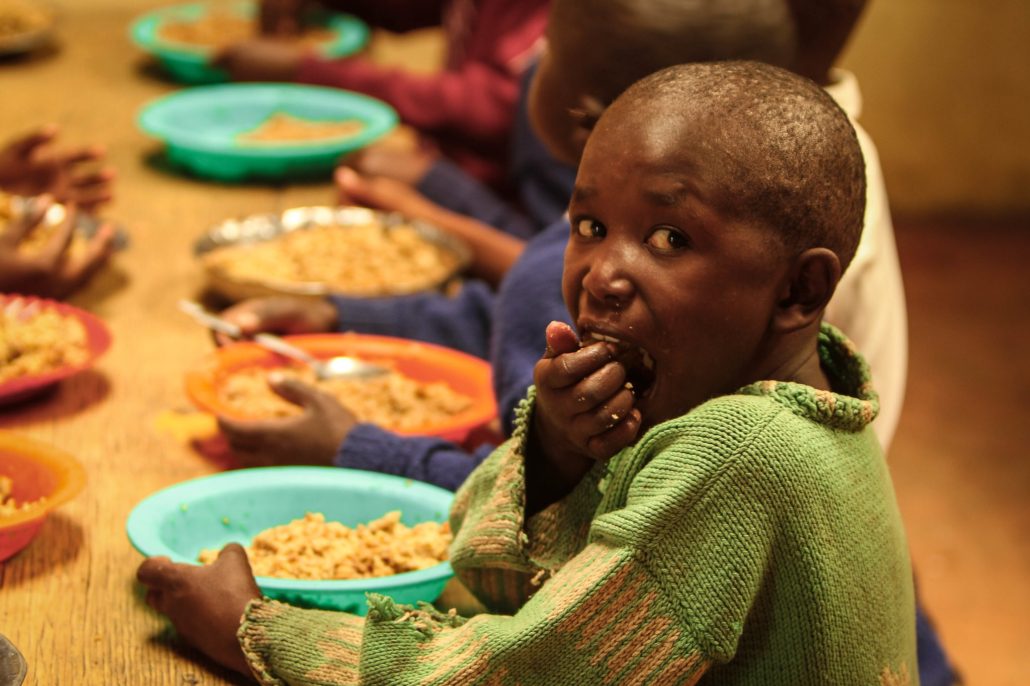
The School Meals Coalition Helps Hungry Students

School Meals Coalition
During the Food Systems Summit in September 2021, the United Nations launched the School Meals Coalition. The coalition emerged as a response to the African Union’s March 2021 communiqué regarding the need for a global school meal program.

The COVID-19 Pandemic and Food Insecurity

The COVID-19 pandemic has exacerbated existing food insecurity among school children worldwide. Food insecurity severely affects children living in low to high-income countries. School closures amid COVID-19 and a lack of resources have resulted in schoolchildren being unable to access meals they previously received from schools. To make matters worse, the incentive to attend school and receive an education frequently diminishes as food insecurity grows. The School Meals Coalition aims to prevent growing food insecurity in schools. The coalition is seeking to ensure that every child receives access to healthy school meals by 2030 to address the effects of the pandemic and improve the quality of life for all children.

How Hunger Affects Education

More than 1 billion children attend school worldwide. Before the COVID-19 pandemic, 338 million children relied on school meal programs. Unfortunately, there still remained 73 million children in 60 lower-income countries without access to these essential school meals. COVID-19 has only increased the number of hungry children globally. At the peak of the pandemic in April 2020, school closures meant that 370 million children lost access to their one guaranteed meal for the day.

Even as schools reopened in 2021, 150 million children continued to go without school nutrition. Access to food stabilizes communities. Conversely, poverty and hunger often cause students to leave school. Without food stability, students lose the incentive to attend school. Ultimately, lack of education and poverty increases child labor and leaves young girls vulnerable to early marriages and gender-based violence.

UNICEF’s The State of the World’s Children 2019 report found that undernutrition produces various obstacles for children. Malnutrition leads to susceptibility to infection and poor cognition and development. In 2019, 149 million children younger than 5 years old suffered from stunting and close to 50 million children endured wasting. The report concluded that nutrition plays a vital role in child development and beyond, stating that hunger “threatens the survival, growth and development of children, young people, economies and nations.” If left unchecked, malnutrition can hinder the livelihoods of people across the world.

What is the School Meals Coalition?

Spearheaded by Iceland, Finland, France and the World Food Programme (WFP), the School Meals Coalition faces a challenging task. In its entirety, the coalition includes 40 member states, U.N. agencies, academic groups, multilateral organizations and more. The European and African Unions prioritize the coalition’s success. For the alliance to succeed, it needs to repair pandemic-induced losses by 2023, reach previously missed students from low-income countries and improve its strategy for school meal programs by 2030.

Although the task appears daunting, the program is seeking to make sustainable and manageable changes to existing systems. For instance, the School Meals Coalition will equip schools worldwide to rely on healthy, local and indigenous foods the communities prepare. By providing communities the tools for school meal programs, the coalition will utilize a “holistic approach to child well-being through the integration of education, health and social protection.”

Thus far, the coalition has established initiatives to set the program in motion. Such initiatives include a research consortium, a financing task force and an advocacy and outreach task force. Furthermore, the coalition intends to create a peer-to-peer network to share strategies and a monitoring process that the World Food Programme leads. The WFP’s annual “State of School Feeding Worldwide” publication will look at the coalition’s progress.

The Coalition’s Impact Beyond the Classroom

The School Meals Coalition will inevitably impact more than just nutrition for school children. Ultimately, the coalition will help to improve and stabilize communities and food systems. Programs like the WFP’s Home-Grown School Feeding Program will emerge across low to high-income countries. When schools utilize food that communities produce and prepare, women and local businesses receive equitable and equal opportunities. Not only will students receive a quality education with suitable learning conditions but their families will also encounter job opportunities and learn sustainable food and business practices.

– Dana Gil
Photo: Flickr

November 6, 2021
https://borgenproject.org/wp-content/uploads/borgen-project-logo.svg 0 0 Jennifer Philipp https://borgenproject.org/wp-content/uploads/borgen-project-logo.svg Jennifer Philipp2021-11-06 07:30:042024-12-13 18:02:36The School Meals Coalition Helps Hungry Students
COVID-19, Food Insecurity, Government

Impact of COVID-19 on Poverty in North Korea

COVID-19 and Poverty in North Korea
North Korea has not reported a single case of COVID-19. According to NPR, the government has tested only 30,000 of the country’s 25 million people for the virus and has not reported any infections. Without any data to examine, global health experts and the international community have little understanding of the impact of COVID-19 on poverty in North Korea.

Yet, North Korea’s longtime despot Kim Jong-un recently announced that the country is amidst a “Great Crisis.” Jong-un cited the government’s failure to establish appropriate pandemic measures as the principal cause of the crisis. Jong-un’s statements have raised considerable questions about the impact of COVID-19 on poverty in North Korea, questions which have largely gone unanswered.

North Korea Before the Pandemic

Before the pandemic, North Korea’s population faced significant economic hurdles. The Heritage Foundation created an Index of Economic Freedom in 1995 that analyzes a country’s levels of various economic freedoms such as government spending, labor freedom, trade freedom and others, by using a score that falls between one and 100. The Foundation then ranks the country globally and regionally using an overall score. According to the Foundation’s 2021 report, North Korea’s economy has received a classification of “repressed” and has ranked lowest in the world on the Foundation’s Index since the year it began.

North Korea’s starving population bolsters the Heritage Foundation’s findings on economic freedom. North Korea has suffered yearly food shortages for decades, and in the year leading up to the COVID-19 pandemic, the nation expected still worse food shortages than usual. Poor harvests and international sanctions battered the North Korean economy as the U.N. reported that 40% of North Koreans would need food aid and more than 10 million were in “urgent need of assistance.”

The “Hermit Kingdom’s” Response to COVID-19

Once the COVID-19 pandemic began, North Korea quickly imposed strict measures to fight it. In one of the most comprehensive and swiftest responses to COVID-19, the government sealed its borders from virtually everyone, including China, its largest trading partner.

Some believe that the government’s isolationist policies were necessary. “North Korea’s all-of-government, comprehensive approach and the repeated holding of large-scale public gatherings suggest that it may have prevented any major outbreak,” said Harvard Medical School’s Kee B. Park.

However, the coronavirus and the government’s response have only bludgeoned an already starving people. According to Radio Free Asia, starvation has caused deaths, and those who cannot receive support from family have resorted to begging. Though the number of people infected is unclear, the increasing number of starving people in an already malnourished nation shows the tremendous impact of COVID-19 on poverty in North Korea.

Despite the worsening situation, North Korea still rejected deliveries of nearly 3 million Chinese-made Sinovac vaccines and more than 2 million Astrazeneca vaccine shipments. The government has expressed concerns about the viability of the vaccines it rejected.

Signs of Progress

Though there is a dearth of information regarding the impact of COVID-19 in North Korea, there have been moments that warrant optimism. For Instance, Kim Jong-un has now acknowledged the food shortages plaguing the country and has even signed an order that may open wartime food supplies to the North Korean people. In addition, the North Korean government has started to ease its closures by accepting shipments of medical supplies including health kits and medicine from the WHO, U.N. and other agencies.

– Richard J. Vieira
Photo: Flickr

November 1, 2021
https://borgenproject.org/wp-content/uploads/borgen-project-logo.svg 0 0 Jennifer Philipp https://borgenproject.org/wp-content/uploads/borgen-project-logo.svg Jennifer Philipp2021-11-01 01:30:502024-05-30 22:25:19Impact of COVID-19 on Poverty in North Korea
Food & Hunger, Food Insecurity, Food Security, Food Security, Foreign Aid, Global Poverty

UN Food Systems Summit

UN Food Systems Summit
The U.N. Food Systems Summit recently took place on September 23, 2021. The U.N. Food Systems Summit highlighted the key nexus between food sustainability and food insecurity. The Summit was a virtual conference, and it described the food-related challenges that many people around the world are currently facing. Statistics highlighted the magnitude of the nutritional issues.

The UN Food Summit: Igniting Action and Hope

The World Food Program’s (WFP) Executive Director, David Beasley, mentioned several concerning facts. For example, 3 billion people are unable to attain a balanced diet. Beyond that, 9 million people die from hunger each year. In 2020 alone, 25,000 people died per day due to starvation. However, following these morbid realities, the Summit revealed the goals of the U.N. and some solutions to the pre-established issues. The emphasis was on galvanizing people to care for one another. At its core, the Summit was a rallying call to action.

Main Objectives of the Summit

The main objective of the Summit was to raise awareness of the food system’s importance to the entirety of the sustainable development agenda. The urgency of addressing the issues plaguing global food systems has increased, particularly in the aftermath of the COVID-19 pandemic. The Summit also aimed to unite stakeholders around a common understanding of food systems as a foundation for action, to recognize the necessity of innovation addressing global food obstacles and catalyze action for the transformation of food systems in every corner of the globe.

António Guterres, the U.N. Secretary-General, issued a summary and statement of action for the Summit. One of the key points of the statement was how the pandemic has significantly worsened food insecurity, resulting in a 20% increase in the number of people facing hunger between 2019 and 2020. Furthermore, the Secretary-General established five action areas to help ensure the necessary changes to achieve all of the SDGs by 2030:

  1. Nourish All People
  2. Boost Nature-Based Solutions
  3. Advance Equitable Livelihoods, Decent Work and Empowered Communities
  4. Build Resistance to Vulnerabilities, Shocks and Stresses
  5. Accelerating the Means of Implementation

This statement of action was very robust. It included details about how the U.N. Resident Coordinators and U.N. Country Teams will work with national governments to develop new national pathways to improve food systems and ensure the accomplishment of the SDGs by 2030.

Global Leaders Reactions

During the Summit, leaders from a variety of countries spoke in an attempt to elicit empathy and initiative in the fight against food insecurity and malnutrition. Presidents, Prime Ministers, Agriculture Ministers and others were present at the Summit. The Summit’s goal was to “transform food systems to achieve the 2030 Agenda for Sustainable Development.” Many of the leaders who spoke focused on the specific issues plaguing the food systems within their state and established courses of action and priorities for tackling those issues.

Spain stated that it will be focussing on boosting family farming, with President Pedro Sanchez saying that “family farming…contributes to the economic and socio-cultural fabric of rural areas.” He followed that statement by announcing that the Spanish government will support family farming by boosting the coalition for the Decade of Family Farming. Dr. Tedros Ghebreyesus, the Director-General of the World Health Organization (WHO), made a strong statement condemning humanity’s current state of production and consumption. He emphasized the urgency of investment into global food systems and called upon food manufacturers to change the composition of their products.

The Conversation Needs to Continue

The U.N. Food Systems Summit provides hope and reassurance that action will occur to address food insecurity and poverty worldwide. The Summit was available to watch for anyone with internet access, and those who registered were able to connect in chat sections. Globalizing the combat of food insecurity and reaching the individual level increases awareness and participation in the Summit, which is beneficial to the U.N. cause. International humanitarian organizations and NGOs should continue to host these community dialogues to raise awareness of the issues plaguing humanity and to establish roadmaps to alleviate these issues.

– Wais Wood
Photo: Flickr

October 24, 2021
https://borgenproject.org/wp-content/uploads/borgen-project-logo.svg 0 0 Lynsey Alexander https://borgenproject.org/wp-content/uploads/borgen-project-logo.svg Lynsey Alexander2021-10-24 07:30:542021-10-21 10:59:23UN Food Systems Summit
Food Insecurity, Global Poverty, Women, Women's Empowerment, Women's Rights

How the UN is Aiding Nepalese Women

Aiding Nepalese Women
Landlocked between India and China and considered the modern-day birthplace of Gautama Buddha, Nepal is one of the poorest countries in the world. One in four families lives in poverty in a country where food shortages, natural disasters and severe weather are extremely common. Women’s rights in Nepal are also limited due to lack of education, high rates of violence against women and historical patriarchal practices within their government. Here is more information about the situation in Nepal and how some are aiding Nepalese women.

The Situation

The United Nations recognizes Nepalese women’s need for aid. As a result, it has implemented volunteer programs centered around solving food insecurity and improving health education and much more to provide assistance and sustainable, long-term solutions to Nepalese communities.

Because of COVID-19 and the lockdown, approximately 41% of women in Nepal lost their jobs and main sources of income. Women who were once financially independent now faced a reality that meant relying on others to provide for their families. Seeing this widespread problem, the women of Nepal united during this trying time and established women-managed community kitchens centered around aiding Nepalese women in poverty and eliminating the food insecurity crisis the country has been facing.

UN Women

U.N. Women and the Government of Finland are working with local women to develop these community kitchens and provide a sustainable source of food. Only 20% of land in Nepal is capable of being cultivated. These community kitchens are not only providing food for the people of Nepal, but they are also empowering these women to combat local food insecurity due to their weather conditions.

The meals include “rice, daal (lentil soup), spinach, vegetable, pickle, fruits, ladoo (sweets), and a bottle of water.” Daily, these community kitchens cook up to 250 meals, but sometimes they have even produced more than 500 requested meals in a day. Women for Human Rights, Maiti Nepal, Nagarik Aawaz and Nari Bikas Sangh have all created women-run community kitchens in Nepal serving 95,000 meals and providing baby food to 30,000 people since June 2020.

In total, more than 100 women work for and run the Nepal community kitchens and are making a real impact in their communities through their work. By building trust and uniting a community, vulnerable groups of women like migrants, dwellers, ill or sick women, pregnant women or women with disabilities have been able to find leadership roles in their communities. Nepal’s women-run community kitchens show the impact women can have against poverty in their own country.

The Female Community Health Volunteers (FCHV)

The Female Community Health Volunteers (FCHVs) program began in 1988 in Nepal. The all-female volunteers are also advocates and educators on maternal health, newborn caretaking, childhood health and nutrition. The implementation of programs like the “National Immunization Program, Birth Preparedness Package, Community-Based Integrated Management of Neonatal and Childhood Illness (CB-IMNCI), Integrated Management of Acute Malnutrition, Infant and Young Child Feeding, and Family Planning program” are all possible because of the U.N.’s FCHV program. The program also provides frontline workers during polio vaccine campaigns and other communicable disease advocacy efforts.

Clean cooking is also a problem in Nepal, so besides community kitchens, Nepal has rerouted the FCHV program to help combat this issue. FCHVs go from home to home to educate local women on the harms of certain fuels used when cooking. Alternating from wood and kerosene with an open flame to biogas, petroleum gas and electric stoves lowers blood pressure and decreases the risk of pneumonia. The long-term health effects are detrimental, and these volunteers are working hard to keep their communities safe and healthy through their FCHV programs.

Maiti Nepal

Besides providing food for the community and a living wage for the women running the kitchens, groups like Maiti Nepal have used these community kitchens as an opportunity to educate locals on the dangers of COVID-19. Providing masks and sanitizer along with the meals has also promoted better public health for the country which the COVID-19 pandemic hit hard. Women in the FCHV program aid in any area of the community that needs help, so they became frontline workers and educators during the pandemic.

Looking Ahead

The U.N. is constantly working to improve women’s leadership and empowerment in countries facing low rates of women’s involvement in politics and places of power. By 2022, Nepal is aiming to graduate from the least developed country status, and the work these women are doing is directly contributing to the completion of this goal.

The United Nations is aiding Nepalese women in more ways than one and is constantly developing programs like the community kitchens and the FCHV program to fit the needs of each specific community. The women volunteering in these programs are working towards a better tomorrow for their local people and nation as a whole.

– Annaclaire Acosta
Photo: Flickr

October 23, 2021
https://borgenproject.org/wp-content/uploads/borgen-project-logo.svg 0 0 Lynsey Alexander https://borgenproject.org/wp-content/uploads/borgen-project-logo.svg Lynsey Alexander2021-10-23 07:30:402024-05-30 22:25:16How the UN is Aiding Nepalese Women
Food Insecurity, Global Poverty, Hunger

ProVeg International: Food Justice In Africa

ProVeg International
The definition of food insecurity is “the disruption of food intake or eating patterns because of lack of money and other resources” according to the Office of Disease Prevention and Health Promotion. All across the world, food insecurity remains an issue despite being essential for human survival. This violation of basic human rights has justifiably led to many movements, ideas and actions to cultivate better, more accessible food systems for everyone regardless of economic status. Ultimately, increasing food justice means reducing poverty, a mission that lies at the core of ProVeg International, a global “food awareness” organization.

Food Injustice in Africa

Food injustice permeates the continent of Africa as many African countries battle poverty. According to the Africa Center for Strategic Studies, more than “100 million Africans were facing crisis, emergency, or catastrophic levels of food insecurity in 2020.” The Center highlights a rise of more than 60% in comparison to 2020, with an expectation that food insecurity rates will continue in this direction through 2021 and beyond. The rise in food insecurity rates is alarming and represents a worsening issue in the fight against hunger.

This food insecurity is coupled with Africa’s higher poverty rates. Hunger Notes reports that “according to the World Bank, in 2013, 42.3% of the population of sub-Saharan Africa lived on $1.90 or less per day.” This, it also notes, is a major factor in higher levels of food insecurity in African countries. The connection between poverty and hunger in the continent of Africa reveals why there are many efforts to aid and combat both rates of poverty and rising rates of food insecurity. Both anti-poverty initiatives and anti-food insecurity initiatives intersect to fight this pressing issue.

A ProVeg Approach

ProVeg International is a global organization fighting food injustice with increased food awareness and plant-based initiatives. Its branch in South Africa acts as a platform for these initiatives in the African continent. According to its website, ProVeg holds events and participates in political outreach and corporate engagement. All these efforts aim to raise awareness of the importance of accessible, healthy plant-based food. In addition to these activities, ProVeg holds challenges such as Veganuary, which is “a global campaign that encourages people to try plant-based [foods] for the month of January.” This approach of easing people in is important, as is encouraging those who have the means and accessibility to go plant-based to do so.

Using a plant-based approach increases access to affordable and healthy food for those who need it. Additionally, ProVeg encourages those who already have access to fresh grown foods to fully incorporate them into their diets. ProVeg highlights how “achieving food security for everyone means doing more to ensure that everyone has reliable access to sufficient, safe and nutritious food in order to maintain an active and healthy life.” ProVeg International incorporates this message by highlighting how “an inequitable global food distribution system” disproportionately impacts the most vulnerable and impoverished people.

In this way, ProVeg makes it is easy to see the intersections of food insecurity and poverty, showing the importance of ProVeg’s plant-based initiative for achieving food justice. As rates of food insecurity rise across Africa, ProVeg’s plant-based initiative contributes to food justice and seeks to make healthy foods accessible. The role that ProVeg plays presents an important approach in the fight against food injustice.

– Sebastian Fell
Photo: Flickr

October 11, 2021
https://borgenproject.org/wp-content/uploads/borgen-project-logo.svg 0 0 Jennifer Philipp https://borgenproject.org/wp-content/uploads/borgen-project-logo.svg Jennifer Philipp2021-10-11 07:30:452021-10-18 04:30:12ProVeg International: Food Justice In Africa
Food Insecurity, Global Poverty

Uncovering the Invisible Poverty in Japan

Invisible Poverty in JapanThe third-largest economy in the world, Japan has vast influence over global trends in technology and culture. The country has a storied history, first opening its shores to modernization in the mid-19th century with the arrival of American Commodore Matthew Perry. After contact with the West, Japan underwent a process of rapid industrialization, adopting and co-opting colonial practices to become the leading East Asian power. A closer look at the history of the nation tells a story of invisible poverty in Japan.

The History of Japan

During World War II, Japan’s fate changed for the worse. Tokyo sided with the Axis Powers and lost the war to the Allies in a devastating fashion. After the destruction of Hiroshima and Nagasaki from American atomic strikes, Japan had to rebuild in the interceding decades. By the 1980s, Japan once again emerged as a major world power and the second-largest economy. Pundits believed Japan was on track to overtake even the United States.

The arrival of the 1990s heralded a second collapse. The Japanese stock market burst and the country plunged into a recession known as the Lost Decade. Growth stagnated and has remained slow for the last 30 years. In 2020, COVID-19 added yet another factor of uncertainty to an already unstable fiscal situation.

Japan still remains a wealthy developed nation. But, its population is aging and a return to global preeminence is therefore unlikely. Meanwhile, poverty is festering, particularly among the young. Addressing these challenges is crucial as much of the global economy remains tied to Japan.

Invisible Poverty in Japan

In Japan, poverty is often invisible but no less severe. In an OECD report analyzing 34 countries, Japan ranked sixth from last in terms of the “share of the population living in poverty.” While these statistics might be shocking to ordinary Japanese citizens who mostly do not have to experience direct encounters with grinding poverty, the statistics are not surprising to researchers. Over the years, experts took notice of an alarming trend. Not only is the Japanese poverty level high (not unlike the United States) but it is also steadily increasing. In 2020, Japan’s poverty rate was almost 16%, defined as “people whose household income is less than half of the median of the entire population.”

Since the 1990s, growth has been almost non-existent. Across multiple governments, none have been able to restart the Japanese economic engine. In 2019, growth was a measly 0.3%. Although U.S. citizens often critique their own economy for being too slow, the U.S. economy is much faster than Japan’s. In 2019, the United States grew 2.2%. Amid COVID-19, the contraction of the economy exacerbated these challenges. A wider global recovery has sparked optimism in Tokyo, but uncertainty lies ahead.

Japan’s Strong Points

  • Japan retains a high standard of living. Despite its economic slowdown from the 1990s, Japan remains one of the most prosperous countries in the world. While Tokyo lags slightly behind the United States and Western Europe in per capita GDP, it has a highly developed free-market system coupled with a dynamic culture of innovation that puts the island nation at the forefront of technological progress.
  • Inequality is relatively low. Compared to countries like the United States, Japan has a lower Gini coefficient, the baseline metric used by experts to measure income inequality. The Japanese government has had a positive influence on this development. Effective taxation and reallocation of funds allow for a significant decrease in Japanese inequality in comparison to the beginning of the 20th century.
  • Of all nations, Japan has the highest life expectancy. During the economic boom of the 1980s, Japan achieved a crowning status as the nation with the longest life expectancy. Although its economy has stagnated since that period, Tokyo’s role at the pinnacle of the world has not diminished. To this day, the average Japanese life expectancy is 84, compared to 79 in the United States.

Second Harvest Alleviates the Impacts of Poverty

Despite high Japanese living standards, the often invisible poverty in Japan has galvanized a growing cross-section of Japanese nationals to build organizational structures to address the fundamental challenges the population faces. Addressing food insecurity in the nation is Second Harvest, “Japan’s first food bank” drawing from farmer and retailer donations across the country to distribute resources to underserved communities. In 2002, its first year of legal corporation, Second Harvest delivered 30 tons of food. Ten years later, the amount had grown to more than 3,000 tons of food. Since 2013, Second Harvest has been delivering food to “320 welfare agencies and organizations in the Kanto area as well as nationally.”

Such organizations lend an optimistic perspective to the future, one that the industrious and innovative people of Japan can capitalize on.

– Zachary Lee
Photo: Flickr

September 28, 2021
https://borgenproject.org/wp-content/uploads/borgen-project-logo.svg 0 0 Jennifer Philipp https://borgenproject.org/wp-content/uploads/borgen-project-logo.svg Jennifer Philipp2021-09-28 05:41:462024-05-30 22:25:13Uncovering the Invisible Poverty in Japan
COVID-19, Food Insecurity, Global Poverty, Hunger

Everything to Know About Hunger in Angola

Hunger in AngolaThe catalyzation of food insecurity is causing around 6 million people to fall into hunger in Angola, according to UNICEF. The number of people going hungry in Angola, however, continues to rise due to the most severe drought since 1981 in conjunction with the effects of the COVID-19 pandemic. The spread of droughts, especially in Southern Angola, caused the death of 1 million cattle. This created surges of poor malnutrition and severe illnesses. Despite this, hope exists for those suffering from hunger in Angola.

Drought

The severe drought in Angola has continued spreading for almost three years now, traumatically affecting hunger in Angola. Crop production has decreased by nearly 40%, forcing more families into poverty. The drought has, within only three months in Cunene, Angola, tripled levels of food insecurity. The growing scarcity of food and heightening hunger of Angolans is pushing them to seek refuge in proximate countries such as Namibia.

Pedro Henrique Kassesso, a 112-year-old man, can attest that this three-year-long drought has been the worst he has ever experienced in Angola. The drought has affected almost 500,000 children. Not only has food insecurity heightened, but school dropout rates have risen due to increasing socioeconomic troubles. Hunger in Angola has forced children to put aside their education to support their families in collecting food and water.

Longing for Land

Former Angolan communal farmers are longing to get land back from commercial cattle farmers. According to Amnesty International, the Angolan government gives the land to commercial cattle farmers. Commercial cattle farmers have taken 67% of the land in Gambos, Angola. The battle for land has exasperated the hunger levels of communal Angolan citizens who have been reliant on their land and livestock for survival. The combination of loss of land and drought equates to millions of Angolan citizens ending up in poverty.

Despite the drought and rising food insecurity in Angola, people from neighboring countries are seeking refuge in this nation. As of 2017, 36,000 people have undergone displacement from the Kasai region of the Democratic Republic of the Congo (DRC) and found refuge in Angola. Because of asylum seekers and refugees fleeing to Angola, the nation’s population is rapidly growing. Angola’s population is growing by 1 million people every year, according to the World Population Review. As a host country to asylum seekers, battles for land, ongoing drought and rapid population growth, more people are succumbing to poverty and hunger in Angola.

Hope on the Horizon

Despite the surging levels of food insecurity in Angola, hope is rising on the horizon. In fact, the government of Japan donated $1 million toward United Nations agencies that serve to uplift Angolan citizens who have succumbed to poverty especially due to the drought and the negative effects of the COVID-19 pandemic on the economy of Angola. The donation from Japan, along with the funds raised to end hunger in Angola by the World Health Organization (WHO) and World Food Programme (WFP) projects to at last tackle the issue of malnutrition and hunger in Angola.

– Nora Zaim-Sassi
Photo: Flickr

September 27, 2021
https://borgenproject.org/wp-content/uploads/borgen-project-logo.svg 0 0 Jennifer Philipp https://borgenproject.org/wp-content/uploads/borgen-project-logo.svg Jennifer Philipp2021-09-27 01:30:002021-09-24 10:56:42Everything to Know About Hunger in Angola
Page 19 of 31«‹1718192021›»

Get Smarter

  • Global Poverty 101
  • Global Poverty… The Good News
  • Global Poverty & U.S. Jobs
  • Global Poverty and National Security
  • Innovative Solutions to Poverty
  • Global Poverty & Aid FAQ’s
Search Search

Take Action

  • Call Congress
  • Email Congress
  • Donate
  • 30 Ways to Help
  • Volunteer Ops
  • Internships
  • Courses & Certificates
  • The Podcast
Borgen Project

“The Borgen Project is an incredible nonprofit organization that is addressing poverty and hunger and working towards ending them.”

-The Huffington Post

Inside The Borgen Project

  • Contact
  • About
  • Financials
  • President
  • Board of Directors
  • Board of Advisors

International Links

  • UK Email Parliament
  • UK Donate
  • Canada Email Parliament

Get Smarter

  • Global Poverty 101
  • Global Poverty… The Good News
  • Global Poverty & U.S. Jobs
  • Global Poverty and National Security
  • Innovative Solutions to Poverty
  • Global Poverty & Aid FAQ’s

Ways to Help

  • Call Congress
  • Email Congress
  • Donate
  • 30 Ways to Help
  • Volunteer Ops
  • Internships
  • Courses & Certificates
  • The Podcast
Scroll to top Scroll to top Scroll to top