 The third-largest economy in the world, Japan has vast influence over global trends in technology and culture. The country has a storied history, first opening its shores to modernization in the mid-19th century with the arrival of American Commodore Matthew Perry. After contact with the West, Japan underwent a process of rapid industrialization, adopting and co-opting colonial practices to become the leading East Asian power. A closer look at the history of the nation tells a story of invisible poverty in Japan.
The History of Japan
During World War II, Japan’s fate changed for the worse. Tokyo sided with the Axis Powers and lost the war to the Allies in a devastating fashion. After the destruction of Hiroshima and Nagasaki from American atomic strikes, Japan had to rebuild in the interceding decades. By the 1980s, Japan once again emerged as a major world power and the second-largest economy. Pundits believed Japan was on track to overtake even the United States.
The arrival of the 1990s heralded a second collapse. The Japanese stock market burst and the country plunged into a recession known as the Lost Decade. Growth stagnated and has remained slow for the last 30 years. In 2020, COVID-19 added yet another factor of uncertainty to an already unstable fiscal situation.
Japan still remains a wealthy developed nation. But, its population is aging and a return to global preeminence is therefore unlikely. Meanwhile, poverty is festering, particularly among the young. Addressing these challenges is crucial as much of the global economy remains tied to Japan.
Invisible Poverty in Japan
In Japan, poverty is often invisible but no less severe. In an OECD report analyzing 34 countries, Japan ranked sixth from last in terms of the “share of the population living in poverty.” While these statistics might be shocking to ordinary Japanese citizens who mostly do not have to experience direct encounters with grinding poverty, the statistics are not surprising to researchers. Over the years, experts took notice of an alarming trend. Not only is the Japanese poverty level high (not unlike the United States) but it is also steadily increasing. In 2020, Japan’s poverty rate was almost 16%, defined as “people whose household income is less than half of the median of the entire population.”
Since the 1990s, growth has been almost non-existent. Across multiple governments, none have been able to restart the Japanese economic engine. In 2019, growth was a measly 0.3%. Although U.S. citizens often critique their own economy for being too slow, the U.S. economy is much faster than Japan’s. In 2019, the United States grew 2.2%. Amid COVID-19, the contraction of the economy exacerbated these challenges. A wider global recovery has sparked optimism in Tokyo, but uncertainty lies ahead.
Japan’s Strong Points
- Japan retains a high standard of living. Despite its economic slowdown from the 1990s, Japan remains one of the most prosperous countries in the world. While Tokyo lags slightly behind the United States and Western Europe in per capita GDP, it has a highly developed free-market system coupled with a dynamic culture of innovation that puts the island nation at the forefront of technological progress.
- Inequality is relatively low. Compared to countries like the United States, Japan has a lower Gini coefficient, the baseline metric used by experts to measure income inequality. The Japanese government has had a positive influence on this development. Effective taxation and reallocation of funds allow for a significant decrease in Japanese inequality in comparison to the beginning of the 20th century.
- Of all nations, Japan has the highest life expectancy. During the economic boom of the 1980s, Japan achieved a crowning status as the nation with the longest life expectancy. Although its economy has stagnated since that period, Tokyo’s role at the pinnacle of the world has not diminished. To this day, the average Japanese life expectancy is 84, compared to 79 in the United States.
Second Harvest Alleviates the Impacts of Poverty
Despite high Japanese living standards, the often invisible poverty in Japan has galvanized a growing cross-section of Japanese nationals to build organizational structures to address the fundamental challenges the population faces. Addressing food insecurity in the nation is Second Harvest, “Japan’s first food bank” drawing from farmer and retailer donations across the country to distribute resources to underserved communities. In 2002, its first year of legal corporation, Second Harvest delivered 30 tons of food. Ten years later, the amount had grown to more than 3,000 tons of food. Since 2013, Second Harvest has been delivering food to “320 welfare agencies and organizations in the Kanto area as well as nationally.”
Such organizations lend an optimistic perspective to the future, one that the industrious and innovative people of Japan can capitalize on.
– Zachary Lee
Photo: Flickr
 The catalyzation of food insecurity is causing
  On April 12, 2013, the World Bank approved funding for the
  Edible insects may be the solution to alleviating food insecurity. With rising global rates of hunger and a growing population, the world needs affordable, sustainable and accessible food sources. Traditional livestock requires acres of land, not to mention massive quantities of crops for feed and a lot of water too. Overall, livestock does not present a sustainable food source for the future. Edible insects, however, are increasing in popularity as research reveals a myriad of benefits that make edible insects a possible solution to reducing food insecurity across the world.
 Overfishing in developing countries all over the world exacerbates poverty, causes food insecurity and impacts marine life. Overfishing occurs when specific regions are fished continually using special technology. The practice is tied to bycatch, which occurs when unwanted marine life is caught and killed in the nets used to mass fish. Bycatch has
 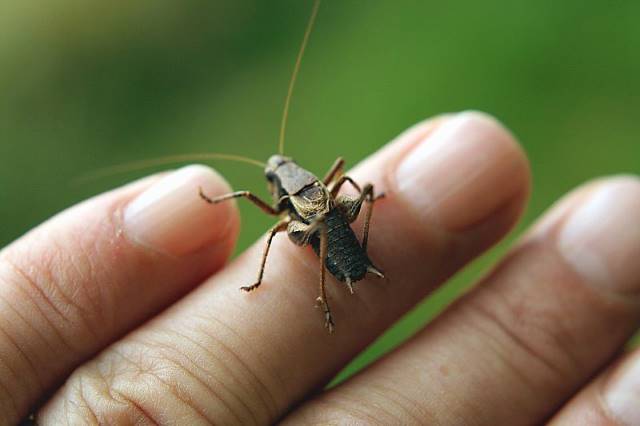 Esnath Divasoni is changing the game when it comes to how the world thinks about food and sustainability. The 33-year-old rural Zimbabwean “edible-insect farmer” is promoting the
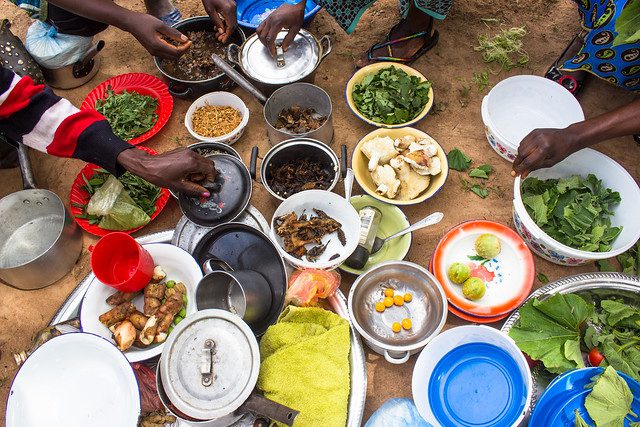 According to the Council on Foreign Relations,

 The COVID-19 pandemic has negatively impacted the