• Link to X
  • Link to Facebook
  • Link to Instagram
  • Link to TikTok
  • Link to Youtube
  • About
    • About Us
      • President
      • Board of Directors
      • Board of Advisors
      • Financials
      • Our Methodology
      • Success Tracker
      • Contact
  • Act Now
    • 30 Ways to Help
      • Email Congress
      • Call Congress
      • Volunteer
      • Courses & Certificates
      • Be a Donor
    • Internships
      • In-Office Internships
      • Remote Internships
    • Legislation
      • Politics 101
  • The Blog
  • The Podcast
  • Magazine
  • Donate
  • Click to open the search input field Click to open the search input field Search
  • Menu Menu

Archive for category: Education

Information and stories on education.

Education, Global Poverty

Shidhulai Brings Education by Boat

Five months of monsoon season in Bangladesh brings with it at least two floods a year. In riverside areas, these floods make many roads impassable, preventing travel, school attendance and access to resources for long periods of time every year. To overcome this ecological obstacle, a local nonprofit organization, Shidhulai Swanirvar Sangstha, is implementing an innovative solution.

Shidhulai runs a fleet of boats that bring education, libraries, waste management, computer education, internet access and information on sustainable agriculture and healthcare to the Chalanbeel region of northwest Bangladesh.

Shidhulai operates by building and converting boats, equipping them with books and technology, powering the boats using solar energy and bringing these resources to communities through waterways.

Shidhulai has 88 boats, with 42 currently operating as boat schools, mobile internet-education units and healthcare clinics. The remaining 46 boats are being converted into housing options for climate refugees and flood victims called “Climate Shelters.”

Each boat is equipped with solar panels on its roof, which generate the electricity needed for the boat’s operations. Surplus energy is distributed between local families through solar lamps. The boats are fitted with multi-layered waterproof roofs, windows for ventilation and flat plank floors, all made in the region using locally available materials.

In addition to their fleet of boats, the organization has developed a Central Library, Technology Center and Regional Headquarters in their Shidhulai complex, which is easily accessible by waterways. All of its services are free of cost, with the exception of its mobile phone calls and bicycle pumps.

Since its inception in 1998, Shidhulai has served 70,000 students, and hopes to reach 100,000 more in the next five years. By turning the region’s waterways into pathways for education, information and technology, this grassroots organization has brought new life to northwestern Bangladesh.

– Tara Young

Sources: Shidhulai, Jolkona, Washington Post
Photo: Architcture as Auesthetics

October 24, 2013
https://borgenproject.org/wp-content/uploads/borgen-project-logo.svg 0 0 Borgen Project https://borgenproject.org/wp-content/uploads/borgen-project-logo.svg Borgen Project2013-10-24 05:03:352024-12-13 17:49:45Shidhulai Brings Education by Boat
Advocacy, Developing Countries, Education, Global Poverty, Health, Nonprofit Organizations and NGOs, Poverty Reduction

5 Books about Global Health and Development

three_cups_of_tea_book
No matter what your political leanings may be, these books cannot help but convince readers of the importance of global development. As you read the anecdotes and arguments presented in these books, remember that only 1 percent of the U.S. budget goes to foreign aid – and change begins with you.

1. Three Cups of Tea by Greg Mortenson

After traveling and mountain-climbing in the Himalayas, Mortenson launched a mission to bring schools and education to children living in remote regions of central Asia. His moving book outlines the importance of local development projects targeted at education, capacity building and sustainability. Through Mortenson’s activism and writing, the Taliban’s hold has been reduced over previously unprotected and disempowered communities.

2. Partner to the Poor by Dr. Paul Farmer

World-renowned doctor, anthropologist and humanitarian Paul Farmer defines the term “structural violence” and explains its connection to global health in this gripping book. Farmer writes about the structural elements of political and social life that systematically undermine access to healthcare in rural Haitian, Rwandan and Peruvian communities. His arguments on political instability’s effect on population compel readers to see the vast impact of foreign policy and aid.

3. The Practice of International Health by Ananya Roy and Daniel Perlman

This book offers a series of personal accounts from physicians and humanitarians providing healthcare around the world. More so than other anecdotes, these stories provide a detailed picture of the logistical and cultural challenges international development projects face. However, rather than discouraging such projects, “The Practice of International Health” demonstrates how such barriers can be overcome in order to achieve remarkable success.

4. Half the Sky by Nicholas Kristof and Sheryl WuDunn

Journalists Kristoff and WuDunn cover a lot of ground in this entertaining and heartbreaking collection of stories. Similar to Mortenson’s work, “Half the Sky” emphasizes the importance of grassroots organizations, illuminating the tireless efforts of individuals in India, China, Afghanistan and Ethiopia on the behalf of women. In the book’s epilogue, Kristoff and WuDunn also provide an extensive list of nonprofits doing amazing work around the world, as well as easy steps for getting involved in female empowerment and global development.

5. Banker to the Poor by Muhammad Yunus

Microfinance has both supporters and critics, but after reading this autobiography by the founder of the Grameen Bank, Muhammad Yunus, readers might find that their opinion has changed. Yunus was awarded the Nobel Peace Prize in 2006 for his work in providing small-value loans to women in rural areas in order to promote economic growth among families and villages.

– Shelly Grimaldi

Sources: GoodReads, Banker to the Poor
Photo: Wishes 4 Life

October 21, 2013
https://borgenproject.org/wp-content/uploads/borgen-project-logo.svg 0 0 Borgen Project https://borgenproject.org/wp-content/uploads/borgen-project-logo.svg Borgen Project2013-10-21 15:54:572020-07-09 20:52:165 Books about Global Health and Development
Education, Global Poverty

Graphite Offers Way-Markers to Teachers and Students

Graphite_Gates_Foundation_Common_Sense_Media
Anyone with Internet access knows there can be temptation to misuse its power. What has the potential to bring understanding across social and geographic divides and make accessible information from every discipline and denomination is often instead used to watch cats behaving quirkily or play video games. Lamentable as that misuse is, it is unlikely to change. Knowing this, Common Sense Media created Graphite.

Graphite is a website that rates games, apps, websites from the Internet, gaming consoles and more, on a tripartite rubric to help teachers and students sort the games with educational content from those which are purely time-wasters. Some games are small and virtually unknown; others are as universally recognized as SimCity.

The idea has earned support ranging from philanthropic dignitaries such as Bill Gates, teachers across the country, and students themselves, who can rate the games on a separate tier from the teachers’ ratings.

Graphite is not alone in this new take on learning. Khan Academy, which has been an unequivocal success, has incorporated game-like elements into its curriculum as well, such as awards and points, which can be used to buy avatars. The old doctrine of repetition and memorization from a black and white textbook is on the way out.

However, there are concerns that making education more about fun is fool’s gold. Numerous studies have linked playing video games and heavy computer usage to temporarily reduced cognitive ability, suggesting that there are benefits to learning by rote. Furthermore, there are social consequences to consider: public school systems are, in part, dedicated to instructing children on the way to be effective workers.

Children learn more than facts in school – they learn a new milieu which home life does not typically comprise. By buckling the complaints of children who find school boring or difficult, parents and teachers may be creating a lenient mentality that could cause issues in the future.

Of course, traditional schooling has its own achilles heel, which leads back to the anecdote that opened this article: the Internet. It is an all too common practice for children to escape from the stresses of school and immediately deluge themselves with cartoons, videos, and games, possibly negating the benefits from earlier in the day. Slumping test scores and the declining ability of Americans to compete globally for top-tier jobs in science, medicine, and technology can be seen as testament to this.

It is in this respect that Graphite and its ilk must be viewed not as the solution to a learning problem, but as a complementary tool which can, if not cultivate further learning, at least lend a hand in retaining what traditional methods are able to instill. Like public school, Graphite’s secondary, and possibly more important function, is social.

It has the power to teach children to recognize and acknowledge the difference between games with value, and those without. Hopefully, what Graphite will one day accomplish is to create a lifestyle among an entire generation in which free time is not spent watching strange cats.

– Alex Pusateri

Sources: Graphite, Forbes, Pulse 2, Pravad.Ru
Photo: Memphis Flyer

October 21, 2013
https://borgenproject.org/wp-content/uploads/borgen-project-logo.svg 0 0 Borgen Project https://borgenproject.org/wp-content/uploads/borgen-project-logo.svg Borgen Project2013-10-21 06:59:382024-05-25 00:26:30Graphite Offers Way-Markers to Teachers and Students
Education, Global Poverty, Women & Children

Malala’s Weapon of Choice Revealed on The Daily Show

malala_daily_show
With a comprehension of human nature typically not seen in someone of only 16 years of age, Malala Yousafzai explained the motivation for literally risking her life for everyone’s right to education by saying: “We are human beings…we don’t learn the importance of anything until it’s snatched from our hands.”

In an interview with Jon Stewart of Comedy Central’s The Daily Show, well-known educational activist Malala Yousafzai once again stunned the world through the embodiment of such pure compassion and altruism that left her usually quick-witted host speechless.

She described her home of Swat Valley, located in Pakistan, as a peaceful paradise of natural beauty with flowing rivers and lush green hills. It was not until 2007 that the Taliban in her hometown had begun attacking schools and anyone they deemed anti-Taliban. Malala recounted how she realized how crucial education was after recognizing the Taliban feared the power of an educated woman.

The empowerment and liberation these young girls felt in school was too great for their community to surrender to the Taliban. Schools went underground, removed school signs and tried to continue educating children even under the possibility of being attacked by the Taliban.

When asked what motivated her to stand up for education, she spoke of the inspiration her father gave her who was also an activist for women’s rights and education. His example gave her the courage to take the fight for her rights into her own hands rather than wait for the government to intervene.

By raising her voice on multiple platforms from her blog with BBC Urdu, to appearing on media channels, Malala generated enough awareness of Swat Valley’s situation and advocacy for women’s education, that the Taliban labeled this 14-year-old girl as a threat. She explained that the Taliban attempted to rule Swat Valley through fear and the misuse of Islam. Malala refused to back down and instead used her intelligence to articulate her experience and subvert the Taliban’s tyranny, but in turn risked her life.

After a friend told her that the Taliban were targeting her, she described what she planned to do if a member of the Taliban was about to kill her. With her steel resolve, she stated to Jon Stewart and everyone around the world watching that she would never retaliate against the Taliban, because doing so would make her no different than a terrorist.

Dialogue and compassion would be her weapons of choice, and she would tell the Taliban she fights not for her education, but for the education of all – including the Taliban’s children. Such blunt advocacy for peace and pacifism momentarily left Jon Stewart in silence until he comically asked if Malala’s father would be mad if he adopted her.

Other great leaders in history have came to similar conclusions when faced with the idea of violent suppression. Martin Luther King Jr., Mahatma Gandhi, Mother Theresa, and now Malala Yousafzai have displayed a similar capacity for compassion and peace that great change often necessitates.

It requires a certain level of vision and passion to make people gravitate towards the leaders of grand social movements and it is evident in the actions and resolve of Malala Yousafzai that she poses such qualities. It is now up to the people across the world to pick up their pens and raise their voices as Malala has done and join the fight for equality she has risked her life for.

– Jacob Ruiz

Sources: The Daily Show, USA Today
Photo: Jezebel


Malala Yousafzai Facts


October 20, 2013
https://borgenproject.org/wp-content/uploads/borgen-project-logo.svg 0 0 Borgen Project https://borgenproject.org/wp-content/uploads/borgen-project-logo.svg Borgen Project2013-10-20 17:16:042024-12-13 17:49:44Malala’s Weapon of Choice Revealed on The Daily Show
Charity, Education, Global Poverty, Nonprofit Organizations and NGOs

Patrick and Anna M. Cudahy Fund: What You Should Know

Patrick_Anna_Cudahy_Fund
The Patrick and Anna M. Cudahy Fund is a foundation that grants money to nonprofit organizations involved in social and youth services, education, art and culture.

The premise of the fund dates back to the early 1920s, when Articles of Association were drawn to break ground on the Alice Dickson Cudahy Clinic. This clinic was created to provide free services to dependent family members of employees at the Cudahy Brothers Company. Some of these free services included medical attention, and education on matters such as child welfare, domestic science and social hygiene. The clinic was able to open on August 1, 1923, thanks to a $19,270.77 donation made by Michael F. Cudahy.

On August 22, 1935, the name of the organization was changed to the Michael F. Cudahy Fund. Upon this change, the association broadened its spectrum of philanthropy efforts to include the severely poverty-stricken and ill. On September 29, 1943, the name of the organization was once again changed, this time to the Patrick and Anna M. Cudahy Fund, in honor of Michael’s parents.

Today, the Fund primarily assists youth organizations located in Wisconsin and Chicago, though some money is granted to charities involving public interest and environmental conflicts. The Fund also accepts international requests affiliated with U.S. nonprofits.

– Meagan Hurley

Sources: Business Journal, Cudahy Fund

October 17, 2013
https://borgenproject.org/wp-content/uploads/borgen-project-logo.svg 0 0 Borgen Project https://borgenproject.org/wp-content/uploads/borgen-project-logo.svg Borgen Project2013-10-17 13:53:402017-03-20 13:09:27Patrick and Anna M. Cudahy Fund: What You Should Know
Advocacy, Education, Gender Equality, Global Poverty, Philanthropy, Women & Children, Women and Female Empowerment

5 Great Female Writers on Giving Back

Anne_Frank_Giving_Back
This author’s previous post illuminated philanthropic quotes from five of the greatest male writers of our times. Here, we introduce to you five great female writers and what they have to say about giving back:

So many gods, so many creeds,
So many paths that wind and wind,
While just the art of being kind,
Is all this sad world needs

—Ella Wheeler Wilcox
Wilcox was an American poet whose style was simple, but the meanings therein were often profound. Some of her great works include Poems of Passion, A Woman of the World, and Poems of Peace.

I’ve learned that you shouldn’t go through life with a catcher’s mitt on both hands; you need to be able to throw something back.

—Maya Angelou, As a writer, poet, and a significant member of the Civil Rights Activists during the 1960s, Angelou is perhaps most known for her autobiographies, including I Know Why the Caged Bird Sings. Other famous works include Just Give Me a Cool Drink of Water ‘Fore I Die, The Heart of a Woman, and Letter to My Daughter.

As we work to create light for others, we naturally light our own way.

―Mary Anne Radmacher. Radmacher is a writer and artist, and teaches writing seminars. She is best known for Lean Forward into Your Life, and Live Boldly.

No one has ever become poor by giving.

—Anne Frank. While hiding with her family from the Nazis during World War II with another family in Amsterdam, she kept a diary which was discovered after her death in a Nazi concentration camp. Her diary, The Diary of a Young Girl, is well known across the world as the heartbreaking memoir of a young girl’s transition into adolescence and an attempt at understanding an adulthood she’d never reach.

Indifference and neglect often do much more damage than outright dislike.

—J.K. Rowling, a writer with a rags-to-riches story, is not one who needs to be convinced of the importance of giving back. After making it to the list of richest people in the world in 2011, Rowling managed to donate so much money that she failed to make it to the list in 2012. Along with her multi-faceted fantasy Harry Potter novels, JKR is known for The Casual Vacancy, and The Cuckoo’s Calling, which was written under the pseudonym Robert Galbraith.

– Aalekhya Malladi

Sources: GoodReads, Poetry Foundation, Telegraph
Photo: HTML Giant

October 16, 2013
https://borgenproject.org/wp-content/uploads/borgen-project-logo.svg 0 0 Borgen Project https://borgenproject.org/wp-content/uploads/borgen-project-logo.svg Borgen Project2013-10-16 09:27:522024-12-13 17:49:435 Great Female Writers on Giving Back
Education, Global Poverty, Health

The Side Effects of Not Knowing

medication
Everyone in the United States knows to expect a long, rambling list of side effects at the end of a TV commercial for medication. We have also learned that taking medication as directed by a physician is an important part of being a responsible patient and consumer, and to notify our doctor immediately if symptoms worsen. But in the absence of television, many people living in rural communities of developing nations don’t know what to make of their medication and its side effects. And without consistent access to doctors or nurses who might be able to explain these side effects, patients’ lack of information often prevents them from benefiting from medication meant to help their quality of life.

This lack of consumer information has dramatic consequences. For example, the World Health Organization estimates that there are more than 222 million women worldwide who would like to use family planning methods to delay or prevent pregnancies, but are unable to do so. Coincidentally, for those women who do make it through social and financial barriers to obtain birth control pills, experiencing adverse symptoms to birth control is one of the main reasons women stop using the method. When women get unexplained bleeding outside of regular menstruation, cramps, headaches, and back pain, they assume the medication is hurting their bodies. This breeds rumors that birth control damages the body, further ingraining social stigma against family planning.

Similar issues surround the drug Coartam, used in many rural health centers as the first-line treatment for malaria. Because Coartam relieves the fever and chills of a malarial infection, some patients will ask for Coartam any time they have a fever, whether it is caused by the malaria parasite or not.

Most public health organizations focusing on HIV/AIDS have realized the critical importance of education alongside medication and healthcare. The famous ABC campaign, first created by the health ministry of Botswana in the 1990s and adjusted in 2003, has educated millions of people about how the HIV virus is transmitted, and how abstinence, being tested regularly, and using condoms can prevent HIV infection. The campaign has aimed to leverage the millions of dollars invested in condom distribution. Because gender dynamics and other social norms play a large role in the acceptance or rejection of condom use, education is a critical step in bringing about behavior change.

Now, health education needs to expand to include drug information any U.S. consumer would want to know. Public health and international development projects need to have the foresight and funding to include patient education if they want to truly impact healthcare and quality of life.

– Shelly Grimaldi

Sources: World Health Organization
Photo: EmaxHealth

October 12, 2013
https://borgenproject.org/wp-content/uploads/borgen-project-logo.svg 0 0 Borgen Project https://borgenproject.org/wp-content/uploads/borgen-project-logo.svg Borgen Project2013-10-12 04:00:142024-05-25 00:24:45The Side Effects of Not Knowing
Charity, Education, Global Poverty

Justin Bieber for Global Education

justin_bieber_pencils_of_promise
Since its founding in 2008, Pencils of Promise has been working towards improving access to education around the globe. The non-profit has set out to identify places most in need of educational facilities and then proceeding to build schools in those locations.

However, the organization’s role does not end there. To ensure the sustainability of their projects, Pencils of Promise also offers scholarships, education programs, and hires and trains individuals from local communities to staff their schools. With a focus on long-term success, schools and curricula are also routinely monitored and assessed for efficacy.

Canadian pop sensation, Justin Bieber, has been an avid supporter of Pencils of Promise for many years. In 2011, the smooth-voiced crooner competed in a Magnum Ice Cream contest against Nelly Furtado, Usher, and Jordin Sparks for $20,000 toward their charities of choice.

Bieber ended up easily defeating his opponents and winning the competition, and split the award money evenly between Pencils of Promise and Make-A-Wish Foundation.

The following year, the teen star went on to join Pencils of Promise’s founder, Adam Braun, in filming a promotional video encouraging adolescents to create personal fundraising pages on behalf of the organization. The incentive (aside from the gift of giving, of course)? Bieber would pay a visit to the three schools that demonstrated the most impact through fundraising for the Schools4All campaign.

With each $25 contribution, contestants would be compensated with one lottery entry. The more entries and donations one collected, the better the chance that he or she would get to meet Bieber.

According to the singer, “”I wanted to give every one of my fans a chance to help others and bring me to their school for just $25. The Schools4All campaign is a way for us young people to make a change, and I’ll get to thank an entire school in person.”

To further magnify the project’s significance, Bieber also partnered with Barnes & Noble and Nook to match the amount of money generated by fundraising participants and to donate 1,000 Nook readers to students enrolled in Pencils of Promise schools.

Thanks, in no small part to Bieber, Pencils of Promise’s reach continues to grow as it gains prominence. To date, the organization has built 146 schools in countries such as Ghana, Laos, Nicaragua, and Guatemala.

From his deep involvement with Pencils of Promise and his commitment to furthering its goals, Bieber sets a prime example of how to use one’s star power to alleviate the ill effects of global poverty.

– Melrose Huang

Sources: Huffington Post, PR Newswire
Photo: PopCrush

October 4, 2013
https://borgenproject.org/wp-content/uploads/borgen-project-logo.svg 0 0 Borgen Project https://borgenproject.org/wp-content/uploads/borgen-project-logo.svg Borgen Project2013-10-04 20:26:002017-02-21 12:50:34Justin Bieber for Global Education
Education, Global Poverty, Women and Female Empowerment

Uganda to Provide Contraception for Girls

Uganda High School Contraception Women Reproductive Rights
In an effort to reduce the number of women who die from maternal complications, Uganda’s government is considering a plan to provide contraception to every Ugandan women between the ages of 14 and 18.

In Uganda, an estimated 16 women die every day from complications related to pregnancy and childbirth. For every woman who dies, an additional 15 women develop complications, such as fistulas. These statistics make it unlikely that Uganda will achieve the United Nations Millennium Development Goal of reducing maternal mortality by 75 percent by the 2015 deadline.

During a meeting organized by the Ugandan health ministry earlier this month, Sarah Opendi, the state minister for primary health care, said it was “unethical” to allow Uganda’s female citizens to continue to die from easily preventable complications

Among the most fatal of these complications are hemorrhaging, high blood pressure, and contraction of infectious diseases due to weakened immune systems. However, many young women also die from self-induced abortions.

“You don’t know what some of these girls go through,” Opendi said. “When they can’t confide in anyone and are desperate to get the fetus out they will do anything.”

Afraid to confide in their parents and usually impregnated by classmates who are also unable to support a child,  many girls try to terminate their own pregnancies, and often die in the process.

To address this problem, the Ugandan government plans to set up youth centers in schools and hospitals, where young girls can receive proper counseling. The government is likely to also provide condoms and contraceptive pills.

John Cooper, the executive director of Uganda Family Planning Consortium, believes that every woman should have a child by choice, not chance. Currently, of the Ugandan women who get pregnant, half of the pregnancies are unwanted.

“Now, we can’t want to reduce the numbers of women who dies while giving birth and not want to provide women with contraception that can reduce their fertility,” said Cooper.

The Ugandan minister must first convince several critics before the government’s plan to provide contraception to every woman between 14 and 18 is implemented. But this may be the country’s only option. Uganda’s population currently stands at over 34 million, and the country’s fertility rate is 6.7 percent. Moreover, women in rural areas lacking medical resources may produce twice as many children.

If the movement to provide contraception passes, the government must turn to its next issue in the fight to lower maternal mortality and limit population: the need to allocate more funding and resources to Uganda’s impoverished rural regions.

– Scarlet Shelton

Sources: New Vision, Index Mundi, all Africa
Photo: Books For Africa

October 2, 2013
https://borgenproject.org/wp-content/uploads/borgen-project-logo.svg 0 0 Borgen Project https://borgenproject.org/wp-content/uploads/borgen-project-logo.svg Borgen Project2013-10-02 21:13:042018-01-30 13:13:07Uganda to Provide Contraception for Girls
Education, Global Poverty

Literate Women Improve Development

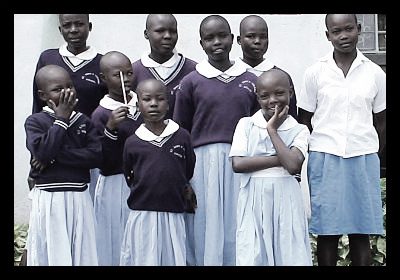
girls_school_ghana
One in every six adults worldwide is illiterate. Most of the world’s illiterate are women, meaning that they are 15 or older and unable to read or write. Literate women add to their country’s development. This is accomplished through their participation in business, government and culture. Moreover, they are more likely to ensure that their children, especially the girls, attend school, guaranteeing a subsequent generation of literate women.

United Nations Secretary-General Ban Ki-moon stated, “Every literate woman marks a victory over poverty.” Literate women strengthen the development of their country by reducing mortality rates, increasing child and maternal health and ensuring ongoing literacy for girls.

Therefore, governments, donors and non-governmental organizations (NGOs) have been encouraged to increase the funding and advocacy to improve literacy rates among the world’s women.

Africa is the only continent where most adults are not able to read or write. According to the United Nations Educational, Scientific and Cultural Organization (UNESCO), the adult literacy rates are below 50 percent in Benin, Burkina Faso, Chad, Ethiopia, Guinea, Mali, Niger, Senegal, Sierra Leone and The Gambia. Due to gender inequality, the literacy rates in these countries are even lower for women.

Below are the literacy rates for the women in some of these countries:

  • Benin: 30 percent are literate, 70 percent of women are illiterate
  • Burkina Faso: 21 percent are literate, 79 percent of women are illiterate
  • Chad: 25 percent are literate, 75 percent of women are illiterate
  • Mali: 24 percent are literate, 76 percent of women are illiterate

With a poverty rate of 43 percent, Mali is one of the world’s poorest countries. Life expectancy is 54 years and girls’ education rate is only up to 7 years old. For these women and girls living in poverty, gaining an education is essential for survival. Through educating women and girls in Mali, HIV infection rates will decrease, incidents of human trafficking will diminish and women will marry and have children later in life. Women will also instill a value for education in their children and will gain more input in their family functioning.

Through increased funding and advocacy to educate the women of the world, global poverty will be diminished.

– Caressa Kruth

Sources: UN News Centre, UNICEF, UNESCO, CIA, The World Bank, World Education
Photo: The Blessing Basket

October 2, 2013
https://borgenproject.org/wp-content/uploads/borgen-project-logo.svg 0 0 Borgen Project https://borgenproject.org/wp-content/uploads/borgen-project-logo.svg Borgen Project2013-10-02 20:41:582024-05-25 00:23:03Literate Women Improve Development
Page 234 of 241«‹232233234235236›»

Get Smarter

  • Global Poverty 101
  • Global Poverty… The Good News
  • Global Poverty & U.S. Jobs
  • Global Poverty and National Security
  • Innovative Solutions to Poverty
  • Global Poverty & Aid FAQ’s
Search Search

Take Action

  • Call Congress
  • Email Congress
  • Donate
  • 30 Ways to Help
  • Volunteer Ops
  • Internships
  • Courses & Certificates
  • The Podcast
Borgen Project

“The Borgen Project is an incredible nonprofit organization that is addressing poverty and hunger and working towards ending them.”

-The Huffington Post

Inside The Borgen Project

  • Contact
  • About
  • Financials
  • President
  • Board of Directors
  • Board of Advisors

International Links

  • UK Email Parliament
  • UK Donate
  • Canada Email Parliament

Get Smarter

  • Global Poverty 101
  • Global Poverty… The Good News
  • Global Poverty & U.S. Jobs
  • Global Poverty and National Security
  • Innovative Solutions to Poverty
  • Global Poverty & Aid FAQ’s

Ways to Help

  • Call Congress
  • Email Congress
  • Donate
  • 30 Ways to Help
  • Volunteer Ops
  • Internships
  • Courses & Certificates
  • The Podcast
Scroll to top Scroll to top Scroll to top