• Link to X
  • Link to Facebook
  • Link to Instagram
  • Link to TikTok
  • Link to Youtube
  • About
    • About Us
      • President
      • Board of Directors
      • Board of Advisors
      • Financials
      • Our Methodology
      • Success Tracker
      • Contact
  • Act Now
    • 30 Ways to Help
      • Email Congress
      • Call Congress
      • Volunteer
      • Courses & Certificates
      • Be a Donor
    • Internships
      • In-Office Internships
      • Remote Internships
    • Legislation
      • Politics 101
  • The Blog
  • The Podcast
  • Magazine
  • Donate
  • Click to open the search input field Click to open the search input field Search
  • Menu Menu

Archive for category: Education

Information and stories on education.

Development, Education, Global Poverty, Health

10 Pieces of Good News About Sub-Saharan Africa

good news about sub-saharan africaFor many Americans, the face of global poverty is sub-Saharan Africa. Sub-Saharan Africa consists of 48 countries in southern, central and eastern Africa. Four years ago, the majority of people living in poverty were in sub-Saharan Africa, but a great deal of progress has been made in the fight against global poverty in recent decades. The effects of that progress can be seen as clearly in sub-Saharan Africa. Twenty years ago, much of sub-Saharan Africa was gripped by extreme poverty and nearly non-existent economic growth. However, there has been significant poverty reduction and economic growth recently, thanks in part to poverty reduction initiatives throughout the region. These ten facts describe the good news about sub-Saharan Africa.

10 Pieces of Good News About Sub-Saharan Africa

  1. In 2013, 42.6 percent of sub-Saharan Africans were affected by severe poverty. By 2016, this percentage dropped to 35.2 percent. This represents a decrease in poverty rates of over 5 percent in three years.
  2. Since the 1990s, quality of life in sub-Saharan Africa has improved. Infant mortality is lower and chronic malnutrition is 6 percent less likely. Adult literacy rates have increased by 4 percent as well.
  3. African children are more likely to survive common diseases. In addition, more treatment options are available for HIV and life expectancy has increased by almost twenty years.
  4. Throughout the 1990s, sub-Saharan Africa’s GDP growth remained below 3 percent. The region’s economic growth was above 2.5 percent in 2017 and remained above 3 percent for most of the past decade. Even 2016, sub-Saharan Africa’s lowest year of GDP growth during the 21st century, was better than 1993, its lowest year of GDP growth during the 1990s.
  5. The sub-Saharan African economy was predicted to grow at a faster pace in 2019 than the economies of more affluent regions. For example, Kenya’s economy was predicted to grow by 5.8 percent. Overall regional growth was predicted to be higher than 3 percent.
  6. Economic growth is expected to continue rising after an economic downturn in 2015, with an expected average growth of 3.7  percent in 2020.
  7. In 1999, many sub-Saharan African countries adopted poverty reduction policies modeled on the 1999 Poverty Reduction Strategy Paper (PRSP). PRSP programs include cash transfers, subsidies and public works programs. PRSP programs significantly increased economic growth where they were implemented.
  8. From 1990 to 2012, GDP in PRSP countries increased from 0.82 percent to 5.12 percent. GDP in sub-Saharan Africa (including both PRSP and non-PRSP countries) increased from 4.61 percent to 5.21 percent from 2000 to 2012. PRSP greatly stimulated economic growth.
  9. By 2013, 80 percent of primary school age children in Africa were enrolled in school. Secondary school enrollment rates also increased. This means that as education improves, poverty will decrease.
  10. In 1990, industry comprised about 21.9 percent of sub-Saharan Africa’s GDP. In 2012, industry comprised about 24.6 percent of sub-Saharan Africa’s GDP. In the west, the economic transition from a predominantly agricultural economy to a more industrial economy was an indicator of economic growth. A gradual shift away from an economy that relies solely on agriculture is good news for the people of sub-Saharan Africa.

Poverty is still present in sub-Saharan Africa, but the numbers show how much progress has been made. Further, they show that there is plenty of good news about sub-Saharan Africa. Sub-Saharan Africa does not have to be the face of global poverty because of the region’s economic growth and poverty reduction.

– Emelie Fippin
Photo: Flickr

August 21, 2019
https://borgenproject.org/wp-content/uploads/borgen-project-logo.svg 0 0 Kim Thelwell https://borgenproject.org/wp-content/uploads/borgen-project-logo.svg Kim Thelwell2019-08-21 16:54:472024-05-29 23:10:2610 Pieces of Good News About Sub-Saharan Africa
Advocacy, Developing Countries, Development, Education, Global Poverty

Global Citizen Year: Connecting Students to Service

global citizen year
In 2008, after winning first place at the Harvard Business School’s Pitch for Change competition, Stanford graduate and aspiring social entrepreneur Abigail Falik established the cultural immersion gap-year program, Global Citizen Year. Falik became inspired to create an opportunity for service available for all rising college freshmen.

Global Citizen Year in Ecuador

As a developing country, Ecuador faces a significant economic strain, especially in its more rural areas. It ranks as the fourth poorest country in South America with a GDP per capita at $11,036.

Global Citizen Year offers five distinct apprenticeships to its fellows, all of which revolve around social justice and complete cultural immersion. The program prides itself on providing an uncensored version of third-world interaction. This stands in contrast to its counterparts, many of which place a patronizing lens over international service.

When a fellow embarks on their mission to Ecuador, they choose between apprenticeships in agriculture, education, environmental conservation, social enterprise or social work. The duties range from working alongside the local government in efforts to protect vulnerable populations, to helping tutor English in local schools, to working in government-run elderly homes.

The following is an excerpt from Natalia Lanzoni’s June 2019 interview with the Borgen Project regarding Global Citizen Year’s unique approach.

Natalia Lanzoni’s June 2019 Interview with the Borgen Project

The Borgen Project: What were the biggest culture shocks—especially relating to the level of poverty—you faced when initially arriving in Ecuador?

Lanzoni: There was obviously a considerably less amount of wealth than the average person has in Cambridge. It kind of permeates every aspect of life, even the little things that you don’t think about what we do here. When I would buy groceries with my host-family we would buy one roll of toilet paper, because that’s what their income allows them. Here we don’t even think about it when we’re buying twenty-four rolls of toilet paper. It means that we have a surplus in our income that we can afford to spend it now. There was a lot of privileges I had that I didn’t even realize. Especially the fact that I was able to travel. The host-family told me they had never seen the ocean, which blew my mind because they were a two-hour drive away. Also, my host parents had to cross the U.S. border as illegal immigrants to find work when their son was born, because the U.S. won’t give visas if they see Ecuador in the papers. Their son lived his first ten years parentless.

The Borgen Project: Can you talk about your service experience in Ecuador?

Lanzoni: For the program, we have what’s called an apprenticeship, which is basically a volunteer job in our communities. So, a lot of people are English teachers or assistants to English teachers. English is important because it is so global. The one I worked for was at a local elderly home, it was run by the government of the town which provided a place for them to hang out during the day. They would come there and do crafts and the home would feed them meals. That home also supported families that lived very rarely, that had no sources of income because they were older. And they lived really high on the mountainsides, so a lot of them didn’t even have access to clean water, or they couldn’t walk all the way to the river because it was too far. They were living in pretty extreme poverty and the organization would also make trips out to do activities with them. Also, deliver them food and supplies for their homes.

TBP: Can you explain the ways in which you believe Global Citizen Year ensures long-lasting improvement on both a personal and social level?

Lanzoni: There are two different parts of how the organization is working to combat poverty. There’s the more obvious one which is the labor, the volunteer work that the fellows do while they’re in the country. But obviously, they’re only 18-year-old kids who don’t have a marketable skill or some niche way in which they can help the community. So I think the organization is more focused on the bigger picture, which is educating the leaders of tomorrow and inspiring young kids who are about to go off to college to involve themselves in social work. People don’t really think about going to college to work for a nonprofit combating poverty that often, so this is a way to expose young kids to those types of fields and to hopefully educates them in ways that they know will tangibly help that community down the line.

Global Citizen Year succeeds in informing its students about the reality of extreme global poverty. In doing so, it builds a force of passionate and motivated youth that will fight the fight to end global poverty. Here is the application to become a Global Citizen Year fellow.

– Liam Manion
Photo: Flickr

August 19, 2019
https://borgenproject.org/wp-content/uploads/borgen-project-logo.svg 0 0 Kim Thelwell https://borgenproject.org/wp-content/uploads/borgen-project-logo.svg Kim Thelwell2019-08-19 14:52:212019-10-09 08:02:45Global Citizen Year: Connecting Students to Service
Development, Education, Global Poverty

4 Ways Asante Africa Foundation is Helping Impoverished Youth in East Africa

asante africa foundationEducation has a massive impact on global poverty rates. According to the Global Partnership for Education, around 171 million people globally would escape poverty if every child left school with the ability to read. However, according to the Brookings Institute, one in four primary school-aged children in East Africa are not receiving an education. Asante Africa Foundation is working to combat this statistic. The non-profit organization aims to provide quality education and job skills to underprivileged children in Kenya and Tanzania through a four-pronged approach.

The Leadership and Entrepreneurial Incubator Program

The sub-Saharan workforce is the least skilled in the world. According to an Inter-University Council of East Africa report from 2014, a mere 49 percent of employers in Kenya believe graduates are prepared to succeed in an entry-level position. Only 39 percent of employers in Tanzania believe graduates are prepared. Asante’s leadership program works with children to build skills that are applicable in the workforce.

The program is a three year curriculum focused on personal development, job readiness and entrepreneurship. Skills like goal setting, financial literacy, leadership development, professional etiquette, industry exploration, project planning, interviewing and resume building are taught to children in the program. The programs five year impact report states that around 60 percent of participants have a leadership position in their communities, more than 70 percent have completed internships and participants have seen a 40 percent increase in salaries as opposed to those not involved in the program.

The Girls’ Advancement Program

According to Human Rights Watch, over 49 million girls in sub-Saharan Africa are out of primary and secondary school. Tanzania was found to have policies harmful to girls’ education. Human Rights Watch discovered that school officials conducted pregnancy tests and expelled pregnant students. The Girls’ Advancement Program teaches female students about sexual maturation, reproductive health, children’s rights and also assists schools in providing safe environments for girls.

The program has greatly benefited female students. Financial literacy is at 95 percent, 85 percent of participants feel they can attend school while menstruating and 70 percent know the importance of HIV awareness and prevention. The program also involves male students and helps them learn about male and female health.

Accelerated Learning in the Classroom Program

The third of the four ways Asante African Foundation is educating impoverished youth in East Africa is by improving educational resources and classroom environments. The Accelerated Learning in the Classroom Program provides intensive teacher training, a learner-centered education model and low cost digital resources to schools. Over 3,000 teachers have been trained to use digital resources in the program. According to Asante, 63 percent of students involved saw increases in English and critical thinking skills.

Scholarship Program

According to UNICEF, direct and indirect costs of schooling are a large barrier to education, especially among girls. Asante provides scholarships for primary, secondary and university level schooling. The primary school scholarship covers food, school materials, uniforms, personal items, boarding and transportation. The secondary and university scholarships cover all the aforementioned items except transportation and are based on academic performance. All of the scholarships cover one year of expenses and are given to rural and poor students of East Africa.

Asante has positively impacted over 500,000 lives through their programs. According to Global Partnership for Education, programs like Asante’s help reduce poverty rates, increase individual earnings, reduce income inequality while promoting economic growth. Asante has received awards from UNESCO, the Jefferson Awards Foundation, the Khan Academy, the African Achievers Awards and the United Nation Girls’ Education Initiative for their effective and beneficial work. The four ways Asante African Foundation is educating impoverished youth in East Africa and strategies like them are essential for the development of that region, and according to the U.N., imperative in ending extreme poverty.

– Zach Brown
Photo: Flickr

August 19, 2019
https://borgenproject.org/wp-content/uploads/borgen-project-logo.svg 0 0 Kim Thelwell https://borgenproject.org/wp-content/uploads/borgen-project-logo.svg Kim Thelwell2019-08-19 09:32:022024-05-29 23:10:444 Ways Asante Africa Foundation is Helping Impoverished Youth in East Africa
Education, Global Poverty, Life Expectancy

Top 10 Facts about Living Conditions in Guinea-Bissau

Top 10 Facts about Living Conditions in Guinea-Bissau

Once considered as a possible model for African development, Guinea-Bissau is now one of the poorest nations in the world. The nation has struggled to recover from instability created by a string of military coups in the 1980s. Now, the population is crippled with human trafficking, poverty and low literacy rates. Here are the top 10 facts about living conditions in Guinea-Bissau.

Top 10 Facts about Living Conditions in Guinea-Bissau

  1. Guinea-Bissau’s population is among the poorest in the world. In 2017, the nation’s GDP per capita was $1,700, ranking it 178 out of 214 nations. The main source of income is substance farming of products like cashews, coconuts and Brazil nuts. Those three crops account for 92 percent of the country’s exports. Furthermore, 67 percent of the population lives below the global poverty rate, 20.7 percent do not have access to improved water sources and more than three-quarters of the population lives in areas without improved sanitation.
  2. Healthcare is exceptionally rare in Guinea-Bissau. Diseases such as HIV, cholera, malaria, typhoid fever and yellow fever are rampant. Almost all medical facilities are located in the capital. There is only one hospital bed per 1,000 inhabitants. These facilities are highly inadequate and poorly funded as medicine only accounts for 5.6 percent of the GDP.
  3. Bissau-Guineans have an average life expectancy of 61.4 years. The nation’s life expectancy ranks among the lowest in the world. High infant and maternal mortality rates contribute to low life expectancy. There is little medical help for giving birth, making it very dangerous. In fact, one in every 19 mothers dies in childbirth. The infant mortality rate is among the highest in the world at 54.8 per 1,000 births.
  4. Caritas Internationalis has a strong presence in Guinea-Bissau. The organization was established in 1982 and operates 41 parishes and missions across Guinea-Bissau. Caritas assists in healthcare accessibility, job training, food security and emergency support. Its most impressive feat was the establishment of 24 different nutritional rehabilitation centers, which monitor vulnerable children and provide support for struggling parents.
  5. As a whole, education is seriously underfunded, accounting for roughly 2.1 percent of the nation’s GDP. Only 60 percent of the nation is literate. However, fewer than half of Guinean-Bissau women are literate. There are two universities throughout the country and several vocational schools. While education is supposed to be compulsory, only 65 percent complete the basic level of primary education. Instead of going to school, many children work to help provide an income. In 2017, 169,200 children between the ages of 5 and 17 were working.
  6. Children suffer from malnutrition. Anywhere from 11 percent to as high as 51 percent of Bissau-Guineans are food insecure, causing malnutrition. Roughly 15,000 children do not have enough to eat. Malnutrition has serious effects on a growing body. A lack of calories leads to underdevelopment, stunted growth and weakens the immune system.
  7. Of all the top 10 facts about living conditions in Guinea-Bissau, human trafficking presents the most danger for the developing country. For boys and girls alike, human trafficking is an unfortunate reality. Many boys who attend Quranic schools end up being forced into begging or labor by corrupt leaders of these Quranic schools. Traffickers have little trouble moving these boys through Guinea-Bissau’s weak borders. Bissau-Guinea girls suffer from sex trafficking and forced street vending. Many girls are recruited believing they will be models, but they are forced into prostitution instead. The government is on the Tier 2 watchlist, meaning it does not meet the standards for human trafficking, but it is making changes. In 2015, the government identified a single trafficking victim for the first time in 10 years.
  8. In March, Guinea-Bissau held a peaceful and successful voting day for the national assembly. U.N. officials hope that this vote will finally put an end the political turmoil that has plagued the nation since 2015 when then-President José Mário Vaz dissolved the government. This election was one of the final steps taken by the U.N. Integrated Peacekeeping Office in Guinea-Bissau (UNIOGBIS). This office aimed to reform Guinea-Bissau’s political structure as well as reinforce and rebuild political authority.
  9. Voz di Paz and the U.N. Peacekeeping fund are working together to empower women in Guinea-Bissau. Child marriage is a problem with 24 percent of women between the ages of 20 and 24 being married before they were 18. Furthermore, 45 percent of women ages 15 to 49 have undergone genital mutilation. The organization Voz di Paz is looking to kickstart culture change. In 2017, Voz di Paz consulted with women across Guinea-Bissau and identified four obstacles that hinder women. These obstacles are social pressure to conform to norms, the distortion of differences between men and women in politics, weak female solidarity and a lack of women within the Defense and Secretary forces. Voz di Paz presented this information at a conference with 50 participants from different communities. The result of the conference was a film produced in January 2018.
  10. The NenitaSá Engineering Foundation seeks to boost education and technology skills. One of their main projects is the STEM after-school club. Through this club, NenitaSá hopes to elevate Bissau-Guinean children’s skills in the engineering field, allowing them greater opportunities to find jobs throughout the world. On a large scale, NenitaSá hopes to increase education levels across Guinea-Bissau, especially for women.

These top 10 facts about living conditions in Guinea-Bissau reveal that its citizens are struggling. However, international organizations are taking notice and are striving to institute positive change in this small, West African country.

– Andrew Edwards
Photo: Flickr

August 18, 2019
https://borgenproject.org/wp-content/uploads/borgen-project-logo.svg 0 0 Kim Thelwell https://borgenproject.org/wp-content/uploads/borgen-project-logo.svg Kim Thelwell2019-08-18 01:30:202024-06-06 00:26:22Top 10 Facts about Living Conditions in Guinea-Bissau
Education, Global Poverty

Team Nelson Aiding Orphans in Tanzania

Orphans in Tanzania
Team Nelson is a nonprofit organization based out of Atlanta, GA that works to send orphans in Tanzania to school. In 2017, there was a 79 percent net enrollment rate in primary school but only a 23 percent net enrollment rate in secondary school. After primary school, many teenagers have to find work to help provide for their families, so retention is a huge issue in secondary school. Many of the orphanages in Arusha, Tanzania lack the funds to send their children to school, so McCrea O’Haire and her board began to raise money to send the first boy she met, Nelson, to school. From there, it grew.

Team Nelson has been successfully raising money and awareness in order to send more Tanzanian orphans to school. The organization also encourages kids to prioritize their education and reap the greater benefits of completing their education instead of leaving to find work. The Borgen Project had the opportunity to interview McCrea O’Haire about Team Nelson about sending orphans to school in Tanzania.

Who is Nelson?

Nelson is one of the first kids that O’Haire met in Tanzania and the inspiration behind Team Nelson. Upon first meeting him, she recalls him having a reserved and shy nature, as he was just trying to blend in with the other children. It was not until she learned of his situation that she saw him for who he really was and “realized how important it is to help the invisible children that people might not notice.” She eventually decided to transform Team Nelson into much more than just one child. Originally, she did not intend to do anything other than sending Nelson to school, but she received an outpour of support from family and friends which snowballed her intentions. Once she felt the support around her, she had the inspiration to do more.

The Future of Team Nelson

In running this nonprofit, O’Haire cites two main challenges. Firstly, everyone in the organization also works full-time jobs and have careers, so there are many difficult compromises that it must make. Secondly, there are always language barriers and cultural differences her team encounters when they visit Arusha. She cites their desire “to help people living across the world while not interrupting their cultural flow or offending anyone,” noting that this is not always easy.

Within the next five years, O’Haire hopes the organization continues its current trajectory. In the past year and a half, it has been able to send 18 children to school, so in five years, it would like to send around 50 or more kids. One of her favorite things about Team Nelson is the “one to one love” that they currently have. She wants to help as many kids as possible but also does not want the program to include thousands of kids that members of the organization have never met.

Addressing Systemic Issues in Tanzania

AIDS killed Nelson’s mother and alcoholism afflicted his father. His family alone represents a larger, systematic issue resulting in the death of many parents and caretakers in Tanzania, which has left about 3.1 million orphans in Tanzania. O’Haire cites this problem as one of the main reasons she and her team decided to create Team Nelson; “A lot of the problems in Tanzania revolve around offering more opportunities for education and helping the children further their lives with increased resources and tools.” She emphasizes the importance of sexual health education that children receive in school and the need for recurring doctor’s appointments.

If the government continues to receive pressure to employ more top-down approaches, she says, there will be drastic improvements in health and education. Fortunately, the Tanzanian government recently decided to make all lower-secondary education free in order to retain more students, as there are currently 1.5 million adolescents that are not in school.

Although it is quite difficult to live in rural Tanzania right now, O’Haire underscores the positivity of everyone she has met there. Prior to her trips there, she prepares herself to be the beacon of hope and energy that they may need but quickly reminds herself that Tanzanians are a happy group. In hard times, she reminds herself of the objectives of Team Nelson, which is sending children to school. She must often turn down requests but notes the importance of staying focused on her organization’s goals and trust in that impact.

If you would like to help Team Nelson and the orphans in Tanzania, O’Haire encourages a monthly donation of just $10, which directly contributes to getting children an education. In the case that providing a financial contribution is not possible, she hopes that “people will spread the word about this cause and really care about the problems our world is facing.”

To learn more, please visit https://www.weareteamnelson.com/.

– Jessica Haidet
Photo: Flickr

August 17, 2019
https://borgenproject.org/wp-content/uploads/borgen-project-logo.svg 0 0 Kim Thelwell https://borgenproject.org/wp-content/uploads/borgen-project-logo.svg Kim Thelwell2019-08-17 06:28:042019-12-16 14:21:46Team Nelson Aiding Orphans in Tanzania
Education, Global Poverty

Irene’s School in Uganda Supports Girls’ Education

Irene's School in Uganda

Education outcomes, a lack of funding, rapid expansion and inadequate management have led to low and declining education outcomes for girls and boys in Uganda. Since 2000, initial primary enrollment and attendance rates have increased; however, only one-third of students will finish their primary education.

The Problem

Only 20 percent of students reach O-level, which is four years of lower secondary education, and only 10 percent reach A-level, which is finishing secondary education and two years of upper secondary education. Furthermore, less than half of primary students meet the minimum level of literacy and numeracy in the National Assessments of Performance in Education.

Girls living in sub-Saharan Africa face some of the greatest disadvantages when it comes to gaps in education. Globally, over half of the out-of-school children live in this region, and nearly 40 percent of adolescent girls are out of school.

The reasons for this vary, however one of the most tenacious reasons is harassment from men. There is a lack of private bathroom facilities and it is very common for boys at school to target girls for consensual or forced sexual encounters which can harm the girl’s reputation. If she becomes pregnant, she’s forced out, while the father of the baby can continue with school.

Irene’s Story

Irene’s school in Uganda is a success story that stands above the rest and gives girls in sub-Saharan Africa hope. Irene Kamyuka, the youngest of four kids, was forced to drop out of her sixth year of primary school in 2012 because her father ran short of money. Kamyuka’s father told her that she could go back to school when her siblings were finished and he had saved up enough money.

However, because of her dedication and the generosity of others such as the Plan International Program, the 15-year-old is now in her first year at Kamuli Progressive College and stands as an inspiration to girls aspiring to stay in school. The international development charity is paying her term fees, which work out to about 20 U.S. dollars every three months.

Stories like Irene’s are not uncommon. Ugandans who live in rural areas, like in Kamyuka’s town Kamuli, make their living as subsistence farmers and run into difficulties paying for their children’s schooling. Though this East African nation’s government-run schools are free, parents who cannot afford to pay for uniforms, books and supplies cannot send their child to school.

According to preliminary statistics from Uganda’s Ministry of Education for the 2012 school year, the number of girls who qualify to attend secondary school stood at 343,000 in contrast to 408,000 boys. As in Kamyuka’s case, the outcome of their education is often interrupted or canceled completely.

How is the world helping?

Despite it being unusual for girls to attend school as far as the seventh grade in Uganda, the country is receiving support. UNICEF has been supporting Irene’s school in Uganda since 2015 by providing school supplies, as well as training teachers and building a new classroom block and latrines.

Similarly, the Plan International Program continues to help those in need to pay dues for school, and the Irene Children’s Support Organization (LICSOU) was formed in 2012. They work to respond to the overwhelming number of children who are dropping out of schools within rural communities like Irene’s school in Uganda. In order to accomplish their goals and help the greatest number of children, they plan on lobbying, advocating and improving community networking and collaboration.

– Grace Arnold
Photo: Unsplash

August 16, 2019
https://borgenproject.org/wp-content/uploads/borgen-project-logo.svg 0 0 Kim Thelwell https://borgenproject.org/wp-content/uploads/borgen-project-logo.svg Kim Thelwell2019-08-16 14:00:352019-11-19 14:20:59Irene’s School in Uganda Supports Girls’ Education
Education, Global Poverty, Technology

Digital Education Improves Literacy in Bangladesh

literacy in bangladeshThe term “literacy” means far more today than in the past, incorporating not only the ability to read physical texts, but to also be able to comprehend and break down internet sources and articles as well. Bangladesh has been striving to make the country’s educational system develop these skills through the implementation of newer programs and the infusion of technology into schools. The government’s goal of creating an accomplished, educated population through digital education has helped to increase literacy in Bangladesh.

Education Overview

Bangladesh’s school system is broken down into four categories: pre-primary, primary, secondary and tertiary. The country currently has five years of compulsory education from age six to age ten. The country has been working to decrease the number of out of school children throughout the past ten years, with only 753 children not in school as of 2017. The number of out of school adolescents has also decreased, dropping from 2,776 children in 2010 to 995 children in 2017.

Impact of Digital Education

With these decreases in out-of-school children, Bangladesh has been working to increase the literacy levels throughout the country. Digital education is making access to reading materials and textbooks easier throughout all regions, which helps to improve literacy in Bangladesh. Using digital materials to increase the level of education in schools is helping children to understand the tools available through the internet and infuse a larger amount of knowledge into the current school systems in place. Many schools have adopted the use of technology to aid education throughout the country, incorporating digital white boards, tablet devices and learning apps to infuse more learning materials into classrooms.

JAAGO Foundation

One group working to improve literacy rates in Bangladesh is the JAAGO Foundation, which has helped through the creation of a digital school. This school helps to teach information and communications technology (ICT) to students, which was accredited by UNESCO in 2017 as an innovative, new method for ICT education. The school is set up into parts: a headquarters for teachers located in Dhaka, and classrooms in remote areas with video-streaming technology to broadcast lessons from the headquarters. JAAGO’s school also includes interactive calls between the students and the teachers in Dhaka so that these students have opportunities to ask questions and get individual learning time.

JAAGO has also partnered with Bangladesh’s government through the A2i project, which provides an e-learning platform for students looking for an online education. This platform, named Muktopaath, features both videos and educational lessons to supplement traditional education forms and help to increase the literacy rates throughout the country.

Literacy Rates on the Rise

Because of institutions like the digital school from the JAAGO Foundation, literacy in Bangladesh is currently at an all-time high, with 72.76 percent of the population being literate in 2016. This number has increased by 26.1 percent from 2007, where literacy rates were measured at 46.66 percent. The literacy rate for people between 15 to 24 has also increased drastically, from 61.87 percent in 2007 to 92.24 percent in 2016. These figures show how Bangladesh is working to break out of the Least Developed Country (LDC) designation and improve overall quality of education throughout the regions.

Bangladesh’s government has also been increasing funding to local schools to benefit the quality of literacy and education throughout the country. Government spending toward education was over $4.3 billion in 2016, which is more than double what the government spent in 2008. The National Education Policy of 2010 helped to make education accessible for everyone, and over 26,000 primary schools have been accredited by the government as national schools to ensure that a primary school is in every region of the country.

Literacy in Bangladesh has been steadily increasing by infusing technology into local schools. Through increasing government funding for schools and with the help of outside programs like the JAAGO Foundation, educational systems throughout the country are beginning to rise to meet international education standards. As more technology is added into school systems, Bangladesh will continue to improve in international standings and surpass LDC status within the next few years.

– Kristen Bastin
Photo: Flickr

August 16, 2019
https://borgenproject.org/wp-content/uploads/borgen-project-logo.svg 0 0 Kim Thelwell https://borgenproject.org/wp-content/uploads/borgen-project-logo.svg Kim Thelwell2019-08-16 09:39:342024-05-29 23:10:44Digital Education Improves Literacy in Bangladesh
Children, Education, Global Poverty, Technology

RD9 Solutions Offers Robotics and Programming Education to African Youth

Robotics and Programming EducationTyrone van Balla, a young South African entrepreneur, has designed a course for robotics and programming education in order to teach African children more about electronics and technology. His company, RD9 Solutions, provides accessible and affordable EdTech, or educational technology, with their innovative robots. Van Balla, originally from Cape Town, South Africa, grew up with access to a computer and now realizes how important it is for today’s children to be exposed to technology in order to be successful. As the global economy becomes more dependent on tech-savvy employees, it is imperative that Africa’s youth have the opportunity to learn these skills. That is exactly what van Balla and partner Ridhaa Benefeld plan to provide through various technologies at RD9 Solutions.

Access to technology and STEM education in many African countries is limited. In fact, UNESCO reported that only 22 percent of schools in sub-Saharan Africa have access to electricity, let alone any further technology. This is exactly the issue which van Balla and Benefeld plan to address through their company. Additionally, the African Union’s Agenda 2063 aims to provide full access to education, training, skills and technology for Africa’s youth, which accounts for 19 percent of the global population aged 15-24 years, by 2063. The sheer quantity of young, working-age people in Africa has the potential to yield great economic benefit for the continent. With both the government and companies like RD9 Solutions working towards a common goal, there is the possibility for huge changes in the education sector in Africa.

With the help of MiiA, the robot that the two entrepreneurs created, students can be taught robotics and programming education for other technologies. Programming is one of the most valuable modern skills and MiiA the robot helps these children quickly learn how to be efficient programmers. Students are able to program MiiA robots to do simple actions like drive, dance and play ping-pong or soccer. Once the children learn more about programming, the possibilities with MiiA are limitless, as it can be programmed to do just about anything. A robot like MiiA is so useful in Africa because it operates as a self-teaching tool, so there does not necessarily need to be someone present that knows how to program. This allows children in all parts of the continent to become self-taught programmers.

In the next five years, van Balla envisions the robots being available all throughout Africa. He also plans on this technology having a lasting impact on African youth. With a growing job skills gap, it is necessary that the education systems in African countries capitalize on this opportunity for their young people. In fact, STEM jobs alone have grown over 17 percent in the past few years creating an immediate need for more skilled workers. MiiA robots will allow students to be exposed to educational technology at an early age and develop those skills throughout their time in school. Once they enter the workforce, their programming skills will be extremely valuable to potential employers.

– Jessica Haidet
Photo: Flickr

August 15, 2019
https://borgenproject.org/wp-content/uploads/borgen-project-logo.svg 0 0 Kim Thelwell https://borgenproject.org/wp-content/uploads/borgen-project-logo.svg Kim Thelwell2019-08-15 16:59:552024-06-06 00:26:20RD9 Solutions Offers Robotics and Programming Education to African Youth
Economy, Education, Global Poverty

Education in Venezuela: Childhood Learning

Education in Venezuela
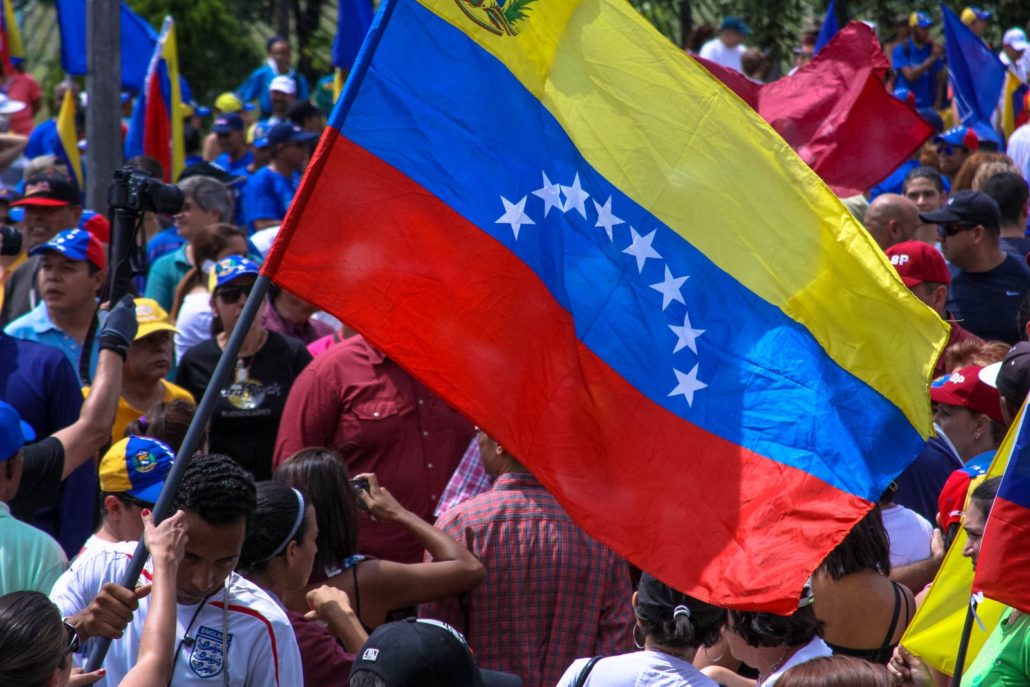
The Council of Foreign Relations refers to Venezuela as a failed petrostate, or as a nation struggling economically—and, as a result, socially—due to extensive reliance on a once successful, now-fractured petroleum trade. In 2015, global prices plummeted to less than $49 per barrel of oil. Just a year earlier, the average was $93 dollars per barrel. Since then, the Venezuelan economy has experienced inflation at record high rates—the highest at 2,688,670 percent in January 2019. This led to food and vital medicine shortages across the country. Almost 90 percent of the country’s population now lives in poverty, and education in Venezuela has experienced a major decline.

The economic situation this country has experienced since 1990 is almost entirely responsible for the lack of funding and resources that the country allocates to social welfare programs—particularly those supporting electricity, running water and food security in education. Despite worldwide support for leadership change in Venezuela while it is desperately in need of humanitarian assistance and guidance, people are doing very little to address the needs of individual citizens and the currently under-covered establishment of education in Venezuela.

Why Venezuelans Cannot Stay in School

Under the current system, basic education in Venezuela is compulsory and free–in recent years, however, the Venezuelan government has failed to follow through in ensuring these elementary level schools are in stable condition to foster a learning environment. As the disadvantages of remaining in Venezuela continue to increase, a growing number of Venezuelans have begun immigrating to countries like Colombia and Brazil in search of a better life. The conditions for learning in Venezuela are so dire. UNICEF reported on May 31, 2019, that up to 3,000 Venezuelan children in one region of the country cross daily into neighboring Colombia to get to and return from their school in the Colombian border city of Cúcuta. Seven thousand more students with their families have already left Venezuela behind and migrated to Colombia to live and learn there full time.

The quality of consistent and scheduled education in Venezuela has declined drastically in recent years. Country-wide power outages that lead to the cancellation of classes for days and weeks on end discourage many people in Venezuela from trusting the educational system of their country. While the Ministry of Education in Venezuela has yet to report on the frequency of power outages in Venezuelan schools, a Reuters article found that two major blackouts in March 2019 led to the government canceling classes for a week at the beginning and end of that month. Though classes would normally end at the start of July, Venezuelan Education Minister Aristibulo Isturiz said the school would be open until the end of July to account for missed educational days.

UNESCO has found Venezuelan youth are not remaining in school as they did in years past. In 2009, the gross enrollment ratio for primary students in Venezuela was 101 percent. In 2017, that ratio became 93.37 percent. This is alarming due to the fact that nine years of education (ages 7-14) are legally compulsory by decree of 1880 Venezuelan President Antonio Guzman and solidified through the creation of the Ministry of Public Instruction and the Bolivarian social program Mission Robinson. Though there should be no obstacles keeping children of this age in school, on average 7 percent do not attend. Secondary education adolescent gross enrollment dropped from 92 percent in 2013 to 83 percent in 2017. Between 2013 and 2017, the number of out-of-school children grew by 200,000 and the number of adolescents no longer in Venezuelan schools increased by 150,000.

No Food, No School

This overall decrease in quality also has to do with the fact that children who made sure to attend for the sake of receiving at least one meal per day are no longer receiving a meal at school. At the Santo Anglo School an hour outside Caracas, the nation’s capital, schools have adjusted their protocol so that they are not responsible for feeding students anymore. They ask parents to feed children breakfast before they go to school and end school around 11:45 a.m., which is just before lunch so they do not have an obligation to provide it.

These issues persist in all parts of this country. Francy Rodriguez, a teacher in Venezuela’s capital, told an Al-Jazeera reporter that, “The children have no food at home and they come here to at least get one meal. But we haven’t had food for a year because the kitchen is broken. The children faint during physical education class because their stomachs are empty.” A Venezuelan regional president to a chapter of the National Federation of Educational workers stated that “Hungry people aren’t able to teach or learn. We’re going to end up with a nation of illiterates.”

Efforts to Fix the Crisis

In a joint effort led by the International Organization for Migration and the office of the United Nations High Commissioner for Refugees, 95 worldwide organizations that strive to end migrant crises will be working to solve the Venezuelan migrant crisis by following the Refugee and Migrant Response Plan of 2019. This plan provided “a total of USD 738 million … for the period January – December 2019, including USD 315.5 million for Colombia, USD 117.3 million for Ecuador, USD 106.4 million for Peru, USD 56.6 million for Brazil, USD 35.7 million for the Southern Cone, USD 34.8 million for the Caribbean, USD 21.7 million for Central America/Mexico and USD 49.7 million for regional (Venezuela).”

In addition, UNICEF advocates are appealing to allocate around $70 million to the Venezuelan cause, with a focus on assisting local and national governments within that region to improve the quality of “drinking water and sanitation, protection, education and health services for uprooted children and those in vulnerable communities.” Also, the World Food Programme plans to expand its initiative supplying food in schools that are not meeting healthy standards to Venezuela. In doing so, it provides food security so that children do not feel obligated to enter the labor force at an age they should be learning and growing their intellectual capabilities.

– Fatemeh-Zahra Yarali
Photo: Flickr


August 15, 2019
https://borgenproject.org/wp-content/uploads/borgen-project-logo.svg 0 0 Kim Thelwell https://borgenproject.org/wp-content/uploads/borgen-project-logo.svg Kim Thelwell2019-08-15 10:30:252024-05-29 23:13:50Education in Venezuela: Childhood Learning
Education, Global Poverty

Going to School Nonprofit Empowers Indian Girls

Empowers Indian Girls
According to the Ministry of Human Resource Development (MHRD), 62.1 million children in India do not attend school. Of children between the ages of 6 and 14, only half attend school. Within that age group, 53 percent of girls are illiterate. In India, the persistent drop in attendance of girls in school perplexes many, but also encourages a few. Going to School is a creative nonprofit trust that empowers Indian girls and children through the creation of digital games and books to educate them and help them establish new skills. These abilities will help the children navigate the world around them.

Going to School emerged in 2003 when Lisa Heydlauff traveled India with Nitin Upadhye. During their travels, Lisa recorded their experience with children who went to school in a tent in the middle of the desert. Lisa turned her experience into a children’s book, which later became the inspiration behind the Going to School nonprofit.

Graphic novels, apps, movies, television shows and digital games are just a few things Going to School creates with its “design-driven stories.” Working with government school systems, Going to School provides teachers with the skills necessary to spread their stories. Aside from being teachers, the Going to School nonprofit is a diverse team of writers, designers, artists, educationists and economists. Going to School also has printed over one million children’s books and games, ensuring that over 300,000 children have access to entrepreneurial skills.

Unique Stories and Projects

This creative nonprofit empowers Indian girls through a variety of projects such as Luna’s Stories, Girl Star and The Children’s Scrappy News Service. Luna’s Stories is a series of 10 stories that follow Luna, a young, curious and creative girl who attends school in India. Using small animated movies to introduce the adventurous explorer, Luna inspires over 100,000 girls who live in Bihar and Jharkhand, India. In addition to Luna’s Stories, girls receive a skill challenge project and a game that demonstrates Luna’s skills and traits.

Girl Star, composed of 15 children’s stories, movies and radio shows, focuses on extraordinary girls. These stories encourage girls to attend school by teaching them about unconventional careers, such as beekeeping. Seen by over 100 million people, Girl Stars continues to empower girls today. Kids run the Children’s Scrappy News Service for kids. The platform provides children with a voice as they take on and solve problems in the world. The children learn a variety of skills, such as writing, communicating, editing and filming. Government schools show the Children’s Scrappy News Service fueled by scrapbooks made of recycled material.

Helping Children Develop Lifelong Skills

Going to School empowers Indian girls and children by not only providing them with the skillset needed to succeed in school but also the knowledge and drive to put those skills to the test later in life. In April 2018, Going to School launched its Girl’s Guide to 21st Century India project, upon the American Jewish World Service’s request. Tasked with creating a “feminist-economics toolkit,” the questions revolve around 10,000 girls’ submissions. The toolkit provides girls and young women with answers ranging from everything they need to stay in school, including voting and mental health.

There is also hope for the young entrepreneurs who live in poverty through the Be!Fund. The Be!Fund is India’s first nonprofit risk capital fund for 18-29 year-olds who live in poverty. The Be!Fund asks these young people to submit business ideas that could solve an issue where they live. Through the Be!Fund’s partnership with Going to School, more children have better access to education, a brighter future and a chance to change the world.

In 2016, Going to School won the HCL Grant, which will go towards introducing 300 Be! Schools to government schools. The HCL Grant, created by the HCL Foundation, supports and strengthens NGOs. From classes eight and nine, 30,000 students will learn valuable life skills through Going to School’s interactive storytelling lessons. The grant will also train 600 government school teachers to teach interactive storytelling classes.

The creative nonprofit plans to release new material and stories during the summer of 2020. It is evident, however, that its unique take on learning will continue to empower Indian school girls for many years after graduating.

– Emily Beaver
Photo: Flickr

August 15, 2019
https://borgenproject.org/wp-content/uploads/borgen-project-logo.svg 0 0 Kim Thelwell https://borgenproject.org/wp-content/uploads/borgen-project-logo.svg Kim Thelwell2019-08-15 02:32:392024-06-06 00:26:17Going to School Nonprofit Empowers Indian Girls
Page 116 of 241«‹114115116117118›»

Get Smarter

  • Global Poverty 101
  • Global Poverty… The Good News
  • Global Poverty & U.S. Jobs
  • Global Poverty and National Security
  • Innovative Solutions to Poverty
  • Global Poverty & Aid FAQ’s
Search Search

Take Action

  • Call Congress
  • Email Congress
  • Donate
  • 30 Ways to Help
  • Volunteer Ops
  • Internships
  • Courses & Certificates
  • The Podcast
Borgen Project

“The Borgen Project is an incredible nonprofit organization that is addressing poverty and hunger and working towards ending them.”

-The Huffington Post

Inside The Borgen Project

  • Contact
  • About
  • Financials
  • President
  • Board of Directors
  • Board of Advisors

International Links

  • UK Email Parliament
  • UK Donate
  • Canada Email Parliament

Get Smarter

  • Global Poverty 101
  • Global Poverty… The Good News
  • Global Poverty & U.S. Jobs
  • Global Poverty and National Security
  • Innovative Solutions to Poverty
  • Global Poverty & Aid FAQ’s

Ways to Help

  • Call Congress
  • Email Congress
  • Donate
  • 30 Ways to Help
  • Volunteer Ops
  • Internships
  • Courses & Certificates
  • The Podcast
Scroll to top Scroll to top Scroll to top