7 Facts About Women’s Health in Ethiopia
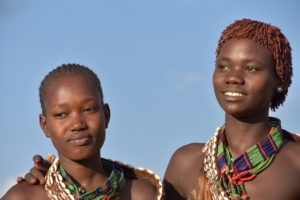 While gender equality has been a significant issue in the sub-Saharan African country, recent steps have been taken to ensure the health and safety of Ethiopian women and girls. Below are seven facts about women’s health in Ethiopia.
7 Facts About Women’s Health in Ethiopia
- The maternal mortality rate has been cut in half between 1990 and 2010. One reason for this is the implementation of the Health Extension Program (HEP) in 2005, which aims to provide all families with clean and safe spaces to deliver their babies both at home and in medical facilities.
- In 2015, the Center for International Reproductive Health Training (CIRHT) was founded in order to increase the number of medical professionals that could provide reproductive care to rural areas of Ethiopia. Students are completing the program in three years, compared to 12 years of similar advanced programs in other African countries. The program also works to destigmatize reproductive health and merge it into mainstream health care. Partly as a result of this program, the number of Ethiopian women making four or more doctors’ visits during their pregnancies has tripled between 2000 and 2014.
- Ethiopia has a long history of gender-based discrimination which impacts the wellbeing of women and girls in the country. In February of 2019, the Ethiopian government held a meeting with civil society organizations (CSOs) as a part of African Health Week to prioritize gender-sensitive policymaking objectives in the health care sector.
- The use of contraceptives has increased by almost six times from 2000 to 2016. The introduction to modern contraceptive methods had helped prevent unwanted pregnancies and disease among married women in Ethiopia.
- Twice as many women in Ethiopia have HIV than men, but in 2016, 49 percent of women had knowledge of HIV prevention methods, compared to 32 percent in 2000. This has contributed to a 45 percent decrease in AIDS-related deaths in the country between 2010 and 2018, as well as a decrease of 6,000 new cases in the same timeframe.
- In both rural and urban communities, the percentage of female genital mutilation has decreased by at least 10 percent. Though progress still needs to be made, both settings have seen a significant decrease in the act between 2000 and 2016.
- In 2018, the first two urogynecology fellows in Ethiopia graduated from Mekelle University. Oregon Health and Science University partnered with Mekelle to launch the first urogynecology fellowship program in the country. Urogynecologists treat pelvic floor disorders in women, many who suffer in silence in Ethiopia, as this group of disorders is not well known.
While Ethiopia has severely struggled with gender inequality throughout its history, it is encouraging to see that the Ethiopian government is making concrete changes. Between the creations of programs and institutions, as well as improved education, women’s health in Ethiopia will continue to make great strides.
– Alyson Kaufman
Photo: Pixabay
