• Link to X
  • Link to Facebook
  • Link to Instagram
  • Link to TikTok
  • Link to Youtube
  • About
    • About Us
      • President
      • Board of Directors
      • Board of Advisors
      • Financials
      • Our Methodology
      • Success Tracker
      • Contact
  • Act Now
    • 30 Ways to Help
      • Email Congress
      • Call Congress
      • Volunteer
      • Courses & Certificates
      • Be a Donor
    • Internships
      • In-Office Internships
      • Remote Internships
    • Legislation
      • Politics 101
  • The Blog
  • The Podcast
  • Magazine
  • Donate
  • Click to open the search input field Click to open the search input field Search
  • Menu Menu

Archive for category: Developing Countries

Information and stories about developing countries.

Developing Countries, Education, Global Poverty, Technology

Worldreader Empowers Communities

Worldreader Empowers Communities to Create Lifelong Readers
Illiteracy is not much of a problem in developed countries, but for developing countries, rates of illiteracy are high. Around 617 million children are not meeting the minimum reading level because the regions they live in do not always stress education as much or it simply is not available. Illiteracy is a huge problem, especially in this day and age. It can cause an average decrease of 35 percent in income, and a lack of reading can lead to a lack of cognitive development. Worldreader empowers communities to create lifelong readers.

Worldreader Empowers Readers

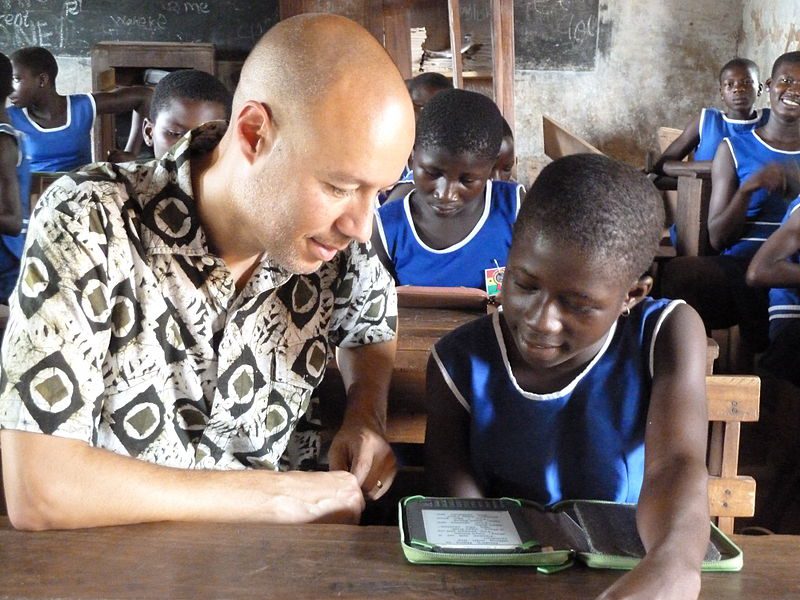
When people have an education, they tend to give posterity a better chance. Children born to literate mothers are 50 percent more likely to live past 5 years old. Worldreader is an application with a library of 35,000 books in 52 different languages. It is available on advanced but affordable e-readers and other devices. The content of these books depends on the reader but all titles aim to be culturally relevant.

There are four categories of reading on the application. Worldreader has tailored the programs to each of its audiences to best address the main problems for each crowd. These programs include pre-reading, library reading, lifelong reading and school reading.

Pre-reading is for younger people up to age 19 but can also help illiterate adults. This program promotes positive interaction, cognitive development and school preparedness. Library reading focuses on promoting reading culture through libraries no matter the age. The goal of this program is to get more people to visit libraries and more librarians to emerge in their areas.

Lifelong reading is for people from 16 and up to read digital books on the Worldreader Open Library application. This program seeks to build a reading habit in people and promote an overall joy of reading. It also wishes to gain more regular readers by transitioning users to readers. That may sound similar, but really it is for a noncommittal user to develop a reading habit and become a lifelong reader.

Lastly, school reading is just how it sounds. School programs have e-readers with books for any age or grade level, language or even cultural context. It has a teaching program for educators to help cultivate learning and reading cultures. Worldreader also works to train families, schools and libraries so they can reap the most benefit from its programs.

Worldreader’s partners help to make this happen. Worldreader’s partners provide the resources that it needs to reach people in need. Its main partners are Binu, the Stavros Niarchos Foundation and Opera Mini. Binu helps to promote Worldreader on its Moya app. The Stavros Niarchos Foundation helps to launch e-readers in all national Kenyan libraries. Opera Mini promotes Worldreader to its users from 34 sub-Saharan African countries. Other prominent partners include USAID, The U.N. Refugee Agency, UNHCR, Bill & Melinda Gates Foundation, LinkedIn, Pearson and Amazon. Penguin Random House, Sub-Saharan Publishers, Longhorn Publishers, Modjaji Books and Rosetta Books are the partners that help to publish and translate books for Worldreader.

Worldreader’s Accomplishments

The year 2018 saw an increase of 3 million readers with over 10 million readers overall. Worldreader has gained 100 million hours of reading since 2014 and has received $12.1 million total in donations. These donations have made it much easier for Worldreader to reach more potential readers from around the world. These funds mostly went toward program services, but other notable areas are management and fundraising. Worldreader empowers communities through this funding. As of 2018, Worldreader is already in 49 countries including Mexico, Ghana, India, Kenya and Jordan.

The Future for Worldreader

Worldreader empowers communities to improve literacy rates. Worldreader’s plans for the future consist of continuing to provide cheap but good technology for under-resourced people, which should in turn help schools to save on book money. The application also plans to expand on its pre-existing book collection. While 35,000 titles is a lot, it aims to add much more. It will also collect the data from its readers to provide future insights into technology improvements. Through this data collection, Worldreader will be able to improve its technology and books. Worldreader encourages sharing costs and responsibilities for sustainable impact. Its donors and supporters help to do so. Worldreader is always searching for more supporters to bring reading to the under-resourced. The Worldreader website has options to sponsor schools, volunteer or join its Reading for Opportunity campaign.

– Nyssa Jordan
Photo: Wikimedia Commons

April 9, 2020
https://borgenproject.org/wp-content/uploads/borgen-project-logo.svg 0 0 Lynsey Alexander https://borgenproject.org/wp-content/uploads/borgen-project-logo.svg Lynsey Alexander2020-04-09 07:30:342020-04-06 14:26:40Worldreader Empowers Communities
Developing Countries, Development, Food & Hunger, Global Poverty, Malnourishment

The Role of Food Aid in Fighting World Hunger

Food Aid in Fighting World Hunger
Fighting world hunger is one of the most prominent issues activists tackle in the fight against global poverty. While famine and food shortages are a major contributor to hunger in impoverished places, they are not the only contributors. In working to lift themselves out of poverty, nations do not only lack funding, but also resources and opportunities.

If an impoverished nation has a limited set of food, it often has the dilemma of choosing between using its limited amount of food to guarantee its population meals or to export it in the hopes of generating capital and improving the country’s overall situation longterm. On the other hand, it is often difficult for a nation to maintain a healthy economy when the workers are too busy focusing on meeting their necessities.

Malnourishment in Eastern Africa

While the number of starving people decreased in the world overall in the past few years, eastern Sub-Saharan Africa still holds most of the world’s undernourished population. In this region, 30.8 percent of the population still suffers from a food shortage.

Eastern African countries like Uganda, Kenya, Burundi, Rwanda, South Sedan and Tanzania have a primarily agriculture driven economy with coffee, cut flowers, tea, tobacco, fish and vegetables being its main exports.

In the East African Community (EAC), up to 44 percent of the GDP comes from agriculture, with 80 percent of the region’s population relying on agriculture for their livelihoods.

Producing food is not the problem itself, as having an agriculture-centered economy means that there is enough food to sustain an economy. However, when a bad season destroys a harvest, food prices suddenly soar as a result. This happened to Kenya in 1984 when a drought caused a food shortage. It previously grew food both for consumption and export, keeping pace with a growing population. When this happens, the people who are more reliant on this harvest as an accessible food source cannot afford it. Developed countries can afford to purchase these exports at inflated prices, though they are not reliant on them as their main food source.

The Weight of the Developed World

The developed countries are not ignorant of developing country’s food stability or quality of life and will often try to send direct food aid to assist hungry nations. When wealthier countries do try to help in the form of sending food aid, though, sometimes they wind up unintentionally causing more damage in the longterm.

Sending food aid to malnourished countries to help with fighting world hunger might help the starving population in the short term, but it does nothing to triage the bleeding infrastructure that exacerbated the food shortage to begin with. Reliance on food aid can depress the prices at which farmers sell locally grown crops, hampering production if no one buys what they are producing, which can further cripple the local economy in the long run.

World Vision

While there are some drawbacks with direct food aid, there are other means of aid that developed countries can send in addition to food. Investing in the country’s infrastructure so that farmers know how to grow more food more effectively can help protect them from food shortages if a poor growing season hits. Providing resources for impoverished countries to set up schools can allow the population to move away from a purely agricultural economy, and allow it to cultivate a more diverse one. This can, in turn, create more jobs for the people to earn an income with.

World Vision works to end global poverty and improve the welfare of families, women and children through long term programs and education. In Burundi and Rwanda, World Vision has been fighting world hunger by providing improved seeds and fertilizers to farmers, while also connecting them with markets to encourage turning a surplus of food into an income.

In providing individuals with access to credit and loans via Village Savings and Loans Associations (VSLAs), the community can meet day-to-day needs while also supplementing other income-generating projects.

World Vision institutes and trains savings groups, who strive to help families within the community save money. World Vision also creates non-agricultural job opportunities.

Successes

As of 2017, more than 1,600 VSLAs’ stabilized the lives of 100,000 children. This means that 7,385 hungry children gained more than 400 grams due to health programs. Around 4,560 farmers trained in agricultural sustainability in Burundi whereas 20,244 did in Rwanda in both 2016 and 2017. In 2017, 22,522 farmers had the resources they needed to grow their crops while 14,611 farmers did in 2016 and 2017. The number of World Vision-created savings groups grew to 6,831 with 107,159 members, while the organization created 2,230 non-agricultural jobs.

As a result of World Vision’s work in Rwanda, families went from making $15.01 per month to $42.20 from non-agricultural endeavors. Around 73.5 percent of adolescents reported having sufficient food, which was a 32 percent increase from 55.5 percent in 2014.

In Kenya, World Vision works closely with the government, abiding by the Kenya Health Policy and the National Food and Nutritional Security Policy to encourage maternal, infant and young child nutrition, agricultural and livestock nutrition and education in nutrition.

A focus on productivity, sustainability and education can help a lucrative economy take root, and the proper guidance on how to maintain it can create a solid foothold for the nation to maneuver out of starvation and poverty.

– Catherine Lin
Photo: Flickr

April 9, 2020
https://borgenproject.org/wp-content/uploads/borgen-project-logo.svg 0 0 Kim Thelwell https://borgenproject.org/wp-content/uploads/borgen-project-logo.svg Kim Thelwell2020-04-09 05:30:092020-04-09 10:35:16The Role of Food Aid in Fighting World Hunger
Developing Countries, Global Poverty

How the COVID-19 Crisis Is Impacting Global Poverty 

Covid-19 Crisis
The COVID-19 crisis or coronavirus pandemic continues to grow as the number of global cases rises. With U.S. President Donald Trump approving a fiscal stimulus package of $2.2 trillion, the dire economic ramifications of the COVID-19 crisis grow more significant. Yet, there are disproportionate economic impacts on the world’s poor that highlight the implications of COVID-19 on global poverty.

What the COVID-19 Crisis Means for Global Poverty

Unfortunately, the aftershocks of COVID-19 will destabilize the world economy even further during the beginning of 2020 and beyond. The Asian Development Bank already estimates that the collective global impact of the COVID-19 crisis will be between $77 billion to nearly $347 billion in economic output costs worldwide.

The World Economic Forum calls the COVID-19 crisis a “pandemic in the age of inequality” as it especially impacts countries lacking universal health care or adequate health care systems. Many workers have lost work and are cannot even take paid sick leave of any kind.

“[I] fear hunger will kill us before coronavirus,’’ says Momanned Sabir, a young street entrepreneur in Delhi who owns a yogurt-based drink shop. Her words come in response to the three-week lockdown that Indian Prime Minister Narendra Modi imposed. Poverty and unemployment impact many daily wage earners and workers in informal and unorganized sectors. This is particularly evident in nationwide lockdowns from India, China, the Philippines, the Middle East and European countries.

Among the 50 countries under the United Nations’ Least-Developed Country Status (LDC), more than 900 million remain vulnerable to the risk of COVID-19. This is due to the poor health care infrastructure and resources to support a large-scale health crisis. Most importantly, many countries continue to be in short supply of testing kits.

U.N. Secretary-General Antonio Guterres has appealed for $2 billion to help the world’s poor who have been impacted by COVID-19. World Health Organization director Tedros Adhanom Ghebreyesus implores G20 nations to offer aid and support low and middle-income countries.

Future Course of Action

Indian Finance Minister Nirmala Sitharamn has proposed an economic stimulus package for financial relief to women and vulnerable groups. For example, there are welfare systems that distribute free gas cylinders, wheat and rice for up to three months. For women in India’s Jan Dhan banking system, the government offers compensation of 500 rupees for the next three months. In addition, India has issued a bailout package of $22 billion to help cushion the economic impacts of its lockdown, especially as several daily wage and unorganized workers have lost out on work and pay during this period.

The number of testing kits will also increase soon due to the invention of a new working test kit by Dr. Minal Dhakave Bhosale. India will thus rely less on more expensive imported kits. There will be a distribution of more than 100,000 kits every week from now on.

Moreover, the International Monetary Fund (IMF) has provided $50 billion to control the COVID-19 crisis in low-income countries that seek support through its emergency financing facilities. Along with the IMF, the World Bank is also providing debt relief to poor countries through loans and grants. The group is also working with more than 35 countries to address the economic implications of the pandemic. The World Bank also plans to spend a whopping $160 billion over the next 15 months and is already securing fixed amounts for wide-scale mitigation efforts and projects.

Oxfam International is working on ways to use its knowledge and expertise in public health to better address the ongoing crisis, especially after its work during other outbreaks like Ebola and the Zika virus. Oxfam is also assisting in the delivery of sanitation services and offering accurate information to people.

Looking to the Future

To help those who have lost jobs due to COVID-19, the Asian Development Bank recommends focusing on strengthening social assistance. It also urges attention to upgrading labor market policies and programs.

The COVID-19 crisis could also impact the way the world addresses global poverty going forward, especially given the potential global impacts. It will take long-term development strategies to get low-income workers and poorer communities back on their feet.

– Shivani Ekkanath
Photo: Flickr
April 8, 2020
https://borgenproject.org/wp-content/uploads/borgen-project-logo.svg 0 0 Jennifer Philipp https://borgenproject.org/wp-content/uploads/borgen-project-logo.svg Jennifer Philipp2020-04-08 07:30:292020-04-06 09:26:59How the COVID-19 Crisis Is Impacting Global Poverty 
Developing Countries, Development, Global Poverty, Women, Women and Female Empowerment, Women's Rights

5 Women Writing About Global Poverty

Women Writing About Global Poverty
Due to an array of causes, including unpaid maternity leave and lower wages, women are statistically more likely to struggle with poverty than men. This imbalance has driven many female authors to speak up about the issue through writing. The publication of material to inform readers of the realities of poverty is extremely beneficial to the cause. Fiction or nonfiction books can play a major hand in urging the world to take action against this social injustice. Here are five women writing about global poverty.

5 Women Writing About Global Poverty

  1. Katherine Boo is an American journalist, whose reports on disadvantaged populations earned her a Pulitzer Prize in 2013. People know her best for her book, “Behind the Beautiful Forevers: Life, Death, and Hope in a Mumbai Undercity,” a compilation of interviews and observations from Boo’s time in India. The book follows the stories of several different residents of Annawadi, a slum dwelling in close proximity to Mumbai. The village is home to roughly 3,000 people who experience a life of scavenging through airport waste and residing next to a sewage lake. Boo’s accounts of Annawadi provide a jarringly honest look at life inside of a community struggling to battle poverty within a developing nation. She believes that shedding light on underlying issues is imperative to initiate real change in impoverished communities, like Annawadi.
  2. Shobha Rao was merely 7-years-old when she moved to the United States from India. Her novel, “Girls Burn Brighter,” and her short story collection, titled “An Unrestored Woman,” have received critical acknowledgment for the representation of varying social issues, including poverty. “Girls Burn Brighter” centers on two young Indian women who attempt to escape slavery, sex trafficking and prostitution. The novel distinctly describes various aspects of poverty in Poornima and Savitha’s intertwined tales. Both girls’ families are extremely poor, forcing them to scavenge junkyards; the family sends the children to work the spinning wheel, where the two characters meet. As one of many women writing about global poverty, Rao’s writings demonstrate the dark and brutal effects poverty places on those who endure it.
  3. NoViolet Bulawayo is a native of Zimbabwe, now living in the United States, who uses childhood experiences as inspiration for her writings. The Man Booker Prize shortlisted her literary debut, “We Need New Names;” Bulawayo was the first black African woman and Zimbabwean to receive this award. “We Need New Names” follows a 10-year-old Zimbabwean girl on her journey to escape the impoverished, corrupt conditions of her homeland and seek refuge in America, which does not end up offering any solace to the young immigrant. Bulawayo’s compassion for human rights, particularly of her fellow Zimbabweans, has driven her to become one of the most prominent women writing about global poverty today.
  4. Tsitsi Dangarembga is also a native to Zimbabwe; born and raised in the nation, her creative voice has traveled across oceans to reach the hearts of people everywhere. One of her books, “Nervous Conditions,” earned a place on BBC’s list of 100 Stories that Shaped the World in 2018. Further, the novel’s debut was the first time that a book that a black Zimbabwean woman wrote received publication in English. This story follows a young Zimbabwe girl’s struggle for a better education after her brother’s death. In addition to the other women writing about global poverty, Dangarembga also utilizes this theme as a primary element throughout the novel. Dangarembga’s writing captures an authentic view of the life that impoverished Zimbabweans lead, resulting in a raw story that emphasizes the struggles that millions of women in developing nations face.
  5. Anne C. Bromley is an American poet and children’s book author. In 2010, she published “The Lunch Thief,” a children’s book about poverty. The story focuses on Rafael, a boy who plots revenge against the bully who has been stealing his lunch. Rafael soon discovers that local wildfires had recently impacted the thief and the thief’s family, pushing the family into poverty thus fueling the boy’s theft. In the end, Rafael and the thief become friends through him sharing his lunch. Bromley is one of the few women writing about global poverty in children’s books, which is an engaging and efficient way to introduce children to such issues and how to properly react to them.

Books have the ability to spread information, teach children literacy skills and send hope to a person dealing with social, physical or other circumstances. Further, one could argue that books are one of the world’s ultimate weapons against poverty. These five women writing about global poverty have proven that adversity can give rise to a powerful voice. In a world where women are statistically more impoverished than men, such a voice is essential to starting a movement for change.

– Harley Goebel
Photo: Flickr

April 5, 2020
https://borgenproject.org/wp-content/uploads/borgen-project-logo.svg 0 0 Lynsey Alexander https://borgenproject.org/wp-content/uploads/borgen-project-logo.svg Lynsey Alexander2020-04-05 07:30:402024-05-29 23:15:225 Women Writing About Global Poverty
Developing Countries, Global Poverty

Building Safer Roads in Latin America

Roads in Latin America
In 2010, the United Nations declared the Decade of Action for Road Safety, calling upon governments to take the actions necessary to reduce the 1.3 million annual traffic deaths that plague modern society. For Latin America in particular, where 60 percent of roads remain unpaved and the rate of deaths from traffic fatalities stands at twice that of high-income regions, this was and is an incredibly pressing issue. That is why, as the Decade of Action for Road Safety comes to a close in 2020, it is important to reflect on what governments have done to build safer roads in Latin America, and how they can continue to carry the torch in securing the future of the region’s most vulnerable.

Taking Action on the Ground Level

Efforts to improve road safety have traditionally fallen into one of a few categories. Awareness campaigns, such as Salvador, Brazil’s Life Not Traffic program, invest heavily in training drivers on proper road etiquette, as well as lobbying for stricter drunk-driving laws. For Salvador and other Latin American cities, in particular, educating the youth through programs like “child drivers of the future” is also a major priority, as traffic deaths are the leading cause of death for Latin Americans ages 15-29.  So far, the results of these efforts are striking. In just eight years since its initial launch, Life Not Traffic has contributed to a 50 percent drop in traffic fatalities in Salvador.

Structural solutions, on the other hand, focus on pinpointing areas of improvement in regard to material conditions on the road, as well as looking at safer and more efficient ways to control the flow of traffic. The construction of roundabouts to replace traditional four-way intersections, for instance, has led to a 50-70 percent drop in traffic fatalities and a 30-50 percent drop in traffic injuries. Meanwhile, increased investment into speed and red-light cameras is also yielding promising results.

Structural solutions can also bring economic benefits, such as in the case of Tocantins, Brazil, where times of rain have historically inhibited the region’s road network, depriving Tocantins’ residents of access to Brazil’s urban population centers. To combat this issue, the World Bank has funded the construction of more than 700 concrete bridges in cooperation with local authorities, which has both increased employment and the average wage of the region’s agricultural workers. Safer, more reliable roads have also meant a rise in the percentage of children attending school in Tocantins, which has had the added effect of opening up more work opportunities for Tocantins’ female population.

Obstacles to Improvement

The World Bank’s work in Tocantins is a particularly salient example in this case, as it highlights the traditional obstacles to improving Latin America’s road infrastructure, as well as the steps necessary to overcome them. For one, there is the problem of geography. Where conditions in European and North American nations are, for the most part, agreeable to road building, tall mountains, thick jungles, expansive deserts and urban centers hamper Latin America. These, in combination with the region’s low population density, have made road-construction very costly.

However, while geographic conditions certainly make the task of building better roads more difficult, the real crux of the issue lies in the lack of funding that Latin American governments are able to devote to infrastructure. Estimates from the Inter-American Developmental Bank indicate that the region faces an annual infrastructure-spending shortfall of around $100-150 billion, due to regional governments’ issues with fiscal deficits and mounting public debts. As a consequence, programs aimed at both improving and expanding the region’s road networks frequently go underfunded, leading to the need for foreign aid and investment.

Foreign Aid Successes

Indeed, recent years in Latin American have seen an increasing number of successes in road improvements due to foreign aid, though economists estimate that still more aid is necessary before Latin America will be able to bring its infrastructure on par with the rest of the world. China’s Belt and Road Initiative, for instance, has provided $26.8 billion in infrastructure-related loans to Latin America since 2005, including financing a major highway in Bolivia that should bring significant economic benefits to the region after its completion in 2021. The United States, for its part, has also recently launched a new initiative to encourage more private U.S. financial investment into Latin America’s roads and other infrastructure.

In addition to building new roads, many new organizations have also taken root in the region with an eye on other means of improving road safety. The Latin NCAP is one such organization, launched under the umbrella of the U.N.’s Decade of Action for Road Safety, which has published over 100 safety assessments for new vehicles since 2010, helping to keep Latin America’s drivers safe before they even step in the car.

While much work remains when it comes to building safer roads in Latin America, it is undeniable that foreign aid has led to major improvements for the region’s inhabitants.

– James Roark
Photo: Pxfuel

April 2, 2020
https://borgenproject.org/wp-content/uploads/borgen-project-logo.svg 0 0 Lynsey Alexander https://borgenproject.org/wp-content/uploads/borgen-project-logo.svg Lynsey Alexander2020-04-02 07:30:442024-05-29 23:15:37Building Safer Roads in Latin America
Developing Countries, Development, Economy, Education, Global Poverty

Socio-economic Equity in Brazil and Chile

Socio-economic Equity in Brazil and Chile
Latin America has the worst socio-economic equity gap in the world. The average Gini Index (percentile measurement of income distribution) is 41, which is a 10 point difference in comparison to the Organization for Economic Cooperation and Development (OECD) average. The Gini Index is like golf in a sense—the lower the score, the better the distribution. Although this region has a high Gini rate, Brazil and Chile have shown real promise in leading the rest of the region in socio-economic equity.

Chile: Counter-cyclical Spending and Education Investments

The Bachelet Administration effectively implemented a counter-cyclical spending policy that helped safeguard against a total economic collapse during the 2008 global crisis. Essentially, social spending reduced and taxes increased during a boom period, allowing Chile to save approximately $18.1 billion with the Economic and Social Stability Fund. During the global recession, Chile increased its social spending and lowered taxes creating demands for goods. When properly executed, counter-cyclical spending more evenly distributes resources without causing stagnation or inflation.

Education is essential to decreasing inequality between low-skilled workers and high-skilled workers; it provides an endowment of marketable skills. Generally speaking, better skills receive better pay. Chile spends 1.2 percent of its total GDP on Early Childhood Education and Care programs.

 In 2017, nearly 33 percent of 19 to 20-year-old Chileans enrolled in tertiary education and 25 percent finished with a four-year degree. Systemic education reform made tertiary education 100 percent free for low-income households. As a result, students receiving government loans and scholarships increased from 17 percent in 2007 to 58 percent just 10 years later.

Chileans have benefited from a reformed education system in a tangible way. Individuals with vocational degrees earn 40 percent more than secondary educated workers. Those with a bachelor’s degree earn upwards of 100 percent, and doctoral graduates earn 4.7 times the average of upper secondary educated workers.

Universal education invests in resource mobility; however, this is only possible if leaders prioritize the fundamental needs of those living in extreme poverty. Brazil, through conditional cash transfer programs, directly addresses the imbalance of socio-economic equity by providing those needs.

Brazil: Conditional Cash Transfers

Non-contributory social protection or social assistance works specifically for those in vulnerable living situations. These programs, funded through a general budget and taxation of public companies, provide monetary assistance to low-income households with children.

Of more than 30 active conditional cash transfer (CCT) programs in Latin America, Bolsa Familia (PBF) is the most prevalent. PBF reduced poverty in Brazil by 28 percent during its first 13 years and assisted over 11 million families a year.

The goal of PBF (and CCTs) is to end cyclical systemic poverty by investing in human development. Families receive assistance after they agree to social responsibilities like taking their children to health care providers and attending school.

Since its inception in 2003, Bolsa Familia integrated four other CCT programs. Today it reaches 46 million people, 54 percent of whom are women. The Economic Commission for Latin America and the Caribbean estimates that out of 133.5 million people living, 30.2 million households receive a conditional cash transfer.

There is no denying the obvious progression in addressing the imbalance in socio-economic equity in Brazil and Chile; however, much of Latin America still lives in poverty. The long term solution for socio-economic equity is to integrate non-discriminatory policies into law.

Universal Social Protection

The idea of a basic level of income is not new; the concept received debate during the early 19th century in the U.K. Meanwhile, some proposed it in the U.S. in the 70s and then again in 2019 with Andrew Yang’s promise to give $1,000 to every U.S. citizen every month.

Creating a “care pillar” would not only meet the urgent needs of those who need it most but would also promote human development for all. A stronger care system by function distributes necessary provisions of public goods and services, creating socio-economic equity. Unconditional, universal payment to the state inhabitants allows them to meet their basic needs.

The Universal Social Protection in Latin America and the Caribbean states that “by freeing people of the more serious consequences of material dependency, a basic income could lead to a rearrangement of social hierarchies, increase bargaining power of women…and [others facing] discrimination…and open up spaces for greater autonomy…for all people.”

In other words, bettering the linkage between the components of social protection and coverage, while eliminating discriminatory mechanisms, guarantees access to a decent life.

Brazil and Chile have made exemplary progress in the battle for socio-economic equity, but like the rest of Latin America, they have a long way to go before income distribution is fair and balanced. Breaking the cycle of poverty begins with policy. It is up to the countries that have disposable funds to implement policy change and reform. Once those countries reach socio-economic equity, they will have the resources to help neighboring countries reach the same goal.

– Marissa Taylor
Photo: Flickr

April 1, 2020
https://borgenproject.org/wp-content/uploads/borgen-project-logo.svg 0 0 Lynsey Alexander https://borgenproject.org/wp-content/uploads/borgen-project-logo.svg Lynsey Alexander2020-04-01 07:30:432020-03-30 13:32:39Socio-economic Equity in Brazil and Chile
Developing Countries, Global Poverty

Sustainable Farming in Developing Countries

Sustainable Farming in Developing Countries
About 10,000 years ago, humans were primarily nomadic, wandering the land in search of game and other wild food sources. Gradually, these hunter-gatherer societies settled into sedentary communities. In addition, hunter-gatherer societies cultivated land and domesticated animals. The history of agriculture is in a sense the history of human civilization as the food surplus that farming large quantities of staple grains allowed for steady population growth and the beginnings of urbanization. Through the centuries, humans have continued to innovate agricultural methods, developing new tools and technologies to more efficiently raise crops. Today, sustainable farming is the new workshop of the agricultural invention. Sustainable farming in developing countries is in its early stages but may prove a solution to food scarcity in those nations.

What is Sustainable Farming?

Sustainable farming is not a buzzword, it is a practice. Sustainable agriculture is a science-minded approach to farming, predicated on an awareness of agriculture’s place in the local ecosystem. Moreover, sustainable farmers take a mindful approach to their work, attempting to encourage biodiversity, maintain soil fertility, protect water sources and prevent erosion.

Sustainable Farming in the Developing World

The most obvious benefit that sustainable farming initiatives offer developing nations is the potential to dramatically increase crop yields. A study that the American Chemical Society conducted determined that sustainable farming methods could improve harvests by about 80 percent within four years. As a result, sustainable agriculture incorporates water preservation techniques. It also contributes to water security. The Global Agriculture and Food Security Program plans to revamp irrigation and drainage networks across 44,415 hectares of farmland in 12 developing nations.

To be sure, while sustainable farming in developing countries has a lot of advantages, it is not without limitations. Given that most farmers in developing nations operate at a subsistence level, the possibility of long-term gains provided by a shift to sustainable farming might not be enough incentive to change. Additionally, the farmers might not even be aware that sustainable methods exist or have access to guidance in implementing those methods.

Agriculture and Poverty Reduction

Sustainable farming in developing countries provides tangible macroeconomic benefits, including poverty reduction. Research from the World Development Journal found agricultural growth to have two to three times more impact on poverty reduction than equivalent growth in other industries. Moreover, the poorest segment of society reaps the lion’s share of wealth gains from agricultural development.

The OECD organized a research study designed to reveal why certain countries made faster progress than others at poverty reduction. In addition, the study reported to what extent agriculture played a role in this disparity. The results indicate that agriculture may be the key to alleviating poverty. Agriculture revenues contributed an average of 52 percent to poverty reduction in developing countries. Once again, the extremely impoverished benefitted the most. It seems clear that sustainable farming is more than an efficient and environmentally friendly set of agricultural procedures. It is also a path out of poverty.

– Dan Zamarelli
Photo: Wikipedia Commons

March 29, 2020
https://borgenproject.org/wp-content/uploads/borgen-project-logo.svg 0 0 Lynsey Alexander https://borgenproject.org/wp-content/uploads/borgen-project-logo.svg Lynsey Alexander2020-03-29 01:30:162024-05-29 23:15:14Sustainable Farming in Developing Countries
Developing Countries, Global Poverty, Health

ICT and eHealth in Developing Countries

ICTS and eHealth in Developing Countries
Information Communication Technology (ICT) supports medical workers when physicians are absent. They manage patient records and keep accurate accounts in medical supplies and medication inventory. ICTs increase lab information management and create algorithms for effective treatment plans including the distribution of medications and immunizations. As a laundry list of medical conveniences, ICT in eHealth has a lot of advantages. Yet, the concept of eHealth in developing countries is more about connecting rural and resource-poor communities with specialists. So, how does ICT and eHealth in developing countries work?

Asynchronous Medical Exchanges

The obvious advantage is that health information is easily accessible, regardless of time, location or occupation. Asynchronous medical exchanges bridge physical and time-complying barriers between multiple personnel. This could be between a doctor and patient or doctor and specialists or all three. There are various forms of ICT (email, video conference and audio), all of which offer an array of services including teledermatology, telepathology and teleradiology, to name a few.

Maternal and child health care is of primary concern in many countries, and India has shown particular promise in women and children eHealth platforms.

Successful ICT Programs in India’s Mobile Health Initiative

The use of cell phones, home patient monitoring devices and other wireless devices closed the gap between India’s poorest communities and health care. The National Informatics Centre developed MCTS (Mother and Child Tracking System), which utilizes information technology (IT or ICT) to access a full spectrum of health services for pregnant women and children. MCTS operates on an alert-notification platform for medical workers. Services include antenatal, post-op and post-natal care for mom as well as guaranteed immunizations and check-ups for the first five years.

At the state level, eHealth programs like PICME (Pregnancy Infant Cohort Monitoring Evaluation) in Tamil Nadu, Arogyam in Uttar Pradesh and the 2018 Digital LifeCare initiative all provide working platforms for physicians to screen, manage and care for patients in resource-poor areas on or off-site.

The use of ICT in eHealth has impacted developing countries and progress, as illustrated in India, has occurred. However, reliable internet access is necessary for the successful implementation of ICT in eHealth. In addition, eHealth development varies by country and has unequal distribution among the poorest of countries.

Serbia has a population of 7 million with about 37 percent seeking health information online; only 33 percent have access to reliable internet. Similarly, Turkey has a population of 80.3 million with reliable internet access for more than half. Algeria, Guatemala and Zambia’s populations have less than 20 percent internet access respectively and Afghanistan only 5 percent. Many challenges threaten the successful implementation of eHealth, chief among them access to reliable internet.

A Digital Divide

If global society continues daily reliance on digital technology and services, resource-poor countries will be in the wake of information communication technology. Gaps in supportive infrastructure cripple developing countries’ chances of successful eHealth platforms.

Rapid technological advances over the last decade impede resource-poor locations’ ability to remain up-to-date with medical equipment and treatment plans, disallowing use of the technology. Likewise, unstable power supplies and insufficient or unreliable communication networks fundamentally limit the potential of eHealth integration.

A cross-sectional survey conducted in Brazil reported 81.4 percent of medical physicians believed EHR (electronic health records) response time was unsatisfactory. Eighty-six percent complained of technical difficulties and 35 percent had an insufficient supply of equipment in clinics—a direct result of insufficient funding.

Information Communication Technology is expensive and insurance packages, private party investments and individual donors or clients provide the majority of funding.

Deputy Director of the Digital Health Solutions Programme Skye Gilbert speaks caution and vigilance to collaborators when considering solutions for the digital divide, stating that “Being excluded from the digital domain will have more and more implications for someone’s health status…So the digital divide will become more and more tied to health equity over time.”

A Symbiotic Relationship

Overall, health improvement for resource-poor settings will not improve unless health technologies are accessible to all. The way in which ICT impacts eHealth in developing countries is quantifiable in that the countries with proper resources and pre-existing conducive technological platforms have measurable success in the implementation of eHealth programs. But for those countries struggling to fill in a widening digital gap, eHealth and, by consequence, people will always underrepresent and neglect public health.

Countries like Bangladesh, Paraguay, Qatar and Rwanda officially adopted eHealth strategies—four of 73 with eHealth initiative plans. Until medical information communication technology is accessible to everyone, health will only ever be a privilege for those able to afford it.

– Marissa Taylor
Photo: Flickr

March 27, 2020
https://borgenproject.org/wp-content/uploads/borgen-project-logo.svg 0 0 Lynsey Alexander https://borgenproject.org/wp-content/uploads/borgen-project-logo.svg Lynsey Alexander2020-03-27 13:01:582024-06-06 00:32:53ICT and eHealth in Developing Countries
Developing Countries, Global Poverty

An Impoverished Kingdom: Poverty in North Korea

Policies of Poverty in North Korea
Few places in the world have aroused as much curiosity and suspicion as North Korea. Known as the “hermit kingdom,” the multiple facets of daily life are secret from the rest of the world, but what is little known about the country paints a very poor economic picture. North Korea’s enigmatic persona on the world stage makes any attempt to uncover its true economic standing rather difficult. This could be due to the fact that the nation has not released any statistics to the global community since the 1960s. Also, while the exact numbers regarding North Korea’s economy and poverty in North Korea are a mystery, there is still quite a bit the world knows about its economic progress (or lack thereof) and how it is affecting the quality of life of its citizens.

Poverty in North Korea

Firstly, many know that along with North Korea’s cult of personality style of governance with Kim Jong-un as its poster boy, it keeps a tight grip on all of the business affairs of the country, resulting in a command economy. As a result, the free market is essentially non-existent with the state determining not only which goods people should produce, but also how and at what price to fix them at. According to the Korea Institute for National Unification (KINU), “the standard of living has deteriorated to extreme levels….” Even citizens, not fortunate enough to be part of the political or social elite, do not receive the basic necessities of health care and food security.

The KINU has even estimated that poverty in North Korea extends to about half of North Korea’s population of 24 million.

North Korea’s ironclad grip on its economic and political structures, coupled with its military-centric ideology, makes for a chaotic mix resulting in a struggling population. Even with modest attempts to modernize—including special economic zones, price liberalization and limited transactions with its South Korean neighbor—North Korea still finds itself focused on military and foreign policy. By doing so, it is absorbing much-needed market capital. Also, while North Korea fears that economic liberalization will lead to political and social liberalization, it is unprepared to take the economic risks that its neighbor and ally China has taken to marry its communist politics with a partially free-market economic approach.

Global Scrutiny and Aid

North Korea has faced increased global scrutiny due to its nuclear weapons ambitions, and this has resulted in not only immense political pressure but also crippling economic sanctions. Even with the post-Soviet push for rapid industrialization, North Korea has shown little economic resilience in the face of global disconnection. This has only exacerbated the ripple effect which inevitably leads to its suffering citizens.

Additionally, while the internal systems of the hermit kingdom were not enough to overcome, North Korea finds itself repeatedly on the receiving end of climate change and natural disasters. With alternating and equally devastating periods of both droughts and floods, paired with a government unable to respond, this only aggregates North Korea’s agricultural problems.

It is even suffering its worst drought in four decades, according to its state-run media. With a majority of North Koreans relying on crops and livestock for survival, and with the intensity of irregular weather on the horizon, the country could soon find itself in dire straits that it will be unable to shield from the global community.

Even with the multitude of economic, social and political problems North Korea has in front of it, there are still signs that the global community is willing to help eliminate poverty in North Korea. With China and South Korea right along its borders, North Korea has seen help in the form of aid. South Korea has pledged $8 million for aid. China has been even more generous. In 2012, China gave 240,074 tons of rice, more than 80 times what Europe gave North Korea that same year. These pledges signal that some are offering help to lessen the burden of poverty and struggle for the citizens of North Korea, but there is still more than others can and should do.

– Connor Dobson
Photo: Flickr

March 26, 2020
https://borgenproject.org/wp-content/uploads/borgen-project-logo.svg 0 0 Lynsey Alexander https://borgenproject.org/wp-content/uploads/borgen-project-logo.svg Lynsey Alexander2020-03-26 07:30:132022-03-24 13:20:46An Impoverished Kingdom: Poverty in North Korea
Developing Countries, Global Poverty

How Microgrids Could End Global Energy Poverty

Global Energy Poverty
Around 840 million people around the world have no access to electricity. Global energy poverty is prevalent with most living in developing nations in South Asia, Latin America and rural Africa. In India, more than 300 million people lack access to electricity. In Sub-Saharan Africa, that number is twice as high.

Energy poverty or the lack of access to modern energy services, including electricity and clean cooking facilities, remains a barrier to global prosperity and individual well-being. That is why ensuring basic energy for 100 percent of the world’s population by 2030 is one of the United Nation’s Sustainable Development Goals. Yet, at the current rate of progress, 650 million people will still live in the dark. Microgrids have the potential to improve that course and eliminate global energy poverty.

What are Microgrids?

Microgrids or mini-grids are small, localized power grids. They can operate on their own using local energy generation without needing a connection to a larger power grid. Renewable resources power most along with diesel back-up and batteries.

Microgrids can power fridges, fans, irrigation pumps and other basic machinery. With microgrid energy, families can power appliances that save time on household chores, farmers can increase crop yield with irrigation and schools can light their classrooms.

Benefits of Microgrids

With low costs and high yields, microgrids could end global poverty. The price of batteries, solar and other energy technologies has been decreasing since 2010, in turn reducing the cost of microgrids. The International Energy Agency named localized power grids as the most cost-effective option to deliver electricity to more than 70 percent of the unconnected. Continued innovation will further drive cost reduction.

Microgrids are also modular, easy to transport and simple to install. This makes them especially valuable in remote and rural areas.

Use of Microgrids

In India and Sub-Saharan Africa, microgrids are already electrifying and transforming communities. SmartPower India, with support from the Rockefeller Foundation, has used microgrids to power more than 100 villages and serve 40,000 people. Since the project launched in 2015, carpenters and tailors have more than doubled their productivity, farmers have built cold storage facilities to keep produce and entrepreneurs have opened small businesses. Local economies grew by $18.50 per capita.

In Kenya, a solar company is using microgrids to deliver power to villages deep in the African bush. SteamaCo’s microgrids supply 10,000 households and businesses across 25 villages with electricity. This has allowed for businesses to trade longer, students to study after dark and communities to grow more independent.

A lack of access to modern, reliable and affordable energy services hinders communities and cripples economies. It is time to turn the light on for the billions of people without access to electricity. Microgrids could end global energy poverty.

– Kayleigh Rubin
Photo: U.S. Marine Corps

March 22, 2020
https://borgenproject.org/wp-content/uploads/borgen-project-logo.svg 0 0 Lynsey Alexander https://borgenproject.org/wp-content/uploads/borgen-project-logo.svg Lynsey Alexander2020-03-22 07:30:302020-03-18 12:38:44How Microgrids Could End Global Energy Poverty
Page 86 of 157«‹8485868788›»

Get Smarter

  • Global Poverty 101
  • Global Poverty… The Good News
  • Global Poverty & U.S. Jobs
  • Global Poverty and National Security
  • Innovative Solutions to Poverty
  • Global Poverty & Aid FAQ’s
Search Search

Take Action

  • Call Congress
  • Email Congress
  • Donate
  • 30 Ways to Help
  • Volunteer Ops
  • Internships
  • Courses & Certificates
  • The Podcast
Borgen Project

“The Borgen Project is an incredible nonprofit organization that is addressing poverty and hunger and working towards ending them.”

-The Huffington Post

Inside The Borgen Project

  • Contact
  • About
  • Financials
  • President
  • Board of Directors
  • Board of Advisors

International Links

  • UK Email Parliament
  • UK Donate
  • Canada Email Parliament

Get Smarter

  • Global Poverty 101
  • Global Poverty… The Good News
  • Global Poverty & U.S. Jobs
  • Global Poverty and National Security
  • Innovative Solutions to Poverty
  • Global Poverty & Aid FAQ’s

Ways to Help

  • Call Congress
  • Email Congress
  • Donate
  • 30 Ways to Help
  • Volunteer Ops
  • Internships
  • Courses & Certificates
  • The Podcast
Scroll to top Scroll to top Scroll to top