• Link to X
  • Link to Facebook
  • Link to Instagram
  • Link to TikTok
  • Link to Youtube
  • About
    • About Us
      • President
      • Board of Directors
      • Board of Advisors
      • Financials
      • Our Methodology
      • Success Tracker
      • Contact
  • Act Now
    • 30 Ways to Help
      • Email Congress
      • Call Congress
      • Volunteer
      • Courses & Certificates
      • Be a Donor
    • Internships
      • In-Office Internships
      • Remote Internships
    • Legislation
      • Politics 101
  • The Blog
  • The Podcast
  • Magazine
  • Donate
  • Click to open the search input field Click to open the search input field Search
  • Menu Menu

Archive for category: Developing Countries

Information and stories about developing countries.

Developing Countries, Global Poverty

Meesanallur in Tamil Nadu Is Breaking the Cycle of Poverty

Meesanallur in Tamil NaduThe village of Meesanallur in Tamil Nadu, India, has become a symbol of hope and transformation for marginalized communities, particularly the Irula tribe, who have long been trapped in cycles of poverty and bonded labor. Through strategic interventions by government and nongovernmental organizations (NGOs), Meesanallur has transitioned into a thriving community, offering security, stability and a model for rehabilitation replicable for other impoverished populations in regions susceptible to economic exploitation.

About Meesanallur in Tamil Nadu

Prior to its transformation, Meesanallur was a typical example of the challenges faced by many rural villages in Tamil Nadu. The village was characterized by extreme poverty, with most of its inhabitants, particularly those from the Irular tribe, living in dilapidated huts with little to no access to basic amenities like clean water, sanitation or electricity. The lack of education and employment opportunities perpetuated a cycle of poverty, forcing many families into bonded labor to survive. This economic exploitation was compounded by social marginalization, as the Irular community faced significant discrimination, further limiting their access to resources and opportunities for advancement.

Transforming Lives Through Planned Resettlement

One of the most significant aspects of Meesanallur’s transformation is the resettlement of Irula families who were once kept in near-perpetual poverty, often for generations, as the victims of exploitative working conditions and bonded labor. These families have now been resettled in the planned community of Meesanallur, where they have been provided housing, education and economic opportunities. The resettlement initiative, supported by the International Justice Mission (IJM) and local authorities, has been crucial in providing these families with the security and stability they lacked for generations.

In Meesanallur, the construction of new homes, complete with basic amenities such as electricity and sanitation, has been a game-changer. These homes have provided physical shelter and a sense of dignity and belonging. The availability of legal land ownership has further empowered the residents, giving them a stake in their future and a foundation upon which they can build better lives.

Economic Empowerment and Education

Economic empowerment has been a cornerstone of Meesanallur’s success. The community has been equipped with resources and training to engage in various income-generating activities. For instance, residents have received support to start small businesses, engage in agriculture and access employment opportunities. These initiatives have significantly reduced the community’s reliance on exploitative labor practices, helping them achieve financial independence.

The Broader Impact and Future Potential

The success of Meesanallur as a model for breaking the cycle of poverty holds significant potential for other vulnerable communities, particularly those facing similar challenges of bonded labor, marginalization and economic deprivation. The approach taken in Meesanallur—combining resettlement, economic empowerment and community building—can be adapted and implemented in other regions with similar demographics.

For instance, the model can be applied to other tribal communities across India, many of whom face similar issues of exploitation and poverty. By providing secure housing, legal land ownership and opportunities for economic and educational advancement, these communities can be lifted out of poverty and given the tools to sustain themselves long-term.

Conclusion

Meesanallur stands as a beacon of hope for marginalized communities across India and beyond. Through strategic interventions and a holistic approach to rehabilitation, the village has successfully broken the cycle of poverty and provided its residents with the means to build a better future. The model of Meesanallur has the potential to be replicated in other vulnerable communities, offering a pathway to security, stability and dignity for those who have long been deprived of these fundamental human rights.

– Sophia Lee

Sophia is based in Media, PA, USA and focuses on Good News for The Borgen Project.

Photo: Flickr
September 14, 2024
https://borgenproject.org/wp-content/uploads/borgen-project-logo.svg 0 0 Lynsey 2 https://borgenproject.org/wp-content/uploads/borgen-project-logo.svg Lynsey 22024-09-14 07:30:192024-09-14 03:02:58Meesanallur in Tamil Nadu Is Breaking the Cycle of Poverty
Developing Countries, Global Poverty, Water

Reverse Osmosis: A Path to Clean Water in Jamaica

Clean Water in JamaicaAccess to clean, safe drinking water is integral for maintaining the health and everyday life of any human being, with the World Bank stating that it is “essential for human and economic development.” However, with less than 1% of the water on Earth being drinkable, not everyone has access to clean, safe water.

Access to Clean Water in Jamaica

The anthropogenic change in the climate is placing further stress on natural freshwater sources due to increasingly irregular rain patterns and more frequent extreme weather, such as droughts and flooding. This affects access to safe drinking water and damages water infrastructure, further limiting availability. In Jamaica, this has led to indefinite water restrictions in some areas as reservoirs like the Hermitage System and Mona Reservoir operate well below capacity, at 37% and 33%, respectively.

In recent years, Jamaica has even had to resort to water shutoffs where water is only accessible at certain times. This demonstrates that although Jamaica is known as “the land of wood and water,” access to clean and safe water remains an important issue and is only predicted to worsen if no intervention is undertaken to combat the impact of climate emergency.

Increasing Access to Clean Water in Jamaica

Jamaica’s National Environment and Planning Agency (NEPA), in response to the nation’s worsening clean water situation and the threat posed by adverse climate conditions, signed a grant agreement with the U.S. Trade and Development Agency (USTDA) on July 31, 2024. The grant “will support the development of reverse osmosis technology” by facilitating a study undertaken by the NEPA into 13 different national reverse osmosis sites and four international sites “that are environmentally responsible and reduce the impact on groundwater and marine life.”

Advancements in Reverse Osmosis Technology

Reverse Osmosis (RO) “is a multistage water filtration process that is used to remove up to 99.9% of contaminants.” This could simply be removing salt from seawater and turning it into safe and clean potable water for households or industries. However, it can also have other less obvious applications, such as removing heaving metals and dangerous chemicals from industrial wastewater, allowing it to be reused or distributed to the public. Both these applications of RO technology can help reduce water insecurity and help provide greater access to clean water in Jamaica.

Current developments in RO technology are also promising, offering increased efficiency at lower energy costs through a new pressure exchange system that fully automates the RO process. These new technological developments, combined with the implementation of RO systems made possible by the USTDA grants, can reduce Jamaica’s water insecurity while reducing the operation costs of such technology, making these services much more cost-effective and viable for a developing economy such as Jamaica’s.

Safe Water, Health and Poverty

While most people intuitively understand the importance of access to safe and clean water because it’s used copiously in daily life, it is also inextricably linked to health and, by extension, poverty. Clean water is essential not only for drinking and basic sanitation but also for many industries, including agriculture, which accounts for about one-twentieth of Jamaica’s gross domestic product (GDP). Therefore, a lack of access to clean and safe water can cause diseases such as cholera or diarrhea and reduce economic growth by impacting and limiting industries such as agriculture, which accounts for 29% of GDP and 65% of jobs in developing countries.

Poor health is a major cause of poverty and a significant barrier to escaping it, as medical treatment often forces those living in or near poverty to cover out-of-pocket expenses. Ill health also prevents the sick individual or those caring for them from working, creating a loss of earnings that “is often larger than that through medical expenses.” Therefore, disease and poor health caused by unsafe water, often resorted to when clean and safe water is unavailable, can directly impact or cause poverty. A lack of safe and clean water can also affect early childhood development due to time spent fetching water and associated illness with poor hygiene and sanitation, leading to disrupted education, another factor directly linked to increases in poverty.

Final Remarks

Achieving 100% access to clean water across Jamaica is essential for reducing poverty-related factors and fostering economic growth. The USTDA’s support will help accelerate progress toward this goal while facilitating the implementation of sustainable, long-lasting infrastructure to meet Jamaica’s ongoing demand for clean water. Advancements in RO technology further support meeting future water demands while lowering energy costs, making RO a more viable long-term solution for Jamaica’s clean water needs. This will help reduce the impact of a lack of clean and safe water as an influencing cause of poverty and its continuation, hopefully paving the way for further poverty reduction measures in the country.

– Archie Day

Archie is based in St Andrews, Scotland and focuses on Technology and Global Health for The Borgen Project.

Photo: Pexels

September 13, 2024
https://borgenproject.org/wp-content/uploads/borgen-project-logo.svg 0 0 Lynsey 2 https://borgenproject.org/wp-content/uploads/borgen-project-logo.svg Lynsey 22024-09-13 01:31:112024-09-13 01:31:11Reverse Osmosis: A Path to Clean Water in Jamaica
Agriculture, Developing Countries, Global Poverty

3 Agricultural NGOs in East Timor

Agricultural NGOs in East TimorEast Timor is a small Pacific island near Australia and Indonesia. Of its economically active citizens, nearly 80% are active in agriculture. Agriculture makes up 25.4% of the country’s gross domestic product (GDP), with its main exports being coffee, rice, corn, beans and more. As the main activity and source of income for most of the population, agriculture is vital for East Timor’s economy and people. Despite being a crucial sector of the economy, many Timorese farmers lack high-quality equipment and knowledge of sustainable crop production methods, leading to low yields and poor-quality crops. This is where agricultural nongovernmental organizations (NGOs) play a crucial role in improving farming practices in East Timor. Here are three examples of NGOs focused on enhancing agricultural development in the region.

RAEBIA

RAEBIA is a local organization that promotes conservation agriculture to support communities. In response to challenges such as drought and adverse climatic conditions, the organization focuses on teaching sustainable farming techniques to rural farmers in East Timor, ensuring agricultural practices are resilient and future-oriented.

To achieve its goals, RAEBIA operates two key programs—Seeds of Survival and Community Seed Banking. Through these initiatives, the organization has established two community seed banks, which serve as local institutions to preserve seeds. Additionally, several hectares of farmland have been conserved using techniques like terracing, controlled grazing and controlled deforestation.

By teaching and implementing these practices, farming in East Timor can become sustainable as the soil quality improves. The programs have also committed to educating the local communities on combating climate emergencies and empowering local leaders in the farming community, including women and youth.

Food and Agriculture Organization of the United Nations

Food and Agriculture Organization of the United Nations (FAO) is another NGO operating in Timor Leste and it is working to support the country’s agricultural census and management systems for its agriculture. Guided by its Country Programming Framework (CPF), FAO works to improve farming livelihoods and support smallholder fishing. For example, FAO collaborated with the Secretary of State of Fisheries to develop sustainable marine management in East Timor. Furthermore, it strengthened regional and national fisheries governance.

Additionally, FAO also donated money to East Timor’s Ministry of Agriculture and Fisheries to enhance their monitoring and evaluation capacity. This was achieved by developing a system and improving its planning, programming and decision-making, using the Ministry of Agriculture and Fisheries data. FAO’s goal was to push East Timor’s aquaculture to enhance from the top down, with the government using “the developed M&E system to inform evidence-based policy planning and decisions.”

The Global Agriculture and Food Security Program

The NGO has a program operating in East Timor called the Sustainable Agriculture Productivity Improvement Program (SAPIP) that focuses on increasing smallholder agriculture productivity. In rural areas, crops are typically watered only by rainfall due to a lack of proper irrigation equipment. These crops are often grown through unsustainable small-scale subsistence farming on poor-quality soil.

SAPIP aims to enhance food security in East Timor by boosting public sector investments to increase smallholder agricultural productivity. Furthermore, it connects farmers to markets, helps mitigate risks such as floods and offers technical assistance. The NGO plans to train farmers using the Farmer Field School model. This will equip them with knowledge of good agricultural practices and demonstrate the benefits of collective farming.

As of December 2021, SAPIP had benefited 70,121 people, 47% of whom were women. This has been achieved by providing 123,554 days of training to scientists, extension agents, agro-dealers, farmers and community members to boost agricultural productivity. Additionally, 14,386 farmers became members of associations, approaching the end target of 16,500. SAPIP has made a substantial impact on East Timor’s agricultural communities.

Conclusion

These three agricultural NGOs in East Timor each have slightly different focuses, but all share the goal of improving and strengthening the country’s agriculture sector. Whether by promoting sustainable practices, uniting and empowering farming communities or advancing aquaculture, all three organizations have significantly contributed to enhancing East Timor’s agriculture quality.

– Hannah Chang

Hannah is based in Philadelphia, PA, USA and focuses on Good News and Politics for The Borgen Project.

Photo: Wikimedia Common

September 8, 2024
https://borgenproject.org/wp-content/uploads/borgen-project-logo.svg 0 0 Lynsey 2 https://borgenproject.org/wp-content/uploads/borgen-project-logo.svg Lynsey 22024-09-08 07:30:462024-09-08 22:48:003 Agricultural NGOs in East Timor
Developing Countries, Economy, Global Poverty

Project Mano: Ethiopia Uses Bitcoin to Fight Poverty

Project ManoIn Ethiopia, 40% of the population still doesn’t have access to electricity, contributing to high unemployment, particularly among young adults. Without proper technological skills and access to electricity, people are less likely to find jobs. Nearly 4% of the country’s population is unemployed across both rural and urban areas. Ethiopia’s new initiative, Project Mano, aims to address these challenges by utilizing Bitcoin. The project focuses on Bitcoin mining facilities and substations to strengthen the country’s economy.

Project Mano

Project Mano aims to integrate intensive bitcoin mining into Ethiopia’s economy, powered by the country’s renewable energy resources, including the Grand Ethiopian Renaissance Dam (GERD), the largest dam in Africa. Led by the Russian bitcoin mining company Bitcluster, the project will support Ethiopia’s environmental goals of clean energy while also boosting technological infrastructure and growing the nation’s economy. If GERD is repurposed for bitcoin mining, it could generate billions of dollars annually for Ethiopia. At full capacity, the dam could power 200,000 similar machines, potentially yielding more than $2 billion per year.

Project Mano will establish a mining facility in Addis Ababa, strategically located near the GERD. Ethiopia’s climate is also a significant advantage for the facility’s construction. With temperatures ranging from 9°C to 24°C throughout the year, the country provides ideal conditions for bitcoin mining, as facilities are less likely to overheat or freeze. Additionally, Addis Ababa’s Bole International Airport, the largest on the continent, offers direct flights to most global capitals, making it a key transport hub and helping reduce the cost of importing equipment and materials.

The Benefits

Project Mano will offer significant benefits to Ethiopia’s population in the fight against poverty. Inflation remains high and the crises in Ukraine and Gaza have increased pressure on import prices. With 55% of the population unbanked, money circulation is limited, forcing the government to print more money and worsening inflation. One of Project Mano’s initiatives is to adopt Bitcoin as legal tender, allowing it to be used for purchases, employee salaries and taxes. Since bitcoin maintains its value, this could help reduce poverty by stabilizing Ethiopia’s economy and promoting fiscal security.

Furthermore, using the GERD for bitcoin mining will provide 24/7 electricity access, helping Ethiopia combat poverty. The “electrification” of rural areas will lead to the establishment of bitcoin mining substations, allowing remote communities to gain access to electricity while creating new tech-related job opportunities. This increase in employment will boost Ethiopia’s economy and significantly reduce the number of people struggling with food poverty.

Summary

Project Mano proposes bitcoin mining as a solution for securing a stable economy. It plans to establish a facility in Addis Ababa powered by Africa’s largest hydroelectric project and other renewable energy sources. The project aligns with Ethiopia’s renewable energy goals while having the potential to generate billions of dollars for the economy. By expanding technological infrastructure, bitcoin mining will create more employment opportunities, address the high unemployment rate among young adults and help alleviate food poverty. Additionally, the Bitcoin facilities present significant opportunities for foreign investment and access to foreign currency, improving the quality of life for average Ethiopians and stabilizing the economy on a larger scale.

– Chelsey Saya McLeod

Chelsey is based in Southampton, Hampshire, UK and focuses on Good News, Technology and Solutions for The Borgen Project.

Photo: Pexels

September 7, 2024
https://borgenproject.org/wp-content/uploads/borgen-project-logo.svg 0 0 Lynsey 2 https://borgenproject.org/wp-content/uploads/borgen-project-logo.svg Lynsey 22024-09-07 07:30:122024-09-07 00:52:43Project Mano: Ethiopia Uses Bitcoin to Fight Poverty
Developing Countries, Global Poverty, Hunger

Initiatives of World Food Program in Ukraine

World Food Program in UkraineMillions of Ukrainians are facing food insecurity due to Russia’s invasion. Since 2022, World Food Program (WFP) has invested more than $700 million into the economy of Ukraine to combat hunger. Furthermore, it has provided food to more than 3 million people along the frontlines.

Hunger Crisis

Present-day food insecurity in Ukraine began with Russia’s occupation and annexation of Crimea in 2014. The crisis intensified significantly following Russia’s full-scale invasion in 2022, leading to severe disruptions and damage to Ukraine’s agrifood systems. As a result, approximately one in three Ukrainians—about 11 million people—are now food insecure.

The destruction of livelihoods and increased inflation due to war have further impeded access to nourishment for millions of Ukrainians. Additionally, as a major global grain producer, Ukraine plays a critical role in supplying more than half of its exports to low-income countries. The ongoing conflict has severely disrupted this supply chain, worsening global food security, amplifying pre-existing food insecurity and driving up food prices.

Foreign Aid to Ukraine by World Food Program

While there is a high density of food insecurity in Kyiv, the greatest proportion of people experiencing Ukraine’s hunger crisis are located close to the war’s frontlines to the north and east of Ukraine. Here, one in four households was discovered to experience severe food shortages. As of March 2022, WFP has provided aid in the form of food and cash, equal to 2.5 billion meals, to tackle hunger in Ukraine.

WFP currently provides food assistance to three million internally displaced and affected individuals in Ukraine on a monthly basis, dispensing food throughout frontline regions. Most of the food is locally sourced and distributed in collaboration with local responders. For example, the nonprofit empowers local female-led bakeries in Mykolaiv to produce bread that is later distributed to thousands of households residing on the frontlines.

WFP also extended its school lunch scheme. The scheme has provided around 100,000 children in more than 700 schools in Ukraine with food. Additionally, WFP schemes work with local organizations and farmers to aid future crop cultivation. This is being achieved by removing landmines and explosive residues from farmlands. Approximately 25,000 square kilometers of arable land may contain landmines and other hazardous debris from the ongoing war, which have already injured and claimed hundreds of lives.

These WFP initiatives aim to rehabilitate mined land into productive farmland, restore agricultural livelihoods and reduce hunger in Ukraine. However, for now, many Ukrainians have to rely on WFP food boxes until local farmers and agrifood systems recover.

Future Outlooks

The Ukraine Third Rapid Damage and Needs Assessment (RDNA3) conducted by the World Bank estimated that it would cost $56 billion to recover and reconstruct Ukraine’s agricultural sector. Humanitarian aid, therefore, will be crucial in preventing a more severe and extensive humanitarian crisis in Ukraine.

– Viola Cuthbertson

Viola is based in London, UK and focuses on Good News for The Borgen Project.

Photo: Flickr

September 6, 2024
https://borgenproject.org/wp-content/uploads/borgen-project-logo.svg 0 0 Lynsey 2 https://borgenproject.org/wp-content/uploads/borgen-project-logo.svg Lynsey 22024-09-06 07:30:252024-09-06 01:44:50Initiatives of World Food Program in Ukraine
Aid, Developing Countries, Global Poverty

Voluntary Service Overseas Helps People in Developing Nations

Voluntary Service OverseasWhile many organizations work with people in developing nations experiencing poverty and other hardships, Voluntary Service Overseas works in a way that makes them stand out from the crowd. This is because it helps people in developing nations not by merely providing aid but by working closely with people living in poverty and members of marginalized groups to determine what is preventing them from being able to meet their needs and breaking down these barriers.

Three-Point Strategy

Voluntary Service Overseas supports people in developing nations in three key ways. First, with the help of local and international volunteers, the organization collaborates with communities to design programs that identify specific needs. This approach allows volunteers to build strong relationships with community members.

The second step focuses on helping locals develop the skills and knowledge needed to improve their lives. As a result of learning new skills, community members often become volunteers themselves and carry on the organization’s work long after they have left, which is the program’s final step.

Rwanda and Bangladesh

Voluntary Service Overseas helps people in developing nations across the globe. In Bangladesh, the organization provides education for Rohingya refugees ages 3 to 5, teaching them the basics of literacy and numeracy to give them a strong start on the path to education. Older children also benefit from the program through 12 learning centers that offer education and a much-needed respite from the challenges of living in a refugee camp. The program has been tremendously successful, reaching more than 6,600 refugee children ages 3 to 14.

Voluntary Service Overseas also supports marginalized groups in Rwanda, focusing on Deaf young people. Volunteers provide lessons in Rwandan sign language and Deaf culture to 200 local health care professionals, enabling them to offer vital sexual and reproductive health information to 250 Deaf young people. As sexual and reproductive health information becomes more accessible, the overall health of both hearing and Deaf communities improves. Health care professionals also benefit from the program by better understanding how to communicate with and treat Deaf patients. This reduces miscommunication and language barriers, enhancing the quality of care they provide to members of the Deaf community.

Cambodia

Cambodia is another country where Voluntary Service Overseas helps people in need. Through its GREEN program, the organization helps protect the fishing industry in the region’s Tonle Sap Lake from adverse weather, deforestation, domestic and industrial sewage and other factors affecting water quality and the habitat of native fish. This is achieved by educating locals on more environmentally friendly ways of living through theater and outreach from local volunteers.

The organization also works in collaboration with local businesses by helping them establish alternative waste management strategies that have less of an impact on the lake’s cleanliness. Local schools and families are also educated on these strategies, allowing the future generation to continue protecting the environment when they enter the world of work. This program has had a positive impact on the ecosystem of Cambodia, with 70% of families adopting more environmentally friendly ways of living and 50 green businesses headed by women and young people being established.

Closing Remarks

Voluntary Service Overseas helps people in developing nations through various initiatives. The organization provides education for Rohingya refugees in Bangladesh, teaches Rwandan health care workers how to assist Deaf young people with sexual and reproductive health and educates Cambodian individuals and businesses on environmentally friendly practices and waste management. These strategies significantly improve the lives of people in developing nations.

– Sue-Joyce Headon

Sue-Joyce is based in Liverpool, UK and focuses on Good News and Celebs for The Borgen Project.

Photo: Flickr

September 4, 2024
https://borgenproject.org/wp-content/uploads/borgen-project-logo.svg 0 0 Lynsey 2 https://borgenproject.org/wp-content/uploads/borgen-project-logo.svg Lynsey 22024-09-04 07:30:172024-09-04 01:02:40Voluntary Service Overseas Helps People in Developing Nations
Developing Countries, Global Poverty

A Path Forward: Addressing Disabilities and Poverty in Serbia

Disabilities and Poverty in SerbiaIn Serbia, the intersection of disabilities and poverty presents significant challenges. While the country has made strides in improving conditions for people with disabilities, many still face barriers that hinder their access to essential services and opportunities.

The Scope of Disabilities and Poverty in Serbia

Serbia, a country in Southeastern Europe with a population of around 6.6 million, has a significant portion of its population living with disabilities. According to the United Nations (U.N.), around 8% of the population has a disability. Many of these individuals face challenges that are exacerbated by poverty, limiting their access to essential services and opportunities. The combination of disability and poverty creates substantial barriers to health care, education and employment, perpetuating a cycle of disadvantage.

Barriers Faced by Disabled Individuals

The poverty rate in Serbia is a significant concern, with around 24.3% of the population living below the national poverty line. However, individuals with disabilities are disproportionately affected, facing an even higher likelihood of poverty compared to the general population. This disparity exacerbates their struggles with accessing health care, education and employment opportunities, further entrenching them in a cycle of poverty and marginalization. The gap between the overall poverty rate and that of the disabled population highlights the urgent need for targeted interventions.

Health Care Access

Disabled people in Serbia face significant challenges in accessing health care services. Approximately 8% of the population, nearly 600,000 individuals, lives with some form of disability. One in five women and adolescent girls with disabilities report difficulties accessing needed health services. Additionally, one in four women with disabilities is dissatisfied with the sexual and reproductive health services she receives and one in seven has never had a gynecological examination. These challenges are compounded by negative stereotypes and barriers that persist even among health professionals.

Solutions

Several organizations and activities aim to improve conditions for disabled persons in Serbia. For instance, the National Organization of Persons with Disabilities of Serbia (NOOIS) focuses on advocating for disability rights and providing various support services. With representation for more than 800,000 individuals with disabilities, NOOIS has implemented programs such as accessible transport services and educational workshops. In addition, Nordeus, the largest IT company in Serbia, established a corporate foundation with $2.7 million to support the education and training of young IT professionals in the country.

A Call to Action

Addressing the intersection of disability and poverty in Serbia requires continued effort and collaboration. Key areas for improvement include increasing funding for support programs. Additionally, enhancing the accessibility of public services and raising awareness to combat social stigma, will support efforts within the country.

By focusing on practical solutions and promoting positive change, Serbia can make significant strides toward reducing poverty and improving the lives of individuals with disabilities.

– Aneela Agha

Aneela is based in Dubai, UAE and focuses on Global Health for The Borgen Project.

Photo: Flickr

September 3, 2024
https://borgenproject.org/wp-content/uploads/borgen-project-logo.svg 0 0 Lynsey 2 https://borgenproject.org/wp-content/uploads/borgen-project-logo.svg Lynsey 22024-09-03 03:00:112026-04-16 09:59:50A Path Forward: Addressing Disabilities and Poverty in Serbia
Developing Countries, Global Poverty

The UN Early Childhood and Sustainable Development Program

The Early Childhood and Sustainable Development ProgramThe United Nations’ (U.N.) joint program, the Early Childhood and Sustainable Development Program, was a key part of the COVID-19 recovery plan, running from March 2020 to February 2022. With an investment of $2.6 million for more than 24 months, the program aimed to address significant challenges in early childhood care. The pandemic exacerbated existing disparities in access to early child care services across different regions and income levels in Argentina, highlighting the urgent need for targeted interventions to support the most vulnerable communities.

Overview

The goal and impact of the Early Childhood and Sustainable Development Program are noteworthy since it has worked toward breaking the cycle of intergenerational poverty and inequalities for the most vulnerable groups: women, children, girls, people with disabilities, Indigenous groups and migrants. Promoting access to equitable childhood care services would provide an opportunity for children to get the proper intervention and education needed for their development, leading to a higher possibility of economic mobility. Additionally, child care services could allow parents to work or continue their education, enhancing the families’ economic stability.

In collaboration with the International Labor Organization (ILO), the United Nations Resident Coordinator Office (RCO), the United Nations Commission for Latin America and the Caribbean (U.N. ECLAC), the United Nations Development Program (UNDP) and the United Nations Children’s Fund (UNICEF), the Early Childhood and Sustainable Development Program has benefited 5.2 million children aged 0-6, including 2.7 million from low-income backgrounds. The program aimed to reduce inequality gaps through strategies such as policy enforcement, funding and training for child care workers.

Impact in Argentina

The program supported the Argentine government to initiate the national early childhood strategy (ENPI) at regional and national levels. The government’s ongoing commitment is anticipated to guarantee that child care services remain well-distributed and accessible across the country, even beyond the duration of the U.N.’s joint program.

Another initiative of the U.N.’s Early Childhood and Sustainable Development Program in Argentina was the creation of the Federal Care Map. This tool collects and monitors data on child care services using geo-referenced information. It helps assess which regions require funding most urgently. It also ensures the effective allocation of resources, particularly for Indigenous children in rural areas.

Lastly, the Early Childhood and Sustainable Development Program trained 3,000 early childhood education and service care workers across Argentina. The program provided tools to address the psychosocial effects and developmental issues in children caused by the pandemic. It also supported the implementation of a new curriculum that emphasizes child care centers as places of belonging, care and comfort.

Moving Forward

The U.N.’s Early Childhood and Sustainable Development Program in Argentina is a remarkable example of an effort to confront the root cause of continued poverty. It is anticipated that the long-lasting poverty can be overcome with national and sub-national efforts and active participation from the residents.

– Sein Kim

Sein is based in Bellevue, WA, USA and focuses on Good News and Technology for The Borgen Project.

Photo: Wikimedia Commons

September 1, 2024
https://borgenproject.org/wp-content/uploads/borgen-project-logo.svg 0 0 Lynsey 2 https://borgenproject.org/wp-content/uploads/borgen-project-logo.svg Lynsey 22024-09-01 07:30:562024-09-01 00:19:46The UN Early Childhood and Sustainable Development Program
Developing Countries, Education, Global Poverty, Poverty Reduction

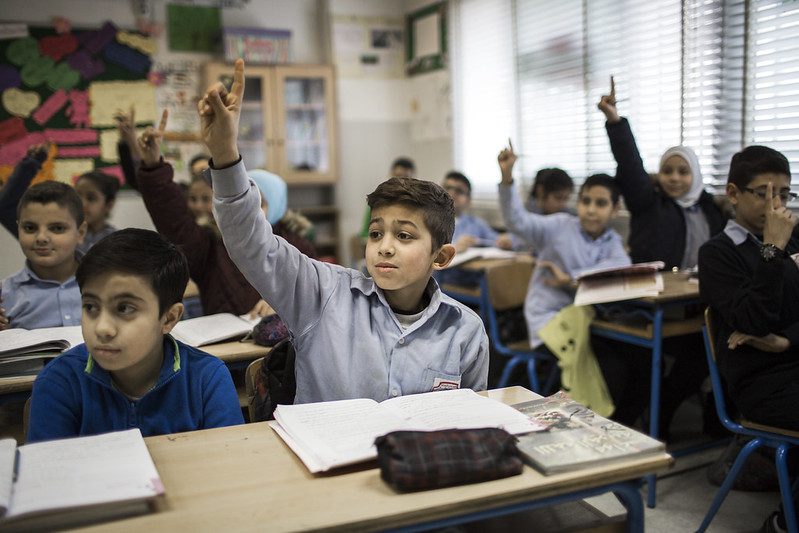
Tackling Poverty Through Education in the Middle East

Education in the Middle EastEducation is a key determinant of economic stability and growth. In the Middle East, where poverty levels are high, access to education can significantly affect an individual’s economic prospects. According to Maher Hamoud, a professor of political economy at the University of Leuven, Belgium, “People tend to be easily manipulated when the level of education is low.” However, the relationship between education and poverty is not merely about individual empowerment; it also affects broader sociopolitical dynamics.

Hamoud notes that “a serious educational development plan must be implemented for at least a generation” to see significant societal changes. Unfortunately, the political instability in many Middle Eastern countries often disrupts long-term developmental planning, leading to inconsistent progress. For example, the 1967 Six-Day War between Egypt and Israel severely interrupted Egypt’s educational programs, demonstrating how conflict can derail efforts to improve schooling and, by extension, economic stability.

Current Educational Programs

Several initiatives throughout the region aim to address disparities. The World Bank’s Arabic Initiative focuses on improving the quality of education in the Middle East. This program emphasizes curriculum development, teacher training and technology integration in the classroom to provide students with the skills needed to compete in a globalized economy.

Amideast is another crucial player in the region. It offers academic opportunities that promote cross-cultural understanding and scholarly achievement. By providing professional training, English language instruction and scholarships, Amideast helps students from underprivileged backgrounds access quality education and improve their economic prospects. The organization’s initiatives have benefitted more than 1,900 exchange and scholarship students and empowered 19,000 youths and women through special programs.

Save the Children, known for its work in crises, has also been instrumental in the Middle East. The organization runs programs that provide schooling to youth in conflict zones, ensuring that even in the most challenging circumstances, young people have the opportunity to learn. These initiatives are crucial in regions where conflict and displacement have disrupted traditional education systems.

New Possibilities to Bridge the Inequality Gap

While existing programs have made significant strides, much work still exists to ensure all youth have access to quality education in the Middle East. One promising approach is the implementation of cash transfer programs, which provide financial incentives for families to keep their children in school. Cash transfer programs give money to increase a household’s income, reduce poverty and improve well-being. They have been successful in other regions and could help reduce economic barriers in the Middle East.

Investments from governments and nongovernmental organizations (NGOs) are also essential. Hamoud highlights the importance of sustained efforts, noting that “governments tend to avoid seriously investing in education.” He points to examples like Singapore, Malaysia and Kuwait, where long-term investment in education has led to significant improvements. Similar commitments in the Middle East could yield substantial benefits, facilitating a more educated and economically stable population.

Digital solutions offer another route for expanding educational access. Online learning platforms, mobile teaching initiatives and cyber classrooms can reach students in remote areas or conflict zones. These technologies can also standardize education across the region, ensuring that all students have access to the same high-quality resources. Despite physical and logistical challenges, today’s technology offers avenues to bridge inequality.

Looking Forward

Access to education in the Middle East is critical in reducing poverty levels. While current programs have made significant contributions, there is still a need for innovative solutions and sustained investment. With new possibilities such as cash transfers, investments and digital solutions, the region can work toward a future where every child can receive a quality education, regardless of socioeconomic background. Hamoud pointed out, “A serious educational development plan must be implemented for at least a generation.” With the right strategies, the Middle East can make significant strides toward alleviating poverty and achieving long-term economic stability.

– Asiya Siddiqui

Asiya is based in Fremont, CA, USA and focuses on Technology and Global Health for The Borgen Project.

Photo: Flickr

August 30, 2024
https://borgenproject.org/wp-content/uploads/borgen-project-logo.svg 0 0 Lynsey 2 https://borgenproject.org/wp-content/uploads/borgen-project-logo.svg Lynsey 22024-08-30 07:30:182024-08-30 06:24:56Tackling Poverty Through Education in the Middle East
Developing Countries, Global Poverty, Nonprofit Organizations and NGOs

Village Enterprise: Equipping Business Owners in Rural Rwanda

Village EnterpriseIt has been 30 years since the tragic 1994 Rwandan genocide, and Rwanda is still reeling from its aftershocks. The conflict, which claimed 800,000 civilian lives and displaced 1.5 million people, left the country’s infrastructure in ruins, with homes, schools and medical centers reduced to rubble. That year, the United Nations (U.N.) reported that the poverty rate in Rwanda peaked at 78%, rendering a significant portion of the population unable to afford necessities. Today, nearly half of all Rwandans live below the poverty line and 16% are in extreme poverty. Yet, despite these grim statistics, hope is on the horizon for sustainable economic growth.

A Strategic Partnership

The Government of Rwanda seeks to eradicate extreme poverty by 2030. A strategic partnership with civil society organizations, such as the U.S.-based NGO Village Enterprise, could support this goal. Village Enterprise specializes in entrepreneurial training in rural Africa, equipping aspiring business owners with the necessary skills and capital to get their ideas off the ground.

In the next few years, its work in Rwanda will offer more than 31,000 participating households training, startup cash ($180 per small business group of target size three households) and business mentoring to support the launch of enterprises like hairdressing, farming and bicycle repair. As such, the program is a critical component of the government’s effort to reduce unemployment and boost the national standard of living.

Village Enterprise’s Poverty Graduation Approach

Village Enterprise’s poverty graduation approach has already shown significant success. This model, designed to lift individuals from extreme poverty and give them the tools to achieve financial independence, is a game-changer. Many beneficiaries, particularly women, who comprise 82% of the program, have reported a substantial increase in income, improved living conditions and a newfound sense of agency.

Celeste Brubaker, Chief of Impact and Innovative Financing at Village Enterprise recounts speaking with program participants indelibly proud of the progress they have made and the lives they have built: “The entrepreneurs often explain how their businesses have empowered them to achieve goals such as improving their diets, sending their children to school or upgrading their homes.” Stories like these underscore the people-centered mission at the heart of the fight against extreme poverty and emphasize its outsize impact.

Bellancile’s story is a testament to the program’s efficacy. Bellancile, 42, of Butare, Rwanda, shares: “I used to believe that a woman eats because her husband works, but now I’m the one feeding my family.” Bellancile’s experience is among many. Since Village Enterprise established its presence in Rwanda in 2021, nearly 14,000 entrepreneurs and 6,000 new businesses have emerged from its entrepreneurial program, with the figures to increase in the next couple of years.

A New and Promising Contribution

On July 17, 2024, the Fund for Innovation and Development (FID), an independent body hosted by the French Development Agency (AFD), issued a $1.3 million grant to Village Enterprise. These funds, combined with a $6.5 million grant awarded to the organization by the United States Agency for International Development (USAID) last year, will cofinance its initial scaling work in Rwanda.

Village Enterprise is also partnering with the Rwandan government to extend the program’s reach, seeking to raise an additional $22 million to establish an outcomes fund, which Brubaker believes will “incentivize service providers who effectively support communities and discourage participation from less effective organizations.” Increasing the organization’s capacity beyond its current operations in four Rwandan districts could enable its entrepreneurial training to serve an additional 125,000 households by 2027.

Navigating the Challenges

Overall, the country’s economic outlook is positive. The World Bank reported a 7.6% growth in gross domestic product (GDP) for the first three quarters of 2023 and anticipates significant gains in the next two years. Village Enterprise’s entrepreneurial program has played a role in the country’s economic recovery. However, challenges persist, including external shocks, limited resources, ineffective sequencing, difficulties in impact measurement and disjointed coordination.

Despite the obstacles, though, Jean Pierre Sibomana, Village Enterprise’s Rwanda Scaling Project Director, points to reasons to be optimistic: “The country is focused on sustaining livelihoods through initiatives like Ejo Heza, a pension program for especially those working in the informal sector, as well as job creation and the development of the education sector… It’s a long journey, but looking at how committed the government is, it presents hope.” Indeed, Village Enterprise’s entrepreneurial training program, bolstered by philanthropic contributions, may prove a linchpin of the government’s efforts to eradicate extreme poverty in the near future.

Maurice Nirere, Village Enterprise’s Senior Manager of Monitoring and Evaluation in Rwanda, recommends other pan-African governments follow suit. He emphasizes the importance of international collaboration, stating that by “putting in place well-designed strategies and anti-poverty policies, [governments can demonstrate] a political willingness to combat poverty and [create] a room to collaborate with international agencies.” This call for global collaboration makes aid agencies and governments part of a shared mission and fosters a sense of shared responsibility.

Looking Ahead

Village Enterprise’s progress in Rwanda has made a tangible impact, changing lives and stabilizing rural areas embroiled in extreme poverty. Emerance of Rulindo, Rwanda, has forged a path to success and independence with the organization’s support. She and her business partners, Lucie and Domithile, are now not merely surviving but providing for their families in ways they never imagined possible. Their tenacity and even the name of their business, “Bright Future,” signal prosperous days ahead for thousands across Rwanda.

– Natalie Kaufman

Natalie is based in Orlando, FL, USA and focuses on Business and Good News for The Borgen Project.

Photo: Flickr

August 27, 2024
https://borgenproject.org/wp-content/uploads/borgen-project-logo.svg 0 0 Lynsey 2 https://borgenproject.org/wp-content/uploads/borgen-project-logo.svg Lynsey 22024-08-27 01:30:512024-08-26 10:15:28Village Enterprise: Equipping Business Owners in Rural Rwanda
Page 11 of 157«‹910111213›»

Get Smarter

  • Global Poverty 101
  • Global Poverty… The Good News
  • Global Poverty & U.S. Jobs
  • Global Poverty and National Security
  • Innovative Solutions to Poverty
  • Global Poverty & Aid FAQ’s
Search Search

Take Action

  • Call Congress
  • Email Congress
  • Donate
  • 30 Ways to Help
  • Volunteer Ops
  • Internships
  • Courses & Certificates
  • The Podcast
Borgen Project

“The Borgen Project is an incredible nonprofit organization that is addressing poverty and hunger and working towards ending them.”

-The Huffington Post

Inside The Borgen Project

  • Contact
  • About
  • Financials
  • President
  • Board of Directors
  • Board of Advisors

International Links

  • UK Email Parliament
  • UK Donate
  • Canada Email Parliament

Get Smarter

  • Global Poverty 101
  • Global Poverty… The Good News
  • Global Poverty & U.S. Jobs
  • Global Poverty and National Security
  • Innovative Solutions to Poverty
  • Global Poverty & Aid FAQ’s

Ways to Help

  • Call Congress
  • Email Congress
  • Donate
  • 30 Ways to Help
  • Volunteer Ops
  • Internships
  • Courses & Certificates
  • The Podcast
Scroll to top Scroll to top Scroll to top