• Link to X
  • Link to Facebook
  • Link to Instagram
  • Link to TikTok
  • Link to Youtube
  • About
    • About Us
      • President
      • Board of Directors
      • Board of Advisors
      • Financials
      • Our Methodology
      • Success Tracker
      • Contact
  • Act Now
    • 30 Ways to Help
      • Email Congress
      • Call Congress
      • Volunteer
      • Courses & Certificates
      • Be a Donor
    • Internships
      • In-Office Internships
      • Remote Internships
    • Legislation
      • Politics 101
  • The Blog
  • The Podcast
  • Magazine
  • Donate
  • Click to open the search input field Click to open the search input field Search
  • Menu Menu

Archive for category: Child Marriage

Child Marriage, Global Poverty, Women and Female Empowerment

Ending Child Marriages

Ending Child MarriagesChild marriage is one of the biggest problems affecting young women in third world countries. Roughly 15 million girls under age 18 are married every year. That translates to around 41,000 girls every day. Child marriage affects young girls throughout third world countries by cutting off their access to education, harming their health and making them more susceptible to cases of domestic and sexual violence. Child marriage also puts a strain on a country’s economy and will end up costing them trillions of dollars over the next 10 years. Though the statistics appear devastating, several organizations are dedicated to ending child marriages in third world countries.
Africa, Asia and the Middle East have the highest percentages of child marriage. Research done by CARE, an organization fighting global poverty, provided the top 26 countries where girls under the age of 18 are more likely to get married rather than enroll in secondary school. The country with the lowest percentage of girls enrolled in secondary school is Niger with only 10 percent. However, 76 percent of girls in Niger are married before age 18. Other countries with significantly low enrollment rates include Somalia, Mozambique and Ethiopia.

Girls Not Brides

Girls Not Brides became an independent charity in 2013. It is an organization committed to ending child marriages. There are 1,300 civil organizations from 100 countries involved in the organization. The sole intention of Girls Not Brides is to end child marriage so girls can live a fulfilling and healthy life. Its main goal is to bring global attention to child marriage and support laws or programs that will protect girls worldwide from the dangers of child marriage.

Girls Not Brides also offers support to those who were already married all over the world. They believe that the minimum age for marriage should be 18 years old for both boys and girls. This is in accordance with the U.N. Convention on the Rights of the Child. Girls Not Brides aims to encourage an open dialogue about the dangers of child marriage, work with other organizations to end child marriage and help to introduce different policies and funding to end child marriage.

In 2016, Girls Not Brides published a strategy set on their plan to tackle child marriage from 2017 until 2020. The plan is an overarching blueprint of what the organization wants to do that is based on their successes in its 2014-2016 plan. Its number one goal is to work with governments to get child marriage legislation passed as well as bring it to the attention of lawmakers. Other goals include globalizing, engaging communities, increasing their funding and donations, using facts and evidence to further their claims about child marriage and setting up partnerships with other organizations.

Other Organizations Fighting Child Marriages

Even though Girls Not Brides is one of the only organization that is dedicated specifically to fighting child marriage, there are other organizations that have made ending child marriages a part of their mission. CARE focuses on ending global poverty through women’s empowerment. Breakthrough uses more artistic and creative means to fight for social justice, which includes children’s rights. Humanim is an NGO fighting for children’s rights and protections.

On a more local level, some organizations focus nationally. In Egypt, the Egyptian Foundation for the Advancement of Childhood Conditions works under the Childs Rights International Network to protect the basic human rights of children. Seya, in Yemen, is a children’s rights organization that puts protecting children as its most important mission. Vasavya Mahila Mandali, which is one of two organizations based in India that believes in empowering women and children.

Child marriage is a huge issue for girls and young women globally. It is one of the top three things holding girls back from obtaining an education and living their lives to the fullest potential. Child marriage violates a young girl’s autonomy and puts her in danger of being seriously injured or, at worst, killed. The existence of Girls Not Brides and the other organizations that are dedicated to ending child marriages and working to educate the public about it are making the world a better place for those who are at risk of becoming a child bride.

– Sydney Toy
Photo: Flickr

October 2, 2019
https://borgenproject.org/wp-content/uploads/borgen-project-logo.svg 0 0 Kim Thelwell https://borgenproject.org/wp-content/uploads/borgen-project-logo.svg Kim Thelwell2019-10-02 01:30:332024-05-29 23:13:00Ending Child Marriages
Child Marriage, Global Poverty

Key Factors in Terminating Child Marriage

terminating child marriage
Child marriage and its confining consequences affect 650 million women across the world and violate human rights. Some of these are access to health care and economic opportunity. While UNICEF databases indicate that the prevalence of child marriage has considerably decreased by at least 6 percent since 1995, child marriage rates remain urgent and concerning; 12 million girls under 18 enter a marriage or early union globally each year.

The persistence of child marriage in a globalized age remains a barrier that obstructs the world from achieving international social justice. Aims to discover the key to terminating child marriage is only a modern development, as child marriage had been the norm virtually everywhere up until the 20th century. In the 21st century, the practice conflicts with a number of the Sustainable Development Goals (SDGs) set by the U.N. in 2015, such as gender equality, no poverty and decent work and economic growth.

The U.N. Sustainable Development Goals

  1. Gender equality: Women make up the vast majority of child marriage victims, largely lacking the necessary empowerment from their communities to escape such conditions. Often feeling as though they lack any other choice, they enter the immobilizing hands of long-held social norms and thus continuing gender inequalities. Subsequently, they are unable to escape their impoverished conditions.
  2. No poverty: Just as poverty is a consequence of child marriage, it too serves as a driving cause. In rural regions where large family sizes and poverty commonly go hand in hand, families send off young daughters in arranged marriages as an attempt to reduce their financial burden. The attempt largely fails, however, and the cycle of poverty for these families and girls continues.
  3. Decent work and economic growth: Barred from freedom and choice in major life decisions, it is no surprise that these 15 million child victims entering marriage each year lack economic independence. Not only do these conditions mean the disabling of girls from unlocking their potential, but according to Economic Impacts of Child Marriage research, it also restrains countries, where child marriage is most prominent, from achieving significant and otherwise attainable economic growth.

Other SDGs that clash with child marriage include quality education and reduced inequalities. Given the prevalence and urgency of this human rights issue, to make true progress within the variety of goals, the U.N. set Target 5.3 of the SDGs to “eliminate all harmful practices, such as child, early and forced marriage and female genital mutilation.”

The UN’s Inter-Agency Program

Latin America and the Caribbean are regions with the highest prevalence of child marriage, following Southern Asia and sub-Saharan Africa. As such, the U.N. made it a priority to target this region to accomplish SDG target 5.3. Specifically, it intended to accomplish this with an inter-agency program covering five countries.

  1. The Dominican Republic, where 36 percent of girls married before 18 in 2017.
  2. Guatemala, where 30 percent of girls married before 18.
  3. Colombia, where 23 percent of girls married before 18.
  4. El Salvador, where 26 percent of girls married before 18.
  5. Mexico, where 26 percent of girls married before 18.

This program involved the uniting of the UNPF, UNICEF and U.N. Women in October 2017 to discuss their shared experiences alongside Latin American inter-institutional actors. Moreover, it was “to identify common challenges and strategies and develop national and regional roadmaps to contribute to compliance with the SDGs” according to UNICEF’s official file.

Those involved included members of civil society and international organizations, government officials and even adolescent girls serving as the program’s youth network representatives. The U.N. uses the power of diversity to effectively analyze, evaluate and prescribe for the pressing matter at hand.

Four Main Program Outcomes

The program ultimately proved that communication and cooperation among these diverse parties are key to terminating child marriage. The first step to progress is to discover and discuss the root causes of the critical issue. Through mutual respect for one another and collective discussion, key causes that participants agreed upon during the program included poverty and inequalities, as well as gender-based violence. With their first-hand experiences, the adolescent representatives disclosed the majority of the drivers discussed. Key causes they shared included school dropout, social harassment and the lack of resources available for pregnant and/or married girls.

Four main outcomes came out of the program, agreed upon by all involved parties as key to terminating child marriage. They were as follows:

  1. Create legal reforms to raise the legal age of marriage in all countries with no exceptions. Participants thoroughly discussed challenges in doing so and in promoting awareness of such legal changes. Since the program, a legislation change that occurred was the Mexico Senate’s approval of a total ban on underage marriage.
  2. Promote policies and services in the areas of health, education and gender equality, among others, and make them far more accessible in all regions. Involved parties agreed that a key means of doing so would require working at the community level and from among civil society, such as teaching males the good of gender equality.
  3. Empower girls in all Latin American and Caribbean countries. This would be accomplished by teaching adolescent girls their sexual rights as well as using social networks to reach and further educate them. This method would be particularly effective since there is a rising amount of internet usage in Latin America.
  4. Create a multilateral platform to maximize efficiency in the fight against child marriage within Latin America and beyond. The collaboration innate to this program would optimistically enter the future with cooperative methods such as pooling resources and advocating for girls’ rights internationally.

Countries should consider each of the four outcomes when implementing future national and international developments and projects meant to end underage marriage. The evident prioritizing of international cooperation is key to terminating child marriage. While the battle in doing so is far from over, the future appears bright as endeavors for correspondence and correlating declines in child marriage rates represent the necessary effort— and potential— for change.

– Breana Stanski
Photo: Flickr

September 5, 2019
https://borgenproject.org/wp-content/uploads/borgen-project-logo.svg 0 0 Kim Thelwell https://borgenproject.org/wp-content/uploads/borgen-project-logo.svg Kim Thelwell2019-09-05 18:07:452024-05-29 23:10:28Key Factors in Terminating Child Marriage
Child Marriage, Global Poverty

3 Efforts to Protect Women’s Rights in Africa

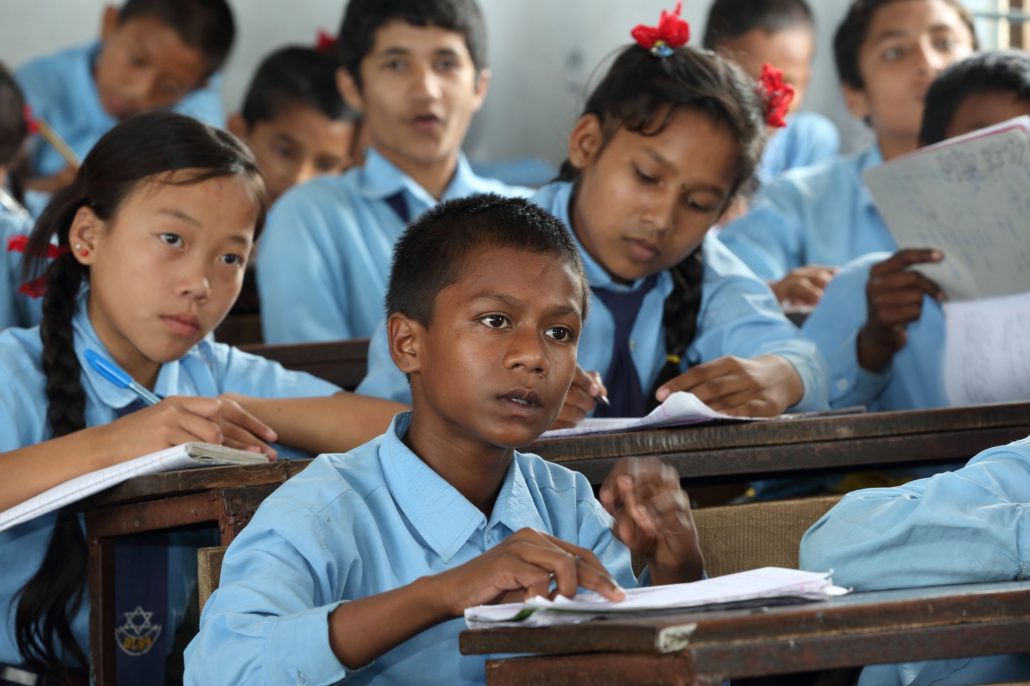
Gender inequality is one of the biggest issues in many African countries. In many regions, women stop attending school when they begin menstruating while others have high rates of child marriage. Many women around the world are also often subject to gender discrimination in the workplace. That said, today, more than ever there are numerous individuals and organizations that have taken a stand to improve women’s rights in Africa.
3 Efforts to Protect Women’s Rights in Africa

  1. Ayisat Yusuf-Aromire and Fellow Female Soccer Players
    In Africa, soccer is seen by many as a man’s profession; as such, female players have an enormous pay gap compared to their male counterparts (female players earn R5,000 (approximately $338) for every game won while men take home R60,000 (around $4,000).Along with a large pay gap, women’s soccer teams also receive less media coverage and funding. Many of these women are also victims of abuse and harassment as a result of being athletes. In response to all of this, many these players have been conducting protests and sit-ins. They have been supported in part by the SheFootball Initiative, a nonprofit organization that aims to empower women by educating and motivating female soccer players in Africa. The founder, Ayisat Yusuf-Aromire (a former soccer player herself), began the organization because she wanted to get rid of the cultural stigma that women should not take part in athletics. So far, Yusuf-Aromire’s work has seemed to pay off, as the organization has become a major voice in women’s soccer in Africa.
  2. Nana Darkoa Sekyiamah
    In many parts of Africa, individuals are not properly educated on safe sex practices, and this can lead to high teen pregnancy and HIV/AIDS rates. To help better educate young people about these issues, Nana Darkoa Sekyiamah, who works as the director of communications for the Association for Women’s Rights in Development, has created a blog called Adventures from the Bedrooms of African Women. The blog aims to provide a safe space where African women can discuss sex and sexuality issues and become educated on safe sex. Resources like these are a great first step towards reducing rates of HIV/AIDS and teen pregnancy in Africa.
  3. Kudirat Abiola, Temitayo Asuni and Susan Ubogu
    Child marriage has become increasingly prevalent in Africa, especially in Nigeria, where roughly 44 percent of girls are married before they turn 18. To combat this, Kudirat Abiola (15), Temitayo Asuni (15) and Susan Ubogu (16) began It’s Never Your Fault, a nonprofit organization that aims to reduce child marriage in Nigeria. The organization has started a petition for the government to raise the minimum age for consent to marriage from age 11 to age 18. To date, the petition has gained more than 130,000 signatures globally.

– Chelsea Wolfe
Photo: Flickr

September 3, 2019
https://borgenproject.org/wp-content/uploads/borgen-project-logo.svg 0 0 Kim Thelwell https://borgenproject.org/wp-content/uploads/borgen-project-logo.svg Kim Thelwell2019-09-03 01:30:212019-12-16 13:55:503 Efforts to Protect Women’s Rights in Africa
Child Marriage, Education, Global Poverty

The Importance of Secondary Education

The Importance of Secondary Education
Secondary education is an important segment in every person’s life. It also serves as a means to potentially empower girls, raise a person’s economic status and reduce infant mortality rates as these listed facts will show. Here are the 10 facts about the importance of secondary education.

10 Facts About the Importance of Secondary Education

  1. Child marriage would reduce by 64 percent if all girls received a secondary education. Moreover, early pregnancies would lower by 59 percent.
  2. There are more than 226 million children around the world who do not attend secondary school. If these children were all to go onto secondary education, then the under-five mortality rate would fall by 49 percent. According to Ann M. Veneman, the Executive Director of UNICEF, evidence shows that girls who receive an education are more likely to take better care of their families, and in turn, reduce infant mortality rates.
  3. A person’s earnings should increase by 10 percent on average for each year of school they attend. As a result, education may help boost economies and bring populations out of poverty.
  4. In 29 countries around the world, children must complete secondary school. Some developed and developing countries will even pay for children to attend secondary school.
  5. In just 40 years, a country could raise its Growth Domestic Product (GDP) per capita by 23 percent through equal access to education.
  6. The attendance of all children to school would require $39 billion in funding every year.
  7. Children often start to drop out of school after primary school. The decrease in enrollment is as much as 10 percent worldwide and 34 percent in Sub-Saharan Africa.
  8. In the year 2012, reports stated that there were 168 million child labor workers between the ages of five and 17. This is one of the reasons a child might be unable to attend school.
  9. In most developing countries, public school is not free for children to attend, as they must purchase books, uniforms and other school supplies. Even factoring out the costs of going to school, 67 million children still do not receive the right to attend. As a result, millions of children do not obtain a proper education, making it difficult to find substantial forms of employment. One solution to this has been Child Empowerment International, an organization that works to provide education to children across the world by setting up day schools for children without access to education, such as in refugee camps.
  10. While girls are less likely to be able to attend school in the first place, boys are more likely to repeat grades or drop out of school altogether. This is due to various issues within their countries, such as restrictions on education for women or early marriage.

There are many issues regarding education and while there are many projects working to decrease these issues, the issue is still at large. There is a need for an international presence regarding the importance of secondary education, and education itself.

– Alex Cahill
Photo: Flickr

August 28, 2019
https://borgenproject.org/wp-content/uploads/borgen-project-logo.svg 0 0 Jennifer Philipp https://borgenproject.org/wp-content/uploads/borgen-project-logo.svg Jennifer Philipp2019-08-28 07:30:072024-05-29 23:11:09The Importance of Secondary Education
Child Marriage, Child Soldiers, Children, Global Poverty

South Sudanese Children Released from Hostage Situation

South Sudanese Children Released from Hostage Situation

On July 23, 2019, 32 South Sudanese children were released from a hostage situation. These children were released to their families and other community members in Leer County, in northern South Sudan. These children were abducted by political opposition groups, with some of the boys abducted as early as 2016. Since the abduction, these 32 children were forced to witness armed conflicts and even participate as child soldiers. Unfortunately, the abduction of these 32 boys is not an uncommon incident; it is a daunting aspect of the South Sudanese civil war.

South Sudan has been in unrest since December 2013, when a civil war was sparked by conflict between the nation’s president and vice president. Supporters for President Salva Kiir were pitted against opposition supporters for Vice President Riek Machar, creating a power struggle over which regime would control the country. This resulted in five years of violence against armed forces and unarmed civilians. The devastation from this civil war has resulted in an estimated 400,000 deaths and has caused nearly 2.5 million refugees to flee the country.

Of the many atrocities committed within this civil war, the recruitment of children into armed forces is one of them. Recruitment, in this case, means the abduction or sale of children. Child abduction across South Sudan has become more frequent due to the nation’s civil war. In 2018, the U.N. last reported that around 19,000 children have been forced into armed groups across South Sudan. Young boys are typically made into child soldiers, while the abducted young girls are made into child brides. It is not uncommon for young girls to be sold into marriage, as the nation’s civil war has economically damaged many communities.

Where these abducted children end up is a mixed bag; some of these children are taken by armed opposition groups, while some of the child soldiers wind up in South Sudanese government forces. For the children integrated into government armed forces, their placement there is not condoned by the nation’s army, South Sudan’s People Defense Force (SPLA). A spokesperson for SPLA, Lul Ruai Koang, publicly stated, “We don’t want child soldiers… We gave their names to UNICEF.” In other words, if there are child soldiers found within SPLA ranks, their information will be given to UNICEF. From there, UNICEF is in charge of what happens to these children.

As for the South Sudanese children released from their hostage situation on July 23, 2019, UNICEF has enrolled all 32 boys into a three-year integration program. This program will provide for the boys’ basic needs, along with additional educational and psychological programs. As of July 2019, UNICEF has assisted 3,143 children throughout South Sudan after they have been released from armed forces. UNICEF’s reintegration programs have become essential in helping these children cope past their traumas and become functioning members of society.

“These children are deprived of a childhood and have seen things children should never experience,” South Sudanese UNICEF representative Mohamed Ag Ayoya said about the July hostage release. “However, it is not too late to give them a future, and that future started today.”

– Suzette Shultz
Photo: Flickr

August 1, 2019
https://borgenproject.org/wp-content/uploads/borgen-project-logo.svg 0 0 Kim Thelwell https://borgenproject.org/wp-content/uploads/borgen-project-logo.svg Kim Thelwell2019-08-01 15:54:282024-05-29 23:10:32South Sudanese Children Released from Hostage Situation
Child Marriage, Global Poverty

10 Facts About the Keeping Girls in School Act

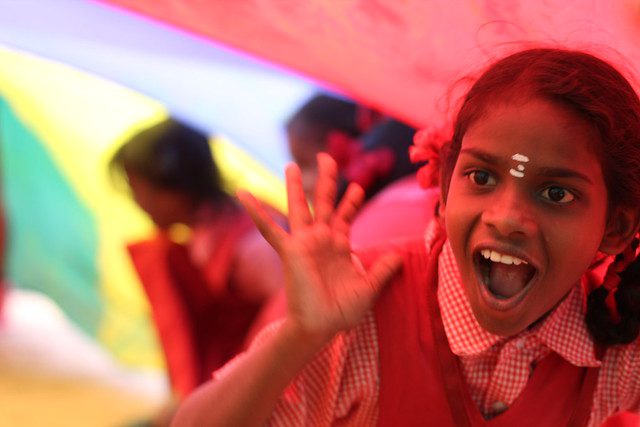
Keeping Girls in School ActFor hundreds of years, people have robbing women and young girls of their right to an education. Of the 774 million illiterate people around the globe, two-thirds are female. Without an education, women die at higher rates, have an increased number of child deaths, are more likely to marry young, are less likely to find work and are more likely to receive lower pay. The Keeping Girls in School Act is designed to address the worldwide barriers that currently exclude 130 million school-aged girls from their right to an education. The legislation has the power to cut child deaths by 50 percent and will raise girls’ future wages by $15 to $30 trillion. Here are 10 facts about the Keeping Girls in School Act.
10 Facts About the Keeping Girls in School Act

  1. The bill has bi-partisan Congressional support. On April 9, 2019, Sen. Jeanne Shaheen (D-NH) and Sen. Lisa Murkowski (R-AK) introduced the Keeping Girls in School Act into the Senate. On that same date, Rep. Brian Fitzpatrick (R-PA), Rep. Lois Frankel (D-FL), Rep. Susan Brooks (R-PA) and Rep.Nita Lowey (D-NY) introduced the bill into the House. More recently, Rep. Greg Walden (R-OR), Rep. Peter J. Visclosky (D-IN), Sen. Todd Young (R-IN) and Sen. Benjamin L. Cardin (D-MD) have also decided to cosponsor the bill, totaling a number of 25 co-sponsors in the House and three in the Senate. With advocates in both the House and the Senate, the Keeping Girls in School Act has garnered the support of not only both legislative bodies but both political parties.

  2. The bill will cut child deaths by 50 percent. Education is one of the most valuable resources when it comes to saving children’s lives. Malnutrition is one of the leading causes of death for children under five largely due to many mothers’ lack of education on proper hygiene, health and nutrition. According to UNESCO, if all women received secondary education, it would cut in half the number of child deaths and save three million lives. When provided with an education, mothers are able to raise their children in a healthier way because they have the knowledge necessary to provide them with a higher quality of life.

  3. The bill focuses on secondary education. The Keeping Girls in School Act focuses on education at the secondary level rather than the primary because girls are at higher risk of dropping out as adolescents. Between the ages of 14 to 18, girls are at the greatest risk of pregnancy, child marriage and genital mutilation. By focusing on girls in this age range, the Keeping Girls in School Act has the power to not only educate young women but to prevent inhumane practices from infiltrating their lives.

  4. The bill will reduce child marriage by 66 percent. Without proper education, people force many young girls into marriage because the girls do not understand that they have the right to refuse it. Education informs young women about their rights and provides them with the tools necessary to challenge the cultural expectations. According to UNESCO, one in seven sub-Saharan African women are married under the age of 18 due to their lack of education. Education is one of the leading factors when it comes to reducing child marriage. If the Keeping Girls in School Act passes, it will play a vital role in eradicating child marriage because it will grant young women the awareness that they have autonomy over their own lives.

  5. The bill is divided into 14 barriers. The Keeping Girls in School Act is divided into 14 sections in an attempt to address all the barriers that prevent women from receiving an education. These include: harmful social norms, lack of safety at or traveling to school, child and forced marriages, distance from and cost of school, the priority of education given to young men, poor nutrition, early pregnancy, HIV, disabilities and racial or religious discrimination. The Keeping Girls in School Act not only outlines these 14 barriers but sets out to challenge them. By individually working to overcome these educational confines, the Keeping Girls in School Act will not only make education more accessible for young women but it will also improve the quality of their lives.

  6. The bill will decrease violent conflict by 37 percent. Lack of education is one of the biggest contributors to violent conflict. Likewise, conflict-affected areas inhibit girls’ access to education greatly. Girls in conflict-affected areas are 90 percent more likely to be uneducated due to the violent reality of their communities. By providing young women with access to education, the violence that keeps thousands of girls from being educated will decrease and the fear that leads their lives will consequently lessen.

  7. The bill will save worldwide governments 5 percent or more on education budgets. With more girls attending school, there will be fewer child marriages, so more women will be able to enter the workforce later on. As a result, they will earn more money and will be able to contribute to their country’s economy in a way they were formerly unable to. An investment in female education is more than a social rights investment because it also houses an economic return. With more economically stable women, more people will be able to purchase products and their countries’ economies will rise as a result. By prioritizing girls’ education, U.S. foreign assistance is not only investing in young women but also investing in themselves.

  8. The bill will promote gender equality. By advancing girls’ education, the U.S. is taking a global stand against inequality. Worldwide, four million more boys receive education than girls. The Keeping Girls in School Act has the power to bridge the gap. Providing education for young women is not only the acknowledgment that they are equally valuable but it is the recognition that they are undeniably capable. In Pakistan, women with secondary education earn 70 percent of the country’s average male income while their primary school counterparts earn only 51 percent. By advocating for the Keeping Girls in School Act, the U.S. is challenging social norms that have oppressed young women for decades. As a result, the Act also possesses the power to change the way people value women around the globe.

  9. Fifty international nonprofit organizations endorse the bill. The largest global poverty organizations around the world support the Keeping Girls in School Act. Organizations such as UNICEF U.S.A, CARE U.S.A and ADRA International are currently backing the legislation. By supporting this bill, these organizations are not only spreading awareness for the global issue but they are exemplifying the mass of its importance.

  10. The bill will receive updates every five years. Keeping in line with global progression, if enacted into law, the Keeping Girls in School Act promises to keep up. If passed, the Senior Coordinator for Gender Equality and Women’s Empowerment, the Ambassador-at-Large for Global Women’s Issues and the Senior Coordinator for International Basic Education Assistance will oversee the bill. This makes sure that the diversity of issues addressed are in line with the reality of the world’s social climate, ensuring that women’s education progresses at the fastest possible rate.

These 10 facts about the Keeping Girls in School Act can spread awareness of a bill that has the power to change the lives of young women around the world. Programs such as CARE’s Keeping Girls at School and funds like UNESCO’s Malala Fund For Girls’ Right to Education are making great progress towards improving the issue. However, with 76 million illiterate female youths worldwide, the Keeping Girls in School Act will help to increase education for women even further.

– Candace Fernandez
Photo: Unsplash

July 30, 2019
https://borgenproject.org/wp-content/uploads/borgen-project-logo.svg 0 0 Kim Thelwell https://borgenproject.org/wp-content/uploads/borgen-project-logo.svg Kim Thelwell2019-07-30 13:56:492024-05-29 23:10:1510 Facts About the Keeping Girls in School Act
Child Marriage, Children, Education, Global Poverty, Nonprofit Organizations and NGOs

4 Nonprofit Organizations Fighting Child Marriage in India

Child Marriage in IndiaChild marriage is any formal or informal marriage of one or both individuals under the age of 18. Not only a human rights violation, child marriage also negatively affects a child’s health, physical growth, mental and emotional development and education opportunities. Some reasons for child marriage are poverty, lack of education, political and financial reasons, gender inequalities and improper implementation of the law. Both girls and boys are affected by child marriages; however, girls are affected at a much higher rate. Of 223 million child brides, 102 million are married before they turn 15. One in three of the world’s child marriages are located in India. Fortunately, these four nonprofit organizations fighting child marriage in India are dedicated to making a change.

4 Nonprofit Organizations Fighting Child Marriage in India

  1. Saarthi Trust: Rehabilitation psychologist Kriti Bhartihe founded Saarthi Trust in 2011. This organization’s main focus is working on the establishment of rights for women and children, child marriage annulment and protection for women and children. Saarthi Trust is the first organization to annul a child marriage in India. Since then, they have successfully annulled 30 marriages and prevented 900. In addition, this organization has rehabilitated 6,000 children and 5,500 women. The Saarthi Trust also offers programs for mental support and education for women and children.  
  2. Aangan Trust: Suparna Gupta founded Aangan Trust in 2002. It works to ensure protection from trafficking, hazardous work, child marriages and violence. This organization trains women to work with child survivors to guarantee that there is no further harm. The women are trained in active listening skills, building empathy and linking children and families to existing services to help reduce risks. This will allow the children to heal, restore their dignity and get back into the community. In addition, these women also build connections with key government agencies, the police and Child Welfare Protection to go through with care plans and to monitor the children’s progress. 
  3. Girls Not Brides: Dedicated to ending child marriages, a group of independent global leaders called The Elders founded the global partnership of Girls Not Brides in 2011. There are members of this organization India, Kenya, Mexico and Senegal. The organization’s main goals are to raise awareness of the negative impact child marriages have through an open, informed and inclusive conversation with communities, facilitate learning with organizations ending child marriages and mobilize policy to end child marriages. The organization works directly with girls by helping them build skills, empowering them and developing support networks. 
  4. Institute of Health Management Pachod (IHMP): Two doctors started IHMP, a nonprofit organization that addresses public health concerns of marginalized groups in India, in 1986. Their main focus is to help vulnerable young girls in rural communities. The IHMP provides life skills and education to these girls in order to make positive life decisions and prevent child marriages. There are several programs offered that support and empower young girls. The institute’s community-based teachers conduct classes that help young girls learn how to negotiate to delay marriage so they can continue their education.

Although child marriages continue to exist, these four nonprofit organizations fighting child marriage in India not only have a positive impact but generate hope for many young boys and girls. 

– Merna Ibrahim
Photo: Flickr

July 25, 2019
https://borgenproject.org/wp-content/uploads/borgen-project-logo.svg 0 0 Kim Thelwell https://borgenproject.org/wp-content/uploads/borgen-project-logo.svg Kim Thelwell2019-07-25 11:54:282024-05-29 23:10:094 Nonprofit Organizations Fighting Child Marriage in India
Child Marriage, Gender Equality, Global Poverty

5 Activists Ending Child Marriages

Ending Child MarriagesEven in 2019, child marriage remains a global problem. Every year, 12 million girls from all around the world will get married before the age of 18. Child marriage is rooted in gender inequality and poverty because in many communities’ girls are still seen as a burden on the family. Marriage is often considered the best way to assure their future. However, there are many organizations and individuals tackling the problem of gender inequality and child marriage. Below are
Five activists whose work is ending child marriages

  1. Nada Al-Ahdal defends children’s rights.
    Nada Al-Ahdal is a Yemeni activist with a personal connection to escaping child marriage. In 2013, at the age of 11, Nada Al-Ahdal ran away from her family’s home in order to prevent a forced marriage to a 26-year-old man. During her escape, Nada Al-Ahdal made a video explaining how, if the marriage had gone through, she would have lost her chance at an education and ruined her life. Furthermore, she would have lost her childhood.
    In the first month of the video being posted, it received more than 8 million views. Nada Al-Ahdal has appeared on Lebanese and Yemeni television, spreading her message for ending child marriages. In 2018, at just 15 years old, Nada founded the Nada Foundation to protect and defend children’s rights. The foundation offers to safe havens. Additionally, it has a number of awareness programs focused on protecting children.
  2. Nice Nailantei Leng’ete speaks out against child marriage.
    At eight years old, Nice Nailantei Leng’ete ran away from her home village in Kenya. She did this in order to avoid undergoing female genital mutilation. As an adult, Nice Nailantei Leng’ete has become an activist that negotiates with village elders in Kenya to convince them to adopt alternative rites of passage for girls. She is an officer with Amref Health Africa. Additionally, it is estimated that her work has saved more than 15,000 girls in Kenya for genital mutilation and child marriage. Nice Nailantei Leng’ete now speaks out on a global stage against mutilation and child marriage in Africa. In 2018, she even was named one of the 100 most influential people in the world by Time Magazine.
  3. Fatoumata Sabaly enacts change as an activist.
    Fatoumata Sabaly is from Senegal, where child marriage and female genital mutilation is still fairly common. She is a respected member of her community as a grandmother and mother. She leverages this position as an activist through the Grandmother Project. The Grandmother Project is an NGO that uses the status of elders in communities to enact change and improve the well-being of women and children.
    Fatoumata Sabaly has explained the important work she does in the project: “Sometimes, girls come to tell me their parents are marrying them off, even though they want to stay in school. When this happens, I go to their parents. Out of respect for me, the parents listen to my advice and let their daughters stay in school.” Her activism and authority are helping girls stay in school and out of unwanted marriages.
  4. Arvind Ojha leads an organization fighting child marriage and violence against females.
    Arvind Ojha is the head of URMUL Trust, an organization active in the Indian state of Rajasthan for more than 25 years. Rajasthan has one of the worst child marriage rates in all of India. URMUL Trust works hard in ending child marriage, female genital mutilation and female foeticide. Arvind Ojha has said that “[URMUL Trust doesn’t] just focus on engaging women and children in programs but also older people and even religious leaders. Change is happening. The average age of marriage for girls is increasing.”
    In 2005, URMUL Trust launched a program in the districts of Sri Ganganagar, Hanumangarh and Jaisalmer called “Dignity of the Girl Child”. The program was aimed at ending child marriages, domestic violence and female infanticide. In 2011, URMUL Trust became partners with Girls Not Brides in order to strengthen their work to ending child marriage.
  5. Isatou Jeng defends women through advocacy.
    At 15 years old, Isatou Jeng found herself pregnant and with enormous pressure to get married. What she did next broke many societal norms in her home country of Gambia. She demonstrated her passion in ending child marriages by saying, “I stood my ground, refused to marry, and saw education as the best chance for a better life for me and my child.”
    Presently, she leads The Girls Agenda, a nonprofit she founded. The purpose of the organization is to fight for other girls facing gender-based violence and child marriage. Throughout her career as an activist, she has also worked as the advocacy and campaign officer for the Network against Gender-Based Violence. This is a group of organizations that works to defend women and girls in Gambia.
    In 2018, at a conference for women who transform the world, Isatou Jeng said about her involvement with The Girls Agenda, “I did not become a feminist, I was born a feminist.”

Every minute, 23 girls under the age of 18 are married around the world. Consequently, this is the reason that the work these activists and their organizations do is so important and urgent. Even in an era where child brides seem to be a relic of the past, ending child marriages is still a critical issue.

– Isabel Fernandez
Photo: Flickr

July 22, 2019
https://borgenproject.org/wp-content/uploads/borgen-project-logo.svg 0 0 Kim Thelwell https://borgenproject.org/wp-content/uploads/borgen-project-logo.svg Kim Thelwell2019-07-22 11:13:402024-05-29 23:00:195 Activists Ending Child Marriages
Child Marriage, Child Soldiers, Global Poverty

Child Labor in Myanmar

Child Labor in Myanmar

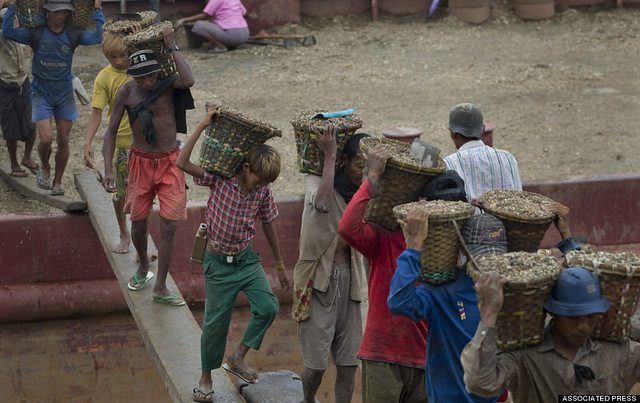
Child labor in Myanmar continues to be a concern for one of the poorest nations in Asia. It is estimated that 1.13 million children, ages 5 through 17 work as laborers in Myanmar. This amounts to 9.3 percent of the child population. Said conditions are a violation of human rights and deprivation of well being.

Impact of Poverty

The prime factor of involvement of children in the workforce is poverty. With more than 32 percent of the nation living below the national poverty line, children work to supplement low household incomes.

However, employers exploit children and pay extremely low rates. In some cases, children as young as 14, working in garment-producing factories, make as little as 17  cents per hour; Yet, the nation’s minimum wage is $3.60.

Government Involvement in Child Trafficking

In August 2017, it was estimated 690,000 people fled from Myanmar due to acts of violence caused by the Myanmar government. Of those, nearly 400,000 were children.

In Myanmar, there is an abundance of trafficking, with little to no intervention. Frequently, the displacement of young girls to China is due to trafficking, for work, or marriage to Chinese men as child brides.

Additionally, Myanmar also has the highest number of child soldiers globally. In these cases, young boys against their will have to comply with captor commands. These commands are in sync with militarization goals and tactics.

Impact of Child Labor

One prominent consequence of child labor in Myanmar is the lack of education among children. One in five children drops out of school in order to work. In Myanmar culture, it is socially acceptable and common to see children working, rather than in school. Also, children who are in the workforce usually have little awareness, nor education about their safety and health rights in the workplace, leading to a high risk of fatal injuries.

The agricultural industry employs 60.5 percent of children in the workforce. Construction and fellow small-scale industries also have a significant role in employing child laborers. Just over half of these children perform potentially hazardous work that is likely to harm their physical or psychological health. Children as young as 15 to 17 make up 74.6 percent of the child workforce exposed to hazardous jobs.

The Intervention of Child Trafficking in Myanmar

Although child labor in Myanmar is widespread, the government of Myanmar is addressing this issue with the support of the International Labor Organization (ILO). The Myanmar Program on the Elimination of Child Labor Project was a four-year program (2013-2017) funded by the U.S. Department of Labor, overseen by the ILO. The goals of this project were to increase awareness of children in the workforce while improving the legal and institutional laws concerning child labor.

The Myanmar government ratified the ILO Convention No.182 which prohibits the worst forms of childhood labor and is in the process of finalizing the country’s first National Action Plan. This proposal outlines ways to reduce child labor in Myanmar while improving the lives of the children all together.

Child labor in Myanmar is a prominent issue as it affects millions of lives. There is, however, a reason to be optimistic, as the Myanmar government and fellow organizations have begun prevention protocols, ensuring a better future for the children of Myanmar.

– Marissa Pekular


Photo: Flickr

June 30, 2019
https://borgenproject.org/wp-content/uploads/borgen-project-logo.svg 0 0 Kim Thelwell https://borgenproject.org/wp-content/uploads/borgen-project-logo.svg Kim Thelwell2019-06-30 11:35:302024-05-29 22:59:42Child Labor in Myanmar
Child Marriage, Global Poverty, Women's Empowerment, Women's Rights

Top 5 Women Activists in Developing Countries

Women Activists in Developing CountriesThere are many reasons for people around the world to use their voices and advocate for social equality. Here is a list of five women activists in developing countries.

Top 5 Women Activists in Developing Countries

  1. Kriti Bharti
    The founder of the Girls Not Brides movement in Rajasthan, northern India, Kriti Bharti prevented over 900 child marriages. Kriti established the Saarthi Trust in 2011 to pull girls from forced child marriages and to educate them on their societal rights. Bharti is both a social activist and a rehabilitation psychologist. She set up rehabilitation programs for the girls released from child marriage.The Girls Not Brides movement has forums that provide food, shelter and water for girls banished from their families. The forums also include educating girls on their societal rights and providing them with life skills such as sowing. Twenty-seven percent of girls in India marry before the age of 18 resulting in India being the highest country with child brides. The Saarthi Trust was the first organization in India to annul a marriage and annulled 31 other child marriages since 2012.

    Poverty is a leading cause that resolves itself in child marriage. Usually, families marry off their young daughter to help alleviate finances; the younger the bride, the lower the dowry (a form of payment). Gender norms also play a key factor in child marriages. A girl is of lower value in general. Typically, females are not able to contribute to society because of this, leading their value to be held in household chores and motherhood. Moreover, a woman’s value is upheld in her benefitting her marital family more than her blood family. Thus, the family will usually educate their sons rather than their daughters.

    The South Asia Initiative to End Violence Against Children (SAIEVAC) takes local action against abuse towards children by providing shelter with food and water and by educating girls in jobs. The Sustainable Development Goals stated that India is striving to end child marriages and forced labor by the year 2030.

  2. Malala Yousafzai
    Malala is now a household name across the world. The youngest person awarded the Nobel Peace Prize in 2014; she now uses her voice and her story to speak for the women around the globe who could not. “I tell my story not because it is unique, but because it is the story of many girls,” Yousafzai said.After she spoke out against education oppression towards girls in 2012, a Taliban gunman shot Malala in the head in 2012. Then, she began the Malala Fund. The Malala Fund now reaches six different countries; Afghanistan, Brazil, India, Nigeria, Pakistan and Syria. In each country, it recruits female teachers and tries to bridge the gap between gender disparity in education. It also educates teachers and students on gender discrimination, teaches girls how to speak about their rights, gives free secondary schooling and campaigns for new policies advocating for girls’ education. The goal of Malala’s Fund is to give girls “12 years of free, safe, quality education.”
  3. Holida, Suci and Ria
    The Yes I Do project of Indonesia began with three girls advocating against child marriage in their village and country. Holida, Suci, both 18, and Ria, 16, advocated that the abuse’s of child marriage is everyone’s responsibility to end. The Yes I Do project strives to prevent child abuse and forced sexual acts due to the selling of young girls into marriage. The project exposes the effects that sexual abuse has and the ways it affects reproductive health.Through village forums and discussions, the girls highlighted with their fellow neighbors that they have the same rights as boys do. Through their voices, child marriage cannot go unnoticed. Now, when a girl is forced or marries young, people talk about it. This gives fire to Holida, Suci and Ria’s campaign. The girls plan on making a movie to take to other villages around their own. “We want everyone to know why child marriage is wrong so that girls everywhere can achieve their dreams,” Suci said.
  4. Manal al-Sharif
    Manal al-Sharif, an Iraqi woman, co-founded the Women to Drive movement bringing awareness to the oppression of women’s rights in Saudi Arabia and bringing back the ability for women to drive. In 1957, Saudi Arabia decreed that women could no longer drive. In 1990, a large protest took place where 47 women drove around the country’s capital. Over 20 years later, in 2011, Manal al-Sharif started the Facebook campaign called Women to Drive to spread awareness of their oppression.Later that same year, al-Sharif and fellow co-founder, Wajeha al-Huwaider, recorded a video of themselves driving and speaking out against the difficulty of being a woman and commuting. In June 2018, King Salman issued a decree that Saudi women could obtain a driver’s license. Al-Sharif and the women advocating for years for freedom for their gender are making progress. Since the summer of 2018, women can take to the road, something they were not able to do for 62 years.
  5. Zahra’ Langhi
    The Lybian Women’s Platform for Peace (LWPP) is an organization that puts pressure on the government to give opportunities to women to uphold sociopolitical places within government and society. Zahra’ Langhi is a co-founder and feminist activist who started speaking out in 2011 when Muammar Gaddafi’s reign ended after decades of abusing his power over the country. The leading effects after the uprising resulted in 35 women joining together to form LWPP. The state of Libya is dangerous and unbalanced, especially for women advocating to eliminate corruption in politics. Langhi never gave up her voice and continues to speak for compassion and understanding to infiltrate her country. “We need to start acting as agents of compassion and mercy. We need to develop a feminine discourse that not only honors but also implements mercy instead of revenge, collaboration instead of competition, inclusion instead of exclusion,” Langhi said.

These five women activists in developing countries spread their knowledge to their fellow neighbors and friends. From halfway across the globe, people Western countries can stand next to these women activists in developing countries and let them know they have support.

– Hannah Vaughn
Photo: Flickr

June 21, 2019
https://borgenproject.org/wp-content/uploads/borgen-project-logo.svg 0 0 Kim Thelwell https://borgenproject.org/wp-content/uploads/borgen-project-logo.svg Kim Thelwell2019-06-21 01:30:072024-05-29 23:00:17Top 5 Women Activists in Developing Countries
Page 12 of 13«‹10111213›

Get Smarter

  • Global Poverty 101
  • Global Poverty… The Good News
  • Global Poverty & U.S. Jobs
  • Global Poverty and National Security
  • Innovative Solutions to Poverty
  • Global Poverty & Aid FAQ’s
Search Search

Take Action

  • Call Congress
  • Email Congress
  • Donate
  • 30 Ways to Help
  • Volunteer Ops
  • Internships
  • Courses & Certificates
  • The Podcast
Borgen Project

“The Borgen Project is an incredible nonprofit organization that is addressing poverty and hunger and working towards ending them.”

-The Huffington Post

Inside The Borgen Project

  • Contact
  • About
  • Financials
  • President
  • Board of Directors
  • Board of Advisors

International Links

  • UK Email Parliament
  • UK Donate
  • Canada Email Parliament

Get Smarter

  • Global Poverty 101
  • Global Poverty… The Good News
  • Global Poverty & U.S. Jobs
  • Global Poverty and National Security
  • Innovative Solutions to Poverty
  • Global Poverty & Aid FAQ’s

Ways to Help

  • Call Congress
  • Email Congress
  • Donate
  • 30 Ways to Help
  • Volunteer Ops
  • Internships
  • Courses & Certificates
  • The Podcast
Scroll to top Scroll to top Scroll to top