• Link to X
  • Link to Facebook
  • Link to Instagram
  • Link to TikTok
  • Link to Youtube
  • About
    • About Us
      • President
      • Board of Directors
      • Board of Advisors
      • Financials
      • Our Methodology
      • Success Tracker
      • Contact
  • Act Now
    • 30 Ways to Help
      • Email Congress
      • Call Congress
      • Volunteer
      • Courses & Certificates
      • Be a Donor
    • Internships
      • In-Office Internships
      • Remote Internships
    • Legislation
      • Politics 101
  • The Blog
  • The Podcast
  • Magazine
  • Donate
  • Click to open the search input field Click to open the search input field Search
  • Menu Menu

Archive for category: Charity

Charity, Children, Global Poverty

The Shoe That Grows

The Shoe That Grows - TBP
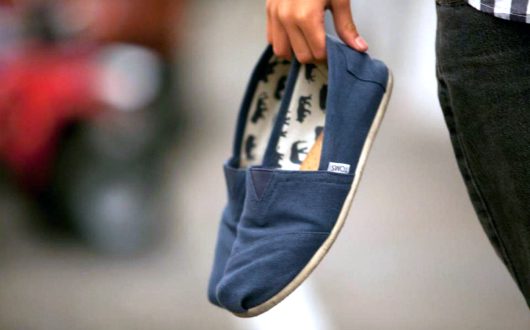
Idaho native Kenton Lee’s “The Shoe That Grows” has seen quite a bit of media frenzy for its fascinating innovation. An idea that has been in the making since 2007, the unique invention could serve as the answer to those in developing regions who lack shoes.

Following his 2007 graduation from Northwest Nazarene University, aspiring philanthropist Kenton Lee embarked on monthly mission trips from Ecuador to Kenya. What would soon catch his attention was a stop at a Kenyan orphanage, where over 140 children with parents who died from AIDS resided.

While walking to a church, the fresh graduate spotted a 6-year-old girl wearing a white dress and a pair of shoes that were “four- or five-sizes too small.” They were so undersized that holes were made for the girl’s toes to hang out. Lee was also astonished by the unsanitary conditions within the orphanage, including a lack of clean water and on-and-off electricity.

Following the sighting, Lee spoke with the director of the orphanage to seek further information as to why the young girl and others lacked durable footwear. The director disclosed to Lee that shipments of shoe donations were made a year prior, but because those in need happen to be kids, they easily outgrow the shoes as they age. The optimistic designer later found that over 300 million children in developing countries lack shoes, resulting in the contraction of soil-transmitted diseases such as threadworms and Guinea worms.

Upon returning to the United States, Lee sparked an idea that could maintain comfortable footwear to poverty-stricken children in developing regions. That idea was The Shoe That Grows, but Lee knew his plan would not come to light if he did not seek help from a supportive team of volunteers to push his idea into effective force.

The year 2009 would mark Kenton Lee’s founding of Because International, a nonprofit organization to help propel the innovative shoe idea into the media. Following backfire from failed efforts to get big-name shoe companies like Nike onboard, Lee and voluntary members partnered with shoe development company Proof of Concept to pull the “growing shoe” design together.

Lee would explain in an interview with Buzzfeed that the base of the creation is a sandal made with compressed rubber material similar to tires. It was also indicated that the sandal could last up to 10 years with the help of durable leather and heavy-duty buckles.

The optimistic contributor later added in 2011 that the shoe could grow from a size 5 to a size 12, enabling users to adjust their shoe as their feet grow.

In 2012, Kenton Lee shared that, because Proof of Concept undergoes a 16-week shoemaking process, funding support would be urgently needed. Hence, in October 2012, Lee and Because International launched a two-week fundraising campaign via Crowdrise to meet a desired goal of $4,000 in order to produce a prototype of the innovative shoe. When enough money was raised, Lee and his wife traveled back to Kenya to test out 100 prototypes in four schools. Much to his liking, the disadvantaged schoolchildren “loved them,” and with a few tweaks, Lee had the final product ready in 2014.

In October 2014, Idaho news station KTVB was among the first to get a glance of the finished product, and they later disclosed on their official website that each pair would be sold for $10. The following year, British publication Daily Mail noted that the sandal-based wear had increased by $30. However, it also said that if 100 pairs were purchased, the price would be reduced to $12.

Alternately, Because International launched a digital page requesting willing donors to contribute $15 to fill duffle bags with 50 pairs of shoes each. Once filled, each bag is sent off to its destination to aid shoeless people.

While the growing shoe has accumulated praise, a few critics have remained skeptical of its potential performance, arguing that the product will fail like previous similar ideas attempted by other shoemakers. For example, created in 2002, the company INCHworm designed footwear that retained an accordion-like segment that could expand three sizes. However, the product immediately faced criticism when stockers failed to understand its purpose due to the shoe “only filling one niche,” and only serving as a “casual slip-on,” rather than being marketed as a sneaker or a dress shoe. Moreover, its price of over $45 did not sit well with consumers, which resulted in American disinterest and limited production in the United Kingdom.

By a stark contrast, Kenton Lee’s invention is not strictly designed for American sale, but rather for a wider release overseas for the betterment of underprivileged kids. With the global sale in perspective, individuals like Jacksonville State University professor Pam Hill hope the product is not “just limited to tropical or sub-tropical regions,” but is also geared toward children in “inclement [or] snowy” regions who lack the same essentials.

Some have been weary of the product’s production in China, where they hope the procession units will not add any unnecessary material that could pose as a harmful threat to the children. Lee, however, has noted that the factories have been long proponents of Proof of Concept.

With five nonprofit establishments backing the product, alongside a successful $50,000 crowdfunding campaign, 2,500 units have been sold in disadvantaged regions from Colombia and Peru to Kenya and Haiti. The Shoe That Grows is ready to make an impact. But when success is ultimately achieved, what will be next on Lee’s list?

Lee and Because International plan to produce a second project, tentatively titled “A Better Bed-net,” which will supply bedding to orphaned kids in mosquito-infested areas. The bedding is to be equipped with netting that will trap disease-carrying mosquitoes that try to make their way into orphan shelters. For now, Kenton Lee and his supportive network are carefully taking one step at a time to ensure that they are truly living up to their motto: “Making things better by making better things.”

– Jefferson Varner IV

Sources: The Shoe That Grows 1, The Shoe That Grows 2, OregonLive, Buzzfeed, Smithsonian, KTBV, Youtube 1, Daily Mail Online 1, Daily Mail Online 2, Youtube 2, CNN Money, The Cultureist, AOL Money UK, Idaho Entrepreneurs
Photo: Daily Mail

July 7, 2015
https://borgenproject.org/wp-content/uploads/borgen-project-logo.svg 0 0 Borgen Project https://borgenproject.org/wp-content/uploads/borgen-project-logo.svg Borgen Project2015-07-07 07:30:022024-12-13 17:53:59The Shoe That Grows
Advocacy, Charity, Nonprofit Organizations and NGOs, Philanthropy

What Charitable Organization Should I Donate To?

which charitable organization should i donate toBefore you think about participating in a charitable organization, you should do your research. Due to the many charitable organizations that exist within our philanthropic community, some organizations have come to be that do not have charity in mind. In order to understand which organization is beneficial or harmful, it is important to pay attention to the impact of the organization. While numbers on their website may be important, they aren’t everything within the giving equation.

Some organizations have claimed to be nonprofit and have thus exploited a system based on charity. While a contribution may make its way to the intended individual, along the way the amount is decreased for a variety of reasons leaving the final amount received significantly less than the original contribution.

While it is important to realize the many pitfalls of philanthropic donation, it is essential to realize that not all organizations are like this. In some cases, it can mean life or death to those individuals who are on the receiving end of a donation.

For individual giving, it is important to give to a cause that is important to you. While there are many great organizations that help with global hunger like the Global Alliance for Improved Nutrition and Action Against Hunger, or global poverty like Innovations for Poverty Action, ultimately where your donation goes is up to you.

Before donating to that major philanthropic organization that says they have used the money to provide x, y and z, look deeper into their numbers and statistics and decide if your donation will really be making a difference.

A good place to get started with general philanthropic organizations can be found here.

In addition, it is important to know which organizations to generally avoid here.

– Alysha Biemolt

Sources: Marketplace, The Life You Can Save 1Tampa Bay Times, The Life You Can Save 2The Life You Can Save 3, Love to Know
Photo: Needpix.com

June 24, 2015
https://borgenproject.org/wp-content/uploads/borgen-project-logo.svg 0 0 Borgen Project https://borgenproject.org/wp-content/uploads/borgen-project-logo.svg Borgen Project2015-06-24 16:08:072020-07-15 10:12:26What Charitable Organization Should I Donate To?
Charity, Nonprofit Organizations and NGOs

Ex Novo: A Charitable Brewery

Ex-Novo-Charitable-Brewery
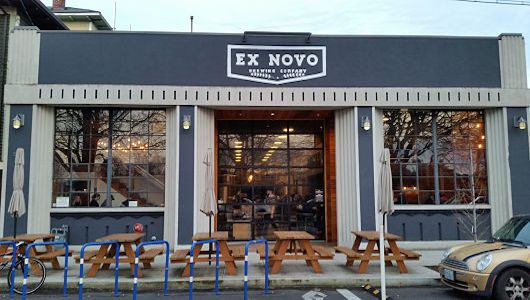
A company that unites good beer, good food and good causes seems too good to be true. But the Ex Novo Brewing Company in Portland, touting itself as “a 10-barrel non-profit brewery,” is making this dream a reality.

The charitable brewery was founded by former engineer Joel Gregory, who stated in an interview with Portland Monthly Magazine that he “felt compelled to help in any way.” And with the brewery’s charitable efforts supporting causes such as Mercy Corps’ work with Syrian refugees and the International Justice Mission, Mr. Gregory is helping.

The alcohol industry is not exactly known for its charitable efforts. By taking the growing craft beer craze and using it as an opportunity to do good, Ex Novo is bringing charity to the beer industry, and bringing change to the world.

And they’re doing it deliciously. Food items served at the brewery include bacon, cottage pie and a pork meatball banh mi. Beers include Irish Stouts, IPAs and a variety of Saison brews. In addition, the brewery serves homemade brownies and a stout milkshake.

The first non-profit brewery is receiving nothing but praise for these features. Customers on Yelp praise the non-profit nature of the establishment, along with the charitable brewery’s expansive food and drink menu. Though Ex Novo does not currently bottle or can its beer, it can be found on tap throughout the Portland area.

Opened in July 2014, it would appear that the one-year-old brewery is making a big splash in Portland. And with its delicious menu and good reputation, the organization can change both lives and tastes.

Only time will tell if Ex Novo’s conception of the not-for-profit brewery will have an impact in the beer industry. Through its support of Mercy Corps’ fight to end the cycle of refugee poverty and the International Justice Missions’ fight against global systems of exploitation, Ex Novo is a wonderful example of a local business making a global difference in the fight against poverty.

– Andrew Michaels

Sources: Portland Monthly Magazine, Ex Novo Brewing Company, Yelp, Eater, International Justice Mission, Mercy Corps
Photo: Koperski

June 24, 2015
https://borgenproject.org/wp-content/uploads/borgen-project-logo.svg 0 0 Borgen Project https://borgenproject.org/wp-content/uploads/borgen-project-logo.svg Borgen Project2015-06-24 00:45:472024-12-13 17:51:35Ex Novo: A Charitable Brewery
Activism, Charity

Charity for Every Millennium Development Goal

Millennium Development Goal
Looking to gain some good karma? A Millennium development goal can address many issues ranging from health to HIV/AIDS. This list recommends one great way to support each of the latter four Millennium Development Goals. All charities listed have a score of 96 or higher on Charity Navigator. To see part one of this article, please click here.

Millennium Development Goal 5: Improve Maternal Health

Where to donate: Direct Relief

Women in low-income countries are at a startling disadvantage when it comes to maternal health. Worldwide, a woman dies from complications during pregnancy or childbirth every two minutes. Even more shocking is the fact that 90 percent of these women die from preventable conditions.

One of Direct Relief’s chief programs works to improve the health of mothers in impoverished countries. The organization’s health services train and equip midwives, provide emergency obstetric care and treat birth-related injuries.

Charity Navigator recently ranked Direct Relief at the top of its “10 of the Best Charities Everyone’s Heard Of” list. When donating to Direct Relief, you can choose to either direct your gift specifically to their Maternal and Child Health programs or let the organization use the money where it is most needed.

Millennium Development Goal 6: Combat HIV/AIDS, Malaria and Other Diseases

Where to donate: United Nations Foundation Nothing But Nets

Malaria, a disease transmitted by infected mosquitoes, kills over 600,000 people every year. In sub-Saharan Africa, malaria is the leading killer of children; one child dies from the disease every 60 seconds.

In 2006, Rick Reilly published an article in Sports Illustrated challenging his readers to donate to the fight against malaria. His column inspired the creation of Nothing But Nets, which in the past nine years has worked with hundreds of thousands of individuals to distribute bed nets throughout Africa. The organization has also partnered with some big names, including the World Health Organization, the National Basketball Association’s NBA Cares and the Bill and Melinda Gates Foundation.

The idea behind Nothing But Nets is simple: when bed nets keep out mosquitoes, fewer people are infected with malaria. The insecticide-treated nets also kill mosquitoes, which helps slow the spread of the disease. This life-saving strategy is also relatively cheap; it costs only $10 to send a net to a family in sub-Saharan Africa.

Millennium Development Goal 7: Ensure Environmental Sustainability

Where to donate: Global Greengrants Fund

Want an organization that works to promote sustainability and social justice? Since 1993, Global Greengrants has provided worthy communities with grants to help them face environmental and social challenges. According to the organization’s website, “Global Greengrants believes local people know best how to address the environmental issues impacting their own lives.”

The Global Greengrants Fund supports over 5,300 projects in 163 countries. Before giving a grant, the organization’s team of Grant Advisors carefully reviews which projects will receive funding. Once chosen, grant recipients use the money to combat issues such as fresh water shortages, biodiversity loss and land rights violations. Women in Ghana, for example, used a Greengrant to prevent a mining company from destroying their freshwater spring. Community members in Indonesia used their Greengrant to keep palm-oil companies from illegally clear-cutting local rainforests.

Millennium Development Goal 8: Global Partnership for Development

What to donate: Your time!

Millennium Development Goal 8 is especially complex. It calls for fairer trade practices, better debt relief services, affordable access to pharmaceutical drugs and new technologies and increased aid for the world’s poorest countries. While all these targets may seem overwhelming, you can advocate to make your support for them heard.

Time can be just as valuable a donation as money. Call or email your Congressional representatives and ask them to support bills such as the Food for Peace Reform Act of 2015. The act would allow U.S. global food aid to reach over eight million more people while saving an estimated $440 million.

Another important bill to support is the Electrify Africa Act, which addresses the target of MDG 8 that calls for increased availability of technology in developing regions. The bill was passed by the House in 2014 but never made it through the Senate. Show your Congressional leaders that the Millenium Development Goal like this matter to you by making a 30-second phone call.

– Caitlin Harrison

To see part one of this article, please click here.

Sources: Direct Relief, Nothing But Nets, Global Greengrants Fund, The Borgen Project
Photo: Flickr

June 18, 2015
https://borgenproject.org/wp-content/uploads/borgen-project-logo.svg 0 0 Borgen Project https://borgenproject.org/wp-content/uploads/borgen-project-logo.svg Borgen Project2015-06-18 08:01:562020-07-17 11:01:34Charity for Every Millennium Development Goal
Charity, Global Poverty

What are Charitable Contributions?

what-are-Charitable-Contributions

We all know that giving to charity is both personally satisfying, in that it allows us to give to the causes we support, as well as financially satisfying, when we fill out our taxes and collect on deductions.

And that’s great, but what is a charitable contribution?

According to the IRS, “a charitable contribution is a donation or gift to, or for the use of, a qualified organization. It is voluntary and is made without getting, or expecting to get, anything of equal value.”

The IRS states that “qualified organizations include nonprofit groups that are religious, charitable, educational, scientific, or literary in purpose, or that work to prevent cruelty to children or animals.” Qualified organizations have 501(c)3 status. Whether or not an individual organization is qualified can be found using the IRS Exempt Organizations Select Check tool.

Charitable contributions are not tax deductible for certain organizations. For instance, donations to sports clubs and chambers of commerce are not deductible. Neither are donations to political candidates or labor unions.

Though many people think of charitable contributions as simply consisting of cash, contributions are far from limited to money. Items such as clothing, jewelry and cars are tax deductible to varying degrees when donated. It is important to note that not all noncash contributions are accepted as tax deductible. For instance, service costs cannot be deducted, and blood donated to a blood bank or blood drive cannot be donated for monetary value.

Volunteer work is not deductible. However, costs directly resulting from volunteer work are deductible. For instance, the cost of gasoline used while travelling to and from volunteer work can be deducted.

There is a variety of paperwork which must be filled out in the process of claiming a deduction from a charitable donation. This paperwork depends on the size and nature of the donation. For example, to receive a deduction on any donation of $250 or more, cash or noncash, a receipt is required. Any noncash donation worth $500 or more means filling out IRS form 8383.

The most important thing about charitable contributions, however, won’t be found in tax codes or deductions. It will be found in the satisfying reward of giving time, money, possessions and effort to fight for a cause that you believe in. That’s something to which no monetary value can be assigned.

– Andrew Michaels

Sources: TurboTax Blog, IRS, IRS,
Photo: Business 2 Community

June 15, 2015
https://borgenproject.org/wp-content/uploads/borgen-project-logo.svg 0 0 Borgen Project https://borgenproject.org/wp-content/uploads/borgen-project-logo.svg Borgen Project2015-06-15 08:09:222024-12-13 17:51:28What are Charitable Contributions?
Aid Effectiveness & Reform, Charity, Global Poverty

Benefits of a Universal Basic Income

Universal Basic Income is a concept where everyone receives a check from their government every month to pay for any necessities one may need. Although the thought of Universal Basic Income (UBI) is a radical move for any country, it can be a way to alleviate poverty. Instead of Food Stamp and Welfare programs, citizens would receive one lump sum check regardless of status. According to the Huffington Post “it could eliminate poverty to a great extent, and set the stage for a healthier and more productive society.”

Switzerland citizens have been fighting for this movement and have sparked a public referendum to push the movement forward. The country has seen the possible benefits of what a UBI can accomplish. Families can have food security, income inequality would decrease, and if countries adopt the idea with success may influence other countries to do the same. In the 1970’s Canada experimented with the implementation of a UBI, and according to the New York Times “poverty disappeared…High-school completion rates went up; hospitalization rates went down.”

Another reason this topic is so vital in today’s world is the advancement of technology. The Guardian has found “Oxford academics Carl Benedikt Frey and Michael A Osborne have predicted computerisation could make nearly half of jobs redundant within 10 to 20 years.” Thus, the more technology grows, the less jobs will be available to the public.

However, the chance of having a UBI gives citizens a way to achieve their professional dreams. Instead of people working a job they need to survive, with a monthly check from the government they can focus on what they really want to do. The economist has studied “Philippe Van Parijs, a Belgian philosopher, who believes a UBI provides ‘the real freedom to pursue the realization of one’s conception of the good life’” Therefore, a family living in poverty will lose the stress of worrying about their next meal and children can focus on education.

If this concept seems so beneficial why hasn’t it been done? One of the main concerns of creating a UBI is the downfall in work ethic; there is a possibility of laziness if people receive checks for simply being alive. Another drawback is the raise in taxes, BBC has stated “income tax would not necessarily rise, but value added tax – on what people buy rather than what they earn – could rise to 20% or even 30%.”

Despite some negativities in a UBI, it is an idea that may soon be adopted by a majority of the world. With its recent conversation in many governments there seems to be a positive outlook on this concept. A universal income may sound outlandish but so does ending world poverty; yet, both are achievable in the near future.

Sources: BBC, The Guardian, The Huffington Post, The New York Times
Photo: PBS

April 4, 2015
https://borgenproject.org/wp-content/uploads/borgen-project-logo.svg 0 0 Borgen Project https://borgenproject.org/wp-content/uploads/borgen-project-logo.svg Borgen Project2015-04-04 04:00:012020-07-03 08:38:54Benefits of a Universal Basic Income
Charity, Nonprofit Organizations and NGOs

Holiday Gifts that Keep Giving

According to the National Retail Federation, Americans are projected to spend over $600 billion on holiday gifts during the 2014 season alone. A staggering statistic when compared to the fact that an estimated $40 billion would be necessary to provide clean water and sanitation, reproductive health for women and basic education, health and nutrition to every person living in a developing country worldwide.

Fortunately, many nonprofits, online marketplaces and charitable organizations are doing something to help redirect some of the money that Americans spend each holiday season to those who need it most. If you’re in the market for a gift that does double-duty this year, check out the following stores and nonprofit organizations for ample meaningful gift ideas:

1. Heifer International:

Give the gift of an animal in your friend or family’s name and help provide a family in a developing country with both food and a reliable source of income. Heifer International

2. Books for Africa:

Honor a friend or family with a book donation through Books for Africa (BFA), a non-profit dedicated to increasing literacy rates and children’s access to books in Africa. For donations of $50 or more, BFA will send a hand-written thank-you note to your honoree. $50 provides 100 books for a classroom. Books for Africa

3. Oxfam America Unwrapped:

Browse an endless array of gifts online—from goats and honeybees, to books and school meal programs for kids—and give to a family or child in need on behalf of a friend or family member. In return, a free, personalized card will be sent to the ‘gift-giver,’ along with a photo of the gift and information about how specifically it makes a difference in the lives of people living in poverty. Oxfam America Unwrapped

4. JADEtribe:

100 percent natural and ethical, JADEtribe’s bags, clothing and accessories truly embody the phrase “fashion with a conscience.” Each piece is handcrafted by women in South East Asia, and proceeds from JADEtribe purchases directly improve the lives of the female artisans who contribute to the company’s extensive selection. JADEtribe

5. Global Goods Partners:

Artisans living in third-world countries have an opportunity to sell their beautiful handmade goods on this online marketplace. Purchase a gift from this site, and a high percentage of sales will go directly back to the artisan who made it. Global Goods Partners

6. Ten Thousand Villages:

A fair-trade retailer since 1946, Ten Thousand Villages has stores across the United States, and an extensive collection of jewelry, clothing, kitchen and household items, and home décor, among many other gift ideas. The store partners with artisans around the world, in Bangladesh, India, Nigeria, Cambodia and Peru, among dozens of other countries. Its mission: sustain livelihoods, empower women, preserve cultural arts, and build global relationships. Ten Thousand Villages for online purchases or to find a store near you.

7. The Little Market:

Lauren Conrad’s e-commerce site, which is filled with vibrant, handmade goods, was created to serve as a platform for female artisans living in third-world countries worldwide to reach a wider audience. The proceeds for items such as jewelry, clothing, bags and ceramics go directly back to the women who made them. The Little Market

8. Bead for Life:

Bead for Life was founded to empower women in Uganda by helping them start their own bead-making businesses. The Beading Program provides women in impoverished countries with a steady source of income, derived from handcrafted beaded jewelry. Invite friends and family to shop for the cause by hosting a Beading Party from your home; a customized inventory of jewelry will be sent directly to your doorstep beforehand. Or order beads online. Bead for Life

Whether you’re giving a life-changing gift of an animal to a family in need, or wrapping a selection of handmade bags, scarves and jewelry that will help support the livelihood and businesses of female artisans worldwide, choosing a gift from the above list automatically makes you an ally in the fight against global poverty. Why not send a feel-good present or two this year, when it’s guaranteed to touch the friend or family member you’re choosing to honor, and to alter the lives of the person, family or community on its receiving end?

– Elizabeth Nutt

Sources: The Borgen Project, Info Wars
Photo: Nugget Market

December 12, 2014
https://borgenproject.org/wp-content/uploads/borgen-project-logo.svg 0 0 Borgen Project https://borgenproject.org/wp-content/uploads/borgen-project-logo.svg Borgen Project2014-12-12 04:00:182024-05-27 09:23:05Holiday Gifts that Keep Giving
Charity, Global Poverty

Where Should I Donate my Money?

Where should I donate money
There are many charitable organizations that do good work when it comes to global poverty issues — almost too many, in fact. Thus it can be an overwhelming process when it comes to deciding where you want to donate your money, and that all depends on the global poverty issues that matter most to you. Are you interested in serving global health issues? Finding technology and solutions? Maybe you want your money to go toward global education and businesses. What’s important is finding where your passion is in the deep pool of global poverty issues, and that will make it a little easier in deciding where you’d like to donate your money.


3 Places Where You Might Want to Donate to


1. The Adventure Project

With a focus on businesses, The Adventure Project helps families escape global poverty by recruiting local people to become entrepreneurs. By teaching them how to sell products and services to their communities, they become pioneers in their own local economies to help everyone venture forward. Your donations will have a transformative impact by providing local partners the means to educate and support people living in poverty so they may become profitable entrepreneurs. Thirty dollars can fund one month of job training, and with $360, you can fund someone’s chance to have a business for an entire year.

2. The Girl Effect

Launched in 2008, The Girl Effect began its unique movement empowering adolescent girls to end poverty for themselves, their families and their communities. By providing girls with powerful resources and investing in development practitioners who are committed to advocating for female empowerment, there is a better chance of preventing global health issues, such as child marriage, HIV/AIDS and teen pregnancy. With 250 million adolescent girls living in poverty, why wouldn’t you invest in this global poverty issue? The Girl Effect is created by the Nike Foundation in collaboration with the NoVo Foundation, United Nations Foundation and Coalition for Adolescent Girls.

3. One Day’s Wages

It all started when two people fell in love in Seattle and decided to donate their 2009 income to alleviate global poverty. Eugene and Minchee Cho took it one step further by encouraging families and friends to donate their “one day’s wages” and be part of a global grassroots movement of people who are committed to renewing their pledge monthly, quarterly, yearly or even on their birthdays. One Day’s Wages promotes and provides sustainable solutions through partnerships and small organizations in developing regions. Your donations directly enable the Board and Staff to fund small NGOs and CBOs to invest in people and communities in the developing regions.

– Chelsee Yee

Sources: The Adventure Project, Girl Effect, One Day’s Wages


“The Borgen Project is an incredible nonprofit organization that is addressing poverty and hunger and working towards ending them.”
– The Huffington Post


Learn about The Borgen Project


November 19, 2014
https://borgenproject.org/wp-content/uploads/borgen-project-logo.svg 0 0 Borgen Project https://borgenproject.org/wp-content/uploads/borgen-project-logo.svg Borgen Project2014-11-19 04:00:452020-08-01 17:33:50Where Should I Donate my Money?
Charity, Global Poverty, Philanthropy

Mark Zuckerberg Giving to Ebola Relief

Ebola_relief

Facebook CEO Mark Zuckerberg, along with his wife Priscilla, has donated $25 million to help eradicate the Ebola epidemic sweeping the world. According to a Forbes article that quoted Zuckerberg, the disease has already infected 8,400 people and is projected to infect over a million in the coming months if it continues at this rate.

The money donated by Zuckerberg will be put toward the Center for Disease Control’s Global Disaster Response Fund. The money will support safe burials, services for the dead, the training of more medical staff, medical supplies and more. Approximately 150 members of the CDC will be heading to West Africa to address the issue in person.

Zuckerberg posted on Facebook, “We need to get Ebola under control in the near term so that it doesn’t spread further and become a long term global health crisis that we end up fighting for decades at large scale, like HIV or polio.”

Ebola has quickly become a topic of concern, constantly permeating airwaves and worrying the majority of the world. Accordingly, there are other wealthy philanthropists reaching out in the campaign against this deadly disease.

The Bill & Melinda Gates Foundation has donated $50 million to U.N. agencies and other groups giving supplies to those suffering from Ebola. Bill Gates’ business partner, Paul Allen, initiated the Tackle Ebola campaign, setting an example by giving $20 million. Allen strongly remarks, “A winnable battle should never be lost.”

Zuckerberg is considered one of the top philanthropists in the United States, he is involved in various charities and willing to donate financially. With contributions like Zukerberg’s, Ebola relief efforts can advance.

– Kathleen Lee

Sources: Business Insider, Forbes
Photo: Flickr

November 11, 2014
https://borgenproject.org/wp-content/uploads/borgen-project-logo.svg 0 0 Borgen Project https://borgenproject.org/wp-content/uploads/borgen-project-logo.svg Borgen Project2014-11-11 04:00:442020-08-01 18:10:38Mark Zuckerberg Giving to Ebola Relief
Charity, Global Poverty, Hunger

Top Charities to Donate to for Hunger

donate to for hunger
The United Nations Food and Agriculture Organization has estimated that around 870 million people of the 7.1 billion people in the world –  that is, one in eight – were suffering from undernourishment between 2010 and 2012. Almost all the hungry people, 852 million to be exact, live in developing countries.

There are 16 million people undernourished in developed countries. Thankfully the number of undernourished people has decreased almost 30 percent in Asia and the Pacific, from 739 million to 563 million.

The decline in hungry people could be accredited to charities that make it their mission to end world hunger. One charity helping alleviate hunger for example treated 42,000 severely malnourished children in Democratic Republic of Congo in 2012. This charity is called Action Against Hunger.

Action Against Hunger has 30 years of expertise in specific areas like conflict, natural disaster and chronic food insecurity. It runs life-saving programs in over 40 countries benefiting seven million people each year.

In America, the number one charity to donate to for hunger is Feeding America. Formerly known as America’s Second Harvest, it provides food assistance to more than 25 million low-income people facing hunger in the United States, including more than nine million children and almost three million seniors. Feeding America services all 50 states with more than 200 food banks.

While considering which charity to donate to, a third charity to consider is the Bread for the World Institute. The Institute is a lot like The Borgen Project in that it aims to educate its advocacy network, opinion leaders, policy makers and the public about hunger in the United States and abroad. One of the primary goals of the Institute is to end hunger in the United States by 2030.

Thanks to donations and hardworking volunteers, world hunger has been cut in half; however, hunger still kills more people every year than AIDS, malaria and tuberculosis combined. For example, Asia currently has the most people on its continent that are hungry, making up about two thirds of the area. In order to stay on track and end hunger by 2030, donations are imperative and any of the charities listed above are rapidly working to make sure the money donated is used in the most efficient way.

– Brooke Smith

Sources: about.com, Bread for the World Institute, Action Against the World, WFP
Photo: flickr

September 19, 2014
https://borgenproject.org/wp-content/uploads/borgen-project-logo.svg 0 0 Borgen Project https://borgenproject.org/wp-content/uploads/borgen-project-logo.svg Borgen Project2014-09-19 13:34:072024-12-13 17:49:34Top Charities to Donate to for Hunger
Page 35 of 42«‹3334353637›»

Get Smarter

  • Global Poverty 101
  • Global Poverty… The Good News
  • Global Poverty & U.S. Jobs
  • Global Poverty and National Security
  • Innovative Solutions to Poverty
  • Global Poverty & Aid FAQ’s
Search Search

Take Action

  • Call Congress
  • Email Congress
  • Donate
  • 30 Ways to Help
  • Volunteer Ops
  • Internships
  • Courses & Certificates
  • The Podcast
Borgen Project

“The Borgen Project is an incredible nonprofit organization that is addressing poverty and hunger and working towards ending them.”

-The Huffington Post

Inside The Borgen Project

  • Contact
  • About
  • Financials
  • President
  • Board of Directors
  • Board of Advisors

International Links

  • UK Email Parliament
  • UK Donate
  • Canada Email Parliament

Get Smarter

  • Global Poverty 101
  • Global Poverty… The Good News
  • Global Poverty & U.S. Jobs
  • Global Poverty and National Security
  • Innovative Solutions to Poverty
  • Global Poverty & Aid FAQ’s

Ways to Help

  • Call Congress
  • Email Congress
  • Donate
  • 30 Ways to Help
  • Volunteer Ops
  • Internships
  • Courses & Certificates
  • The Podcast
Scroll to top Scroll to top Scroll to top