• Link to X
  • Link to Facebook
  • Link to Instagram
  • Link to TikTok
  • Link to Youtube
  • About
    • About Us
      • President
      • Board of Directors
      • Board of Advisors
      • Financials
      • Our Methodology
      • Success Tracker
      • Contact
  • Act Now
    • 30 Ways to Help
      • Email Congress
      • Call Congress
      • Volunteer
      • Courses & Certificates
      • Be a Donor
    • Internships
      • In-Office Internships
      • Remote Internships
    • Legislation
      • Politics 101
  • The Blog
  • The Podcast
  • Magazine
  • Donate
  • Click to open the search input field Click to open the search input field Search
  • Menu Menu

Archive for category: Charity

Activism, Charity, Global Poverty

Five Charitable Companies

Corporations and charities aren’t two ideas that necessarily go hand in hand. Corporations generally exist to make money; charities give it away (or use it to give away items or resources to people in need). However, some companies do freely give their profits to charities, showing that even the corporations that make the biggest profits are also invested in people who make the least. Here are the five most charitable companies.

1. Kroger

The biggest grocery store chain in America is also one of its most charitable companies, in terms of percentage of profits. In 2010, Kroger donated more than 10 percent of its overall profits – approximately $64 million – to charities at both local and national levels. Kroger’s charitable endeavors include not only donations, but also employee volunteering efforts programs and participation in programs to feed the hungry. Kroger’s store loyalty card-holders can also choose local charities to which they would like a portion of their bill to be donated, allowing communities to rally around local causes.

2. Macy’s

Charity may not be the first thing that comes to mind when you think of a company that sponsors showy events like the Macy’s Thanksgiving Day Parade, but this department store actually gives a significant amount of its profits to charities around the country. Macy’s consistently gives approximately $40 million annually to charitable organizations, and encourages its customers to give back around the holidays with its “Thanks for Sharing” campaign.

3. Walmart

Walmart giving does not total much of its overall profits (less than 1.5 percent, actually), but because this corporation is such a behemoth, its charitable donations, dollar for dollar, are more than almost any other company in the world – it was knocked down to #2 in 2013 by Wells Fargo. Walmart donates over $300 million per year to charity. The company also donates significant amounts of food to charities and hunger-prevention programs.

4. Goldman Sachs

Another surprising company that ranks high on the corporate giving list is Goldman Sachs. Despite its alleged role in causing the recession of 2008, Goldman actually works in some ways to prevent poverty by donating millions to charity. In fact, during a time period in which its own profits dropped by 35 percent, Goldman increased its charitable giving by a whopping 300 percent, bringing them to $315 million total. Though the company has been accused of using charitable donations to bolster their image after the fiscal crisis, the fact remains that few companies have donated more than Goldman.

5. Target

Target makes the top 10 charitable corporations list, with its donations coming in at five percent of total profits. Target’s employees are some of the most generous with their time as well, as Target runs a substantial employee service program. Target’s goal is to transform for the better every community with a Target store, and by giving to charities that support education, hunger prevention and public safety, they’re doing just that.

– Elise L. Riley

Sources: Forbes, Business Insider
Photo: CrainsNY

August 18, 2014
https://borgenproject.org/wp-content/uploads/borgen-project-logo.svg 0 0 Borgen Project https://borgenproject.org/wp-content/uploads/borgen-project-logo.svg Borgen Project2014-08-18 11:51:232024-06-05 01:58:01Five Charitable Companies
Charity, Children, Global Poverty, Nonprofit Organizations and NGOs

ChildFund International

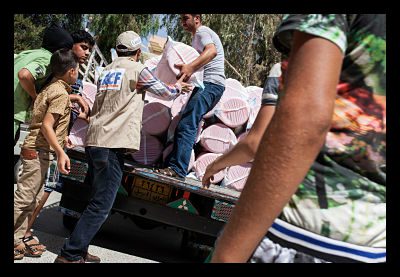
ChildFund International works to help more than 400 million children all over the world who live in poverty. ChildFund was founded by Dr. J. Calvitt Clarke who started the “child scholarship” and who introduced and used seven innovative methods in order to reduce child poverty.

The first innovation, the aforementioned “child scholarship,” depends on a sponsor providing donations for one child.

The second innovative idea is “working with families,” where ChildFund helps run orphanages in addition to working with families to help them create better conditions for their children.

The third innovative idea involves encouraging “local communities to run local programs” in order to show the community how to foster the emotional and social needs of young children.

The fourth innovative idea impacts ChildFund itself. ChildFund promised to operate on a “Code of Fundraising Ethics;” it therefore follows this pledge by operating with honesty and integrity.

The fifth innovative idea was the creation of the “emergency action fund,” where an emergency response team will be available to provide immediate relief in situations of violence and in the face of natural disasters.

The sixth innovative idea was the creation of “child-centered spaces,” which are areas children can go in order to recover and escape.  The goal is to provide children a safe place to be and to learn in the midst of war and other types of violence.

The seventh innovative idea was establishing “a new approach to program development” that involves listening to children explain how poverty impacts them and then specifically responding to their comments in order to remedy the situation.

One of ChildFund International’s most recent projects is dedicated to helping families who have members afflicted with HIV to “build a future beyond HIV.”  The program tries to ensure that families have a safety net so that they may continue living a relatively normal life.  This “safety net” includes the following: health care services, protection if a family member dies, psychosocial support, food and nutrition, education, and economic empowerment.”

– Jordyn Horowitz

Sources: ChildFund International 1, ChildFund International 2, ChildFund International 3, BBB Wise Giving Alliance
Photo: ChildFund International

August 15, 2014
https://borgenproject.org/wp-content/uploads/borgen-project-logo.svg 0 0 Borgen Project https://borgenproject.org/wp-content/uploads/borgen-project-logo.svg Borgen Project2014-08-15 10:09:022024-06-05 01:58:03ChildFund International
Activism, Charity, Children, Global Poverty, Health

Zachary Levi, Comic-Con Support Operation Smile

While many of the conversations about the San Diego Comic-Con (SDCC) have been about the latest updates and footage from some of the hottest movies, some of the guest panels were doing good deeds.

Zachary Levi, from the television show, Chuck, used the opportunity to entice the fans as well as raise funds for Operation Smile. Some of the “Conversations for a Cause” panels hosted by Levi’s company, The Nerd Machine, included Badass Women, the cast of Orphan Black, and a conversation with Nathan Fillion, among several others. Last year, Nerd HQ, an offshoot of The Nerd Machine, raised around $215,000 for Operation Smile and this year they beat previous fundraising efforts.

Operation Smile is a non-profit organization that helps to pay for cleft palate surgeries in underprivileged areas. The deformity has a high prevalence rate and cleft lip and palates can inhibit a child’s ability to eat, speak, hear and breathe. Unfortunately, like many disabilities, cleft palate is incredibly stigmatized and many people born with it have trouble finding employment.

While Nerd HQ has garnered a reputation for innovation and technology in the four years since its inception, it is also gaining a philanthropic name. Since its partnership with Operation Smile, the non-profit estimates that Nerd HQ has raised over $400,000 to pay for the surgeries.

With many of the attendees noting Nerd HQ’s “Conversations for a Cause” as one of the highlights of the Comic-Con. Over the past two years, attendance and donations have increased so hopefully next year Nerd HQ can continue to increase its philanthropic donations.

– Kristin Ronzi

Sources: The Nerd Machine
Photo: Zachary Levi Star

August 12, 2014
https://borgenproject.org/wp-content/uploads/borgen-project-logo.svg 0 0 Borgen Project https://borgenproject.org/wp-content/uploads/borgen-project-logo.svg Borgen Project2014-08-12 04:00:472024-06-04 03:22:13Zachary Levi, Comic-Con Support Operation Smile
Charity, Nonprofit Organizations and NGOs, Volunteer

How To Pick A Charity To Give To

There are many great charities out there doing much-needed work to reduce global poverty. Here are some tips on deciding which charity you should give to.

1. Clarify your beliefs

Before you start looking for a charity to give to, be sure you know what you believe. Figure out what missions matter the most to you and your family. Do you care the most about protecting the environment? Fighting human trafficking? Providing education? Once you have selected the category that you care about most, you can begin to research the different methods of solving that problem.

2. Start broad

Use websites like CharityNavigator.org, GuideStar.org or GiveWell.org to learn how different charities in the category you picked spend their money. Sites like these aggregate tax information and other records you can use to learn how different charities spend their money.

3. Do your research

Find a clear description of the charity’s mission, programs and achievements. Figure out what their goals are, how they measure their success and how they use that information to function better. If you can’t find this information easily, be wary. But be aware that some problems are hard to solve. Don’t place a dollar sign on a human life. Some organizations invest thousands of dollars rescuing women and children from slavery because, simply put, extracting slaves is hard and expensive.

Nancy Lublin CEO of DoSomething.org  knows that “Low overhead doesn’t necessarily mean an organization is awesome at fighting poverty, or that its turnover is low and its people productive. And it certainly doesn’t guarantee that the group is spending wisely.”

Lublin cited Apple as an example from the for-profit world of a company with high overhead but incredible products.

“According to Apple’s Q4 2008 report, 78% of its expenses were sales, general, and administrative — the corporate equivalent of overhead. Seventy-eight percent! Yet nobody flinches,” she wrote.

4. Contact the charity and become personally involved

If you’re going to establish a long-term relationship with an organization, take the time to call them, or at least email them about your interest. Best of all, take the time to become personally involved in the charity you donate to allows you incomparable insight into how they operate.

“Be very reluctant to give to strangers,” Dan Moore, vice president of public affairs for GuideStar, an online source of financial information on charities told NBC. “If you know the organization and you know their work, you will know with some degree of confidence that your gift will be put to good use.”

5. Trust your gut

If an organization seems questionable, don’t give. Find a group that you feel comfortable supporting and give what you can.

Picking a charity to support can be daunting but taking the time to give well is incredibly rewarding.

– Sally Nelson

Sources: Fast Company, NBC
Photo: Infiniti

August 4, 2014
https://borgenproject.org/wp-content/uploads/borgen-project-logo.svg 0 0 Borgen Project https://borgenproject.org/wp-content/uploads/borgen-project-logo.svg Borgen Project2014-08-04 14:15:152024-05-27 09:18:54How To Pick A Charity To Give To
Charity, Global Poverty

Zakat Foundation of America

Founded in 2001, the Chicago-based Zakat Foundation of America seeks to show the “inclusive beauty of Islam” through humanitarian work in their community and abroad.

The organization is funded largely by ‘zakat,’ or almsgiving, one of the five Pillars of Islam. At its start, donations were used for emergency relief and seasonal programs — programs offered during the year’s greatest giving periods.

Both operations maintain a strong presence in the organization today: Zakat still responds to natural disasters with food, medicine and hygiene packages. It even constructs temporary shelters. ‘Seasonal programs’ are campaigns structured to make seasonal giving easy and effective. During Ramadan, for example, giving within the Muslim community is strongly encouraged.

More recent is Zakat’s ‘Perpetual Charity,’ which rests on the organization’s missions to create sustainable services for those in need. They offer micro-loans and erect buildings in underdeveloped areas. They establish health clinics, some of them mobile, provide health and hygiene training and supply food and clean water. Education is a priority, so Zakat builds schools, trains teachers and offers scholarships.

Through Zakat, donors can sponsor orphans who have lost parents to war, illness and natural disasters. Sponsored children are assured of clothing, education, healthcare and nutritious food.

Domestically, Zakat manages social service programs. They distribute backpacks full of school supplies. Hot meals are given to poorer communities during Ramadan and fresh meat given to poorer families during Udhiya/Qurbani. Special attention is paid to struggling Navajo communities, where food packages are often needed.

To keep administrative costs low, the Zakat Foundation operates with a small staff. Volunteers are consequently as, if not more, important than donations. They help man community centers and make up service trip teams.

Yet in the Zakat foundation, donors, employees and volunteers alike are guided by the principles of the Quran:

“They feed with food–despite their own desire for it– the indigent, and the orphan and the captive (saying): ‘We feed you purely for the sake of God. We desire no reward from you, nor thankfulness.’”

– Surah al-Insan 8-9

– Olivia Kostreva

Sources: Zakat, Zakat, Zakat, Zakat, InterAction
Photo: Google Play

July 17, 2014
https://borgenproject.org/wp-content/uploads/borgen-project-logo.svg 0 0 Borgen Project https://borgenproject.org/wp-content/uploads/borgen-project-logo.svg Borgen Project2014-07-17 16:00:582024-06-05 01:57:45Zakat Foundation of America
Advocacy, Charity

Donations for Education

When asking for donations, the phrase “every donation helps” seems to be a staple in every campaign, letter or advertisement. Many times, this statement is hard to believe, especially when thinking in terms of individual donations toward larger goals. Fortunately, in the fight for equal educational opportunities, small donations do make a large impact in impoverished areas. The following list describes causes that correspond with specific U.S. dollar amounts. This list proves that every donation really does make a difference.

Five dollars:

Five dollars is more than it costs to supply an individual in India with a year of clean water from public water systems put in place by the Water for the World Act. Clean water prevents diseases that keep children out of school or from performing at high levels during class.

Ten dollars:

Ten dollars can buy one kilogram of beeswax, an ingredient necessary for many simple medications and remedies for illnesses that keep children out of school. One kilogram of beeswax is enough for one hundred tubs of medication. By providing communities with medical supplies such as this, donors help children make the most of their education by keeping them healthy enough to attend classes.

Twenty dollars:

Twenty dollars covers the daily cost of transportation for three teachers in Ecuador who have to travel to mountainous regions to teach their students.

Fifty dollars:

Fifty dollars is enough to train a teacher in the rural areas of the Solomon Islands in Disaster Risk Management. Not only do students and other members of the classroom environment feel more secure when a teacher has this kind of training, the school becomes a safer and more credible institution. This encourages children to attend school, and increases attendance levels overall.

One Hundred dollars:

A donation of 100 dollars could provide a family in Sri Lanka with the money to buy two solar powered lamps so children who do not have electricity in their homes can do their homework at night.

Two Hundred dollars:

Donating 200 dollars to Volunteer for the Visayans’ “Adopt-A-School” project will ensure that a school in the Philippines has a year’s supply of paper, pens, pencils and chalk.

Three Hundred and Ninety-Five dollars:

Through the SOS Africa program, 395 dollars will send a child in Africa through a year of high quality education. This donation covers all of the student’s education-related fees.

Small donations have a significant impact on education. Even donations that do not directly relate to schooling, such as medical supplies, help in impoverished countries because they promote the overall well-being of children who have the potential to become successful through education.

Direct results are not always visible to donors because recipients are often far away. However, making a donation toward education is an effective way to contribute to something worthwhile.

– Emily Walthouse

Sources: Caritas, Unesco, Volunteer for the Visayans, SOS Africa, Global Giving
Photo: Generation Finance

July 17, 2014
https://borgenproject.org/wp-content/uploads/borgen-project-logo.svg 0 0 Borgen Project https://borgenproject.org/wp-content/uploads/borgen-project-logo.svg Borgen Project2014-07-17 04:00:562024-06-05 01:57:47Donations for Education
Activism, Charity, Development

Which Countries Do The Most and Why?

Mankind has tendencies for both conflict and generosity. Simon Anholt conducted a study called the Nations Brand Index in 2005, on people’s perception of countries. Sampling and polling over seventy percent of the world’s population, Anholt began his search for the type of self-interest that would motivate countries to act on a global scale.

Anholt found that the image of a country is vitally important to its government’s survival, and that this image greatly affects the economic growth and stability of a country. The results that were collected were utilized to form the Nations Brand Index, that now consists of over 200 billion pieces of data on perceptions of countries across the world.

Anholt found that good countries, not necessarily wealthy or powerful ones, were the most appealing on a global scale. He summarizes his findings with these words, “in order to do well, you need to do good”.

From these findings, Anholt developed a second index called the Good Country Index, which measures how much a country contributes to the populations of other countries. The Good Country Index found that Ireland contributed the most to the world in terms of per head of population and per dollar of GDP. Finland came second in ranking, and the U.S. ranked 21st.

How does the U.S. move up in the rankings? We can start with increasing foreign aid, which is less than 1 percent of the federal budget. Per capita, the United States spends $80.37 towards development aid. The average American spends more per year on candy, alone. Ireland contributes 6.8 percent of income per individual, certainly a larger amount than the average Americans candy budget. This is what makes Ireland “good” and creates an image admired by other countries. In order to do well, America needs to do more good.

– Christopher Kolezynski

Sources: TED, Oxfam, The Borgen Project Nation Master
Photo: Kennedy Adventures

July 11, 2014
https://borgenproject.org/wp-content/uploads/borgen-project-logo.svg 0 0 Borgen Project https://borgenproject.org/wp-content/uploads/borgen-project-logo.svg Borgen Project2014-07-11 09:34:112024-05-27 09:18:13Which Countries Do The Most and Why?
Charity, Global Poverty

Uruguay’s “Poor” President

The Economist recently named Uruguay the 2013 country of the year, noting that the country, which is described as “modest yet bold, liberal and fun-loving,” also has a leader who fits that description as well.

President Jose “Pepe” Mujica, also known as the world’s poorest President, has drawn attention not only because of his policies and bold leadership, but also because of his leadership philosophy and modest lifestyle.

At a time when world leaders often have hoards of staffers at their beck and call, it is a rare phenomenon to see a President who looks on convention and decides against it. Uruguay’s “poor” president lives in a small, one-bedroom farmhouse with his wife and donates 90 percent of his salary to charity. He drives a Volkswagen Beetle and he rarely wears a suit.

Uruguay, which has seen its fair share of conflict, has been able to make tremendous strides in poverty reduction over the past few years, falling from 22.4 percent of the population in 2008 to 12.4 percent in 2012. With a President who leads by example, it’s clear that he is just what the country needs during times of austerity and difficult decisions.

Here are 5 famous quotes from Uruguay’s Presidnet Mujica on his thoughts about revolution, leadership, and global consumption

1. “I’ve seen some springs that ended up being terrible winters. We human beings are gregarious. We can’t live alone. For our lives to be possible, we depend on society. It’s one thing to overturn a government or block the streets. But it’s a different matter altogether to create and build a better society, one that needs organization, discipline and long-term work. Let’s not confuse the two of them. I want to make it clear: I feel sympathetic with that youthful energy, but I think it’s not going anywhere if it doesn’t become more mature.”

2. “It seems that we have been born only to consume and to consume, and when we can no longer consume, we have a feeling of frustration, and we suffer from poverty, and we are auto-marginalized.”

3. “We can almost recycle everything now. If we lived within our means, by being prudent, the 7 billion people in the world could have everything they needed. Global politics should be moving in that direction. But we think as people and countries, not as a species.”

4. “Businesses just want to increase their profits; it’s up to the government to make sure they distribute enough of those profits so workers have the money to buy the goods they produce… It’s no mystery — the less poverty, the more commerce. The most important investment we can make is in human resources.”

5. “My goal is to achieve a little less injustice in Uruguay, to help the most vulnerable and to leave behind a political way of thinking, a way of looking at the future that will be passed on and used to move forward. There’s nothing short-term, no victory around the corner… What I want is to fight for the common good to progress.

– Andrea Blinkhorn

Sources: Mic.com 1, Mic.com 2, The Economist, Vice News, Al Jazeera, World Bank
Photo: Mic.com

July 3, 2014
https://borgenproject.org/wp-content/uploads/borgen-project-logo.svg 0 0 Borgen Project https://borgenproject.org/wp-content/uploads/borgen-project-logo.svg Borgen Project2014-07-03 07:45:252024-12-13 17:50:22Uruguay’s “Poor” President
Charity, Global Poverty

Food for the Poor, Inc.

Food for the Poor, Inc., or FFP, is a Christian-owned and operated nonprofit community dedicated to feeding the poor in Latin America and Caribbean countries.

The nonprofit believes in the power of prayer and donations or gifts to help feed starving children in 17 different countries in order to make their lives better one day at a time.

FFP’s ministry reflects their belief in God’s unconditional love; they inspire trust and faith, and embrace all people, regardless of race or status. It is their belief that Christ is alive and well in their ministry, and that they can best serve him by assisting those in greatest need.

FFP began their work in Coconut Creek, Fla., and it is their current headquarters where they hold daily prayer services. They encourage all members and volunteers of the nonprofit to pray for those in dire need daily because prayer is a fundamental part of their ministry.

The nonprofit also sends out monthly devotionals and weekly prayers in order to set their volunteers and members on the right path as to who has the greatest need. They take prayer requests through the postal service, by telephone and by email in order to best serve the people for whom they pray daily.

FFP addresses issues such as starvation, deforestation, lack of education and many other hardships that may be detrimental to the well-being of the countries they serve.

The nonprofit uses donations and the prayers and faith of their members to help put an end to the largest issue of global poverty. Through donations of gifts, people can help someone eat, get out of poverty or stop deforestation of the rainforests in Latin America.

The charity is in good standing and has great ratings on nonprofit tracker websites. According to Charity Navigator, they put nearly 96 percent of all gifts or donations received toward programs to put an end to global poverty, deforestation and more.

Through the power of faith, donations and prayer, FFP provides a fresh new perspective on how to go about providing aid to those in need.

— Cara Morgan

Sources: Food for the Poor, Charity Navigator
Photo: Empire Press

June 25, 2014
https://borgenproject.org/wp-content/uploads/borgen-project-logo.svg 0 0 Borgen Project https://borgenproject.org/wp-content/uploads/borgen-project-logo.svg Borgen Project2014-06-25 17:17:032024-05-26 23:49:10Food for the Poor, Inc.
Advocacy, Charity, Women, Women and Female Empowerment

Chime for Change

Haute fashion house Gucci held a benefit on June 3 at its Manhattan location on 5th Avenue in honor of its charity program, Chime for Change. Many influential celebrities were in supportive attendance such as Beyonce and actress Blake Lively. The event celebrated the charity’s first anniversary, marking a year of explosive growth and international charitable influence.

Chime for Change is a charity and international women’s empowerment and awareness campaign sponsored by Gucci, cofounded by Salma Hayek Pinault, Beyonce Knowles-Carter and Frida Giannini, Gucci’s creative director. The campaign is partnered with charity powerhouses such as the Kering Foundation, the Bill and Melinda Gates Foundation, Facebook, Catapult, Twitter, Hearst Magazines and Kellogg’s.

Gucci pledged to donate $1 million in proceeds from its global perfume sales; Gucci fragrance customers can donate $5 from each purchase to various projects, charities and organizations supporting justice, health or education for women and young girls. It also set up an official Chime for Change website, through which direct donations to the latter programs can be collected online. The campaign is partnered with Catapult, which connects donors and volunteers directly to over 50 organizations throughout 38 countries worldwide.

These organizations are primarily focused upon the formerly mentioned goals of female education, justice and health; the program has thus far contributed significantly to these programs, and its progress is meticulously recorded online at Chimeforchange.org/impact-report. For example, the program provided enough funding for midwives in Cambodia to reduce the country’s high rate of maternal deaths during childbirth. It has also nearly completed gathering the funding necessary to both create homes for young girls in India and provide free, sanitary cesarean sections to impoverished women at the St. Damien Hospital in Haiti (a nation in which one in 10 mothers die during childbirth.)

Another page of the website tracks donation progress by percentage for various exigent causes, such as providing health services for 35 rescued victims of human trafficking at a time and funding peer education in Spain to prevent female genital mutilation, which affects over 100 million children globally.

Chime for Change makes it simple for customers around the world to easily contribute to many influential causes worldwide; it represents a meaningful and influential step towards alleviating world poverty.

– Arielle Swett

Sources: Chime for Change, Huffington Post, Catapult
Photo: Closet On The Go

June 20, 2014
https://borgenproject.org/wp-content/uploads/borgen-project-logo.svg 0 0 Borgen Project https://borgenproject.org/wp-content/uploads/borgen-project-logo.svg Borgen Project2014-06-20 10:11:232024-12-13 17:50:19Chime for Change
Page 36 of 42«‹3435363738›»

Get Smarter

  • Global Poverty 101
  • Global Poverty… The Good News
  • Global Poverty & U.S. Jobs
  • Global Poverty and National Security
  • Innovative Solutions to Poverty
  • Global Poverty & Aid FAQ’s
Search Search

Take Action

  • Call Congress
  • Email Congress
  • Donate
  • 30 Ways to Help
  • Volunteer Ops
  • Internships
  • Courses & Certificates
  • The Podcast
Borgen Project

“The Borgen Project is an incredible nonprofit organization that is addressing poverty and hunger and working towards ending them.”

-The Huffington Post

Inside The Borgen Project

  • Contact
  • About
  • Financials
  • President
  • Board of Directors
  • Board of Advisors

International Links

  • UK Email Parliament
  • UK Donate
  • Canada Email Parliament

Get Smarter

  • Global Poverty 101
  • Global Poverty… The Good News
  • Global Poverty & U.S. Jobs
  • Global Poverty and National Security
  • Innovative Solutions to Poverty
  • Global Poverty & Aid FAQ’s

Ways to Help

  • Call Congress
  • Email Congress
  • Donate
  • 30 Ways to Help
  • Volunteer Ops
  • Internships
  • Courses & Certificates
  • The Podcast
Scroll to top Scroll to top Scroll to top