• Link to X
  • Link to Facebook
  • Link to Instagram
  • Link to TikTok
  • Link to Youtube
  • About
    • About Us
      • President
      • Board of Directors
      • Board of Advisors
      • Financials
      • Our Methodology
      • Success Tracker
      • Contact
  • Act Now
    • 30 Ways to Help
      • Email Congress
      • Call Congress
      • Volunteer
      • Courses & Certificates
      • Be a Donor
    • Internships
      • In-Office Internships
      • Remote Internships
    • Legislation
      • Politics 101
  • The Blog
  • The Podcast
  • Magazine
  • Donate
  • Click to open the search input field Click to open the search input field Search
  • Menu Menu

Archive for category: Charity

Charity, Global Poverty

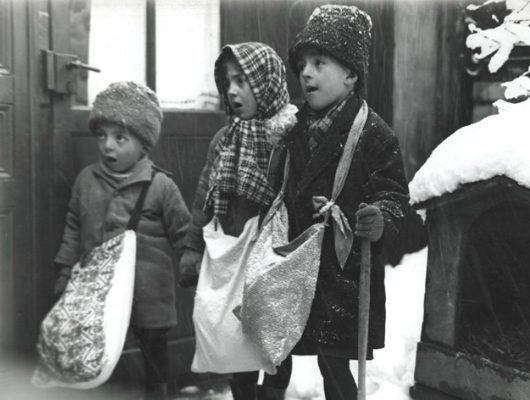
12 Charitable Ideas for Christmas

charitable_ideas_for_Christmas
According to the World Bank, as of 2012, 896 million people are living in extreme poverty or less than $1.90 a day. A staggering 77.8 percent of people in extreme poverty currently reside in Sub-Saharan Africa and South Asia.

Holiday Christmas shoppers can find ways to help those living in poverty. According to the National Philanthropic Trust, the average American donation was $2,974 last year. For an average family of four, that number breaks down to about $743 per person.

Here are 12 charitable ideas for Christmas:

  1. Sign up for a site that gives part of the proceeds to charity. AmazonSmile is a great example. The e-commerce giant will donate 0.5 percent of eligible purchases to the customer’s chosen charity. The best part? There’s no extra charge to the customer.
  2. Enroll in a rewards credit card that “gives back.” Capital One offers a rewards donation option when a customer enrolls in their “No Hassle Giving” site. Customers can choose from up to 1.2 million charities and use their reward points to donate to their chosen charity.
  3. Do a one-time donation. Give a one-time donation without being obligated to contribute on a monthly basis. Many charities provide this option for contributors, like The Borgen Project.
  4. Donate shoes sitting in your closet. Have old shoes that are sitting in the closet? Donate them to Soles4Souls. Since 2006, the organization has “collected and distributed 26 million pairs of shoes to those in need in 127 countries around the world and all 50 states in the U.S.” Coats, shirts and pants are also important donations that can help those in need.
  5. Shop consciously. There are many charities that donate some, if not all of the proceeds to a certain charity or cause. A prime example is (RED) a campaign that is sponsored by ONE, an international advocacy organization started by Bono. ONE (RED) pairs with iconic brands such as Apple, Coca-Cola and Starbucks to create one-of-a-kind items that support HIV/AIDS grants in countries such as Ghana, Kenya and Rwanda. The companies involved contribute 50 percent of the profits earned to the ONE (RED) campaign.Charitable_Ideas_for_Christmas
  6. Look for donation “widgets” or “buttons.” On some sites, donating is as simple as clicking a button. For example, The Hunger Site advertises a free “Click to Give” button. Notably, last year the organization’s “click button” funded 52.8 million cups of food.
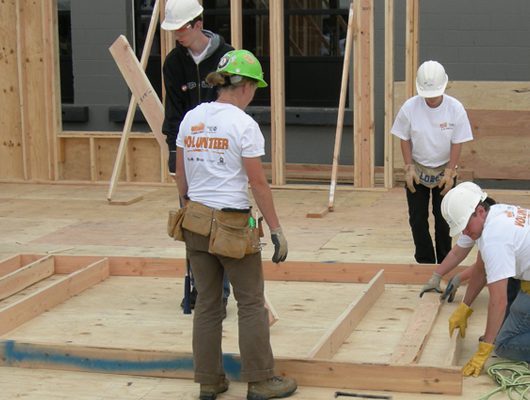
  7. Volunteer. Options range from participating in a soup kitchen, donating professional resources such as writing or marketing skills or assisting in a project such as building a community school.
  8. Email congressional leaders. Writing to Congressional leadership is another way to get involved in helping out those in need. Since each and every email is tallied, a simple email addressed will help get key global poverty legislation on leaders’ radars.
  9. Give up coffee or snacks for a week and donate the money. A $5 drink every day during a normal workweek can set you back $25. Giving up that Grande Peppermint Mocha with soy milk, no whip may be hard at first, but that money can be put towards something like a mosquito net, life-saving medication or clean drinking water.
  10. Share on social media. Facebook and Twitter have become increasingly popular ways for people to share raise awareness about global poverty issues.
  11. Select “Charity Gift Cards”. TisBet capitalizes on the gift card model, but gives it a charity twist. The recipients of these gift cards get to choose which one of the 250 listed charities to spend the designated amount.
  12. Make use of matching donations. Some employers match employee donations, up to a certain dollar amount. Others even match volunteer hours or gifts from retirees, board members and even spouses.

– Alyson Atondo

Sources: World Bank, National Philanthropic Trust, Amazon, Capital One, Soles 4 Souls, One, Greater Good, Chicago Tribune, TisBest, World Vision
Picture: Pixabay, Flickr
December 22, 2015
https://borgenproject.org/wp-content/uploads/borgen-project-logo.svg 0 0 Borgen Project https://borgenproject.org/wp-content/uploads/borgen-project-logo.svg Borgen Project2015-12-22 01:30:052024-12-13 18:05:3212 Charitable Ideas for Christmas
Charity, Developing Countries, Development, Global Poverty

Lottie Moon: A Southern Belle

Lottie_Moon
Why do citizens in the poorest states give the most to charity? When it comes to statewide charitable funds, this question seems to arise time and time again. As for the reason – research has suggested the answer lies in religion.

In 2013, Southern Baptists gave approximately $153,000 to the International Foreign Mission Board through the Lottie Moon Christmas Offering. Each Christmas, Southern Baptists participate in this tradition through donations. Who is Lottie Moon, and how does she continue to fight global poverty?

Charlotte Digges “Lottie” Moon was born on Dec. 12, 1840, to a wealthy Virginia family. She cherished education and became the first woman to obtain a master’s degree from a southern college. Around age 18, she became a Christian and desperately desired to become involved with foreign mission work. At the time, this field was closed to single women.

Moon’s sister, Edmonia, began writing to the secretary of the Foreign Baptist Foreign Mission Board, Henry Tupper. Surprisingly, he agreed to let them help, and in 1873 at age 32, Moon and her sister arrived in Tengchow, China.

Moon wasn’t there simply to teach her religion, she was a reformist. She taught school and was a strong advocate for women. Moon fought ardently against the women’s practice of foot binding. In foot binding, a woman’s toes are forced to curl down into her heel, producing a crescent shape. Even though foot binding was a symbol of the elite, it was painful and harmful to the body.

Even though many other missionaries fled, Moon remained in China during the Russo-Japanese War of 1904-1905. Starvation surrounded her, so she took in children and animals, even refusing to eat if they could not.

She wrote home suggesting a week of prayer and offerings be set aside for missions during Christmas. People responded and the Women’s Missionary Union was born. The union is alive and productive in the South today; it collects more than $20 million annually for Southern Baptist mission work overseas.

Eventually, Moon herself fell ill. She did not want to leave China, but her colleagues sent her home on a ship. She died in 1912 on Christmas Eve, and there are conflicting stories about her exact cause of death.

Nevertheless, Lottie Moon has become a beloved friend of Southern Baptists and a martyr among missionaries. Sandra Spears, a Southern Baptist from Mississippi, said she learned about Lottie Moon as a child and has given to the cause for more than 50 years. It’s a tradition.

It should be noted that even though the donations received for the Lottie Moon Christmas Offering are designed for mission work, they aren’t solely spent on building churches and supporting missionaries. Some of the work could be considered “humanitarian” as the missionaries provide meals, medical resources and a host of other critical needs that exist in developing countries.

A 7-year-old boy who was growing up Southern Baptist in the Deep South asked his mother, “When does Lottie Moon ever get paid off?” A humorous question from a child, but when it comes to lifting others out of poverty and giving to help others, the possibilities seem endless.

– Dana McLemore

Sources: BDC Online, History’s Women, The Pathway, Cornell University
Photo: Wikimedia

November 24, 2015
https://borgenproject.org/wp-content/uploads/borgen-project-logo.svg 0 0 Borgen Project https://borgenproject.org/wp-content/uploads/borgen-project-logo.svg Borgen Project2015-11-24 10:26:582024-05-27 09:28:23Lottie Moon: A Southern Belle
Aid, Charity, Global Poverty

The Sovereign Military Order of Malta Aids Poor and Sick

Military-Order-of-MaltaThe Sovereign Military Order of Malta has a rich history of generosity. Also called the Order of St. John of Jerusalem, the organization dates back to 1048. At the time, it was a military order in charge of hospital defense. Members in the Order of Malta were chivalrous and noble of nature.

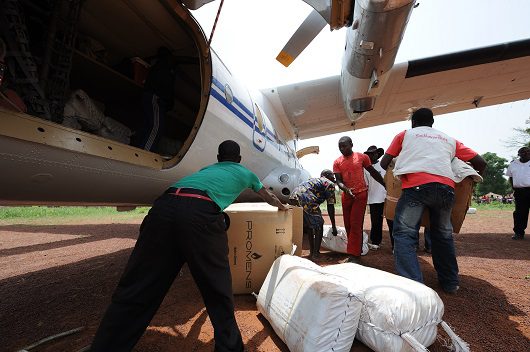
Since its beginning, the Order of Malta has been committed with aiding the poor and suffering. Today, it operates in more than 120 countries, providing medical and social care, disaster relief, emergency services and assistance for elderly, children and refugees. For more than 900 years, it has cared for people of all religions and beliefs.

“There are 13,500 members world-wide, plus 80,000 trained volunteers and 25,000 medical and para-medical personnel, working in a large number of hospitals, hospices, homes for the elderly and a variety of other aid activities,” says Marchesino Daniel de Petrie Testaferrata, elected president of the Maltese Association of the Order of Malta.

The Order of Malta has diplomatic relations with numerous countries, which allows it to better assist others, such as helping the sick in areas that some organizations may have trouble accessing.

The Order of Malta has provided disaster relief assistance in The Philippines and Haiti. In Africa, it focuses on care for HIV patients; treatment for tuberculosis, malaria and leprosy; and clean water supplies for others. It also cares for refugees and orphaned children in Asia and the Middle East.

In addition, the Order of Malta has aided in Europe and North America. After Hurricane Katrina hit the U.S., the Order of Malta provided shelter while working on reconstruction projects.

Malteser International, the Order of Malta’s relief agency, reports that, in 2014, its aim was to spread medical supplies to regions affected by Ebola. This year, it is educating others in hopes of minimizing the disease.

For more information on the Order of Malta, visit its website.

– Kelsey Parrotte

Sources: Independent, The Order of Malta, Saint Peter’s List,                                                                                                                                                                                                                                                                      Photo: Flickr

October 6, 2015
https://borgenproject.org/wp-content/uploads/borgen-project-logo.svg 0 0 Borgen Project https://borgenproject.org/wp-content/uploads/borgen-project-logo.svg Borgen Project2015-10-06 01:30:252020-06-27 07:01:24The Sovereign Military Order of Malta Aids Poor and Sick
Aid, Charity, Global Poverty

Mission of Hope Haiti Builds 500 Homes

Mission_of_Hope_Haiti
In 2010, an earthquake killed over 200,000 Haitians and left crumbling housing infrastructure. Since then, homelessness in Haiti has steadily declined but more than 85,000 people still remain without a home. Rebuilding from the damage is the toughest task for the poorest country in the Americas.

Before the earthquake, Haitians lived in relatively poor housing built from inadequate materials. Haiti ranks near the bottom in the world in providing shelter for their citizens. Shelter includes availability of affordable housing, access to electricity, quality of electricity supply, and household air pollution attributable deaths.

The international community has been very supportive of Haiti. The EU provided $996 million to Haiti from 2008 to 2013. Money that was used for roads, education, food security, human rights, agricultural, electricity, and trade.

On a smaller level, charities and volunteers have been a strong driving force for recovery in Haiti.

Mission of Hope Haiti, a Christian missionary organization, provides education for people in the island nation. The organization has a partnership with Hope for Haiti, and the government in Haiti to build homes. Recently, Mission of Hope celebrated its 500th home built for the affected families since 2010, an average of 100 homes each year.

Every house has three rooms, land for farming, detached bathroom, access to education, water, two fruit trees, and agricultural training. The cost of each home is relatively low at $6,000.

Mission of Hope has educated 6,000 children, provided 91,000 nutritious meals each day, and housing for hearing-impaired families. Their work has helped make Leveque one of the best settlements in Haiti.

“Our vision from the first home built has been to provide those who lost their homes with a quality, cost efficient Haitian home that will not only provide a place to live but a place to thrive,” said Mission of Hope President Brad Johnson.

Homelessness in Haiti is still a serious threat to human security, but organizations like Mission of Hope provide solutions and help that will benefit thousands of people’s lives.

– Donald Gering

Sources: EurActiv, Good News Network, Huffington Post, Social Progress Imperative
Photo: Google Images

September 20, 2015
https://borgenproject.org/wp-content/uploads/borgen-project-logo.svg 0 0 Borgen Project https://borgenproject.org/wp-content/uploads/borgen-project-logo.svg Borgen Project2015-09-20 01:30:412024-05-27 09:27:52Mission of Hope Haiti Builds 500 Homes
Activism, Aid Effectiveness & Reform, Charity, Global Poverty, Nonprofit Organizations and NGOs

St. George’s Crypt Makes Progress to Help those in Need

St. George’s Crypt Makes Progress to Help those in Need
Founded in the 1930s, St. George’s Crypt became a charitable group that has helped local people for generations. In its beginnings, the small church began charitable functions and fundraising from local people, run by Reverend Percy Donald, known as the Don.

Throughout its existence the function of the organization has shifted to satisfy the needs of the people and the events occurring around the neighborhood, such as assistance for those affected by war, illness, and the impact of a devastating economic downturn.

As the group’s website states, one of the objectives of the organization is to assist in “the relief of poverty, hardship, sickness and distress among needy and destitute persons,” and recently St. George’s Crypt has taken their efforts to help people even further.

In 2011, The Crypt set up purchase shops that would benefit more people in the area. More recently, the organization has done even more as it has invested more money into building homes for struggling families in the area.

A development project recently gave the group £1.5 million to spend on infrastructure, and the building of 20 new homes for those in need. These properties will act as “halfway houses” to help individuals as well as families get back on their feet, and create more sustainable lifestyles, and smarter economic practices.

The outreach of support for those in need knows no limits, helping those that are homeless, ill, suffering the vulnerabilities of recent catastrophes, and even those suffering from addiction. One of these housing developments will include a hostel in Hyde Park, which will house a larger number of people at a time for a shorter period of time.

When small organizations such as these expand over the years, even over 85 years such as the St. George’s Crypt, it gives hope that there is potential for anyone to make a difference in their communities. To learn more about St. George’s Crypt and the work they continue to do for those in need in their community, go to their website.

– Alexandrea Jacinto

Sources: St. George’s Crypt, BBC
Photo: Flickr

September 18, 2015
https://borgenproject.org/wp-content/uploads/borgen-project-logo.svg 0 0 Borgen Project https://borgenproject.org/wp-content/uploads/borgen-project-logo.svg Borgen Project2015-09-18 01:30:402024-05-27 09:27:38St. George’s Crypt Makes Progress to Help those in Need
Charity, Philanthropy

What is the Definition of Philanthropy?

What is the Definition of Philanthropy?-TBP
According to the Merriam Webster Dictionary, philanthropy is defined as “goodwill to fellow members of the human race; especially active effort to promote human welfare.” Additionally, philanthropy is “an act or gift done or made for humanitarian purposes,” or “an organization distributing or supported by funds set aside for humanitarian purposes.”

This is interesting to consider. The majority of the time, most of us tend to think of philanthropy as the large donation of money to humanitarian or environmental causes. We tend to think of famous philanthropists like Andrew Carnegie and John Rockefeller. More recently, we might think of Bill Gates and Warren Buffet.

What is a Philanthropist

However, a philanthropist does not only have to be someone who donates large sums of money to worthy causes. The definition of philanthropy says that one has to have a goodwill to humankind and an interest in promoting human welfare. One can accomplish this in a multitude of different ways.

A philanthropist could be someone who is educating herself on humanitarian issues. She could figure out what issues are salient to her, what issues are most dire or what issues people do not acknowledge as much. She could also learn the most effective solutions to this issue. The philanthropist could use this education in order to build her dedication to an issue and make the most change.

A philanthropist could be someone who consistently does community service for a humanitarian organization or a cause that he supports. He could dedicate his time to this organization and help using the skills that he possesses.

A philanthropist could be someone who works for a nonprofit or humanitarian organization. This person could dedicate his or her career to a valuable cause. She could work on the ground or in policy reform.

Finally, someone could donate a percentage of their income to a cause or humanitarian organization. The amount of money does not necessarily have to be large.

In conclusion, it is important to remember that a philanthropist has to make an “active effort to promote human welfare.” This means that a philanthropist is not exclusively someone who donates a lot of money to humanitarian causes. A philanthropist makes a significant effort to change a societal problem, in the best way that he or she can. A philanthropist finds an issue resonates with her, and she does what she can to help. Philanthropy is about dedication to humanitarian issues. It is not always about money.

– Ella Cady

Sources: Huffington Post, Merriam Webster, About.com, Biography Online
Photo: LTD

September 8, 2015
https://borgenproject.org/wp-content/uploads/borgen-project-logo.svg 0 0 Borgen Project https://borgenproject.org/wp-content/uploads/borgen-project-logo.svg Borgen Project2015-09-08 10:49:392024-06-05 03:46:35What is the Definition of Philanthropy?
Charity, Global Poverty, Philanthropy

Five Charities that Make a Different Kind of Difference

Five Charities that Make a Different Kind of DifferenceCharities all work to accomplish different goals and, while their goals are all admirable, some seem to stand out a little more than others. The traditional philanthropic method typically involves collecting donations to be spent on aiding a group or cause either by giving away the raised funds or purchasing specific goods to give to those in need. While this charity formula is not wrong, there are other non-traditional ways to do good. Take a look at these five organizations that make a different kind of difference with your donation.


1. Development Media International (DMI) — DMI creates and broadcasts radio and television programs that help educate and encourage people to adopt healthy practices that can improve a community’s standard of living and individuals’ longevity. Instead of using their funding to distribute soap for hand washing or toothbrushes, they teach simple practices that can make long-term differences, practices that can be taught to children and passed along through generations.

2. Kiva — Kiva is a nonprofit that works to alleviate global poverty through individual micro-loans. Donors invest in the form of a small personal loan for individuals to accomplish a project or improve their businesses. Microfinance institutions allow individuals and communities to lift themselves out of poverty by giving them the tools to be economically successful.

3. The Global Alliance For Improved Nutrition (GAIN) — GAIN is an organization that works to eliminate iodine deficiency, which can lead to impaired cognitive development and is common in developing countries. GAIN’s Universal Salt Iodization program uses the funds they raise to provide technical assistance, supply needed equipment and train government officials. In addition, salt producers monitor the results of changes made in developing countries. GAIN targets the root of iodine deficiency and funnels its efforts toward rectifying it instead of simply managing the consequences.

4. VillageReach — VillageReach is a nonprofit that develops, tests and implements new systems, technologies and programs that improve health in rural or poor communities. In the past few decades, there have been great advancements in the medical field, but because of a lack of access to clinics, medicines and trained professionals, many people in the developing world are isolated from these advancements and do not reap the benefits of improved health and healthcare.

This is where Village Reach comes in; instead of focusing money on more vaccines or more doctors, they focus on removing barriers that stand in the way of communities receiving the healthcare they need. VillageReach partners with institutional stakeholders, such as governments and global health partners, to implement the change needed to extend the reach of adequate healthcare.

5. The Borgen Project — Donations made to The Borgen Project have the intention of alleviating global poverty. While your donation will not directly purchase a meal for a hungry child, it has the power to feed, clothe and provide power for an entire community or country. Funds that are raised by The Borgen Project go toward program services, and fund development and operation expenses. This means that donations are used to fuel the machine that pushes political leaders to allocate funds in a way that benefits those living in poverty in developing countries. So your five dollars could influence the U.S. government to pass legislation that provides millions of people with clean drinking water.

– Brittney Dimond

Sources: Give Well, KIVA, Village Reach
Photo: Flickr

September 3, 2015
https://borgenproject.org/wp-content/uploads/borgen-project-logo.svg 0 0 Borgen Project https://borgenproject.org/wp-content/uploads/borgen-project-logo.svg Borgen Project2015-09-03 08:19:152024-05-27 09:18:15Five Charities that Make a Different Kind of Difference
Charity, Global Poverty, Hunger

Viola Davis Talks About Her Childhood Struggles in Poverty

Viola_Davis
In the August/September 2015 issue of AARP The Magazine, Viola Davis of ABC’s hit series, “How to Get Away with Murder,” talks about growing up in poverty and why giving back is important to her.

Now the star of a drama that has 9 million viewers on the edge of their seats, Davis said she is living her dream by just being able to afford a house. “When you grow up poor, you dream of just having a home and a bed that’s clean — that’s a sanctuary,” Davis said.

In her interview with AARP, the actress said that she grew up in a household with five siblings in an old building in Central Falls, Rhode Island. Her mother worked in a factory and her father groomed racehorses. “But grooms don’t make money,” Davis said. “Definitely not enough to feed a family of eight.”

Her family received food stamps that paid for groceries which did not last the entire month. Occasionally, Davis had to resort to garbage dumps for scraps and sometimes she had to steal from a store. When she was caught, she felt so ashamed that she forced herself to stop. Davis then had to count on other means to eat.

“Most of the time, the school lunch was the only meal I had. I would befriend kids whose mothers cooked three meals a day and go to their homes when I could,” Davis said.

The summers were difficult because she did not have school to feed her, but the winters were not much easier. The pipes in the building where she lived sometimes froze over, so the family did not have water to clean with or drink. The furnace broke, and the family would have to use each other’s body heat to stay warm.

Despite her hunger and unstable home life, Davis performed well in school. She and her siblings wanted to make sure they did not live in those conditions in the future.

“School was their haven,” Sara Davidson, AARP The Magazine writer, said. “And they stayed late, participating in sports, music, drama and student government.”

School was not only Davis’ means for nourishment but also where she found her calling. She entered the Upward Bound program, which funded her education at Rhode Island College. After graduating, she attended Juilliard for their drama program.

Continuing in her success, Davis won two Tony awards and later received two Oscar nominations.

Though it seemed as if Davis’ rise to fame was only increasing, she still had her doubts about being cast in a lead role. In her childhood years, she had experienced racism every day.

“People would throw things out of their cars and call us the N-word,” Davis said.

Because of this, she thought she was too dark-skinned to earn a big part in a Hollywood movie. “That notion was upended when, in 2014, she was offered the starring role in How to Get Away with Murder,” Davidson said.

In addition, although Davis was more than pleased with her life as a professional actress, wife and mother, she yearned for something more. She was asked to be the spokesperson for Hunger Is, and now she is dedicated to giving back.

Hunger Is was formed by the Safeway Foundation and the Entertainment Industry Foundation. The campaign seeks to end childhood hunger. With her own experience in the matter, Davis gave a touching speech about her childhood struggles. The two non-profits then donated $100,000 to the causes of her choice.

Davis divided this contribution between many organizations in her hometown including Central Falls High School’s Thespian Society.

Helping kids achieve their dreams, or even getting them meals, has brought Davis more happiness than acting. Although she had a difficult childhood, Davis is still looking up.

“There’s buoyancy and lightness in me. I’m not angry about my life. I’m not bitter at all. I’m happy,” Davis said.

To read more about Davis’ interview, visit the AARP website.

– Fallon Lineberger

Sources: AARP, Entertainment Weekly, Hunger Is
Photo: Flickr

August 14, 2015
https://borgenproject.org/wp-content/uploads/borgen-project-logo.svg 0 0 Borgen Project https://borgenproject.org/wp-content/uploads/borgen-project-logo.svg Borgen Project2015-08-14 09:30:442024-06-05 23:35:37Viola Davis Talks About Her Childhood Struggles in Poverty
Activism, Charity

Top 10 Employers that Practice Corporate Matching

Corporate Matching
What is corporate matching? When a company recognizes the charitable actions of their employees and decides to match that same altruistic nature through financial means. The following companies practice corporate matching (and are in no particular order).

1. General Electric

Today, the GE Foundation matches over 35 million dollars annually to nonprofit and educational institutions.

2. Google

Matching up to over $12,000 in donations per employee each year, Google has been highlighted as a company that not only matches charitable giving, but also matches funds employees personally raise for charities.

3. CarMax

Matching to nearly every nonprofit organization, CarMax’s 1:1 match policy on all donations applies to not only all employees, but all of the employees’ dependents until the age of 26.

4. Soros Fund Management

This company has the highest matching gift ratio (3:1 match for employees and 2:1 match for partners) of any corporation, creating a high incentive for Soros families to give.

5. Boeing

Boeing matches both employee and retiree donations. In addition, they provide a $100 grant to a nonprofit every time an employee participates in a charitable event (run/walk/bike type events).

6. BP

This company offers every type of employee giving with their generous giving programs. BP allows for the public to track all of its charitable spending in addition to the standard 1:1 matching.

7. Gap Corporation

Including many of the Gap subsidiaries, Gap employees can request matches made to majority of nonprofit based organizations. They also offer the most comprehensive and user-friendly online match system. Gifts made within the company can range from $1,000 to $10,000.

8. Microsoft

Through employee giving within the company, more that $1 billion was donated to charitable organizations within the match program.

9. Johnson & Johnson

All company employees, including retirees, are eligible to request up to $10,000 in donation matching. They also have a 2:1 matching ratio for current employees, and a 1:1 rate for all retirees.

10. Bank of America

With a 1:1 matching for all family members, including those of part-time employees, Bank of America has a $5,000 matching cap and has a longer period of acceptance for those matches than other companies.

– Alysha Biemolt

Sources: Double the Donation 1, Double the Donation 2, Double the Donation 3,

August 6, 2015
https://borgenproject.org/wp-content/uploads/borgen-project-logo.svg 0 0 Borgen Project https://borgenproject.org/wp-content/uploads/borgen-project-logo.svg Borgen Project2015-08-06 01:24:412020-07-10 11:30:19Top 10 Employers that Practice Corporate Matching
Advocacy, Charity, Global Poverty

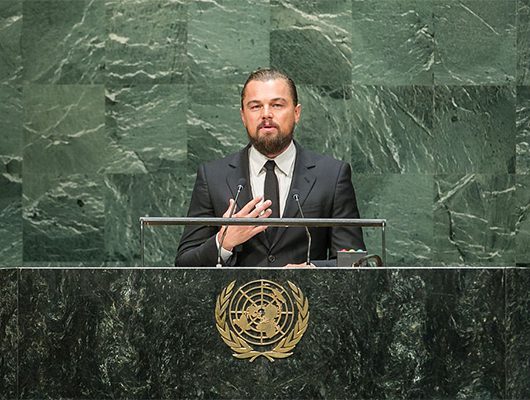
Leonardo DiCaprio Foundation Raises Over $40 Million

Leonardo_DiCaprio_Foundation
At a recent fundraising gala, the Leonardo DiCaprio Foundation (LDF) raised more than $40 million. This money was dedicated to preserving the last of Earth’s wildlife, habitat, and fragile ecosystems.

DiCaprio stated during the opening ceremony, “We’ve decimated our forests, wildlands, polluted and overfished our rivers and oceans; all the key ecosystems that not only serve as a home to our planet’s biodiversity but also make life here for us possible”.

The event itself, an annual affair, focused its current efforts on protecting key species like the tiger, rhino, shark, and mountain gorilla by working with governments to conserve the jungles, coral reef and forests they call home.

The LDF was able to raise such a large amount of money in a single evening by holding a live auction, presented by the LDF’s long-term partner Julius Baer and other co-sponsors like Chopard and Armani.

The live auction sold an extensive collection of fine art, luxury items and uniquely memorable lifetime experiences. Some of the items sold were an estate home on Leonardo DiCaprio’s own Belize Island that was sold for over $11 million, a private concert with Elton John sold twice for a total of $3 million, and a limited re-edition of Rodin’s “The Thinker” sold for close to $2 million. This shortlist of expensive items were a few of the many auctioned off at the gala event. In addition, several key figures at the event donated simply out of the kindness of their hearts for this worthy cause.

Starting in 1998, the LDF has stated its mission of protecting the world’s last wild places. The LDF implements solutions that help restore balance to threatened ecosystems, ensuring the long-term health and well being of all Earth’s inhabitants. Since that time the Leonardo DiCaprio Foundation (LDF) has worked on some of the most pressing environmental issues. The LDF has made several strides with grantmaking, public campaigns and media initiatives to focus efforts on protecting the biodiversity of the world.

With accomplishments like this, it is truly satisfying to see the LDF tirelessly strive to make a difference.

– Alysha Biemolt

Sources: Look to the Stars, Leonardo DiCaprio, Calfund
Photo: Flickr

July 30, 2015
https://borgenproject.org/wp-content/uploads/borgen-project-logo.svg 0 0 Borgen Project https://borgenproject.org/wp-content/uploads/borgen-project-logo.svg Borgen Project2015-07-30 01:30:412020-07-14 07:38:40Leonardo DiCaprio Foundation Raises Over $40 Million
Page 33 of 42«‹3132333435›»

Get Smarter

  • Global Poverty 101
  • Global Poverty… The Good News
  • Global Poverty & U.S. Jobs
  • Global Poverty and National Security
  • Innovative Solutions to Poverty
  • Global Poverty & Aid FAQ’s
Search Search

Take Action

  • Call Congress
  • Email Congress
  • Donate
  • 30 Ways to Help
  • Volunteer Ops
  • Internships
  • Courses & Certificates
  • The Podcast
Borgen Project

“The Borgen Project is an incredible nonprofit organization that is addressing poverty and hunger and working towards ending them.”

-The Huffington Post

Inside The Borgen Project

  • Contact
  • About
  • Financials
  • President
  • Board of Directors
  • Board of Advisors

International Links

  • UK Email Parliament
  • UK Donate
  • Canada Email Parliament

Get Smarter

  • Global Poverty 101
  • Global Poverty… The Good News
  • Global Poverty & U.S. Jobs
  • Global Poverty and National Security
  • Innovative Solutions to Poverty
  • Global Poverty & Aid FAQ’s

Ways to Help

  • Call Congress
  • Email Congress
  • Donate
  • 30 Ways to Help
  • Volunteer Ops
  • Internships
  • Courses & Certificates
  • The Podcast
Scroll to top Scroll to top Scroll to top